Confident, Bold, and Joyful

Listen to the podcast of this post by clicking on the player below, and you can also subscribe on AppleSpotify, or Audible.

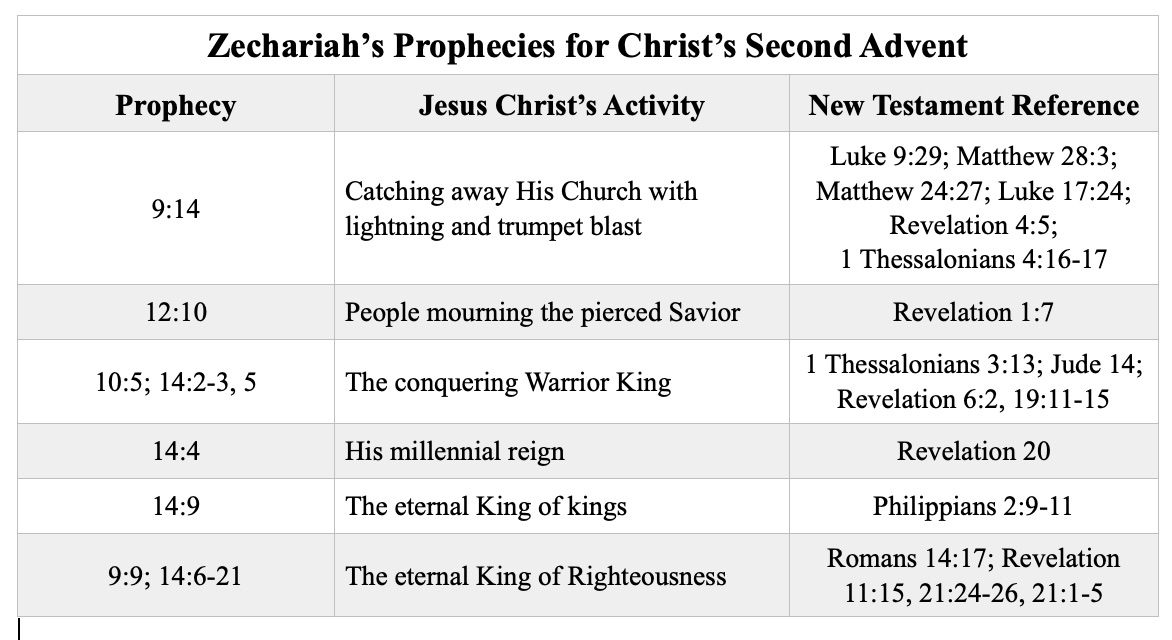
Zechariah pronounces more messianic prophecies than any other biblical writer, with the exception of Isaiah (and he wrote 66 chapters!). These prophecies are fulfilled in Christ’s First Advent, and promised for His Second Advent. Check these out for yourself…
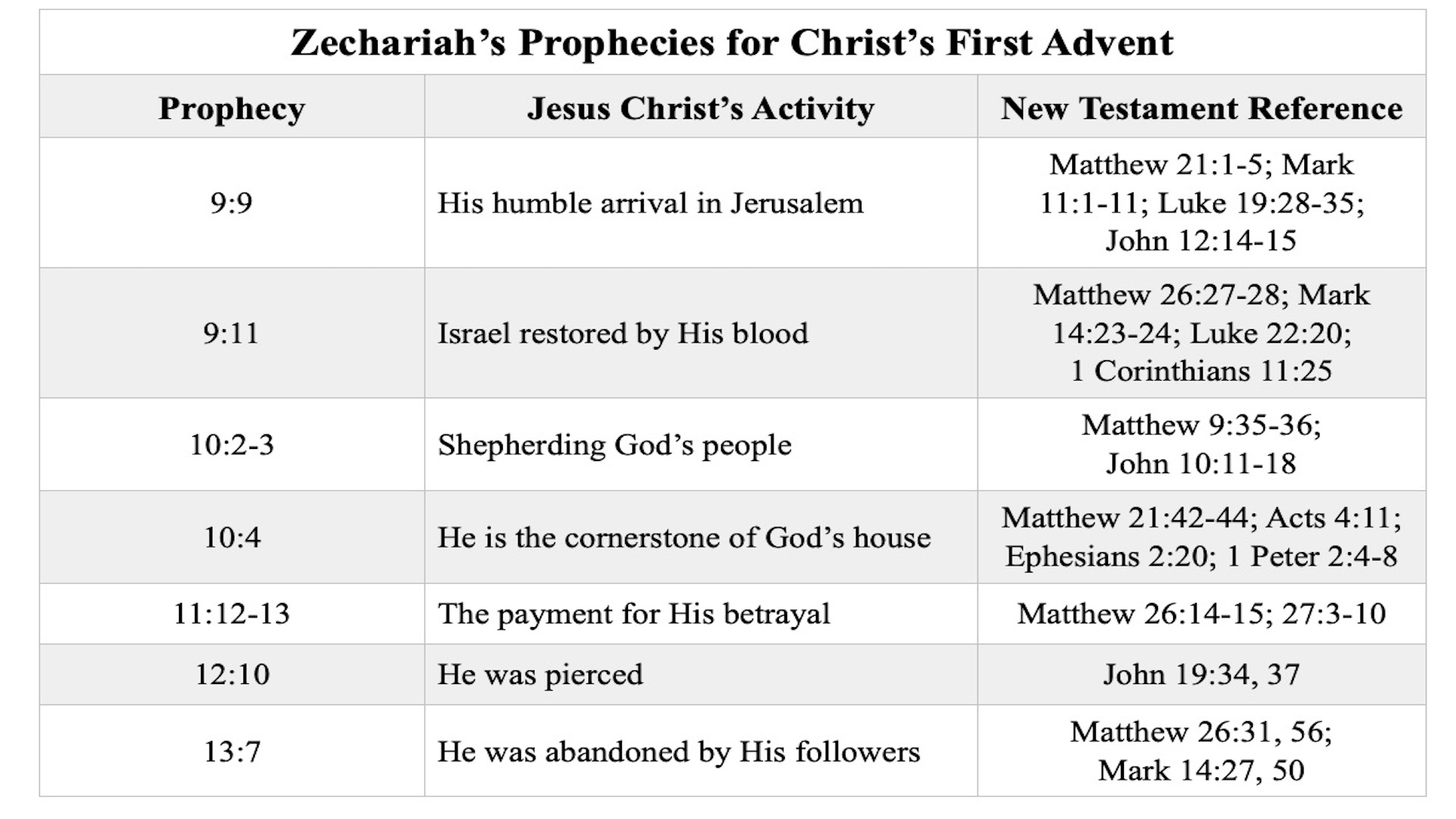
(All of the biblical references for the above chart can be viewed by clicking here.) 

(All of the biblical references for the above chart can be viewed by clicking here.)
Why is it so vital that Jesus fulfilled these prophecies? 

(1) The historicity of these fulfilled prophecies gives us a confidence for the future. 

These fulfilled prophecies assure us that God is sovereign over all history. There are no accidents, and God needs no help from anyone else in fulfilling what He has promised. As a result, no world event—no matter how big it may seem—should be able to rattle us! 

(2) The authenticity of what God has done gives us boldness for today. 

When God does the miraculous, He authenticates His Word. This authenticity has always made God’s people stand out (see Genesis 41:39). It’s also why people recognized Jesus as the divine Son of God (John 3:2; 9:30-33). So we can live with the boldness to know that what God says He will do, He will do! 

(3) The exclusivity of God’s promises and fulfillment of those promises gives us joy for our testimony. 

Only Jesus could have done all of this (Luke 24:26-27, 44), so only Jesus can fulfill what is still remaining to be fulfilled! We can have supreme joy in knowing that only Jesus is our hope of salvation (John 14:6; Acts 4:12). 

It’s vital that we know this is true so that we can live confident, bold, and joyful! Our confident boldness and our bold joy both glorify God and attract seekers to Him. 

If you’ve missed any of the other messages in our series looking at the major lessons from the minor prophets, you can access all of those messages by clicking here. 

You may download a PDF version of the above charts by clicking here → Zechariah prophecies for the First Advent or here → Zechariah prophecies for the Second Advent

►► Would you please prayerfully consider supporting this ministry? ◀︎◀︎

Soul Watchers

I share T.M. Moore’s heartbeat for the role of shepherd leaders in the Church today. I highly recommend that every pastor subscribe to the newsletters that are available through the Fellowship of Ailbe. 

A recent article called “Soul Watchers” really caught my attention. Here are a few excerpts to whet your appetite… 

Elders are called “overseers” and “shepherds” in their relationship to the congregations of the Lord (1 Peter 5:1-3). … Elders were charged with the responsibility of watching over the flocks of the Lord (Acts 20:28), preserving sound doctrine and right practice in the churches (Acts 15:1-6; Titus 1), and, in particular, keeping watch over the souls of God’s people (2 Corinthians 12:15; Hebrews 13:17). … 

The elders appointed to serve the churches of the New Testament were called to be shepherds, leading the Lord’s flocks into fuller realization of His Kingdom and promises. In fact, so vital were elders to the churches of the New Testament that Paul insisted that any church that didn’t have elders was to that extent not “in order” (Titus 1:3).

(Check out the bible verses T.M. references in this piece by clicking here.)

T.M. Moore wrote one of the endorsements for my book Shepherd Leadership: The Metrics That Really Matter, and I recently appeared as a guest on his Ailbe Podcast.

By His Stripes

Listen to the podcast of this post by clicking on the player below, and you can also subscribe on AppleSpotify, or Audible. 

Have you ever heard this truism: The person with an experience is never at the mercy of the person with an argument? 

There are, sadly, many who deny the reality of God’s divine healing for today. They may say God healed in the past, but that age has passed, or they may simply deny all supernatural activity. I have the best reply to these skeptics or deniers—and you may have this same reply: God does heal today; I know this is true because He has healed me! 

Our truth statement about this says: “Divine healing is an integral part of the gospel. Deliverance from sickness is provided for in the atonement, and is the privilege of all believers.” Let me break this down into three parts. 

(1) “Divine healing is an integral part of the gospel.” After that word “integral” I’d like to insert the word “indisputable.” When God does the miraculous, it is an undeniable proof of His love and power. A great story to prove this point is when Jesus healed a paralytic after He forgave him of his sins (Luke 5:17-26). 

Notice how the people responded: Everyone was amazed and gave praise to God. This glory to God has always been the reason God performs miracles (see Mark 6:7-13; Acts 2:43; Acts 3:9-12). 

(2) “Deliverance from sickness is provided for in the atonement.” I like to remember that the word atonement means “at-onement” and stands opposed to disease which I like to say as “dis-ease.” Sin is our ultimate dis-ease—the ultimate separator—so Jesus took care of both our spiritual dis-ease and our physical dis-ease when He died on the Cross for us, just as Isaiah prophesied. That’s why the New Testament also shows us salvation and healing frequently being linked together (Acts 10:38; 8:4-8). 

(3) “And is the privilege of all believers.” ALL believers, not just a select few and not just those who lived at the time of the first apostles. 

Divine healing has been—and always will be—an integral and indisputable part of the gospel precisely because it exalts God as THE Healer. 

Many people today still believe what the disciples of Jesus believed: Disease is a consequence of personal sin. In addressing this misunderstanding, Jesus said that disease was “so that the work of God might be displayed” in the life of the one about to be healed. He said something similar while at the graveside of Lazarus, before he raised that dead man back to life (John 9:1-38; 11:4-45). 

Sometimes God heals us now, but ALWAYS He heals us in our glorified bodies (2 Corinthians 12:9-10; 5:1-9; Revelation 21:4). Our patience and hope in our future, ultimate healing glorifies God in the present. 

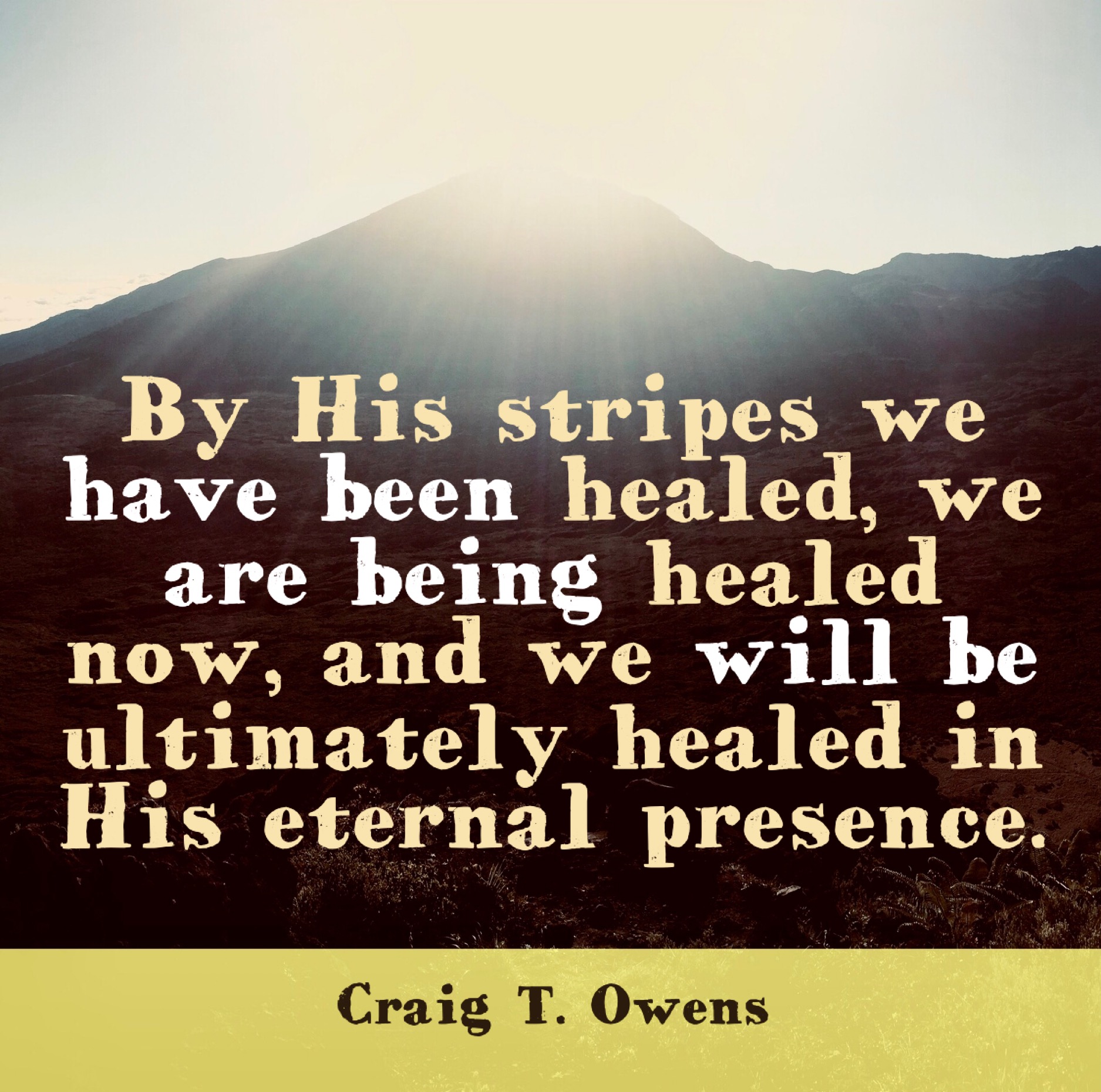
By faith in Jesus we can claim that “by His stripes we have been healed” (1 Peter 2:24). The verb tense Peter uses means we have been healed, we are being healed now, and we will be ultimately healed in Christ’s eternal presence. Whether we are healed here or not, we can live knowing that His healing power always brings Him glory and always draws people to Him, so don’t hesitate to keep on asking Him for His healing touch on your body and soul. 

If you’ve missed any of the other messages in our series exploring our foundational beliefs, you can access the full list by clicking here. 

►► Would you please prayerfully consider supporting this ministry? ◀︎◀︎
Ordinances Of The Church

Listen to the podcast of this post by clicking on the player below, and you can also subscribe on AppleSpotify, or Audible. 

Many churches recognize a various numbers of ordinances within their worship services. The dictionary gives two definitions of the word ordinance that are helpful for us: (1) a rule to be followed, and (2) something believed to be ordained (or made holy). 

There are two ordinances that we celebrate: baptism in water and holy communion. 

Water Baptism

This wasn’t a practice invented by Christians, but teachers had been baptizing their students for years as an outward sign of followership. Not only did various members of the Israelite community come to John to be baptized, but even Jesus desired to be water baptized (Matthew 3:5-6, 13-17). 

Why would Jesus need to be baptized? Look at how Jesus replied to John, “It should be done, for we must carry out all that God requires” (Matthew 3:15 NLT), or in the NIV: “to fulfill all righteousness.” 

Jesus came to be our High Priest. One of the requirements for the priest was “he must bathe himself in water before he puts” on the ceremonial robes that were to be worn in the tabernacle (Leviticus 16:4). Jesus also came to be our perfect sacrifice, so He needed to be like us in every single way. If Jesus wasn’t water baptized, not “all righteousness” would have been fulfilled. 

Jesus was also baptized as an example for us. We, too, are priests in God’s Kingdom that need to be washed for our priestly service (1 Peter 2:9; 3:20-21). 

Our foundational truth statement on this is: “The ordinance of baptism by immersion is commanded by the Scriptures. All who repent and believe on Christ as Savior and Lord are to be baptized. Thus they declare to the world that they have died with Christ and that they also have been raised with Him to walk in newness of life.” 

Jesus gave us this rule to follow for new Christians: “baptizing them in the name of the Father and of the Son and of the Holy Spirit” (Matthew 28:19). This is also what Peter announced to the new believers on the Day of Pentecost: “Repent and be baptized, every one of you, in the name of Jesus Christ for the forgiveness of your sins” (Acts 2:38).  

Communion

Sometimes called The Last Supper or The Lord’s Supper, the Israelites had continued to celebrate the Passover (Exodus 12) with unleavened bread and wine—symbolizing the body and the blood of the sacrificial lamb which saved them from death. 

Our foundational truth statement on this is: “The Lord’s Supper, consisting of the elements—bread and the fruit of the vine—is the symbol expressing our sharing the divine nature of our Lord Jesus Christ, a memorial of his suffering and death, and a prophecy of His second coming, and is enjoined on all believers ‘till He come!’” 

Jesus, while celebrating Passover with His disciples, showed how Passover had been pointing to His First and Second Advents (Luke 22:13-20; 1 Corinthians 11:23-26). 

Both of these ordinances have reminders in them of our new life in Christ:

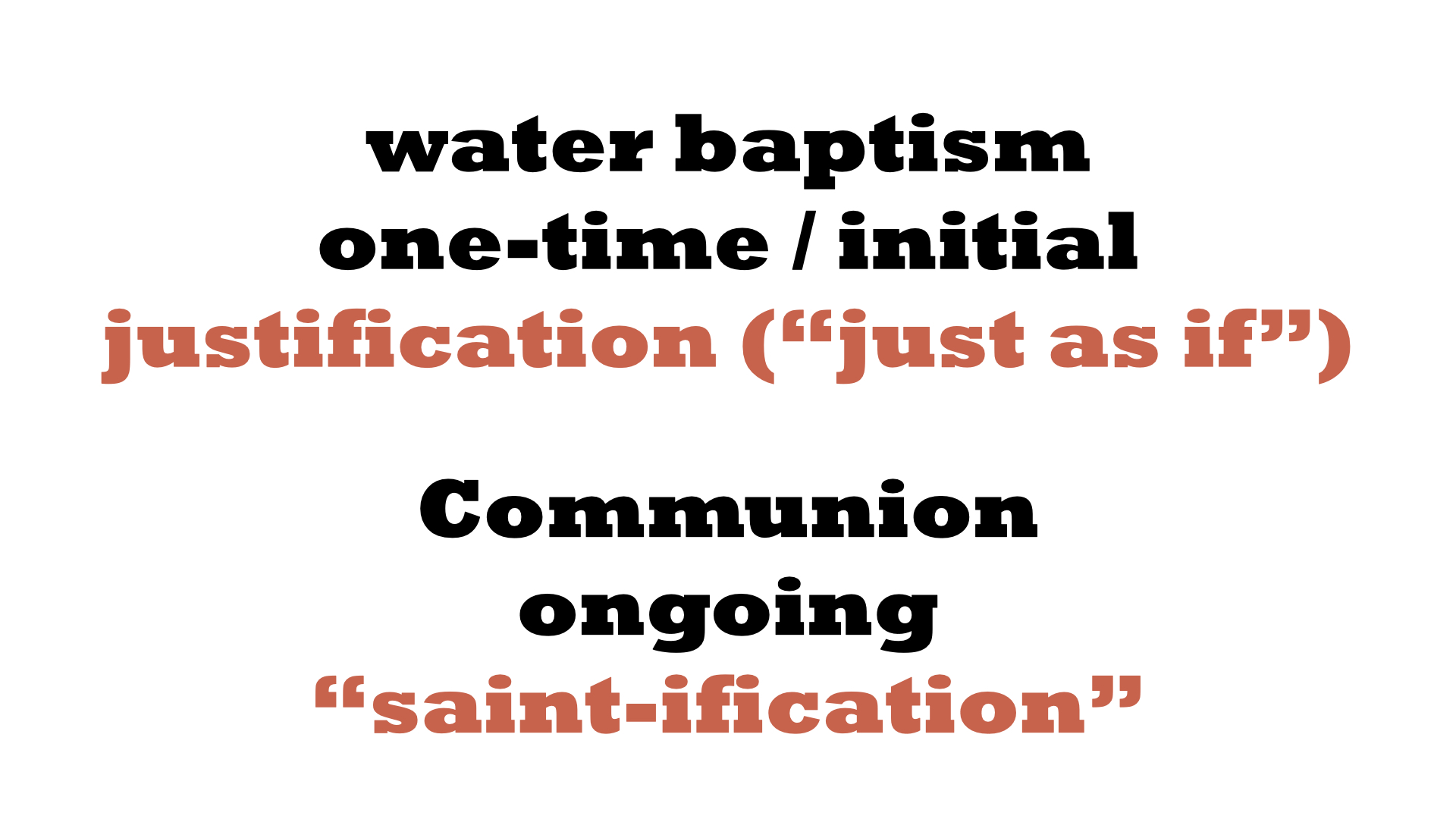
  1. Water baptism is a one-time event, just as our justification (“just as if I’d never sinned”) is a one-time event. This looks back to what Jesus did on the Cross. 
  2. Communion is an ongoing celebration “until He comes,” just as our sanctification (“saint-ification”) is an ongoing process. This looks ahead to what Jesus will complete when we are glorified in Heaven. 

If you’ve missed any of the other messages in our series exploring our foundational beliefs, you can find the complete list by clicking here.

►► Would you please prayerfully consider supporting this ministry? ◀︎◀︎
“Today You Will Be With Me In Paradise”

Listen to the podcast of this post by clicking on the player below, and you can also subscribe on Apple or Spotify.

Dying declarations are powerful statements!

As Jesus was nailed to the Cross, His first dying declaration prompted such a change of heart in a hardened criminal that the criminal’s own dying declaration caused Jesus to say, “Amen!” The story is found in Luke 23:32-43.

But first, we need to ask, why were criminals crucified alongside Jesus? An obvious answer is that it fulfilled a First Testament prophecy—He poured out His life unto death, and He let Himself be regarded as a criminal and be numbered with the transgressors (Isaiah 53:12). 

How did this come about? Maybe…

  • Pilate was trying to justify his actions? 
  • the Sanhedrin had used these criminals as “evidence” that Jesus was stirring up a rebellion against the crown? 
  • a Roman centurion suggested, “Let’s kill three birds with one stone”? 

Whatever the case, they couldn’t have been very happy about this, especially since Barabbas (a fellow criminal) had just been released. They probably blamed Jesus for their awful predicament, so they naturally joined in the mockery. 

And what cruel mockery it was! 

  • the people stood watching these crucifixions and, since Luke uses the word for a sports spectator, it appears they were cheering the bloodshed they were observing
  • the Pharisees and Sadducees derided Jesus
  • the Roman soldiers continued the inhuman mockery and abuse that they had begun hours before 
  • the criminals crucified on either side of Jesus blasphemed Him 

Luke kindly records that only one criminal was hurling insults at Jesus, but Matthew and Mark make it clear that both criminals were blaspheming Jesus (Matthew 27:44; Mark 15:32). 

It appears that one criminal, although at first a blasphemer, had a change of heart. 

Perhaps it was because He heard this Jesus, who was being so horribly mistreated, ask His Father to forgive His tormentors instead of asking for retribution. The apostle Peter says that when we follow Christ’s example in this it can actually make people become ashamed of their slander against us (1 Peter 2:23; 3:14, 16). 

Or perhaps this criminal had been in the crowd earlier that week on Monday when Jesus taught about the Kingdom of God all day. If he was, he would have heard Jesus talk about the rewards for the righteous and the punishment for the wicked, and he would have heard Jesus talk about how even criminals like himself could be allowed into God’s Kingdom (Matthew 21:28-32). 

All of this was working on him until his own slander against Jesus stuck in his throat and he rebuked his companion for his blasphemy. He said, “We are guilty and deserve this death sentence. But this Man is totally innocent!” 

Then turning to Jesus, he delivers his faith-filled declaration, “LORD Jesus, remember me when You come into Your kingdom.” He called Him Lord, asked for a reward, and acknowledged that Christ’s Kingdom was not of this earth. This dying declaration was more faith-filled than even the disciples of Jesus could make, since all but one of them had fled in fear!

Jesus is so moved by this man’s declaration that His first word to him is Amen: “I tell you the truth [literally: Amen!], today you will be with Me in paradise. 

King David taught us that the sacrifice that God accepts is a broken heart, and the apostle Paul agrees by saying that it is the heart change and the confession of our mouth that brings our salvation (Psalm 51:16-17; Romans 10:4-11). 

My friend, Jesus has opened the way to Paradise for you by His death on the Cross. When our humbled hearts speak the truth about God’s Kingdom, Jesus says, “Amen!” and God welcomes us into His presence for ever and ever! Don’t wait another day, but cry out to Jesus today: tell Him that you are guilty, but you believe He has paid for your sins. He will then say the same word to your heart: “Amen! You will spend eternity in Paradise with Me!” 

If you would like to follow along as we look at all seven of the dying declarations Jesus made from the Cross, please click here. 

►► Would you please prayerfully consider supporting this ministry? ◀︎◀︎

“Father, Forgive Them”

Listen to the podcast of this post by clicking on the player below, and you can also subscribe on Apple or Spotify.

In our system of law, special attention is given to someone’s dying declaration. If our legal system gives such weight to the last words of an imperfect man, it seems to me that we should take special note of the dying declarations of the only truly innocent Man who ever walked this earth: Jesus Christ. 

After being nailed to the Cross, the first dying declaration from Jesus was: Father, forgive them, for they do not know what they are doing (Luke 23:34). 

Let’s say that Billy is dying on a hospital bed after being fatally shot, and all he can muster the strength to do is point at Johnny and whisper, “He… shot… me….” We would know who the “he” was in that situation, but who exactly is the “them” in this declaration of Jesus? 

Who offended Jesus? Who mortally wounded Him? Who caused Him such anguish? Maybe it was…

  • His disciples who couldn’t stay awake to pray with Him 
  • Judas who betrayed Him with a kiss 
  • the nine disciples who ran away 
  • Peter who denied three times that he knew Jesus 
  • the false witnesses in Caiaphas’ house
  • the members of the Sanhedrin who hit Him and spit on Him 
  • the members of the Sanhedrin who were silent 
  • the temple guards who mocked Him 
  • those who spewed lies when Jesus stood before Pilate
  • those who lied about Jesus when He stood before Herod 
  • Herod and his soldiers who mocked Him 
  • the Roman soldiers who abused Him 
  • the Roman soldiers who stripped Him naked and crucified Him 

To all of the above, Jesus said, “Father, forgive them”!  

Listen to how Peter described the response of Jesus to all of this: When they hurled their insults at Him, He did not retaliate; when He suffered, He made no threats… (1 Peter 2:23). That word for insults means to heap abuse on Him or to pile on. This was a fulfillment of a 700-year-old prophecy: He was oppressed and afflicted… (Isaiah 53:7). Isaiah uses similar words, where oppressed means tyrannized, and afflicted means a humiliating, painful loss of dignity. 

Christ’s own disciples afflicted Him, and so did the temple guards, and Pilate, and King Herod, and the Roman soldiers… and you and me. All of this mistreatment and humiliation and tyrannizing was handed out by us too (see Isaiah 53:6; 1 Peter 2:24-25). That’s why His arms were spread so wide when He said, “Father, forgive them,” because there were so many that needed forgiveness! 

When Jesus said forgive, He was asking His Father to take away our guilt that kept us out of God’s presence. Think of a courtroom scene where God the Father is the Judge, satan is the prosecutor, Jesus is the victim, and I am the defendant. The evidence is overwhelming and incontrovertible, and I am pronounced guilty. My punishment is a death sentence. When Jesus says, “Father, forgive him,” He is taking the death penalty in my place! 

In another beautiful fulfillment of an Old Testament practice, Jesus became both our sin offering and our scapegoat, making atonement for us at the mercyseat in the Most Holy Place, and allowing us to be welcomed into God’s holy presence (Leviticus 16:15-16, 20-22; Hebrews 9:12-14). 

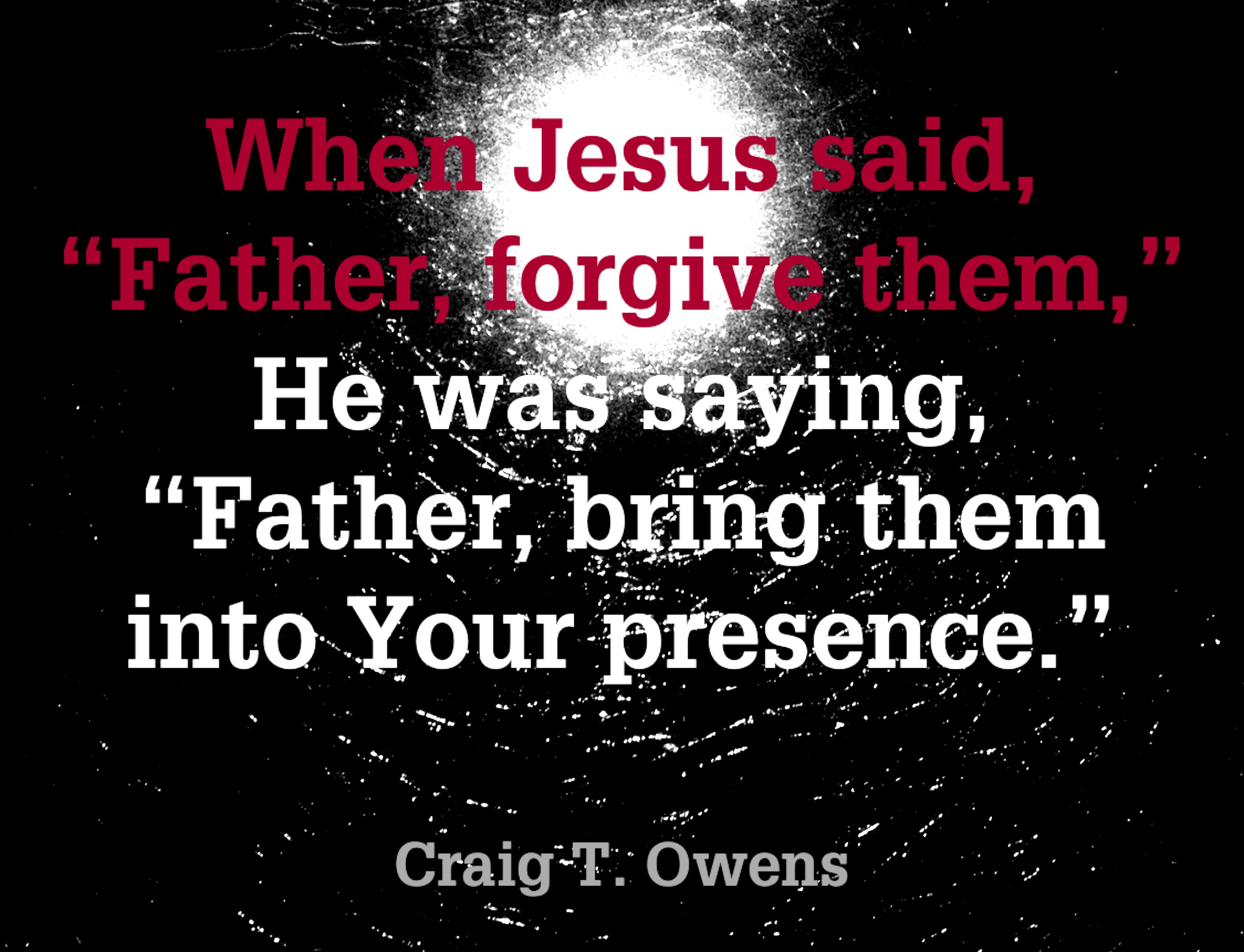
When Jesus said, “Father, forgive them,” He was saying, “Father, bring them into Your presence!” 

You and I need to accept by faith the atoning work done on the Cross, the forgiveness of sins that was purchased for us. Jesus didn’t come to condemn us, but to lovingly restore us, and for that we are eternally and humbly grateful. 

Please don’t miss out on any of these dying declarations from Jesus. You can find my thoughts on all of the confessions of this dying Man by clicking here.

►► Would you please prayerfully consider supporting this ministry? ◀︎◀︎
Learning Life’s Lessons

Listen to the podcast of this post by clicking on the player below, and you can also subscribe on iTunes or Spotify.

Have you heard the cliché, “Experience is the best teacher”? I don’t think that’s really true. I’ve known a lot of people who have had some huge experiences but haven’t learned a single lesson from them. Honestly this is the better statement: Evaluated and recalled experience is the best teacher. 

Many of my “life lessons” have cost me money. For instance, I was told numerous times by my parents, grandparents, and my driving instructor not to speed, but I didn’t learn that lesson the easy way. It cost me financially. I recovered from that, and I’ve only had one speeding ticket in the 40 years that followed! 

Most of us can recover from a financial loss. But other life lessons cost us more dearly: our broken physical health, lost intimacy in a relationship, a damaged reputation, or missed opportunities. Then we walk around with the weight of guilt, baggage, second-guessing, and regret. Jesus didn’t die on a Cross for us to live weighed down like this! 

God wants to help us! So why do we wait to call on Him until after we’ve tried to do it ourselves? Or until after we’re so deep in trouble or weighed down with baggage? Perhaps we think, “This is such a tiny thing. I can handle it myself.” 

  • Solomon said it was the tiny things that brought ruin 
  • God told Cain that it was the sin that was crouching at his door that wanted to take him down 
  • The devil prowls around and looks for the most opportune time to pounce on us 
  • Which is why Paul tells us to put on all of God’s armor and prayer all the time (see Song 2:15; Genesis 4:7; 1 Peter 5:8; Luke 4:13; Ephesians 6:10-11, 18) 

Portia Nelson summed it up well in her short story that I think all of us can relate to…

Chapter 1
I walk down the street.
   There is a deep hole in the sidewalk.
   I fall in.
   I am lost… I am helpless. It isn’t my fault.
It takes forever to find a way out.

Chapter 2
I walk down the same street.
   There is a deep hole in the sidewalk.
   I pretend I don’t see it.
   I fall in, again.
I can’t believe I am in the same place. But it isn’t my fault.

Chapter 3
I walk down the same street.
   There is a deep hole in the sidewalk.
   I see it is there.
   I still fall in… it’s a habit… but my eyes are open, I know where I am.
It’s my fault. I get out immediately.

Chapter 4
I walk down the same street.
   There is a deep hole in the sidewalk.
   I walk around it.

Chapter 5
I walk down another street.
    —Portia Nelson

Prayer helps us avoid the holes in our sidewalk, the crouching sin at our door, the prowling devil, and the lurking temptations. But more than that, prayer puts us on the right path to avoid all of these things in the first place (see Proverbs 3:5-6; Isaiah 30:21; 2 Samuel 22:34, 37)! 

God doesn’t have to get ready to help us; He’s already ready to help us. He’s just waiting for us to ask for His help. 

No matter how little or big the challenges, with God I can overcome! 

No matter how obvious or hidden the hole is, with God I can go down the right street! 

No matter how many times I fall in the hole, God can get me out! 

No matter how much the devil wants to bring me down, with God I can live righteously! 

No matter how many times sin pounces on me and I give in to it, God can forgive me! 

Don’t wait a moment longer to call on your heavenly Father in prayer. Let Him hear your voice early and often—He loves to hear from you and respond to you! 

If you’ve missed any of the other posts in this series on prayed called Be A First Responder, you can find the full list by clicking here.

A Proper Perspective In An Evil Culture

Do these phrases sound familiar? 

  • The foundations are being destroyed, what can the righteous do? 
  • The faithful have vanished from among men 
  • Everyone lies to his neighbor 
  • The boastful say, “We will triumph with our tongues” 
  • The wicked freely strut about when what is vile is honored among men 

This could be said today in my neighborhood. And 20 years ago in Washington DC. And 500 years ago in Europe. But it was said over 3000 years ago!

In times like these it’s important to remember that there have always been times like these! 

In the United States, elections bring regular changes in leadership. Around the world and throughout history violent dictators are toppled, benevolent monarchies fall, dominate personalities shine brightly and fade from the scene, even people who called themselves “Great” or “the king of kings” have disappeared. What should our perspective be in changing cultures—whether they are good or evil?

In Psalms 9-12, David shares some timeless reminders.  

In Psalm 9, he contrasts the temporary track record of mortals with the transcendency of Yahweh. His Selah pauses in this psalm invite us to consider the question: Who benefits me ultimately and affects me eternally: mortals or God?

In the Septuagint, Psalms 9 and 10 make up one psalm. In our English Bible, Psalm 9 closes with the phrase “they are but men” and Psalm 10 closes by calling mankind “mere earthly mortals.” Contrast that with Yahweh who is described as “the LORD reigns forever” and “the LORD is King for ever and ever.” 

In between these eternal affirmations of God, mere earthly mortals are described as: 

  • arrogant 
  • boastful—literally saying “hallelujah” to themselves 
  • blessing all who are like them in their wicked thoughts
  • having no room in their thoughts for God 
  • even praying to themselves—which is the literal meaning of “he says to himself” that David repeats three times 

Literally this mere earthly mortal thinks of himself as god! But even as he says “nothing will ever hurt me while I’m alive” he acknowledges his mortality, admitting that he is indeed finite. 

In Psalms 11 and 12, David gives the righteous the proper perspective to handle all of this. In a word, David wants the godly to remember:

  • Remember God sees everything 
  • Remember God punishes the wicked and rewards the righteous 
  • Remember God gets the final word 

Christians can only live exemplary, anxiety-free, and God-honoring lives when we stay focused on the Infinite, on the Eternal God. With this perspective we can live out our roles as “aliens and strangers”—as the apostle Peter calls us—while we live in this evil culture.

Thursdays With Spurgeon—Sweeter And Sweeter

This is a weekly series with things I’m reading and pondering from Charles Spurgeon. You can read the original seed thought here, or type “Thursdays With Spurgeon” in the search box to read more entries.

Sweeter And Sweeter

Therefore, to you who believe, [Jesus] is precious. (1 Peter 2:7)

     The preciousness of Christ is connected in the Scriptures with a believing people. The Bible never expects that without faith men will glorify Christ. For, dear brothers and sisters, it is by faith that the value of Christ is perceived. You cannot see Christ by mere reason, for the natural man is blind to the things of the Spirit. You may study the evangelists themselves, but you will never get to see the real Christ who is precious to believers except by a personal act of faith in Him. …  An ounce of faith is better than a ton of learning! … 

     By faith the Lord Jesus is more and more tasted and proved and becomes more and more precious. In proportion as we taste our Lord, He will rise in our esteem. … The more afflictions a believer endures, the more he discovers the sustaining power of Christ, and therefore the more precious Christ becomes to him. … 

     Every time you give way to skepticism and critical questioning, you lose a sip of sweetness.

From Christ Precious To Believers

Oh, how sweet Jesus is! 

Have you tasted and discovered this for yourself?

I just keep falling in love with Him
Over and over and over and over again
I keep falling in love with Him
Over and over and over and over again
He gets sweeter and sweeter as the days go by
Oh what a love between my Lord and I
I keep falling in love with Him

Thursdays With Spurgeon—Unspeakable Gift

This is a weekly series with things I’m reading and pondering from Charles Spurgeon. You can read the original seed thought here, or type “Thursdays With Spurgeon” in the search box to read more entries.

Unspeakable Gift

Therefore, to you who believe, [Jesus] is precious. (1 Peter 2:7)

     We can never say enough of God’s unspeakable gift! On any other subject there is a danger of exaggeration, but it is impossible here. If you find honey, it is well to eat cautiously of it, for it may pall upon you. But when you find Christ, take in all you can and pray for an enlarged capacity, for He will never grow too sweet. …  

     Let every one of us do something fresh by which to prove the believer’s love to Christ! Let us not be satisfied with proof already given. Let us invent a new love token! Let us sing to the Lord a new song! Let not this cold world dare to doubt that to believers Christ is precious! Let us force the scoffers to believe that we are in earnest!

From Christ Precious To Believers

When was the last time you were amazed at something new you discovered about Jesus? The apostle Paul prayed that our hearts would continue to expand into the height, depth, breadth, and width of His fullness. 

When was the last time you sang a new love song to Jesus? He is singing over you, and He would love to hear your original love song to Him as well. 

Over the mountains and seas
Your river runs with love for me
And I will open up my heart
And let the Healer set me free

I’m happy to be in the Truth
And I will daily lift my voice
For I will always sing
Of when Your love came down

I could sing of Your love forever! 

Oh, I feel like dancing
It’s foolishness, I know
But when the world has seen the light
They will dance with joy
Like we’re dancing now

I could sing of Your love forever!