Thursdays With Spurgeon—God Is The Great Worker

This is a weekly series with things I’m reading and pondering from Charles Spurgeon. You can read the original seed thought here, or type “Thursdays With Spurgeon” in the search box to read more entries.

Listen to the podcast of this post by clicking on the player below, and you can also subscribe on iTunes or Spotify.

God Is The Great Worker

I planted, Apollos watered, but God gave the increase. So then neither he who plants is anything, nor he who waters, but God who gives the increase. Now he who plants and he who waters are one, and each one will receive his own reward according to his own labor. For we are God’s fellow workers; you are God’s field, you are God’s building. (1 Corinthians 3:6-9) 

     God Himself is the Great Worker. He may use what laborers He pleases, but the increase comes only from Him. Brothers, you know it is so in natural things—the most skillful farmer cannot make the wheat germinate, grow, and ripen. … And in the spiritual farm it is even more so, for what can man do in this business? … We can tell out the truth of God, but to apply the truth to the heart and conscience is quite another thing. … 

     Well said our Lord, ‘Without Me you can do nothing’ (John 15:5). What is the effect of all this upon your minds? Briefly I would draw certain practical lessons out of this important truth of God. (1) The first is, if the whole farm of the church belongs exclusively to the great Master Worker and the laborers are worth nothing without Him, let this promote unity among all whom He employs. … 

     (2) Next, notice that this fact ennobles everybody who labors in God’s husbandry. … 

     (3) But lastly, how this should drive us to our knees! Since we are nothing without God, let us cry mightily to Him for help in this, our holy service!

From Farm Laborers

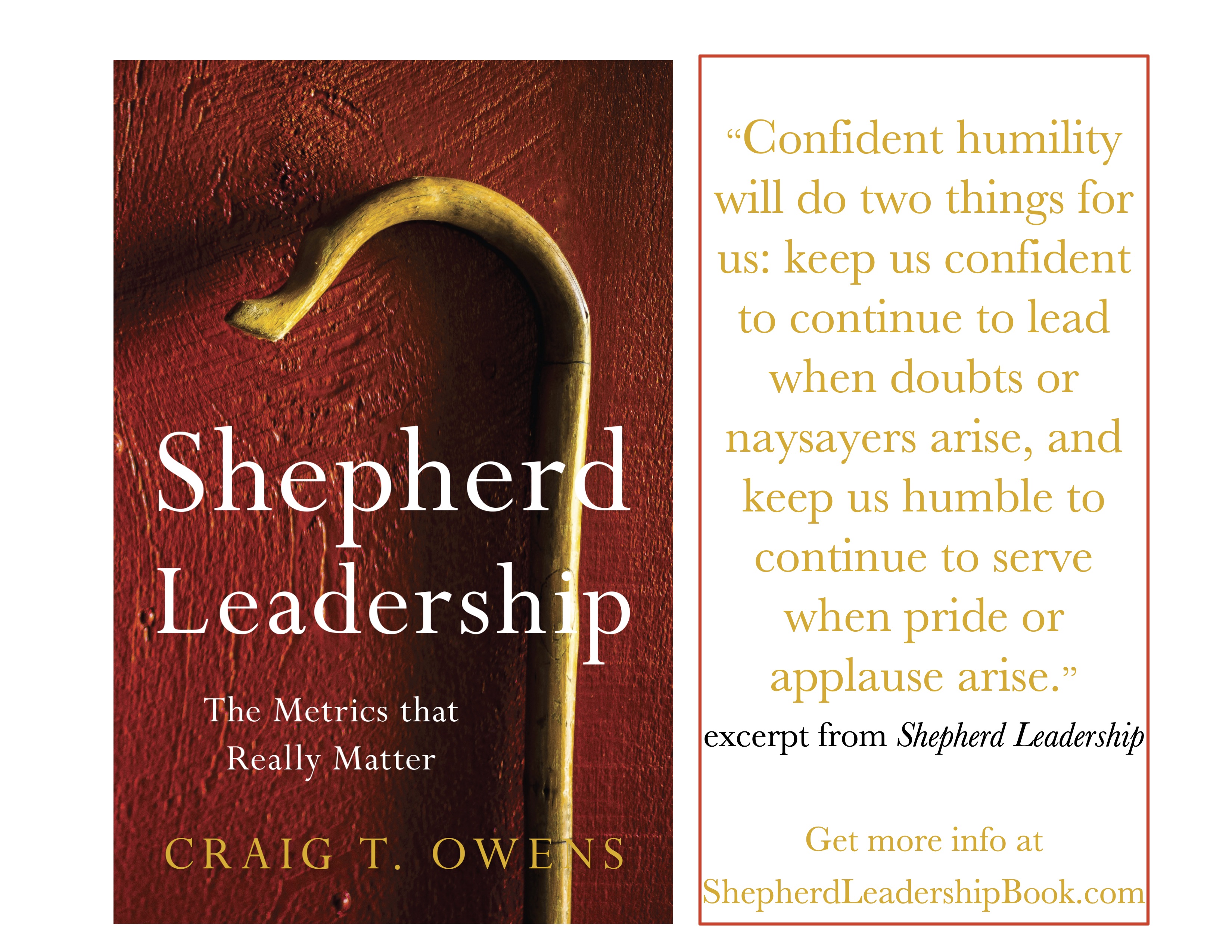
I learned long ago of both the confidence and the humility in reminding myself that God chose me to work in His field. Here’s how I describe that in my book Shepherd Leadership: The Metrics That Really Matter

     There is nothing wrong about aspiring to a leadership position. The apostle Paul wrote to his young protégé Timothy, “This is a trustworthy saying: ‘If someone aspires to be a church leader, he desires an honorable position’” (1 Timothy 3:1 nlt). Yet this desire needs to be tempered by Jeremiah’s words to his scribe Baruch, “Should you then seek great things for yourself? Do not seek them” (Jeremiah 45:5). Taken together, a shepherd leader’s passion for greater leadership should be to gain greater things not for himself but for others. 

     Shepherd leaders need to remind themselves frequently of this simple statement: God chose me. The confidence comes from remembering “God chose.” If God has chosen me, then He has also equipped me. He foresaw the needs of this organization, and He has prepared me to step into this role for such a time as this. The humility comes from remembering “God chose me.” Who am I that God would think so highly of me? Of all the people on Earth that God could have placed here, why did He pick me? This confident humility will do two things for us: keep us confident to continue to lead when doubts or naysayers arise, and keep us humble to continue to serve people when pride or applause arises. (except from chapter 2 “Secure To Serve”) 

How important it is to remind ourselves that God makes things grow—not us. Our role is to perform the highest-quality labor possible, and to remain faithful at our post until God gives us a new assignment.  

This isn’t true just for church leaders, but for every member of the Body of Christ

►► Would you please prayerfully consider supporting this ministry? ◀︎◀︎
 

Three Pictures Of The Church

Listen to the podcast of this post by clicking on the player below, and you can also subscribe on AppleSpotify, or Audible. 

When you’ve been at a church service have you ever asked yourself, “What are we doing here? What exactly is ‘church’? What are we supposed to be doing?”  

 Some people think church is saints going out to tell people about Jesus, and some people think church is saints coming together to hear about Jesus (see Matthew 28:19-20; 1 Corinthians 11:18). I think this is an either-or trap. 

I think a better way of looking at this is “both-and” and “so that”: BOTH coming to a gathering of believers so that we can be equipped to go out AND going out to tell people about Jesus so that we can bring new disciples into the church. 

Our foundational truth statement says: The Church is the Body of Christ, the habitation of God through the Spirit, with divine appointments for the fulfillment of her great commission. Each believer, born of the Spirit, is an integral part of the General Assembly and Church of the Firstborn, which are written in heaven. 

To help us see where we play a vital role in all of this, the Bible gives us three pictures of the church:

  1. A Body
  2. A Building
  3. A Bride

(see Ephesians 1:22-23; 1 Corinthians 12:12-26; Ephesians 2:19-22; John 3:29; 2 Corinthians 11:2; Ephesians 5:21-33)

All of these pictures speak of multiple parts making up one unified, healthy whole. Remove any part or any function, and the whole thing is diminished. All of these pictures also speak of intentionality. No one becomes healthy by accident, or builds a sound structure by accident, or enjoys a fulfilling marriage by accident. Health, soundness, and fulfillment all result from being intentional about our choices and interactions. 

I believe these three pictures also help us see what the church isn’t and is. 

  • A healthy church isn’t about numbers  
  • A healthy church isn’t about the day of the week that we meet
  • A healthy church isn’t about an “order of service” (there is no such thing listed in the New Testament!)
  • A healthy church is about Jesus being the focal point. As Jesus said, “I will build My Church.”   
  • A healthy church is about being intentional in everything we do 
  • A healthy church is about doing everything we can to glorify Jesus, both when we come together and when we go out into the world

(see Matthew 18:20; Romans 14:5; Matthew 16:18; Acts 10:38; 1 Corinthians 10:31; Hebrews 10:23-25) 

The first Church in the New Testament showed us how they followed the example of Jesus. Before trying to fulfill the Great Commission of going into all the world, they first obeyed the directive from Jesus to stay in Jerusalem until they were empowered by the Holy Spirit. Then we see an intentionality, and an empowerment, and a complete reliance on the Holy Spirit in everything they undertook from that point on. 

(see Acts 1:8; 2:42-47; 4:29-35; 6:1-7; 8:4, 26; 10:19-20; 13:1-3; 15:1-29)  

It’s not about going to “my church” or going to “your church.” It’s about being the Church (with a capital “C”)—the Body of of Christ, the Building of Christ, the Bride of Christ. 

Bottom line:

Christians are being the Church when they are intentionally living in a way that makes Jesus known. 

This is a part of our ongoing series looking at our foundational truths. If you’ve missed any of the messages in this series, you can find the full list by clicking here.

►► Would you please prayerfully consider supporting this ministry? ◀︎◀︎

Thursdays With Spurgeon—A Word To Preachers

This is a weekly series with things I’m reading and pondering from Charles Spurgeon. You can read the original seed thought here, or type “Thursdays With Spurgeon” in the search box to read more entries.

Listen to the podcast of this post by clicking on the player below, and you can also subscribe on iTunes or Spotify.

A Word To Preachers

I planted, Apollos watered, but God gave the increase. So then neither he who plants is anything, nor he who waters, but God who gives the increase. Now he who plants and he who waters are one, and each one will receive his own reward according to his own labor. For we are God’s fellow workers; you are God’s field, you are God’s building. (1 Corinthians 3:6-9) 

     Paul is a laborer, Apollos is a laborer, Cephas is a laborer, but not so much as a foot of the farm is Paul’s, nor does a single parcel of land belong to Apollos, or the smallest allotment to Cephas. ‘You are Christ’s, and Christ is God’s’ (1 Corinthians 3:23). The fact is that in this case the laborers belong to the land and not the land to the laborers, ‘for all things are yours: whether Paul or Apollos or Cephas’ (3:21-22). … 

     Brothers, a laborer may work very hard at a whim of his own and waste his labor, but this is folly! Some discourses do a little more than show the difference between a Tweedledum and Tweedledee, and what is the use of that? … 

     All God’s laborers must go to Him for their seed, or else they will scatter tares. All good seed comes out of God’s granary. If we preach, it must be the true word of God or nothing can come of it. … A sermon is vain talk and dreary word spinning unless the Holy Spirit enlivens it. … 

     Here we have mention of a personal service and a personal reward: ‘Each one will receive his own reward according to his own labor.’ The reward is proportionate, not to the success, but to the labor! Many discouraged workers may be comforted with that expression. You are not to be paid by results, but by endeavors.

From Farm Laborers

My dear preacher friend, God sees you. He has placed you in the field where He needs you to be, and He has given you the skills you need to have to labor for Him. Never doubt that! 

You may be the one breaking up hard ground, or the one sowing seed, or the one watering, or the one bringing in the harvest. Wherever you are and whatever you are doing, rely on the strength God gives you. He will illuminate His Word to your heart first so that you can share a timely word with those under your care. Then He will send the Holy Spirit to enliven all that you preach. 

God has given you the tools and skills, now you must diligently supply the effort. Don’t become discouraged by what seems to be a lack of “success.” As God tells us through Paul, He will reward your faithful labor in His field. 

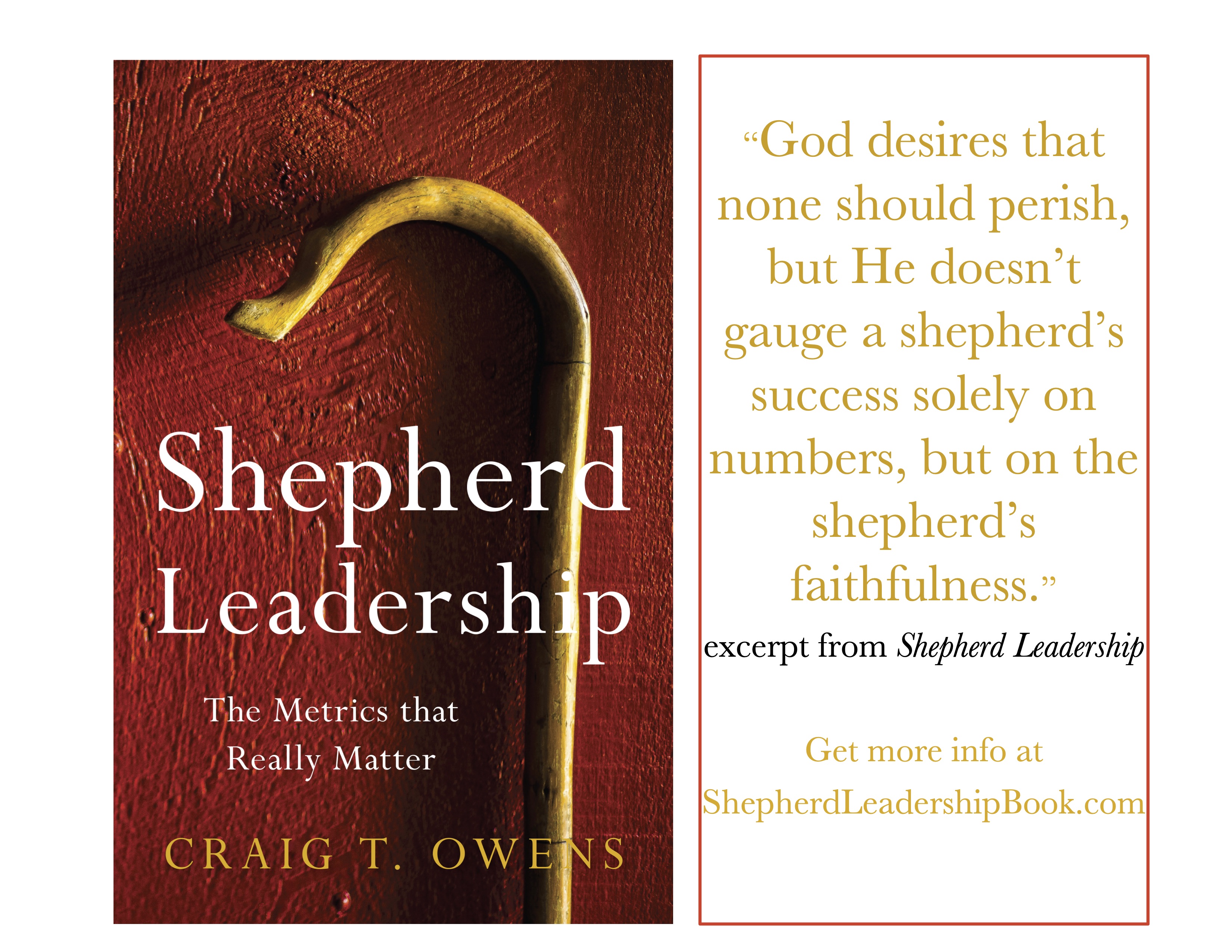
My book Shepherd Leadership: The Metrics That Really Matter elaborates on this point. The thoughts in this book will remove from you the burden of trying to live up to any unbiblical metric of “success” in your ministry. I hope you will get a copy of this book! Check out ShepherdLeadershipBook.com for more details.

►► Would you please prayerfully consider supporting this ministry? ◀︎◀︎
Thursdays With Spurgeon—We Are All Laborers

This is a weekly series with things I’m reading and pondering from Charles Spurgeon. You can read the original seed thought here, or type “Thursdays With Spurgeon” in the search box to read more entries.

Listen to the podcast of this post by clicking on the player below, and you can also subscribe on iTunes or Spotify.

We Are All Laborers

I planted, Apollos watered, but God gave the increase. So then neither he who plants is anything, nor he who waters, but God who gives the increase. Now he who plants and he who waters are one, and each one will receive his own reward according to his own labor. For we are God’s fellow workers; you are God’s field, you are God’s building. (1 Corinthians 3:6-9) 

     Remember that the ablest ministers, the most powerful evangelists, the most profound teachers are, after all, nothing but laborers together with God. Let your mind be set upon the Master and not upon the servants! Do not say, ‘We are for this man because he plants,’ or ‘We are for the other because he waters,’ or ‘We are a third party for nobody at all.’ But let us join in ascribing all honor and praise to God, Who works all our works in us, since every good gift and every perfect gift is from above and comes down from the Father of lights, to Whom be glory world without end! … 

     The church is God’s farm.… In the margin of the Revised Version, we read, ‘You are God’s tilled ground….’ 

    We begin by considering that the church is God’s farm. The Lord has made the church of His sovereign choice to be His own by purchase, having paid an immense price for it. ‘For the Lord’s portion is His people; Jacob is the lot of His inheritance’ (Deuteronomy 32:9). Because the Lord’s portion was under mortgage, therefore the only begotten Son laid down His life as the purchase price and redeemed His people to be the Lord’s portion forever and ever. Henceforth it is said to all believers, ‘You are not your own. For you were bought at a price’ (1 Corinthians 6:19-20). Every acre of God’s farm cost the Savior bloody sweat, yes, the blood of His heart! He loved us and gave Himself for us; that is the price He paid! … 

     The Master’s commission is not ‘sit still and see the Spirit of God convert the nations,’ but ‘Go into all the world and preach the gospel to every creature’ (Mark 16:15). 

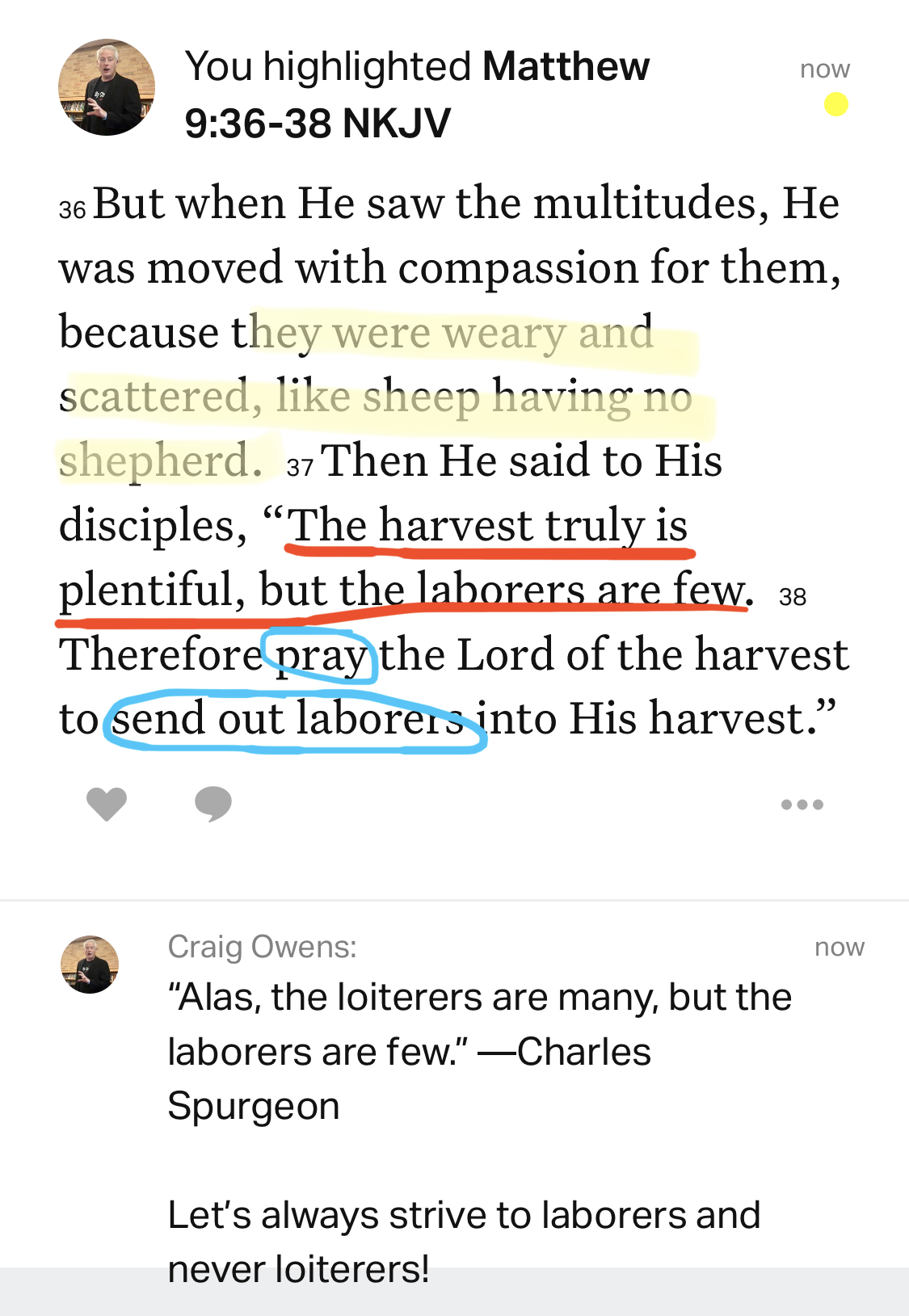
     Alas, the loiterers are many, but the laborers are few.

From Farm Laborers

It’s sad how much time Christians spend on non-essential things. We church shop to find the pastor or the music that suits our tastes; we claim ownership over ministries and only allow others to work under us, but never alongside us; or we attend church and give our tithes and offerings and expect the pastor to do all of the ministry. 

All of this is not only unbiblical but none of this is focused on eternity. And as C.S. Lewis said, “All that is not eternal is eternally useless.” 

Jesus paid too high a price for us to keep the good news to ourselves, or claim that our ministry is superior to someone else’s, or to simply loiter and watch others do the work. All Christians are laborers in God’s field. God made an invaluable investment in the work Jesus did on the Cross, so He wants to see a return on His investment that will last for all eternity. 

It’s time for us to stop squabbling, stop protecting our turf, and stop loitering. We must get to the work because the time is short and the Master is looking for eternal results.

►► Would you please prayerfully consider supporting this ministry? ◀︎◀︎
Watch Your Horn

Listen to the podcast of this post by clicking on the player below, and you can also subscribe on AppleSpotify, or Audible. 

During my freshman year of college, I was once the butt of a good-natured joke. I didn’t mind it so much except for the fact that there were several people in the room that didn’t know me, so they would have walked away thinking I was a jerk. As I vented to my roommate about this, his counsel was simply, “Just forgive ‘em, man!” 

Yeah, right … easier said than done! I didn’t want forgiveness—I wanted payback! Ever been there? 

The Hebrew word Selah is a call for us to pause and calmly think about what’s going on in our heart and mind. For instance, in those moments where we may want someone to get justice for the way they hurt us. 

In Psalm 75, God is literally the One who speaks the Selah. In fact, God speaks twice in this short psalm: once in verses 2-5 and again in verse 10 to close this psalm. Putting together His two speeches, God says, “I choose the right time, I judge perfectly, I hold everything firm. Selah. I will cut off the horns of all the wicked, but the horns of the righteous will be lifted up.” 

What is meant by “the horn of the wicked” or “the horn of the righteous”? Literally, it means a show of strength, but it can be used in both a negative or a positive sense. 

In the negative sense it means:

  • boasting of your own power 
  • standing in defiant opposition to all other powers 
  • proudly trumpeting your own strength
  • the English words “arrogant” and “boast” in verse 5 are both the same word Hebrew word halal. This means to shine a light on yourself, literally to say “Hallelujah!” to or about yourself! 

This pride is so dangerous! As C.S. Lewis said, “Pride is ruthless, sleepless, unsmiling concentration on the self.”

In the positive sense, a horn means the righteous person who shines a light on God, who concentrates on Him, who knows that anything good they have comes from Him. 

The wicked lift up their own horn (literally lift up themselves), while the righteous bow their horn (literally lift up God). What does God do? God opposes the proud but shows favor to the humble (1 Peter 5:5). 

This psalm essentially has God giving two warnings:

  1. To the wicked He says, “Do not lift up your horn against Me.” 
  2. To the righteous He says, “Submit to Me and do not try to rush My timing.” 

Notice that Asaph says “a cup of foaming wine” is coming to the wicked (v. 8). This symbolizes God’s judgment (Revelation 19:11-16). This was to be our just punishment too, but Jesus took the cup of God’s wrath Himself, and in its place gave us the cup of God’s blessing (Isaiah 51:22; Matthew 26:39-42; 1 Corinthians 10:16). This switching of the cups is what we celebrate every time we drink the cup of Communion. 

God was patient with us and He is still being patient with the boastful wicked, which is why He warns them—and us—to Selah. We were rescued from judgment and now God calls upon us to tell others about Him, so that they may also be reconciled to Him through Jesus Christ (Proverbs 24:11-12; 2 Peter 3:9). 

Here’s the call to Christians: Watch your horn! Don’t shine a light on yourself, but shine a light on Jesus Christ and remain on-mission to rescue those who persist in blowing their own horn. 

If you’ve missed any of the other messages in our Selah series, you can find the full list by clicking here. 

►► Would you please prayerfully consider supporting this ministry? ◀︎◀︎

Ordinances Of The Church

Listen to the podcast of this post by clicking on the player below, and you can also subscribe on AppleSpotify, or Audible. 

Many churches recognize a various numbers of ordinances within their worship services. The dictionary gives two definitions of the word ordinance that are helpful for us: (1) a rule to be followed, and (2) something believed to be ordained (or made holy). 

There are two ordinances that we celebrate: baptism in water and holy communion. 

Water Baptism

This wasn’t a practice invented by Christians, but teachers had been baptizing their students for years as an outward sign of followership. Not only did various members of the Israelite community come to John to be baptized, but even Jesus desired to be water baptized (Matthew 3:5-6, 13-17). 

Why would Jesus need to be baptized? Look at how Jesus replied to John, “It should be done, for we must carry out all that God requires” (Matthew 3:15 NLT), or in the NIV: “to fulfill all righteousness.” 

Jesus came to be our High Priest. One of the requirements for the priest was “he must bathe himself in water before he puts” on the ceremonial robes that were to be worn in the tabernacle (Leviticus 16:4). Jesus also came to be our perfect sacrifice, so He needed to be like us in every single way. If Jesus wasn’t water baptized, not “all righteousness” would have been fulfilled. 

Jesus was also baptized as an example for us. We, too, are priests in God’s Kingdom that need to be washed for our priestly service (1 Peter 2:9; 3:20-21). 

Our foundational truth statement on this is: “The ordinance of baptism by immersion is commanded by the Scriptures. All who repent and believe on Christ as Savior and Lord are to be baptized. Thus they declare to the world that they have died with Christ and that they also have been raised with Him to walk in newness of life.” 

Jesus gave us this rule to follow for new Christians: “baptizing them in the name of the Father and of the Son and of the Holy Spirit” (Matthew 28:19). This is also what Peter announced to the new believers on the Day of Pentecost: “Repent and be baptized, every one of you, in the name of Jesus Christ for the forgiveness of your sins” (Acts 2:38).  

Communion

Sometimes called The Last Supper or The Lord’s Supper, the Israelites had continued to celebrate the Passover (Exodus 12) with unleavened bread and wine—symbolizing the body and the blood of the sacrificial lamb which saved them from death. 

Our foundational truth statement on this is: “The Lord’s Supper, consisting of the elements—bread and the fruit of the vine—is the symbol expressing our sharing the divine nature of our Lord Jesus Christ, a memorial of his suffering and death, and a prophecy of His second coming, and is enjoined on all believers ‘till He come!’” 

Jesus, while celebrating Passover with His disciples, showed how Passover had been pointing to His First and Second Advents (Luke 22:13-20; 1 Corinthians 11:23-26). 

Both of these ordinances have reminders in them of our new life in Christ:

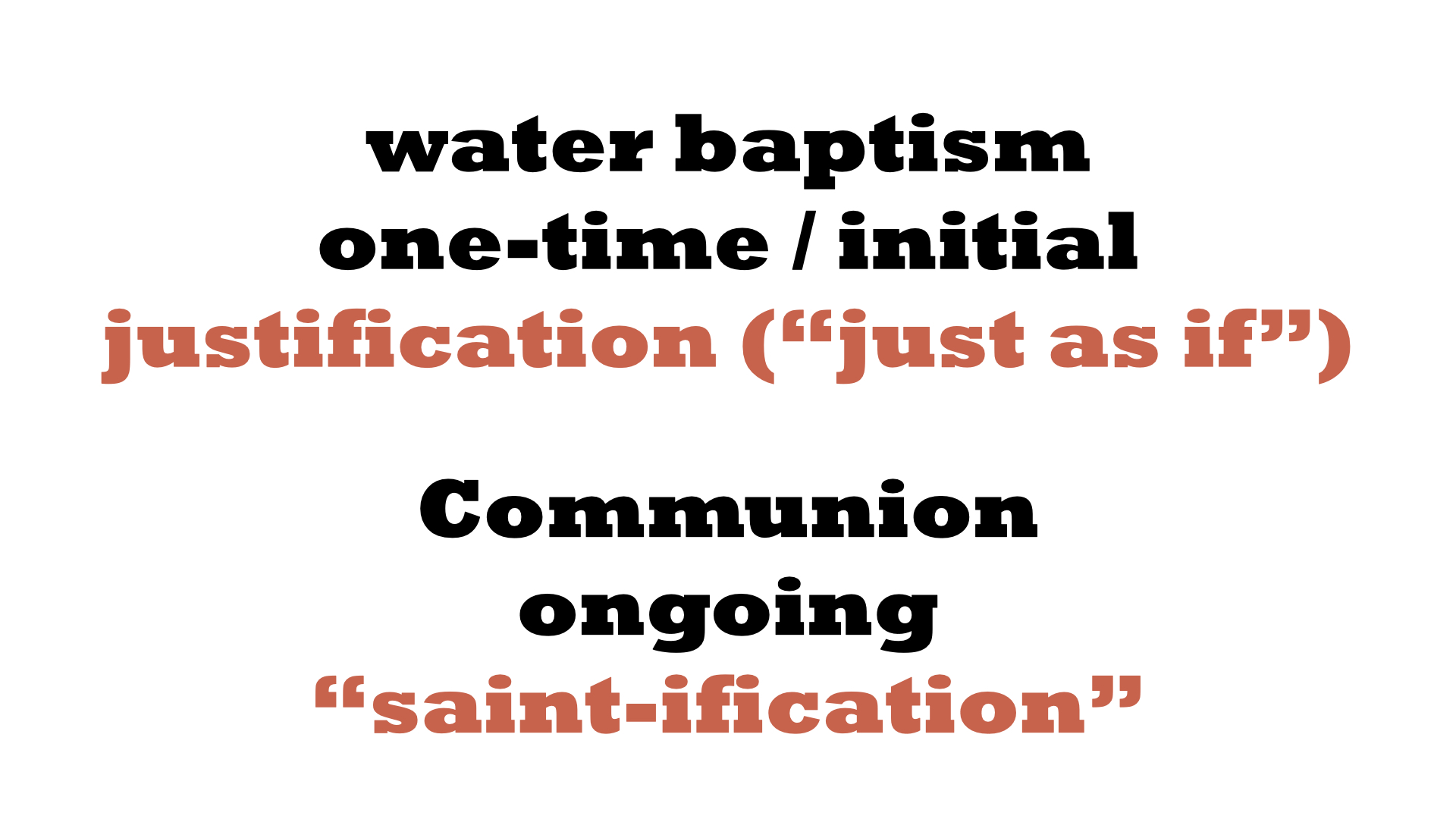
  1. Water baptism is a one-time event, just as our justification (“just as if I’d never sinned”) is a one-time event. This looks back to what Jesus did on the Cross. 
  2. Communion is an ongoing celebration “until He comes,” just as our sanctification (“saint-ification”) is an ongoing process. This looks ahead to what Jesus will complete when we are glorified in Heaven. 

If you’ve missed any of the other messages in our series exploring our foundational beliefs, you can find the complete list by clicking here.

►► Would you please prayerfully consider supporting this ministry? ◀︎◀︎
Two Perfect Prayers

Friends, I recently shared a message in which I talked about how the Holy Spirit helps us in our prayer life, specifically how the Spirit reminds Christians that we have been adopted into God’s family. 

In this clip from that sermon, I talk about the only two times that we can pray perfect prayers, and I make reference to two passages of Scripture: John 14:26 and Romans 8:26-27. Take a listen… 

The Spirit of Truth reminds us of everything God has said to us in His Word, and He helps us turn those promises into prayers (see John 14:26). 

The Spirit of Intercession gives us a prayer language unknown to our logical mind, whereby we pray in a language in which we have no control over the words being spoken (see Romans 8:26-27; 1 Corinthians 12:4-10). 

Only when we pray God’s Words directly back to Him, or when we pray in tongues as the Holy Spirit enables us, are we praying a perfect, unselfish, God-glorifying prayer.

►► Would you please prayerfully consider supporting this ministry? ◀︎◀︎
Thursdays With Spurgeon—The Basis Of Our Hope

This is a weekly series with things I’m reading and pondering from Charles Spurgeon. You can read the original seed thought here, or type “Thursdays With Spurgeon” in the search box to read more entries.

Listen to the podcast of this post by clicking on the player below, and you can also subscribe on iTunes or Spotify.

The Basis Of Our Hope

     If there is no resurrection, apostolic preaching fails. ‘If Christ is not risen, then our preaching is empty’ [1 Corinthians 15:12-22]. … If Christ was not raised, the apostles were false witnesses. When a man bears false witness, he usually has a motive for doing so. What motive had these men? What did they gain by bearing false witness to Christ’s resurrection? It was all loss and no profit to them if He had not risen. They declared in Jerusalem that He had risen from the dead, and straightway men began to haul them to prison and to put them to death! Those of them who survived bore the same testimony. They were so full of the conviction of it that they went into distant countries to tell the story of Jesus and His resurrection from the dead. … They were brought before Roman emperors again and again, and before the proconsuls, and threatened with the most painful of deaths, but not one of them ever withdrew his testimony concerning Christ’s resurrection! …  

     If Christ is not raised, your faith is in vain. If it is in vain, give it up! Do not hold on to a thing that is not true! I would sooner plunge into the water and swim or wade through the river than I would trust myself to a rotten bridge that would break down in the middle. If Christ did not rise, do not trust Him, for such faith is in vain! But if you believe that He did die for you and did rise again for you, then believe in Him, joyfully confident that such a fact as this affords a solid basis for your belief! …  

     If [Jesus] died for you and rose again for you, that is the groundwork of your confidence, and I pray you keep to it. … Go your way and sing, ‘The Lord is risen indeed,’ and be happy as all the birds in the air, till you are, by and by, as happy as the angels in heaven through Jesus Christ our Lord. Amen.

From If There Is No Resurrection 

I shared a series of messages that said, “I know Jesus is A.L.I.V.E. because of…” and each of the letters of ALIVE reminded us of a convincing proof of His resurrection. I would especially direct your attention to two of those letters. 

The “L” stands for lives changed. When someone has a complete about-face life change because of their interaction with Jesus, that is pretty strong proof that their encounter was with a living Savior. 

And the “E” stands for the engagement of Christ’s followers. It’s astounding to see how much of our world’s history has been positively impacted because of the influence of Christians. Their lives had become so radically different because of the life of Jesus in them that they could not help but change the culture around them. 

As I said last in the last Thursdays with Spurgeon installment, always remember that the one with a personal experience is never at the mercy of the one with an argument. If your life has been changed by personal and ongoing interactions with Jesus Christ, don’t keep that good news to yourself. Let that assurance you have be a bright and winsome witness to all who are around you.

“Father, Into Your Hands I Commit My Spirit”

Listen to the podcast of this post by clicking on the player below, and you can also subscribe on Apple or Spotify.

I have some sobering news for you: You are going to die. 

Death is the great equalizer. It comes for the rich and poor, the scholar and the illiterate, all races, all ages, the healthy as well as the sick. Unless you’re still alive when Jesus comes back again, your odds of dying are 1-in-1. 

What happens “on the other side”? What happens after this life is over? Since it seems dark and mysterious to most people, they tend to ignore it until it’s thrust upon them. That’s why I find the dying words of people interesting. Like P.T. Barnum asking, “How were the receipts today at Madison Square Garden?” or W.C. Fields reading a Bible on his deathbed and telling a friend, “I’m looking for a loophole.” 

Or the very last words of Jesus: “Father, into Your hands I commit My spirit.” 

Jesus is steeped in Scripture, so nearly everything He says in His final four declarations come directly from the Psalms, including His final phrase which comes from Psalm 31:5. 

When Jesus broke a three-hour silence with His cry, “My God, My God, why have You forsaken Me,” both Matthew and Mark use the Greek words megas phoné to describe how loudly Jesus spoke. And now with His final words, Luke uses the same megas phoné description. 

Notice in the first megaphone cry Jesus calls on God the All-Powerful Creator. And with His last megaphone declaration, He calls on His Father who is All-Loving. How comforting it is to know that God is both All-Powerful and All-Loving! Not only can He answer our cries, but He delights to answer them! 

The word Jesus uses for “commit” is in the future tense and it means “to entrust as a deposit.” Jesus believed that God was going to do more than just give Him life again, but that He would give life to all who would believe in Him. 

Unlike atheist Bertrand Russell who said, “I would never die for my beliefs because I might be wrong,” Jesus DID die for His beliefs, and by rising from the dead proved He was right in trusting God. 

Job saw an inescapable death for all mankind, but he also foresaw the forgiveness of God (Job 14:5, 16-17). Jesus died once for all mankind and was then resurrected, bringing about the death of death by making forgiveness accessible to anyone (Hebrews 9:27-28; 1 Corinthians 15:19-22). 

We can now have the peace that comes from trusting the only One to Whom we can safely entrust our souls. Because Jesus brought death to death, we can have the same peace when we die that Jesus had when He died. 

With faith in Jesus, you can…

…live today knowing you’re invincible until God calls you home 

…live today full of joy because your home in heaven is secure

…live your very last day in peace because you know to Whom your soul is entrusted 

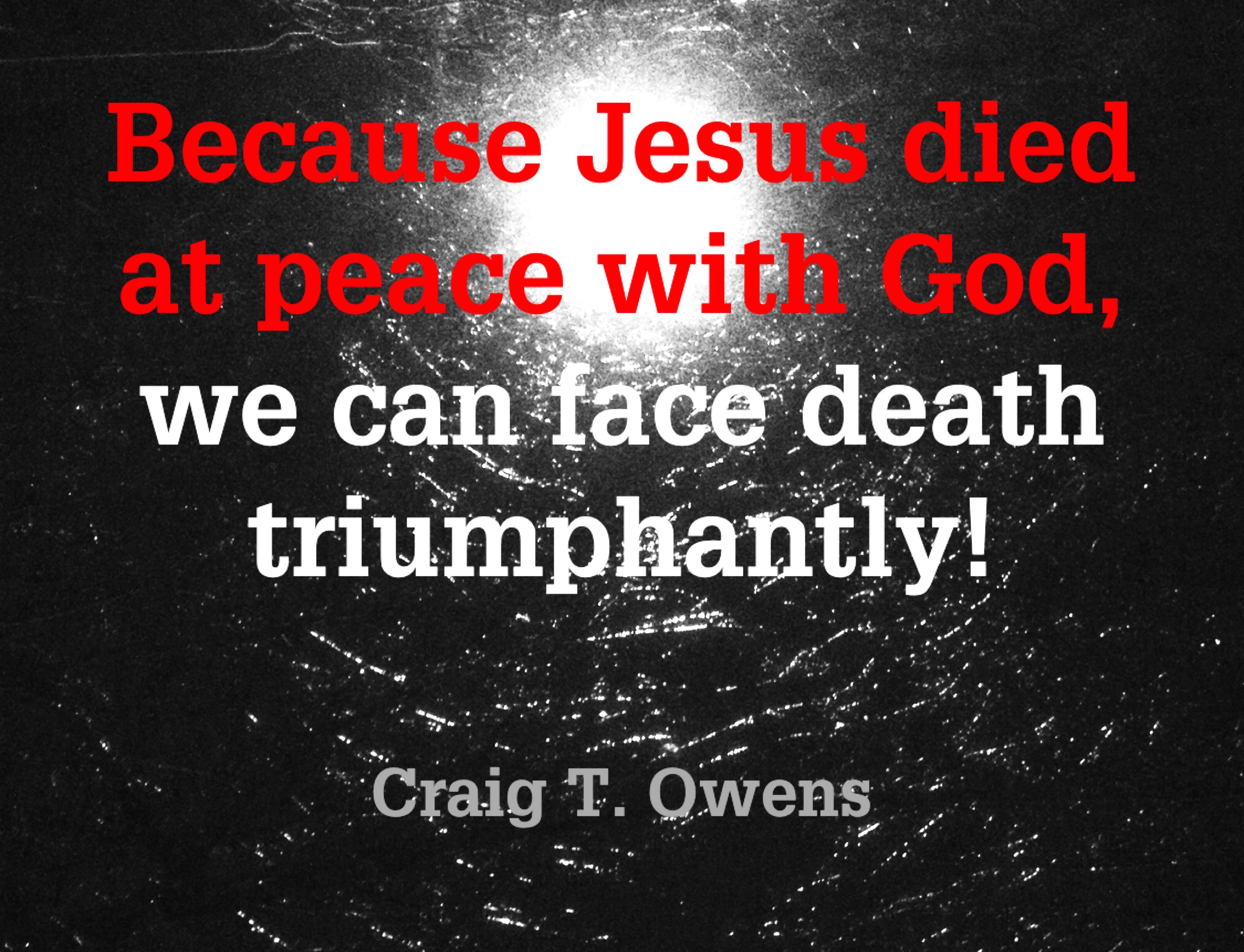
Because Jesus died at peace with God, we can face death triumphantly! 

If you’ve missed any of the messages in our series on the dying declarations of Jesus, you can access the full list by clicking here.

►► Would you please prayerfully consider supporting this ministry? ◀︎◀︎

Prayer (book review)

Listen to the podcast of this post by clicking on the player below, and you can also subscribe on Apple or Spotify.

John Bunyan was in prison for refusing to bow to the dictates of the ecclesiastical rulers of England, but prison could not silence his pen. Before writing The Pilgrim’s Progress, which Bunyan said came to him in a dream, he wrote two manuscripts on prayer which can only have come from a visit to a much more substantial heavenly realm. 

Prayer is actually two books written in the mid-seventeenth century. The first book is A Discourse Touching Prayer in which Bunyan dives deep on the apostle Paul’s desire, “I will pray with my spirit, but I will also pray with my understanding” (1 Corinthians 14:15). The second book is The Saints’ Privilege And Profit, which is a deep dive into the idea of “the throne of grace” (Hebrews 4:15). 

When I say “deep dive” I mean that John Bunyan gives us a masters’ level course on prayer! This is not reading for a new Christian nor for someone who merely utters a superficial prayer here and there. These books are for the mature Christian who is dissatisfied with their current level of prayer and longs for a deeper level of intimacy in communion with our Heavenly Father. 

Let me reiterate that Bunyan wrote these books from jail. Not exactly the idyllic setting for contemplation, nor an environment for pious platitudes that are reserved for the serene time of prayer in a place of comfort. Just imagine: Bunyan uses just one verse from the Bible for each of these works, and then keeps drilling down and down into the immeasurable riches that are found in our relationship with God. 

If you’re ready to take your prayer to an entirely new and more intimate place, spend some time with your Bible and these two short books from John Bunyan. 

►► Would you please prayerfully consider supporting this ministry? ◀︎◀︎