Listen to the podcast of this post by clicking on the player below, and you can also subscribe on Apple, Spotify, or Audible.
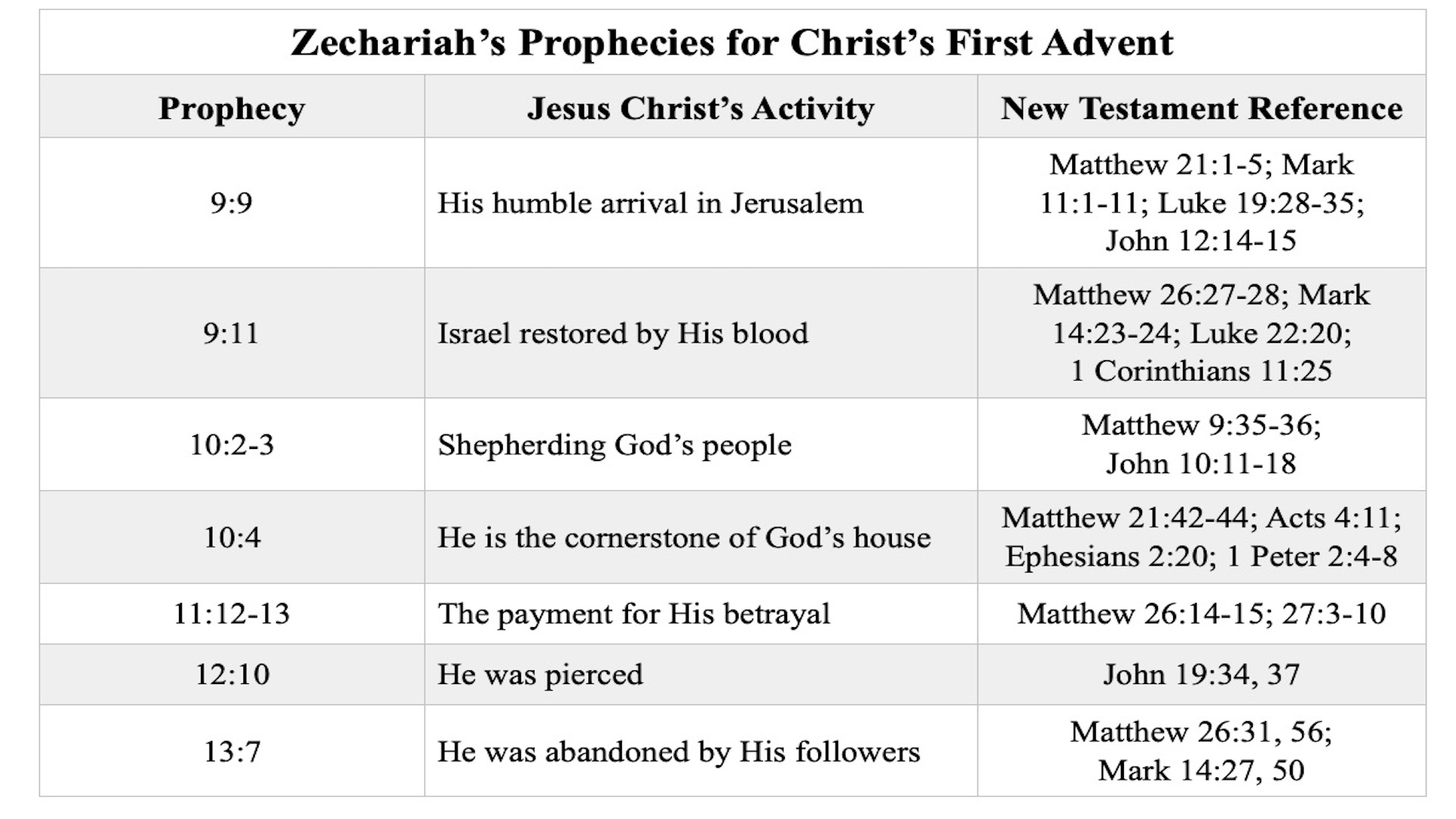
Zechariah pronounces more messianic prophecies than any other biblical writer, with the exception of Isaiah (and he wrote 66 chapters!). These prophecies are fulfilled in Christ’s First Advent, and promised for His Second Advent. Check these out for yourself…
(All of the biblical references for the above chart can be viewed by clicking here.)
(All of the biblical references for the above chart can be viewed by clicking here.)
Why is it so vital that Jesus fulfilled these prophecies?
(1) The historicity of these fulfilled prophecies gives us a confidence for the future.
These fulfilled prophecies assure us that God is sovereign over all history. There are no accidents, and God needs no help from anyone else in fulfilling what He has promised. As a result, no world event—no matter how big it may seem—should be able to rattle us!
(2) The authenticity of what God has done gives us boldness for today.
When God does the miraculous, He authenticates His Word. This authenticity has always made God’s people stand out (see Genesis 41:39). It’s also why people recognized Jesus as the divine Son of God (John 3:2; 9:30-33). So we can live with the boldness to know that what God says He will do, He will do!
(3) The exclusivity of God’s promises and fulfillment of those promises gives us joy for our testimony.
Only Jesus could have done all of this (Luke 24:26-27, 44), so only Jesus can fulfill what is still remaining to be fulfilled! We can have supreme joy in knowing that only Jesus is our hope of salvation (John 14:6; Acts 4:12).
It’s vital that we know this is true so that we can live confident, bold, and joyful!Our confident boldness and our bold joy both glorify God and attract seekers to Him.
Listen to the podcast of this post by clicking on the player below, and you can also subscribe on Apple, Spotify, or Audible.
At the window of my house I looked out through the lattice. I saw among the simple, I noticed among the young men, a youth who lacked judgment. He was going down the street near her corner, walking along in the direction of her house at twilight, as the day was fading, as the dark of night set in. Then out came a woman to meet him, dressed like a prostitute and with crafty intent. …
With persuasive words she led him astray; she seduced him with her smooth talk. All at once he followed her like an ox going to the slaughter…. Many are the victims she has brought down; her slain are a mighty throng. Her house is a highway to the grave, leading down to the chambers of death. (Proverbs 7)
Solomon tells us that we know the place—her corner, her street, her house.
Solomon tells us that we know her goal—she came out to meet him with crafty intent.
Solomon tells us that we know her strategy—speaking lies with a brazen face, speaking words that are seductive, persuasive, smooth, and with an outfit to match the vocabulary.
Solomon tells us we know the outcome—her victim is brought down into the chambers of death.
The Bible never counsels us to fight sexual sin, but it says we should flee sexual sin. Stronger people than me have been sucked into the quicksand of sexual temptation.
It sounds innocent enough (“it’s just a little flirting”). It sounds harmless enough (“there’s no harm in looking”). It sounds tame enough (“who will ever know?”). But her slain are a mighty throng!
Solomon also tells us the way to avoid sexual sin—keep God’s words close by, store up His commands in your heart, keep wise and God-fearing friends around you, and stay away from her corner, her street, her house.
This is not a trivial thing. I’m no match for the silky seduction of sexual temptation! Flee! Run away! Don’t even get close to it! Jesus said that drastic steps may be needed—get rid of your computer, stop watching TV alone, get a new job.
Don’t fight it—flee it! Your best strategy is to stay as far, far away as possible. Let me say it again: You are no match for the crushing power of sexual temptation, so FLEE!
Listen to the podcast of this post by clicking on the player below, and you can also subscribe on Apple, Spotify, or Audible.
My cousin Dick Brogden wrote in his book Missionary God, Missionary Bible, “Since good news must often indeed rectify bad news, the gospel message is both warning and invitation.” This is so appropriate when reading the prophet Zephaniah: He wanted to share some really, really good news, but first, he must make us confront the really bad news.
Zephaniah prophesied near the end of Judah’s decline toward exile. He saw the great revival in King Josiah’s day, and then watched his fellow Israelites once again turn their backs on God. If Jeremiah spoke to faithless Israelites, and Habakkuk spoke to faithful Israelites, then Zephaniah spoke to fake Israelites—those who appeared to be religious, but whose hearts were not actually devoted to God.
This whole book looks backward in history and forward to soon-to-be-fulfilled prophecy. Most of the time when God speaks, He is asking us to look forward to what is unavoidably coming. Zephaniah then takes God’s words as a call for us to apply them to our lives today.
In the first chapter, God’s forward-look is a warning of the judgment that most assuredly is coming. Built into His warning are two backward looks to the law of Deuteronomy (vv. 13 and 15 look back to Deuteronomy 28:29-30).
Zephaniah uses this warning as a wake-up call for us, telling us to “seek the Lord” and “seek righteousness, seek humility” before the day of God’s judgment comes (2:1-3).
The fact that God’s judgment would fall on godless people shouldn’t surprise anyone (2:4-15), but when Zephaniah says, “Woe to the city of oppressors” (3:1), he’s talking to the people of Judah! Zephaniah addresses his warning to the fake Israelites, the hypocritical people—those claiming God’s name but not God’s nature.
The apostle Paul sounds a similar warning to New Testament Christians:
Now these things occurred as examples to keep us from setting our hearts on evil things as they did. Do not be idolaters, as some of them were; as it is written: ‘The people sat down to eat and drink and got up to indulge in revelry.’ We should not commit sexual immorality, as some of them did—and in one day twenty-three thousand of them died. We should not test Christ,as some of them did—and were killed by snakes. And do not grumble, as some of them did—and were killed by the destroying angel. These things happened to them as examples and were written down as warnings for us, on whom the culmination of the ages has come. So, if you think you are standing firm, be careful that you don’t fall! (1 Corinthians 10:6-14)
The really bad news is ALL of us have sinned and we have ALL fallen short of God’s righteous standard. As a result, ALL of us would stand guilty before God on Judgment Day.
But the really, really good news is that Jesus allowed our penalty to fall on Him instead! So if we put our faith in Jesus, God’s judgment will be appeased in Christ instead of on us!
Christians, then, take the name of Jesus Christ, but we need to make sure we also take His nature.Fake—hypocritical—Christians are those who are “Christian” in name only.
I like the way Eugene Peterson paraphrased part of the 1 Corinthians passage above—These are all warning markers—danger!—in our history books, written down so that we don’t repeat their mistakes. Our positions in the story are parallel—they at the beginning, we at the end—and we are just as capable of messing it up as they were. Don’t be so naive and self-confident. You’re not exempt. You could fall flat on your face as easily as anyone else. Forget about self-confidence; it’s useless. Cultivate God-confidence. (The Message)
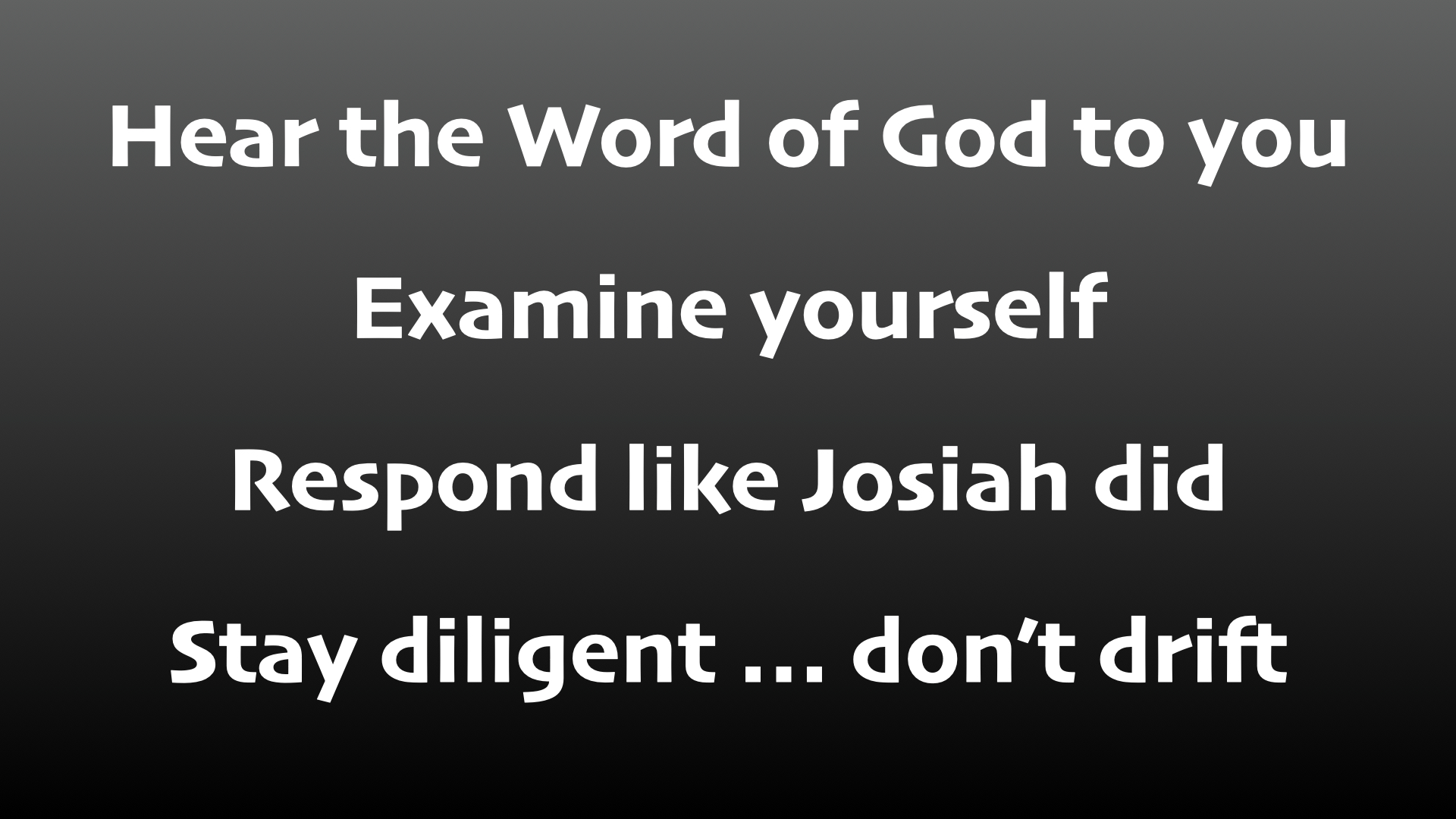
As we read those words, “So if you think you are standing firm, be careful that you don’t fall,” I’d like to suggest four action steps:
Hear the Word of God to YOU—not your neighbor—but you personally.
After you hear the Word, examine yourself to see if you are truly living in God’s nature and not just using His name.
Respond like King Josiah did when he heard God’s Word: He made a public commitment “to follow the Lord and keep His commands, statutes and decrees with ALL his heart and ALL his soul” (2 Kings 23:3).
Stay diligent—Hebrews 2:1 tells us, “We must pay the most careful attention, therefore, to what we have heard, so that we do not drift away.”
Don’t delay—the Day of the Lord is closer today than it’s ever been before! Pay attention to the really bad news that Judgment Day is coming, but then make certain you are standing in the nature of Jesus Christ on that day so that God’s judgment will pass over you.
This is a weekly series with things I’m reading and pondering from Charles Spurgeon. You can read the original seed thought here, or type “Thursdays With Spurgeon” in the search box to read more entries.
Listen to the podcast of this post by clicking on the player below, and you can also subscribe on iTunes or Spotify.
Secure Forever
Our first parent, Adam, lived in the midst of happiness and peace in the garden. Unlike ourselves he had no depravity, no bias toward evil. God made him upright. He was perfectly pure, and it was in his own will whether he should sin or not. The balance hung evenly in his hands.
But have you forgotten how on that sad day he took of the forbidden fruit and ate and thereby cursed himself and all of us! … When you recollect the paradise he left, the happiness and peace that have forever passed away through his sin, do you not hear the voice that says to you, as a depraved and fallen creature, ‘Therefore let him who thinks he stands take heed lest he fall’ (1 Corinthians 10:12)? Conscious of your own weakness as compared with your parent Adam, you are ready to cry out, ‘O my God, how can I stand where Adam falls?’
But here comes the joyous thought that Christ, who has begun with you, will never cease till He has perfected you! Can you help singing with Jude, ‘Now to Him who is able to keep us from stumbling’?”
From Christians Kept In Time And Glorified In Eternity
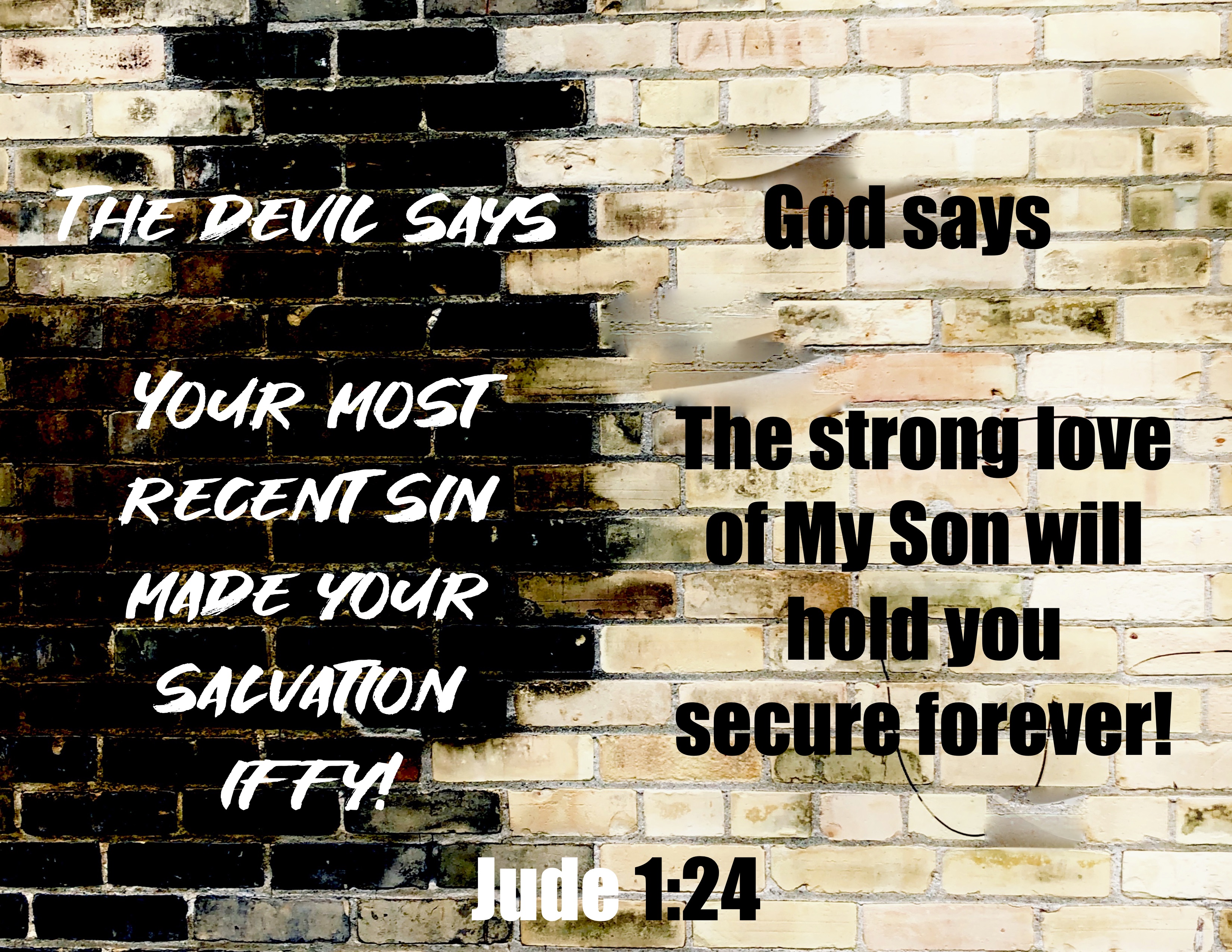
When the devil says, “Your most recent sin made your salvation iffy,” you remind him what God says: “The strong love of My Son will hold you secure forever!”
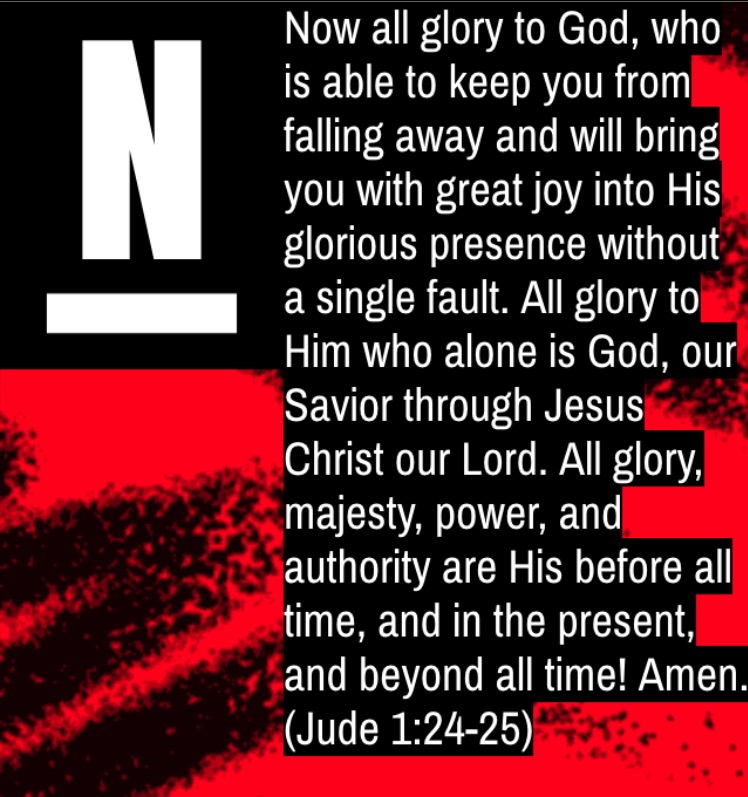
To Him who is able to keep you from stumbling and to present you before His glorious presence without fault and with great joy—to the only God our Savior be glory, majesty, power and authority, through Jesus Christ our Lord, before all ages, now and forevermore! Amen. (Jude 1:24-25)
Listen to the podcast of this post by clicking on the player below, and you can also subscribe on Apple, Spotify, or Audible.
In the Foreword to my book Shepherd Leadership: The Metrics That Really Matter, Dick Brogden observes, “God plucked David from the sheepfold. God chose a sheep to be a shepherd. And though we all are stupid sheep, when God plucks us out of obscurity to serve others, we can have the humble confidence for as long as we are asked to lead that God has chosen us. That confidence both faithfully drives us to our knees and fearlessly propels us against our giants. It is good to be a sheep; it is good to be an under-shepherd. Just remember you are stupid, chosen by the Wise One, and as long as you serve as a shepherd, you and your flock will be safe.”
How true it is that all of us are sheep. The role of the shepherd is to care for the sheep and create a healthy environment for them. The role of healthy sheep is to reproduce more sheep. In this, both shepherds and sheep are ministers—we all minister to those God has placed around us.
God calls all Christians to be ministers. The Church is the sheepfold that equips us, but then we must go out to minister in a way that will bring lost sheep to a personal relationship with Jesus.
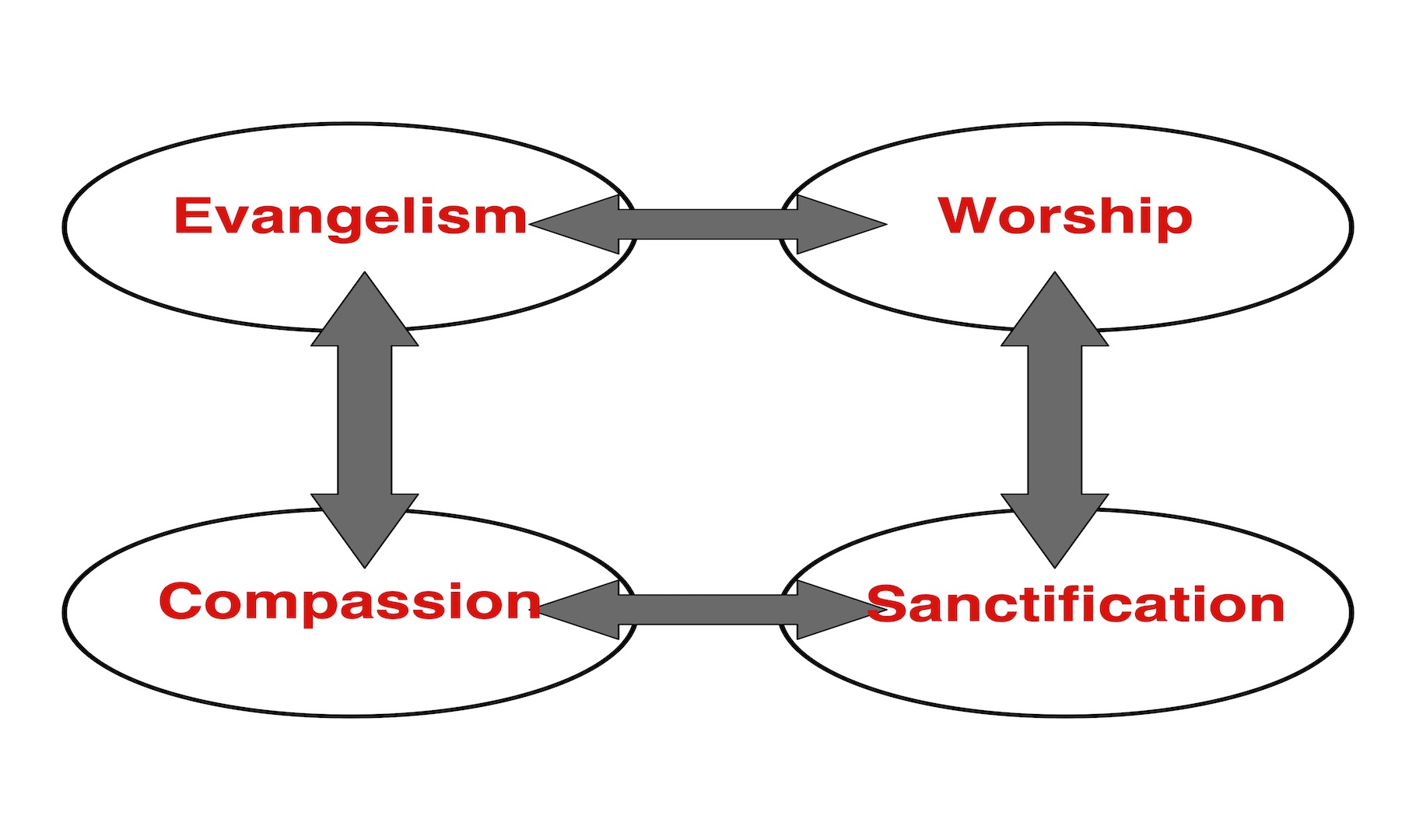
Our foundational truth statement about church ministry says: A divinely called and scripturally ordained ministry has been provided by our Lord for the fourfold purpose of leading the Church in evangelism, worship, sanctification, and compassion.
(1) Evangelism. When we looked at the foundational belief about the Church, we noted that it’s not either-or—evangelism or discipleship—but it’s both-and. Christians are being the Church when they are intentionally living in a way that makes Jesus known (Matthew 10:1, 7-8; 28:18-20).
(3) Sanctification. Remember that we are all in-process of becoming saints (I like to remember this by calling it saint-ification). We need each other to do this, which is why God gives gifts to bring out Christ-like maturity in us (Ephesians 4:1-7, 11-16).
So here are two important questions we need to ask ourselves: (1) Am I doing quality work? (2) Am I faithfully doing my work?
To help answer those questions, I like this thought from Leonard Sweet’s book I Am A Follower: “The most important metrics we must rely on, the crucial ‘deliverables’ we can present, must focus on the newly formed lives of the disciples we are making, the followers who are following Christ into a place of serving Him by serving others. The most important measure of our faithfulness to Christ must be the extent of transformation into the living image of Christ Himself. … The quantifiable fruit of our church is not found in the number of people we can gather on a weekly basis. What counts is what is happening in the lives of those who have gathered.”
These are questions we should all ask the Holy Spirit to reveal to us:
What is happening in my life?
Am I telling others about Jesus?
Am I worshipping God so consistently that everyone can see it?
Am I maturating as a saint and am I helping other saints mature?
Is my faith seen in my compassionate actions?
Our individual answers to those questions will determine the success of our individual churches, which will ultimately determine the effectiveness of the global Church of Jesus Christ. I hope you will take some time to consider these questions for yourself.
Listen to the podcast of this post by clicking on the player below, and you can also subscribe on Apple, Spotify, or Audible.
Why do Christians say things like, “Let’s go to church” or “Let’s go meet with God”?
Do we forget that Jesus said He would never leave us, or that He sent the Holy Spirit to be our constant Companion, or that our very heart is the temple of God’s presence (Matthew 28:20; John 14:16; 1 Corinthians 3:16)? We are naturally self-focused creatures. It takes discipline on our part to keep reminding and re-reminding ourselves that God is always with us.
Psalm 84 and its two Selahs is one way of re-reminding ourselves of God’s abiding presence. The Selahs are reminders to pause and consider, “Where am I?” and to know that the answer can always be, “Surely I am in God’s presence!”
This psalm is divided into three 4-verse stanzas. Stanzas 1 and 2 end with the call to Selah, and all three stanzas feature a powerful name for God: LORD Almighty. When we see LORD in all capital letters, that is God’s covenant name: Yahweh or Jehovah, which means that He is the “I AM that I AM.” Almighty signifies that He is the invincible, un-defeatable Captain of angel armies.
In these two combined titles, we have the personal intimate God of love and the unstoppable God of limitless power! If He were just the God of love, we may not be able to trust His power. If He were just the God of power, we may not be able to approach Him. He is the All-Loving, Ever-Approachable Power.
Another important recurring theme in Psalm 84 is the word blessed. It’s used three times in this psalm, more than in any other single psalm. This word means God’s unmerited favor, and the word either begins or ends each of the three stanzas.
In stanza 1 (vv. 1-4), twice we have that combined title of LORD Almighty. But we must always remember that our God is not distant and unapproachable, but the sons of Korah call Him “my King” and “my God.” At the end of this first stanza, we are invited to Selah—a pause to praise our glorious King!
Stanza 2 (vv. 5-8) begins with that reminder that we are blessed. The psalmists tell us that God’s blessings flow even in my Valley of Baca (or weeping). With God’s presence surrounding me, I can go from “strength to strength”because the LORD Almighty hears my prayer and responds to my prayer! So at the end of this stanza, we are again invited to Selah—this time it’s a pause to pray to our listening God.
In stanza 3 (vv. 9-12), another important word is featured that reminds us that our God is not a stingy King, but One who delights in His children and wants to lavishes them with His blessings: the word is favor. We read, “look with favor on Your anointed one” and “the LORD bestows favor and honor; no good thing does He withhold from those whose walk is blameless.” God’s favorable blessings flow toward us as eternally as He exists!
This psalm is circular: it begins as it ends, so it invites us to continue to praise, continue to pray, and continue to abide in His presence. We’re called not just to know about God’s presence, but to rejoice in His presence.
It’s one thing to know about God’s omnipresence, but it’s an entirely different thing to abide in God’s omnipresence!
This isn’t something that happens overnight. Brother Lawrence reminds us that this is a progressive revelation for Christians: “One does not become holy all at once. … The more one knows Him, the more one desires to know Him. And as knowledge is commonly the measure of love, the deeper and more extensive our knowledge shall be, the greater will be our love: and if our love of God were great we should love Him equally in pains and pleasures.”
I encourage you to Selah frequently so that you can move from mere head knowledge of God’s presence to becoming intimately aware of His closeness!
This is a weekly series with things I’m reading and pondering from Charles Spurgeon. You can read the original seed thought here, or type “Thursdays With Spurgeon” in the search box to read more entries.
Listen to the podcast of this post by clicking on the player below, and you can also subscribe on iTunes or Spotify.
God Is The Great Worker
I planted, Apollos watered, but God gave the increase. So then neither he who plants is anything, nor he who waters, but God who gives the increase. Now he who plants and he who waters are one, and each one will receive his own reward according to his own labor. For we are God’s fellow workers; you are God’s field, you are God’s building. (1 Corinthians 3:6-9)
God Himself is the Great Worker. He may use what laborers He pleases, but the increase comes only from Him. Brothers, you know it is so in natural things—the most skillful farmer cannot make the wheat germinate, grow, and ripen. … And in the spiritual farm it is even more so, for what can man do in this business? … We can tell out the truth of God, but to apply the truth to the heart and conscience is quite another thing. …
Well said our Lord, ‘Without Me you can do nothing’ (John 15:5). What is the effect of all this upon your minds? Briefly I would draw certain practical lessons out of this important truth of God. (1) The first is, if the whole farm of the church belongs exclusively to the great Master Worker and the laborers are worth nothing without Him, let this promote unity among all whom He employs. …
(2) Next, notice that this fact ennobles everybody who labors in God’s husbandry. …
(3) But lastly, how this should drive us to our knees! Since we are nothing without God, let us cry mightily to Him for help in this, our holy service!
From Farm Laborers
I learned long ago of both the confidence and the humility in reminding myself that God chose me to work in His field. Here’s how I describe that in my book Shepherd Leadership: The Metrics That Really Matter—
There is nothing wrong about aspiring to a leadership position. The apostle Paul wrote to his young protégé Timothy, “This is a trustworthy saying: ‘If someone aspires to be a church leader, he desires an honorable position’” (1 Timothy 3:1 nlt). Yet this desire needs to be tempered by Jeremiah’s words to his scribe Baruch, “Should you then seek great things for yourself? Do not seek them” (Jeremiah 45:5). Taken together, a shepherd leader’s passion for greater leadership should be to gain greater things not for himself but for others.
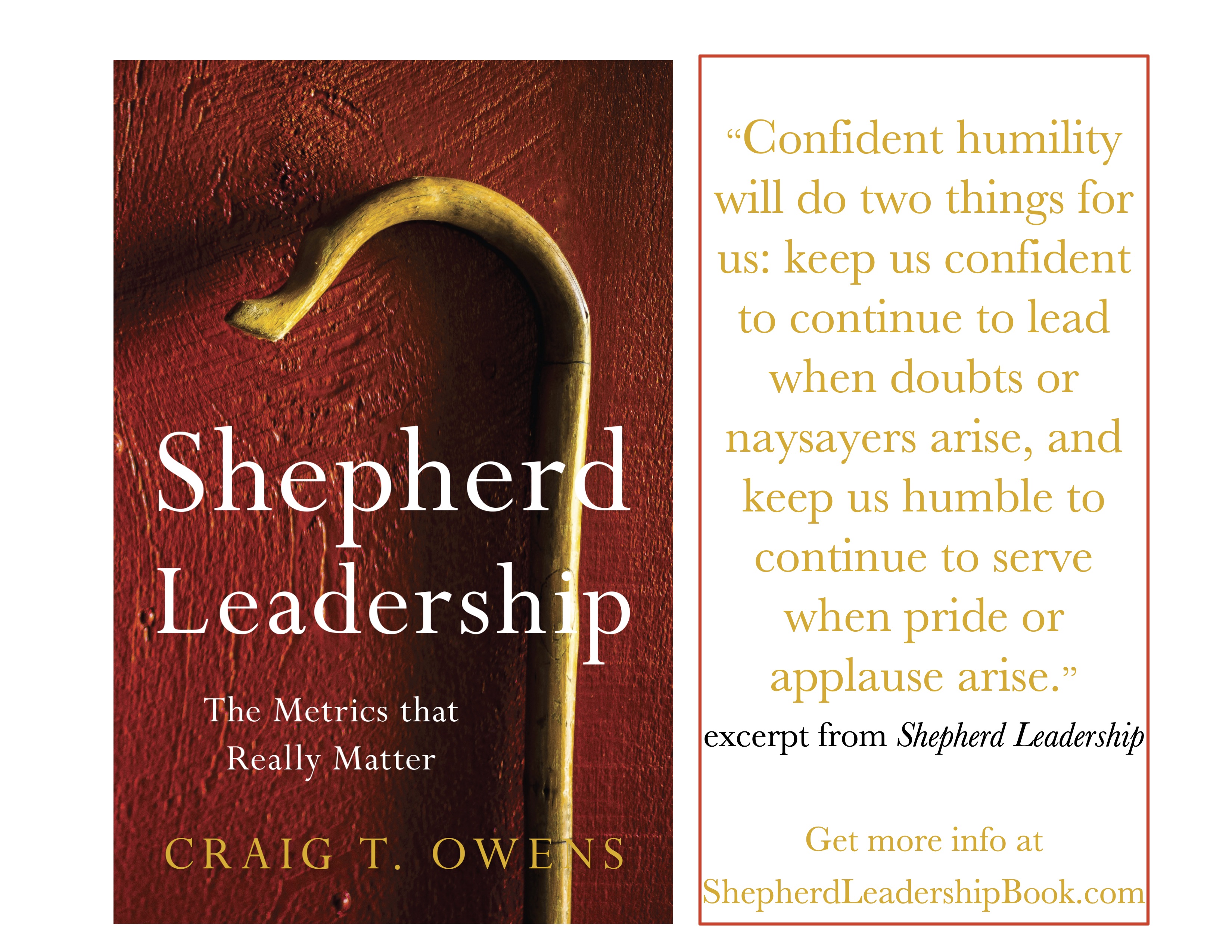
Shepherd leaders need to remind themselves frequently of this simple statement: God chose me. The confidence comes from remembering “God chose.” If God has chosen me, then He has also equipped me. He foresaw the needs of this organization, and He has prepared me to step into this role for such a time as this. The humility comes from remembering “God chose me.” Who am I that God would think so highly of me? Of all the people on Earth that God could have placed here, why did He pick me? This confident humility will do two things for us: keep us confident to continue to lead when doubts or naysayers arise, and keep us humble to continue to serve people when pride or applause arises. (except from chapter 2 “Secure To Serve”)
Listen to the podcast of this post by clicking on the player below, and you can also subscribe on Apple, Spotify, or Audible.
When you’ve been at a church service have you ever asked yourself, “What are we doing here? What exactly is ‘church’? What are we supposed to be doing?”
Some people think church is saints going out to tell people about Jesus, and some people think church is saints coming together to hear about Jesus (see Matthew 28:19-20; 1 Corinthians 11:18). I think this is an either-or trap.
I think a better way of looking at this is “both-and” and “so that”: BOTH coming to a gathering of believers so that we can be equipped to go out AND going out to tell people about Jesus so that we can bring new disciples into the church.
Our foundational truth statement says: The Church is the Body of Christ, the habitation of God through the Spirit, with divine appointments for the fulfillment of her great commission. Each believer, born of the Spirit, is an integral part of the General Assembly and Church of the Firstborn, which are written in heaven.
To help us see where we play a vital role in all of this, the Bible gives us three pictures of the church:
All of these pictures speak of multiple parts making up one unified, healthy whole. Remove any part or any function, and the whole thing is diminished. All of these pictures also speak of intentionality. No one becomes healthy by accident, or builds a sound structure by accident, or enjoys a fulfilling marriage by accident. Health, soundness, and fulfillment all result from being intentional about our choices and interactions.
I believe these three pictures also help us see what the church isn’t and is.
A healthy church isn’t about numbers
A healthy church isn’t about the day of the week that we meet
The first Church in the New Testament showed us how they followed the example of Jesus. Before trying to fulfill the Great Commission of going into all the world, they first obeyed the directive from Jesus to stay in Jerusalem until they were empowered by the Holy Spirit. Then we see an intentionality, and an empowerment, and a complete reliance on the Holy Spirit in everything they undertook from that point on.
It’s not about going to “my church” or going to “your church.” It’s about being the Church (with a capital “C”)—the Body of of Christ, the Building of Christ, the Bride of Christ.
Bottom line:
Christians are being the Church when they are intentionally living in a way that makes Jesus known.
This is a weekly series with things I’m reading and pondering from Charles Spurgeon. You can read the original seed thought here, or type “Thursdays With Spurgeon” in the search box to read more entries.
Listen to the podcast of this post by clicking on the player below, and you can also subscribe on iTunes or Spotify.
A Word To Preachers
I planted, Apollos watered, but God gave the increase. So then neither he who plants is anything, nor he who waters, but God who gives the increase. Now he who plants and he who waters are one, and each one will receive his own reward according to his own labor. For we are God’s fellow workers; you are God’s field, you are God’s building. (1 Corinthians 3:6-9)
Paul is a laborer, Apollos is a laborer, Cephas is a laborer, but not so much as a foot of the farm is Paul’s, nor does a single parcel of land belong to Apollos, or the smallest allotment to Cephas. ‘You are Christ’s, and Christ is God’s’ (1 Corinthians 3:23). The fact is that in this case the laborers belong to the land and not the land to the laborers, ‘for all things are yours: whether Paul or Apollos or Cephas’ (3:21-22). …
Brothers, a laborer may work very hard at a whim of his own and waste his labor, but this is folly! Some discourses do a little more than show the difference between a Tweedledum and Tweedledee, and what is the use of that? …
All God’s laborers must go to Him for their seed, or else they will scatter tares. All good seed comes out of God’s granary. If we preach, it must be the true word of God or nothing can come of it. … A sermon is vain talk and dreary word spinning unless the Holy Spirit enlivens it. …
Here we have mention of a personal service and a personal reward: ‘Each one will receive his own reward according to his own labor.’ The reward is proportionate, not to the success, but to the labor! Many discouraged workers may be comforted with that expression. You are not to be paid by results, but by endeavors.
From Farm Laborers
My dear preacher friend, God sees you. He has placed you in the field where He needs you to be, and He has given you the skills you need to have to labor for Him. Never doubt that!
You may be the one breaking up hard ground, or the one sowing seed, or the one watering, or the one bringing in the harvest. Wherever you are and whatever you are doing, rely on the strength God gives you. He will illuminate His Word to your heart first so that you can share a timely word with those under your care. Then He will send the Holy Spirit to enliven all that you preach.
God has given you the tools and skills, now you must diligently supply the effort. Don’t become discouraged by what seems to be a lack of “success.” As God tells us through Paul, He will reward your faithful labor in His field.
My book Shepherd Leadership: The Metrics That Really Matter elaborates on this point. The thoughts in this book will remove from you the burden of trying to live up to any unbiblical metric of “success” in your ministry. I hope you will get a copy of this book! Check out ShepherdLeadershipBook.com for more details.
This is a weekly series with things I’m reading and pondering from Charles Spurgeon. You can read the original seed thought here, or type “Thursdays With Spurgeon” in the search box to read more entries.
Listen to the podcast of this post by clicking on the player below, and you can also subscribe on iTunes or Spotify.
We Are All Laborers
I planted, Apollos watered, but God gave the increase. So then neither he who plants is anything, nor he who waters, but God who gives the increase. Now he who plants and he who waters are one, and each one will receive his own reward according to his own labor. For we are God’s fellow workers; you are God’s field, you are God’s building. (1 Corinthians 3:6-9)
Remember that the ablest ministers, the most powerful evangelists, the most profound teachers are, after all, nothing but laborers together with God. Let your mind be set upon the Master and not upon the servants! Do not say, ‘We are for this man because he plants,’ or ‘We are for the other because he waters,’ or ‘We are a third party for nobody at all.’ But let us join in ascribing all honor and praise to God, Who works all our works in us, since every good gift and every perfect gift is from above and comes down from the Father of lights, to Whom be glory world without end! …
The church is God’s farm.… In the margin of the Revised Version, we read, ‘You are God’s tilled ground….’
We begin by considering that the church is God’s farm. The Lord has made the church of His sovereign choice to be His own by purchase, having paid an immense price for it. ‘For the Lord’s portion is His people; Jacob is the lot of His inheritance’ (Deuteronomy 32:9). Because the Lord’s portion was under mortgage, therefore the only begotten Son laid down His life as the purchase price and redeemed His people to be the Lord’s portion forever and ever. Henceforth it is said to all believers, ‘You are not your own. For you were bought at a price’ (1 Corinthians 6:19-20). Every acre of God’s farm cost the Savior bloody sweat, yes, the blood of His heart! He loved us and gave Himself for us; that is the price He paid! …
The Master’s commission is not ‘sit still and see the Spirit of God convert the nations,’ but ‘Go into all the world and preach the gospel to every creature’ (Mark 16:15).
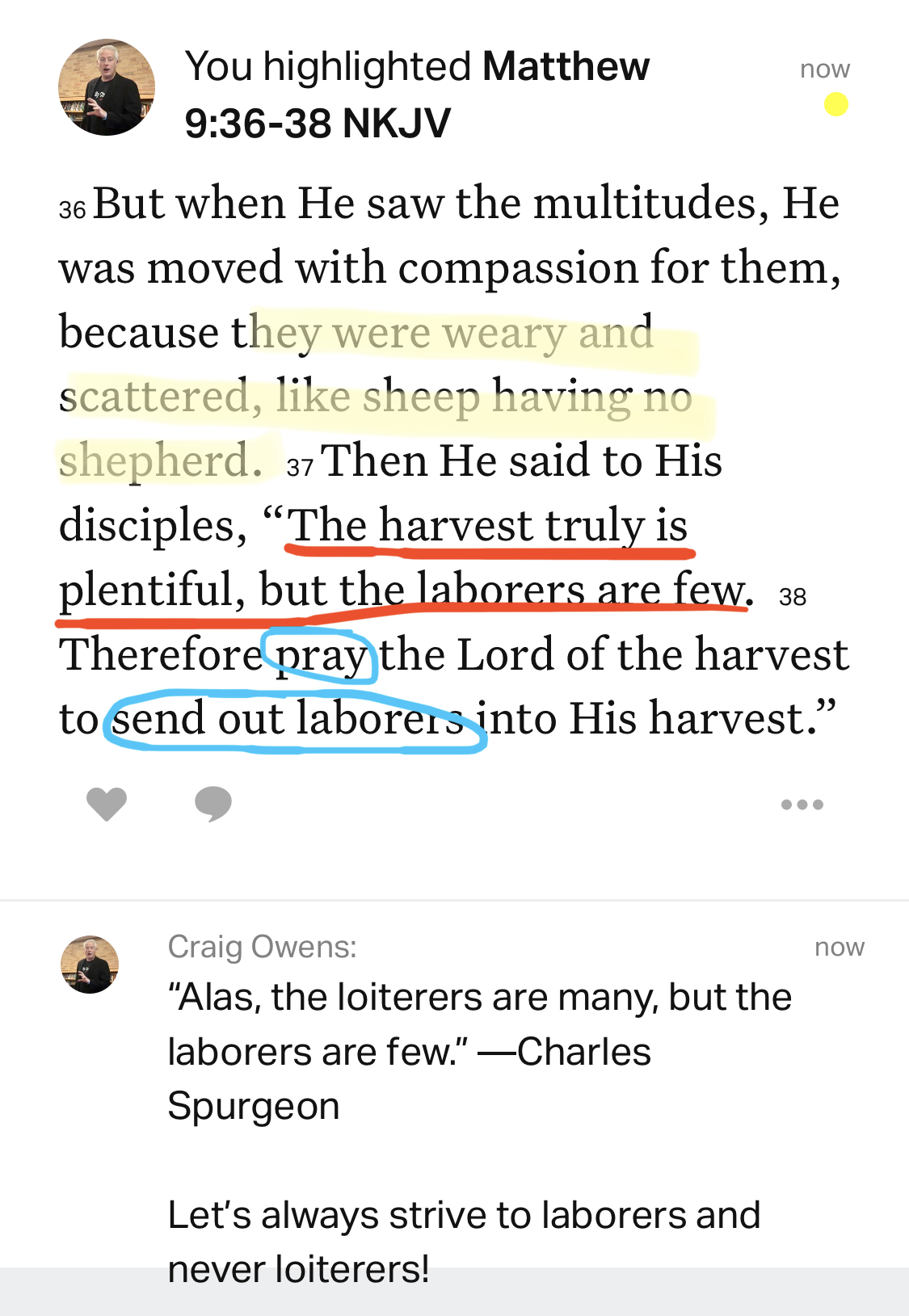
Alas, the loiterers are many, but the laborers are few.
From Farm Laborers
It’s sad how much time Christians spend on non-essential things. We church shop to find the pastor or the music that suits our tastes; we claim ownership over ministries and only allow others to work under us, but never alongside us; or we attend church and give our tithes and offerings and expect the pastor to do all of the ministry.
All of this is not only unbiblical but none of this is focused on eternity. And as C.S. Lewis said, “All that is not eternal is eternally useless.”
Jesus paid too high a price for us to keep the good news to ourselves, or claim that our ministry is superior to someone else’s, or to simply loiter and watch others do the work. All Christians are laborers in God’s field. God made an invaluable investment in the work Jesus did on the Cross, so He wants to see a return on His investment that will last for all eternity.
It’s time for us to stop squabbling, stop protecting our turf, and stop loitering. We must get to the work because the time is short and the Master is looking for eternal results.



 (All of the biblical references for the above chart can be viewed by clicking here.)
 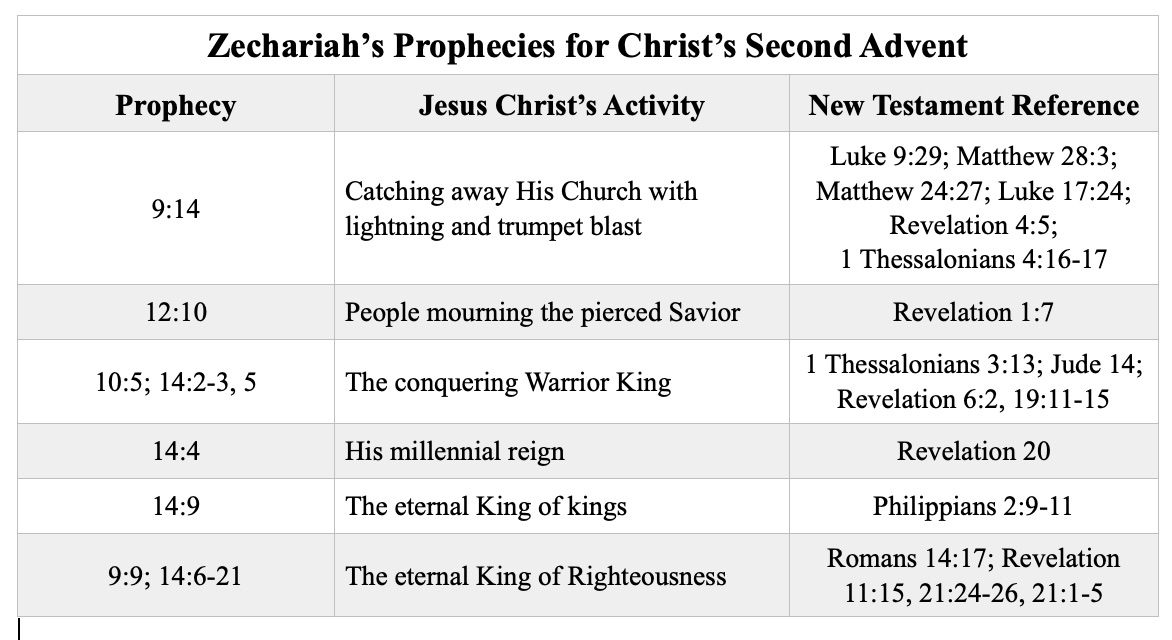 (All of the biblical references for the above chart can be viewed by clicking here.)
 These fulfilled prophecies assure us that God is sovereign over all history. There are no accidents, and God needs no help from anyone else in fulfilling what He has promised. As a result, no world event—no matter how big it may seem—should be able to rattle us!