
Focus On Today

Listen to the podcast of this post by clicking on the player below, and you can also subscribe on AppleSpotify, or Audible. 

Without a doubt, Jesus had the most robust mental health of anyone who has ever walked planet Earth! Dr. Luke, a trained physician, captures this in just one verse (Luke 2:52) where he talks about how Jesus grew in a wholly healthy way, and Luke lists Christ’s mental health as the first priority. 

I’ve already shared five strategies that Christians can employ to enhance their mental health, and I encourage you to check them out here. 

Let me share a sixth strategy with you. 

I’m sure there have been plenty of times when someone asks you about something you like or dislike or why you do something the way you do, you probably don’t tell them the facts but you tell them a story. We have a story for everything we like, everything we do, and everything we avoid. 

It’s good to rehearse these stories and to really listen to them. If we don’t really listen to them, we cannot learn from them; if we don’t learn from them, we rob ourselves of robust mental health. 

From some of our stories, there is a regret that comes from three enemies. These enemies are all tied to our stories about our past and they are would’ve, could’ve, and should’ve—“If only I would’ve…” and “Things would be different today if I could’ve…” and “I should’ve known….”

One of the ways we need to talk back to those thoughts is like this, “I only know the would’ve, could’ve, and should’ve now because I’m older and more experienced. I didn’t know those things in the past so it was impossible for me to have done something differently.” Even the apostle Paul noted, “When I was a child, I talked like a child, I thought like a child, I reasoned like a child. When I became a man, I put the ways of childhood behind me” (1 Corinthians 13:11). 

If we don’t talk back to those regrets of yesterday, we will have doubts about today: Will I make another mistake today? Do I have what it takes to meet today’s challenges? What will others think of me if I mess up? If we don’t address those doubts we have today, that will cause us worry and stress about tomorrow. 

Regret … doubt … worry … stress. Those don’t really sound like words that contribute to positive mental health, do they? 

Here’s the thing we need to remember—Learning from our yesterdays is healthy, but trying to relive our yesterdays is both unhealthy and unproductive! 

Dr. William Osler said, “If the load of tomorrow is added to that of yesterday and carried today, it will make the strongest falter.” 

Four times in just ten verses, Jesus told His followers not to worry about tomorrow (Matthew 6:25-34). He ties that worry about tomorrow to having little faith. That lack of faith comes from our doubts, and those doubts come from our past regrets. 

T.G.I.F.—thank God it’s Friday!—is an escapism. It’s not wanting to deal with the regrets, doubts, and worry by trying to push them to some distant time. It doesn’t allow us to really concentrate on today. The Bible constantly brings us back to the present. 

  • Today is used 203 times in the NIV Bible 
  • Tomorrow is mentioned 56 times
  • Yesterday is only used 8 times 

Jesus taught us to pray, “Give us today our daily bread” (Matthew 6:11) so that we won’t let past regrets spiral downward into daily doubts and then anxiety about tomorrow. Elizabeth Elliot wisely counseled, “One reason we are so harried and hurried is that we make yesterday and tomorrow our business, when all that legitimately concerns us is today.” 

Christians that want to be mentally healthy should continually replace a T.G.I.F. mindset with T.G.I.T.—thank God it’s today! 

Taking a line from Joshua who said, “Choose for yourselves this day whom you will serve” (Joshua 24:15), here are four things we need to choose to remember each day. 

  1. Choose to remember that God uses all things—even our would’ve, could’ve, and should’ves—for our good and for His glory (Romans 8:28). 
  2. Choose to forget those old, self-limiting, stress-causing stories (Philippians 3:13).
  3. Choose to believe that God is doing something new—something I never could have planned (Isaiah 43:18-19). 
  4. Choose to believe that God can help you tell a new story about your past (Genesis 41:51). 

(Check out all of these verses here.) 

You have to choose each day to say “Thank God it’s today! Thank God that I’m not who I was yesterday! Thank God that He is using my would’ve-could’ve-should’ve moments from yesterday to prepare me for today! Thank God that He is teaching me a new story!” 

If you’ve missed any of the previous messages in our series on a Christian’s mental health, you can find them all here. 

►► Would you please prayerfully consider supporting this ministry? My Patreon supporters get behind-the-scenes access to exclusive materials. ◀︎◀︎

Links & Quotes

My courage and my success are directly tied to my obedience of God’s Word. The life of Joshua is just one example. Check out this full message here. I have lots of new content every week, which you can check out on my YouTube channel.

Donald Fairbairn, Professor of Early Christianity at Gordon-Conwell Theological Seminary, presents a brief history of the great Persian persecution of the 4th-century Christians.

“Christ is more of an Artist than the artists. He works in the living spirit and the living flesh; He makes men instead of statues.” —Vincent van Gogh

Bryan Windel echoes something I’ve frequently said on this blog, “The Bible is rooted in real history. This is why archaeology is such a valuable tool; it helps us uncover the biblical world and provides us with important background knowledge about the people, places, and events described in the text.” Bryan was a part of a dig at Shiloh (where Joshua and Samuel play key roles) and he shares some of his observations and discoveries.

“I trained four years to run nine seconds, and people give up when they don’t see results in two months.” —Usain Bolt

“Those who have turned the tide of history have turned it by means of prayer. This should be the motto of every follower of Jesus Christ. Never stop praying, no matter how dark and hopeless it may seem.” —Billy Graham

I love these stories of hope from To Write Love On Her Arms. They have lots of great words of encouragement for you to share with others.

“The year was 1932. The world’s economic and political systems were groaning under the weight of an economic depression.” Against this backdrop, Myer Pearlman wrote to Christians about how they should live in those times. His message is just as relevant for us today.

Fight The New Drug shares six ways porn has lied to you about sex.

Avoiding Ministry Burnout

Listen to the podcast of this post by clicking on the player below, and you can also subscribe on AppleSpotify, or Audible. 

It has always been extremely heart-wrenching for me to see pastors and other ministry leaders get so frazzled that they throw in the towel. Many of them not only resign from the churches where they served, but they end up resigning their ministerial credentials too. 

I know this breaks God’s heart as well. 

When I was interviewed on The Church Lobby podcast, Karl Vaters wanted to discuss some preventative steps that pastors could take to avoid this ministry burnout.

In my book Shepherd Leadership, I devote five chapters to the mental, physical, spiritual, and emotional health of those in ministry leadership. I hope you will pick up a copy for yourself or for your pastor. 

To listen to the full interview on The Church Lobby, please click here.

►► Would you please prayerfully consider supporting this ministry? My Patreon supporters get behind-the-scenes access to exclusive materials. ◀︎◀︎
A Preservative To Moral Decay

Listen to the podcast of this post by clicking on the player below, and you can also subscribe on AppleSpotify, or Audible. 

Have you ever wondered why the Roman soldiers treated Jesus so cruelly? After all, these are professional soldiers so why are they acting in such an unsoldierly way (see Mark 15:16-20)? 

Perhaps they thought that Jesus was just another criminal that was in cahoots with Barabbas—a murderer and insurrectionist. But where would they get that idea? It must have come from the lies and slander that the Sanhedrin were spewing. 

Perhaps the soldiers had a low value of all human life. Where would this come from? First from their leadership: particularly the way history tells us that Pontius Pilate treated the Jews. But we can go a little broader because we also know from history the disregard the Romans had for the weak, the young, the sick, and the aged. 

The bottom line is this: Anytime there is a departure in even the slightest degree from the Great Commandment—love God, love yourself, and love your neighbor—the resulting society is dark and ugly, with people mistreating others in the most inhumane of ways. 

This is where Christians are called to be salt and light. 

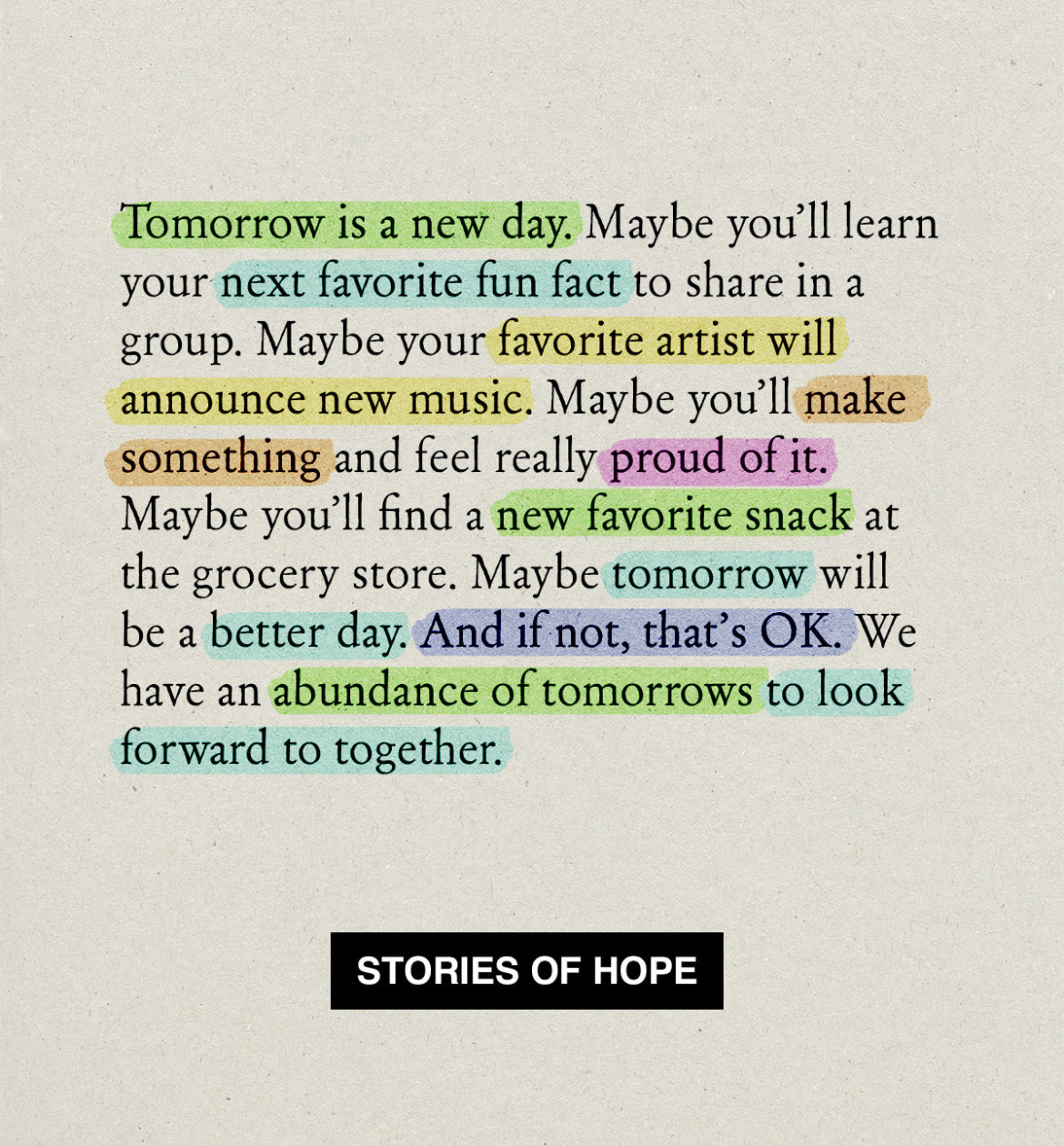
We stand as a check against the decay in societal values. Our high view of God’s power and love, our proper understanding of each person’s worth in God’s sight, and the way we express genuine love for others—especially the weak and marginalized—is a preservative to the moral decay. 

It’s so easy to get caught up with the loud voices around us. Pontius Pilate did, the Roman soldiers did, the Sanhedrin did, and the crowds that listened to these leaders did too. 

If you are concerned about the moral decay you see in your neighborhood, the movies and music that are released, or the behavior of our elected officials, we must adhere all the more closely to the Great Commandment: Love God with all your being, maintain a healthy self-image in light of God’s love for you, and then love your neighbor—all of your neighbors—in the same way God loves you. 

This is the only way His Spirit can equip and empower us to be effective salt and light in these last days! 

►► Would you please prayerfully consider supporting this ministry? My Patreon supporters get behind-the-scenes access to exclusive materials. ◀︎◀︎

Quieting The Angry Rhetoric

Listen to the podcast of this post by clicking on the player below, and you can also subscribe on AppleSpotify, or Audible. 

When the culture becomes increasingly angry and loud, how are Christians to respond? 

Check out this episode of The Podcast. 

Resources I mentioned in this podcast:

►► Would you please prayerfully consider supporting this ministry? My Patreon supporters get behind-the-scenes access to exclusive materials. ◀︎◀︎

Eternally Confident

Listen to the podcast of this post by clicking on the player below, and you can also subscribe on AppleSpotify, or Audible. 

When we hear the word “if” we hear something that is uncertain: “If only I get that job” or “If I have enough money at the end of the month” or “If we get there in enough time.” 

The dictionary tells us “if” has an element of uncertainty. Like when King George III said of George Washington’s decision to step down as the president, “If he does that, he will be the greatest man in the world.” 

Sometimes we think of “if” as a condition to receive some sort of award or recognition. Like Rudyard Kipling’s famous poem If

If you can keep your head when all about you are losing theirs and blaming it on you … [then] Yours is the Earth and everything that’s in it, and—which is more—you’ll be a Man, my son! 

We need to be careful of those paradigms when we come to the next song of ascent in Psalm 124, since the word “if” appears twice in the opening two verses. 

David is not saying, “Weren’t we lucky that God was there for us” or “I wonder if He will be for us again in the future.” I like how the New Living Translation renders this verse: “What if the Lord had not been on our side?” In other words, He was on our side, therefore look what we avoided! 

Far from being a statement of uncertainty, this is a statement of total assurance: It’s saying, “I’m confident of what would have happened if God wasn’t there, and I’m assured of what will happen in the future.” This is why in the next verses David calls on us to praise God in the present tense. 

Every one of these songs of ascent can be sung as stand-alone songs, but the Jewish sages believed that these 15 songs are like the 15 steps that go up to the center of the courtyard. No one climbs the steps from their basement, stops after three or four steps, and says, “I was lucky that the first steps held me! Now I’m wondering if the next step is going to fail me or not.” No, the fact that we have already climbed some steps gives us assurance of the stability of the next step. 

Look at a quick review of the previous steps: 

  • in Psalm 120 pilgrims climb away from the pull of the dark valleys 
  • in Psalm 121 we read the phrase, “I lift my eyes up to the One who is watching over me”  
  • in Psalm 122 we climb the steps knowing that we aren’t climbing to a throne of judgment but a throne of shalom because of the peace Jesus purchased for us
  • in Psalm 123 we are called to only have eyes for our Savior who has lavished His grace on us, and who continues to lavish His grace on us
  • now in Psalm 124 we continue to climb up in growing assurance 

The devil loves to use “if” as a weapon to keep us from this confidence. Perhaps the doubt comes like this, “This song was written by David. If I’m not King David—or even a part of the Jewish nation—can I be assured that God is on my side?” 

Yes, you can! Remember that God’s grace is unearned, undeserved, and unending. And it’s for anyone and everyone who puts their faith in Jesus (Romans 4:23-24; 1 Corinthians 1:30; Romans 8:31-32). 

Or perhaps the devil’s doubt comes like this, “If I sin, will God no longer be on my side?” 

No, neither our efforts nor our shortcomings increase nor decrease God’s love for us. He loved us before we even knew we needed Him, and our sin cannot diminish His love one iota (Romans 5:20-21; 2 Corinthians 5:21; Ephesians 2:4-5). 

When the devil confronted Jesus, he used that little weapon “if” with all three of his temptations. Jesus dismantled those temptations to doubt God by quoting Scripture. So too with Joshua. As he contemplated leading the Israelites into the Promised Land, he may have felt a bit insecure. God told Joshua to continue to meditate on His Word and as a result, Joshua would be strong and courageous. 

David’s closing words in Psalm 124:8 is the Source of our doubt-destroying confidence: “Our help is in the name of the Lord, the Maker of heaven and earth!” 

Whenever the devil plagues you with doubts, keep your eyes on your Maker, keep His Word in your mouth, and then feel His confidence grow in your heart. 

If you’ve missed any of the messages in our Ascending series, you can find all of them here. 

►► Would you please prayerfully consider supporting this ministry? My Patreon supporters get behind-the-scenes access to exclusive materials. ◀︎◀︎

Links & Quotes

God’s grace is so amazing. It keeps coming in like waves on a shore. God’s grace is unearned by our efforts, undeserved despite our sins, and unending for all of eternity! Check out this full message hereI have lots of new content every week, which you can check out on my YouTube channel.

“The humble servant of God is grateful for God’s past blessings, unashamed of his daily dependence on God, and confidant of God’s loving reply to every new request.” —Craig T. Owens

“There’s no shame in failing. The only shame is not giving things your best shot.” —Robin Williams

I’ve often said that praying, “God, here are my plans; please bless them” is an arrogant prayer. Instead, humility prays, “God, what would You have me do.” Proverbs 19:21 makes this point clearly. In his commentary on The Book of Proverbs, Dick Brogden noted on this verse, “God always gets His way over man’s ideas. In our hubris we think we know better than God, so we either make plans and then ask for His endorsement or we stand in judgment of what He is doing as if He should have asked us to endorse His plans. Folly judges only by results in Machiavellian crudity, but things going right doesn’t necessarily mean they were right, and things going wrong doesn’t necessarily mean we were wrong. Let us remember we are prophets, priests, and proclaimers, not pragmatists.”

“You don’t have to be a fantastic hero to do certain things—to compete. You can be just an ordinary chap, sufficiently motivated to reach challenging goals.” —Sir Edmund Hillary

Speaking of an exemplary work ethic, David Mathis writes, “However firsthand your experience as a soldier, athlete, or farmer, Scripture stands ready to fill in, supplement, recast, or override our personal experiences (or lack thereof) and teach us a Christian work ethic—for our own joy, the good of others, and the glory of Christ.” The biblical text Mathis uses to help us learn this Christian work ethic is 2 Timothy 2:1-7.

Marvin Olasky has a sobering and insightful post entitled “United States of Abortion.” He wrote, “For nearly four centuries, the frequency of abortion in America has depended on how citizens and residents answered five questions.” The five questions—and his five answers—are a mini history lesson on which all Christians should reflect.

Wave Nunnally has a fascinating look at the ritual purity that was required in order to enter various parts of the Temple in Jerusalem.

“If you are ever inclined to pray for a missionary, do it at once, wherever you are. Perhaps he may be in great peril at that moment.” —Amy Carmichael

From the vastly large solar system to the microscopic level, the beauty and genius of our Creator is seen. A new report published in the journal Nature delves into the complexity of our tiny cilia. Only an all-wise Creator could fashion something so precise!

If you are looking for an easily accessible online library (especially for researching older books), check out the Internet Archive.

Though a professing atheist, Richard Feynman poetically mused that “you might say the ‘hand of God’ wrote that number, and ‘we don’t know how He pushed His pencil.’” What number is that? Physicists call it alpha (α): “That number is 0.00729735256—approximately 1/137. This is the fine-structure constant. It appears everywhere in the equations of quantum physics.” Another remarkable signpost to a magnificent Creator!

The Craig And Greg Show: Reframe Your Fear

Listen to the audio-only version of this podcast by clicking on the player below, or scroll down to watch the video.

Fear is something every leader struggles with, but great leaders learn to reframe that fear into an opportunity to grow. Join Greg and me as we discuss overcoming fear, reframing fear, and helping your team to do the same.

  • [0:23] Good leaders learn how to frame their fear in a different way.
  • [1:09] Greg and I talk about our biggest fears.
  • [2:21] I share about having to overcome fears about making a decision.
  • [3:38] Most of fear is rooted in past experiences, but reframing as a learning experience can help you grow.
  • [6:17] Attempting to use fear as a motivation tool will backfire and restrict your team’s potential.
  • [7:23] Reducing the fears of your team begins with leading from a place of transparent humility.
  • [9:20] Self talk is important in your battle over fear. Lead by example and show your team how to reframe their mentality. 
  • [11:55] Pride is a big stumbling block for leaders, don’t be afraid to include others in the decision making process.
  • [13:50] The top fears that paralyze leaders.
  • [19:55] Good leaders game-plan for future conflict, so when it comes their team is ready.
  • [20:34] Give your team opportunities to battle their fears and grow from them.
  • [22:51] Greg shares a quote from Henry Ford.
  • [24:11] I share a Little League story.
  • [25:03] Greg and I would love to come alongside and help coach you!

Check out this episode and subscribe on YouTube so you can watch all of the upcoming episodes. You can also listen to our podcast on Spotify and Apple.

Interviewing The Author Of “Sage Advice” (part 1)

Listen to the podcast of this post by clicking on the player below, and you can also subscribe on AppleSpotify, or Audible.

I am thrilled to introduce Greg Heeres to you! He’s not only a great friend and my podcast partner on The Craig And Greg Show, but he is also a published author. We chatted recently about why he wrote “Sage Advice” and how it can benefit every reader. 

Check out this episode of The Podcast.

Resources:

►► Would you please prayerfully consider supporting this ministry? My Patreon supporters get behind-the-scenes access to exclusive materials. ◀︎◀︎
Opportunity Leadership (book review)

Listen to the podcast of this post by clicking on the player below, and you can also subscribe on AppleSpotify, or Audible. 

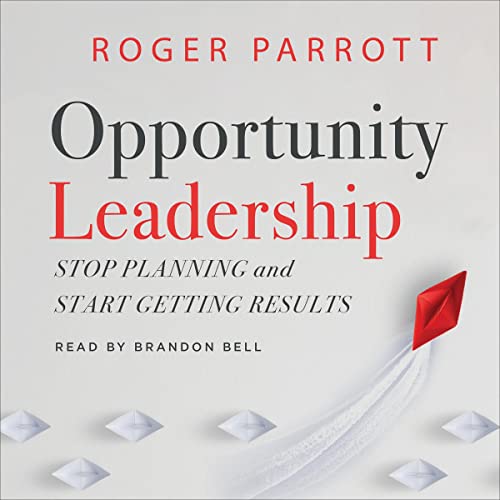
When I wrote my book, I was attempting to bring church leaders back to the biblical foundation for what it means to be a pastor. In a very similar fashion, Roger Parrott does this same thing for ministry leaders in his book Opportunity Leadership. 

Parrott is the president of a vibrant Christian university. As anyone who has been in the arena of higher education will tell you, making long-range plans is at the foundation of everything the administration and faculty do. But Parrott asks where did we get this model? Is this something we see in the Bible? 

Actually, we see verses that subordinate human plans to God’s plan. Verses like, “Many are the plans in a person’s heart, but it is the Lord’s purpose that prevails” (Proverbs 19:21) or, “They tried [planned] to enter Bithynia, but the Spirit of Jesus would not allow them to” (Acts 16:7). This is why Parrott makes the case that we are missing out on what God has in store for us because we only want Him to work on our carefully-made plans.

Parrott makes the case that their university has grown and seized opportunities because they were open and responsive to the doors God presented them, instead of missing out because they were blinded by their plans. 

Obviously, switching to this model will take tremendous buy-in from the point leader all the way through the entire organization. So the bulk of Opportunity Leadership helps prepare Christian leaders to change their paradigm, prepare for the inevitable pushback, and help their teammates move forward. 

I thoroughly enjoyed this book—finding myself saying, “Yes!” frequently as I was reading it—and I am confident all Christian leaders will benefit from reading this insightful work. 

►► Would you please prayerfully consider supporting this ministry? My Patreon supporters get behind-the-scenes access to exclusive materials. ◀︎◀︎