Listen to the podcast of this post by clicking on the player below, and you can also subscribe on Apple, Spotify, or Audible.
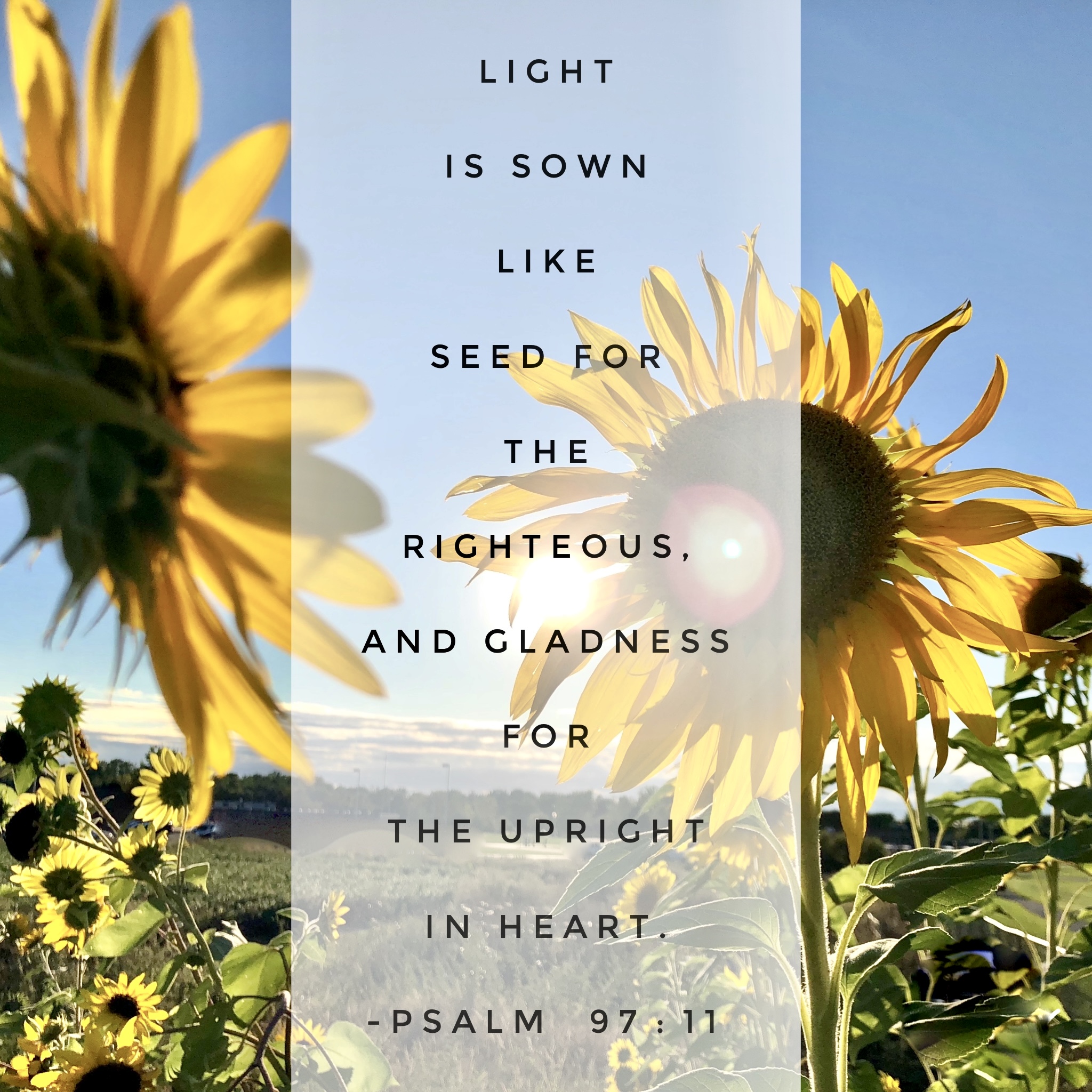
Light is sown like seed for the righteous, and gladness for the upright in heart. (Psalm 97:11)
Jesus used the parable of a farmer sowing seed as a picture of the seed God wants to sow in our hearts. The psalmist says that God’s seeds are light—driving out the shadows of darkness, and producing an abundant harvest of gladness in our hearts.
I like how the Amplified Bible renders this verse in Psalm 97—Light is sown for the uncompromisingly righteous and strewn along their pathway, and joy for the upright in heart—the irrepressible joy which comes from consciousness of His favor and protection.
Let’s live in a such a God-honoring way that His seeds of light bring forth an abundant harvest that gives Him all the glory and points others to Jesus the Savior.
Even the well-known hymn The Solid Rock has the line that says, “When all around my soul gives way.”
Isaiah 40:27-30 gives us a helpful example from the eagle of how we can handle life’s storms.
Eagles have huge wingspans and can travel up to 125 miles in a single flight. When they see storms coming, they lock their wings in place and stop flapping on their own. Instead, they sense the warm currents of air and rides those up and over the storm.
So Tom gave us these steps:
Disengage from our own efforts—don’t try to handle the storm on our own.
Perceive the warmth of God’s promises.
Trust the everlasting God (Isaiah 40:28). “Everlasting” means that God is infinite, vigorous, strong, faithful, and capable.
Ride up and over the storm in God. When God says we mount up on wings like eagles (Isaiah 40:31), it means we are braided together with God.
Live in the renewed strength that only God can give us.
Jesus went through the most unimaginable life storm that any human has ever had to endure, and He said, “Father, into Your hands I commit My spirit” (Luke 23:46). We need to trust our Heavenly Father just like Jesus did when we face storms!
John Piper was asked to weigh-in on the value of repetitive phrases in worship songs. He said, “The issue’s not repetition per se but whether there is enough substance, enough rich content of truth about God woven into the repetitions to justify them, to warrant them. That’s the issue. There’s a difference between repetitions that are called forth by the repeated crescendo of new, glorious truth, and repetitions that serve as a kind of mantra without sufficient truth that is simply used to sustain or intensify a mood. Moods in worship should be awakened and sustained primarily by truth, assisted by music—not primarily by music with a little truth thrown in to justify the singing.”
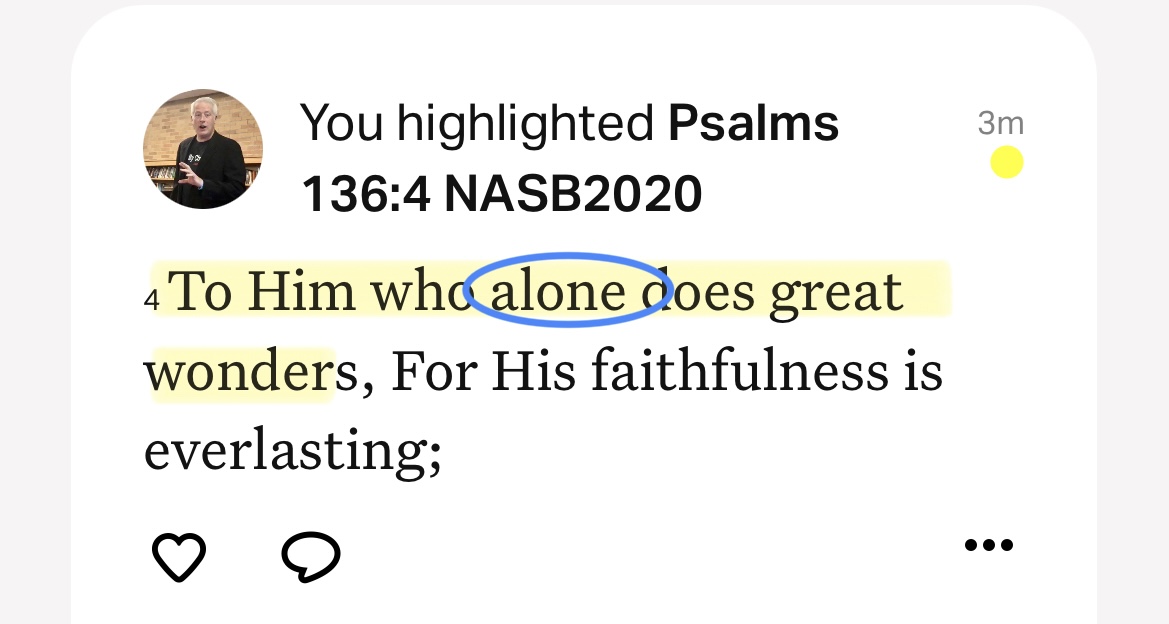
Pastor John Piper used Psalm 136 as an example in the post above. T.M. Moore also shared this thought about Psalm 136: “The term most frequently used to describe this everywhere-present-and-always-at-work love of God is translated as ‘lovingkindness’ or, in some versions, ‘steadfast love.’ Especially Psalm 136, with its antiphonal arrangement of verses, insists that the cosmos is upheld, sustained, and pervaded by the lovingkindness of God. … It would improve our learning to pray without ceasing if we simply took some time out during the day to thank the Lord for the many ways His steadfast love surrounds, sustains, and swarms us at every moment!”
“When people refer to a man as a man of the Book, meaning the Bible, he’s generally found to be a man of multitudinous books, which simply isolates the one Book to its proper grandeur. The man who reads only the Bible does not as a rule know it or human life.” —Oswald Chambers
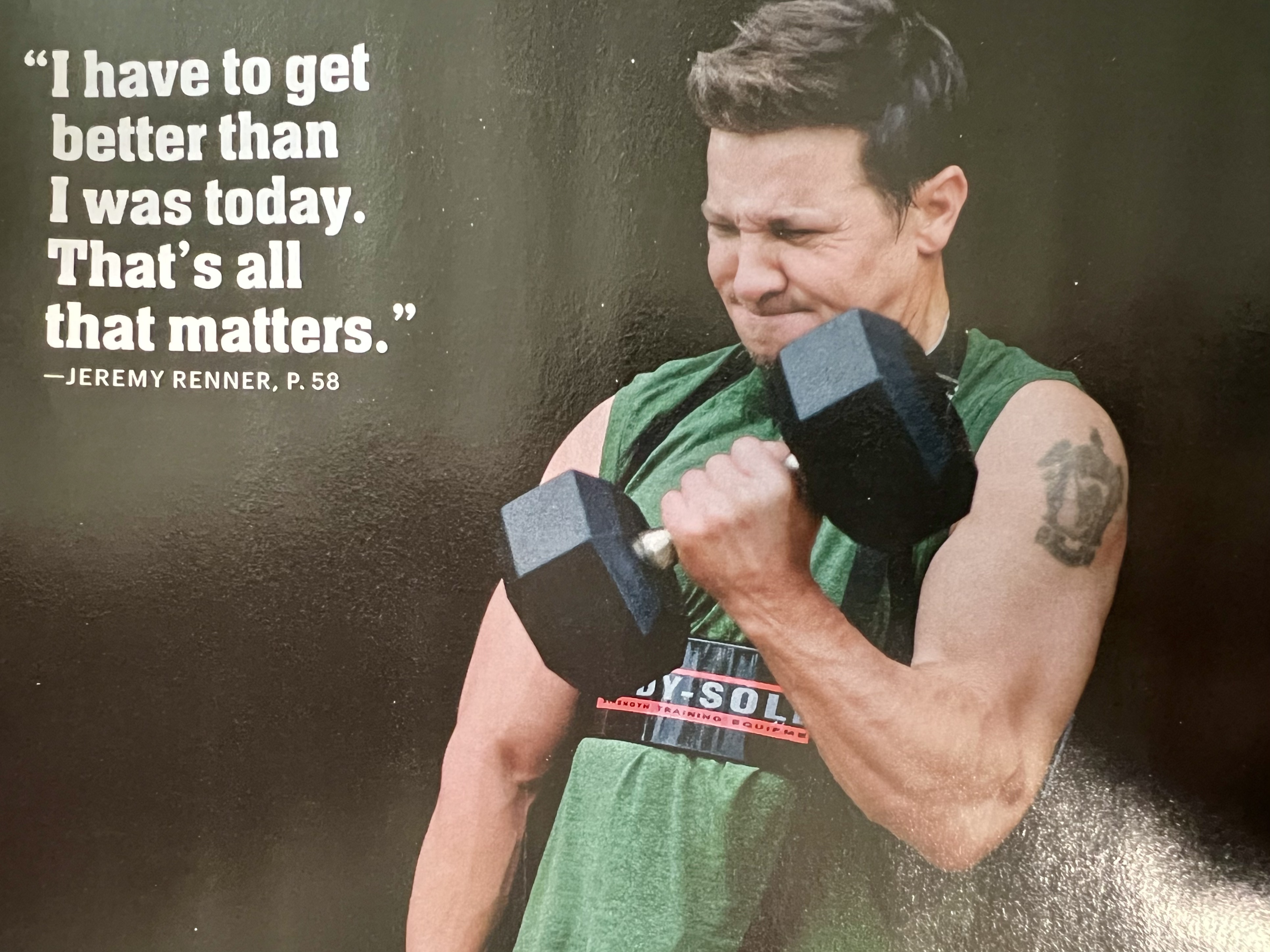
Men’s Health magazine shared an interview with Jeremy Renner, who was nearly killed in a tragic accident. I love his attitude about making today better than yesterday. His words remind me of a poem my grandma used to use to motivate me to keep “besting” what I had already done.
Christopher Ash writes about reading the Psalms through the lens of Jesus. He concludes this way: “I remember seeing on the wall of a church the words of Psalm 20:4: ‘May [the Lord] grant you your heart’s desire and fulfill all your plans!’ How wonderful, you might think. The Bible promises me all that my heart desires. Until you read the psalm and realize that Psalm 20 is a prayer for the king in David’s line. Ultimately, it is a prayer that Jesus will have His heart’s desire granted and that His plans will be fulfilled. And they will! The Psalms are not all about me. If I think they are, I will end up disillusioned. But when I grasp that they are all about Christ, my heart lifts in joy that He is the blessed Man and I belong to Him.”
Listen to the audio-only version of this podcast by clicking on the player below, or scroll down to watch the video.
Stress might have six letters, but it seems like some leaders have a knee-jerk reaction to treat it like a four-letter word. While it might be nice to fantasize about an stress-free life, this is both entirely unrealistic and detrimental to your leadership. The truth is, a mild amount of stress can be helpful to you personally, as well as your organization as a whole. Join us as Greg and I unpack why you should embrace a bit of stress in your life.
[0:14] I have a brain block to start the show!
[0:59] Let’s define stress in a work environment, as opposed to simply work tension.
[1:51] An interesting study about allowing moderate stress to remain in the workplace.
[5:30] Mild stress is helpful for our brains.
[7:37] Stress expands and strengthens our team connections too.
[10:26] Can stress help increase someone’s work performance?
[13:01] Our physical bodies use a stress hormone called cortisol. How can leaders maximize its effects?
[14:38] Stress can help us rise to the challenge in a way that easy times can’t.
[16:02] I share an example of a teammate who grew through stress, as well as a supporting quote.
[18:40] Greg shares a negative example of an organization that became stress-free and drifted toward failure.
[19:30] When times are easy, we can begin to slide into apathy.
[22:40] Should we teach crisis leadership to our teams? If so, how should we do this?
Check out this episode and subscribe on YouTube so you can watch all of the upcoming episodes. You can also listen to our podcast on Spotify and Apple.
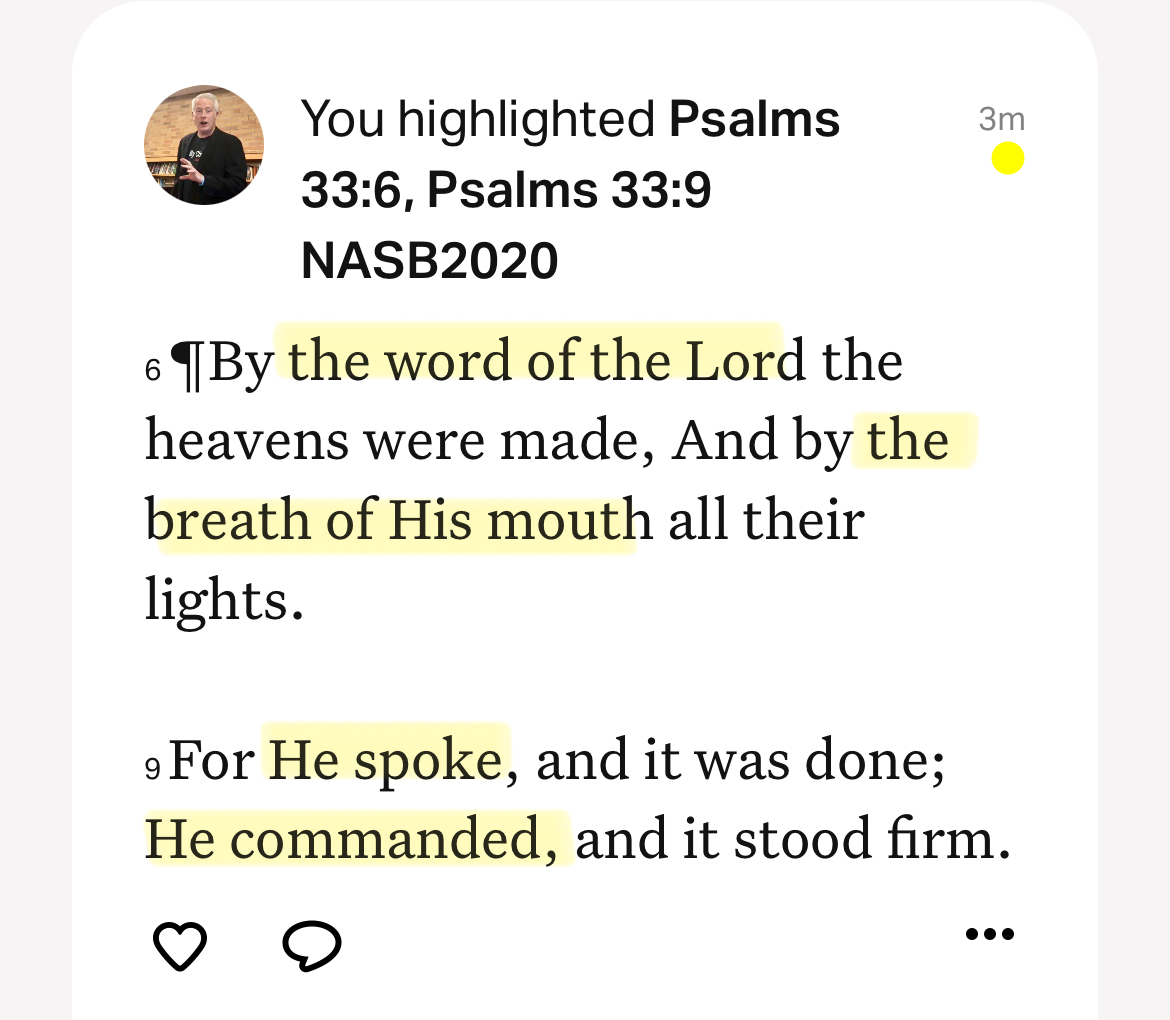
By the word of the Lord the heavens were made, and by the breath of His mouth all their lights. … For He spoke, and it was done; He commanded, and it stood firm. (Psalm 33:6, 9)
We literally live in, on, and through the breath of God. Everything was created as God spoke them into existence—including you and me.
Let’s personalize verse 9, making it our prayer and our declaration:
“For He spoke my name, and it was done; He commanded the plan for my life, and it stands firm even today!”
God created you on purpose and for a purpose. He knew exactly what He was doing when He breathed life into you, and His plan still stands firm. You are invaluable in God’s perfect plan❣️
Listen to the podcast of this post by clicking on the player below, and you can also subscribe on Apple, Spotify, or Audible.
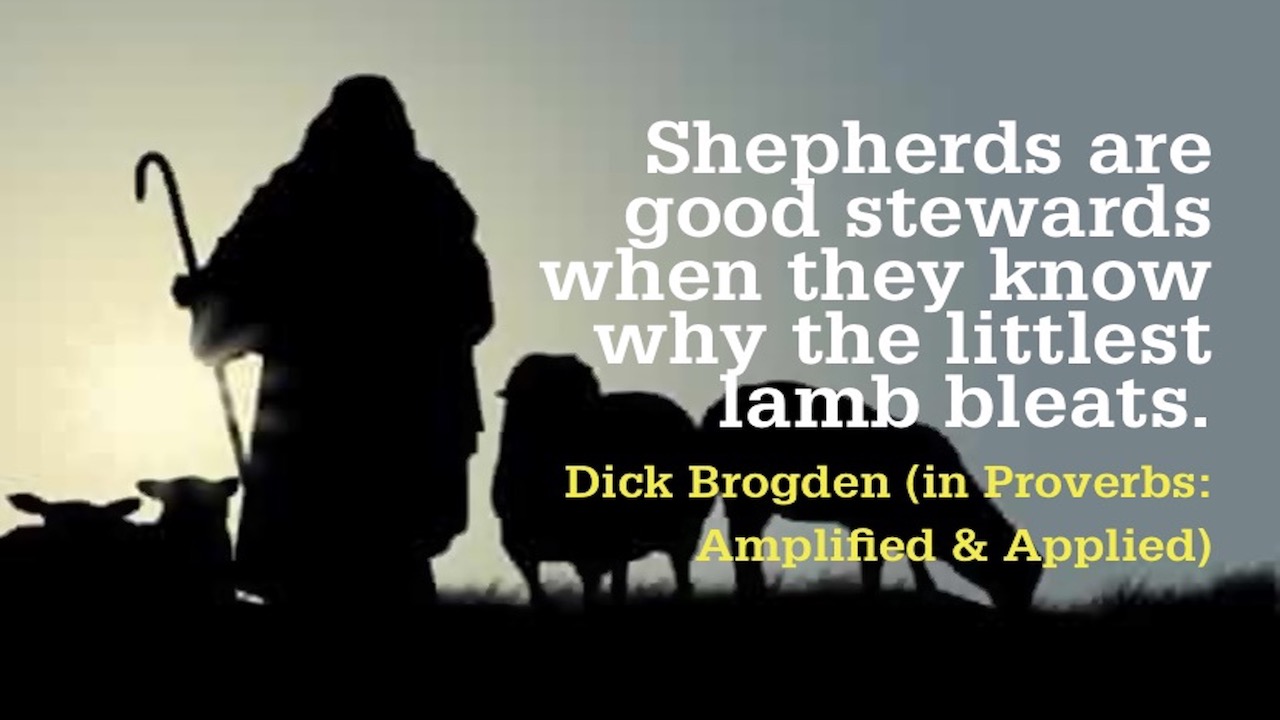
Karl Vaters and I share the same passionate belief that pastors—shepherd leaders—need to be in the pastures where God has placed them, faithfully caring for the sheep under their care.
Check out this clip from my interview on The Church Lobby—
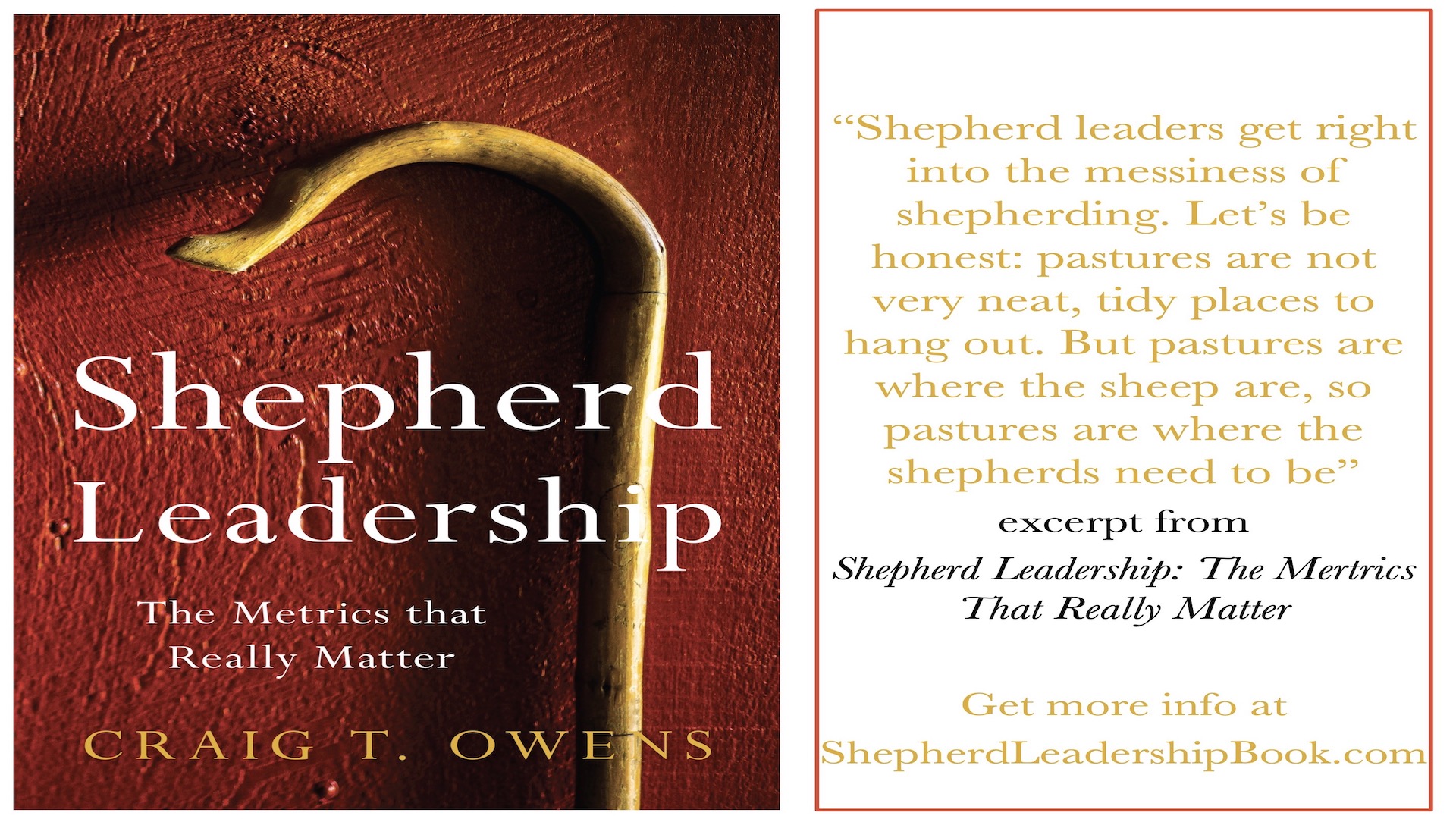
In my book Shepherd Leadership, I wrote this—
Jesus said not only that He knew His sheep, but that His sheep knew Him, too. Shepherd leaders get right into the messiness of shepherding. Let’s be honest: pastures are not very neat, tidy places to hang out. But pastures are where the sheep are, so that is where the shepherds need to be. If the only time you interact with others is when you want to make an announcement or someone needs to be corrected, your sheep will begin to either resent you or fear your arrival.
The best way to know the voice of each one of the sheep in your pasture (and the best way for those sheep to know your voice as well) is to be in the pasture as often as you can. This is what Jesus did at the Good Shepherd, and His under-shepherds honor Him when we follow His example.
You can check out more clips from this Church Lobby interview here.
Check out my book Shepherd Leadership for yourself or for a pastor that you love. And also check out my latest book When Sheep Bite, which I think of as the prequel to Shepherd Leadership.
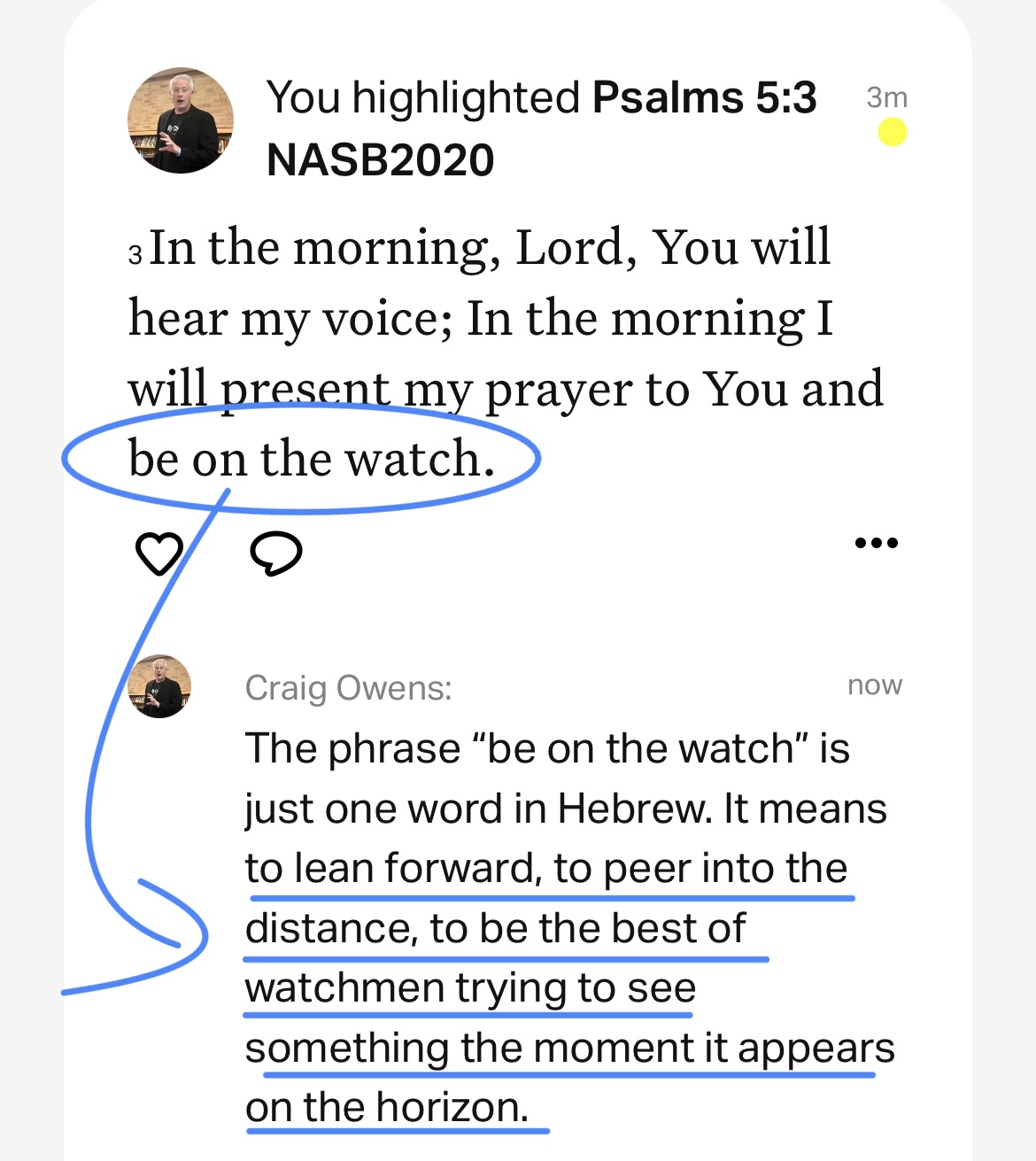
In the morning, Lord, You will hear my voice; in the morning I will present my prayer to You and be on the watch. (Psalm 5:3)
The phrase “be on the watch” is just one word in Hebrew. It means to lean forward, to peer into the distance, to be the best of watchmen trying to see something the moment it appears on the horizon.
This is the posture David encourages us to take with each and every prayer request we present to our Heavenly Father. Our attitude should be, “I am so excited to see how God is going to answer me!”
“wait expectantly” (NIV)
“look up” (NKJV)
“wait for You to speak to my heart” (AMPC)
I shared a video on this idea on an episode of The Podcast—Faith Starts Walking.
I have lots of new content every week, which you can check out on my YouTube channel.
I’m proud to be a part of the Assembly of God fellowship that has its roots in missions. Alice Luce is a great example of a missions pioneer whose work in the 1920s is still bearing fruit today.
“Our nation’s founding document declared independence from Britain, but, with equal fervor, declared dependence upon God. Expressing ‘firm reliance on the Protection of divine Providence,’ the signers committed the American experiment to their Maker. The Spirit of 1776 was reverence and trust. So, as we mark this solemn occasion, let us seek a rebirth of true liberty, which is possible only when governed by divine law. For, without God, we can never have ‘liberty and justice for all.’” —Chuck Colson
“It is impossible to describe the abundance of peace and heavenly joy that often flows into my soul by means of the fresh answers which I have obtained from God, after waiting upon him for help and blessing; and the longer I have had to wait upon him, or the greater my need, the greater the enjoyment when at last the answer comes, which has often been in a very remarkable way, in order to make the hand of God the more manifest.” —George Mueller
The Institute for Creation Research reports on a study: “Physicists at Roskilde University in Denmark have shown that a single equation correctly describes the frequency of wing and fin strokes for a wide array of flying and swimming creatures, including birds, insects, bats, and whales.” Wow, it’s almost as if an all-wise Creator knew what He was doing!
T.M. Moore uses the understanding of wireless internet access to help Christians with a picture of prayer. “When we bend our increasingly Christ-filled minds, hearts, and consciences to the spiritual code-writing of prayer, we craft messages which shape the spiritual air as they course their way toward the Source of all living-water spiritual power, Who is filling all things with Himself. The more we pray with Christ-overflowing souls, the more we flood the spiritual airspace with the Lord, crowding out and sidelining those forces of wickedness which seek to jam those airwaves or fill them with spiritual disinformation. And the less spiritual ‘airspace’ the devil can command, the better for all of us.” —T.M. Moore
Listen to the podcast of this post by clicking on the player below, and you can also subscribe on Apple, Spotify, or Audible.
The phrase “Jesus knew” specifically appears twice in John chapter 13 (vv. 1, 3), but the idea appears in multiple places. Jesus was continually and intimately aware of His Father’s plan and the Holy Spirit’s empowerment to help Him live out that plan.
Check out some of the things Jesus knew:
He knew His mission—I have come into the world as a light, so that no one who believes in Me should stay in darkness (John 12:46)
He knew His role in fulfilling that mission—For I did not come to judge the world, but to save the world (12:47)
He knew His Father’s voice directing Him in His mission—For I did not speak on My own, but the Father who sent Me commanded Me to say all that I have spoken.I know that His command leads to eternal life. So whatever I say is just what the Father has told Me to say(12:49–50)
He knew His Father’s timing for His mission—Jesus knew that the hour had come for Him to leave this world and go to the Father (13:1)
He knew His Father’s empowerment to complete the mission—Jesus knew that the Father had put all things under His power (13:3)
He knew what He must do to bring glory to His Father as He fulfilled His mission—Having loved His own who were in the world, He loved them to the end. … So He got up from the meal, took off His outer clothing, and wrapped a towel around His waist. After that, He poured water into a basin and began to wash His disciples’ feet, drying them with the towel that was wrapped around Him(13:1, 4-5)
Jesus said that He was in His believer’s lives, just as He was in the Father (John 14:20). That means He takes us into His Father, and He also told us that He would impart His Holy Spirit to us.
That means you and I have all that we need to know all that Jesus knew and to live like Jesus lived.
My question is: Why don’t I live this way?
Why am I not living up to this potential every day?
The simple conclusion must be that I am not operating in the full resources that are mine as a child of God.
I must make sure that I am abiding more and more intimately with my Savior, that I am tuning into the prompting of the Holy Spirit more and more consistently, and that I am increasingly aware of my Father’s will for my life.
If we strive for this, we can know what Jesus knew and we can live like Jesus lived. This is how we bring glory to God, just as Jesus did!



 Light is sown like seed for the righteous, and gladness for the upright in heart. (Psalm 97:11)





 Craig T. Owens