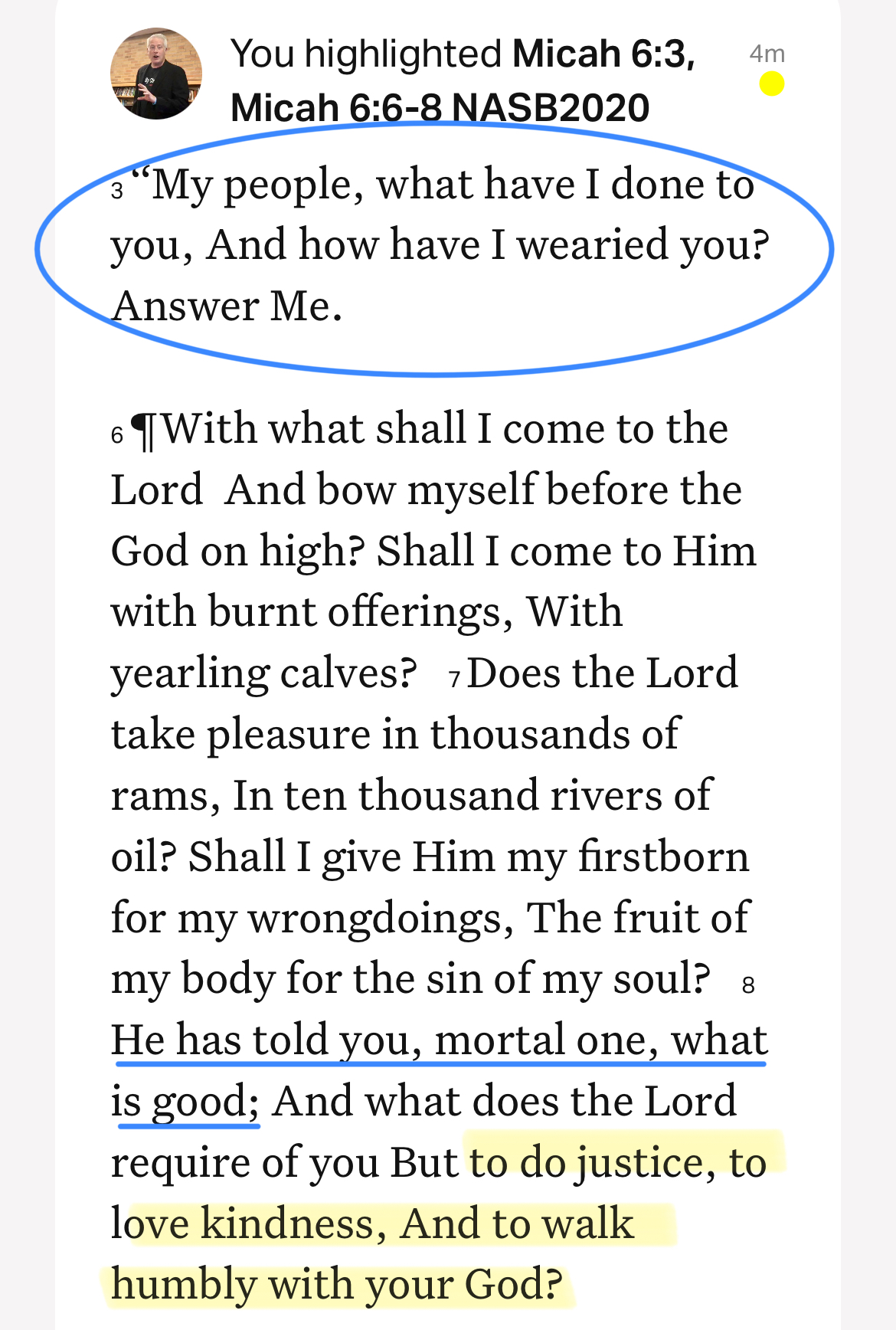
My people, what have I done to you, and how have I wearied you? Answer Me. … With what shall I come to the Lord and bow myself before the God on high? Shall I come to Him with burnt offerings, with yearling calves? Does the Lord take pleasure in thousands of rams, in ten thousand rivers of oil? Shall I give Him my firstborn for my wrongdoings, the fruit of my body for the sin of my soul?He has told you, mortal one, what is good; and what does the Lord require of you but to do justice, to love kindness, and to walk humbly with your God? (Micah 6:3, 6-8)
God doesn’t weary us with constantly changing or overbearing rules!
What God asks of us is that we give Him our heart (love the Lord your God with all your heart, soul, mind and strength), and then we live a life that shows His love to others (love your neighbor as yourself).
That’s it: Love God, and then let justice, love, and humility flow out from that Source of love.
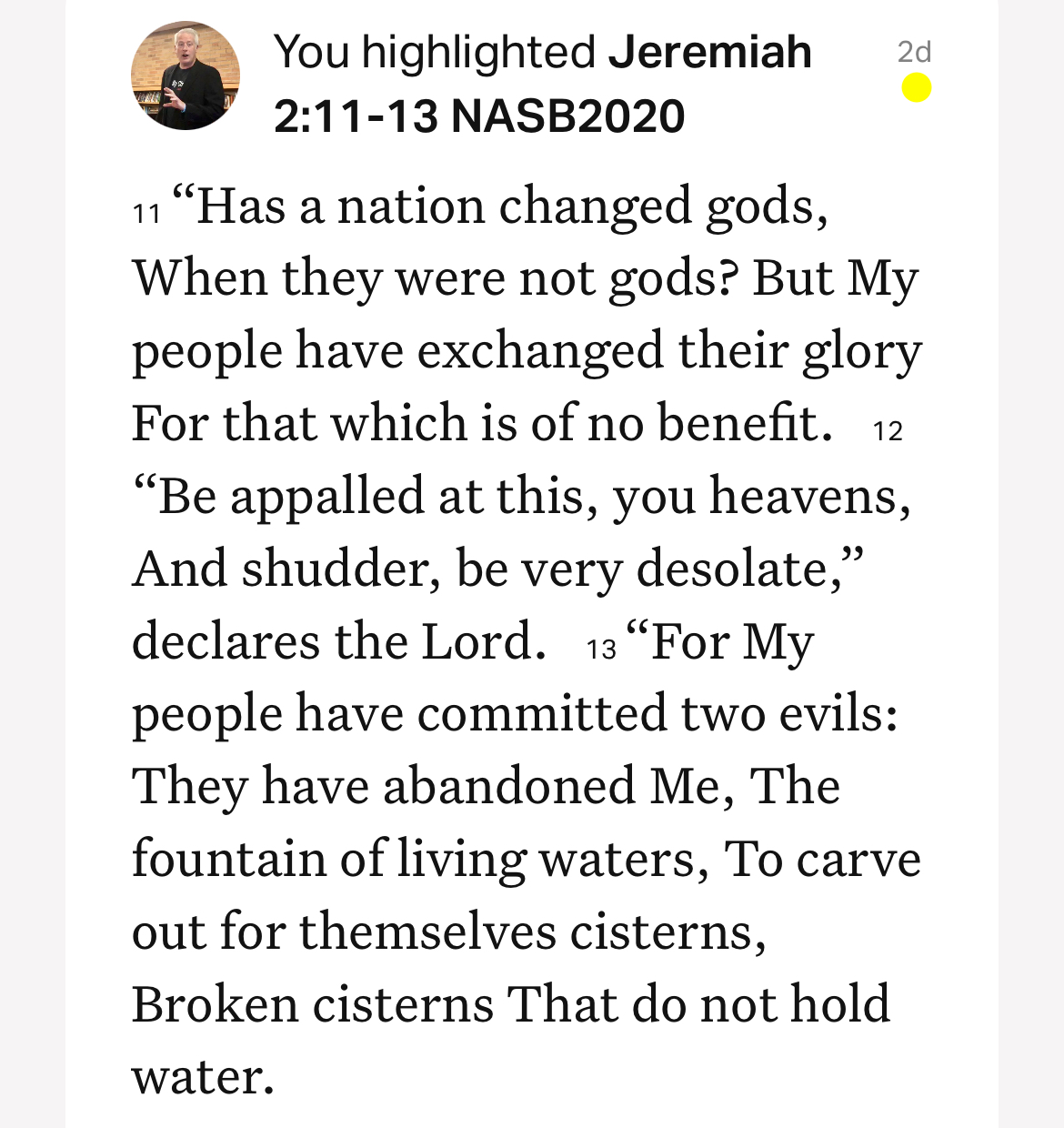
“Has a nation changed gods, when they were not gods? But My people have exchanged their glory for that which is of no benefit.Be appalled at this, you heavens, and shudder, be very desolate,” declares the Lord.“For My people have committed two evils: They have abandoned Me, the fountain of living waters, to carve out for themselves cisterns, broken cisterns that do not hold water. … Your own wickedness will correct you, and your apostasies will punish you; know therefore and see that it is evil and bitter for you to abandon the Lord your God, and the fear of Me is not in you,” declares the Lord God of armies. (Jeremiah 2:11-13, 19)
This was true of Judah, and it’s just as true today in nations that used to regard the Word of God as their righteous standard. We have abandoned God and we have attempted to satisfy ourselves with things that are transient at best.
God goes on to outline the results that we are already seeing in our homes, government, and cultures: “‘Your own wickedness will correct you, and your apostasies will punish you; know therefore and see that it is evil and bitter for you to abandon the Lord your God, and the fear of Me is not in you,’ declares the Lord God of armies” (Jeremiah 2:19).
Listen to the podcast of this post by clicking on the player below, and you can also subscribe on Apple, Spotify, or Audible.
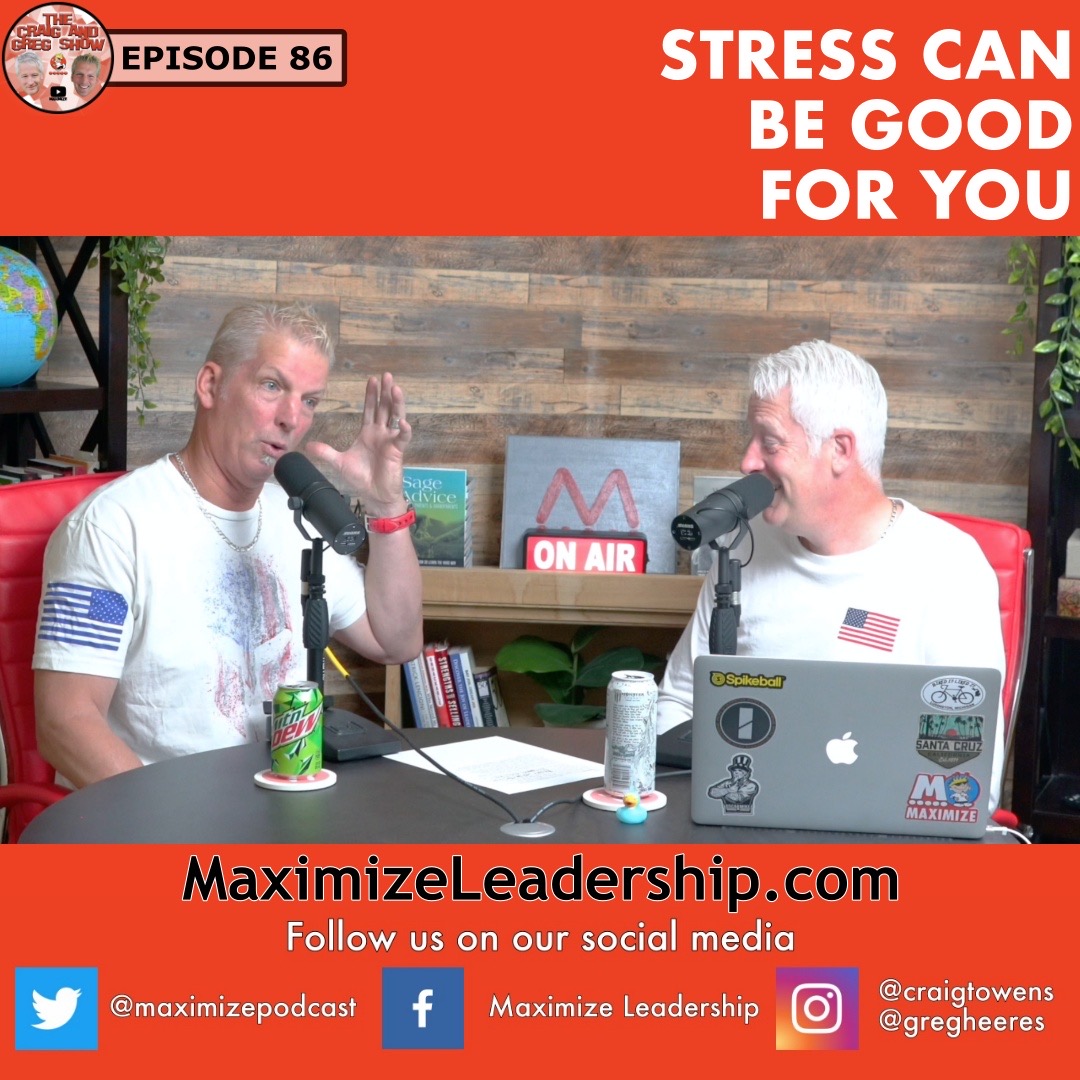
On our most recent leadership podcast, Greg and I were talking about the idea of not trying to eliminate stress from our workplaces. I know that may initially sound counterintuitive, but it actually makes a lot of sense when you really think about it.
“A great team begins to happen when you have the right people on the bus in the right seats and the bus breaks down…. They work through the crisis, they get back on the bus, they’re sweating and tired. All of the sudden something magical happens: They begin to talk to each other. Culture happens through crisis. Unfortunately, many team environments have structured the crisis out.”
Here’s a couple of other quotes for you to ponder:
“Crisis is a powerful motivator. It enables you to do things you should have been doing all along. Whoever said that nothing focuses the mind like the sight of the gallows had it right.” —Anne Mulcahy, CEO of Xerox
“If you really want to see innovation happen, find a crisis. It’s in the middle of a crisis when we come to the realization that either the end is near or a new future is being born. On the verge of a crisis, we are also on the verge of our greatest moment. It’s at that moment that we must decide: innovate or die.” —Dave Ferguson, in his book On The Verge
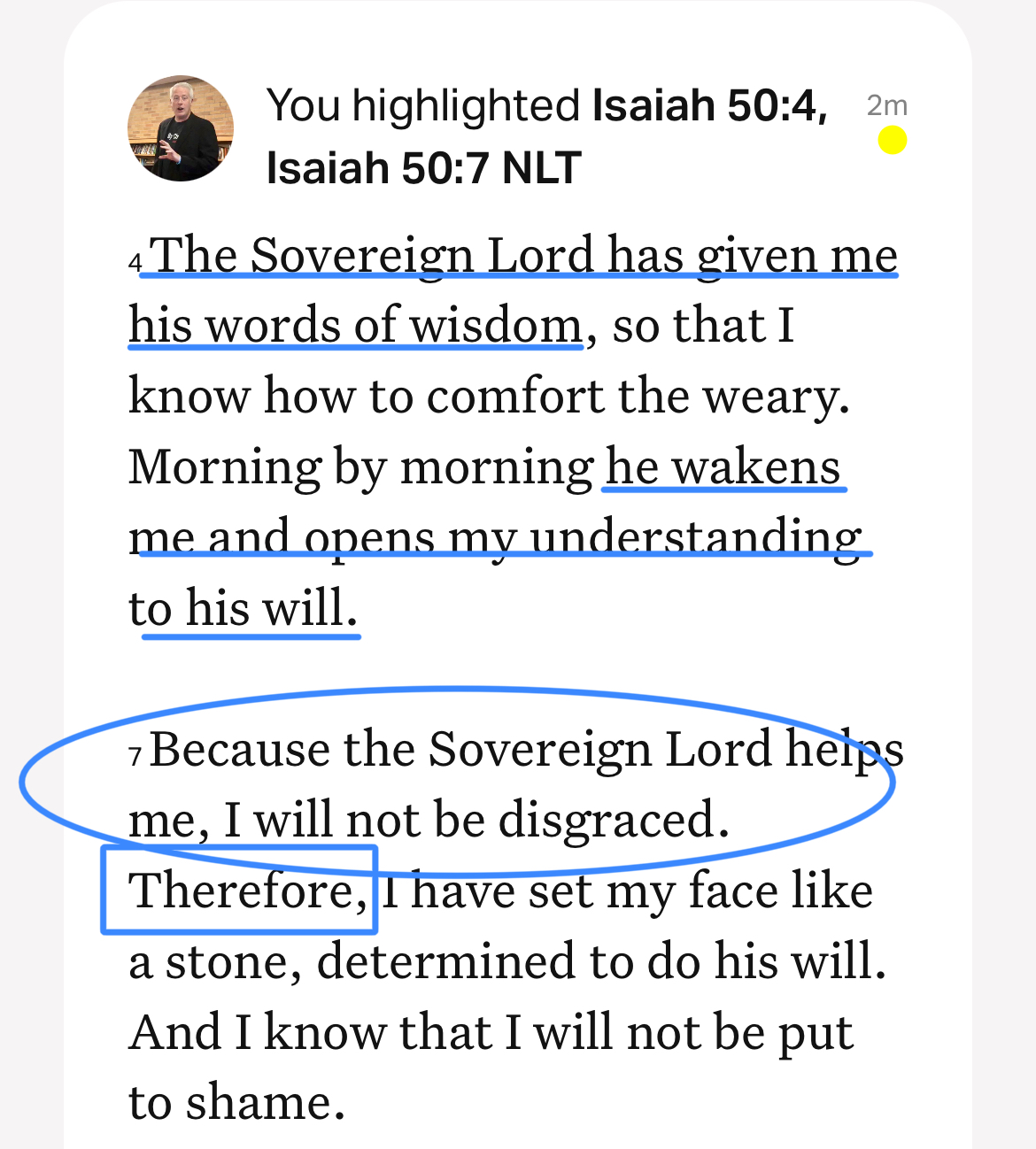
The Sovereign Lord has given me His words of wisdom, so that I know how to comfort the weary. Morning by morning He wakens me and opens my understanding to His will. … Because the Sovereign Lord helps me, I will not be disgraced. Therefore, I have set my face like a stone, determined to do His will. And I know that I will not be put to shame. (Isaiah 50:4, 7 NLT)
Listen to the podcast of this post by clicking on the player below, and you can also subscribe on Apple, Spotify, or Audible.
We’re up to Psalm 131. After this step, only three more steps to go until we reach the top! We’re almost there. We started in a dark valley surrounded by enemies that wanted to keep us in the valley, but we persevered, we matured, and now the end it almost in sight!
Notice that David wrote this Song of Ascent, and I think he may have had a particular instance from his history in mind when he did.
At the height of David’s success, the Bible says that, “David knew that the LORD had established him as king over Israel and that his kingdom had been highly exalted for the sake of His people Israel” (1 Chronicles 14:2). So David used his position to do something very noble: return the ark of the covenant of the Lord to Jerusalem. This was a popular decision that “seemed right to all the people” (13:3).
But it turned out disastrously!
One of the priests overseeing the transportation of the ark of the covenant was killed, and as a result David became angry at God and fearful of Him.
After a cooling off time, David humbled himself. He admitted that he hadn’t “inquired of the Lord” before undertaking this task and then he looked to the Scriptures to find out how to move the ark the correct way (15:12-15).
It’s quite possible David had this incident in mind when he wrote the Song of Ascent for people coming to worship God in the temple where the ark of the covenant of the Lord would be housed.
The opening words sound the tone of humility—“my heart is not proud” and “my eyes are not haughty.” I think in the context of this opening verse of Psalm 131, pride can be defined as:
trying to handle things on my own
concerning myself with things outside my control
That means that humility is trusting that God is in total control.
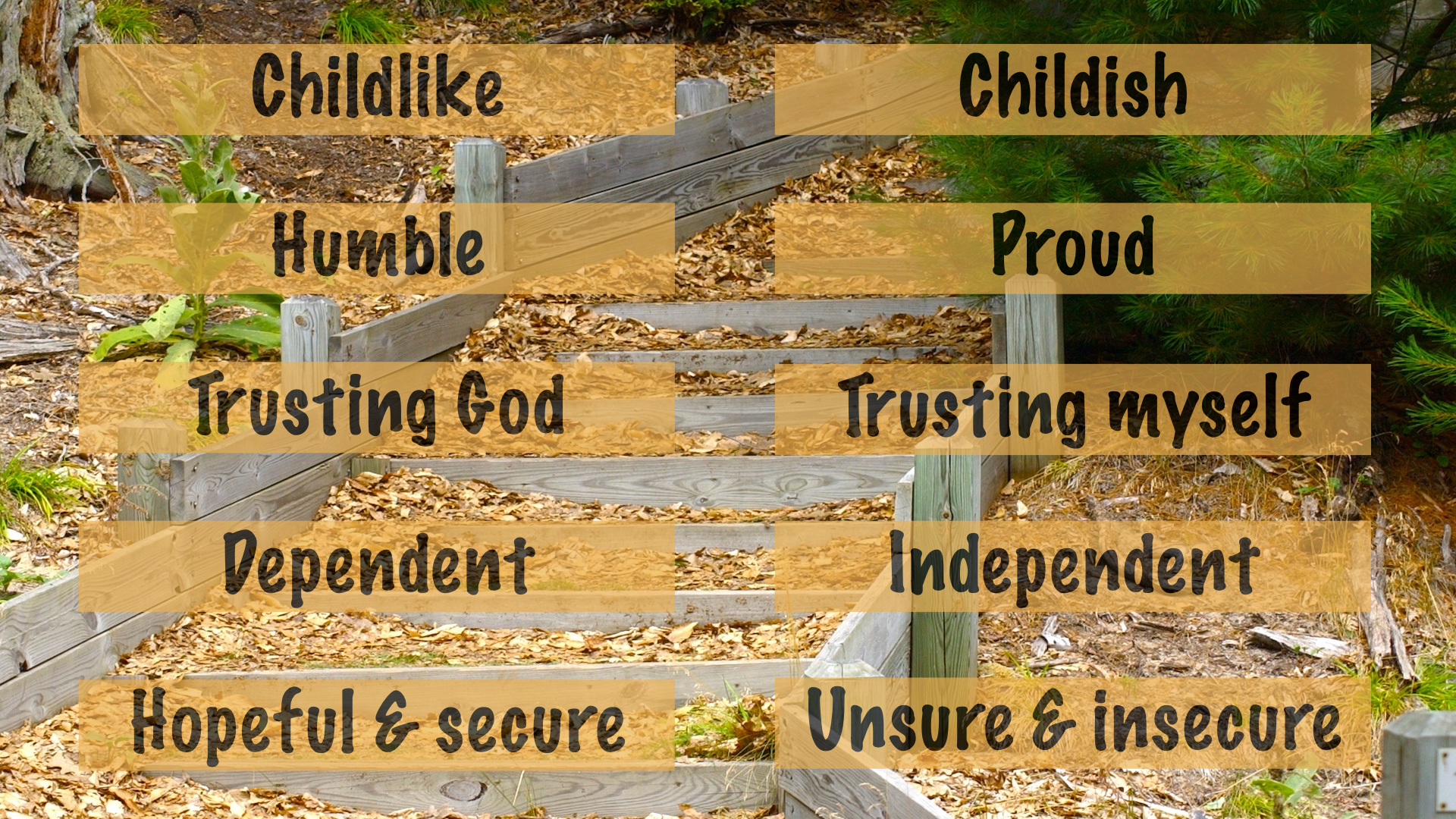
Verse 2 starts with an important word: But. Instead of the fretting of pride, David chooses the trusting of childlike humility. David says that he has “stilled and quieted my soul.” He has chosen childlike humility.
This is exactly what Jesus told us: “Truly I tell you, unless you change and become like little children, you will never enter the kingdom of heaven.Therefore, whoever takes the lowly position of this child is the greatest in the kingdom of heaven” (Matthew 18:3-4).
The consistent message throughout Scripture—from Creation in Genesis 1 until the realization of our eternal reward in Heaven in Revelation 22—is childlike trust in our Heavenly Father.
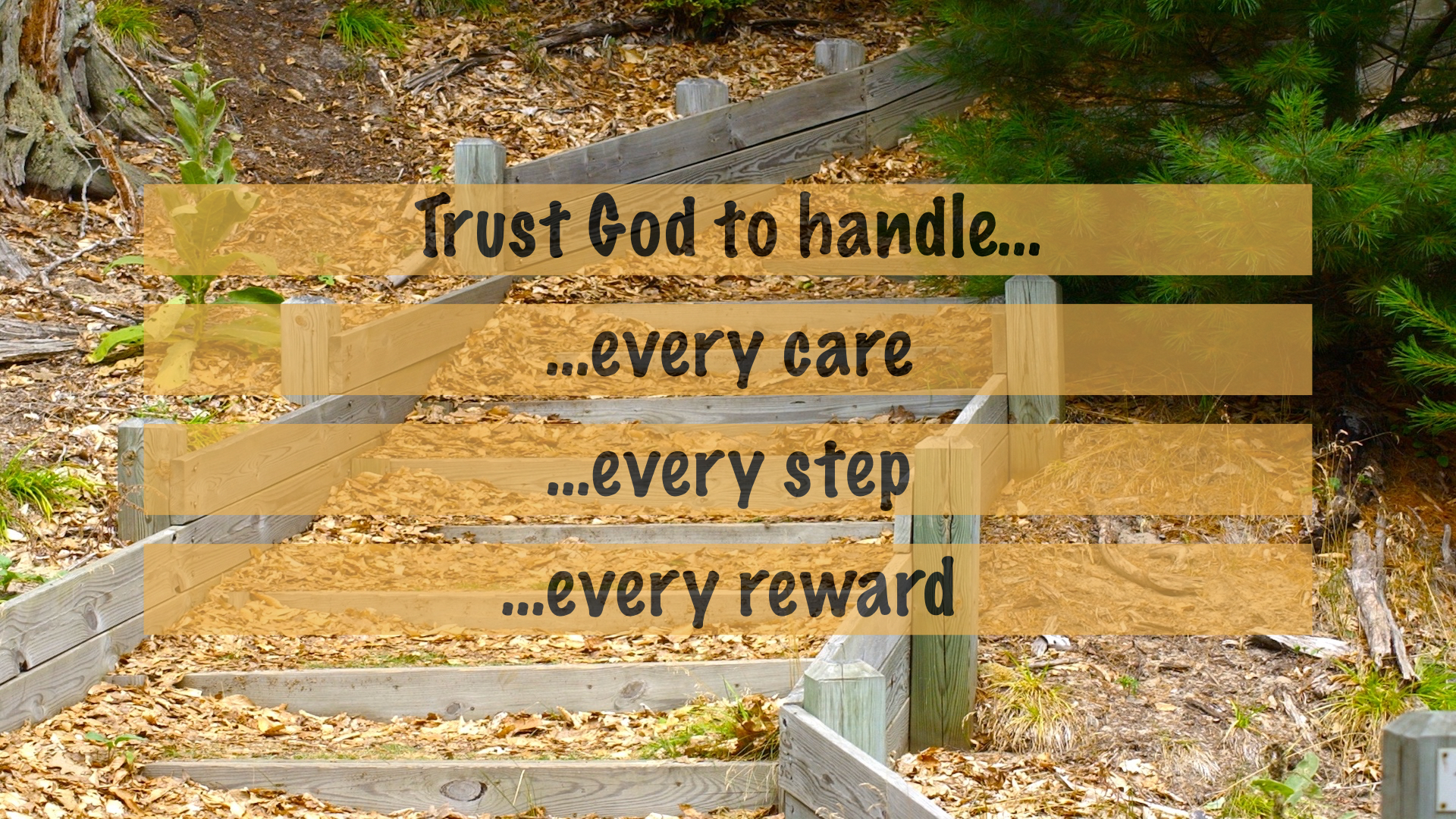
We can trust God to handle…
…every care—1 Peter 5:7
…every step—Proverbs 3:5-6
…every reward—Luke 12:32
Don’t let pride cause you to stumble in the homestretch. The closer we get to the end of the journey, the more childlike we should become.
Leaders should be able to use mistakes as growth opportunities. Check out these wise words from the book Spiritual Leadership.
I have lots of new content every week, which you can check out on my YouTube channel.
T.M. Moore encourages Christian to be ready to help their neighbors answer their burning questions: “Christians, Charles Taylor insists, must not be guilty of crushing human flourishing by a too-small vision of God and an unloving or unenergetic approach to our neighbors. Instead, we must study and prepare to ‘respond most profoundly and convincingly to what are ultimately commonly felt dilemmas.’ We must be ready to guide our neighbors out of the dark woods of wrong belief into the radiant meadows of the Sun of Righteousness, risen with healing in His wings. But to do this, we must be ready guides. We must anticipate the questions our groping neighbors will ask and prepare to answer them clearly and intelligently (1 Peter 3:15).”
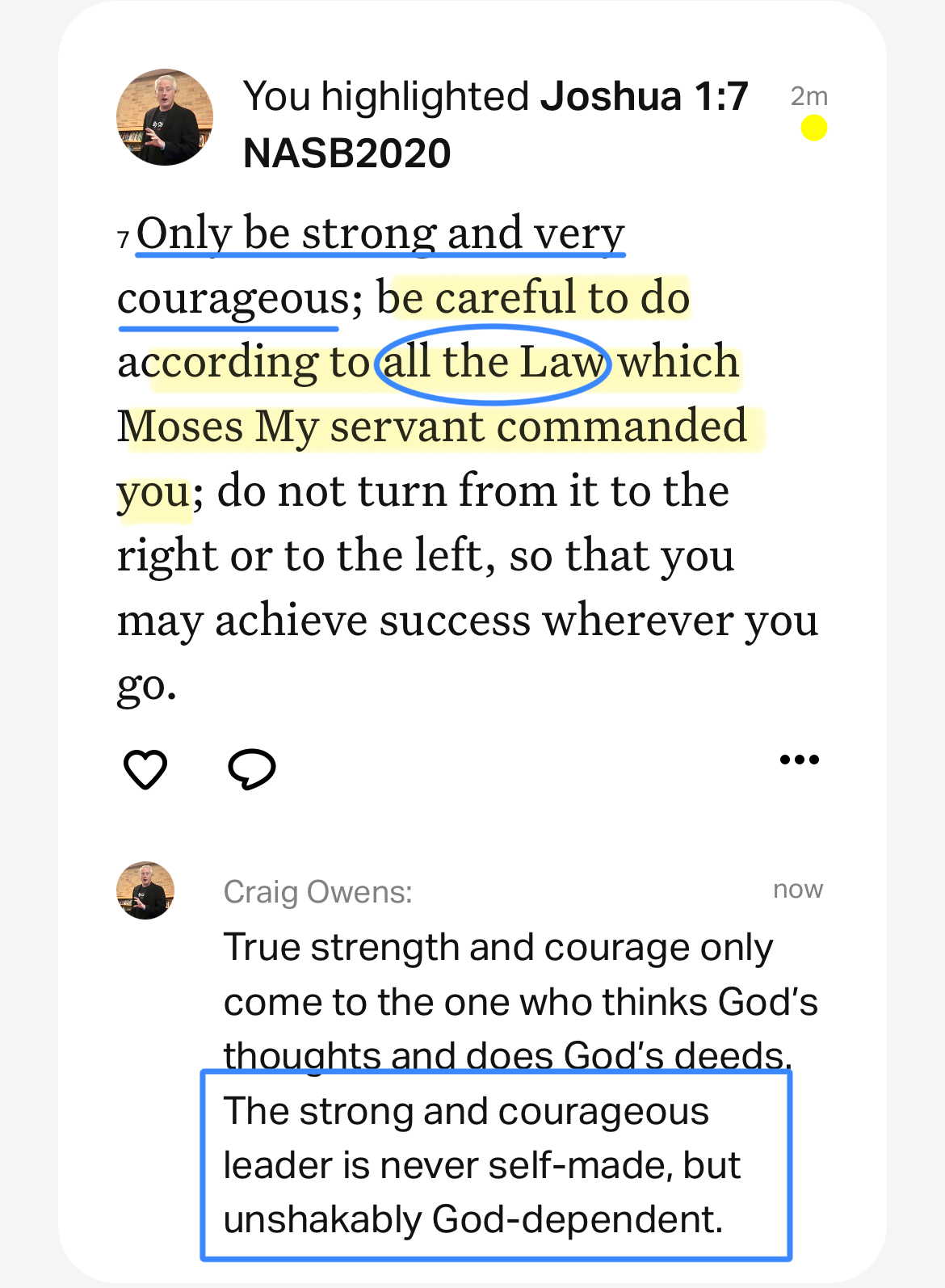
True strength and courage only come to the one who thinks God’s thoughts and does God’s deeds (see Joshua 1:7). The strong and courageous leader is never self-made, but unshakably God-dependent.
On the latest Craig and Greg Show podcast, this the quote from Andy Murray that I shared: “A great team begins to happen when you have the right people on the bus in the right seats and the bus breaks down…. They work through the crisis, they get back on the bus, they’re sweating and tired. All of the sudden something magical happens: They begin to talk to each other. Culture happens through crisis. Unfortunately, many team environments have structured the crisis out.”
Mabel Dean went to Egypt at 40 years old and stayed there for nearly 40 years without taking a single furlough! “All of Dean’s life, people did not expect her to amount to much. Despite what others said, Dean believed that she had a mandate from God for missions work in Africa. She later stated, ‘I was the only homely one in my family. Yet I was the one that He chose for His work.’”
One of the prayers in the Songs of Ascent calls us to mature (or ascend) in our prayers for those who have hurt us.
“There is always a better way of doing things, and either you or your competitor will find it.” —Brad Anderson
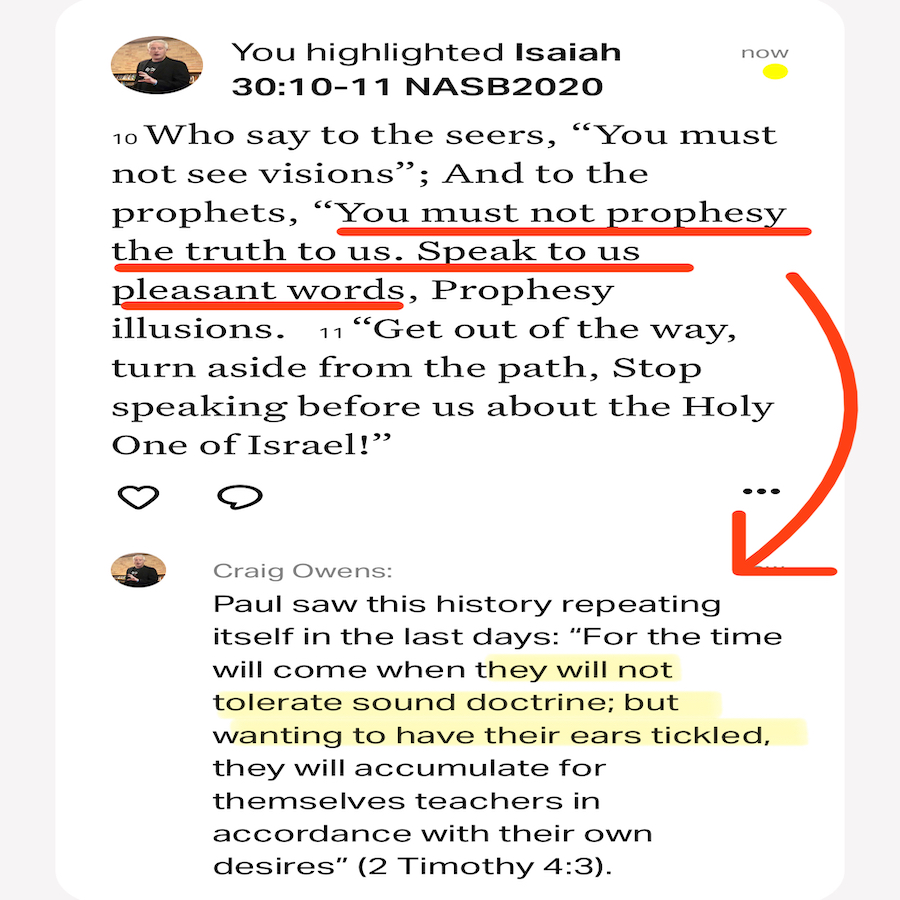
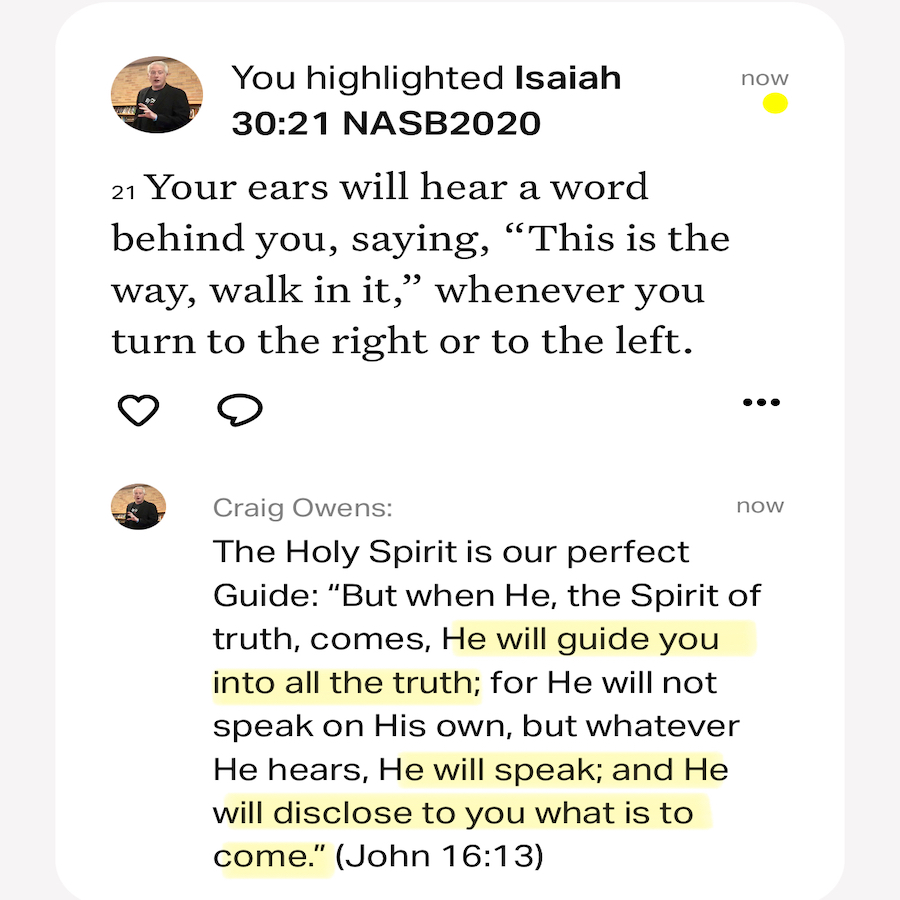
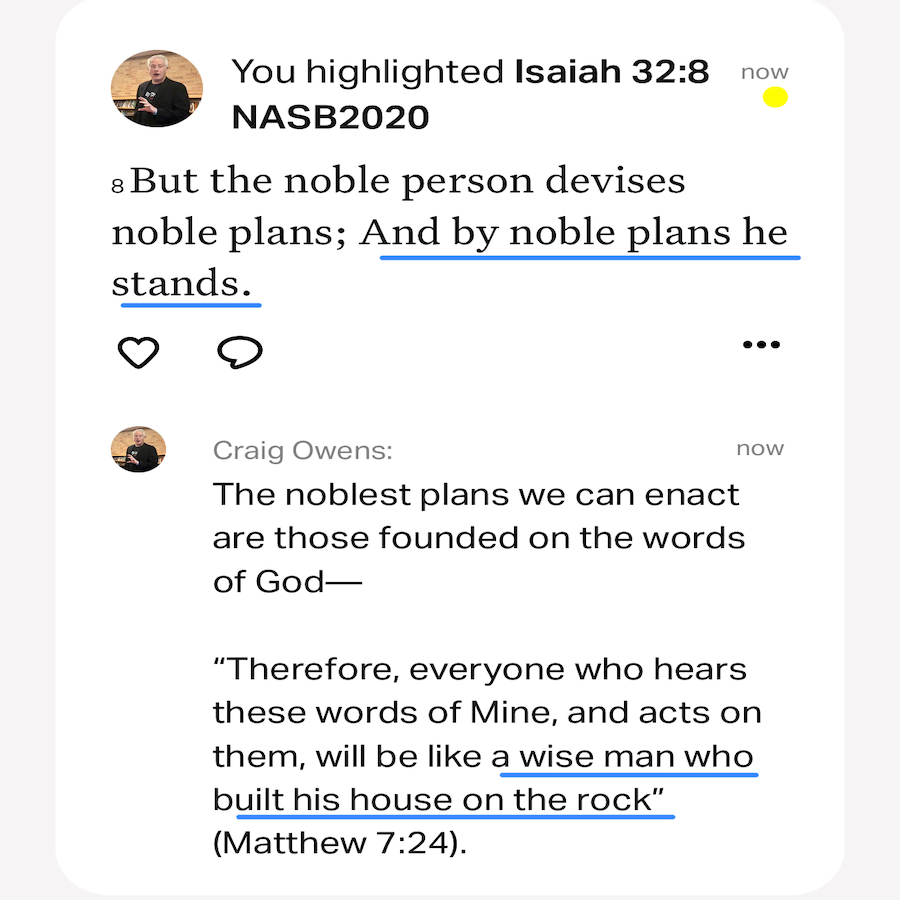
Something stood out to me quite clearly the other day as I highlighted several verses from Isaiah and was reminded of their complementary verses scattered throughout the New Testament. Always remember—
Listen to the podcast of this post by clicking on the player below, and you can also subscribe on Apple, Spotify, or Audible.
When people attack their leader—or when sheep bite—it hurts!
Our first best response is to acknowledge, “That hurt!” but then we need to pause. Our natural response to an attack is fight-or-flight, but healthy leaders take time to learn why that bite occurred.
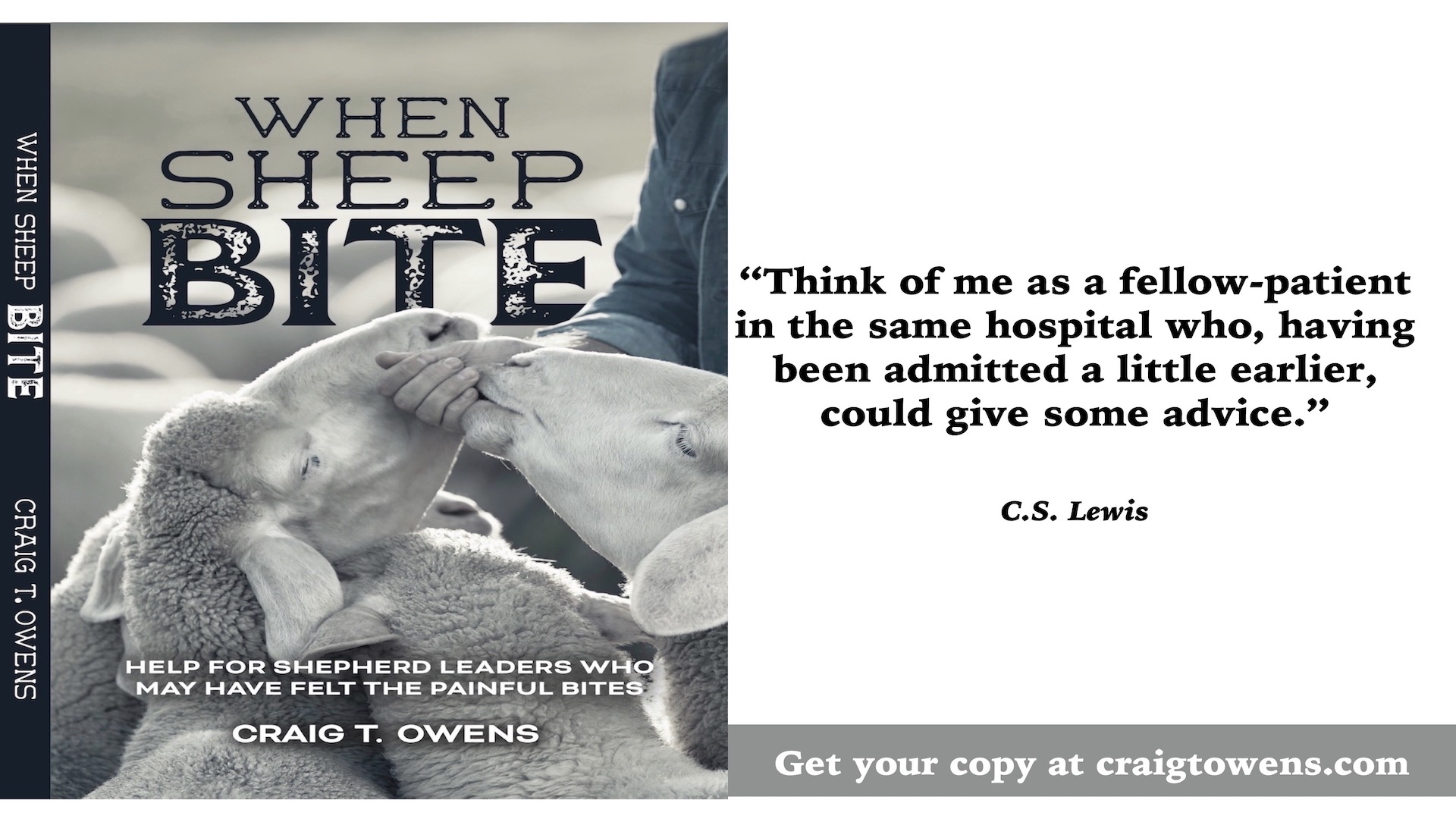
This is an excerpt from an episode of The Craig and Greg Show where Greg interviewed me about my new book When Sheep Bite.
If you would like to watch the full episode of our leadership podcast, you can find that here.
I am getting ready to facilitate a cohort for pastors who have gone through painful sheep bites—or perhaps they are feeling them right now! If you are a pastor, or if you know of a pastor who has been bitten, please check out this cohort here.
And if you would like to pick up a copy of When Sheep Bite for yourself, you can get that here.
Listen to the podcast of this post by clicking on the player below, and you can also subscribe on Apple, Spotify, or Audible.
I want to give you a leadership practice that is going to set you apart from the crowd. It’s all about leveraging an amazing feature God has designed in our brain.
Listen to the podcast of this post by clicking on the player below, and you can also subscribe on Apple, Spotify, or Audible.
Anti-anxiety medications are prescribed at a higher rate than any other medication. As a nation, we have become—literally—a nervous wreck!
I think much of our handwringing and stomach churning is from our obsession with keeping up with “current events.” We have alerts endlessly dinging, screaming at us, “Look at this! Can you believe he said that?! Did you hear about this? We must do something about that!”
Christian, where is your hope? In what are you trusting for relief?
God says through Isaiah that sinners are terrified and godless people tremble at the news—
Sinners in Zion are terrified; trembling has seized the godless. “Who among us can live with the consuming fire? Who among us can live with everlasting burning?” (Isaiah 33:14)
As these anxiety-plagued people are wondering how they can survive the latest deluge of terrible news, God answers the burning question of real security. He says it is…
…One who walks righteously and speaks with integrity, one who rejects unjust gain and shakes his hands so that they hold no bribe; one who stops his ears from hearing about bloodshed and shuts his eyes from looking at evil; he will dwell on the heights, his refuge will be the impregnable rock; his bread will be given him, his water will be sure. (Isaiah 33:15-16)
Did you catch what was in the middle of that list? Stop listening to the reports of bloodshed and stop watching all the news reports of evil people doing evil things.
Instead, God says that we should be watching our own lives closely so that we are:
walking righteously
speaking with integrity
not falling for the latest fads
not being “bribed” by so-called influencers to see things their way
When we are focused on God and on living our lives according to His righteous standards, we won’t have any time or mental energy to give to the evil and bloodshed in the headlines. Rather, we will live securely—protected and blessed by our loving Savior and Lord!
Isaiah 33 goes on to describe what we will notice when we turn off the world’s news and gaze at God: “Your eyes will see the King in His beauty” (v. 17), you will no longer be shaken by “fierce people” (v. 19), but you will know that “the majestic One, the Lord, will be for us…and will save us” (vv. 21-22).
Turn off the world’s news and dive into God’s Good News instead. You will immediately feel God’s peace replacing any fearful trembling in your heart and mind.







 Craig T. Owens