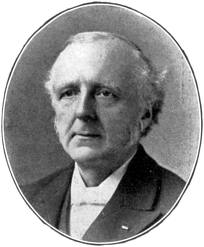
Horatius Bonar has been my “tour guide” as I have been reading through the New Testament in my personal devotional time. I have previously posted reviews on Bonar’s series on The Gospels, and on Acts and The Larger Epistles. This third installment—The Lesser Epistles—is as brilliant as the first two were!
The Lesser Epistles covers Galatians through Jude. Don’t be fooled by the word “lesser” in the title, as this only refers to the length of the biblical books, not the richness of the content, nor the weighty insights from Horatius Bonar!
For the most part, Bonar does not present a verse-by-verse commentary on the Scriptures, but more of an overall theme on select passages. Occasionally he passes over a rather large section of an epistle, and occasionally he slows down to go nearly word-by-word through a key passage. But in everything he writes, the gifting of the Holy Spirit’s insight is clearly evident.
As I have said about his previous books, they are not meant to be read in place of your Bible, but as a companion book side-by-side with your personal reading time. Truly a magnificent set of books!
As I stated in my review of Jerry Bridges’ book The Blessing Of Humility, reading through these thoughts slowly—Beatitude by Beatitude—would bring about the most life-changing impact. In that spirit, I will be sharing some noteworthy quotes one Beatitude at a time. Here are some quotes on blessed are the merciful (Matthew 5:7)…
“The first four character traits of the Beatitudes…all address our internal character and our relationship to God. Here in this Beatitude, ‘Blessed are the merciful,’ Jesus begins to address our relationship with other people.”
“Note the subtle distinction between compassion and mercy. The Samaritan had compassion [Luke 10:33] and then showed mercy [v. 34-35].”
“Mercy expresses itself in two general areas: In the temporal sense, mercy seeks to meet the physical needs of others, as the Good Samaritan did in Jesus’ parable. The second way mercy expresses itself is granting forgiveness to those who have sinned against us.”
“The magnitude of our sin is not measured by its effects on other people but by its assault upon the infinite majesty and holiness of God.”
“To forgive others means we regard ourselves as ten-thousand-talent debtors [Matthew 18:23-35].”
King David loved God, and he loved God’s people. He was passionate about everyone getting as deeply connected with God as he was, so he wrote worship songs, setup worship teams, and organized the temple for worshippers.
The first song of ascent he wrote was one anticipating how good it was going to be when everyone got to the temple in Jerusalem to worship.
In fact, David was so excited about what he was expecting to happen in their worship together that he practically glowed with joy! Really! The word for rejoiced in his song means to be so cheerful and happy that you make others around you bright by your happiness. 😀
What was it that David thought was going to happen? First of all, we need to look at the name Jerusalem. Traditionally this means the City of Peace, but the two words that make up “Jerusalem” are much richer than that. Yes, -salem means “peace.” But the first part of the word (yara-) literally means water flowing through, or an arrow being shot out.
In other words, David anticipated that we are going to a peaceful place to be sent out full of peace, to take that peace to others who don’t have it, but desperately need it.
While we are in our “Jerusalem” (for us in the New Testament, this is our “church,” even if it’s just two or three people getting together), here are five blessings you should expect—
Unity—with all the “tribes” joining together.
Praise—joining together to tell God how great He is!
Learning—we come together to learn God’s statutes.
Judgment—what?! How is judgment a blessing? If you are nervous about being judged, just remember Who does the judging in God’s temple: the Holy Spirit. He judges us in a loving way, and in a way that allows us an opportunity to see our sin, repent from it, and experience unconditional forgiveness. That is exciting!
Peace, security, prosperity—the word shalom is used multiple times in the closing verses of this song. The best definition of shalom is: nothing missing, nothing broken. In other words, when we gather together to worship we should expect that God will heal any dis-ease we have, that He will supply what has fallen short, that He will fill up what’s empty.
With those five blessings in mind, here’s the declaration all Christians can make—
Inside these walls…
we live in unity
we praise the Lord
we learn God’s laws
we judge ourselves by God’s standards
repenting, confessing, forgiving, and being forgiven
we fight for peace
we bless God and one another
We descend back to the valleys
to take this message to valley-dwellers
that they, too, may pilgrimage
with us to Jerusalem
It starts here in God’s family!
It starts with me!
Check out the full video of this message, where I explain each of these ideas more fully. And if you’re in the area, join us on Sunday as we continue our look at the Psalms of Ascent.
As I stated in my review of Jerry Bridges’ book The Blessing Of Humility, reading through these thoughts slowly—Beatitude by Beatitude—would bring about the most life-changing impact. In that spirit, I will be sharing some noteworthy quotes one Beatitude at a time. Here are some quotes on blessed are those who hunger and thirst for righteousness (Matthew 5:6)…
“To hunger and thirst for righteousness, then, indicates a strong overwhelming desire for righteousness. … Righteousness denotes the state of being right. Biblically, it means perfect according to God’s law in every way: thought, word, deed, and even motive.”
“At the moment we trusted Christ as Savior, we were justified—declared by God to be righteous. You will never be more or less righteous before God any day of your life than you were the moment you trusted Christ as your Savior. This raises another question: Why should I hunger and thirst for that which I already have? The answer is that the more we grow and mature in the Christian life, the more sensitive we become to the sin and failure we see in our lives. It is not that we necessarily sin more but rather that we become more aware of and mourn over the sin that is already there. As that happens, we hunger more and more after the righteousness we have only in Christ.”
“There is a legitimate sense in which we are to hunger and thirst for that perfect righteousness we already have in Christ. This should be a continual daily attitude of all growing Christians because we continue to sin every day.”
“There is a second righteousness that we should hunger and thirst for: the experiential righteousness we are to pursue every day. God has inextricably linked together the righteousness we have in Christ and the righteousness we should pursue. He does not give one without the other. Therefore, whoever hungers and thirsts after the righteousness we have in Christ will also hunger and thirst to be righteous in his or her daily experience.” [See 2 Timothy 2:2; 1 Peter 2:24; 1 John 3:10]
“It is clear from Scripture, then, that we are to pursue an experiential righteousness. But what will cause us to hunger and thirst for it? The answer is twofold. First, as we have already observed, the new nature is inclined by the Holy Spirit to pursue righteousness. … The second motivation is gratitude for the righteousness we have in Christ.”
“There will be no growth in experiential righteousness apart from a regular intake of the Word of God.”
“We are absolutely dependent on the Holy Spirit to work in us Himself and to enable us to work. We cannot make one inch of progress toward experiential righteousness without His divine enablement.”
Quotes on the remaining Beatitudes will be posted next week so stay tuned. Even better: subscribe to my blog, and you’ll receive the new quotes directly in your email inbox.
As I stated in my review of Jerry Bridges’ book The Blessing Of Humility, reading through these thoughts slowly—Beatitude by Beatitude—would bring about the most life-changing impact. In that spirit, I will be sharing some noteworthy quotes one Beatitude at a time. Here are some quotes on blessed are the meek (Matthew 5:5)…
“Meekness is not being timid, spineless, unassertive, and easily dominated. It is not a natural niceness. In fact, it has nothing to do with one’s personality or temperament.”
“There is then a twofold expression of meekness: first toward God and then toward other people. Meekness toward God involves: (1) responsiveness to His Word; (2) submission to His Providence.”
“As I reflect on our evangelical community to the extent I am aware of it, it seems we are more knowers of the Word than doers of the word. … Instead we too often use the Scriptures not as a means of judging ourselves but as a means of judging others, especially those whose sins are more flagrant than ours. The meek person, in contrast, searches the Scriptures (or listens to it taught) not to judge others but to allow the Holy Spirit to judge him or her. In fact, the meek person earnestly desires the Spirit to use His Word to effect a deep change in his or her inner being.”
“Thomas Watson wrote that meekness toward other people consists of three things: the bearing of injuries, the forgiving of injuries, and the returning of good for evil.”
“Because we have been forgiven so much, we have an obligation to forgive those who sin against us. Yet our motive for forgiving should not be our obligation but the realization of how much we have been forgiven.”
“Meekness towards man means bearing patiently with the hurtful actions of others and dealing gently with their failures, not only in the assurance that all of these are under God’s providential control, but in the knowledge that, left to ourselves, we have no claim to be any stronger than the weakest of our friends or any better than the worst of our enemies.” —John Blanchard
As I stated in my review of Jerry Bridges’ book The Blessing Of Humility, reading through these thoughts slowly—Beatitude by Beatitude—would bring about the most life-changing impact. In that spirit, I will be sharing some noteworthy quotes one Beatitude at a time. Here are some quotes on blessed are those who mourn (Matthew 5:4)…
“The word that Jesus used in this Beatitude is the strongest word in the Greek language for mourning. It is the word for Jacob’s morning over what he thought was the death of Joseph (Genesis 37:35). … Jesus uses this word to show the intensity of mourning He blesses here. He is, however, actually talking about mourning not over death but over our sin.”
“To be ‘poor in spirit’ is to be convicted of one’s sin, whereas to ‘mourn’ is to be contrite for it.” —John Blanchard
“King David committed two sins: first adultery, and then (essentially) murder to try to cover up his adultery. God sent the prophet Nathan to confront him, and in his skillful accusation of David, Nathan twice used the word despised (2 Samuel 12:7-11). First, David despised the Word of the Lord—that is, he despised the law of God (verse 9). In so doing, he also despised the Person of God (verse 10). Why is this true? Despising the law of God is not only an expression of rebellion. It is also a despising of His very character, since His law is a reflection of His character. This is true not only of such heinous sins as adultery and murder, but also of our more refined sins: pride, selfishness, gossip, and the like. So let us pray that God will indeed allow us to see our sin as rebellion against the rule of God—a despising of God’s law and even of His character.”
“Failure to see our sin as primarily against God is, I believe, the reason we experience so little heartfelt grief over it. … But be it ever so small in our own eyes, whenever we sin we also break God’s law. And Scripture says, ‘Whoever keeps the whole law but fails in one point has become accountable for all of it’ (James 2:10). God’s law is seamless, one complete whole. So when we break any of it, we break the whole law.”
“Is mourning over sin just for those first coming to Christ? No, Jesus’ words are in the present active tense. We could literally translate them as ‘blessed are those who continue to mourn.’ He is pronouncing a blessing on those whose attitude toward their sin is characterized by mourning. One mark of a growing Christian, then, is a growing sense of his or her sin, and an attitude of mourning over it.”
“So mourning over our sin is truly a display of humility in action. We cannot be proud and mourn over sin at the same time. We cannot be judgmental toward other believers, or even toward unbelievers, if we are truly contrite and brokenhearted over our own sin.”
This is a weekly series with things I’m reading and pondering from Oswald Chambers. You can read the original seed thought here, or type “Thursdays With Oswald” in the search box to read more entries.
Is It Human Or Divine?
It is easy to say that human love and Divine love are one and the same thing; actually they are very far from being the same. It is also easy to say that human virtues and God’s nature are one and the same thing; but this, too, is actually far from the truth. We must square our thinking with facts. Sin has come in and made a hiatus between human and Divine love, between human virtues and God’s nature, and what we see now in human nature is only the remnant and refraction of the Divine. Human virtues according to the Bible are not promises of what human nature is going to be, but remnants of what human nature once was. …
As Christians we must learn to trace things to their right source. God makes very distinct the difference between the qualities that are Divine and those that are human. John 15:13 has reference to human love, which lays down its life for its friends. Romans 5:8 has reference to the Divine love, which lays down its life for its enemies, a thing human nature can never do.
From The Psychology Of Redemption
We must be very careful about looking at our life, and then trying to match it up with something we see in Scripture. It should always be the other way around—look at Scripture first, and then see if my life squares with what I see in God’s Word.
Even harder: see if my life squares with what I see in the life of Jesus as presented to me in God’s Word.
In Psalm 139 David began His prayer by saying, “God, You have searched me thoroughly, and You know me completely.” Then he ended his prayer by inviting God to search him yet again. This should be the ongoing posture and attitude of a Christian: asking the Holy Spirit to constantly show us where our lives fall short of the Christian lifestyle presented in the Bible.
As I stated in my review of Jerry Bridges’ book The Blessing Of Humility, reading through these thoughts slowly—Beatitude by Beatitude—would bring about the most life-changing impact. In that spirit, I will be sharing some noteworthy quotes one Beatitude at a time. Here are some quotes on blessed are the poor in spirit (Matthew 5:3)…
“The Greek word that Jesus used for ‘poor’ is the word ptochos. It is used to describe not ordinary poverty but abject poverty. Ptochos is not like my parents struggling to make ends meet [during the Great Depression]. Rather it describes a person who is completely destitute and helpless to do anything about it.”
“Spirit refers to one’s inner being, our self-awareness. Specifically here it means how we evaluate ourselves with regard to our own spiritual condition. This abject poverty of spirit comes from our awareness of our own dreadfully sinful condition.”
“In the Beatitudes Jesus is talking about the character traits of those already in the kingdom. And He says we should be poor in spirit. It should be the ongoing daily attitude of one who is growing spiritually. Believers who are growing continue to see more sin in their lives. It is not that they are sinning more; rather they are becoming more aware of and more sensitive to the sin that has been there all along. … And it is the realization that even the sins, which seems so minor in our eyes, would bring us under the wrath of God, were it not for the atoning blood of Christ shed for us on the Cross, that should cause us to be poor in spirit.”
“Those who are poor in spirit…see Christ’s blood and righteousness as their hope not only for eternity but for God’s favor each day. They groan over their sin and earnestly pursue holiness but they do not trust in their holiness. Instead they say, ‘We are unworthy servants; we have only done what was our duty’ (Luke 17:10).”
“The person who is poor in spirit has a deep, awe-filled reverence for God and His Word.”
“We live in a culture that promotes self-esteem. And I am concerned that this attitude has permeated the body of Christ. We see ourselves as better than we are. We look at sinful society around us, and we can be like the Pharisee who prayed, ‘God, I think You that I am not like other men’ (Luke 18:11).”
Quotes on the next Beatitude will be posted soon. Stay tuned…
“The fruit of the Spirit (Galatians 5:22-23) do not automatically become evident in our lives. If we are not discerning enough to recognize their availability to us, to desire them, and then to nourish them in our thoughts, they will never become embedded in our nature or behavior. Every further step of spiritual growth in God’s grace must be preceded by acknowledging our lack of a godly attribute and then by exhibiting a prayerful determination to obtain it. …
“Today many people are attempting to use their mental capacity and logical thinking to obtain sanctification, yet this is nothing but a religious fabrication. They believe that if they just mentally put themselves on the altar and believe the altar provides the gift of sanctification, they can then logically conclude they are fully sanctified. Then they go happily on their way, expressing their flippant, theological babble about the ‘deep’ things of God.
“Yet the heartstrings of their old nature have not been broken, and their unyielding character, which they inherited from Adam, has not been ground to powder. Their soul has not throbbed with the lonely, gushing groans of Gethsemane. Having no scars from their death on Calvary, they will exhibit nothing of the soft, sweet, gentle, restful, victorious, overflowing, and triumphant life that flows like a spring morning from an empty tomb.” —George Whitefield
It’s not very often that someone would describe humility as a “blessing,” but Jerry Bridges solidly makes the case that Jesus taught and exemplified humility as one of the greatest blessings of all. As with every other Jerry Bridges book I have read, The Blessing Of Humility is a paradigm-changer.
Bridges introduces the topic of his book like this: “The character trait of humility is the second-most frequently taught trait in the New Testament, second only to love. At one time I counted fifty instances of love taught, either by precept or example, in the New Testament; I counted forty instances of humility. I regard these two traits as the foundational stones of Christian character. All other character traits, in one way or another, are built upon love and humility” (emphasis mine).
The longest recorded sermon from Jesus in the gospels is the Sermon on the Mount (Matthew 5-7). This sermon begins as Jesus is addressing His followers, and He lists eight “blessed are” statements which we now call The Beatitudes. Jerry Bridges believes that each of the Beatitudes point us to the lovingly humble lifestyle that should characterize all Christians. So one-by-one, Bridges unpacks each Beatitude, showing us how Jesus lived it out, and how His followers can too.
In fact, Bridges says, “Our guide will be Jesus Himself, Who began His longest recorded sermon with a litany of countercultural blessings known to us as the Beatitudes. Taken together, they offer a portrait of humility in action, something which God commands and which God promises to bless.”
This book isn’t very long, and probably could be read through quite quickly. However, if you will read this book slowly, allowing time to “soak in” each Beatitude and its implications for your life, I believe your spiritual heart will be unalterably changed.
Light & Truth—The Lesser Epistles (book review)
July 12, 2016 — Craig T. OwensThe Lesser Epistles covers Galatians through Jude. Don’t be fooled by the word “lesser” in the title, as this only refers to the length of the biblical books, not the richness of the content, nor the weighty insights from Horatius Bonar!
For the most part, Bonar does not present a verse-by-verse commentary on the Scriptures, but more of an overall theme on select passages. Occasionally he passes over a rather large section of an epistle, and occasionally he slows down to go nearly word-by-word through a key passage. But in everything he writes, the gifting of the Holy Spirit’s insight is clearly evident.
As I have said about his previous books, they are not meant to be read in place of your Bible, but as a companion book side-by-side with your personal reading time. Truly a magnificent set of books!
Share this: