Thursdays With Spurgeon—The Best Study To Expand Your Mind

This is a weekly series with things I’m reading and pondering from Charles Spurgeon. You can read the original seed thought here, or type “Thursdays With Spurgeon” in the search box to read more entries.

The Best Study To Expand Your Mind

     The highest science, the loftiest speculation, the mightiest philosophy that can ever engage the attention of a child of God is the name, the nature, the person, the work, the doings, and the existence of the great God whom he calls his Father. … It is a subject so vast that all our thoughts are lost in its immensity, so deep that our pride is drowned in its infinity. …

     But while the subject humbles the mind, it also expands it. He who often thinks of God will have a larger mind than the man who simply plods around this narrow globe. …

     Nothing will so enlarge the intellect, nothing so magnify the whole soul of man as a devout, earnest, continued investigation of the great subject of the Deity. …  

     There is one name on which mutability can never be written. One heart never can alter. That heart is God’s; that name Love. 

From The Immutability Of God

The vastness—the infiniteness—of God is something which should much consume us! The psalmists frequently write of the time they spent meditating on God and His awesomeness. 

That word “meditate” means to mull something over and over in your mind; literally, it means “to hum.” Perhaps that’s why the psalms were written as songs, so that it would be easier for people to hum their pondering on how majestic our All-Powerful, All-Loving God is. 

It’s not about the quantity of your Bible reading, but it’s about the quality of your reading. And it’s about what you do with what you have read. Soak in it. Meditate on it. Hum it over and over again throughout the day. Let the truth of God’s majesty lift your mind and spirit to new heights!

This is truly the greatest topic on which you can muse. The illumination of God will expand your mind like no other study in the world can.
Oh Lord my God when I in awesome wonder
consider all the worlds Thy hands have made.
I see the stars, I hear the rolling thunder
Thy power throughout the universe displayed.
Then sings my soul, my Savior God, to Thee,
How great Thou art! How great Thou art! (Stuart Wesley Keene Hine)

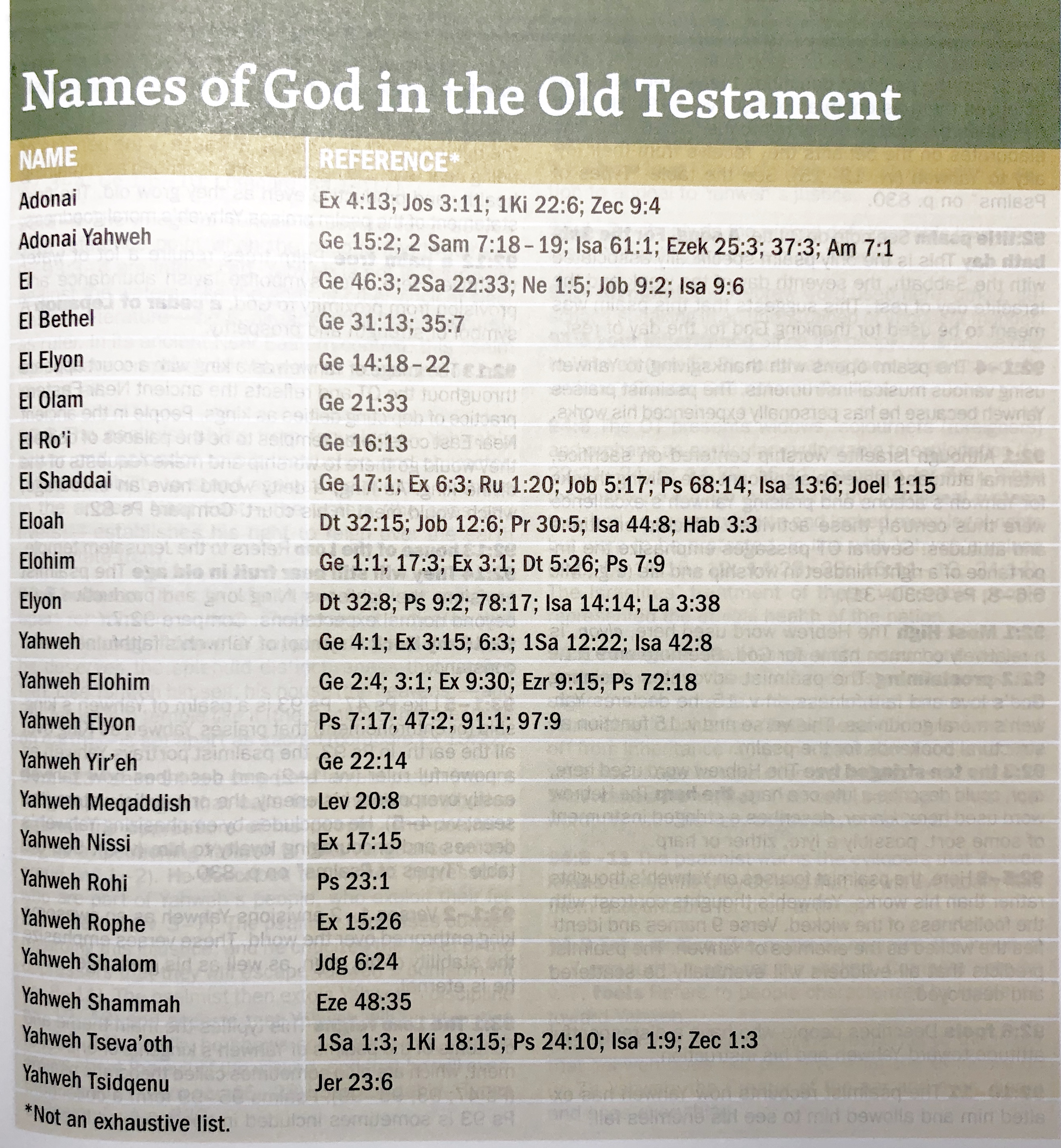
Names Of God In The Old Testament

I love my Faithlife Illustrated Study Bible! I found this gem while reading in the Psalms.

יהוה (yhwh)

The name יהוה (yhwh) is known as the Tetragrammaton, and was probably pronounced as Yahweh. In the Old Testament, it is the proper name of God and is the most common term used to refer to Him (e.g., Gen 4:1). Exodus 3:13–15 connects this name with the verb הָיָה (hayah) “to be”; in this passage, God uses two related names for Himself that are not used elsewhere in the Bible: אֶהְיֶה אֲשֶׁר אֶהְיֶה (ehyeh asher ehyeh, “I am who I am”) and the abbreviated אֶהְיֶה (ehyeh, “I am”), and declares that יהוה (yhwh) is His name. By the time that the Septuagint version of the Torah was translated in the third century bc, Jews avoided pronouncing the Tetragrammaton to avoid committing blasphemy; in reading the Scriptures, the name אֲדֹנָי (adonay, “Lord”) was substituted, and the Septuagint translated this with the Greek word κύριος (kyrios, “Lord”). In English translations of the Bible, יהוה (yhwh) is usually represented as “the Lord,” using capital or small-capital letters to distinguish it from “Lord” as a translation for other Hebrew words. The English representation of this name as “Jehovah” is based on a misunderstanding of a scribal convention that combined the consonants of יהוה (yhwh) with the vowels of אֲדֹנָי(adonay) to remind the reader to pronounce Adonai in place of the Tetragrammaton.

For further details, see these articles: YHWH; Tetragrammaton; Tetragrammaton in the New Testament; Jehovah; I Am Who I Am.

Compound names with יהוה (yhwh)

Sometimes the name יהוה (yhwh) was combined with other terms characterizing God to produce a compound name. The most important of these is יְהוָה צְבָאוֹת (yhwh tseva’oth, “YHWH of Hosts”; e.g., 1 Sam 1:11), which expresses God’s position as the leader of the armies of heaven. Some compound names involving יהוה (yhwh) are translated in the King James Version or in other English translations using the erroneous representation “Jehovah.”

For further details, see these articles: Lord of Hosts; Jehovah-Jireh; Jehovah-Tsidkenu; Jehovah-Nissi.

אֱלֹהִים (elohim) and Related Words

Hebrew אֱלֹהִים (elohim) is by far the most common member of a small group of Hebrew and Aramaic words used to refer to God and other deities. This word is plural in form, but is most often used with singular meaning as a name for the one God of Israel; in this meaning, it occurs with singular verbs (e.g., Gen 1:1). It can also be used with plural meaning to refer to deities of polytheistic belief; in this case, any verbs and adjectives that go with it are plural (e.g., Deut 13:13).

The other words in this family also refer either to the one God or to a polytheistic deity. These are Hebrew אֵל (el, “god”; e.g., Num 12:13; Deut 32:12), Hebrew אֱלוֹהַּ (eloha, “god”; e.g., Job 11:7; Dan 11:38), and Aramaic אֱלָהּ (elah, “god”; e.g., Ezra 6:3; Dan 6:7).

For further details, see these articles: Elohim; Eloah.

Compound Names with El

Hebrew El (“God”) sometimes occurs with other terms in compound names for God. These compound names differ from one another in several ways. For example, the name אֵל שַׁדַּי (el shadday) combines El with the word שַׁדַּי (shadday), which also occurs by itself as a name for God—often translated “Almighty.” The compound name El Shaddai is not frequent, but does occur in several passages (e.g., Gen 17:1; Ezek 10:5). By contrast, the name אֵל רֳאִי (el ro’iy) “God of seeing, God who sees me” occurs only in Gen 16:13, and רֳאִי (ro’iy) does not occur independently as a name of God.

For further details, see these articles: El Roi; El Elohe Israel; El Shaddai; El Elyon.

אָדוֹן (adon) and אֲדֹנָי (adonay)

The Hebrew word אָדוֹן (adon, “master, lord”) is not specifically a divine title. It can be used of humans, indicating a person who has authority (e.g., Judg 19:11; Gen 45:8). It is sometimes used to describe God, emphasizing His authority (e.g., Josh 3:13).

The divine title אֲדֹנָי (adonay) is related to אָדוֹן (adon) and is used only of God (e.g., Psa 2:4). Its form is very close to and may be derived from אֲדֹנַי (adonay, “my lords”), which is simply the plural of אָדוֹן(adon) followed by a first-person singular suffix (e.g., Gen 19:2); but it has a short a vowel in the suffix while the divine title אֲדֹנָי (adonay) has a long a vowel. The divine title may have originated as a respectful title used to address God (e.g., Exod 4:10), using a plural form to express extra respect. However, in the Old Testament it is used not merely to address God, but also to talk about Him (e.g., 2 Kgs 7:6).

For further details, see this article: Adonai.

שַׁדַּי (shadday)

The origin of the name שַׁדַּי (shadday) is uncertain, but it is used as a title for God, especially in the book of Job (e.g., Job 13:3). Its original meaning is debated, but it is often translated “Almighty.” It is sometimes combined with אֵל (el, “god”) in the compound name אֵל שַׁדַּי (el shadday) (e.g., Gen 17:1), but more often occurs alone.

For further details, see these articles: Shaddai; El Shaddai.

עֶלְיוֹן (elyon)

The word עֶלְיוֹן (elyon) means “high, highest”; as a title for God, it is commonly translated “Most High.” It most often occurs alone (e.g., Psa 91:1), but also occurs in compounds with other names of God, including El(e.g., Gen 14:18–22), YHWH (e.g., Psa 7:17), and Elohim (e.g., Psa 57:2).

For further details, see this article: El Elyon.

Other Names

A variety of other names and titles are used for God. A few examples include צוּר (tsur, “Rock”; e.g., Isa 17:10), רֹעֵה (ro’eh) (“Shepherd“; e.g., Gen 49:24), and בּוֹרֵא (bore’, “Creator”; e.g., Isa 40:28). In Psalm 68:4, the Masoretic Text refers to him as “Rider through the Desert”; this is sometimes taken to be a modification of an expression “Rider on the Clouds” which was applied to Ba’al in Ugaritic. In Hosea 2:16, God declares that Israel will no longer call Him בַּעֲלִי (ba’aliy) “my master, my Ba’al” but will instead call him אִישִׁי (ishiy, “my husband”); these names are not used elsewhere in the Old Testament.

Please check out my review of the Faithlife Illustrated Study Bible and pick up a copy for yourself.

Full Of Gratitude And Prayer

I have not stopped thanking God for you. I pray for you constantly. (Ephesians 1:16)

Paul didn’t pray just a one-and-done prayer, but every time he thought of his friends he was grateful and prayerful. 

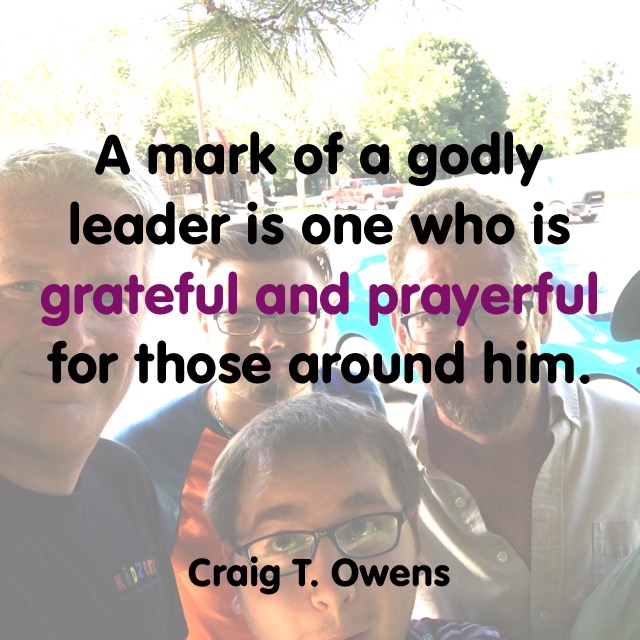
The mark of a godly leader is one who is grateful and prayerful of those around him.

What a prayer Paul prayed! He didn’t want his friends just barely eking out an existence, but he desired for their lives to experience explosive growth and joy! 

He prayed for them to experience…

  • … the full weight of God’s glory
  • … the vast knowledge of God’s revelation wisdom 
  • … an ever-increasing understanding of just who God is
  • … an enlightened mind to grasp God’s nature
  • … an unshakable hope in God
  • … the immeasurable richness of an intimate relationship with God through Jesus Christ
  • … God’s power working both in them and through them 
  • … the rock-solid security they have in Jesus
  • … their inestimable value they were to God
  • … their indispensable place in the Body of Christ 

I like the way Eugene Peterson captures this prayer in The Message:

That’s why, when I heard of the solid trust you have in the Master Jesus and your outpouring of love to all the followers of Jesus, I couldn’t stop thanking God for you—every time I prayed, I’d think of you and give thanks. But I do more than thank. I ask—ask the God of our Master, Jesus Christ, the God of glory—to make you intelligent and discerning in knowing Him personally, your eyes focused and clear, so that you can see exactly what it is He is calling you to do, grasp the immensity of this glorious way of life He has for His followers, oh, the utter extravagance of His work in us who trust Him—endless energy, boundless strength!

Spiritual leaders should be working for and praying for the ever-growing maturity of those under their care. When they see that growth, they should burst out into grateful prayer. And if they don’t see the growth they anticipated, they should pray in faith believing that maturity will soon be visible. 

Let me say it again: The mark of a godly leader is one who is grateful and prayerful of those around him.

This is part 40 in my series on godly leadership. You can check out all of my posts in this series by clicking here.

When Trials Come

Notice that the title of this post says “when” not “if.” Maybe this will be a newsflash for some of you (but I highly doubt it): Christians will face trials.

Even the apostle James says, “Dear brothers and sisters, when troubles of any kind come your way, consider it an opportunity for great joy” (James 1:2). Wait, trials are “an opportunity for great joy”? How can that be?!

→ Trials teach us lessons that we can learn in no other way! ←

How much more mature, and wise, and empathetic would we become if instead of trying to get out of the trials that come our way, we would instead see what we could get out of that trial!

We can rejoice, too, when we run into problems and trials, for we know that they help us develop endurance. And endurance develops strength of character, and character strengthens our confident hope of salvation. And this hope will not lead to disappointment. For we know how dearly God loves us, because He has given us the Holy Spirit to fill our hearts with His love. (Romans 5:3-5)

“When trials come we can try to get out of them, or we can learn to get something out of them.”

—Craig T. Owens

So the next time a trial comes your way, ask the Holy Spirit to show you what lessons you can learn by going through the trial.

Rejoicing At The Coming Of The Judge

In Psalm 50, we read the first-of-twelve psalms written by King David’s handpicked worship leader, a man named Asaph. On the day that Asaph first took up his position as worship leader, David gave him a special song, which definitely influenced Asaph’s songwriting.  

Psalm 50 has a pretty easy outline: an introduction in the first six verses, followed by 17 verses of God speaking to His people—speaking to you and me! In between the introduction and God’s speaking is the word selah.

Selah means a time for us to pause and carefully consider. So Asaph is essentially saying, “God is getting ready to speak with us, so we need to selah—pause from what we are doing so that we can pay careful attention to His words!”  

Asaph sets the stage in the first verse, telling us that the Mighty One, God, the Lord speaks. The words that are about to be spoken come from THE I AM—the All-Sufficient One, the Omnipotent, the All-Knowing, All-Powerful Ruler of the Universe. Asaph also reminds us that He is coming as THE Judge.

When you hear that THE All-Powerful, All-Knowing One is THE Judge that has summoned you into His courtroom, it’s quite likely that your heart would skip a beat. Especially when God lists some of the sins you and I are guilty of breaking in verses 16-20. 

It’s also possible that the news that you have to appear before THE Judge could cause you to rejoice. What? How can we rejoice at that?! David taught Asaph this concept in the song he gave him: God’s people should rejoice over God’s judgments. 

You see, in Psalm 50 God says, “I do not rebuke you for your sacrifices, or for all your attempts to follow the rules.” It’s not in the practices of the law that we find salvation.

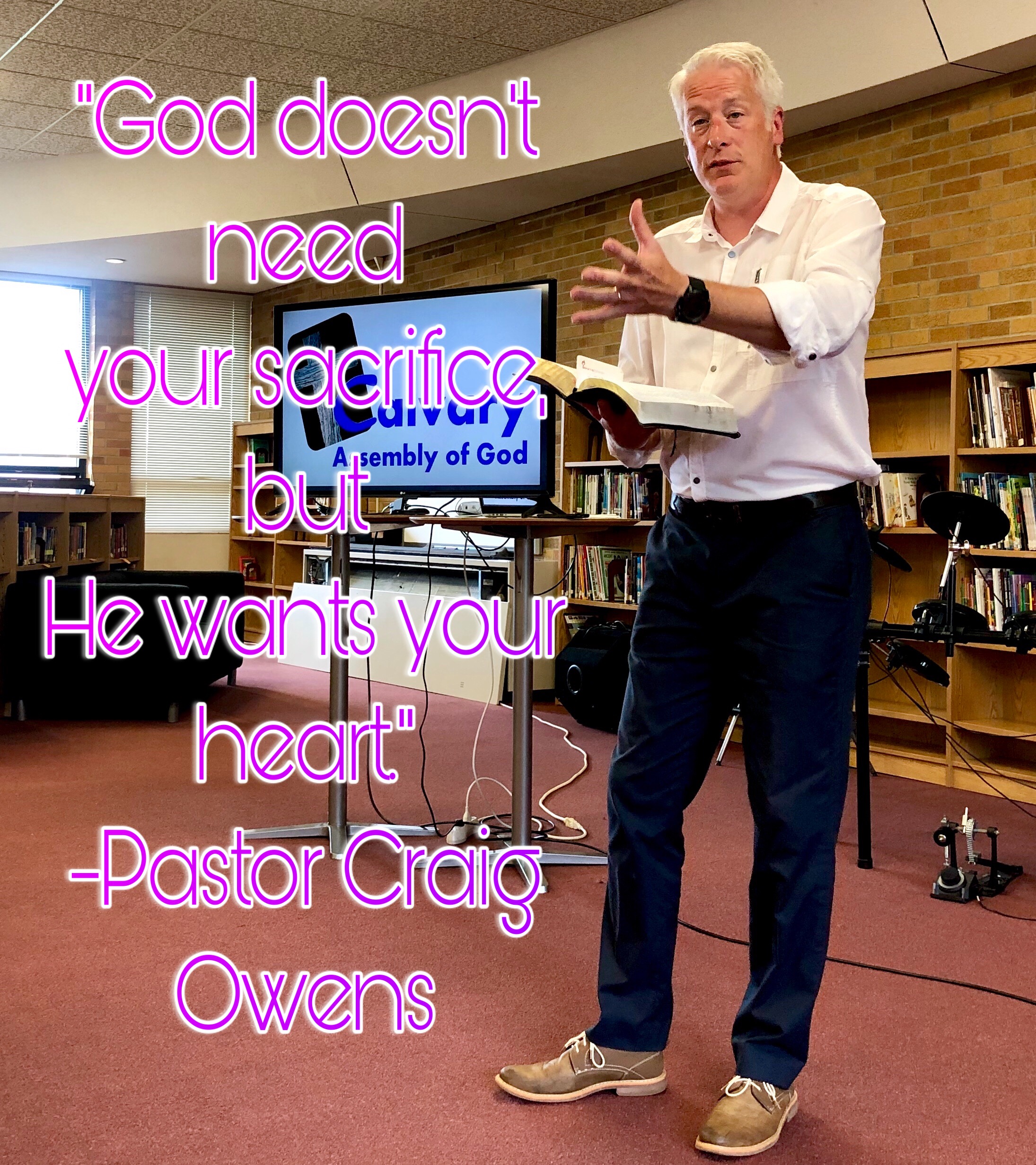
God doesn’t need our sacrifices, but He wants our hearts. 

In order to win our hearts for Himself, THE Judge did something absolutely mind-blowing—THE I AM became flesh like us. And then He became the once-for-all sacrifice for our sins, paying our penalty Himself when He died on the Cross (see Hebrews 2:14-17; 7:17-27). 

This is why we can rejoice when we hear we have to stand before THE Judge. When you have placed your faith in what Jesus did for you on the Cross, when THE Judge opens His perfect record book to your page He will read this inscription written in the crimson red blood of Jesus: PAID IN FULL!

This is why we can rejoice at the thought of seeing THE Judge face to face!

Join me next Sunday as we wrap up this summer looking at the Selahs in the Psalms. We plan to restart this series next summer, unless the Judge calls us home before then!

Poetry Saturday—Thy Ship

Hadst thou a ship, in whose vast hold lay stored
The priceless riches of all climes and lands,
Say, wouldst thou let it float upon the seas
Unpiloted, of fickle winds the sport,
And all the wild waves and hidden rocks the prey?

Thine is that ship; and in its depth concealed
Lies all the wealth of this vast universe—
Yea, lies some part of God’s omnipotence,
The legacy divine of every soul.
Thy will, O man, thy will is that great ship,
And yet behold it drifting here and there—
One moment lying motionless in port,
Then on the high seas by sudden impulse flung,
Then drying on the sands, and yet again
Sent forth on idle quests to no-man’s land
To carry nothing and to nothing bring;
Till, worn and fretted by the aimless strife
And buffeted by vacillating winds,
It founders on the rock, or springs a leak,
With all its unused treasures in the hold.

Go save thy ship, thou sluggard; take the wheel
And steer to knowledge, glory, and success.
Great mariners have made the pathway plain
For thee to follow; hold thou to the course
Of Concentration Channel, and all things
Shall come in answer to thy swerveless wish
As comes the needle to the magnet’s call,
Or sunlight to the prisoned blade of grass
That yearns all winter for the kiss of spring. —Ella Wheeler Wilcox

Thursdays With Spurgeon—Following The Prompting

This is a weekly series with things I’m reading and pondering from Charles Spurgeon. You can read the original seed thought here, or type “Thursdays With Spurgeon” in the search box to read more entries.

Following The Prompting

     I once while preaching at New Park Street Chapel. I had passed happily through all the early parts of divine service on the Sabbath evening and was giving out the hymn before the sermon. I opened the Bible to find the text, which I had carefully studied as the topic of discourse, when, on the opposite page, another passage of Scripture sprang upon me like a lion from a thicket with vastly more power then I had felt when considering the text that I had chosen. The people were singing and I was sighing. I was in a strait between two, and my mind hung as in the balances. I was naturally desirous to run in the track that I had carefully planned, but the other text would take no refusal and seemed to tug at my skirts, crying, “No, no, you must preach from me! God would have you follow me.” I deliberated within myself as to my duty, for I would neither be fanatical nor unbelieving, and at last I thought within myself, Well, I should like to preach the sermon that I have prepared, and it is a great risk to run to strike out a new line of thought, but as this text constrains me, it may be of the Lord, and therefore I will venture upon it, come what may.

     I had brought myself into great difficulty by obeying what I thought to be a divine impulse, and I felt comparatively easy about it, believing that God would help me and knowing that I could at least close the service should there be nothing more to be said. I had no need to deliberate, for in one moment we were in total darkness. The gas had gone out…. Having no manuscript, I could speak just as well in the dark as in the light…. When the lamps were lit again, I saw before me an audience as rapt and subdued as ever a man beheld in his life. … Thus, providence befriended me. I cast myself upon God, and His arrangements quenched the light at the proper time for me. Some may ridicule, but I adore; others may even censure, but I rejoice.

From The Autobiography of Charles Spurgeon

God can speak to pastors as clearly in his or her sermon preparation time as He can in the very moments before the sermon begins. The key is our obedience to follow the prompting of the Holy Spirit. 

Spurgeon would never advocate that preachers “wing it” every time they step into the pulpit. His own life showed a man of diligent study of the Scripture. But neither would Spurgeon say that preachers have to stick to their prepared remarks no matter what. What I think he would say is: Trust God when you’re studying for a sermon, and trust God when you’re delivering a sermon. Allow the Spirit to change your course at any moment. 

Is this a bit nerve-wracking? Spurgeon would say, “Yes, only when deliberating whether to strike out on the new course.” But notice how once he obeyed that prompting, he felt completely at ease.

Spurgeon also reminds us, “I do not see why a man cannot speak extemporaneously upon a subject that he fully understands. Any tradesman, well versed in his line of business, could explain it without needing to retire for meditation, and surely I ought to be equally familiar with the first principles of our holy faith. I ought not to feel at a loss when called upon to speak upon topics that constitute the daily bread of my soul.”

The Church Needs To Foster Community

“Amid the confusion of Christians mistreating people with gender dysphoria to prop up their sense of self-righteousness, and progressives mistreating them to advance their agenda of autonomy, those with real identity struggles are forgotten. Christ alone understands who we are through and through. And because of that each one of us in our fractured states needs to come to Him. …

“The need of the hour is for biblically faithful compassion. The church needs to open its doors and Christians need to open their hearts so that those struggling to find resolution to their dysphoria—and those who are struggling to find clarity amidst other confusions—can find community and, ultimately, their true identity in Christ. In Christ, they can be understood. …

“God’s original intent is for harmony between one’s soul and one’s body. This is why Christians, of all people, should be compassionately concerned with helping people find mind-body congruence. For the Christian, the mind and the body are both important and were meant to work harmoniously. … This biblical perspective defends our integrity as whole human beings in contradistinction to the secular effort to reduce us to our chemistry and jettison any idea that we have an immaterial mind or soul. …

“That is why the invitation of Christ has come in this order: recognition, repentance, redemption, regeneration. When we recognize our need for the Savior (because of our sins in general, not because of our dysphoria), repentance happens and then we are redeemed. But that redemption works itself out in our lives over time. It is the Holy Spirit who lives and works in us to conform us to Jesus’ likeness. It is not an overnight process, which means the church must do a better job of helping that process along. The church needs to foster community.” —Abdu Murray

Uphill Or Downhill?

…And because of this I rejoice. Yes, and I will continue to rejoice (Philippians 1:18).

Paul is in prison, yet he tells his friends that he is choosing to rejoice. Wow! 

Not only that, but this same imprisoned man also reminds his friends to…

  • … let their joy in Jesus overflow 
  • … conduct themselves in a manner worthy of the gospel of Christ
  • … continue to have a servant’s attitude like Jesus
  • … don’t give in to complaining or arguing 
  • … look out for the interests of other people 
  • … rejoice in the Lord
  • … don’t rest on their laurels
  • … forget the past and press on toward the future 

John Maxwell has noted that most people have uphill dreams but downhill habits. That is definitely not a winning combination! 

Paul is making his friends aware of the possible downhill habits that may hold them back from their uphill dreams, and using himself as an example. This first step—awareness—is vital if we are going to break free of the things that are pulling us away from our God-given dreams. 

Solomon wrote, “The path of life leads UPWARD for the prudent to keep them from GOING DOWN to the realm of the dead” (Proverbs 15:24). 

Being prudent is saying, “I’m always on the lookout for what’s best.” 

None of us can go UP by ignoring our downhill habits, or even trying to coast through life. The only way to achieve our uphill dreams is to ask the Holy Spirit to reveal our downhill habits so that we can make a plan to turn those around. 

Check out these characteristics that Paul shares—

Downhill Habit              Uphill Habit
Complaining                    Rejoicing (4:4)
Selfishness                      Gentleness (4:5)
Worrying                         Praying (4:6a)
Grumbling                       Giving thanks (4:6b)
Fixing it myself                Giving it to God (4:6c)
Idle thoughts                   Thinking about my thinking (4:8)
Making my own way         Getting a mentor / partner (4:9)
Being discontent              Being content (4:11-12)
Trying to be self-made     Striving to be Christ-reliant (4:13)

A good prayer for all of us who have uphill dreams that we want to achieve—Holy Spirit, reveal to me my downhill habits. I acknowledge that I need Your help to see and break these habits. Then help me to replace them with Christ-honoring uphill habits that will allow me to achieve the purpose God has for my life.

Ultimate Wisdom

Last week I posted a quote on some of my social media channels that simply stated: “Our opinions don’t matter if they don’t square with God’s Word on the matter.” This seemed to me to be a fairly uncontroversial statement, but one anonymous reader really took me to task for using the hashtag #objectivetruth. Apparently, he thinks there is no such thing. 

But don’t we all rely on objective, external standards all the time? For instance, a gallon of gasoline is a gallon regardless of where you buy it, or whether you feel like it’s a gallon or not. And when you go to pay for your gasoline, the price isn’t based on how the gas station attendant is feeling at that moment, but on the objective amount posted. 

Psalm 49 is somewhat unusual in that it is a “wisdom psalm.” This psalm feels a lot more like something we would read in Proverbs or Ecclesiastes than it does a prayer or song in the Psalms. 

For instance, the first four verses of this Psalm sound a lot like the opening verses of the Book of Proverbs. And verses 5-13 of the Psalm echo what Solomon wrote in Ecclesiastes 2. 

This psalmist—like Solomon—wants us to understand how important it is to get wisdom. So we are urged to listen intently to those who have hard-won insight, to those who have “been there, done that” so that we don’t have to repeat their folly. 

What is that wisdom? It can be broken down into two profound statements:

(1) Everyone dies. 

That can be a really depressing truth IF your focus is building your own kingdom. If all there is to life is what you can earn and build before you die, only to realize that your “kingdom” ends at your last breath, that can be very depressing. 

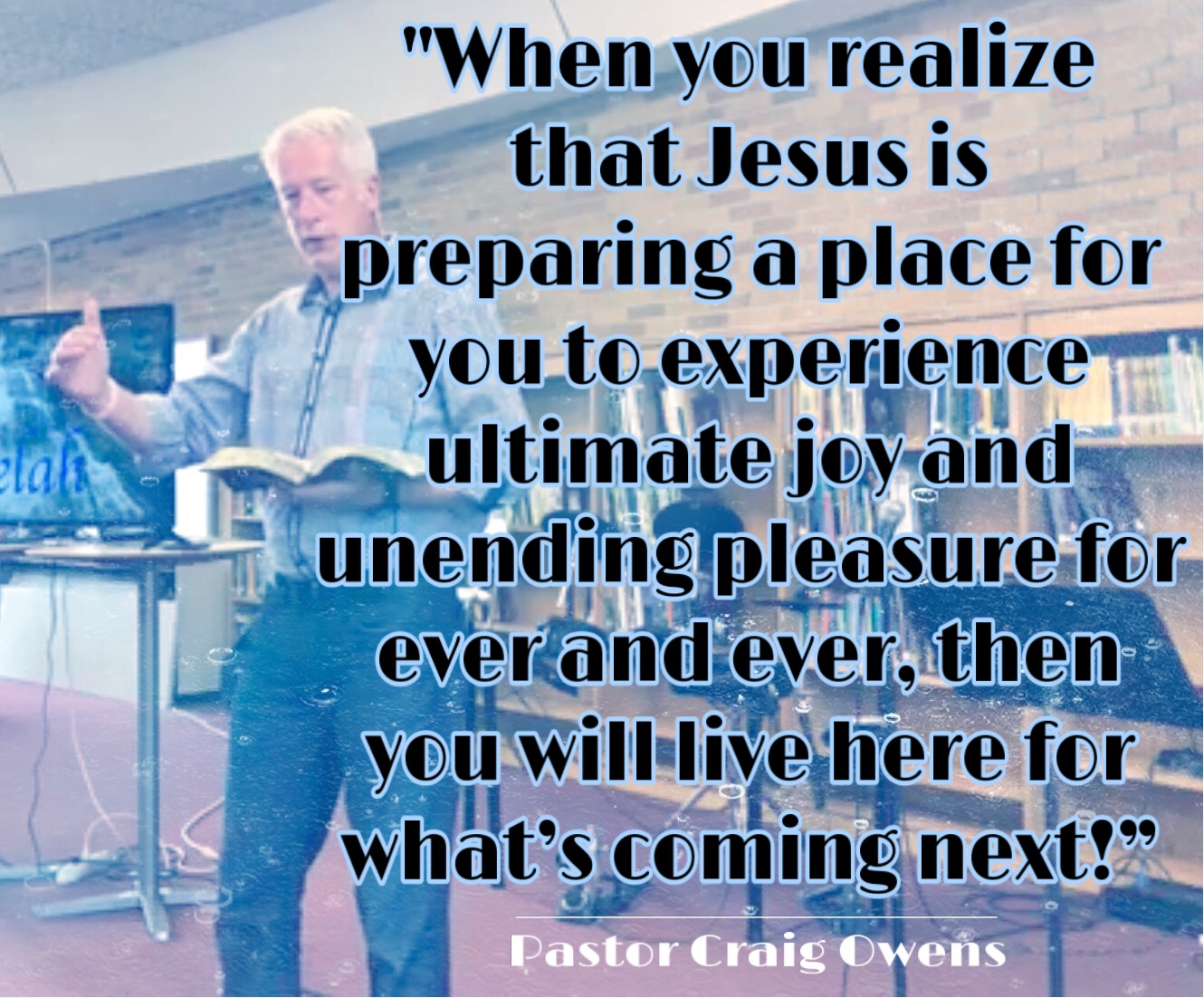
However, this realization that everyone dies can be a very liberating truth IF your focus is on the eternal kingdom that is awaiting you in Heaven. When you realize that Jesus is preparing a place for you to experience ultimate joy and unending pleasure forever and ever, then you will live here for what’s coming next! 

(2) Our eternal destination after we die is determined before we die.

If someone told me that he had discovered the secret to immortality, and then he died and came back to this life to tell me that his theory was correct, it would be wise listen to him. 

That’s exactly what Jesus did for us!

He told us that He would die on a Cross and that He would be raised back to life. AND HE DID IT! His hard-won insight, His “been there, done that” wise words to us are this—“Believe in Me. I died to pay the penalty for the sins that will keep you out of Paradise. So place your faith in what I did, and ask my Father to forgive your sins. Then I promise you that you will spend forever and ever with Me in Paradise!” 

THIS objective truth determines everything else about our lives. 

So I’ll repeat it again—

“Our opinions don’t matter if they don’t square with God’s Word on the matter.” —Craig T. Owens

Join me next Sunday as we continue our series looking at the Selahs in the Psalms.