In the sci-fi movie The Matrix, a character named Neo is fascinated by a young man who appears to be bending spoons simply by looking at them. Neo sits down on the floor across from this young man and takes a spoon in his hand. Although young, this boy gives sage counsel to Neo, “Don’t try to bend the spoon, for that is impossible. Instead remember that there is no spoon. That way you will see that it is not the spoon the bends, but you are the one who bends.”
Although this is a science fiction movie, there is a nugget of truth here for anyone who has ever been face-to-face with an impossible situation. The God who does the “impossible” has offered us the means to see His omnipotence at work—He has told us that we can bring our impossibles to Him in prayer.
Prayer changes things!
In God’s perfect will, sometimes the impossible become completed before our very eyes, and sometimes we see that it is not the situation that bends, but it is we who bend, becoming more godly, wise, and mature because of what God has imparted to us.
Heartfelt prayer is never a meaningless exercise. Without exception, something is changed with every single prayer we offer to God. I invite you to join me for this series of messages looking at what prayer changes.
dire straits:
[dahyuhr streyts] / ˈdaɪər ˈstreɪts /
→ very difficult circumstances.
In Psalm 142, David relates the dire straits he was in:
Enemies closing in.
Trapped in a dead-end cave.
No one around to help.
I look for someone to come and help me, but no one gives me a passing thought! No one will help me; no one cares a bit what happens to me. (Psalm 142:4 NLT)
When there is no earthly way you can get out of the jam you’re in, it’s a perfect time for God to show you that He cares enough to do what no one else can do or will do!
Don’t throw in the towel; throw your hands up to God.
Then I pray to You, O Lord. I say, “You are my place of refuge. You are all I really want in life.” (Psalm 142:5 NLT)
If you are in dire straits, you may also want to check out:
Listen to the podcast of this post by clicking on the player below, and you can also subscribe on Apple, Spotify, or Audible.
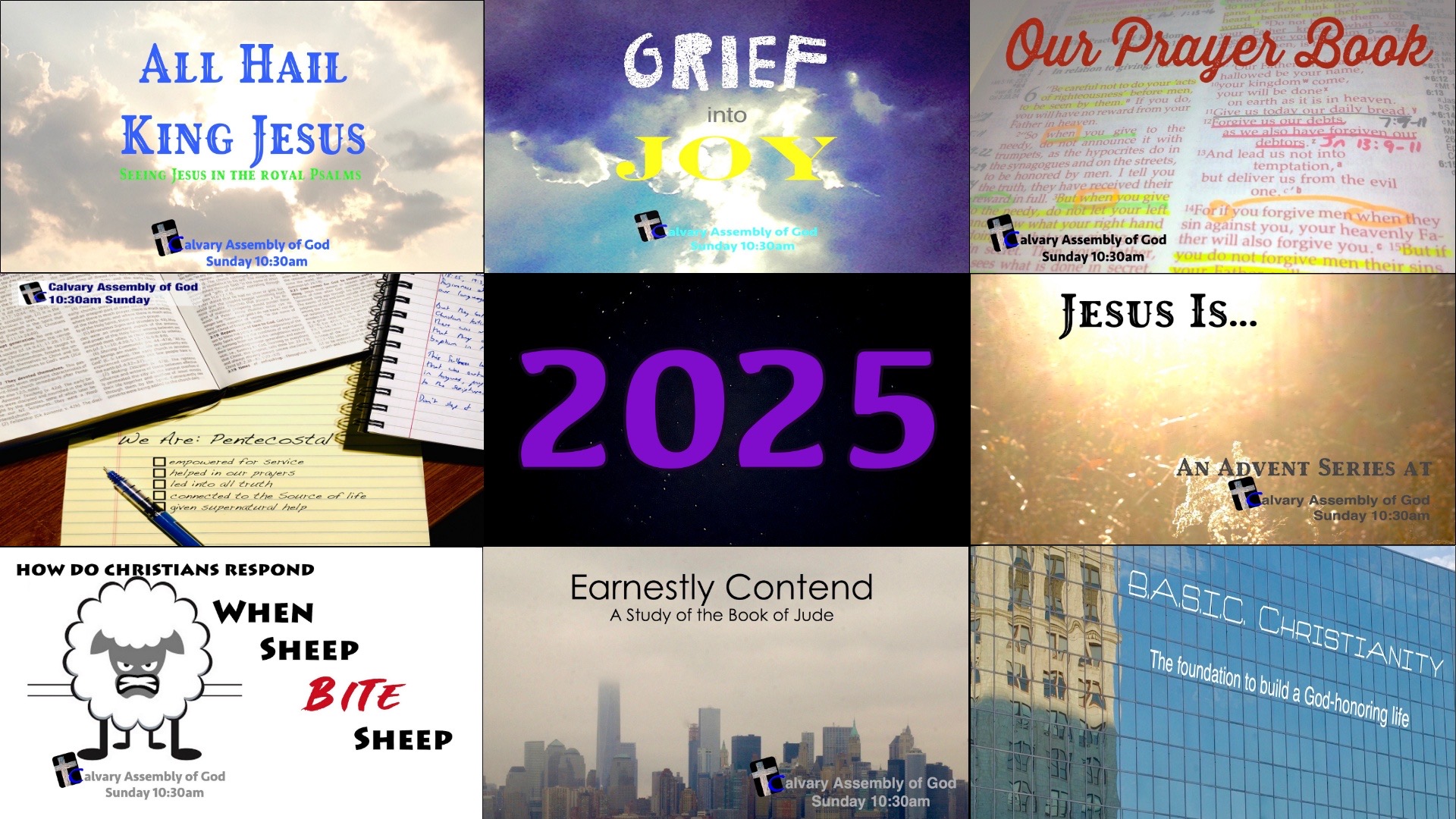
I like to take some time at the end of each calendar year to both look back and look forward. Throughout biblical history, whenever God was ready to take His people into a new chapter, He always took time for them to review the ground they had already covered. So as we get ready to go into 2026, here is a look back at the things God taught us in 2025 through these sermon series I shared with the wonderful folks at Calvary Assembly of God.
Our Prayer Book. God has given us an amazing Book! The Bible addresses the human condition—all our desires, frustrations, hopes, and the only path on which we can find eternal and unfading joy. The Bible not only tells us how to live, but it also tells us how to pray. And it’s as we pray that the principles in the Scripture come alive with fresh applications for our daily life. We don’t have to fumble around, attempting to find the right words to pray and then wondering if those prayers were heard on high. We can learn to pray in agreement with God’s perfect will. God has spoken to us through His Word, and He invites us to use His words to form our prayers back to Him. I love beginning each new year with a reminder of the power of prayer.
When Sheep Bite Sheep. No one likes to be mistreated—especially when the one that hurts us is one we would have thought of as an ally or even a friend. These slights become even more painful when they take place inside the Christian community. When sheep bite sheep, our natural response is to lash out to try to even the scales of justice. But the Bible consistently and clearly calls Christians to pursue a supernatural response. This is a highly practical series of messages on how you can respond in a Christ-honoring way when you are bitten by another sheep in God’s pasture.
Grief Into Joy. At the end of your rope … down for the count … nothing but gray skies all around … unable to see any light at the end of the long, dark tunnel. Ever been there? The reality is, we all have been there. But the good news is that we don’t have to stay there! God is always at work to turn our apparent no-win, dark, hopeless situations into something bright and glorious! He is working in ways that no human mind could have dreamed up, and working on our behalf in a way no human power could ever hope to rival. God specializes in turning grief into joy! We are approaching the time of year where we remember the death of Jesus. Without a doubt that was the darkest, most grief-stricken day in all of history. Yet that time of mourning was completely forgotten in the overwhelming joy that exploded from an empty tomb on Resurrection Sunday!
We Are: Pentecostal. Pentecost for over 1500 years was a celebration in Jerusalem that brought in Jews from all over the world. But on the Day of Pentecost which came just ten days after Jesus ascended back into heaven, the meaning of Pentecost was forever changed! Followers of Jesus—now empowered by an infilling of the Holy Spirit—began to take the good news of Jesus all over the world. These Spirit-filled Christians preached the Gospel and won converts to Christ even among hostile crowds, performed miracles and wonders, stood up to pagan priests and persecuting governmental leaders, and established a whole new way of living as Christ-followers. We, too, can be Pentecostal followers of Jesus Christ today. We can experience an anointing and an empowering in our lives that turns ordinary Christianity into extraordinary Christianity!
All Hail King Jesus. The Bible closes with a vivid picture of Jesus as the undisputed King of kings, and we look forward to that time when all creation bows before Him. Even more so, we cannot wait to be with our King for ever and ever! The psalmists of Israel also foresaw the coming of this King, especially in the example they had in their King David. Many of the poetic words they penned esteemed Jesus as the King for Whom they longed. David himself not only saw the future coming of the Eternal King, but he also looked back in time to see Jesus reigning as King before time began. It is these royal psalms that we will be studying as we celebrate the first arrival on Earth of our King and as we anticipate the second coming of our Royal Majesty. The more clear our vision is of this King, the more we will worship Him, follow Him, and invite others to know Him as their own Lord and Master.
B.A.S.I.C. Christianity. When someone invites Jesus into their heart, they are immediately justified in God’s sight and have the assurance of Heaven as their eternal home. But then the question comes, “Now what?” Our justification is immediate but our sanctification is an ongoing, lifelong process. Sanctification is what brings fruitfulness to a Christian’s life and what allows that fruitful life to be a testimony to others. The Bible gives us the B.A.S.I.C.s of this Christian life, and that’s what we will be exploring over the next few weeks.
Earnestly Contend. Jude, the half-brother of Jesus, wrote a letter to the church. He said he was hoping to write about salvation, but looking at the conditions in the culture around him, he felt urged by the Holy Spirit to challenge Christians to “contend for the faith that was once for all entrusted to the saints.” What does this word “contend” mean for us today? Are Christians supposed to be combative about sharing their faith? Are they supposed to argue with anyone and everyone who disagrees with them on any point? Jude gives us Holy Spirit-inspired wisdom to understand how to deal with those who have departed from the purity of biblical truth.
What To Do In A Crisis. Look back through the pages of history and you will see a common theme. Whether it’s world history or your own personal history, you have so much for which you can give thanks. In tough times, we tend to become forgetful because we are so focused on the intensity of the moment. But if we will simply look back in time, we will see just how faithful God has been to us. We bring our focus back to Him in our trying times when we remember and rehearse “the wonderful things He has done” (Psalm 107). The season of Thanksgiving is a good time for us to be reminded of the powerful resource we have when we are giving thanks for our blessings. Thankful people are confident people because they choose hope in God’s faithful provision over grumbling about their current circumstances.
Jesus Is…. Over 700 years before He was born in Bethlehem, God spoke through the prophet Isaiah to describe the Messiah that was coming. Peter said that until the advent of Jesus, the prophets continued to scour the evidence of who this Messiah was going to be. When Jesus finally came to earth as a Man, young and old alike were thrilled to proclaim that the One they had been longing for had made His long-expected appearing! As Jesus lived on earth, died on Calvary, and was resurrected back to life, He continued to fulfill all that had been prophesied about Him. Isaiah said of Jesus: “He will be called Wonderful Counselor, Mighty God, Everlasting Father, Prince of Peace.” This Advent season we will take some time to unpack what each of these majestic titles mean. We will explore how Jesus demonstrates that He is truly worthy of each of these titles, and we will see how that knowledge should thrill our hearts as we celebrate His first Advent and eagerly long for His Second Advent.
If you live in northern Kent County and don’t have a home church, I would be thrilled for you to visit me at Calvary Assembly of God this year.
Listen to the podcast of this post by clicking on the player below, and you can also subscribe on Apple, Spotify, or Audible.
When we talk about the Baby in the manger, there is often an aspect that we overlook, although it’s included in many of our Christmas carols—
born is the King of Israel
come and worship Christ, the newborn King
hark the herald angels sing, glory to the newborn King
joy to the world, the Lord is come, let earth receive her King
I think many of us bristle a bit at the idea of any king—especially someone claiming absolute authority as King of kings—because of our unpleasant experiences, or perhaps the stories we have heard from history. Lord Acton was right when he said, “Power tends to corrupt and absolute power corrupts absolutely.” Every monarch throughout history has established their kingdom by the strength of their sword: “Do things my way, or else!” Lord Acton went on to correctly add, “Despotic power is always accompanied by corruption of morality.”
The kings of Isaiah’s day in Israel were nothing but evil, and the kings of Judah were becoming more and more ungodly with each successive generation. What about during the time Jesus was to be born? Luke 2:1 tells of Caesar Augustus. Augustus was born Octavian and he came to power after Julius Caesar was assassinated and after fighting against Mark Anthony and Cleopatra. Augustus claimed to restore the republic, but he really kept all the power to himself.
This is why we tend to distrust those who claim authority over us and demand from us our allegiance to them. So when Isaiah begins to tell of the coming Messiah (Isaiah 9:2-5) it sounds like a warlord wielding His powerful sword.
But recall that the first time time Isaiah uses the Hebrew word shalom (peace) is in the titles of this King. Isaiah calls Him a Child and then gives Him such unexpected titles (Isaiah 9:6)!
Isaiah says “the government will be on His shoulders.” The word misra (government) is only used twice in the Old Testament, here in vv. 6-7. The root word sara is also only used twice, and both times are related to Jacob the trickster being transformed into Israel, the one in whom there is no deception. This tells us that the Messiah is going to take the burden on Himself—He flips the Kingdom upside! Instead of all of us serving Him, He comes to serve us!
This is why it’s called His government and peace and establishing and upholding it with justice and righteousness!
This King of absolute power—the One Who is also called Mighty God—could overwhelm us with His unquestioned, unrivaled, and unapproachable power, but He came to be our King who makes peace.
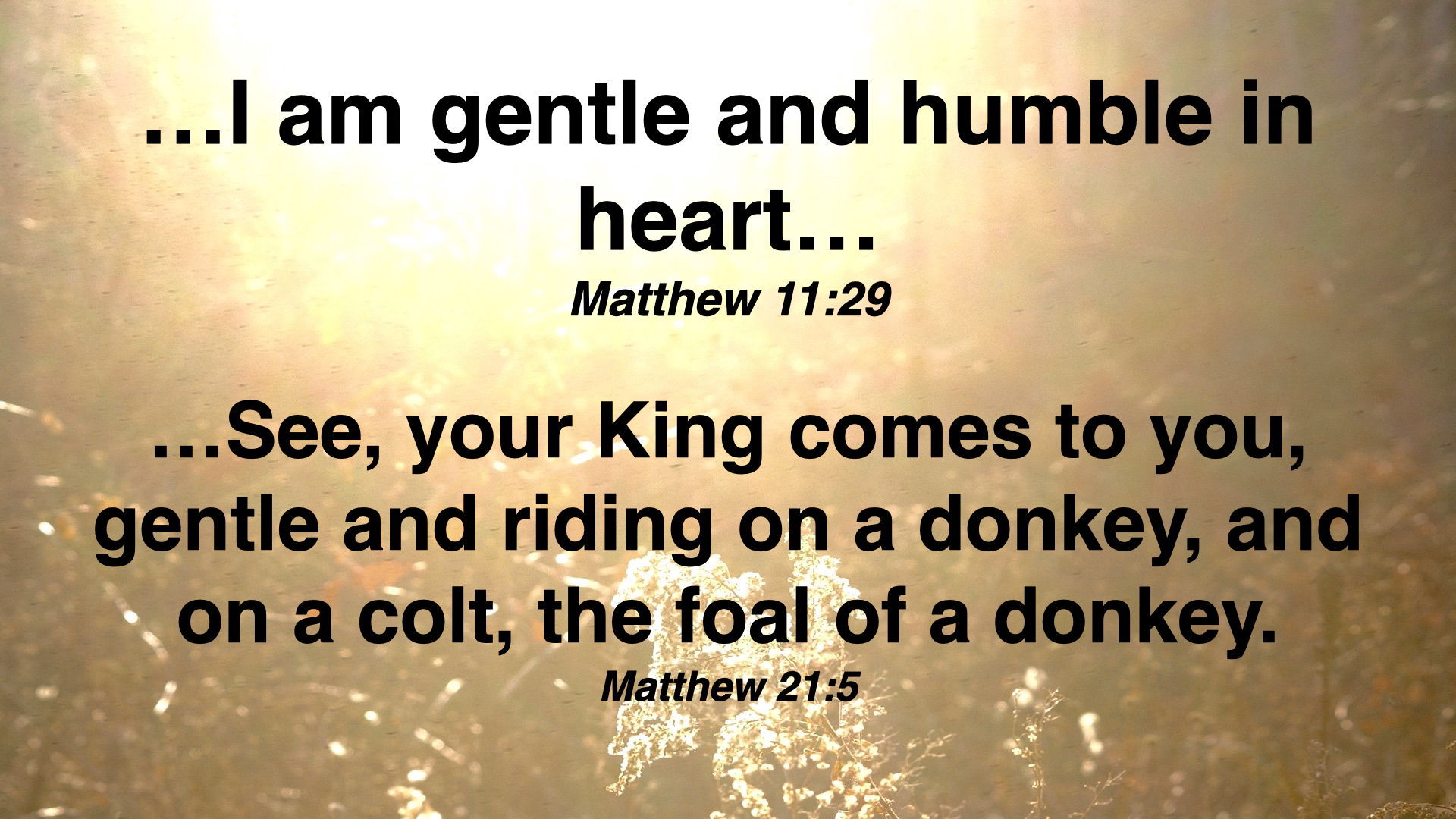
Our King is the most awesome power in the universe, but He is approachable because He is humble (Philippians 2:6-8; Isaiah 53:1-5; Matthew 11:29; Matthew 21:5).
This is exactly what the angel foretold to Mary (Luke 1:26-33), and this is what Mary grasped, as she relates it to us in her Magnificat. Listen as she expresses praise for both our King’s power and His gentleness (vv. 46-55).
Our King came to draw His sword not against us but against the enemy that kept us enslaved and separated from God (Isaiah 9:2-5; Colossians 2:13-15; Revelation 1:18).
In Isaiah 9:6 we read that the government will be on His shoulders. This is Jesus carrying the burden. This word for “shoulders” in the OT is almost always associated with the words “burden” or “yoke.”
We were born with the yoke of sin burdening us (Hebrews 2:15). Jesus took that on His shoulders when He took an old rugged Cross on His shoulders. Now He invites us to give our burden and our yoke to Him (Matthew 11:28-30).
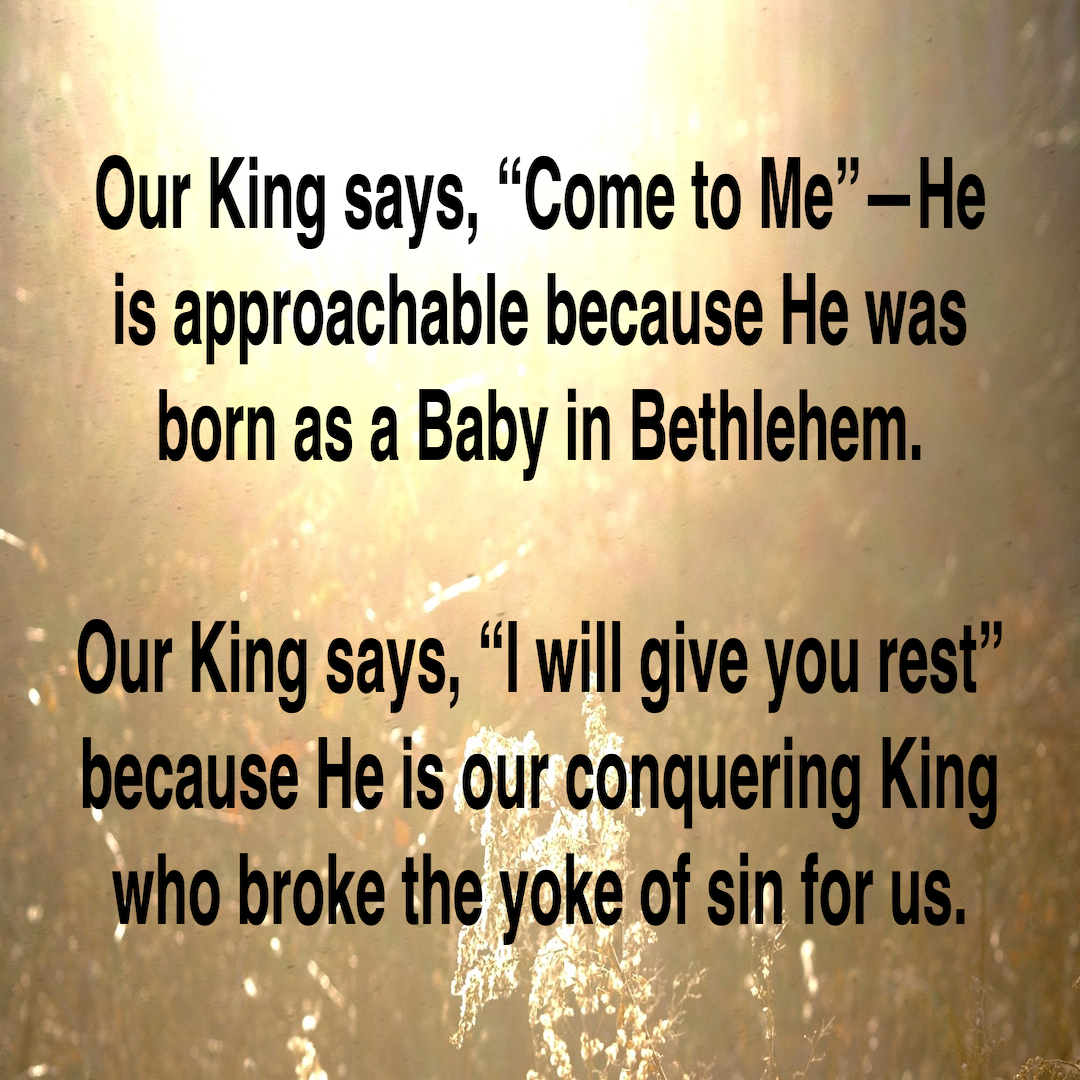
Our King says, “Come to Me”—He is approachable because He was born as a Baby in Bethlehem. Our King says, “I will give you rest” because He is our conquering King who broke the yoke of sin for us. This is what Christmas should remind us!
If you’ve missed any of the previous messages in our series looking at the titles and roles of the Messiah, you can check them all out here.
“Joy doesn’t wait until everything is repaired and restored. It takes root in God’s presence and grows even in hard soil.
“Advent joy doesn’t mean everything is going well. It’s not shallow optimism or a quick distraction from pain. It’s the deep gladness of knowing God is near, faithful, and making all things new.…
“This joy doesn’t depend on circumstances. It flows from union with God. That means joy can live alongside sorrow. …
“The Advent season invites us to practice this kind of joy. As we remain in God’s love and join his Kingdom work of generosity and mercy, we let joy overflow through our lives like a song that begins quietly now but will one day fill all creation.” —Bible Project’s Anticipating Christmas reading plan
“No other story, no pagan legend or philosophical anecdote or historical event, does in fact affect any of us with that peculiar and even poignant impression produced on us by the word Bethlehem. No other birth of a god or childhood of a sage seems to us to be Christmas, or anything like Christmas.” —G.K. Chesterton
“One incident in angelic history, the angelic pronouncement to shepherds in their fields, is enough to weld our hearts to them forever. How free from envy the angels were! Christ did not come from heaven to save their peers when they fell. When satan, the mighty angel, dragged with him a third part of the stars of heaven, Christ did not stoop from His throne to die for them; but He left them to be reserved in chains and darkness until the last great day. Yet angels did not envy men. Though they remembered that He took not up angels, yet they did not murmur when He took up the seed of Abraham; and though the blessed Master had never condescended to take the angel’s form, they did not think it beneath them to express their joy when they found Him arrayed in the body of an infant.” —Charles Spurgeon
“Long had God promised the world’s redemption would come through the offspring who would sustain a bite to the heel yet, in the very act of battle, crush the serpent’s head. Even as kings and prophets pinned their hopes on the coming births of sons, God unfolds His master scheme of one Son to overshadow them all.
“A glimpse of this Son’s manifold greatness will be captured in His name (Isaiah 9:6), which turns out to be not singular but fourfold. He is Guide, Champion, Caretaker, and Peacemaker, and each of these paired with attendant glory.” —David Mathis
“The manger of Bethlehem was big with God’s glory; in the incarnation was wrapped up all the blessedness by which a soul, snatched from the depths of sin, is lifted up to the heights of glory.” —Charles Spurgeon
Listen to the podcast of this post by clicking on the player below, and you can also subscribe on Apple, Spotify, or Audible.
I opened an email this week and clicked on the link to login in to my auto and homeowner’s insurance account, and I was greeted on their website with this message, “Peace of mind is the best gift you can give yourself this season.” And I said to myself, “How perfect, because we are looking at the next prophesied name for Jesus which was given before He was born in Bethlehem: Prince of Peace.”
Except there’s a huge problem here. Did you see it in that website message? “The best gift you can give yourself.” Quite frankly: I cannot give myself peace! Colossians 1:21 says, “Once you were alienated from God and were enemies in your minds because of your evil behavior.” All of us have sinned and are hopelessly destined for eternal punishment (Romans 3:23, 6:23a).
Thankfully, Romans 6:23 goes on to say “the gift of God is eternal life in Christ Jesus our Lord.” This is what the fourth prophesied title of Jesus foretells (Isaiah 9:6-7).
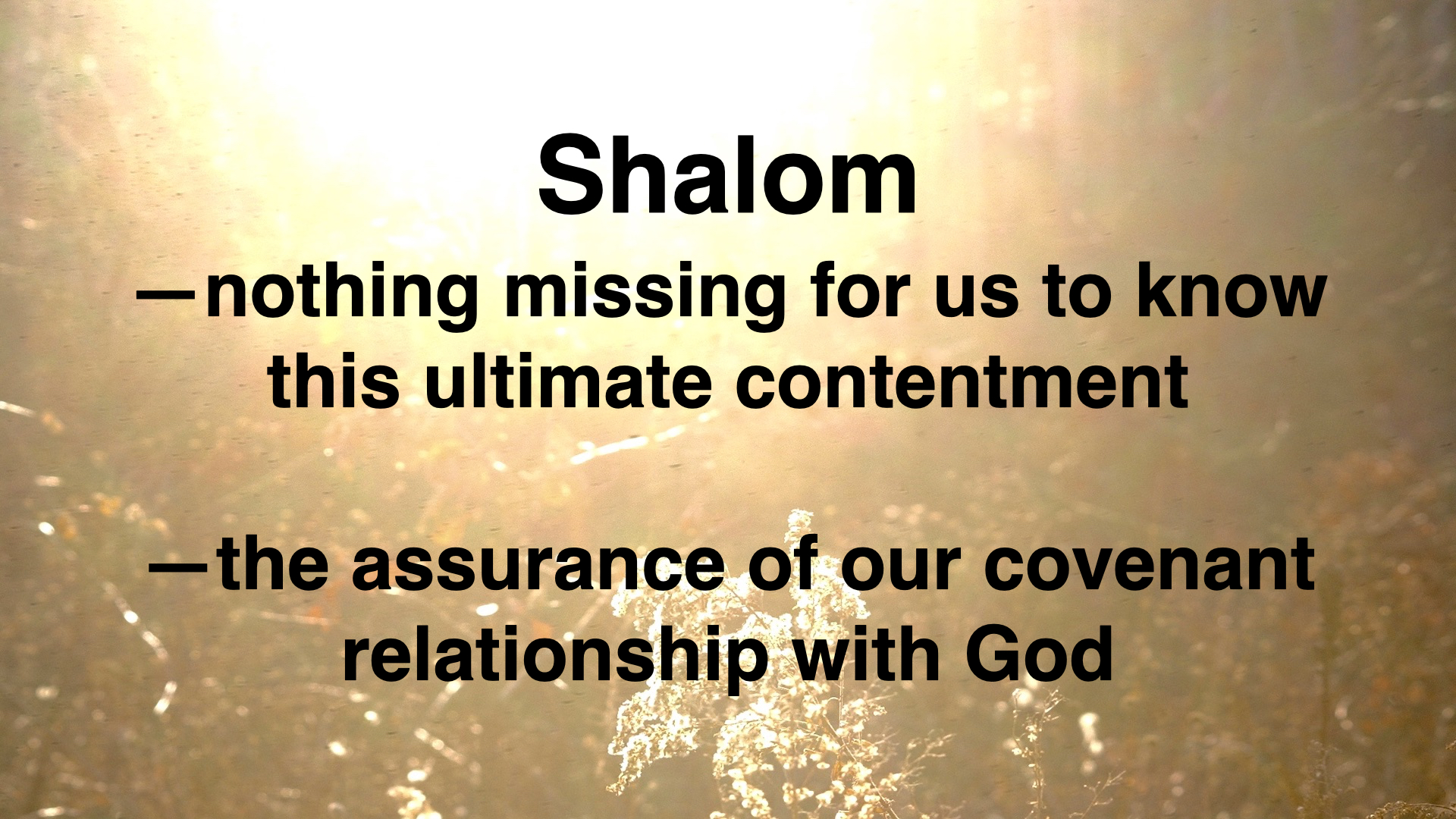
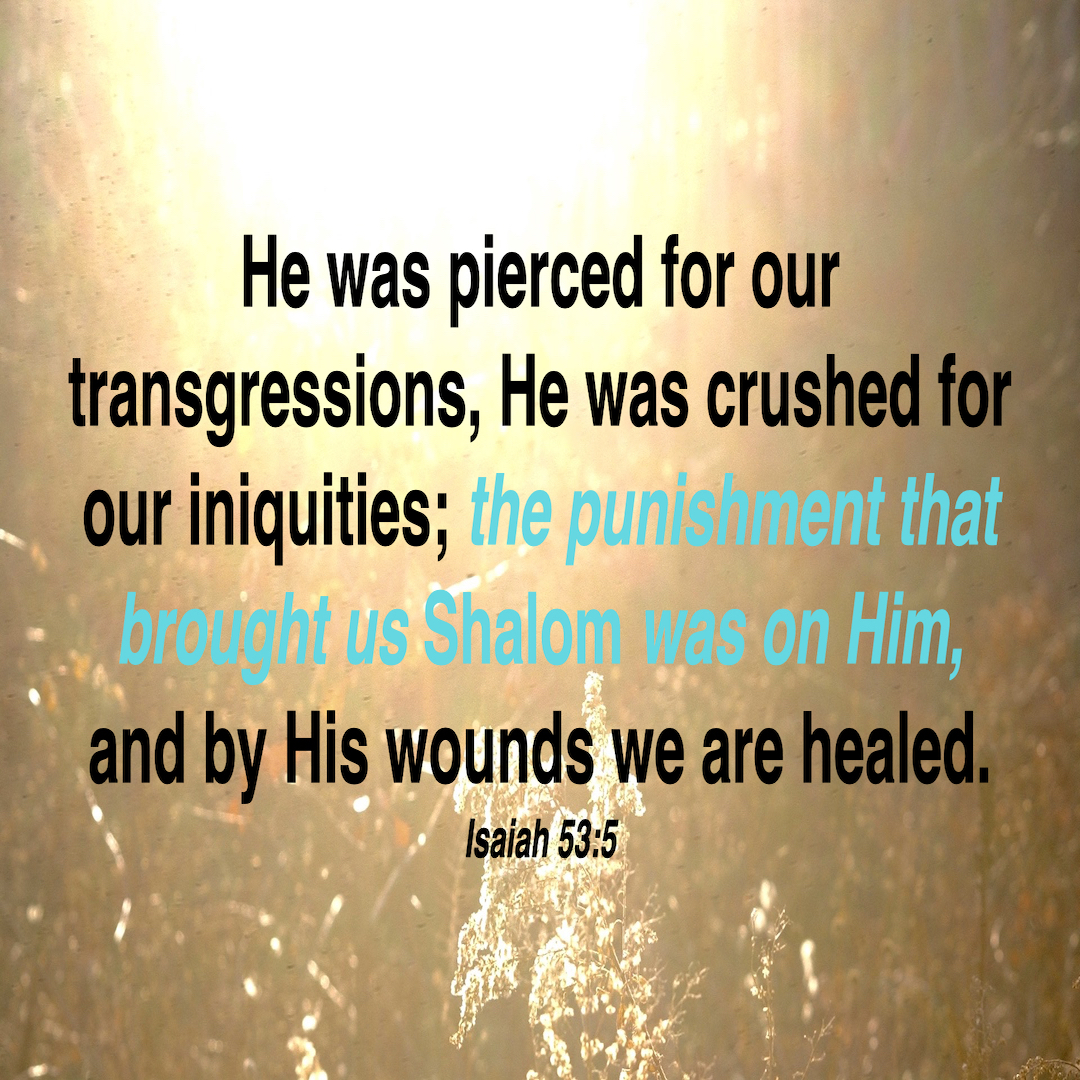
Prince means a Ruler or Overseer. Peace is the Hebrew word shalom which means completeness, soundness, and contentment. Some have described shalom as there being nothing missing for us to know this ultimate contentment. Many call this the assurance of our covenant relationship with God.
Isaiah uses the word shalom quite a bit, but he uses it here in chapter 9 for the first time in the Book of Isaiah.
Zechariah saw the covenant as being fulfilled before Jesus the Messiah was born. Noticed the past tense words that culminate in light and peace in Luke 1:67-79. Zechariah concludes his prophetic word by noticing two profound transitions:
The First Advent of Jesus made peace with God possible for us (Luke 2:8-14; Hebrews 2:14-15).
Now we can live in peace (Isaiah 26:3, 12; John 16:33) and we can announce “peace on earth” to others (John 20:21; Romans 10:15).
The Second Advent of Jesus will reveal His unending peace that gives us eternal life in Him (Isaiah 52:7-10; Genesis 3:22; Revelation 22:14).
We have the peace of God because of the Prince of Peace! And we have the message of peace to share with those who don’t know the Prince of Peace. I pray that this Advent season we will messengers of peace to all those who are living in darkness and hostility.
When people start throwing mud at you, your natural response is to throw the mud back at them or to run away so the mud can’t reach you. Instead of the natural fight-or-flight response, Jesus shows us a supernatural response. I talk about all sorts of attacks—gossip, slander, betrayal, and more—in my book When Sheep Bite as well as the supernatural, biblical response to these attacks.
“The minute you start talking about what you’re going to do if you lose, you have lost.” —George Schultz
“A decent picture of good leadership: Air-traffic controllers have authority, but they use their authority to enable others to fly.” This is a thoughtful post, but as frequent visitors to my blog might expect, I prefer the term shepherd leader over servant leader.
This post recounts some of the stories people told of how Charles Spurgeon’s sermons led them from the bad news to the Good News. Spurgeon himself noted, “If you really long to save men’s souls, you must tell them a great deal of disagreeable truth. The preaching of the wrath of God has come to be sneered at nowadays, and even good people are half-ashamed of it; a maudlin sentimentality about love and goodness has hushed, in great measure, plain gospel expostulations and warnings. But, if we expect souls to be saved, we must declare unflinchingly with all affectionate fidelity, the terrors of the Lord.”
“Men have not got tired of Christianity; they have never found enough Christianity to get tired of.” —G.K Chesterton
“Advancing the Kingdom economy is not exactly a cakewalk. It’s hard work, like running a marathon, going to war against spiritual adversaries, cultivating a field, or embarking on a long and arduous journey. We may expect to encounter many obstacles and challenges along the way as we seek first the Kingdom of God and His righteousness. … We must neither run from these challenges nor give in to them. Instead, advancing the Kingdom economy requires that we face evil head-on, and determine to overcome it by good works of righteousness, peace, and joy in the Holy Spirit (Romans 14:17-19).” Check out the rest of T.M. Moore’s post Overcoming Evil.
Listen to the podcast of this post by clicking on the player below, and you can also subscribe on Apple, Spotify, or Audible.
Last week we talked about how the title “God” can mean different things to different people. When we are talking about the One True God as He is revealed to us in the Person of Jesus, there is no doubt of Whom we are speaking. The opponents of Christianity knew this too, which is why they tried to get the early saints to not use the name Jesus.
Isaiah 9:6 says that a Child is born and a Son is given, but this Son is given the unusual title of Everlasting Father. Jesus acknowledged this unusualness in this exchange with the Pharisees in Matthew 22:41-45.
“Everlasting” means continuous existence; existing in perpetuity; the Chief by which all other things are ordered and aligned. We see this in Genesis 1:1, where “In the beginning” signifies God started Time but He existed before that moment.
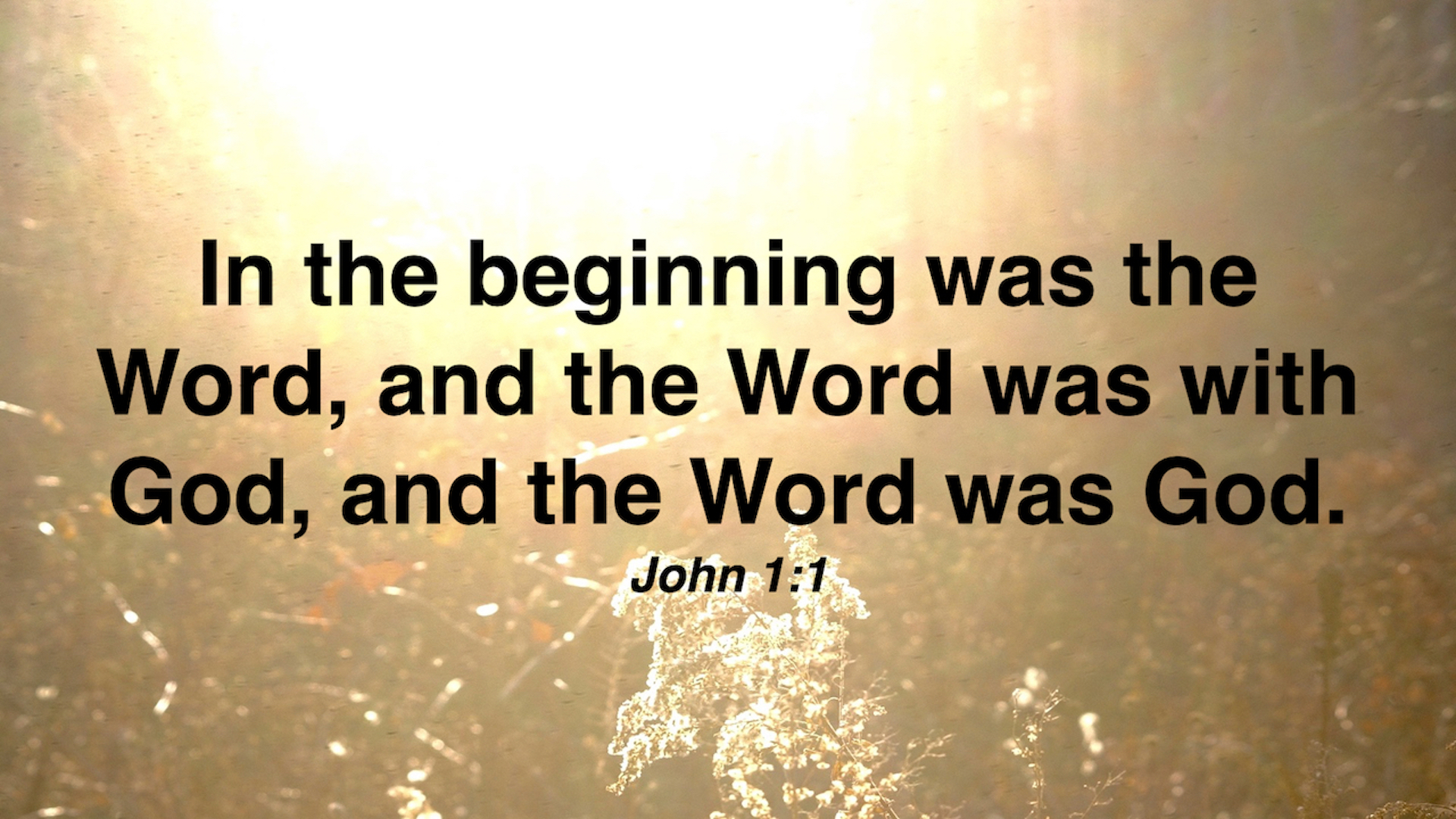
In John 1:1, similar words are used,but here “in the beginning” means if you stand at the moment Time began and were able to look back into the immeasurable eternity that existed before that, God was there. More specifically, the Word of God (Jesus) was there as God. Jesus Himself affirmed this in Revelation 1:8 and 3:14.
Then in 1 John 1:1, the phrase “from the beginning” means that after Time ends, you can look into the infinite eternity that still exists and God is there. Again, Jesus Himself affirms this in Revelation 22:13.
“Father” this is the first word in our biblical Hebrew dictionary. It means father, the head or founder of a family, the protector of the family. Paul says that Jesus fulfills all of these definitions (Colossians 2:9-10, 1:15-22), and the writer of Hebrew opens his epistle with the same thought (Hebrews 1:1-3).
No one on earth has seen God the Father. This makes it difficult to follow Him. Which is why Jesus made His appearing among us (John 1:1, 14, 18).
Paul wanted people to know“the mystery of God, namely, Christ” (Colossians 2:2), and he said that Jesus is the Key that unlocks the treasure-trove of God’s rich love for us. Notice Paul’s progression: teaching the Word (1:25-27) so that we mature (1:28), so that we have the full riches of complete understanding, in order that we may know the mystery of God, namely, Christ (2:2-4).
When Jesus was born, Simeon gave us the same assurance when he saw Jesus and announced that Jesus was the Christ that had been prophesied (Luke 2:25-32), and Jesus Himself told His disciples the exact same thing (John 14:8-9).
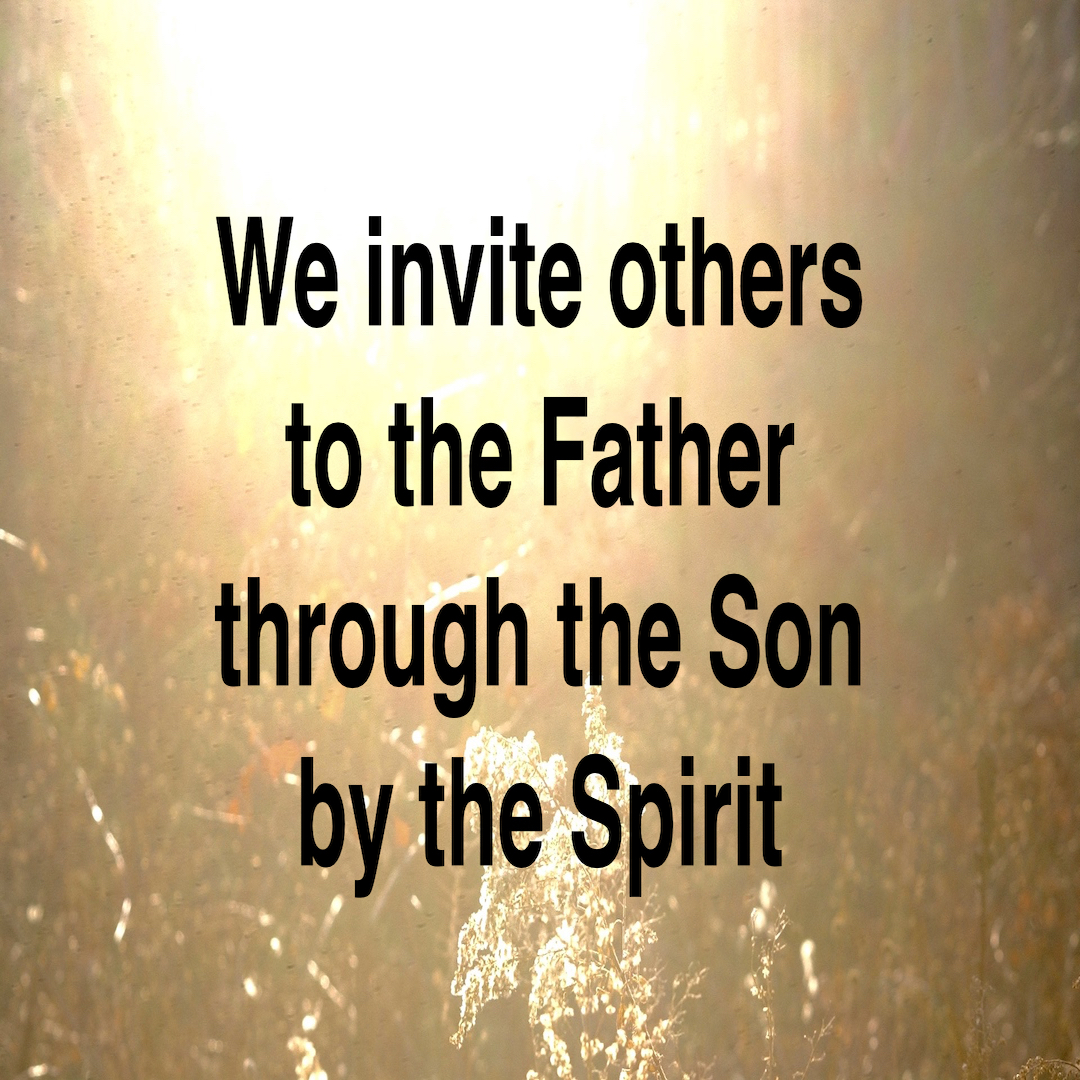
Let people see God’s love through your life, all year-round but especially at Christmas. As we said last week, when we talk about Jesus and live for Jesus, we invite others to God, through Jesus, by the Spirit’s illumination.
As a Christian, when you are sharing your testimony and someone wants to argue with you, remember that you are not fighting against people but you are fighting FOR people. Remind yourself of this over and over so that you respond in love.
“Now in history there is no Revolution that is not a Restoration. Among the many things that leave me doubtful about the modern habit of fixing eyes on the future, none is stronger than this: that all the men in history who have really done anything with the future have had their eyes fixed upon the past. I need not mention the Renaissance, the very word proves my case. The originality of Michael Angelo and Shakespeare began with the digging up of old vases and manuscripts.” —G.K Chesterton
Dr. Stephen Nichols tells of a national day of thanksgiving in 16th century England that began from a very unlikely source.
“Most of the important things in the world have been accomplished by people who have kept on trying when there seemed to be no hope at all.” —Dale Carnegie



 In the sci-fi movie The Matrix, a character named Neo is fascinated by a young man who appears to be bending spoons simply by looking at them. Neo sits down on the floor across from this young man and takes a spoon in his hand. Although young, this boy gives sage counsel to Neo, “Don’t try to bend the spoon, for that is impossible. Instead remember that there is no spoon. That way you will see that it is not the spoon the bends, but you are the one who bends.”
![Psalm 142 [intro]](https://i0.wp.com/craigtowens.com/wp-content/uploads/2025/12/psalm-142-intro.jpg?w=386&h=386&crop=1&ssl=1 "Psalm 142 [intro]")
![Psalm 142.4 [nlt]](https://i0.wp.com/craigtowens.com/wp-content/uploads/2025/12/psalm-142.4-nlt.jpg?w=386&h=386&crop=1&ssl=1 "Psalm 142.4 [nlt]")


![Psalm 142.5 [nlt]](https://i0.wp.com/craigtowens.com/wp-content/uploads/2025/12/psalm-142.5-nlt.jpg?w=386&h=386&crop=1&ssl=1 "Psalm 142.5 [nlt]")




 Craig T. Owens