Are You Available?

Have you ever had someone walk into your life—even if it was just for a moment—and say something you needed to hear? You might not have liked what they had to say, but it was definitely something you needed to hear. 

My hunch is that those timely messengers were not necessarily “experts” in the area in which they talked to you. They may have been a doctor talking about a medical need, or it may have been a friend talking about some health issues. Most of the time our valuable messengers are just everyday people. 

God loves using “everyday people”! 

  • You don’t have to be a trained pastor to minister to people. 
  • You don’t have to be a trained theologian to tell people what you believe about God.
  • You don’t have to be a trained counselor to encourage someone.

You just have to be who God created you to be. And you have to be available. Like Amos. 

Amos was simply taking care of his farm and his herds when God called him to deliver a timely message to His people.

Amos introduces himself as just one of the shepherds of Tekoa (1:1) and tells another priest that he was simply minding his own business when God said, “Go, prophesy to My people” (7:10-15). 

Amos’ name means burden-bearer—he had a burden for his kinsmen. He saw their sin and knew what defiance of God would mean for them. This burden made him available to hear God’s voice say, “Go.” 

“But I’m not a trained prophet,” Amos could have said. “You are telling me to ‘prophesy’ but all I really know is farming and shepherding.” 

God said, “Say what you know.” 

What did Amos know?

  1. Amos knew God’s voice—In this short book, 43 times(!) Amos uses phrases like says the Lord, declares the Lord, or hear the word of the Lord. 
  2. Amos knew his business—This book is filled with language about sheep and shepherds, farmers and farm equipment, gardens and vineyards. 
  3. Amos knew God had told him “Go and speak” so Amos had boldness. 

You can put your name in all three of those places that say Amos. You can know God’s voice through the Bible, you know your “business” (whether it’s parenting, or coaching, or your own profession), and you can hear God saying, “Go, tell people about Me.” 

God wants to use you for His glory. He just needs your availability. Will you be open to being that person? 

Join me next week as we continue to learn the major lessons from that the minor prophets teach us. 
The Day Of The Lord

All we know about the prophet Joel is that he is the son of Pethuel, and his name means Jehovah is God. He appears to be addressing the southern part of Israel (Judah/Jerusalem). 

What is interesting to note about Joel’s writing is a recurring theme that goes something like this: 

Foreshadowing (or prophetic foretelling) → Calling for a godly response → God’s blessing on a right response or God’s punishment on a wrong response → An outcome which foreshadows or foretells another more dire event → repeat…

For instance, in Joel’s prophesy the massive invasion of locusts was intended to get the Israelites to pay attention to their sins. Joel calls for fasting and repentance and warns (foreshadows/foretells) that an invading army at a later date would do even greater damage (1:2-14). 

Likewise, the invading army—which would do more damage than the invading locusts—should also call the Israelites to repentance and imploring God for His help. 

Jesus, just like Joel, taught that whether it was an evil man, an accident, or even a natural disaster, painful things should cause us to consider the state of our eternal soul (see Luke 13:1-5). And Jesus and Joel both foretell of the Day of the Lord when there will be no more opportunities for repentance. 

To prepare God-fearing people for this dreadful day of the Lord, Joel foretells if the outpouring of the Holy Spirit. This is the same empowering Spirit that Jesus said would equip His followers to take the message of salvation to all four points of the compass (Acts 1:4-8). And just as Joel foretold 800 years earlier, on the first Pentecost Sunday after Christ’s ascension back into heaven, the Christians were baptized in the Holy Spirit, prompting Peter to quote an extension passage from Joel (compare Joel 2:28-32 with Acts 2:14-21).

Joel’s final chapter talks about Judgment Day, and about the multitudes, multitudes in the valley of decision. Peter confronted his audience as well about the decision they should make to turn to Jesus as their Savior and Lord. 

The Day of the Lord could come at any moment and millions around the world are still in the valley of decision. I find these words quite sobering—

“Someone asked, ‘Will the heathen who have never heard the Gospel be saved?’ It is more a question with me whether we—who have the Gospel and fail to give it to those who have not—can be saved.” —Charles Spurgeon 

We are even closer to the Day of the Lord today than we were yesterday. What will you do?

Please join me this Sunday as we continue our series learning the major lessons from the minor prophets.

It’s Time To Come Home

I already shared the bizarre but beautiful sermon illustration that Hosea lived out for the Israelites and for us. His wife had been unfaithful to him and had gotten herself so far in debt that she was a virtual slave. Hosea, in a clear picture of God’s amazing, unrelenting love, bought back his wife, paid off her debts, and completely restored her to himself. 

Sadly, the people of Israel—even after seeing this grace-filled living lesson—continue to push farther and farther away from God. This prompted God to announce the indictment against them… 

Hear the word of the Lord, you Israelites, because the Lord has a charge to bring against you who live in the land: “There is no faithfulness, no love, no acknowledgment of God in the land. There is only cursing, lying and murder, stealing and adultery; they break all bounds, and bloodshed follows bloodshed” (Hosea 4:1-2). 

It wasn’t the first time that someone preferred the things of the world to the things of God (like Adam and Eve), and it wasn’t the last time (like you and me). We mortals tend to be seduced by what we can see and hold right now, instead of trusting God for something far better. 

Jesus told a story about a son who enjoyed the full privilege and favor of his father, yet this son thought he could do better on his own. He asked his father for his share of the inheritance and left for a distant land, determined to live a life where he called all the shots. But with his money gone, he found himself in debt, starving, and working as a hired hand in a pigsty. 

It was then that Jesus said that young man came to his senses. He had nothing to bring to his father—no gift of restitution, no token of respect, nothing except his words. All he could say was, “Father, forgive me.” 

But that’s all that was needed. Hosea counseled the Israelites to do the same thing:

Return, Israel, to the Lord your God. Your sins have been your downfall! Take words with you and return to the Lord. Say to Him: “Forgive all our sins and receive us graciously, that we may offer the fruit of our lips” (Hosea 14:1-2). 

The wayward son had a rehearsed speech asking his father to simply hire him as a servant, as if he wasn’t worthy to be considered a son any longer. But the father—in words that reflect our Heavenly Father’s love—cut the son’s speech short. He let the son only say, “Forgive me,” but before the son could make the request to be a servant the father totally restored him. 

After Hosea calls the wayward people to return with their “forgive us,” he quotes God’s reply: “I will heal their waywardness and love them freely, for My anger has turned away from them” (14:4). 

How could this be? How could God’s full judgment not fall on His wayward people? How could it not fall on you and me?! Because it fell on Jesus (2 Corinthians 5:21)! So when we come back to God with our words of forgiveness, He restores us and clothes us in the robe of Jesus (Galatians 3:27). 

Absolutely amazing! 

God longingly speaks to His wayward people, “It’s time to come home. I’m waiting for you with open arms. I am ready to restore you completely. Just come home.”

Join me next week as we continue to learn about the major lessons we can discover in the minor prophets. 

A Bizarre Sermon Illustration

Hosea is the only prophet from Israel (he calls the Israelite king “our king” in 7:5), and along with Amos he is the only prophet to address the northern kingdom exclusively. Hosea addresses the northern tribes of Israel with brutal honesty—he calls them an adulteress wife! Hosea isn’t alone in saying this, as Isaiah, Jeremiah, and Ezekiel all same the same thing too. 

But Hosea alone is called on to live out his message in a most unusual way: God instructs him to marry “an adulterous woman”! The question is: was she already a promiscuous woman before they married? Or did she become unfaithful after they were married? 

I believe that she became unfaithful after marriage. When Gomer gives birth to their first son, Hosea writes that “she bore him a son”—indicating he is the father. But with Gomer’s second and third pregnancies, Hosea simply writes, “she gave birth,” leading me to think that Hosea wasn’t the father of those children. 

The names of the children are also interesting: 

  • Jezreel—This boy’s name means “God sows.” It is a neutral word meaning either sowing good seed and reaping a healthy harvest, or sowing godlessness and reaping punishment. 
  • Lo-Ruhamah—Her name means “not pitied.” God indicates that He will bring a judgment on Israel that is deserved justice. He has been patiently calling them to repentance but they kept running farther away from Him. 
  • Lo-Ammi—This boy’s name is saddest of all. It means “not My people. 

How sad! Can you imagine Hosea’s heartache?! Can you imagine God’s heartache?! God tells Hosea the penalty for their adulterous life (Hosea 2:2-13), which the apostle Paul would later sum up in these straightforward words: the wages of sin is death (Romans 6:23). 

“YET” and “THEREFORE”…

In the middle of God expressing His heartache over His wayward wife He says two amazing words “Yet” and “Therefore” (1:10; 2:14). 

  • Yet I will bless you and reverse your misfortune” 
  • Therefore I will allure you and speak tenderly to you” 

This is UNBELIEVABLE!! Who would respond like this to such vile unfaithfulness?! 

God would.

God did! But God shows and clearly proves His own love for us by the fact that while we were still sinners, Christ—the Messiah, the Anointed One—died for us (Romans 5:8). 

Hosea—whose name means salvation—is called on to do exactly what Jesus did for us. Hosea buys back his wife from her master. Hosea pays the price for Gomer’s sin, just as Jesus paid the price for our sin. 

What amazing love God has for us! 

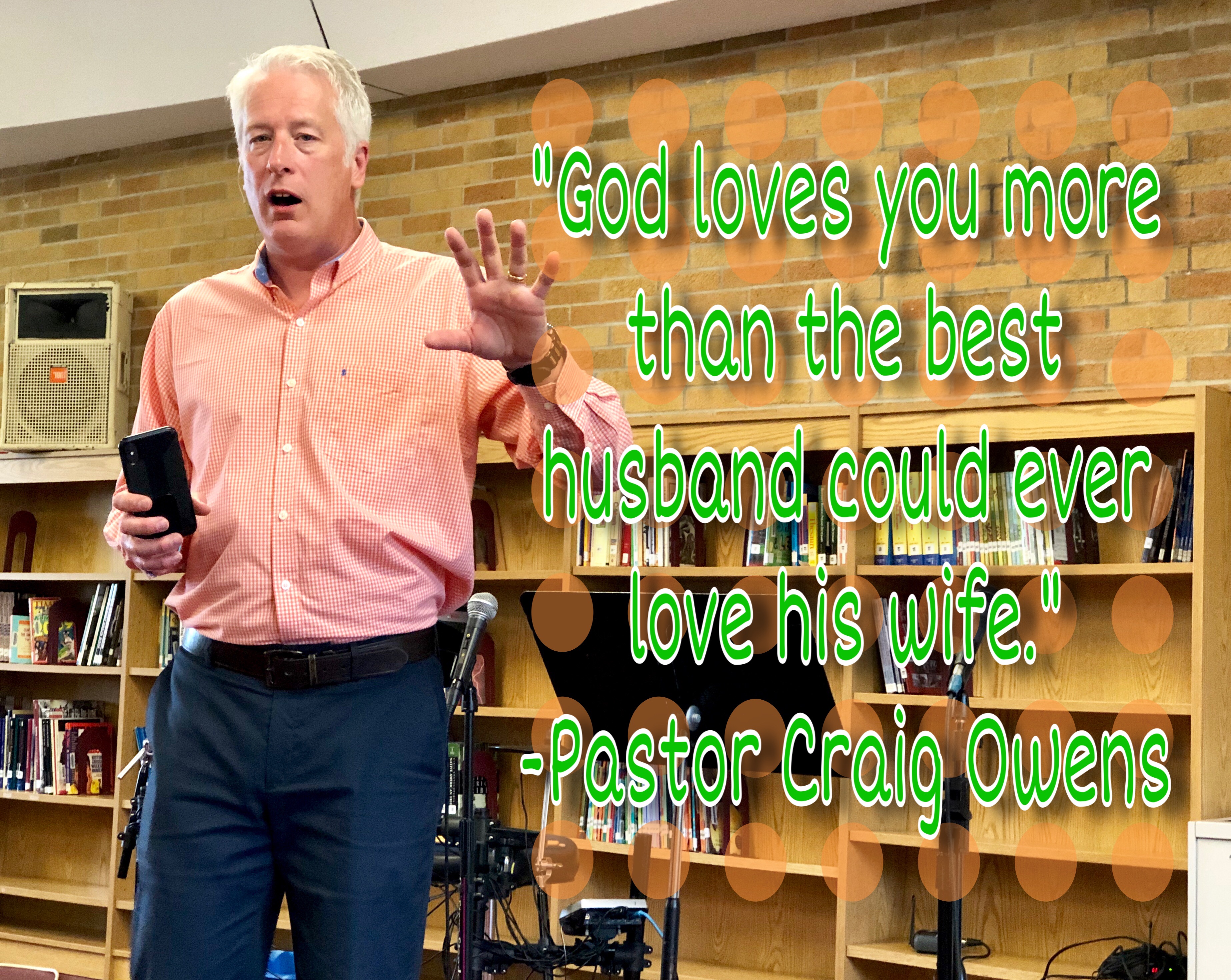
You have never lived an unloved day in your life. Not a single one! God loves you more than the best husband could ever love his wife. He paid for your forgiveness and your freedom. Will you receive that forgiveness and restoration today?

Join me next Sunday as we learn more major lessons from the minor prophets. 

Thursdays With Spurgeon—Rejoicing In God’s Unchangeableness

This is a weekly series with things I’m reading and pondering from Charles Spurgeon. You can read the original seed thought here, or type “Thursdays With Spurg

e search box to read more entries.

Rejoicing In God’s Unchangeableness

But He is unchangeable, and who can turn Him? And what He wants to do, that He does” (Job 23:13 AMP).

     Some shallow thinkers dream that the great plan and design of God was thrown out of order by the fall of man. The fall they consider all accidental circumstances, not intended in the divine plan, and thus God, being placed in a delicate predicament of requiring to sacrifice His justice or His mercy, used the plan of the atonement of Christ as a divine expedient. … I am persuaded that the very fall of man was a part of the divine purpose: that even the sin of Adam, though he did it freely, was nevertheless contemplated in the divine scheme and was by no means such a thing as to involve a digression from His primary plan. …  

     And when later the gospel was sent to the Jews, and they resisted it and Paul and Peter turned to the Gentiles, do not suppose that God had to take down His book and make an eraser or an amendment. No, the whole was written there from the beginning. He knew everything of it. He has never altered a single sentence nor changed a single line of the divine purpose. … 

     It is a sweet consolation to the mind of one who muses much upon these deep matters that God never has changed in any degree from His purpose.

From The Infallibility Of God’s Purpose 

God has a plan for all of His creation. ALL of His creation—that includes you! 

You were made on purpose and for a purpose. God’s original plan of sending Jesus for your salvation still stands. God’s original plan for your particular life—with all of your talents, gifts, personality, and uniqueness—is unaltered by any circumstance. 

YOU have immeasurable value and worth because God created YOU. 

A Minor Introduction

The minor prophets in the Bible are pretty cool! But we have to be careful with man-made titles. For example, the “old” in Old Testament doesn’t mean outdated; nor does the “new” in New Testament mean something updated to modern times. 

In the same way, the minor prophets are only called “minor” because of the volume of their writing, not the quality of their message. In fact, their messages are actually quite major! 

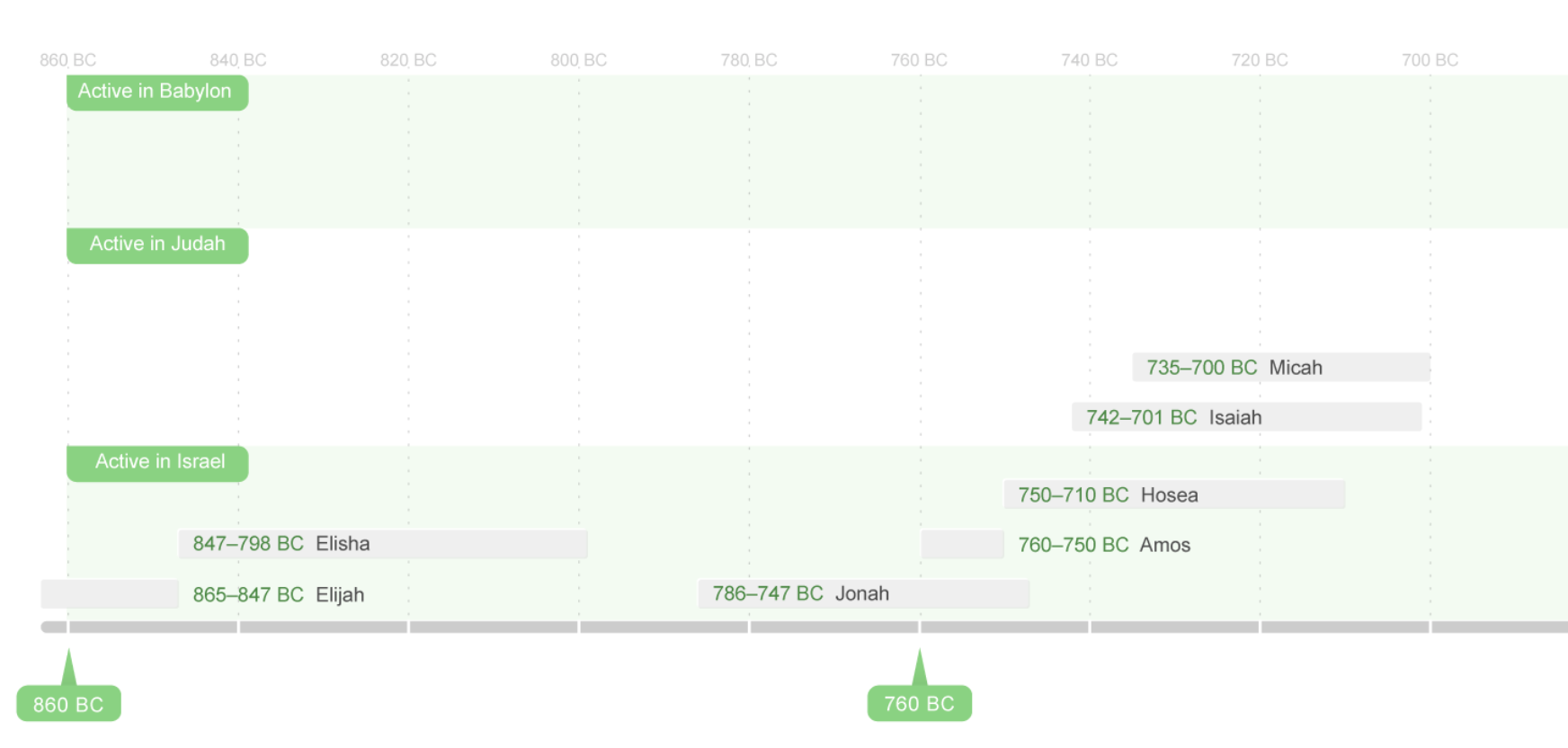
The minor prophets cover a span of about 300 years, from 760 BC (Amos) to 450 BC (Malachi). You can check out this side-by-side chart to see where these prophets fit in the history of Judah and Israel. 

Here are some interesting tidbits about the minor prophets:

  • In the Hebrew Bible, these books are referred to simply as “The Twelve.” 
  • All of these prophets identify themselves in the first verse of their writing except Jonah, but he is identified in 2 Kings 14:23-25. 
  • The only others of the Twelve that are mentioned elsewhere in the Old Testament are Micah, Zephaniah, Haggai, and Zechariah (see Jeremiah 26:16-19; 2 Kings 25:18-21; Ezra 5:1). 
  • The prophets consistently give us some historical context in their writings to help us place when, where, and to whom their ministry took place. 

The Twelve also show up quite liberally in the New Testament. Every one of them has either direct quotations or has their writings implicitly referred to throughout the New Testament. Here’s just a small sampling… 

  • Micah 5:2 tells us where Jesus would be born (Matthew 2:6)
  • Hosea 11:1 says Jesus would spend time in Egypt (Matthew 2:15)
  • Malachi 4:5 says an “Elijah” would precede Jesus (Matthew 17:10-11)
  • Zechariah 9:9 foretells Christ’s triumphal entry into Jerusalem (Mark 11:1-10)
  • Jonah 1:17 was used by Jesus to predict His own resurrection (Matthew 12:39-42)
  • Joel 2:28-32 was quoted by Peter on the Day of Pentecost (Acts 2:16-21)
  • Amos 9:11-12 foretold all peoples coming to Jesus (Acts 15:16-17)
  • Hosea 13:14 was quoted by Paul to show how death was defeated (1 Corinthians 15:53-57)
  • Habakkuk 2:4 was also quoted by Paul to tell how righteous people live (Galatians 3:11)
  • Haggai 2:6 foretells the end times (Hebrews 12:26-29)

I look forward to diving deep into the major lessons in the minor prophets over the next several weeks, but in preparation for that let me give you 3 overarching lessons for all Bible studies:

  1. Christianity is rooted in history. The Bible is a historical record of real people, saying and doing real things in real places in the world. It’s not a collection of fables, myths, or legends. 
  2. We need to study the whole counsel of God’s Word. All of Scripture is interdependent on all the other parts of Scripture, and every part reinforces and amplifies every other part. Don’t limit your Bible reading to just one or two parts.
  3. Looking back in wonder and gratitude builds faith for today and hope for tomorrow. When we see what God has done in the past, and we realize that He is still the same God today, it builds our faith for today. And when our faith today is strengthened, it gives us a bright hope for tomorrow. 

I look forward to having you join me on this journey of discovery through the minor prophets! 

Thursdays With Spurgeon—God’s Purpose Prevails

This is a weekly series with things I’m reading and pondering from Charles Spurgeon. You can read the original seed thought here, or type “Thursdays With Spurgeon” in the search box to read more entries.

God’s Purpose Prevails

But He is in one mind, and who can turn Him? and what His soul desireth, even that He doeth (Job 23:13 KJV). But He is unchangeable, and who can turn Him? And what He wants to do, that He does (AMP). 

     Now the fact taught here is that in all the acts of God in providence, He has a fixed and a settled purpose. ‘He is in one mind.’ It is eminently consolatory to us, who are God’s creatures, to know that He did not make us without a purpose and that now, in all His dealings with us, He has the same wise and gracious end to be served. … 

     O believer, ever look, then, on all your sufferings as being parts of the divine plan and say, as wave upon wave rolls over you, ‘He is in one mind!’ He is carrying out still His one great purpose. None of these comes by chance; none of these happens to me out of order; but everything comes to me according to the purpose of His own will and answers the purpose of His own great mind. … 

     We sweat, we toil, and we fail. How often do we come back weeping because we have toiled, as we think, without success! Yet, Christian man, you have not been without success, for ‘He is still in one mind.’ All this was necessary to the fulfillment of His one purpose. You are not lost; your labor has not rotted under the clod. All, though you see it not, has been working together toward the desired end. … 

     From every evil, good has come. And the more the evil has accumulated, the more has God glorified Himself in bringing out at last His grand, His everlasting design. This, I take it, is the first general lesson of the text—in every event of providence, God has a purpose. ‘He is in one mind.’ 

     Mark, not only a purpose, but only one purpose—for all history is but one. There are many scenes, but it is one drama. There are many pages, but it is one book. There are many leaves, but it is one tree. There are many provinces, yes, and there are many lords and rulers, yet there is but one empire and God the one Potentate.

From The Infallibility Of God’s Purpose

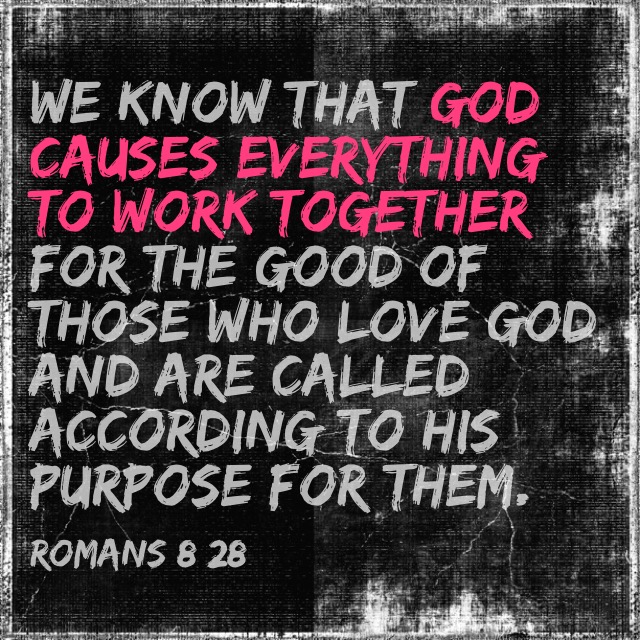
All of history is His storyand your life is a part of that Grand Story as well. God doesn’t miss a thing. He is working all things out to accomplish His purpose (see Romans 8:28). Even when it seems nothing is happening, turn your thoughts back to God Whose plans never fail, Whose purposes are never frustrated, Who is always working out His grand plan.

Favorable Influence

Listen to the podcast of this post by clicking on the player below, and you can also subscribe on AppleSpotify, or Audible. 

Twice the 80th psalm declares—Restore us, O Lord God Almighty; make Your face shine upon us, that we may be saved (Psalm 80:19). 

But if we are already a Christian that has been saved from the penalty of our sin and saved to an eternal reward, then that also means that God’s face IS already shining on us, He HAS already restored us, and He HAS already given us His favor. 

I like how the Amplified Bible renders this verse: Restore us, O Lord God of hosts; cause Your face to shine in pleasure, approval, and favor on us, and we shall be saved! 

What we have received is too wonderful for us to keep to ourselves, so we must let His pleasure, approval, and favor now shine out of us! 

“If the result of our experience of God does not compel and propel us into global mission, it is doubtful whether we have really encountered the God of the Bible.” —Dick Brogden 

Jesus stated His mission simply and then sent us out on the exact same mission (Luke 4:18-19; John 20:21). We do this best by living closely among people so they can also see us shine with God’s favor.

Paul called us to shine as well: Live clean, innocent lives as children of God, shining like bright lights in a world full of crooked and perverse people (Philippians 2:15). I believe this is a perfect definition of the word influence. The origin of the word meant the supposed flowing of ethereal fluid from the stars thought to affect the actions of men. Christians that let their good deeds shine in the darkness can influence the entire culture around them!

“Radical Christianity is not going on a missions trip or a big conference. Radical Christianity is staying steady for decades.” —Mike Bickle 

Being a person that shines with favorable influence requires staying involved for the long haul so that you can build trustworthiness. It’s being in visible places not to get glory, but to let people see God’s glory. When they see His glory shine on you and out of you, they will want what you have too!

Solomon said, By the blessing of the influence of the upright and God’s favor—because of them the city is exalted (Proverbs 11:11). So, my fellow Christian, let me ask you: 

  • Has God shined on you?
  • Are you letting Him shine out of you? 
  • Are you living a noteworthy, trustworthy, visible life in your dark community? 

“It’s your choice: You can be a part of your city’s elevation or its deterioration.”

—Craig T. Owens

►► Would you please prayerfully consider supporting this ministry? My Patreon supporters get behind-the-scenes access to exclusive materials. ◀︎◀︎

How To Respond To Evildoers

I’m sure if I asked for a show of hands, everyone of you would put up a hand (or maybe even two!) to the question, “Has someone done something bad to you?” 

The real issue is not if we’ve been the victim of evildoers doing evil things; the real issue is how to respond to evildoers that do evil things. 

In Psalm 52, David tells us that he wrote this prayer after a vile man named Doeg had done atrociously evil things to a whole town of innocent people. Worse yet: these people were simply trying to help David!

David was fleeing for his life from King Saul, forcing him to leave home with just the clothes on his back. He stopped at the village of Nob and asked Ahimelech the priest for food and a weapon. That act, in King Saul’s mind, was worthy of death. None of Saul’s soldiers would carry out his command to execute the priest, but Doeg quickly responded. Doeg not only killed Ahimelech, but he killed the 85 priests with him, and then he proceeded to annihilate everything and everyone left in the village of Nob. Only one man escaped to tell David what happened. 

When David begins this psalm, he uses the words you or your 14 times in just the first five verses. David is addressing Doeg, almost holding up a mirror to his evil deeds. By contrast, the word I is used five times in just the last two verses of this prayer. 

That tells me that we have to work on this problem of evil from two different directions. We need to see evildoers in their evil, and we need to see a godly response to evildoers. As with many Hebrew poems, the most important principle is in the middle—Surely God will bring evildoers down to destruction, but He will protect the righteous (v. 5). 

In the opening words, David asks Doeg, “Why do you boast of evil?” The word for boast in Hebrew is halal—this is usually the word we translate Hallelujah! In other words, Doeg has put his evil on the throne of his life and is saying “Hallelujah!” to it. A downward slide of all sorts of evil words and evil deeds spiral out from this until the climax: Surely God will bring judgment. 

Notice David says “God” (not you) “will” (not might) take care of this. 

Now let’s look at it from a righteous perspective. Working backwards from verse 9 to verse 5, we see whereas Doeg was praising his evil deeds, David is praising God. David recognizes that it’s only in God’s presence that he can be free, and it’s only God that can ultimately balance the scales of justice. 

▶️ My friend, you cannot make things right. Only God can do this. Please, please, take your eyes off the evildoer that did evil things to you, and put your eyes on the Perfect Judge. He alone can balance the scales of justice. ◀️

So here are four lessons for all of us to learn—

  1. When evildoers do evil things to you, talk to God about them; don’t talk to your enemies and don’t even talk to your friends.
  2. Continue to redirect your heart and thoughts to God’s unfailing love, and away from thoughts of retribution—even if you have to do this a hundred times a day.
  3. When evildoers afflict you, look in the mirror of God’s Word to see if there is anything for which you need to repent and then ask forgiveness.
  4. When judgment comes, don’t gloat. John Bradford, when he saw a cartful of men going off to be hanged said, “There goes John Bradford but for the grace of God.”

In this video I reference our series on the Selahs in the book of Psalms. If you missed any of these, please click here to find a list of the other topics we covered.

Rejoicing At The Coming Of The Judge

In Psalm 50, we read the first-of-twelve psalms written by King David’s handpicked worship leader, a man named Asaph. On the day that Asaph first took up his position as worship leader, David gave him a special song, which definitely influenced Asaph’s songwriting.  

Psalm 50 has a pretty easy outline: an introduction in the first six verses, followed by 17 verses of God speaking to His people—speaking to you and me! In between the introduction and God’s speaking is the word selah.

Selah means a time for us to pause and carefully consider. So Asaph is essentially saying, “God is getting ready to speak with us, so we need to selah—pause from what we are doing so that we can pay careful attention to His words!”  

Asaph sets the stage in the first verse, telling us that the Mighty One, God, the Lord speaks. The words that are about to be spoken come from THE I AM—the All-Sufficient One, the Omnipotent, the All-Knowing, All-Powerful Ruler of the Universe. Asaph also reminds us that He is coming as THE Judge.

When you hear that THE All-Powerful, All-Knowing One is THE Judge that has summoned you into His courtroom, it’s quite likely that your heart would skip a beat. Especially when God lists some of the sins you and I are guilty of breaking in verses 16-20. 

It’s also possible that the news that you have to appear before THE Judge could cause you to rejoice. What? How can we rejoice at that?! David taught Asaph this concept in the song he gave him: God’s people should rejoice over God’s judgments. 

You see, in Psalm 50 God says, “I do not rebuke you for your sacrifices, or for all your attempts to follow the rules.” It’s not in the practices of the law that we find salvation.

God doesn’t need our sacrifices, but He wants our hearts. 

In order to win our hearts for Himself, THE Judge did something absolutely mind-blowing—THE I AM became flesh like us. And then He became the once-for-all sacrifice for our sins, paying our penalty Himself when He died on the Cross (see Hebrews 2:14-17; 7:17-27). 

This is why we can rejoice when we hear we have to stand before THE Judge. When you have placed your faith in what Jesus did for you on the Cross, when THE Judge opens His perfect record book to your page He will read this inscription written in the crimson red blood of Jesus: PAID IN FULL!

This is why we can rejoice at the thought of seeing THE Judge face to face!

Join me next Sunday as we wrap up this summer looking at the Selahs in the Psalms. We plan to restart this series next summer, unless the Judge calls us home before then!