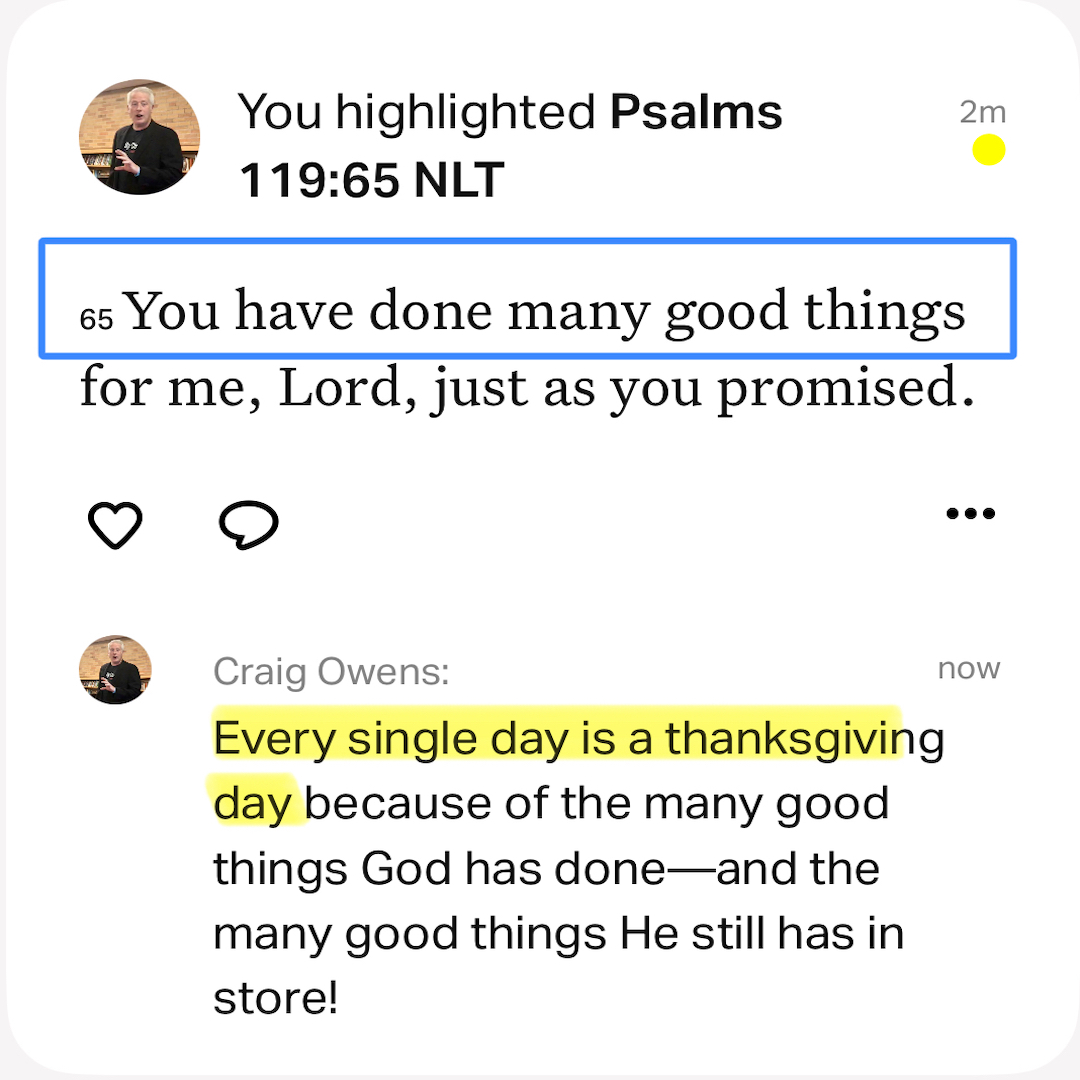
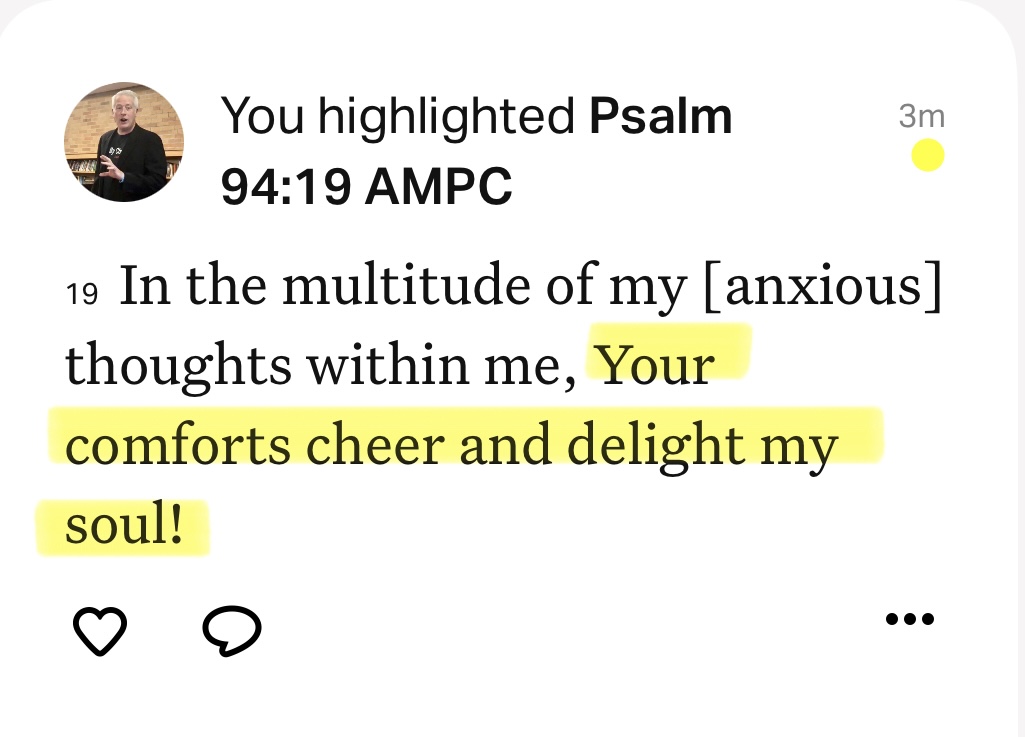
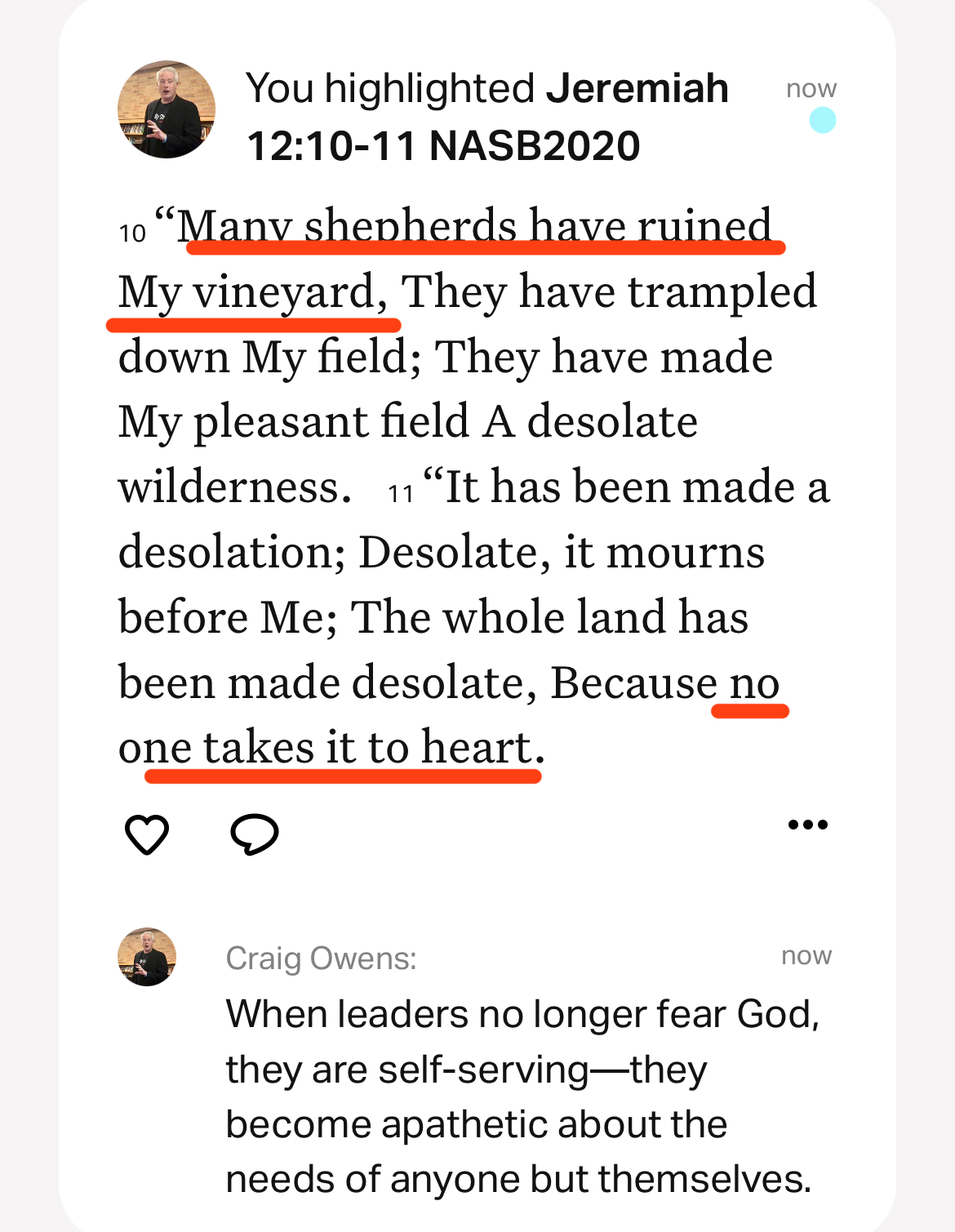
When the Holy Spirit shines His light on a biblical promise, and you turn that into a prayer, write it down! You may need to go back to this again and again. When God answers your prayer, write it down again! This can become a testimony journal that you and others can use to recall God’s provision.
“The pathway to maturity and to solid biblical food is not first becoming an intelligent person, but becoming an obedient person.” —John Piper
“Somehow or other an extraordinary idea has arisen that the disbelievers in miracles consider them coldly and fairly, while believers in miracles accept them only in connection with some dogma. The fact is quite the other way. The believers in miracles accept them (rightly or wrongly) because they have evidence for them. The disbelievers in miracles deny them (rightly or wrongly) because they have a doctrine against them.” —G.K. Chesterton
“At every moment, we always have a choice, even if it feels as if we don’t. Sometimes that choice may simply be to think a more positive thought.” —Tina Turner
Every day should be a day of thanksgiving!
“We are strangers on Earth; our homeland is in Heaven. Our walk is here; our hearts are there.” —Dr. Henry Halley
I have already shared the first two posts in the latest archeological research on the biblical city of Jericho. Here is part three.
“Success is no accident. It is hard work, perseverance, learning, studying, sacrifice, and most of all, love of what you are doing or learning to do.” —Pelé
“The greatest leader is not necessarily the one who does the greatest things. He is the one who gets people to do the greatest things.” —Ronald Reagan
We have a culture where respect for others is eroding quickly. The Bible makes it clear that reverence for God results in respect for people, and respect for people helps us reverence the God who created them.
“The real great man is the man who makes every man feel great.” —G.K. Chesterton
Dr. Louis A. Markos has an insightful article on the works of C.S. Lewis that help us learn how to stay human. “Christians today who are committed to restoring a proper view of man have an ally in the greatest apologist of the twentieth century, C.S. Lewis (1898–1963). Though Lewis offers much help in his best-known apologetics books (Mere Christianity, The Problem of Pain, The Screwtape Letters, The Great Divorce) and his beloved Chronicles of Narnia, we would do well to expand our reading of Lewis to include his searing critique of modern educational philosophy (The Abolition of Man) and his anthropologically incisive science fiction novels, The Ransom (or Cosmic) Trilogy: Out of the Silent Planet, Perelandra, That Hideous Strength.”
The ICR has an article about a fascinating new dinosaur that was unearthed. “Even now in the twenty-first century, paleontologists are still at a loss as to the origin of the dinosaurs. As recently as 2024, five evolutionists stated, ‘Today, inspired by clues from fossils and footprints from a lost world, scientists continue to piece together the puzzle of how various dinosaur groups arose, behaved, and diversified.’ In contrast, the creation model argues that all dinosaur kinds were created during the same period—specifically on Day 6 of the creation week—several thousand years ago. From this perspective, the lack of definitive transitional forms or ancestral precursors in the fossil record aligns with the expectation that dinosaur kinds appeared fully formed and distinct, as observed in the fossil record.”
Axis’ Culture Translator discusses an article posted in Harper’s: “Many have written about how porn warps the expectations users have for relationships; this article demonstrates that, for young men in particular, pornography is often willingly embraced as a complete replacement for human connection. … Woven throughout this subculture is also conscious self-degradation; as the Harper’s article points out, ‘ruin your mind,’ ‘go deeper,’ and ‘give up on life’ are embraced as the movement’s rallying cries. Many young men and women are trapped in this spiritual prison, convinced there is nothing better to live for. Who will show them the way out?” Two helpful resources are Fight The New Drug and Pure Desire.
Leaders need to learn that disagreement on your team is normal and can be healthy. Disagreement doesn’t mean people distrust their leader, but it may mean that they want the bring out the best in their leader. Check out the full conversation Greg and I had on this subject.
I presented a whole series of posts and videos on a Christian’s mental health. Please check it out here. You can replace your anxious thoughts with comforting and delightful thoughts!
No one wants what the gloomy person has. Joy is a Christian’s testimony—it’s what attracts others to Jesus! Check out this full message from my series on the Songs of Ascent.
I have lots of new content every week, which you can check out on my YouTube channel.
“At first glance, people may not see how these different forms of sexual violence connect to each other. But, in fact, experts are increasingly recognizing that they may all stem from one common source—sexual objectification. Sexual objectification occurs when people perceive others as sex objects rather than complex human beings deserving of dignity and respect.” Pornography is a major contributor to the sexual objectification which leads to sexual violence.
Dr. Brian Thomas describes why fossils are found where they are and why land animals may even be found near marine animals: “This fossil discovery [a bone from a South American megaraptor found near Cape Otway, Australia] fits well with a biblical history, which goes something like this: Around 2348 BC, a worldwide flood crushed and reshaped the earth’s surface, breaking up a single landmass (Pangaea) into continents and fossilizing countless living things. Prior to the Flood megaraptors roamed Pangaea, during the Flood they were fossilized, and in the late Flood stages the boundaries of new continents (along with their fossils) were roughly shaped. Unlike the standard story, the outlines of this history have been testified to by reliable eyewitnesses, and this testimony has been faithfully preserved in Genesis.”
“The more we let God take over us, the more truly ourselves we become—because He made us.” —C.S. Lewis
J. Warner Wallace shares two trends in American society that are contributing to the decline of religious adherence in America.
“There is no way around hard work. Embrace it.” —Roger Federer
Shame on my thoughts, how they stray from me!
During the Psalms, they wander on a path that is not right; they run, they distract…
One moment they follow the ways of loveliness, and the next the ways of riotous shame…
Swiftly they leap in one bound from earth to heaven…
O beloved Christ… may the grace of the sevenfold Spirit come to keep them in check!
Rule this heart of mine, O swift God of the elements, that You may be my love, and I may do Your will! —Anonymous, On the Flightiness of Thought, Irish, 8th-9th century
Healthy leaders look in the mirror first before they confront a teammate on something that needs to change. Check out the full conversation Greg and I had on The Craig and Greg Show about defeating the two-headed leadership killer of ignorance and arrogance. I have lots of new content every week, which you can check out on my YouTube channel.
“I am often, I believe, praying for others when I should be doing things for them. It’s so much easier to pray for a bore than to go and see him.” —C.S. Lewis, Letters to Malcolm: Chiefly on Prayer
“The greatest weapon against stress is our ability to choose one thought over another.” —William James
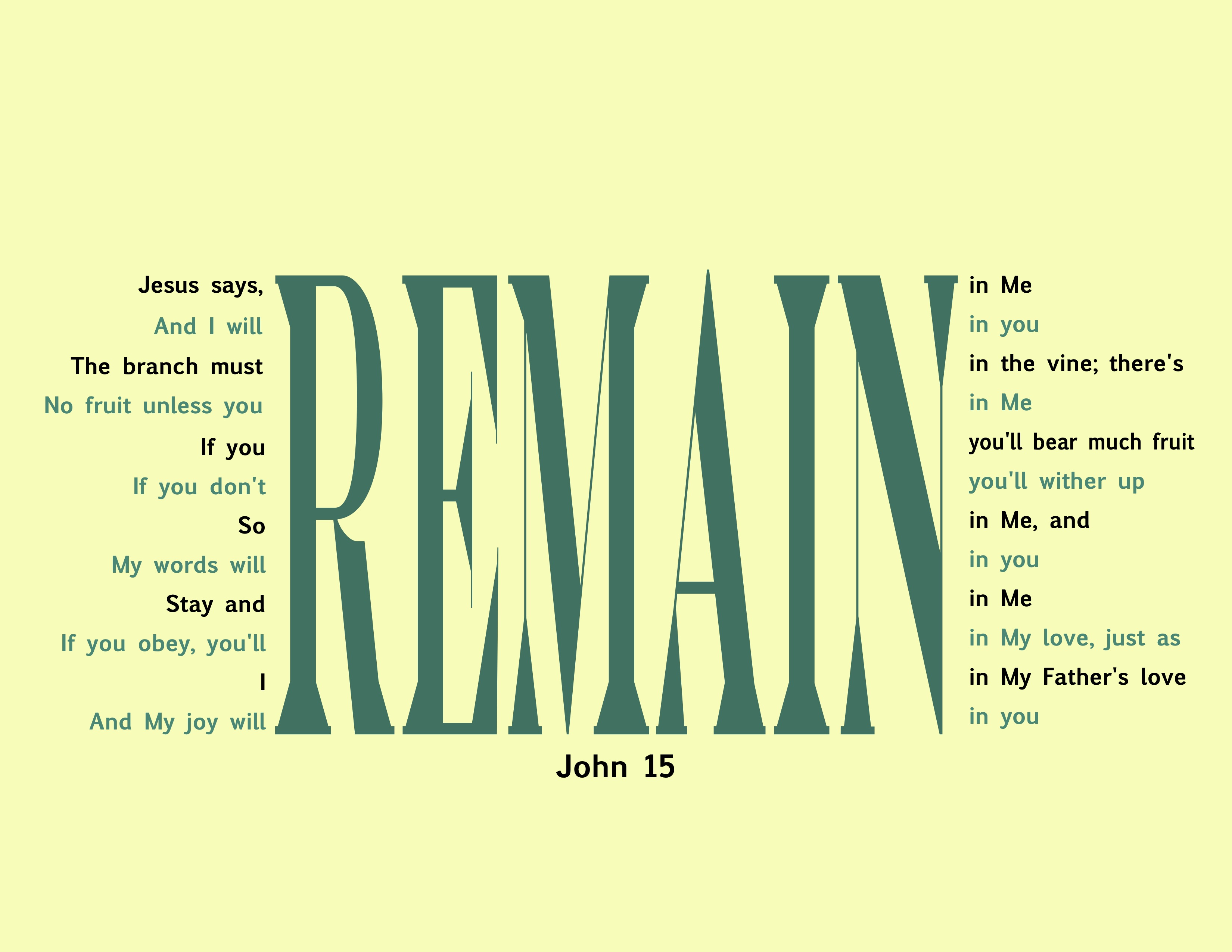
The most empowered and empowering person is the one who remains in Jesus.
“Whereas three or more incidents of intense stress within a year (say, serious financial trouble, being fired, or a divorce) triple the death rate in socially isolated middle-aged men, they have no impact whatsoever on the death rate of men who cultivate many close relationships.” —Daniel Goleman, Richard Boyatzis & Annie McKee, Primal Leadership
T.M. Moore has an outstanding series of posts on how Christians should interact with the governments in the lands in which they live. I highly recommend this series to you. T.M. wrote, “We have seen that justice is a jewel of many facets. In its obligatory facet, justice requires that we love our neighbors simply because they are made in the image of God. We must regard them, and do with them, as we wish to be regarded and done with ourselves. In its preventive facet, justice demands that we use forethought in all our actions to make sure, as far as possible, that our neighbor or his property is not injured by what we do. Distributive justice encourages us to share generously with our neighbors and others in need. Restorative justice comes into play when the balance of neighbor love has become disturbed and the one guilty of disturbing it is required to set things right again. Each of these forms of justice, grounded in the Law of God, is very much a part of life in our society today. It is simply mindless or prejudicial to insist that we should have no input from Scripture or the Law of God, either in the public square or in the making of public policy. Our nation was founded on Biblical principles of justice, and to deny this is to rewrite history past and to put in jeopardy history to come.”
The Greek word translated as “consider” in Hebrews 3:1 means to observe closely, to consider attentively, to fix your eyes or mind upon it. In its context, this verb is usually directing us to the end result of being in awe, kindling a renewed faith, and being rejuvenated with a new resolve to move forward.This is what happens especially when we consider Jesus❣️
Listen to the podcast of this post by clicking on the player below, and you can also subscribe on Apple, Spotify, or Audible.
Do you talk to yourself?
Of course you do. We all talk to ourselves: it’s called “thinking.”
But do you talk out loud when you talk to yourself?
An unhealthy habit for most of us is that our thoughts are only a one-way monologue. That is, we are listening to our thoughts but we are not talking back to them. As a result, everything negative we’ve heard from our enemies is bouncing around in our heads. The more we hear it, the more likely we are to believe it.
In Psalm 42, we hear from a psalmist who is longing to experience God’s presence but at the same time there’s a nagging thought implanted by skeptics: “Where is your God?” The psalmist reminisces how it used to be, which means there is a nagging doubt in his mind that it may never be like that again.
But finally, the psalmist does the mentally healthy thing: he talks back to his thoughts. He asks himself a question and then he gives a new response—a response that is hope-filled instead of doubt-plagued.
Why are you downcast, O my soul? Why so disturbed within me? Put your hope in God, for I will yet praise Him, my Savior and my God. My soul is downcast within me; therefore I will remember You. (Psalm 42:5-6)
When the nagging thought of “Where is your God?” comes up again just a couple of verses later, he doesn’t linger or brood over this doubt-inducing thought but immediately talks back to that negative voice with hope-filled words (vv. 10-11).
The devil has a singular agenda: to separate you from God. He does this through lies and doubts. Jesus told us the devil’s native language is lies: “He was a murderer from the beginning, not holding to the truth, for there is no truth in him. When he lies, he speaks his native language, for he is a liar and the father of lies” (John 8:44).
The Bible tells us that the devil can also put thoughts and desires in our hearts, but they are all lies (see John 13:2; Acts 5:3).
We cannot let these lies go unchallenged, so here’s our battle strategy:
For the weapons of our warfare are not physical weapons of flesh and blood, but they are mighty before God for the overthrow and destruction of strongholds, inasmuch as we refute arguments and theories and reasonings and every proud and lofty thing that sets itself up against the true knowledge of God; and we lead every thought and purpose away captive into the obedience of Christ—the Messiah, the Anointed One. (2 Corinthians 10:4-5 AMP)
There are five questions we need to use to talk to ourselves about the thoughts we hear:
Is this thought unbiblical? (2 Timothy 3:16-17)
Does this thought rob God of the glory due His name (Psalm 29:1-11)?
Does this thought stifle my love for God or others (Mark 12:28-31)?
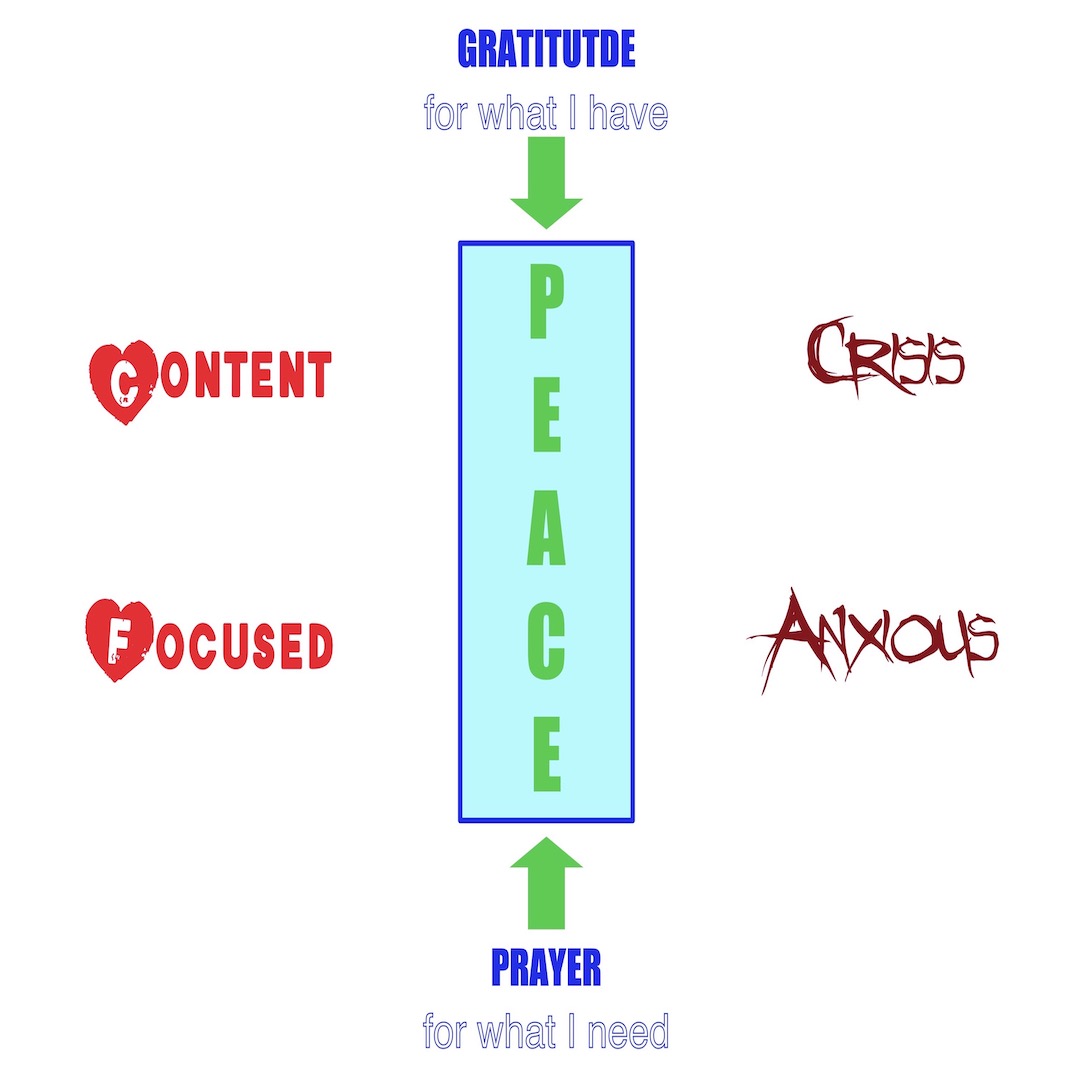
If I linger on this thought, does it rob me of peace (Isaiah 26:3-4)?
Does this thought make me apathetic toward sin (Genesis 4:7)?
If we answer “yes” to any of these questions, we must capture that thought and put it to death, which requires the sword of the Spirit, which is the Word of God (Ephesians 6:17). Because of what Jesus has done for us on the Cross, every promise in God’s Word is “yes and amen” in Jesus, and therefore is an invincible weapon against lying thoughts (2 Corinthians 1:20).
Here’s how we use those promises:
For the accuser of our brothers and sisters, who accuses them before our God day and night, has been hurled down.They triumphed over him by the blood of the Lamb AND by the word of their testimony. (Revelation 12:10-11)
Listen to your thoughts, but don’t listen too long before you start to challenge them with these five questions. Then demolish those lies—triumph over them by the blood of the Lamb and your spoken testimony. Speak the truth out loud for all to hear.
This is part 4 in our series on a Christian’s mental health. If you’ve missed any of the other messages I’ve shared, you can find them all by clicking here.
The first mental health strategy we learned was asking the Holy Spirit to help us see a new path. Instead of thoughtlessly, automatically allowing our minds to go down the well-worn paths they have always gone down before, the Spirit of Truth can help us see a new path. Let me share our second strategy with you.
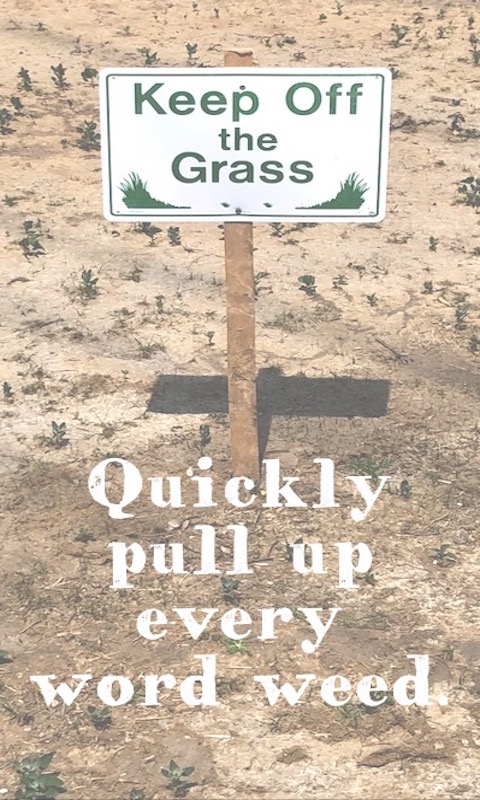
My wife and I had traveled to a neighboring community and when we got out of our car we saw an unusual sight. First of all, there was dirt and a few weeds where there used to be grass, and then there was this sign in the middle of that dirt field: Keep off the grass. That seemed like really wishful thinking to me! I may not have a green thumb—truthfully I probably have a “black thumb” when it comes to keeping plants alive—but I know enough to say that their grass wasn’t going to grow without a lot of effort.
Weeds grow by apathy, they are removed with continual effort. Fruit-bearing plants grow by careful attention, fertilization, and pruning. So if we don’t put in any effort at all, it’s the same thing as fertilizing the weeds.
Solomon made this observation: I went past the field of a sluggard, past the vineyard of someone who has no sense; thorns had come up everywhere, the ground was covered with weeds and the stone wall was in ruins (Proverbs 24:30-31).
Without effort on our part, weeds take over, sap the nutrients, and take up the space that could be used for fruit-bearing plants.
A farmer went out to sow his seed. As he was scattering the seed, some fell along the path, and the birds came and ate it up. Some fell on rocky places, where it did not have much soil. It sprang up quickly, because the soil was shallow. But when the sun came up, the plants were scorched, and they withered because they had no root. Other seed fell among thorns, which grew up and choked the plants. Still other seed fell on good soil, where it produced a crop—a hundred, sixty or thirty times what was sown. (Matthew 13:3-8)
When Jesus says that the thorns grew up and choked the plants, He uses a Greek word that means overwhelmed or suffocated. It’s the same word that is translated as drowning (see Luke 8:33). What weeds do to our gardens, weed thoughts do to our minds.
We all know that when we see a weed pop up above the ground, there is a root below the ground that is supporting it. The sooner we pull that weed, the more likely we are to remove the troublesome root as well.
What about our minds? What are the roots? Jesus identified the roots this way: For out of the heart come evil thoughts—murder, adultery, sexual immorality, theft, false testimony, slander (Matthew 15:19). Jesus taught that we murder, commit adultery, lust, and slander in our hearts long before it ever happens in our words or physical actions.
So when a “weed word” pops out, what do we do? If we do nothing, we fertilize that weed. If we ignore it, we allow that weed to strengthen its hold and begin to choke out the fruitful plants. If we simply say, “Oops, that was a slip of the tongue; I’ll do better to control it next time,” we haven’t pulled the weed, but we’ve fertilized it.
Remember that weeds flourish by apathy, but fruitfulness requires effort.
Back in the parable of the sower, what is the difference between the seed among weeds and the seed in fertile soil? It’s simply the presence of weeds or thorns! If we allow the Holy Spirit to help us pull the weeds, we’ve increased the amount of ground that can be fruitful and produce a crop—a hundred, sixty or thirty times what was sown.
Jesus concludes by reminding us that our ears need to hear—we need to hear His words, and we need to hear our own weed words that don’t align with His words. Then we have a choice: apathetically let the weeds remain, or allow them to be pulled up.
Allow me to share my paraphrase of a passage in Hebrews 12—
My son, do not make light of the Lord’s pruning, and do not lose heart when He weeds your mind, because the Lord prunes the one He loves, and He weeds the garden of everyone He accepts as His son so they can be more fruitful. (my paraphrase of Hebrews 12:5-6)
Our mental health matures when we acknowledge the word weeds we are shown, and then quickly allow the Father to prune those. The Holy Spirit can continue to help us weed the soil of our minds so that it remains a fertile growing place for the seed of God’s Word. By doing this, we will grow in God-pleasing fruitfulness.
If you would like to download the graphic of this reminder for your phone, simply leave me a comment with the model of the phone, and I’ll get the right-sized graphic right out to you. And if you missed the first message in this series, you can review that lesson by clicking here.
Listen to the podcast of this post by clicking on the player below, and you can also subscribe on Apple, Spotify, or Audible.
I don’t think there’s any arguing that Jesus must have been the healthiest Person to ever live. Dr. Luke records His growth in just one succinct verse: “And Jesus grew in wisdom and stature, and in favor with God and man” (Luke 2:52). Every word of Scripture is inspired, right down to the order the words are penned. So when Luke says first that “Jesus grew in wisdom,” that is our indication that a healthy mind is the foundation for every other aspect of health.
I recently received an email from a Christian brother asking for prayer and counseling in overcoming lust and pornography. I naturally agreed to pray with him, but I also said, “Before I offer you any strategies to try, let me ask you a quick question: What have you already tried to get victory over this?”
He replied, “I’ve tried praying, watching videos on it, and basically saying no to the devil. But the temptation comes when I am weak and I think, ‘I can just try again tomorrow!’ And then I fall into it. I am just tempted at times throughout the day, and sometimes I fight it with prayer, but other times I just fall right into it basically without even trying.”
What my friend is dealing with here is a natural, unconscious response. Our brains like well-worn paths because it’s very easy and comfortable for our minds to automatically respond as they have responded before. As in the case of my friend, it may be heading down a path of lust that leads to pornography. For others, it may be unhealthy choices made in response to certain triggers, or it may be the anger that flares up into biting words when a certain someone pushes your buttons.
We head down that well-worn path unconsciously and automatically. Our immediate response might bring some temporary relief, but usually, we’re not very happy with where we’ve ended up once again.
If we are going to make a new path—or a new, healthier response—we first need to become aware of the well-worn path we automatically go to. So my counsel to my friend who emailed me for help was to start keeping a journal. I wrote back:
Your willpower alone isn’t going to cut it (as you’ve probably realized). Here’s the first step I would suggest: keep a journal of every time you are tempted to lust or porn. Write down what you were feeling, was it day or evening, what was happening just before that, did you have time in prayer and Bible reading that day or not, how did you fight the temptation, were you successful or not? I think as you keep track of these things you will begin to see some triggers and some patterns. Maybe you were physically tired, or lonely, or hungry. Maybe it was a certain person you talked with or a show you watched. Maybe it was after checking your social medias or after a super-hard day at work. When you start to see patterns of what is causing you to go to porn for relief, you can recognize them earlier and head them off before they grip your mind so strongly.
Psychologists call it metacognition when we think about what we’re thinking about—when we think about why we are taking a certain well-worn path again.
We don’t think about our thinking very frequently. We keep thinking along those well-worn paths out of habit, not because we want to go down those paths. This is where the Holy Spirit is invaluable: He helps us see those well-worn paths, identify which paths are unhealthy or unproductive, and then help us begin to carve out a new path.
It’s not just thinking about right things, but thinking rightly about all things—even the painful things or the triggering things.
In Ephesians 4:22-25, Paul counsels us to take off the “old self” and “put on the new self, created to be like God in true righteousness and holiness. Therefore” (and this is an important conclusion) “each of you must put off falsehood and speak truthfully to his neighbor.”
Do you remember that Jesus taught us to love our neighbor as ourselves (Mark 12:28-31)? Paul says we are to speak truthfully to our neighbor, so doesn’t that mean that we have to first speak truthfully to ourselves? Yes, we do! If we are going to make new paths for our mind, we are going to have to talk to ourselves differently.
My cousin Dick Brogden wrote, “A primary theater of spiritual warfare is in our heads and thoughts. The primary weapon of the enemy is deceit. He starts with attractive little lies and half-truths, and works his way up to blatant, ridiculous, perverted nonsense. Winning the battle for truth in the mind is critical to winning the war. If we lose enough of the little skirmishes, we can believe and do any wicked thing. If we daily combat lies with light and truth, we will stand firm.”
The “little lies and half-truths” will keep us trapped on our old, well-worn paths. But identifying those lies, and speaking the truth to them, will help us travel down new paths that lead to health and freedom.
Let the Holy Spirit be your Counselor. Let the Holy Spirit help you think about what you’re thinking about when you’re triggered to unconsciously head down the unhealthy well-worn path. Let the Holy Spirit help you see a new path. And then let the Holy Spirit empower you to stick with it—to keep doing the hard work of blazing a new path.
I am going to build on this series of messages about a Christian’s mental health, but let’s start with this simple prayer:
Holy Spirit, help me make new paths.
As you pray this, listen to how the Holy Spirit will guide you away from the unhealthy, unconscious, well-worn paths, and will then lead you into the new, healthy path that brings you freedom.
God will give you everything you need to minister to others. But there’s one thing you have to do first…
“He who thinks half-heartedly will not believe in God; but he who really thinks has to believe in God.” —Isaac Newton
Back in 1929, Donald Gee shared three temptations that Pentecostals needed to be cautious of avoiding: (1) selfish satisfaction, (2) fanaticism, and (3) the temptation to forsake the pure worship of God in exchange for popularity. Check out the full article here.
I really appreciate the leadership insights from Dan Reiland. That’s why I was so honored to have him write such a nice endorsement of my book Shepherd Leadership! Here is an important post Dan wrote for leaders, warning us of 5 ways we can misuse our spiritual authority.
This is a weekly series with things I’m reading and pondering from Charles Spurgeon. You can read the original seed thought here, or type “Thursdays With Spurgeon” in the search box to read more entries.
Listen to the podcast of this post by clicking on the player below, and you can also subscribe on Apple, Spotify, or Audible.
The Final, Authoritative Word
…For the mouth of the Lord has spoken (Isaiah 1:20).
It would not be worth our while to speak what Isaiah had spoken if in it there was nothing more than Isaiah’s thought—neither should we care to meditate hour after hour upon the writings of Paul, if there was nothing more than Paul in them. …
It is not mine to amend or adapt the gospel. What? Shall we attempt to improve upon what God has revealed? The Infinitely Wise to be corrected by creatures of a day? Is the infallible revelation of the infallible Jehovah to be shaped, moderated, and toned down to the fashions and fancies of the hour? God forgive us if we have ever altered His Word unwittingly. …
One Word of God is worth more than libraries of human lore. ‘It is written’ is the great gun which silences all the batteries of man’s thought.
From The Infallibility Of Scripture
As Solomon neared the end of his writings in the Book of Ecclesiastes, he made this observation, “Of making many books there is no end, and much study wearies the body” (12:12). How true that is. Have you walked through a bookstore lately?! There is no end to the opinions that people want to share with you.
But there is one thing that all of the books in all of the bookstores and all of the libraries have in common: not one of them is given to us by “the mouth of the Lord.”
There are certainly many, many books that are saturated in Scripture, but they are still the opinions of man. We need to make sure that everything we read, or every wise person that we listen to, or even every conversation that we have with ourselves are all proven to be true or false based on what God has spoken.
Jesus told us that the Holy Spirit would remind us of everything God’s mouth had spoken to us (John 14:26), and that He would guide us into all truth (John 16:13).