Thursdays With Oswald—Think As Christians

Listen to the podcast of this post by clicking on the player below, and you can also subscribe on AppleSpotify, or Audible. 

This is a weekly series with things I’m reading and pondering from Oswald Chambers. You can read the original seed thought here, or type “Thursdays With Oswald” in the search box to read more entries.

Think As Christians

     The [Holy] Spirit is the first power we practically experience but the last power we come to understand. The working of the Spirit is much easier to experience than to try and understand, the reason being that we form our ideas out of things we have seen and handled and touched; but when we come to think about the Godhead and the Spirit, language is strained to its limit, and all we can do is to use pictures to try and convey our ideas. 

     Yet in spite of the difficulty, it is very necessary that we should think as Christians as well as live as Christians. It is not sufficient to experience the reality of the Spirit of God within us and His wonderful work; we have to bring our brains in line with our experience so that we can think and understand along Christian lines. It is because so few do think along Christian lines that it is easy for wrong teaching and wrong thinking to come in, especially in connection with the Spirit. 

From Biblical Psychology

Christians should be first-rate thinkers. Why? Because the Holy Spirit in a Christian is the Mediator between our brains and our Creator.

We can have the mind of Christ, if we will but exercise our thoughts. As Paul said, we need to take our thoughts captive so that they line up with the reality of God (2 Corinthians 10:5). We cannot simply make a “theology” out of our experiences, but we need to use the thinking power of the Holy Spirit to help us find out what God is revealing to us about Himself through our experiences.

God created us with a mind, a will, and emotions. Let’s make sure we’re not emphasizing one to the diminishment—or exclusion—of the others!

►► Would you please prayerfully consider supporting this ministry? My Patreon supporters get behind-the-scenes access to exclusive materials. ◀︎◀︎

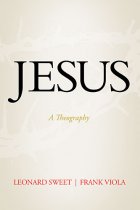
Jesus: A Theography (book review)

Jesus A TheographyVery rarely do I say what I’m going to say about Jesus: A Theography by Leonard Sweet and Frank Viola: This is a must-read!

Jesus does such an amazing job of showing Christ in all His fullness throughout the entire Bible, that I cannot recommend it highly enough. It’s a weighty read covering a weighty subject. At over 300 pages of text, 20+ pages of quotes from imminent theologians, and nearly 100 pages of end notes, this book gives you so much to contemplate. As much as I enjoy speed reading my books, this was a book that I had to read and digest slowly, as there was so much to process in each paragraph.

Far too many people think Jesus “showed up” in the New Testament. But Leonard Sweet and Frank Viola do a masterful job of weaving together the Old and New Testament texts (or, as the authors call them, the First and Second Testaments), to show Christ in all His fullness. If you are among those who have only seen Jesus in the New/Second Testament, you are about to have your paradigm totally rocked!

Let me restate my opening paragraph again—If you want to know more about Jesus Christ, Jesus: A Theography is a must-read!

I am a Thomas Nelson book reviewer.

Check out some quotes from this book here.

Know Your Theological Terms

I shared these helpful memory devices this morning, and perhaps they will be helpful to you as well. Some of the terms theologians use can be somewhat confusing, perhaps just because the words look so big! But the nice thing about the big words, they come from much smaller root words.

In these instances, these are just a different way of stating the big words, to help you remember the importance of their definitions.

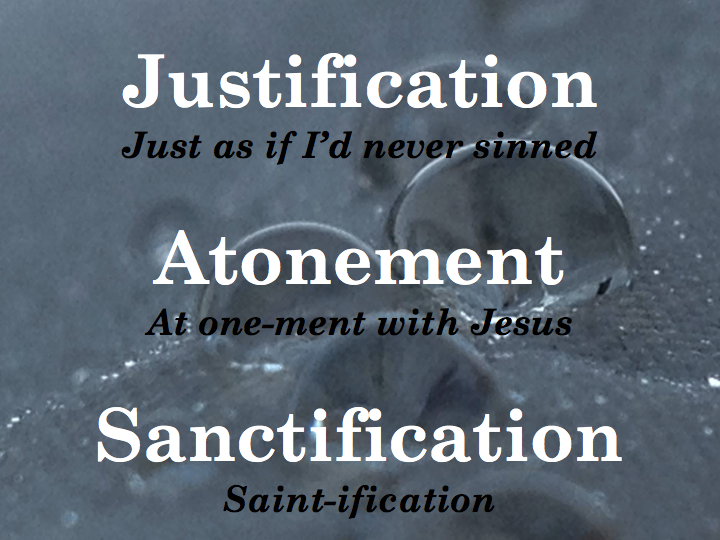
Justification = just-as-if I had never sinned. When your sins have been forgiven, you appear to God just as if you had never sinned, so you have been justified by your faith (see Romans 3:22-24).

Atonement = at one-ment with Jesus. Christ said that He was the way, the truth, and the life, and that no one could come into the Father’s presence except through Jesus. So atonement makes at one-ment with Jesus, which allows us to enter into God’s presence (see Romans 3:25).

Sanctification = saint-ification. The Holy Spirit begins a process in our lives where He is forming us into saints. Whereas justification and atonement are one-time events, sanctification is an ongoing process that is conforming us more and more into the image of Jesus (see 2 Thessalonians 2:13).

I hope this helps you understand and apply these terms.

Answer (Wo)Man

“Hey, pastor, I have a question for you….” As a pastor, do you feel like you need to have all the answers, all the time, to everyone’s questions? I’m not saying that as pastors we shouldn’t always be studying and learning and growing, but I think it’s a dangerous trap for us to feel like we need to have every answer.

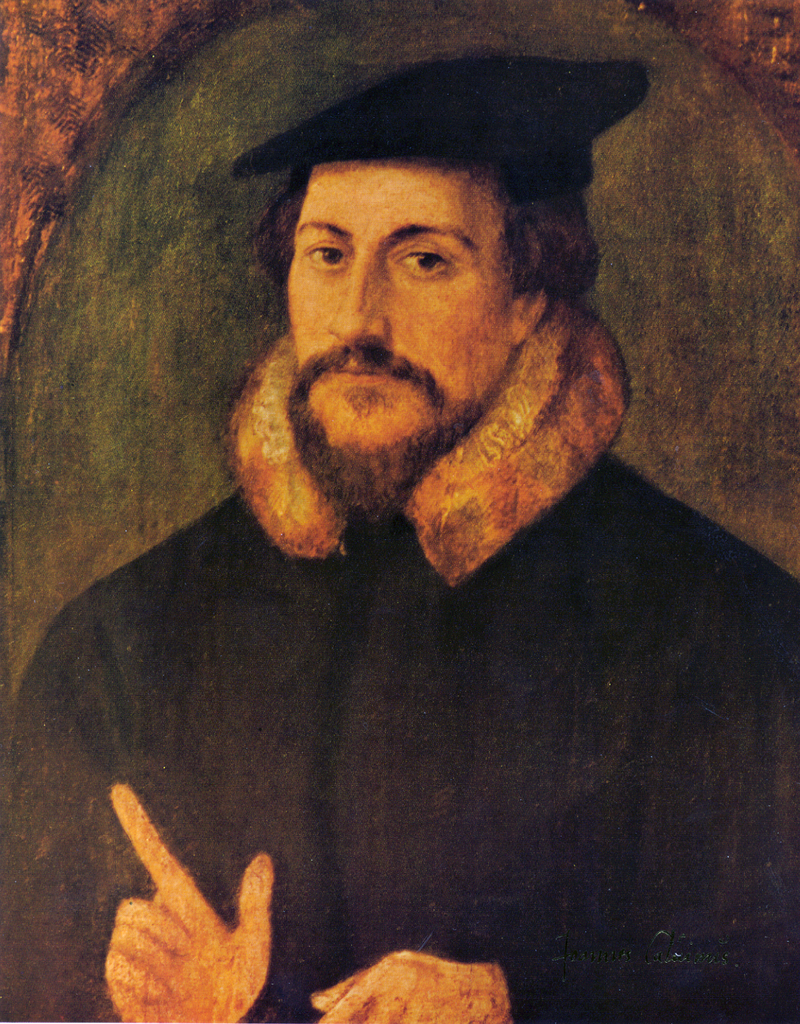
Here’s what John Calvin wrote in The Institutes of the Christian Religion

“And since the Holy Spirit always instructs us in what is useful, but altogether omits, or only touches cursorily on matters which tend little to edification, of all such matters, it certainly is our duty to remain in willing ignorance.

“…Let us here remember that on the whole subject of religion one rule of modesty and soberness is to be observed, and it is this, in obscure matters not to speak or think, or even long to know, more than the Word of God has delivered. A second rule is, that in reading the Scriptures we should constantly direct our inquiries and meditations to those things which tend to edification, not indulge in curiosity, or in studying things of no use.

“…The duty of a Theologian, however, is not to tickle the ear, but confirm the conscience, by teaching what is true, certain, and useful.”

Study for edification, not curiosity. Teach what is true and helpful, not what is tickling ears. And don’t feel like you need to have all the answers.

Book Reviews From 2011

Here is the complete list of books I read in 2011. Click on each title to be taken to my review…

7 Habits Of Highly Effective Teens

A Collection Of Wednesdays

A Treasury Of A.W. Tozer

Abandon The Ordinary

Average Joe

Be A People Person

Be The People

Biblical Ethics

Biblical Psychology

Bonhoeffer: Pastor, Martyr, Prophet, Spy

Bringing Sons Unto Glory

Chazown

City On Our Knees

Costly Grace

Doing Virtuous Business

Elite Prayer Warriors

Enemies Of The Heart

Experiencing The Spirit

Fasting

For Men Only

From The Library Of A.W. Tozer

Galileo

Generation iY

George Washington Carver

Get Off Your Knees And Pray

Go For Gold

God Is The Gospel

Has God Spoken?

Home And Away

How The Mighty Fall

How To Read The Bible

How To Win Friends And Influence People

I Knew Jesus Before He Was A Christian

In Visible Fellowship

Leadership Gold

Leadership Is Dead

Leadership Prayers

Lee: A Life Of Virtue

Letters From Leaders

MacArthur: America’s General

Max On Life

Me, Myself & Bob

Never Surrender

Night

On The Verge

Peach

Plugged-In Parenting

Radical Together

Remember Why You Play

Say It With Love

Secure Daughters, Confident Sons

Sherman: The Ruthless Victor

Smith Wigglesworth On Faith

Soul Work

Soulprint

Stuff Christians Life

Sun Stand Still

The Blessing Of Adversity

The Church In Exile

The Heart Of A Great Pastor

The Hour That Matters Most

The Next Christians

The Seed

Toxic Committees & Venomous Boards

untamed

Upside

Wandering In The Wilderness

We Shall See God

Whale Done

What The Bible Says About The Holy Spirit

Why God Won’t Go Away

Why Great Men Fall

You Were Born For This

Looking forward to sharing more great reads with you in 2012! Let me know if there are any books you would like me to review.

Thursdays With Oswald—Your Theology May Be Wrong

This is a weekly series with things I’m reading and pondering from Oswald Chambers. You can read the original seed thought here, or type “Thursdays With Oswald” in the search box to read more entries.

Your Theology May Be Wrong

     Never be afraid if your circumstances dispute what you have been taught about God; be willing to examine what you have been taught, and never take the conception of a theologian as infallible; it is simply an attempt to state things. … Theology is the science of religion, an intellectual attempt to systematize the consciousness of God.

From Baffled To Fight Better

Far too many times I catch myself believing something just because someone else told me that was the right way to do things. I’m sure my teachers and pastors were well intentioned, but that doesn’t make them infallible.

Only the Word of God is infallible.

When someone asks you, “Why do you do that?” or “Why do you believe that?” the unacceptable response is, “Someone told me this was the way.” Get into God’s Word and find out for yourself. A theologian may start you off on a path, but allow the Holy Spirit to illuminate God’s infallible truth to you personally.

Thursdays With Oswald—Stay Away From Controversies

This is a weekly series with things I’m reading and pondering from Oswald Chambers. You can read the original seed thought here, or type “Thursdays With Oswald” in the search box to read more entries.

Stay Away From Controversies

     That is the danger of putting theology first; it leads a man to tell a lie in order to be consistent with his point of view. …In a theological dispute the theologian is apt to put his point of view in the place of God. … Only one man in a thousand can maintain his spiritual life and controvert; he may increase his intellectual vim, but he does not increase his spiritual grasp of things. Dr. Alexander Whyte put this better than any other when he said:

     “…Eschew controversy, my brethren, as you would eschew the entrance to hell itself. Let them have it their way; let them talk; let them write; let them correct you; let them traduce you; let them judge and condemn you; let them slay you. Rather let the truth of God suffer itself, than that love suffer. You do not have enough of the divine nature in you to be a controversialist.”

From Baffled To Fight Better

Augustine prayed: “Heal me of this lust of mine of always vindicating myself.”

When David was attacked he prayed: “I cry out to God Most High, to God, who vindicates me” (Psalm 57:2).

Who cares what others say? Who cares if you “lose” the argument? What does God say? Let Him—and Him alone—vindicate you.

Thursdays With Oswald—Revised Views Of God

This is a weekly series with things I’m reading and pondering from Oswald Chambers. You can read the original seed thought here, or type “Thursdays With Oswald” in the search box to read more entries.

Revised Views Of God

     The sign of dishonesty in a man’s creed is that he finds out defects in everyone save himself. … Trouble always arises when men will not revise their views of God. … It is a most painful thing for a man to find that his stated views of God are not adequate….

     The man who rests in a creed is apt to be a coward and refuse to come into a personal relationship with God. The whole point of vital Christianity is not the refusal to face things, but a matter of personal relationship.

From Baffled To Fight Better

Every time I read God’s Word I should be confronted with the reality that I don’t know it all. I don’t have it figured out. That’s because the Word is perfect, and I’m not. So the Holy Spirit uses the Word of God to point out flaws in my creeds and theology that need to change.

For the word of God is living and active. Sharper than any double-edged sword, it penetrates even to dividing soul and spirit, joints and marrow; it judges the thoughts and attitudes of the heart. (Hebrews 4:12)

I also need to remember that a creed is a cold, impersonal thing. But my relationship with Jesus Christ is vibrant and personal. Just as I continue to learn new things about my wife (even after 21 years of marriage), I continue to learn new things about my Savior (even after 40+ years of walking with Him).

Changing and revising my creeds is a sign of a mature, healthy relationship.

Thursdays With Oswald—Bad Theology

This is a weekly series with things I’m reading and pondering from Oswald Chambers. You can read the original seed thought here, or type “Thursdays With Oswald” in the search box to read more entries.

Bad Theology

Job’s friends came slowly to the conclusion that their view of God was right, therefore Job must be wrong. They had the ban of finality [the limitation or “curse” of having one’s mind made up] about their views, which is always the result of theology being put before God.

From Baffled To Fight Better

Putting theology before God makes a god out of my mind—and a very weak god at that. Or as G.K. Chesterton put it, “A weak mind is like a microscope, which magnifies trifling things but cannot receive great ones.”

Or maybe God said it best of all“As the heavens are higher than the earth, so are My ways higher than your ways and My thoughts higher than your thoughts.”

Job got it right. He continued to believe that God was doing something bigger than he could think or imagine. He didn’t close off his mind, or put his theology before God, or make a god out of his own ideas.

I pray that when the pressure is on, I can continue to trust God and not give in to the ban of finality.

Challenging Concepts

Part two of our Spiritual Self-Defense series went well last night. Considering this was a difficult concept to wrap our finite, human brains around, I felt that everyone was tuned in. Trying to wrestle with the concepts of God as omnipresent, the unique Three-in-One arrangement of the Trinity, or Jesus as fully God and fully Man are not easy. But it is so important to keep learning and keep growing in our understanding of who God is.

Some people bail out too quickly. “It’s too hard,” they complain, and then walk away. But we have to keep stretching.

A couple of thoughts I’m pondering today:

“If you believe what you like in the gospels, and reject what you don’t like, it is not the gospel you believe, but yourself.” —Augustine

“It seems that when we encounter a hard truth about God, we either bend our understanding to Him or bend Him to our understanding.” —Chris Tomlinson

I want to believe the Bible more, so I’m asking the Holy Spirit to continue to bend me and shape me to the deeper truths about God.