God-ability

Listen to the podcast of this post by clicking on the player below, and you can also subscribe on AppleSpotify, or Audible. 

The last time we were together, Pastor Caleb mentioned that I was the only one he knew that put hot sauce on my eggs. But then several of you let him know that you do that too. After the service, someone told me that they like Tabasco sauce on their pizza, which isn’t something I enjoy. 

We all have different tastes. Our tastebuds are just one of the things that makes us unique creations. Unique means one-of-kind, no one else like me. We don’t need to add something like “very unique” because just by itself the word means that God made a once-in-eternity masterpiece when He made you and me. 

It’s a good thing that we are unique. I see what you don’t see, and you see what I don’t see. There are some things I know how to do well, but perhaps you struggle doing them. That’s okay because there are things you can do that I won’t have the opportunity to do. Combined together we saints make an amazing team! 

The apostle Paul understood the value of unique individuals. 

(Check out all of the Scriptures in this post by clicking here.) 

Titus was probably the one who carried Paul’s letter to the Corinthians and then had the responsibility to teach those saints how to carry out what was in the letter (2 Corinthians 2:12-13; 7:6-7, 13-15; 8:6, 16-17). Titus was the pastor that Paul sent to Crete. Paul quoted a poet who said, “Cretans are always liars, evil brutes, lazy gluttons” (Titus 1:12). Titus was confident and bold to stand his ground for what he believed (Galatians 2:1-3). 

Timothy was more soft-spoken and tenderhearted, so Paul had to encourage him more (1 Timothy 4:7, 12), but he was the one who could soothe troubled spots. Timothy stepped in to help behind the scenes (Acts 18:1-5) and he was the one Paul reached out to with his last letter form prison, asking Timothy to come to him (2 Timothy 4:12). 

What a great thing it is to have unique saints in our lives! 

One person—not matter how gifted—cannot do it all. Look at Moses in Exodus 18:13-18. Even an anointed team like the 12 apostles cannot to it all. Look at Acts 6:1-2. 

These leaders recognized the need to other uniquely gifted people to come alongside them. Moses was advised to choose capable men. In other words, those with the ability to judge disputes wisely (Exodus 18:19-25). The apostles chose those who were full of the Holy Spirit and wisdom (Acts 6:3-6). The Greek word for wisdom (sophia) means someone with heaven-sent wisdom that also has the ability to apply that wisdom effectively. 

Israel in the Old Testament and the Church in the New Testament would have been constricted if those other people hadn’t agreed to let their God-given abilities be used. 

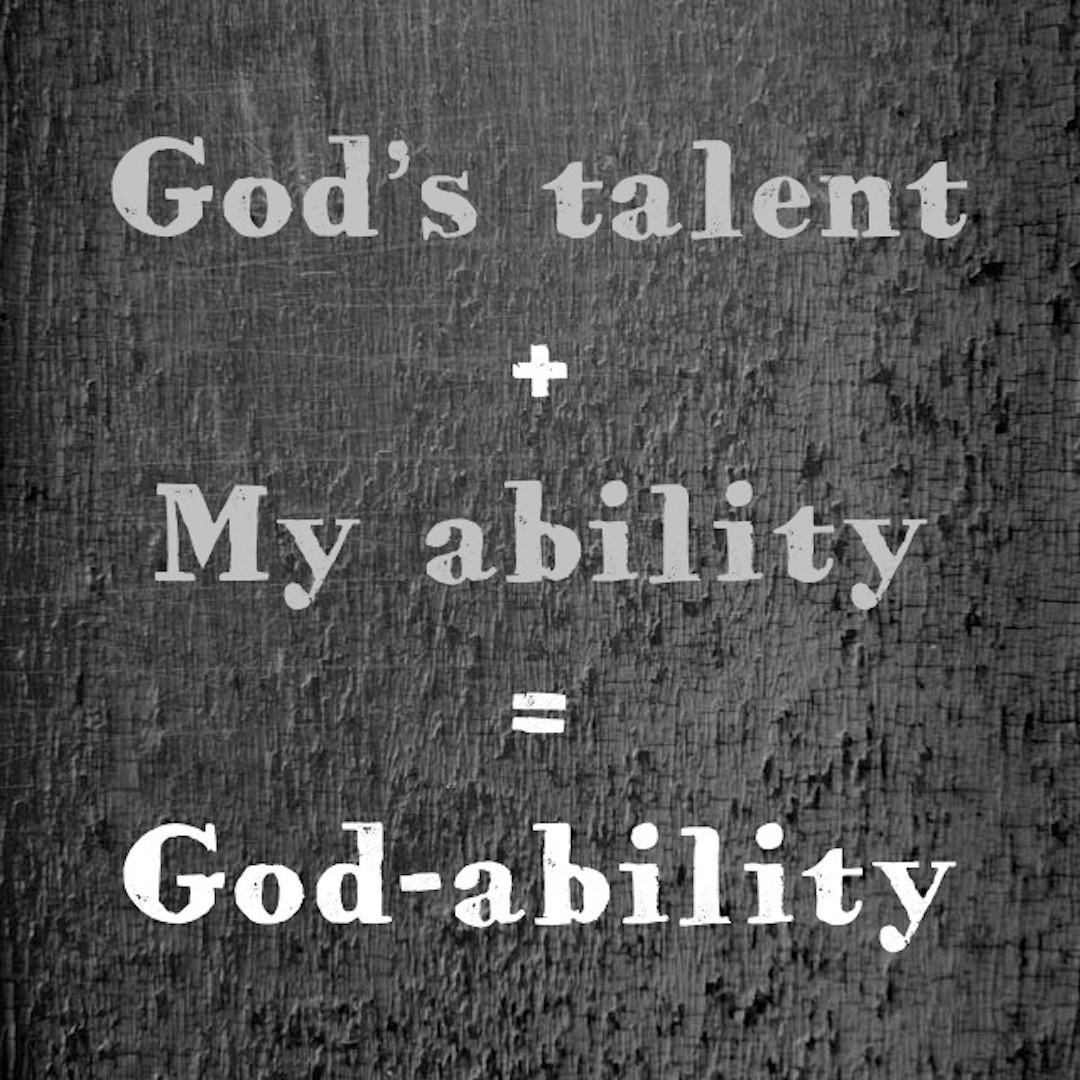
God’s talent + My ability = God-ability

In 2 Corinthians 8-9, Paul is specifically talking about the ability of people to give their offerings to help the growing church, but there is a phrase that I think is appropriate for any application of our gifts: They gave themselves first of all to the Lord (2 Corinthians 8:5). 

When what we do is a cheerful “get to” and not an obligatory “got to” it is noticed by everyone. Those two chapters in 2 Corinthians are filled with words like cheerful, eagerness, and enthusiasm. 

In our Hand2Hand food ministry, some people have…

  • Give-ability to give financially 
  • Shop-ability to find deals
  • Organize-ability to make all the parts work
  • Strength-ability to lift and move 
  • Deliver-ability to get the needed items to those who need them

But none of these work without availability. This is the attitude that makes our God-ability a blessing and not a chore. 

There is a place in ministry for every Christian. When you are available, God will allow the talent that He has given you to be a blessing to the Church. You benefit, the other saints benefit, and the watching world sees a living witness that will draw them to Jesus. 

►► Would you please prayerfully consider supporting this ministry? My Patreon supporters get behind-the-scenes access to exclusive materials. ◀︎◀︎
The Blessing Of Being There

Listen to the podcast of this post by clicking on the player below, and you can also subscribe on AppleSpotify, or Audible. 

Luke had previously spent a little time with the apostle Paul (Acts 16:10-18), but near the end of the historical record in the Book of Acts, we see Luke with Paul almost continually. 

(Check out all of the Scriptures in this post by clicking here.)

The reason we can tell this is because of the pronouns “us” and “we.” From Acts 20:5—21:18, 27:1—28:16, these two pronouns are used over 80 times! 

Luke probably joined Paul in Greece (20:2) and was with him when they arrived in Jerusalem. After Paul’s arrest, transport to Caesarea, and being bound over for his hearing before Caesar, Luke is still there (27:1). Luke remains with Paul throughout the entire journey to Rome, and is still with him as the Book of Acts closes. 

Paul calls Luke a faithful friend (2 Timothy 4:11). Today, people know this man who wrote the Gospel of Luke and the Book of Acts as a preeminent historian. It is God’s perfect provision and timing that links together the lives of Paul and Luke at such a pivotal time. 

Quite simply stated: Paul is blessed by Luke just being with him. 

Not only does Luke preserve the accurate historical record of Paul’s missionary journeys, but it appears that Luke is actively involved in Paul’s letter writing to the churches. Luke uses more unique Greek words in the New Testament than any other writer. But many of the words that appear more than once are found only in the historical works of Luke and the letters of Paul. I can almost imagine Paul dictating a letter, and then pausing to ask his educated friend Luke, “What is the Greek word that means such-and-such?” Luke’s thoughtful, Spirit-inspired reply is then included in these important letters for the early churches. 

This should be a great encouragement to us still today that God has us where we need to be, and with the people that need us in their lives. 

What skills do you have? Who has God put in your life? How can your talents be a blessing to those people? 

Simply doing what God has gifted you to do with those whom He has placed in your life is both a blessing to your companions and is pleasing to your God. 

I pray that you will find a way to use your God-given talents to be a blessing to those around you. Perhaps the blessing will simply be you being there for your friends as they journey through their life. 

►► Would you please prayerfully consider supporting this ministry? My Patreon supporters get behind-the-scenes access to exclusive materials. ◀︎◀︎
The Maturing Steward

Listen to the podcast of this post by clicking on the player below, and you can also subscribe on AppleSpotify, or Audible.

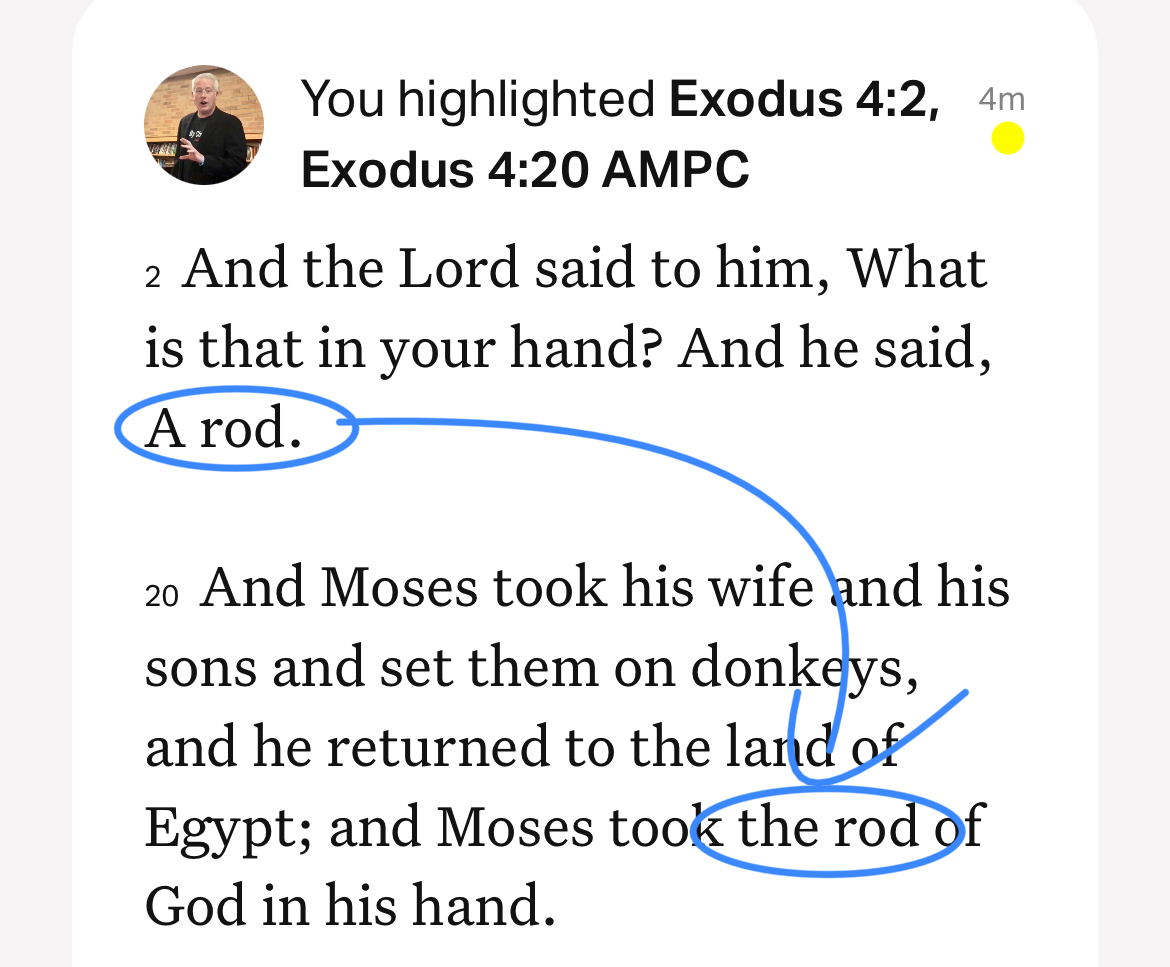
And the Lord said to [Moses], “What is that in your hand?” And he said, “A rod.” … And Moses took his wife and his sons and set them on donkeys, and he returned to the land of Egypt; and Moses took the rod of God in his hand. (Exodus 4:2, 20 AMPC) 

What Moses originally called merely “a rod” he later called “the rod of God.” He recognized that what he thought was his was in actuality what God had given him to use. 

When we recognize that what’s in our hands isn’t our creation, but a God-given talent, it marks a defining moment in both our maturity and our humility. Or to borrow a phrase I elaborate on in my book Shepherd Leadership, this helps us view our God-given talents or positions with confident humility (or, if you like, humble confidence). 

With this shift in Moses’ understanding and language in mind, this is how we should treat every strength God has given us:

• It’s not mine, but God’s 

• I am only a steward of this talent 

I must use this God-given strength only for God’s glory 

• I will have to give an account to God for how I invested or squandered what He entrusted to me

When we realize that we are not self-made men or women, but that any talents, abilities, or opportunities we have are God-appointed, we show a marked maturity in our understanding of our stewardship of God’s gifts. As our maturity grows, our confidence and our humility will grow proportionately. And as we become more confidently humbled in the way we steward God’s gifts, our leadership cannot help but exhibit more of God’s blessing on it. 

All of this growth starts with just the simple recognition that what’s in my hands is there only because God placed it there. 

►► Would you please prayerfully consider supporting this ministry? My Patreon supporters get behind-the-scenes access to exclusive materials. ◀︎◀︎
Stewarding Your Gifts Into Strengths

Listen to the podcast of this post by clicking on the player below, and you can also subscribe on AppleSpotify, or Audible. 

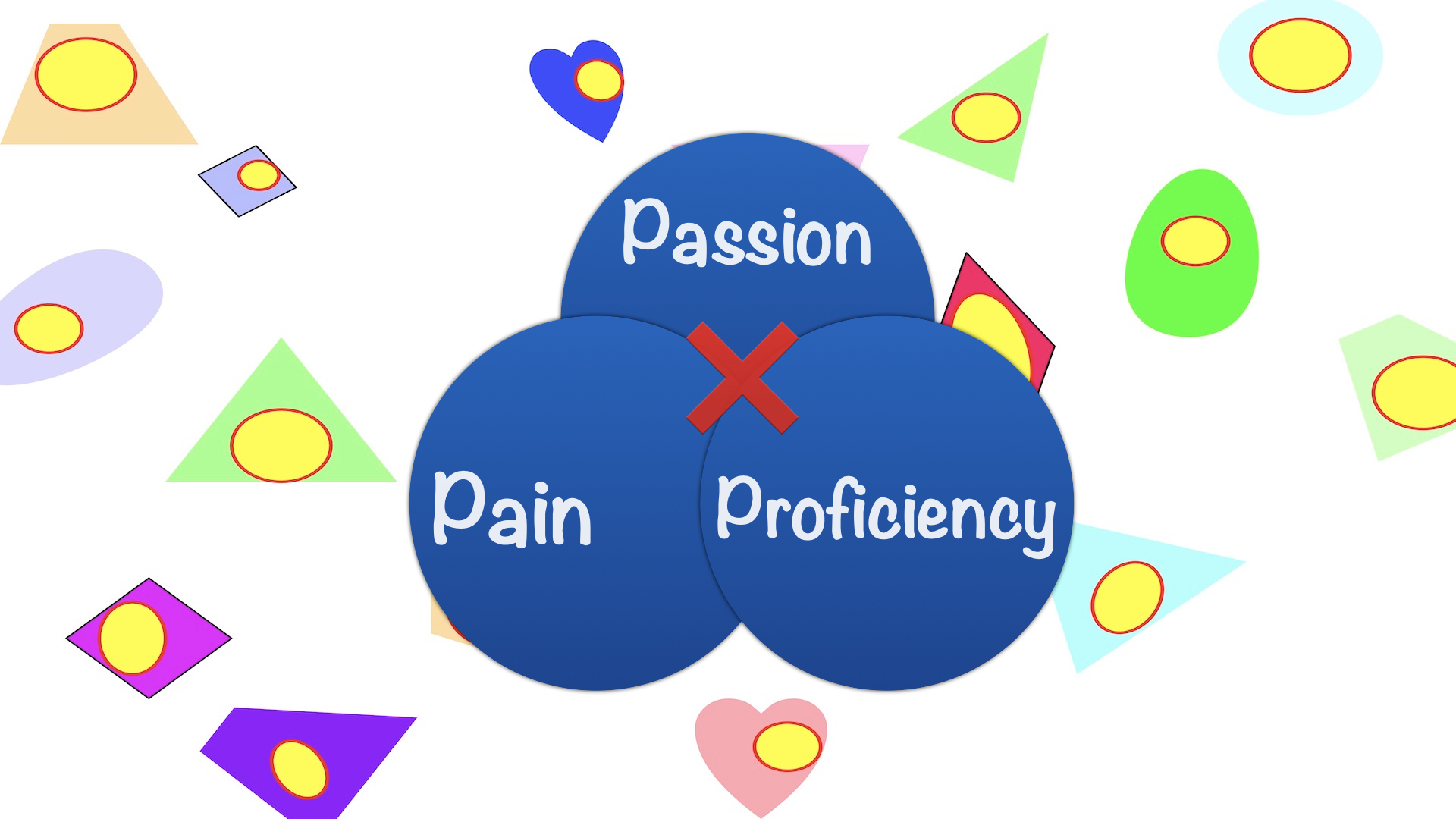
We have been learning about how God gifts us so that He can use us to build His kingdom. Discovering these gifts and then living in this gift zone is going to require us to stretch out of our comfort zone. So far, we’ve looked at two factors: 

  • Passion—what thrills you? 
  • Pain—what kills you? 

As you look back, the things that thrill you and kill you have probably remained consistent through your life. You may recall moments where implementing your gifts went very well and times when it didn’t go so well. The former makes us ready to try again and maybe expand a little further, but the latter tempts us to shrink back into our comfort zone. The key is to find out how we can be more consistent in using our gifts productively. 

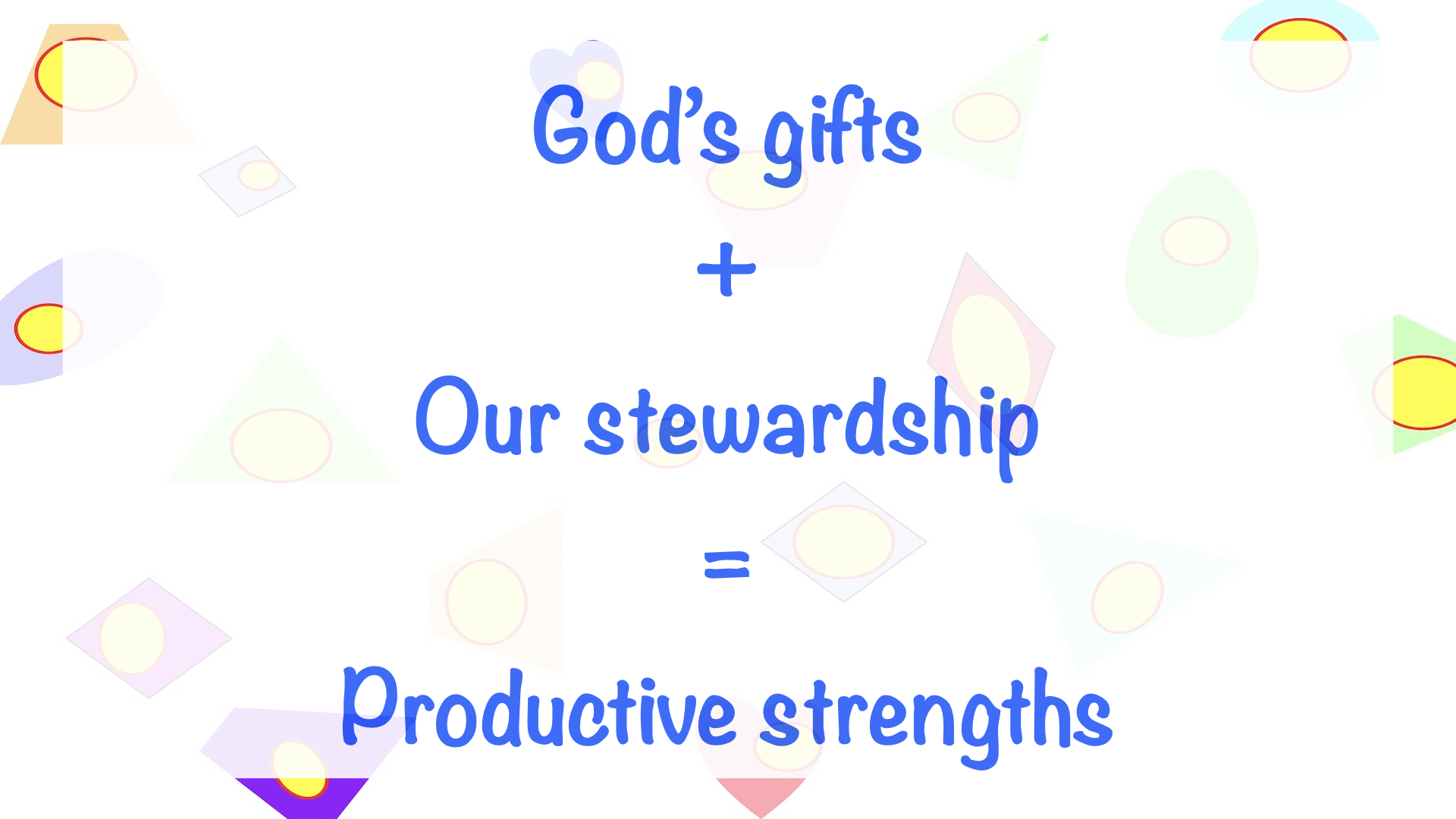
It looks like this: God’s gifts + Our stewardship = Productive strengths. 

God gives the gifts as only He knows best (Psalm 139:16; Romans 12:6; 1 Corinthians 12:11) and then we steward these gifts into productive strengths. 

(Check out all of the Scriptures in this post by clicking here.) 

What does stewardship mean? 

  • The dictionary defines it as the responsible overseeing and protection of something considered worth caring for and preserving. 
  • The Bible always portrays a steward as the one in charge of the precious things in a household—in our case, the Church. 

Jesus makes the role of a steward very clear in his parable found in Matthew 25:14-27. Notice three important things:  

  1. The master gave gifts to everyone of his servants, but he gave “each according to his ability” (vv. 14-15). 
  2. The wise servants stewarded the master’s gift by that way they “put his money to work” (vv. 16-18) 
  3. The master demanded accountability of all of his servants. Two servants acknowledged “you entrusted me” with these gifts (vv. 19-23), while one said, “I was afraid” (vv. 24-27). 

God created each of us on purpose and for a purpose. He gave us the gifts we need to accomplish that purpose. We will only find our fulfillment in life in stewarding those God-given gifts and opportunities in ways that glorify Him. Not only fulfillment here, but then eternal satisfaction when we hear our Savior say, “Well done, good and faithful servant! Enter into your Master’s happiness!” 

The only servants that heard the “well done” from their master were those who realized it was “your money…entrusted” to me. I like how Eugene Peterson brings this out in his paraphrase: 

Make a careful exploration of who you are and the work you have been given, and then sink yourself into that. Don’t be impressed with yourself. Don’t compare yourself with others. Each of you must take responsibility for doing the creative best you can with your own life. (Galatians 6:4-5 MSG) 

So let’s add one more circle to the passion and pain circles, and that is the circle of proficiency. This is what fulfills us because we can do it so well; it feels so natural for us to be doing this. Proficiency is what really brings together the passion and the pain, and it helps us find the sweet spot. 

Let me give you a couple of examples—one from the Old Testament and one from the New Testament. 

Nehemiah was killed that Jerusalem was in shambles and the people were disgraced (Nehemiah 1:3-4)—that’s what killed him. Nehemiah didn’t go to wall-building school, but he effortlessly strategized, cast vision, organized, planned, procured, and adapted—that’s his proficiency. The wall was built in 52 days, Israel’s enemies were disgraced, and the people had a place to worship again (Nehemiah 6:15-16, 9:1-3)—that’s what thrilled him. 

The apostles and the first deacons in the New Testament church saw that some of the widows were being overlooked in the food distribution (Acts 6:1)—this is what killed them. These new leaders didn’t go to food-distribution school, but they effectively strategized, cast vision, organized, planned, procured, and adapted (v. 3)—this is their proficiency. The widows were cared for, the Word of God spread, and more people became Christians (v. 7)—that’s what thrilled them. 

God gives gifts—we feel that in what thrills us and what kills us. We steward those gifts into productive strengths—we stick with what we fulfilled in doing. Our productive strengths then glorify God as we strengthen and grow the Body of Christ. 

Let me give you four things to consider about your area of proficiency:

  1. What comes easily to me? 
  2. Where do I see both the steps and the completion before others do? 
  3. Where do I experience the greatest ROI of my time and efforts? 
  4. What do I do that thrills me because I ran to because it was killing me, and now it fulfills me to keep doing it? 

With all three of these circles, please take some time to ponder what your sweet spot is. And if you’ve missed any of the messages in this series, you can find them all here. 

►► Would you please prayerfully consider supporting this ministry? My Patreon supporters get behind-the-scenes access to exclusive materials. ◀︎◀︎
Links & Quotes

If your mental health is struggling remember GIGO: garbage in, garbage out. We need to look at all our inputs: physical, emotional, and spiritual. Check out this full message by clicking hereAnd be sure to check out all of my videos on my YouTube channel.

In a post entitled The Quest For Immortality, John Stonestreet reminds us that we are more than just the physical bodies we have. He wrote, “Attempts to achieve immortality have continued (and continued to fail) right up to our own time. Medieval European alchemists believed they could produce ‘the philosopher’s stone,’ which would perfect the imperfect, turning lead into gold and making mortal life immortal. Enlightenment thinkers of the late 18th century rejected the mysticism of alchemy but continued to speculate about the means to attain physical immortality. Mary Shelley’s Frankensteinwas written as a cautionary tale about scientific hubris, in response to the more modern attempts of medicine and biology to preserve, extend, and improve life.” Check out this full post.

“You have to train your mind as much as your body.” —Venus Williams

“Peace is the normal condition and set of the soul of those who know the Kingdom’s presence in their lives. And only Jesus can give us the peace that overcomes the fears and troubles of the world, so that His Kingdom citizens may ‘be of good cheer’ [John 16:33] in all they do, come what may.”

“Hatred and anger are the greatest poison to the happiness of a good mind.” —Adam Smith

“Hard work beats talent when talent doesn’t work hard.” —Anonymous

I really love the He Gets Us presentation of Jesus. Check them out! I used the example Jesus showed us of proper self-care in my book Shepherd Leadership.

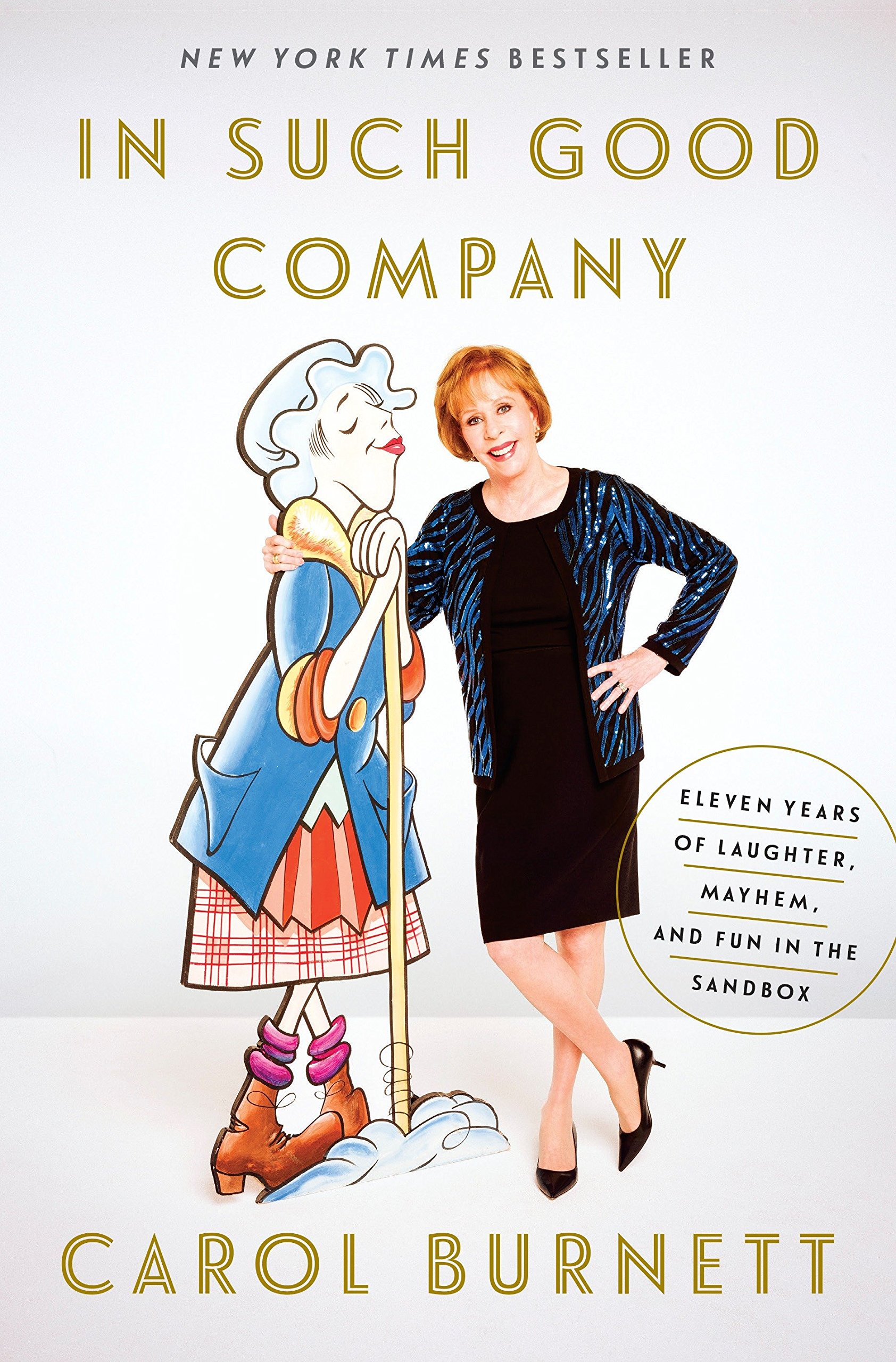
In Such Good Company (book review)

I grew up watching The Carol Burnett Show. The interaction between Carol, her special guests, and regular cast members Harvey Korman, Vicki Lawrence, Lyle Waggoner, and Tim Conway, were always enjoyable. In In Such Good Company, Carol takes us behind the scenes to tell us how the magic happened. 

What goes into such a successful show that won 25 Emmy Awards over its 11-year run? Is it good fortune? Lots of talented people? Hard work? The answer is quite simply: Yes. Of course, those of us enjoying the show week after week were unaware of the hard work and good fortune that was at play. And although we saw several talented actors, musicians, and dancers on stage each week, there were dozens of unseen, talented people that were just as crucial to the show’s success. 

I choose the audiobook version, and I’m glad I did. Carol read her own book, adding a personal touch that I would have otherwise missed by reading it myself. In addition, the audiobook also includes interviews with some of the key personnel that made the show what it was. 

Carol and her team loved what they were doing. They were talented people who continued to work extremely hard to hone their craft. All of us who watched the show were beneficiaries of these talented people. I loved going behind all of the lights and cameras to hear from Carol herself how this all came together. 

If you enjoyed watching The Carol Burnett Show, I’ll bet you will find yourself appreciating it even more after you hear/read Carol’s recollections. 

Walk This Way

In his letter to the Christians in Ephesus, Paul uses the word “walk” seven times to instruct them how to follow the path Jesus laid down for us. 

In Greek, the word for “walks” (peripatēo) means something that regulates my life, or something that keeps me on the right path. It’s my lifestyle that is kept in proper boundaries by something outside of me. 

First of all, notice how Paul tells Christians how not to walk. DON’T WALK THIS WAY…

…following pop culture (2:2)—Living a certain lifestyle because “everyone” is doing it, or because some popular people are living that way. 

…without thinking about why you’re walking the way you are (4:17)

…without comparing your walk to truth (5:8)—Living a life because it feels good to me is a dangerous way to live. I must make sure there is an objective truth that is keeping me on a proper path.

…foolishly (5:15)—To be foolish is either (a) not knowing the truth, (b) not applying the truth I have been shown, or (c) choosing to disregard the truth I’ve been given. 

Instead, Paul tells Christians to WALK THIS WAY

…knowing I am God’s workmanship, created for a great purpose (2:10)—It may take me some time to discover my purpose and my talents, but I keep at it. 

…worthy of my vocation (4:1)—Once I have discovered my talents, I develop them into strengths that will benefit others. 

…lovingly (5:2)—Just as Jesus did! 

…in the light of God’s truth (5:8)—This is the exact opposite of foolishly walking. It means I seek the truth and I apply the truth to my life. 

…circumspectly (5:15)—Not wasting my moments, but making sure I am giving 100 percent every single day.

When I WALK THIS WAY people will inevitably notice that I’m motivated not by popularity with people, but by intimacy with God (5:2-7). They will see that my path is bordered by the principles in God’s Word (5:8-14; Psalm 119:105). And they will notice that my life has purpose and is productive (5:15-20). 

All Christians should ask themselves:

  • Is Jesus pleased with the path I’m on today?
  • Can others follow my footsteps toward their own relationship with Christ? 

If you can answer “yes” to those questions, then Jesus will be pleased that you WALK THIS WAY! 

[You can check out the Scriptures I referenced in this post by clicking on DON’T WALK THIS WAY and WALK THIS WAY above.]

Thursdays With Spurgeon—“Follow Me”

This is a weekly series with things I’m reading and pondering from Charles Spurgeon. You can read the original seed thought here, or type “Thursdays With Spurgeon” in the search box to read more entries.

“Follow Me”

     “As Jesus passed on from there, He saw a man named Matthew sitting at the tax office. And He said to him, ‘Follow Me.’ So he arose and followed Him” [Matthew 9:9]. … I know another man, not named Matthew, but Charles, and the Lord said to him, “Follow Me,” and he also arose and followed Him. I do not know all that He saw when He looked upon me. I fear that He saw nothing in me but sin and evil and vanity, but I believe that He did say to Himself concerning me, “I see one to whom I can teach My truth, and who, when he gets ahold of it, will grip it fast and never let it go, and one who will not be afraid to speak it wherever he is.” So the Lord saw what use He could make of me. There is an adaptation in men, even while they are unconverted, that God has put into them for their future service. Luke was qualified to write his gospel because he had been a physician, and Matthew was qualified to write the particular gospel that he has left us because he had been a publican. There may be something about your habits of life, and about your constitution and your condition that will qualify you for some special niche in the church of God in the years to come. Oh, happy day, when Jesus shall look upon you and call you to follow Him! Happy day, when He did look upon some of us, and saw in us what His love meant to put there, that He might make of us vessels of mercy meet for the Master’s use! 

From The Autobiography of Charles Spurgeon

What was true of the apostle Matthew and Charles Spurgeon in past history is true of you today! 

God has plans for you. He has implanted a combination of gifts, talents, and personality in you that is unique to anyone else on this planet. He did this because He foresaw how you could be of use in fulfilling His plans for His kingdom.

Listen! Do you hear Him calling? He is saying to YOU, “Follow Me.” Will you answer that call? 

Teddy Roosevelt On Character

Theodore Roosevelt was well aware that talent alone wasn’t enough to sustain an individual, a family, or a nation. Talent and perseverance, he preached, must be supported by character. In a series of speeches bundled together in the book The Strenuous Life, TR had much to say about character development and integrity. You can check out my review of The Strenuous Life by clicking here. 

“It is a good thing to have a keen, fine intellectual development in a nation, to produce orators, artists, successful business men; but it is an infinitely greater thing to have those solid qualities which we group together under the name of character—sobriety, steadfastness, the sense of obligation toward one’s neighbor and one’s God, hard common sense, and, combined with it, the lift of generous enthusiasm toward whatever is right. These are the qualities which go to make up true national greatness.” 

“We do not need men of unsteady brilliancy or erratic power—unbalanced men. The men we need are the men of strong, earnest, solid character—the men who possess the homely virtues, and who to these virtues add rugged courage, rugged honesty, and high resolve.” 

“The men who with ax in the forests and pick in the mountains and plow on the prairies pushed to completion the dominion of our people over the American wilderness have given the definite shape to our nation. They have shown the qualities of daring, endurance, and far-sightedness, of eager desire for victory and stubborn refusal to accept defeat, which go to make up the essential manliness of the American character. Above all, they have recognized in practical form the fundamental law of success in American life—the law of worthy work, the law of high, resolute endeavor.” 

“After all has been said and done, the chief factor in any man’s success or failure must be his own character—that is, the sum of his common sense, his courage, his virile energy and capacity.” 

 “Bodily vigor is good, and vigor of intellect is even better, but far above both is character.” 

“In the long run, in the great battle of life, no brilliancy of intellect, no perfection of bodily development, will count when weighed in the balance against that assemblage of virtues, active and passive, of moral qualities, which we group together under the name of character…. Of course this does not mean that either intellect or bodily vigor can safely be neglected. On the contrary, it means that both should be developed, and that not the least of the benefits of developing both comes from the indirect effect which this development itself has upon the character.” 

“Character is shown in peace no less than in war. As the greatest fertility of invention, the greatest perfection of armament, will not make soldiers out of cowards, so no mental training and no bodily vigor will make a nation great if it lacks the fundamental principles of honesty and moral cleanliness.” 

“Alike for the nation and the individual, the one indispensable requisite is character—character that does and dares as well as endures, character that is active in the performance of virtue no less than firm in the refusal to do aught that is vicious or degraded.” 

Be sure to check out my review of Theodore Roosevelt’s Autobiography by clicking here, and read some additional quotes from TR here and here. 

God’s Gift To The World

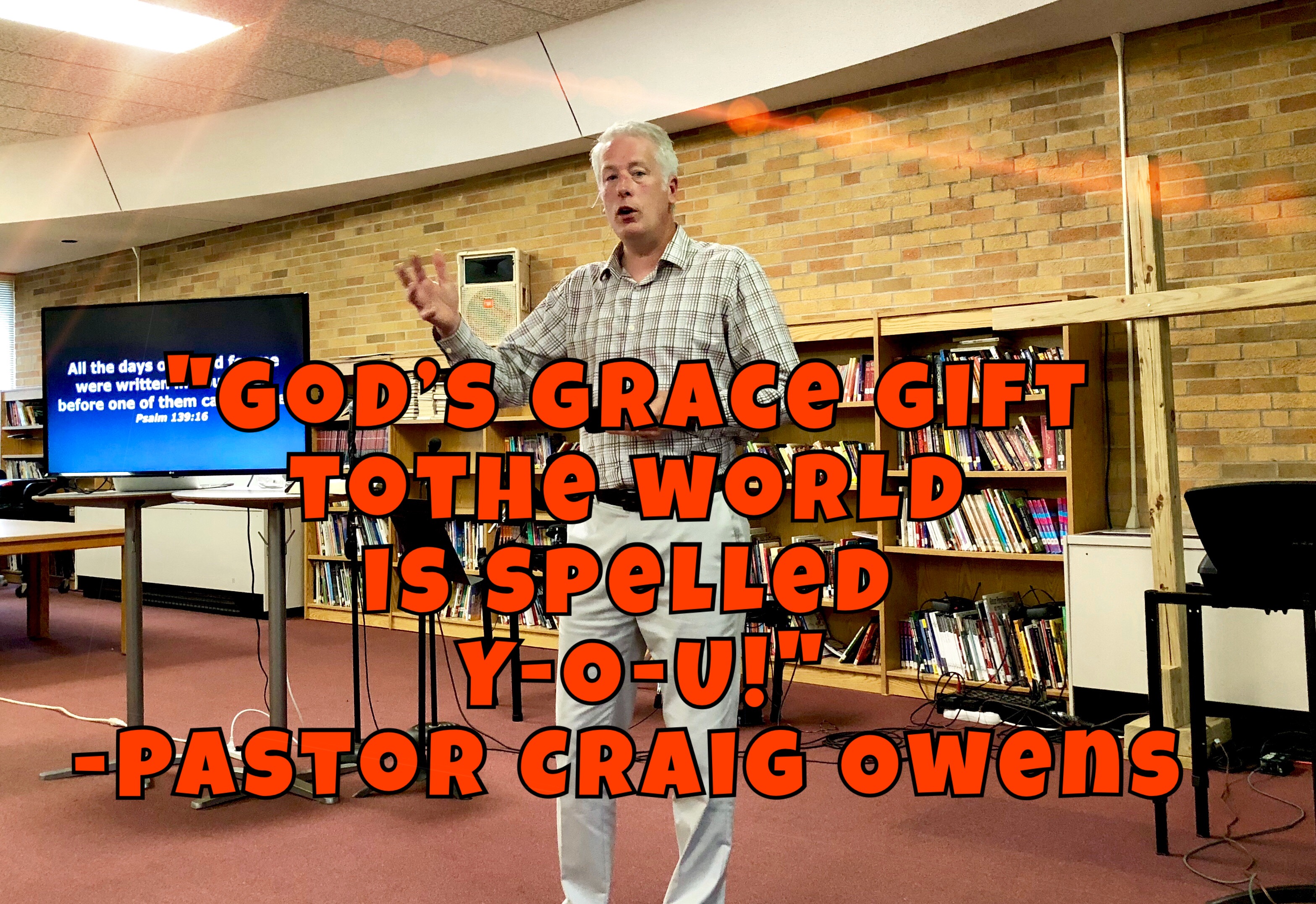
You are a gift. You are God’s grace gift to the world. 

Max Lucado said it this way: “You are you-nique. 

God made you on purpose and for a purpose.

God implanted unique abilities in you from conception (see Psalm 139:13). And check out what God said to Jeremiah, “Before I formed you in the womb I knew and approved of you…” (Jeremiah 1:5). Before you were even conceived, God already knew all about you AND He approved of you! 

Why did God implant these unique abilities in you? Because He knew of the unique opportunities you would face during your lifetime (see Psalm 139:16). Because God is for you, He gave you all that you would need to successfully face every opportunity that came your way. 

Every one of us has been given these grace gifts of unique talents and opportunities. The Bible says, “to each one of us grace has been given as Christ apportioned it” (Ephesians 4:7). If God is for you, and God is for me, then that means that you have been gifted to be a blessing to me and I have been gifted to be a blessing to you (Romans 12:3-6; 1 Corinthians 12:4-7).

Let me state it again: every one of us has been entrusted by God with unique talents in order to successfully face the unique opportunities that He knew we would face. Jon Bloom reminds us, “Some are given more, some are given less, but all are given much.” 

So what do we do with what we’ve been entrusted? There are two possibilities: (1) We can invest our talents and abilities in a way that glorifies God, or (2) We can squander the talents God has given us. 

How do you squander the grace gift of your life? 

  1. Not discovering it—I have a gift?
  2. Devaluing it—I’m nothing special.
  3. Overvaluing it—I’m super-important. I don’t need anyone else.
  4. Laziness—I don’t want to mess it up, so there’s no need for me to invest my gift.
  5. Short-sightedness—My gift is just for me, so it doesn’t matter what I do with it.

I hope we can all say what Erma Bombeck wrote: “When I stand before God at the end of my life, I would hope that I would not have a single bit of talent left but could say, ‘I used everything You gave me.’”

How do you honor God with your you-niqueness? I can tell you in just three simple words—You be you! 

If you will just be who God made you—not downplaying your talents, not wishing you had someone else’s talents—that’s when you will feel fulfilled, and God will be glorified, and the rest of the world will be blessed! So…

YOU BE YOU!