Whether you call it grit or stick-to-it-iveness, those who don’t give up easily are the ones who will become leaders by their example. Check out the conversation we had on The Craig and Greg Show.
I was thrilled to be asked to write an article for Influence Magazine about the biting sheep that every pastor has experienced. I am praying that this article will help pastors recover and thrive in their shepherding ministry.
“Knowing our lowliness and Christ’s worthiness, we neither grovel nor saunter into the presence of God. And we do not go home flippant or weeping. In Christ, we will receive what we ask or what we should have asked.” —David Mathis
In 1 Thessalonians 5:19, the apostle Paul warns us not to quench the Holy Spirit. T.M. Moore asks, “How do we quench the Spirit?” and then gives Christians seven warning signs to avoid this quenching. Check out his post Joy In His Spirit.
I really enjoy these archeological biographies of biblical people and places. The Bible Archeology Report writes, “The Neo-Babylonian king, Amēl-Marduk (biblical Evil-Merodach) is only mentioned twice in Scripture (in 2 Kings 25:27–30 and the parallel passage, Jeremiah 52:31–34), both times in connection with the restoration of Jehoiachin, king of Judah.” In a separate post, John Stonestreet shares an archeological discovery in a Roman cemetery in Frankfurt of an amulet that shows that “the Gospel spread farther and faster than historians thought.”
“If we try to display the excellence of God without joy in it, we will display a shell of hypocrisy and create scorn or legalism. But if we claim to enjoy His excellence and do not display it for others to see and admire, we deceive ourselves, because the mark of God-enthralled joy is to overflow and expand by extending itself into the hearts of others. … God calls us to pray and think and dream and plan and work not to be made much of, but to make much of Him in every part of our lives.” —John Piper
I have blogged quite a bit about the importance of getting enough quality sleep. A new study finds that the link between poor sleep and mental health problems could be related to deficits in brain regions that keep unwanted thoughts out of mind. Check out the full report.
“You may have to fight the battle more than once to win it.” —Margaret Thatcher
Listen to the audio-only version of this podcast by clicking on the player below, or scroll down to watch the video.
When you’re trying to accomplish a task it’s natural to want to search for the quickest way to get it done. But what if that’s not the best way? In this episode Greg and I discuss why rejecting shortcuts and persevering through struggles will make you a better leader, and also allow you to help your team get better as well. Join us for some powerful motivation to kick off the new year!
[0:23] The shortest distance between two points is ____?
[1:04] Why do we want things done so quickly?
[2:36] When difficulty makes us slow down, our natural inclination is to bail.
[3:40] Sometimes slowing down enriches our lives.
[5:22] Leaders have to prepare their team for upcoming hardships, and be willing to fight through them with the team.
[7:12] Greg discusses how going the extra mile separates you from the crowd.
[8:29] Failure informs your success.
[9:27] Greg and I discuss our personal experiences with “shortcut culture” in today’s society.
[16:02] Greg shares a story from his time coaching football that illustrates how a leader can push the team farther.
[18:43] We share action points for leaders to implement this new year.
[22:35] A leadership coach will help you improve and be better equipped to lead your team.
Check out this episode and subscribe on YouTube so you can watch all of the upcoming episodes. You can also listen to our podcast on Spotify and Apple.
John Piper was asked to weigh-in on the value of repetitive phrases in worship songs. He said, “The issue’s not repetition per se but whether there is enough substance, enough rich content of truth about God woven into the repetitions to justify them, to warrant them. That’s the issue. There’s a difference between repetitions that are called forth by the repeated crescendo of new, glorious truth, and repetitions that serve as a kind of mantra without sufficient truth that is simply used to sustain or intensify a mood. Moods in worship should be awakened and sustained primarily by truth, assisted by music—not primarily by music with a little truth thrown in to justify the singing.”
Pastor John Piper used Psalm 136 as an example in the post above. T.M. Moore also shared this thought about Psalm 136: “The term most frequently used to describe this everywhere-present-and-always-at-work love of God is translated as ‘lovingkindness’ or, in some versions, ‘steadfast love.’ Especially Psalm 136, with its antiphonal arrangement of verses, insists that the cosmos is upheld, sustained, and pervaded by the lovingkindness of God. … It would improve our learning to pray without ceasing if we simply took some time out during the day to thank the Lord for the many ways His steadfast love surrounds, sustains, and swarms us at every moment!”
“When people refer to a man as a man of the Book, meaning the Bible, he’s generally found to be a man of multitudinous books, which simply isolates the one Book to its proper grandeur. The man who reads only the Bible does not as a rule know it or human life.” —Oswald Chambers
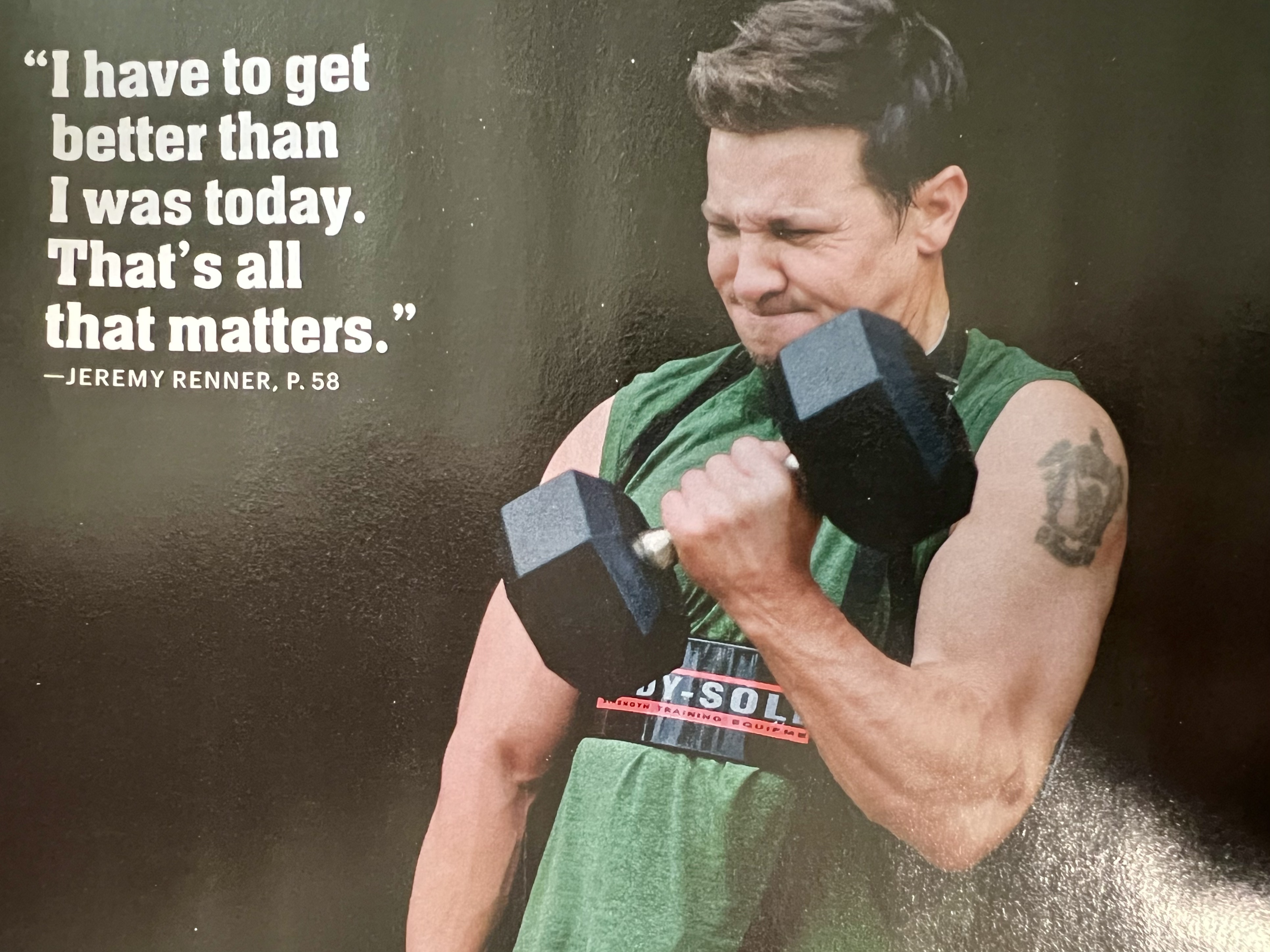
Men’s Health magazine shared an interview with Jeremy Renner, who was nearly killed in a tragic accident. I love his attitude about making today better than yesterday. His words remind me of a poem my grandma used to use to motivate me to keep “besting” what I had already done.
Christopher Ash writes about reading the Psalms through the lens of Jesus. He concludes this way: “I remember seeing on the wall of a church the words of Psalm 20:4: ‘May [the Lord] grant you your heart’s desire and fulfill all your plans!’ How wonderful, you might think. The Bible promises me all that my heart desires. Until you read the psalm and realize that Psalm 20 is a prayer for the king in David’s line. Ultimately, it is a prayer that Jesus will have His heart’s desire granted and that His plans will be fulfilled. And they will! The Psalms are not all about me. If I think they are, I will end up disillusioned. But when I grasp that they are all about Christ, my heart lifts in joy that He is the blessed Man and I belong to Him.”
Listen to the podcast of this post by clicking on the player below, and you can also subscribe on Apple, Spotify, or Audible.
Have you ever said to yourself…
…I should have known better?
…why I am going through this again?
…I thought I was over this hurdle?
…you would think I would have matured enough by now to not have to deal with this?
Maybe the author of Psalm 129 felt this way: “Here I am on the 10th step and I’m still having to deal with this! When will I finally arrive at the top and be done with these issues?” (compare Psalm 129:1-2 with 124:1-5).
I think those statements—“I should have known better” or “I thought I was over this”—pre-suppose that we will reach a point in our life where we “arrive.” If nothing else, this psalm is a reminder that we are still on the journey, that we are still a work-in-progress, that the saint-ification process is still ongoing. It’s clear from Scripture that we never “arrive” until we arrive in Heaven and hear our Master say, “Well done, good and faithful servant.”
While we are ascending up toward our heavenly home, these great oppressions and plowings remind us that there is still work to be done in us and through us to bring glory to God (Romans 5:3-4; James 1:2-4, 12).
Of his Soviet prison, Alexander Solzhenitsyn said, “I bless you, prison—I bless you for being in my life—for there lying on rotting prison straw, I learned the object of life is not prospering as I had grown up believing, but the maturing of the soul.”
The reality is God is using all of those things for my good and for His glory (Romans 8:28).
What happens as I am oppressed and plowed?
(1) I am refined—Psalm 66:8-12, 16-20. God is removing the impurities from my life.
(2) My prayers are matured. Psalm 129:5-8 is an imprecatory prayer, a prayer that says, “Get ‘em, God!” These have their place, but for us they are to be our emergency release valve (which I discuss in more depth in my book When Sheep Bite). But Jesus calls for our prayers to mature from imprecatory to intercessory (Matthew 5:43-45). In my book I write, “This is the highest level of Christian maturity: To pray like Jesus did for those who insulted Him, slandered Him, and crucified Him, ‘Father, forgive them for they don’t understand what they are doing’ (Luke 23:34)”
(3) I develop more intimate God-dependence—2 Corinthians 1:8-10.
(4) I am better equipped to help others—2 Corinthians 1:3-6.
(5) Others feel more inclined to pray for me—2 Corinthians 1:7, 11.
“God uses broken things. It takes broken soil to produce a crop, broken clouds to give rain, broken grain to give bread, broken bread to give strength.” —Vance Havner
Oppressed? Yes! Defeated? No!
Plowed? Yes! Enslaved by the plow’s cords? No!
God uses this to bring us closer and closer to Him until He can eventually say to us face-to-face, “Well done, good and faithful servant!” That’s when we truly arrive! Until then, we keep on ascending.
Listen to the podcast of this post by clicking on the player below, and you can also subscribe on Apple, Spotify, or Audible.
Let’s review the historical background for the Psalms of Ascent. The Jewish people made four pilgrimages to Jerusalem each year, which sit about 2500 fee above sea level, so this was a physical climb. But this also has a spiritual lesson for us today: We are to continue progressing in our walk with God—upward and onward!
The songs of ascent that these pilgrims sang give us life-changing lessons that we can still apply today.
I’m sure there were some pilgrims who thought, “We have to go to Jerusalem.” Just as there are some people today who may something like, “I have to tithe.” But when you have experienced the blessing that comes from obedience, your “have to” turns to “get to” really quickly!
There is a longing in Psalm 128 for God’s blessing. In fact, we see it in nearly every verse: blessed (v. 1), blessing and prosperity (v. 2), blessed (v. 4), bless and prosperity (v. 5), and peace (v. 6).
We have to remember that our obedience doesn’t earn God’s blessing, but rather our obedience keeps us in the place where we can receive God’s ever-flowing blessings. When I have experienced the blessing that followed even my “have to” attitude, I now joyfully “get to” obey because I know that keeps me in a blessed place.
But even knowing that these blessings are flowing for us, sometimes we still get weary. Sometimes it seems as if we are being faithful but we aren’t seeing the results that perhaps we saw before.
Think about these pilgrims ascending 2500 feet year after year after year. It was challenging enough during the golden days of King David and King Solomon, but can you imagine the feelings of futility during the dark days? Perhaps during the exile when the temple was in ruins, or after the exile when the temple didn’t look as it did before and there were overlords ruling Israel? And then it was unquestionably true that the older a pilgrim got, the harder the climb became for them.
But the struggle keeps us reliant on God. Like Solomon said, “The way of life winds upward for the wise, that he may turn away from hell below” (Proverbs 15:24). The longer I walk, the more I get to rely on God’s help, and the sweeter He becomes to me!
I love the line in the hymn Great is Thy Faithfulness, “Strength for today and bright hope for tomorrow—blessings all mine with ten thousand beside.” Because of God’s blessings that I’ve already experienced, I can trust Him for more, even in the struggle of the climb.
Look at some of these promises that come out in other biblical translations.
Blessedare those who fear God (NIV) = “How joyful are those who fear the Lord” (NLT)
Blessing and prosperity will be yours (NIV) = “You will enjoy the fruit of your labor” (NLT) and “You will eat what you worked so hard to grow” (NET)
The middle of this psalm is in verses 3-4. Remember above when I said nearly every verse contains a word of blessing? I didn’t list verse 3, but there is language in this verse that makes it pregnant with blessing—Your wife will be like a fruitful vine within your house; your sons will be like olive shoots around your table.
You may ask, “How is this a blessing?”
The phrase “under their own vine and under their own fig tree” appears throughout the Old Testament. It described a blessed, prosperous, happy, and peaceful home. It was a home at peace within because there was also peace without.
This described the golden era of King Solomon—During Solomon’s lifetime Judah and Israel, from Dan to Beersheba, lived in safety, everyone under their own vine and under their own fig tree (1 Kings 4:25).
After the northern kingdom of Israel fell and the southern kingdom of Judah was surrounded by the Assyrian forces of King Sennacherib, the king’s field commander tried to entice them the people with similar words—
Do not listen to Hezekiah. This is what the king of Assyria says: “Make peace with me and come out to me. Then each of you will eat fruit from your own vine and fig tree and drink water from your own cistern until I come and take you to a land like your own—a land of grain and new wine, a land of bread and vineyards, a land of olive trees and honey. Choose life and not death! Do not listen to Hezekiah, for he is misleading you when he says, ‘The LORD will deliver us.’” (2 Kings 18:31-32)
Notice that he said the land would be “a land like your own.” He was trying to get them to compromise, to no longer listen to God’s voice, to no longer climb up into God’s presence. Much like satan tempted Adam and Eve to eat the forbidden fruit with the promise, “You will be like God.”
But these blessings in Psalm 128 don’t come from fearful “have to” obedience to man, but from reverencing God above all else. So the longing of verses 1-4 become the prayer of verses 5-6 (notice the word may used three times in these verse).
The focus of our longing—where we need to keep our eyes—is on God’s heavenly throne: Zion, Jerusalem, Israel (vv. 5-6; Micah 4:1-5).
In an earlier story, Caleb may have gotten tired while he waited for God to fulfill His promise to him, but he always trusted God as he walked on (see Joshua 14:9-12).
What promises of God are you still praying for?
What are you longing to see accomplished?
What has God already done that you can look back on?
The Hill, though high, I covet to ascend, The Difficulty will not me offend; For I perceive the Way to life lies here. Come, pluck up Heart, let’s neither faint nor fear;
Better, though difficult, the Right Way to go,
Than wrong, though easy, where the End is Woe. (John Bunyan)
Don’t give in.
Don’t give up.
Keep climbing.
Like Caleb say, “It may have been 85 years of walking and climbing, but I’ll keep climbing. GOD, GIVE ME THIS HILL!”
If you would like to check out the other songs of ascent that we’ve already studied, please click here.
God’s laws, precepts, and commands are given to us because He loves us and wants to keep us safe. His laws keep us in a place where we can experience His abundant blessings!
I have lots of new content every week, which you can check out on my YouTube channel.
“Establishing the Kingdom of God means ending evil, which happens not through violent force or coercive threats but through loving-kindness and patient forgiveness. It’s a world compelled by love instead of fear. … This [the outpouring of the Holy Spirit on the Day of Pentecost] is the beginning of a new world. The old world creates enemies and divides people, falsely claiming that some are loveable and others are throwaways, but not so in the Kingdom of God! In God’s empire, all people mutually love one another without partiality.” —Why Is Pentecost Important? reading plan on YouVersion
In the weekly Culture Translator newsletter from Axis Ministry, they had this insightful reminder about the worldview of pornography: “Pornography is not just sexual entertainment; it is a form of propaganda about what human beings are. In the same way that Scripture has a vision for humanity (that all people are God’s beloved children, worthy of honor and respect, with inherent dignity as his image-bearers), pornography also has a vision for humanity: that people (especially women) are objects to be gawked at, violated, and discarded at will. Porn offers a worldview, and like any other worldview, it shapes the way we think about what people are for—and how they should be treated. ‘Pornography teaches us lies that we ingrain into aspects of our relationships and our lives,’ argues Sam Black, Covenant Eyes’ Director of Recovery Education. These lies include the notion that we can’t live without sex, that sex equals love (or acceptance), and/or that what gives humans value is exclusively their sexual attractiveness. ‘Pornography warps our views of our relationships,’ Black continues, ‘and we haven’t even realized it.’”
“I always turn to the sports page first. They record people’s accomplishments. The front page has nothing but man’s failure.” —Chief Justice Earl Warren
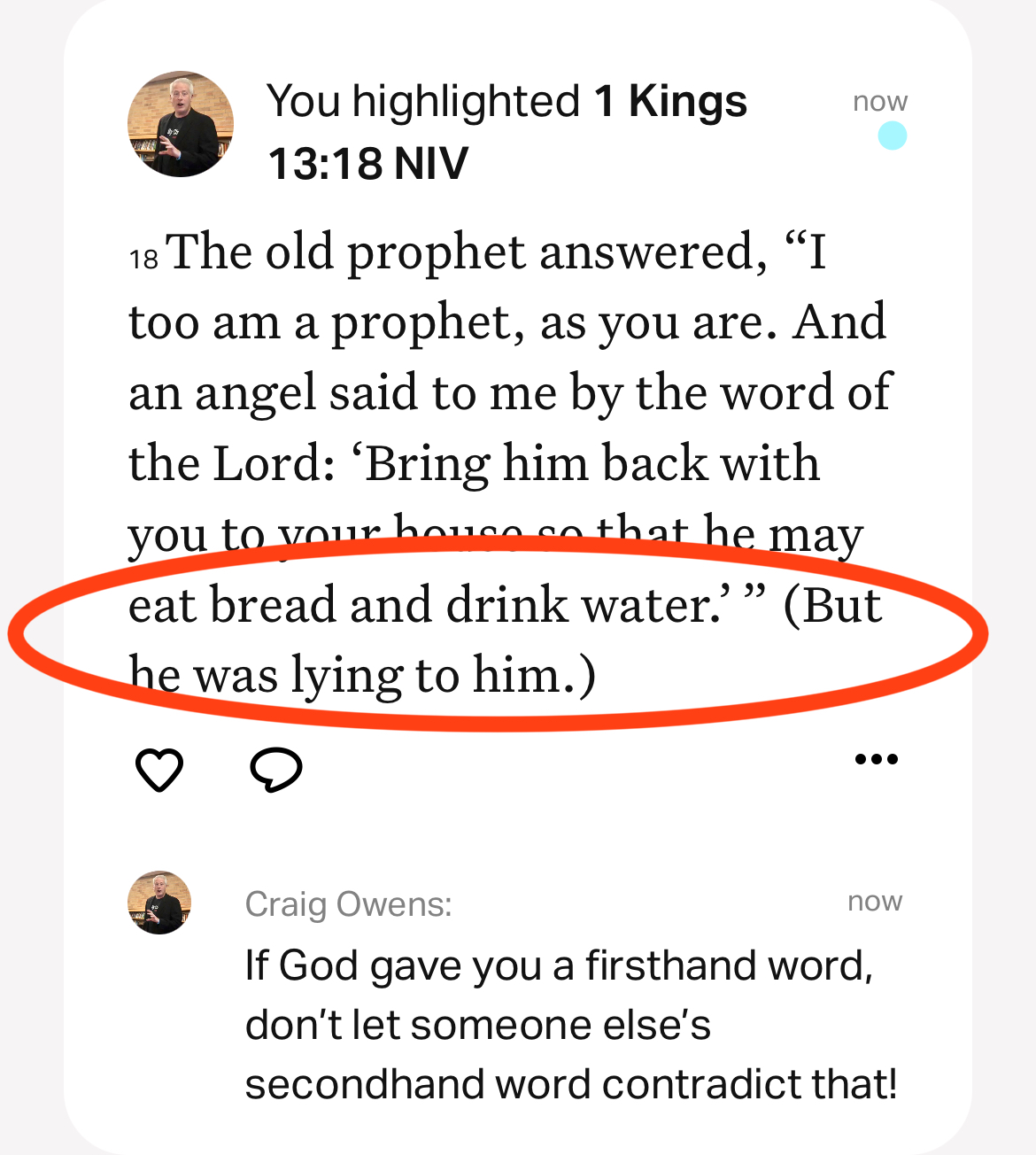
There is a very unusual story told in 1 Kings about a couple of unnamed prophets. One prophet heard from God, delivered the powerful warning God directed him to give, but then disobeyed God because of something another prophet told him that he had heard from God. I shared this commentary on YouVersion, “If God gave you a firsthand word, don’t let someone else’s secondhand word contradict that!”
“All religions are either a preview or a perversion of Christianity.” —C.S. Lewis
“If our relationships with other human beings are going to be meaningful, they will cost us something. Relationships are demanding.” —Herbert Wagemaker
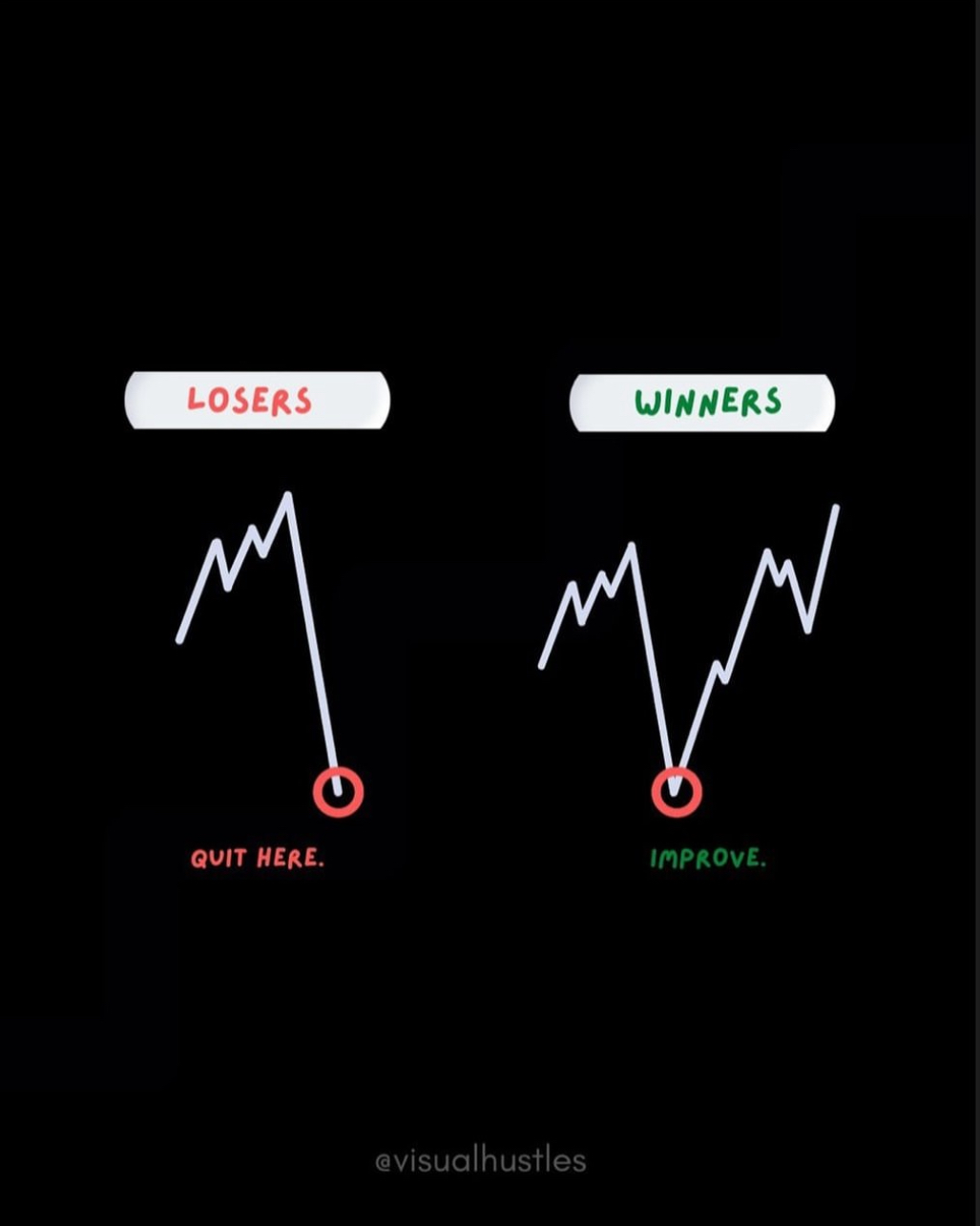
I saw this side-by-side graphic and so many thoughts about perseverance, grit, and stick-to-it-iveness came to mind. It is so true: we all have moments of stumbling. Losers tend to quit when they fall down, but winners learn something from their stumble, improve, and continue to grow. And then I came across this related quote from John D. Rockefeller, “I do not think that there is any other quality so essential to success of any kind as the quality of perseverance.”
Listen to the audio-only version of this podcast by clicking on the player below, or scroll down to watch the video.
When every quality is distilled down, the two things a leader is looking for in a teammate are skill and will. Which one should come first, and what happens if you identify a deficiency in yourself or others in one of these areas? Greg and I tackle these questions, and much more, in this episode of The Craig and Greg Show.
[0:25] What goes into the hiring decision? We think there are two important categories.
[1:14] What are some key leadership skills?
[3:53] Which comes first—skill or the will to use the skill?
[4:49] Some skills are innate and some are learned.
[6:17] Willpower makes the skills go farther and work more effectively.
[8:44] Leaders love to coach those with hustle.
[11:03] Is there a trigger for someone’s willpower to kick in?
[13:18] Leaders sometimes need to adopt a no-matter-what willpower.
[13:59] Top skills that emerging leaders should cultivate.
[17:00] Positivity is an attractive quality.
[18:21] Leaders can help their teammates learn skills and willpower.
[19:52] We need to help people overcome the pull to quit too soon.
Check out this episode and subscribe on YouTube so you can watch all of the upcoming episodes. You can also listen to our podcast on Spotify and Apple.
We’ve added things that we think should be in our prayer vocabulary. But kingdom praying should be as natural as talking to the most loving Father you can imagine! Check out more thoughts in my series of posts called Kingdom Praying. I have lots of new content every week, which you can check out on my YouTube channel.
“Obstacles don’t have to stop you. If you run into a wall, don’t turn around and give up. Figure out how to climb it, go through it, or work around it.” —Michael Jordan
In the post-Flood rock layers, fossils are often found of animals that were much larger than are currently observed. This has been called giantism. “Evolutionists claim that adaption occurs as random mutations make some organisms better fitted for their environment, and the less-fit organisms then die off. … This supposed, random, trial-and-error process requires long periods of time waiting for the ‘right’ random mutation to occur. In contrast, ICR gives credit to Jesus. He designed organisms with built-in sensors that enable them to detect changes in their environment. Internal genetic programming then allows these organisms to rapidly adapt to these changes in predictable ways. Such adaptation is often too rapid for natural selection to be the correct explanation. This design-based paradigm of adaptation is called continuous environmental tracking (CET).” This is an excellent article.
“If the stone falls on the pot, alas, for the pot; if the pot falls on the stone, alas for the pot.” —Jewish proverb, based on Psalm 118:22 and Luke 20:17-18
…ears consecrated to hear God’s voice and the voice of the people
…hands dedicated to ministering in love and obedience
…feet that only walk in God-directed paths
Godly leaders don’t minister to please people, but to lead people to God. So godly leaders are ever aware that in all they do, they must hear God say, “Well done, good and faithful servant.”
Stop praying to yourself! God isn’t impressed with your “powerful” prayer! Jesus tells an interesting story about two men: one thought very highly of his spiritual status and the only could barely lift his eyes. Jesus said that the proud man’s prayer received no help from God, but only the humble man’s prayer was heard. This is a short clip from my series called Kingdom Praying. I have lots of new content every week, which you can check out on my YouTube channel.
“If the fetus gets in the way, ditch it. If the old person gets in the way, ditch it. If you get in the way…” —Francis Schaeffer
“The god of convenience, ruling capriciously in the hearts of men and women, and supported by worshipers of the god of wealth—greedy, self-interested profit-takers in the guise of abortionists and abortion-rights advocates—is the putative lord of life and death where children in the womb are concerned. …Christians must insist that all political candidates seeking their support, at whatever level of government, be firm in their commitment to resist the present abortion regime and expose the lie of the pro-choice agenda by every available means. …The Law of God is holy and righteous and good. Abortion is unholy, unrighteous, and evil. If we want a just and loving society, we will worship God and obey His Law, and we will work to dethrone the god of convenience and to expose the folly and self-interest of all its followers. And we will look to God to explain the nature, meaning, and value of all lives.” —T.M. Moore
Elihu is angry at Job “because he justified himself before God.” Better stated: “Job was more concerned about justifying himself—making himself look good—than he was about making God look good.” Elihu is angry at Job’s three friends because they acted like God and pronounced a guilty verdict against Job. Elihu is righteously provoked. After holding his tongue for 31 chapters, he cannot remain silent any longer!I conclude that Elihu is righteous in his response because God doesn’t have anything negative to say to or about Elihu (as He does with the three friends) at the end of the Book of Job.
Long before the term “fake news” made it into our lexicon, Charles E. Robinson wrote an article in 1934 “as a solemn warning to all Christians” about the rising tide of anti-Semitism. He was especially upset about a book that made an erroneous case blaming Jews for global economic and political turmoil. I am thrilled with the strong spiritual and intellectual legacy in the Assembly of God fellowship!
“There’s a lot of blood, sweat and guts between dreams and success.” —Paul Bear Bryant



 Whether you call it grit or stick-to-it-iveness, those who don’t give up easily are the ones who will become leaders by their example. Check out the conversation we had on The Craig and Greg Show.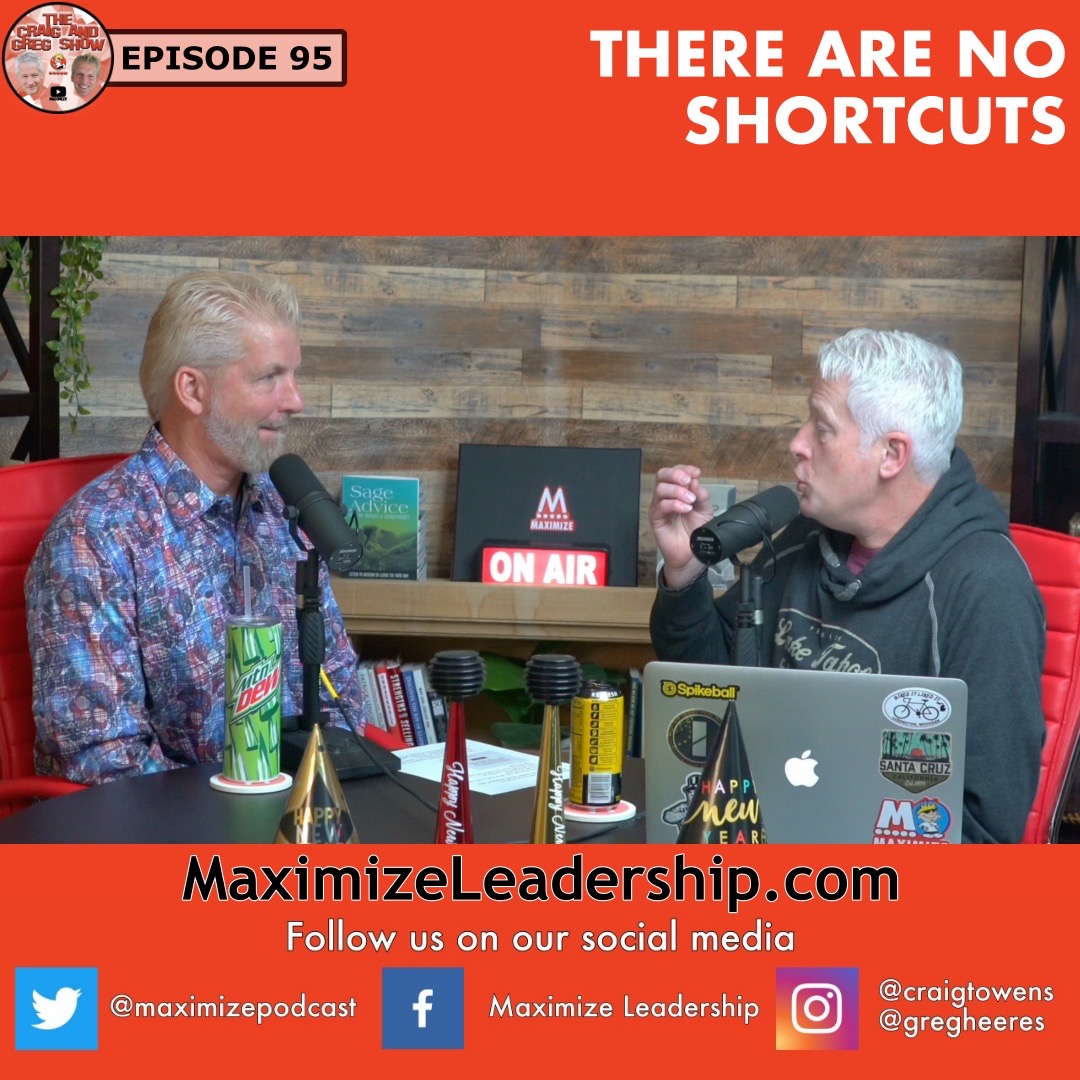





Links & Quotes
February 24, 2024 — Craig T. OwensWe’ve added things that we think should be in our prayer vocabulary. But kingdom praying should be as natural as talking to the most loving Father you can imagine! Check out more thoughts in my series of posts called Kingdom Praying. I have lots of new content every week, which you can check out on my YouTube channel.
“Obstacles don’t have to stop you. If you run into a wall, don’t turn around and give up. Figure out how to climb it, go through it, or work around it.” —Michael Jordan
In the post-Flood rock layers, fossils are often found of animals that were much larger than are currently observed. This has been called giantism. “Evolutionists claim that adaption occurs as random mutations make some organisms better fitted for their environment, and the less-fit organisms then die off. … This supposed, random, trial-and-error process requires long periods of time waiting for the ‘right’ random mutation to occur. In contrast, ICR gives credit to Jesus. He designed organisms with built-in sensors that enable them to detect changes in their environment. Internal genetic programming then allows these organisms to rapidly adapt to these changes in predictable ways. Such adaptation is often too rapid for natural selection to be the correct explanation. This design-based paradigm of adaptation is called continuous environmental tracking (CET).” This is an excellent article.
“If the stone falls on the pot, alas, for the pot; if the pot falls on the stone, alas for the pot.” —Jewish proverb, based on Psalm 118:22 and Luke 20:17-18
Godly leaders don’t minister to please people, but to lead people to God. So godly leaders are ever aware that in all they do, they must hear God say, “Well done, good and faithful servant.”
Share this: