Listen to the podcast of this post by clicking on the player below, and you can also subscribe on Apple, Spotify, or Audible.
Is New Year’s Day really the best time to make a resolution? Well, maybe! Here are some thoughts to help you be more successful whenever you resolve to make some healthy changes in your life.
Check out this episode of The Podcast.
If you would like to go a little deeper on this, check out these posts I previously shared:
Listen to the podcast of this post by clicking on the player below, and you can also subscribe on Apple, Spotify, or Audible.
One of the things I remember the most about my Mom is her fierce belief that God had a plan for my life. There were times I struggled in my belief, but she was tenacious in her faith on my behalf. I’m here today doing what I do—which I love doing!—because of my Mom’s faith-filled, persistent prayers. So if I could give two words of encouragement to godly mothers who are praying for their kids it would be this: Don’t quit!
In 2 Kings we meet a godly woman who very much wanted to be a mother. While she waited and prayed for an answer to this prayer, she kept ministering to others. One of the men who benefitted from her gracious hospitality was the prophet Elisha. Whenever the prophet would pass through Shunem, he would stay that this woman’s house, where she and her husband had prepared a room especially for him.
It appears this Shunammite woman is married to a man much older than her. They are without a male heir, so if her husband dies she will lose everything—no property, no voice, no source of income. Clearly this has to be a concern for her, but she doesn’t mention this to Elisha when he asks how he can bless her for their care for him. Perhaps she had resigned herself to the thought that her barrenness was a hopeless situation, but Elisha told her that in a year’s time she would become pregnant with a son. She must have been disappointed before because she says, “Don’t mislead your servant,” as if saying, “Don’t get my hopes up again!”
However, God does give this couple a son, and that little boy is dearly loved! At a very young age, this boy dies suddenly. This could have been a time that anger or depression could have been expected. But not with this woman!
Remember when we looked at Psalm 42 last week? The psalmist was grateful for the experience he had in God’s presence, but now that there is a setback of some kind he is struggling with the “Where is your God?” taunt from his enemies.
When God answers our prayer, the devil loves to whisper, “Lucky break. You didn’t really deserve this.” So if anything goes wrong he can lie again, “See, I told you so!”
This is where we must not merely listen to those thoughts but talk back to them. Perhaps the Shunammite said something like, “You’re right, I didn’t deserve this or earn this gift of my son. This is a gift from God’s grace. God promised this son to me and I believe God will preserve what He gives.”
Moms, you must cling to God tenaciously in faith-filled prayer!
This godly mother shows us what tenacious faith looks like. She took her son into Elisha’s room, placing him on the prophet’s bed, and she quickly sends word to her husband that she is going to find Elisha. When her husband asks what is wrong, her faith-filled answer is, “It’s all right.”
As she gets close to Elisha’s home, he sees her in the distance and sends his servant Gehazi to ask, “Is everything okay?” To which she gives the same faith-filled reply, “Everything is all right.”
When she finally gets to Elisha, she grabs onto him and says words that must have gotten Elisha’s attention immediately: “As surely as the Lord lives and as you live, I will not leave you.” These are the exact same words Elisha said to Elijah three times on the day Elijah was taken to heaven. Just as Elisha clung to the promise of God’s blessing, so did this mother (see 2 Kings 2:2, 4, 6).
God did answer her prayer and raised her son back to life. But this wasn’t the end of the blessing.
Remember that a widow without a son has no standing in the community. To be saved from a famine in Israel, this woman and her family lived for seven years in Philistia. While they were there, her husband died and squatters took over her property.
But in God’s perfect foresight and timing, this woman and her miracle son walked into the king’s throne room just as Gehazi was telling the king about the miraculous resurrection Elisha prayed for. The king is so moved by this story that he doesn’t just restore her land, but he orders the squatters to pay back to her all of the income they earned from her land during the time she was away!
Not just restoration, but blessings beyond imagining (see 2 Kings 8:1-6).
We don’t know who wrote Psalm 116, but it very well could have been this boy who was raised to life. The opening verses talk about God’s deliverance from death, but then the psalm says, “I serve you just as my mother did” (v. 16).
This woman’s tenacious faith resulted in immediate provision for her, a legacy of faith in her son, and a testimony that is still encouraging us 3000 years later!
So let me repeat this to godly mothers who are praying for their families: Don’t quit! There are eternal testimonies and rewards coming that you cannot even perceive!
Listen to the audio-only version of this podcast by clicking on the player below, or scroll down to watch the video.
Recently Greg got a call from an educational institute asking him for advice on how to help their athletes “toughen up.” Unfortunately, they’re not alone, it seems like resilience is in increasingly shorter supply across the board these days. As a leader, it is your job to help instill grit into your team. Not tearing them down, but showing them that you view them with more potential.
[17:54] Data from the Mayo Clinic that encourages us to develop grit.
[19:34] What happens to reach that have teammates who don’t show stick-to-it-iveness?
[21:04] A leadership separator is action over feelings.
[24:00] The wrong and right ways to handle disappointments.
[25:53] We can help coach you to bring out the resilience in yourself and your team.
Check out this episode and subscribe on YouTube so you can watch all of the upcoming episodes. You can also listen to our podcast on Spotify and Apple.
There is a psychological term called “projection” where we see in others what is really in ourselves. This is something Christians MUST guard against doing. Instead of going to the other person first, let’s go to our knees in prayer first. This is a short clip from a full-length teaching video I provided exclusively for my Patreon supporters.
“Blessed are those who can give without remembering and can take without forgetting.” —Elizabeth Bibesco
Listen to the podcast of this post by clicking on the player below, and you can also subscribe on Apple, Spotify, or Audible.
I always glean so many valuable lessons when I read the autobiographies or biographies of notable people of history. The Roots Of Endurance is the third installment in John Piper’s excellent series “The swans are not silent.”
This book looks at the lives of John Newton, Charles Simeon, and William Wilberforce. Unlike the other books in this series, these men were all contemporaries and all of them had at least a passing relationship with each other. In fact, their lives and accomplishments were an encouragement to each other.
Pastor John makes the case in this book that in order to endure through difficult times successfully, we must have a deep root into the joy of the Lord. This root nourishes our hearts to persevere successfully through long trials. These three men exhibit this endurance beautifully. John Newton had to endure his own struggles with his past, Charles Simeon contended with an obstinate congregation, and William Wilberforce battled pro-slavery forces in Parliament for years before the abolition of the slave trade was enacted.
All three of these men endured successfully because they trusted God so deeply. These roots of trust went deep and helped them to persevere for God’s glory.
As I have mentioned in my other book reviews from the series, anyone who enjoys biographies of godly leaders or the study of church history will thoroughly enjoy The Roots Of Endurance.
If you would like to check out the other books in this series that I have previously reviewed, please click here, here, or here.
Listen to the podcast of this post by clicking on the player below, and you can also subscribe on Apple, Spotify, or Audible.
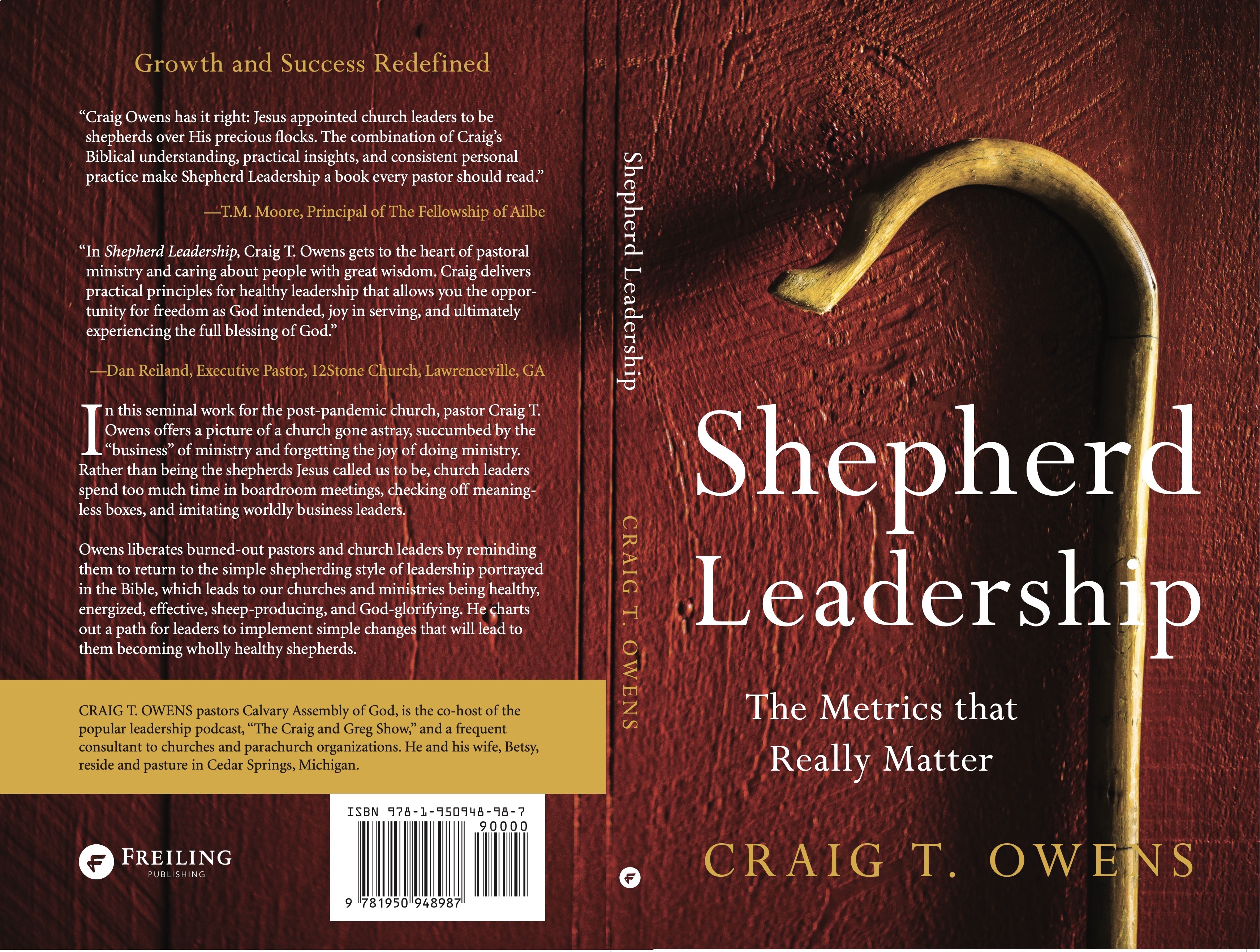
At a Q&A event for my my book Shepherd Leadership: The Metrics That Really Matter, I explained how I started writing this book. The bottom line is you learn to write by writing!
Check it out…
In all seriousness, the process of writing goes something this:
Start writing.
Write something every day.
Read your work to others who really care about you.
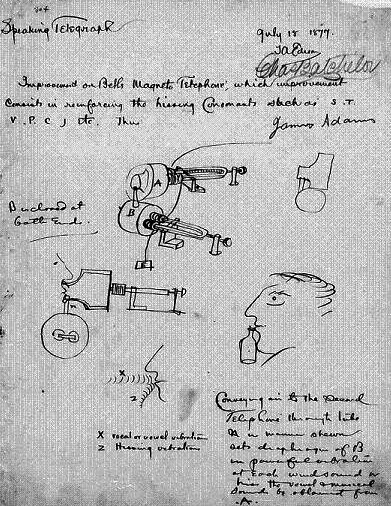
From this book I learned that Thomas Edison’s most-used notation in his journals documenting his experiments was “T.A.” That stood for “try again.” This requires a certain amount of perseverance, or what I like to call stick-to-it-iveness.
Let’s be honest: caring for sheep is frequently a thankless role. Just as soon as they are brought to a green pasture, some of them decide they don’t like this particular pasture, or the water is too cold, or they would rather be with another shepherd. The long hours that shepherds put in are only rarely recognized by the sheep, and often the sheep ask why the shepherd wasn’t available more.
This is the reason why shepherd leaders need to be secure in our simple statement: ‘God chose me.’ If God chose you for this role, He also equipped you for this role. And if He equipped you for this role, He also expects a return on His investment. This security of God’s calling and equipping and the weighty understanding of bringing to God a return on His investment should be our motivators to help us stick with our joyful responsibility. …
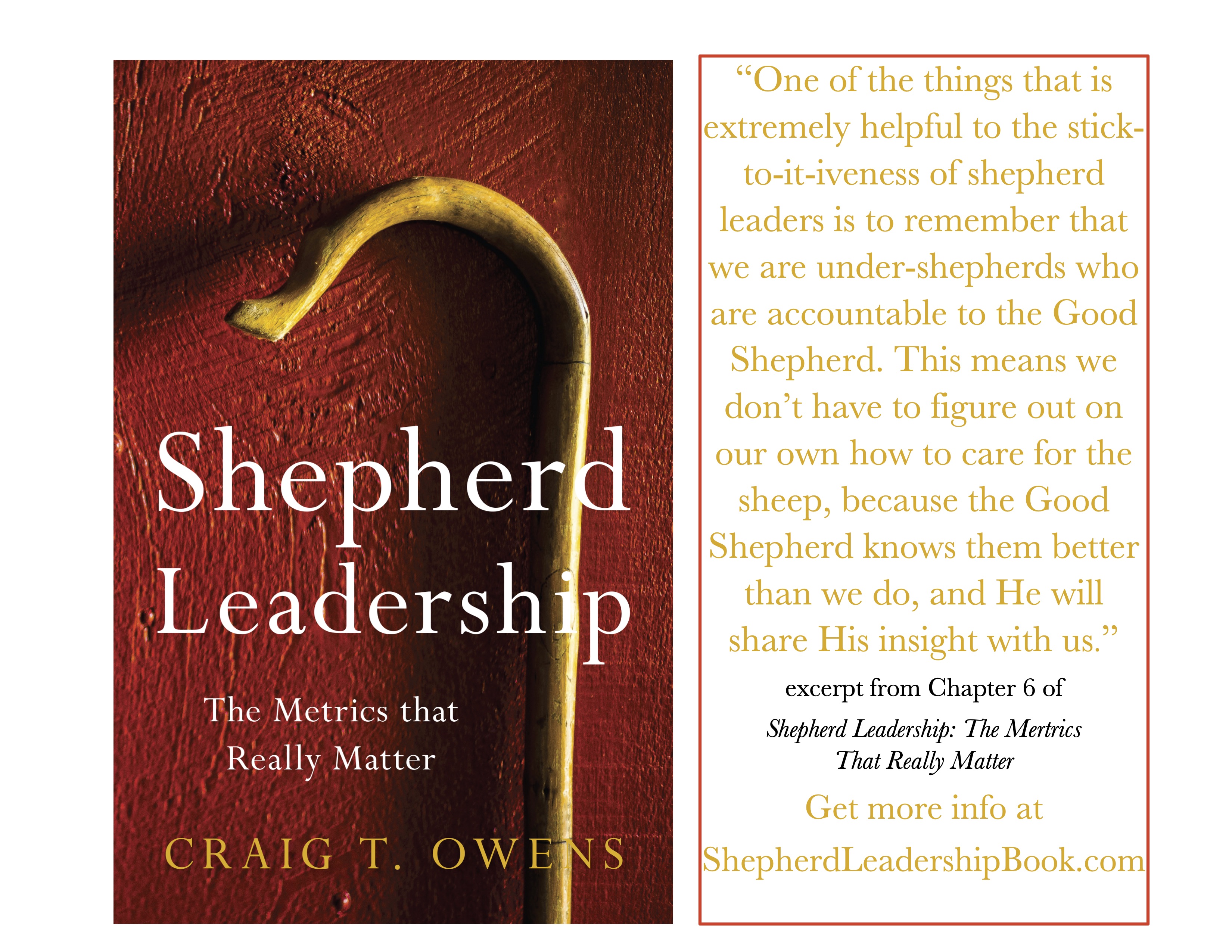
One of the things that is extremely helpful to the stick-to-it-iveness of shepherd leaders—especially in those times we may be battling a pity party—is to remember that we are under-shepherds who are accountable to the Good Shepherd. This means that we don’t have to figure out on our own how to care for the sheep, because the Good Shepherd knows them better than we do, and He will share His insight with us. Neither do we need to learn the shepherding ropes on our own, because both God the Father (the Shepherd of Israel) and Jesus the Son have already demonstrated for us all that we need to do, and the Holy Spirit will continually impart to us the ways we can apply those practices to our particular sheepfold.
I close this chapter with an attitude-correcting, security-building prayer that I wrote using Psalm 23 as my guide.
Leaders especially need to be T.A. people—try again, and try again, and try again. Stick with it, and with God’s help you will be successful.
I invite you to check out my book for yourself. You can read some reviews and additional excerpts by going to ShepherdLeadershipBook.com.
My friend, let me encourage you with two words: Don’t quit. If God has called you to your position of leadership, He will also train you to be successful. I really believe the principles I share in my book will help you, and I hope you will pick up a copy soon.
Listen to the podcast of this post by clicking on the player below, and you can also subscribe on Apple, Spotify, or Audible.
My son, do not forget my teaching, but keep my commands in your heart (Proverbs 3:1).
A better translation of this verse would be like this: My son, keep on not forgetting my teaching, but keep on keeping my commands in your heart.
Or, as Jesus said it, “My Father is always working, and so am I” (John 5:17).
Always workING.
It’s a continuous action. We don’t make a one-time commitment and then coast through the rest of our life. To help us with this, in the third chapter of Proverbs, Solomon shows us God’s blessings on an “ING” lifestyle. That is, the blessings on the right kinds of “ING.”
If I am keepING God’s commands, He is prolongING my life and bringING me peace (vv. 1, 2).
If I am bindING love and faithfulness to my heart, I am winnING favor and a good name (vv. 3, 4).
If I am trustING God and leanING on His wisdom, He is directING me onto the best paths (vv. 5, 6).
If I am fearING God and shunnING evil, He is bringING health to me (vv. 7, 8).
If I am honorING God with my firstfruits, He is continually fillING me to overflowing (vv. 9, 10).
If I am not despisING God’s discipline, I am findING wisdom and gainING understanding (vv. 11-18).
If I am preservING sound judgment and discretion, I am walkING in safety, sleepING sweetly, and experiencING no fear (vv. 19-26).
If I am not withholdING good from those in need, not plottING harm against others, not accusING nor envyING my neighbor, then God is blessING my home, showING me favor, and making sure I am inheritING honor (vv. 27-35).
The apostle Paul reminds us, “So let’s not get tired of doING what is good. At just the right time we will reap a harvest of blessing if we don’t give up” (Galatians 6:9).
Leaving that place, Jesus withdrew to the region of Tyre and Sidon.A Canaanite woman from that vicinity came to Him, crying out, “Lord, Son of David, have mercy on me! My daughter is suffering terribly from demon-possession.”
Jesus did not answer a word. So His disciples came to Him and urged Him, “Send her away, for she keeps crying out after us.”
He answered, “I was sent only to the lost sheep of Israel.”
The woman came and knelt before Him. “Lord, help me!” she said.
He replied, “It is not right to take the children’s bread and toss it to their dogs.”
“Yes, Lord,” she said, “but even the dogs eat the crumbs that fall from their masters’ table.”
Then Jesus answered, “Woman, you have great faith! Your request is granted.” And her daughter was healed from that hour. (Matthew 15:21-28; Mark 7:24-30)