Listen to the podcast of this post by clicking on the player below, and you can also subscribe on Apple, Spotify, or Audible.

The dictionary defines a rhetorical question this way: A question asked solely to produce an effect or to make an assertion of affirmation or denial. In other words, the question is asked with the assumption that the answer is obvious.
The apostle Paul does this five times in five consecutive verses at the end of Romans 8 (see verses 31-35). These questions are Paul’s way of getting us to reaffirm our rock-solid assurance of just how amazing it is that God holds us so securely.
Even though these are rhetorical questions, I want to add the extra assurance by giving you the answer to each question.
(1) Who can stand against me? No one!
Because Almighty God is for me.
(2) Who can cause God’s blessings to be withheld from me? No one!
Because God didn’t withhold His Son Jesus, He won’t withhold any other lesser blessing either.
Because Jesus intercedes for me and imputes His righteousness to me.
(5) Who can separate me from God’s love? No one!
Not a single thing, person, or circumstance can diminish any part of God’s love for me.
Don’t ever buy into the devil’s lies—not even for a second—that somehow you have put yourself in a place where God’s love for you is questionable. Whenever you hear these lies, return again and again to these five powerful rhetorical questions to reassure your heart, mind, and soul of just how securely you are held in God’s grip of grace.
The word gospel simply means the good news about the salvation that comes only through Jesus.
Paul loves this word!
Interestingly, although we refer to the first four books of the New Testament as “The Gospels,” the word itself barely appears:
Matthew—4 times
Mark—8 times
Luke—0 times
John—0 times
And even though these four opening books are the Gospels about Jesus, He Himself only uses the word nine times, with the other three times attributed to someone else mentioning what Jesus was doing.
Peter only uses this word twice (Acts 15:7; 1 Peter 4:17). And John uses it just once (Revelation 14:6).
Paul, however, uses this word 64 times!
It becomes such a part of who he is and how he thinks, that he calls it “my gospel” twice (Romans 2:16, 16:25) and “our gospel” three times (2 Corinthians 4:3; Colossians 1:23; 2 Thessalonians 2:14).
For Paul and for us this Good News is—
God’s promises fulfilled
salvation power
the fullness of God’s blessing
the opening of mysteries
the guide for godly living
glorious light
the expression of God’s grace
the standard of all truth
a key part of the Christian’s spiritual armor
the empowerment for ministry
the anchor of unshakable hope
the means by which we experience Christ’s glory
the only door to life and immortality
For those of us who have been called to preach this Gospel, these thoughts should both humble and empower.
For those of us who have been saved by believing this Gospel, these thoughts should cause us to desire to know more, and more, and more about our Savior.
T.M. is beginning a series on the ministry of the apostle Paul. He writes, “Paul was able to accomplish great things against great odds not because he was such an enthralling preacher (he was not) or had so many resources to invest in his work (he did not), but because he had such great confidence in his message and his Lord.” Check out this series.
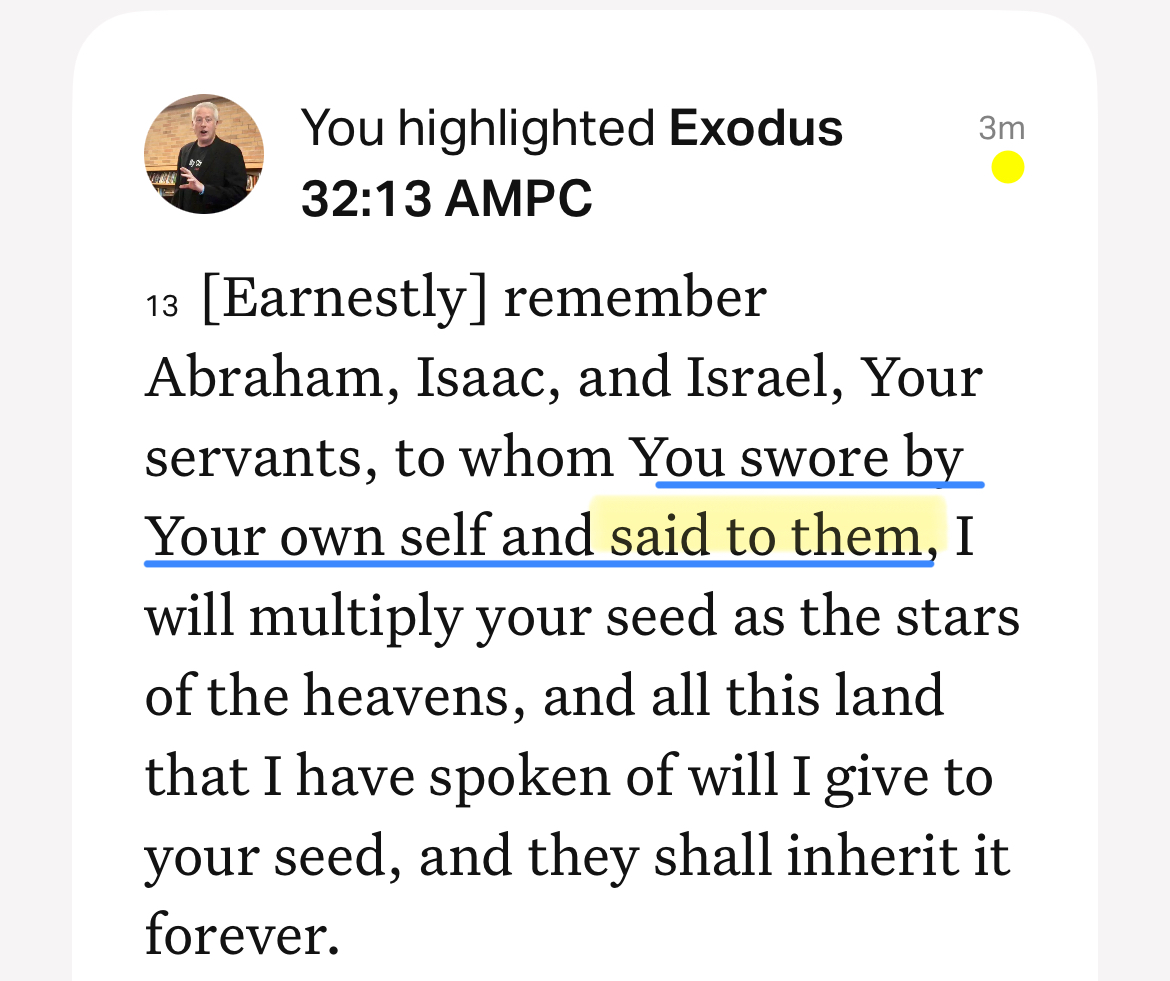
As a father, it always got my attention when my kids would remind me, “Dad, you said….” Not that God ever forgets anything He has promised, but when He hears Moses say, “You swore by Your own self and said to them,” He is pleased because this means that Moses is banking his faith on God’s unchangeable word. Let’s follow this example from Moses and use God’s Word to form our prayers to Him.
The ICR reports, “If the earth is 4.6 billion years old, virtually every square inch of the Earth’s surface would experience a host of erosive events.” But the fact that paleontologists have found so many well preserved foot tracks is a testament to both the Creation and Flood accounts recorded in biblical history.
“When ‘Aunt’ Fanny Lack, a 100-year-old Hoopa Indian woman, accepted Christ and was healed in 1920, she became a local sensation on the Hoopa Indian Reservation in northern California.” This is an amazing story!
“When you hate, the only person that is suffering is you because most of the people you hate don’t know it and the rest don’t care.” —Medgar Evers
Axis’ Culture Translator reported, “A study from World found that 26% of respondents admitted to flirting with a chatbot or AI, either for fun or unknowingly.” I love Axis’ conclusion: “Although social media was initially pitched as a supplement to real-life social interactions, the slope from supplement to replacement is steep. This Valentine’s Day, remind your teens that although real-life relationships can be difficult, we need both the affirmation and pushback that comes with them.”
Greg Morse shares the very real danger of shepherding God’s flock. He writes, “I enlisted to teach, preach, shepherd, and guide—but also to suffer, defend, and die, if the Lord should choose. As a son with his mother, a husband with his wife, a father with his children, so a pastor with his sheep. I am to defend them against all enemies foreign and domestic—spiritual and physical.” Pastors, I encourage you to read this article.
Listen to the podcast of this post by clicking on the player below, and you can also subscribe on Apple, Spotify, or Audible.
It could be that the enemies that are dogging your footsteps—harassing you and closing in on you—are doing so because God incited them to do this.
Why?
So that you will grow stronger in your dependence on His keeping power. God says He will gain the honor and glory when He does what no earthly power can do.
Check out this part of the story about the Egyptians pursuing the Israelites—
“For Pharaoh will say of the Israelites, ‘They are entangled in the land; the wilderness has shut them in.’ I will harden (make stubborn, strong) Pharaoh’s heart, that he will pursue them, and I will gain honor and glory over Pharaoh and all his host, and the Egyptians shall know that I am the Lord.” And they did so. … The Lord made hard and strong the heart of Pharaoh king of Egypt, and he pursued the Israelites, for they left proudly and defiantly. … Moses told the people, “Fear not; stand still (firm, confident, undismayed) and see the salvation of the Lord which He will work for you today. For the Egyptians you have seen today you shall never see again. The Lord will fight for you, and you shall hold your peace and remain at rest.” … Thus the Lord saved Israel that day from the hand of the Egyptians, and Israel saw the Egyptians dead upon the seashore. And Israel saw that great work which the Lord did against the Egyptians, and the people reverently feared the Lord and trusted in (relied on, remained steadfast to) the Lord and to His servant Moses. (Exodus 14:3-4, 8, 13-14, 30-31 AMPC)
God allowed the enemies to pursue the Israelites. Actually, God Himself stirred up these enemies to go after His people.
So let me ask again: Why would God do this?
Two things happened as the Israelites remained at rest:
The Egyptians were defeated, which caused God’s name to be revered
The Israelites were delivered, which caused them to place their trust more firmly in God.
Instead of complaining about your foes—or even trying to defend yourself or fight back against them—keep your eyes on your Savior. He will be glorified as He cares for you as only He can! And when God does unleash His power on your behalf, you will have a testimony that will reverberate through the ages—
Then Moses and the Israelites sang this song to the Lord, saying, “I will sing to the Lord, for He has triumphed gloriously; the horse and his rider or its chariot has He thrown into the sea. The Lord is my Strength and my Song, and He has become my Salvation; this is my God, and I will praise Him, my father’s God, and I will exalt Him. … Who is like You, O Lord, among the gods? Who is like You, glorious in holiness, awesome in splendor, doing wonders?” (Exodus 15:1-2, 11)
God will be glorified in your difficult situation. Stand still and watch your awesome God work in awesome ways!
Listen to the podcast of this post by clicking on the player below, and you can also subscribe on Apple, Spotify, or Audible.I am sometimes amazed at how much Jesus accomplished in just a little over three years of public ministry. What I would have expected to see is a Man burning the candle at both ends—up early, working hard without any breaks each day, very little (if any) leisure time, and then burning the midnight oil.
But instead we see Jesus never seeming to be rushed or exhausted. He takes time for meals with friends, time away from the crowds, and still in just a short period of time He fulfilled hundreds of ancient prophecies and trained His followers to take the Gospel around the globe!
One of the keys is His priority. Notice that I said priority and not prioritieS. Jesus was singularly focused on His Father’s glory and He showed total dependence on Him. I think one of the most telling verses is Mark 1:35: “Very early in the morning, while it was still dark, Jesus got up, left the house and went off to a solitary place, where He prayed.”
If Jesus needed prayer to start His day, how much more do we need this!
Scottish pastor Robert Murray McCheyne wrote in his journal, “Rose early to seek God, and found Him whom my soul loveth. Who would not rise early to meet such company?”
So why don’t we treat prayer like this? I think there are three main hindrances to keep us from making prayer a priority.(1) Self-reliance. A common phrase we use is, “I need to get to work.” But this puts the emphasis on me—my plans, my abilities, my work ethic. I believe I can do more than pray, but I also believe that I shouldn’t do anything until I have prayed.
Prayer, therefore, is a reminder of my utter God-reliance.
God has a better plan than we do. God has more wisdom than we do. God has more strength than we do. So wouldn’t it be better to ask Him what we should be doing, how we should be doing it, and then ask Him for the strength to do it?
When we have this focus, our prayer time will keep us aligned with His plans and empowered with His wisdom and strength. Look at a couple of examples.
Sarah knew how to believe God because He showed how He kept His promise in His perfect timing (Genesis 21:1-2).
Mary knew how to pray and behave in alignment with God’s word (Luke 1:31-38). Her prayer shortly after this is sautéed in Scripture, showing how she relied on God to keep His Word (vv. 46-55).
Saul of Tarsus (who became Paul the apostle) had assurances of God’s direction for his life at almost every turn (Acts 9:15-16, 20:22-24, 21:10-14, 23:11, 27:21-25). Then he writes to his friends at Philippi how God received the glory throughout this whole process (Philippians 1:12-14, 25-26).
We can live and pray with the same assurance that God is completely in control (Isaiah 55:8-11; Romans 8:26-28). (2) Distractions. When Martin Luther was asked about his plans for the next day he said, “I have so much to do that I shall spend the first three hours in prayer.” That sounds unrealistic to most of us, but that is because we call too many things “priorities.” We need a singular priority: The knowledge of God’s will and the help that only God can give.
Stephen Covey has a very helpful tool that I use regularly: the urgent/important grid. Bible reading and prayer time is most decidedly a Quadrant II activity. We make time for these important activities by removing unimportant activities from Quadrant IV. The Bible frequently couples a “take off” with a “put on” (see 1 Corinthians 13:11; 2 Timothy 2:4; Ephesians 6:11-18), which should prompt us to ask, “What’s one thing I can take off of my Quadrant IV and put on that time for prayer in Quadrant II?”(3) Uncertainty. Sometimes we may wonder if our prayers are doing anything. Maybe we think we are not praying the “right way” or perhaps we wonder if we are praying for something in alignment with God’s will or only our own selfishness.
The only two things Jesus said were the “wrong ways” to pray were praying to show off, and babbling like pagans (Matthew 6:5-8). As we read in Romans 8, the Holy Spirit will help us pray, if we will let Him.One way we pray in alignment with God’s will is to pray using the Scripture. The Bible is our Prayer Book. Pastor Timothy Keller wrote, “Your prayer must be firmly connected to and grounded in your reading of the Word. This wedding of Bible and prayer anchors your life down in the real God. … Without immersion in God’s words, our prayers may not be merely limited and shallow but also untethered from reality.”
So here are three steps we need to implement to counteract those three hindrances to a consistent, meaningful prayer life:
Listen to yourself pray—replace the “I have to” with “God, I trust You to direct me and help me.”
Track your time in each quadrant and identify just one Quadrant IV activity you can replace with prayer.
But this isn’t quid quo pro—we aren’t grateful people just so we can get something back for ourselves. We should be grateful people because…
(1) …God is good all the time and so we should be thankful to Him continually—1 Thessalonians 5:18
(2) …Jesus was grateful—1 Peter 2:23; Hebrews 12:2
(3) …God blesses thankful people—1 Peter 3:9; Luke 6:33
(4) …your thankfulness can benefit people you haven’t even met!
Near the end of his life, David wrote a hymn of thanksgiving, which he taught to Asaph (his worship leader) who then taught it to all the citizens (1 Chronicles 16:7-35). Throughout this song, notice how many times David sang about not only giving thanks but sharing our thankfulness with those around us.
In difficult times, people search for what delivered others in the past. A good example is Psalm 106, where the psalmist warns his readers about the dangers of forgetting to be thankful for God’s blessings. This psalm begins and ends with words taken right from David’s hymn of thanksgiving as an added reminder of what our gratitude should sound like (see vv. 1, 47-48).
One hundred years after David wrote this song, King Asa needed to look back to it. His father Abijah had been evil throughout his reign as king, so had his grandfather Rehoboam. His great-grandfather Solomon started off well, but turned away from God near the end of his life. So Asa looked all the way back to the thankful heart of his great-great grandfather David (1 Kings 15:11).
Jehoshaphat needed this same song 100 years after Asa (200 years after David wrote it) in 2 Chronicles 20. Enemies had surrounded Judah and Jehoshaphat called the people to prayer. Jahaziel, a direct descendant of David’s worship leader Asaph, calls the people to trust God to fight the battle for them. As the army marches out the next morning, they put the worship team at the front who sang David’s 200-year-old song of thanksgiving and God used that to ambush their enemies!
Your lifestyle of gratitude today—your songs of thanksgiving—could be a blessing to future generations that haven’t even been born yet!
We would do well to learn the lessons of the past and make sure we are always quickly turning our grumbling into a song of thankfulness.
As you do, you are…
Emulating the lifestyle of Jesus
Banking up blessings from God
Ambushing the enemy
Bringing a testimony to non-believers
Establishing a standard for future generations
We bless God and bless others by employing two words: BE THANKFUL!
Listen to the podcast of this post by clicking on the player below, and you can also subscribe on Apple, Spotify, or Audible.
We as a Church are underperforming. How do I know this? Look at the way the world treats Christians; specifically, look at what’s NOT happening.
“By this all will know that you are My disciples, if you have love for one another” (John 13:35). Jesus said this right after He served His disciples by washing their feet. Is this happening today: Do people know you are a Christian by the way you put your love into servant-hearted action, or do they just know what you are against?
“Be prepared to give an answer to everyone who asks you to give the reason for the hope that you have” (1 Peter 3:15). When was the last time someone saw your hope-filled life in such contrast to everyone else’s response that they said, “How can I have what you have?”
Peter said our adversary prowls like a lion. He is perfectly willing to bide his time, picking the strategy that works best. One of his favorite strategies is lies—sometimes half-truths or out-of-context truths.
…Woe to the earth and the sea, because the devil has gone down to you! He is filled with fury, because he knows that his time is short. … The dragon was enraged with the woman and went off to make war against the rest of her offspring—those who obey God’s commandments and hold to the testimony of Jesus (Revelation 12:12, 17).
Lies are his native tongue. He lied to Adam and Eve right in the beginning (Genesis 3:1, 4-5), and he still lies now (Revelation 12:10). Jesus contrasted this with the truth that He came to proclaim (John 8:42-45).
The devil has learned that with many people, outright attacks drive them TO God. We see this in the oldest book of the Bible (Job 1:6f, 20-22), and in modern times (churches were filled after the 9-11 terrorist attacks).
What the devil would rather do is lie to you to keep you comfortable. In The Screwtape Letters, Screwtape implores Wormwood to keep his patient indifferent and comfortable. Indeed, we all have a comfort zone and we love to stay in it.
King Saul went from 3000 men to 600 men, from a full armory to only two swords, from defeating the Ammonites to being hemmed in by the Philistines. King Saul was enjoying life as the king, hanging out with his friends, sitting under a pomegranate tree, far away from his enemies. Life was good for Saul, life was familiar and comfortable. Saul was living in his comfort zone. But the comfort zone is a lousy place to live.
In the comfort zone you only tell stories, but never live an adventure. In the comfort zone, you only hear about what God has done for others, but you never experience Him move in miraculous ways for yourself.
God has given us all gifts so that we can live as overcomers and bring Him glory, but we settle for living only in our comfort zone. Our comfort zones are always way smaller than our gift zones, and the devil is perfectly happy to see us stay there.
Moses was comfortable in the desert, but God sent him in His power (Exodus 3:11, 14).
David was comfortable in the pasture, but God equipped him to lead a whole nation (2 Samuel 7:18; Psalm 78:70-71).
Jeremiah was comfortable being an anonymous priest, but God gave him words to prophesy to a wayward nation (Jeremiah 1:4-8).
Saul was comfortable as a Pharisee, but God sent him to tell the world the Jesus is the Messiah (Acts 8:3; 1 Timothy 1:16).
What lies have kept you in your comfort zone?
Maybe a parent said, “You’ll never amount to anything.”
Maybe a teacher said, “You’re slow.”
Maybe a classmate said, “You’re weird.”
Maybe the devil said, “You cannot make a difference in the world.”
You need to silence those lies with God’s truth:
God created me on purpose and for a purpose—Psalm 139:13-17
He has given me all the gifts I need to soar—2 Peter 1:3-4
He wants to help me, if I will trust Him—Isaiah 41:10, 13-14
Charles Spurgeon said, “The extent of power God can infuse into a person is immeasurable; when divine strength is granted, human weakness ceases to be a hindrance.”
So, friends, it’s time to get uncomfortable with staying comfortable. It’s time to stretch and soar out of your comfort zone and into more of your gift zone!
I have lots of new content every week, which you can check out on my YouTube channel.
I’m proud to be a part of the Assembly of God fellowship that has its roots in missions. Alice Luce is a great example of a missions pioneer whose work in the 1920s is still bearing fruit today.
“Our nation’s founding document declared independence from Britain, but, with equal fervor, declared dependence upon God. Expressing ‘firm reliance on the Protection of divine Providence,’ the signers committed the American experiment to their Maker. The Spirit of 1776 was reverence and trust. So, as we mark this solemn occasion, let us seek a rebirth of true liberty, which is possible only when governed by divine law. For, without God, we can never have ‘liberty and justice for all.’” —Chuck Colson
“It is impossible to describe the abundance of peace and heavenly joy that often flows into my soul by means of the fresh answers which I have obtained from God, after waiting upon him for help and blessing; and the longer I have had to wait upon him, or the greater my need, the greater the enjoyment when at last the answer comes, which has often been in a very remarkable way, in order to make the hand of God the more manifest.” —George Mueller
The Institute for Creation Research reports on a study: “Physicists at Roskilde University in Denmark have shown that a single equation correctly describes the frequency of wing and fin strokes for a wide array of flying and swimming creatures, including birds, insects, bats, and whales.” Wow, it’s almost as if an all-wise Creator knew what He was doing!
T.M. Moore uses the understanding of wireless internet access to help Christians with a picture of prayer. “When we bend our increasingly Christ-filled minds, hearts, and consciences to the spiritual code-writing of prayer, we craft messages which shape the spiritual air as they course their way toward the Source of all living-water spiritual power, Who is filling all things with Himself. The more we pray with Christ-overflowing souls, the more we flood the spiritual airspace with the Lord, crowding out and sidelining those forces of wickedness which seek to jam those airwaves or fill them with spiritual disinformation. And the less spiritual ‘airspace’ the devil can command, the better for all of us.” —T.M. Moore
Guys, you don’t have to “live down” to the poor male role models that Hollywood portrays, but you can create a beautiful culture in your marriage, your home, and your workplace. Check out the full sermon this clip came from.
I have lots of new content every week, which you can check out on my YouTube channel.
“Challenge yourself; it’s the only path which leads to growth.” —Morgan Freeman
Michael R. Emlet writes, “There are no easy answers here. In thinking about the juxtaposition of mental-health issues and church discipline, we want to be wary of two extremes. First, we don’t want to avoid corrective pastoral care out of fear that we will ‘add insult to injury’ for those struggling with mental affliction. Second, we don’t want to care for someone with mental illness exactly as we would care for someone without such a struggle. We want biblical truth and love to guide us.” This is a thoughtful post about how pastors should think about mental illness in church disciple. I shared a year-long series of messages on a Christian’s mental health, which you can find here.