Listen to the podcast of this post by clicking on the player below, and you can also subscribe on Apple, Spotify, or Audible.
If you go to the doctor because you sense that something is wrong, you want your doctor to tell you the truth. A doctor who avoids telling you the truth because it might hurt your feelings doesn’t put you on the road to recovery.
If this is true for medical doctors, isn’t it more important for soul doctors? After all, even the best doctors cannot keep your physical body alive forever, but your soul will live eternally.
If God has given you His Word to share, He says, “I will make My words fire in your mouth” (Jeremiah 5:14). Deliver that painful—but absolutely vital—diagnosis to help people recover from the ravages of their sin.
To soften the words, to water-down the medicine for the sake of people’s feeling or for the desire to be liked by people, is to become a quack, a false prophet. God says of these charlatans, “They dress the wound of My people as though it were not serious. ‘Peace, peace,’ they say, when there is no peace” (Jeremiah 6:14, 8:11).
Then God says,
The prophets prophesy falsely, and the priests exercise rule at their own hands and by means of the prophets. And My people love to have it so! But what will you do when the end comes? (Jeremiah 5:31)
The healing word is often a hard word. It might even be considered by those plagued by the ravages of sin to be a harsh and painful word. But the only path to healing is the medicine found in God’s Word—the healing balm that comes from exposing my sin, repenting of my sin, and finally enjoying the healing of God’s forgiveness.
We must always speak the truthful healing word in love because eternity is at stake!
He first appeals to an easier option than the hard work it takes to travel all the way up to Jerusalem for the feasts of worship.
If this people goes up to the house of the Lord at Jerusalem to sacrifice, then the heart of this people will turn again to their Lord, to Rehoboam king of Judah; and they will kill me and go back to Rehoboam king of Judah. So the king took counsel and made two calves of gold. And he said to the people, “It is too much for you to go all the way up to Jerusalem.Behold your gods, O Israel, who brought you up out of the land of Egypt.” (1 Kings 12:27-28)
He then gave them replicas of the devoted things in Jerusalem—“behold your gods.” He tricked them to accept the counterfeit as the real thing.
Next, he appointed unqualified priests (v. 31; 13:33). These priests weren’t accountable to God, but only to Jeroboam.
Finally, he proposed an alternative date that they could gather to “worship” (vv. 32-33).
Jeroboam’s sin was to make true worship seem like burdensome work, and then to pass off cheap and easy substitutes to make it appear that the people were worshiping God. But the Bible says, “And this thing became the sin of the dynasty of Jeroboam that caused it to be abolished and destroyed from the face of the earth” (1 Kings 13:34).
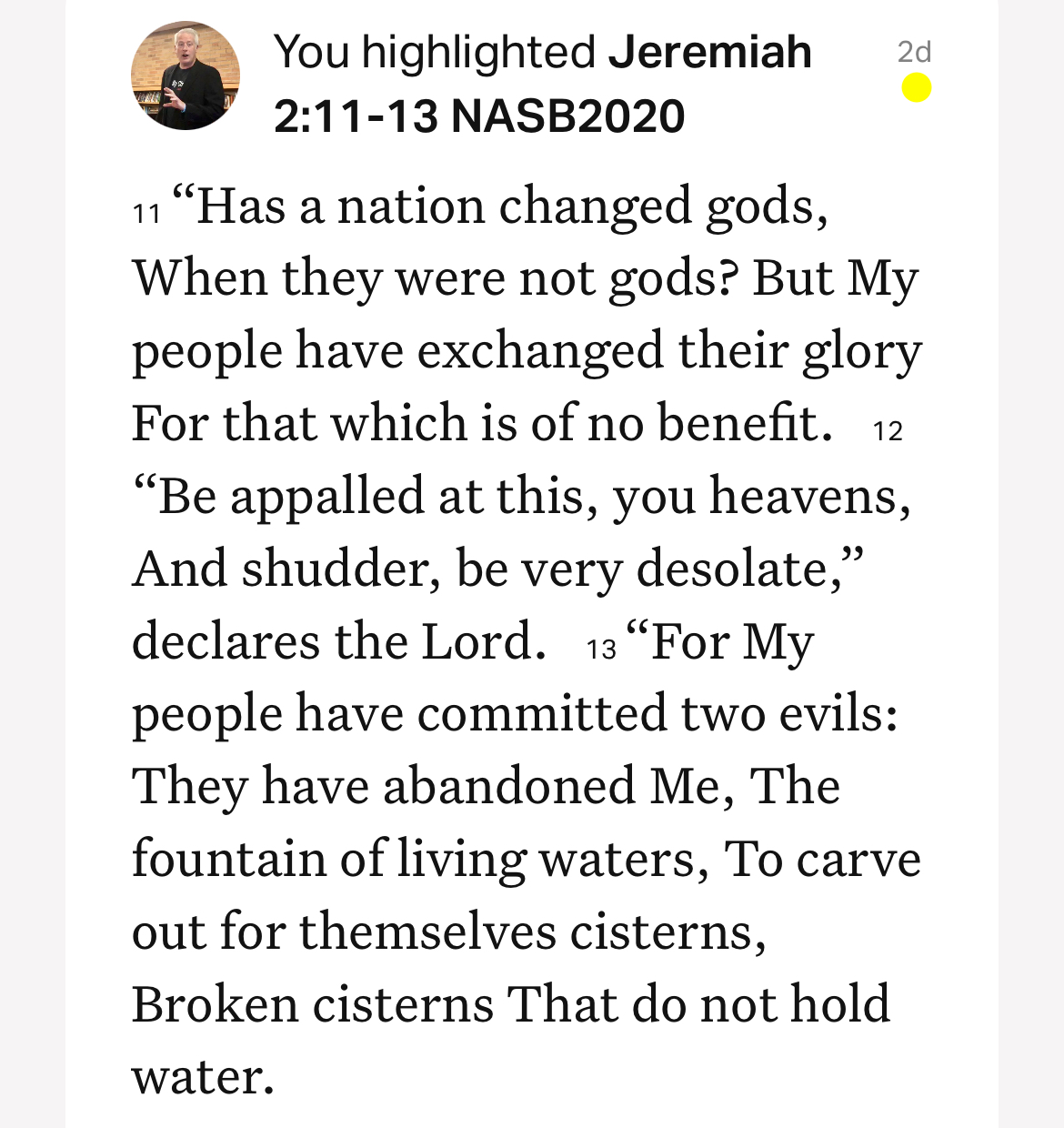
“Has a nation changed gods, when they were not gods? But My people have exchanged their glory for that which is of no benefit.Be appalled at this, you heavens, and shudder, be very desolate,” declares the Lord.“For My people have committed two evils: They have abandoned Me, the fountain of living waters, to carve out for themselves cisterns, broken cisterns that do not hold water. … Your own wickedness will correct you, and your apostasies will punish you; know therefore and see that it is evil and bitter for you to abandon the Lord your God, and the fear of Me is not in you,” declares the Lord God of armies. (Jeremiah 2:11-13, 19)
This was true of Judah, and it’s just as true today in nations that used to regard the Word of God as their righteous standard. We have abandoned God and we have attempted to satisfy ourselves with things that are transient at best.
God goes on to outline the results that we are already seeing in our homes, government, and cultures: “‘Your own wickedness will correct you, and your apostasies will punish you; know therefore and see that it is evil and bitter for you to abandon the Lord your God, and the fear of Me is not in you,’ declares the Lord God of armies” (Jeremiah 2:19).
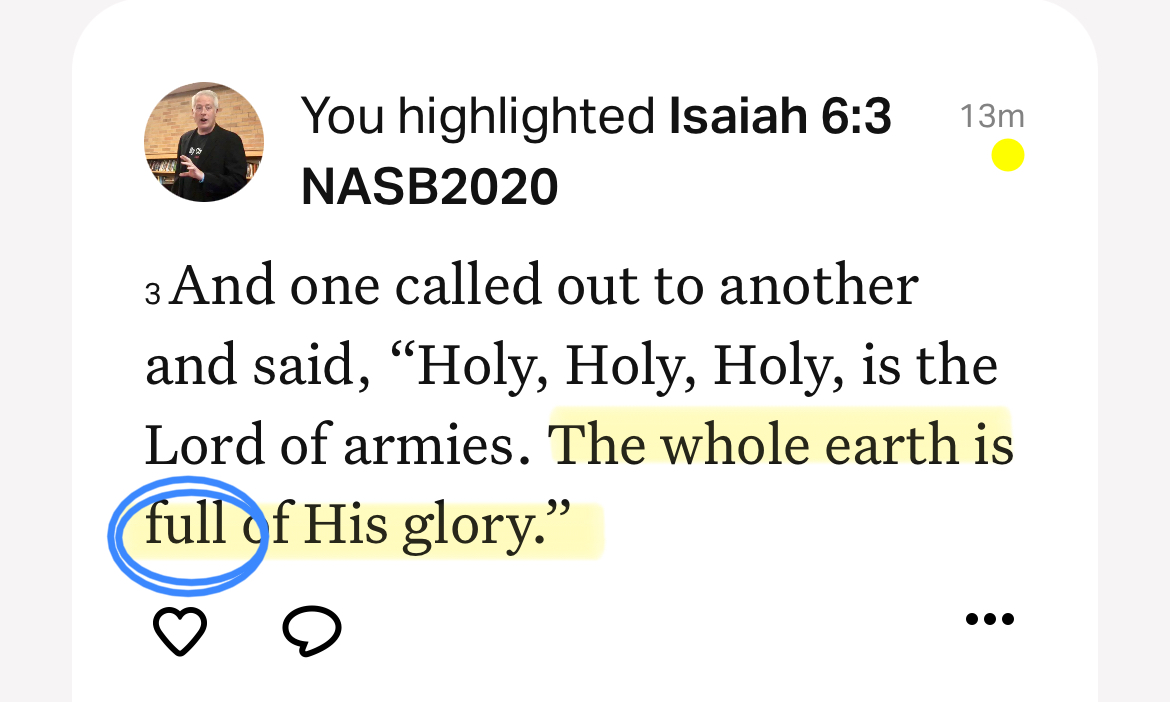
And one [angel] called out to another and said, “Holy, Holy, Holy, is the Lord of armies. The whole earth is full of His glory.” And the foundations of the thresholds trembled at the voice of him who called out, while the temple was filling with smoke. Then I said, “Woe to me, for I am ruined! Because I am a man of unclean lips, and I live among a people of unclean lips; for my eyes have seen the King, the Lord of armies.” (Isaiah 6:3-5)
The literal translation of the phrase “the whole part is full of His glory” is, “The fullness of the whole earth IS His glory.”
Paul says it this way, “All things have been created through Him [Jesus] and for Him. He is before all things, and in Him all things hold together” (Colossians 1:16-17). God spoke all things into existence—we literally live today in His breath, we breathe His breath, we eat His breath. All that exists is the fullness of His glory.
Isaiah got a small glimpse of this glory, and the weightiness of God’s awesome glory brought him to his knees (Isaiah 6:4-5).
How many trivial things would fall to the side when we realize how unimportant they are in comparison to the eternal importance of God’s glory!
How differently we would live each day if we were aware of God’s presence in and around us!
How fearful we would be to even contemplate sinning in His presence!
How quick we would be to repent of sin when we are aware of just how present He is!
How unafraid we would be to boldly stand for God and proclaim His love and power if we were aware of His ever-present Spirit equipping and supporting us!
Oh, that “the Father of glory may give you a spirit of wisdom and revelation in the knowledge of Him” (Ephesians 1:17)!
Listen to the podcast of this post by clicking on the player below, and you can also subscribe on Apple, Spotify, or Audible.
I did a series of Advent messages a few years ago called “The Carols of Christmas” with the premise that many of our old familiar carols had become too familiar and we had lost the true meaning in those beautiful songs.
I think the same is true with the sentiment of wanting to experience the glory of God. Sometimes you will hear people say, “We just want to see God’s glory!” but I’m not sure they really mean this or really want it.
Throughout the Bible, “glory” comes from the Hebrew word which means weightiness. When God appears—or even one of His angels glowing with His glorious presence—people collapse under the weight of His glory. Look at the examples of Moses, Isaiah, Daniel, and even John the beloved disciple of Jesus (Exodus 3:6; Isaiah 6:3-5; Daniel 8:15-17; Revelation 1:12-17).
In the light of Christ’s glory everything is exposed. We have no excuses for our sin. We are seen exactly as we are, and the fear of God’s judgment causes us to collapse under that weight.
But the First Advent story is filled with the phrase “Fear not.” Let me show you two examples. First, notice the strong emotions when the angels appear to the shepherds—
An angel of the Lord appeared to them, and the glory of the Lord shone around them, and they were terrified. But the angel said to them, “Do not be afraid. I bring you good news that will cause great joy for all the people.” (Luke 2:9-10)
What was this good news that would turn their fear into joy? Listen to the angelic message to Joseph—
Joseph son of David, do not be afraid to take Mary home as your wife, because what is conceived in her is from the Holy Spirit. She will give birth to a Son, and you are to give Him the name Jesus, because He will save His people from their sins. (Matthew 1:20-21)
Notice the phrase, “HE will save His people from their sins.” Part of what contributes to our fear of God’s glorious presence is knowing that we are helpless to remove our sins. The fact that Jesus would do this for us was foretold in prophecies like Isaiah 25:7-9 and 59:15-16.
How will Jesus do this? In 1 Corinthians 15:53, Paul says that in order to enter into God’s presence our perishable, mortal lives have to be exchanged for something imperishable and immortal. We are unable to do this, but in the Incarnation, the immortal God put on mortal flesh!
Paul goes on in 1 Corinthians 15 to say, “When the perishable has been clothed with the imperishable, and the mortal with immortality, then the saying that is written will come true: “Death has been swallowed up in victory.” Where, O death, is your victory? Where, O death, is your sting?” (1 Corinthians 15:54-55)!
If our sins were still clinging to us, spending eternity in the presence of the King of Glory would be torturous! Our fear of His weighty glory is only changed into joy when we accept that He has saved us from the penalty of our sins. Now our fear of His glory isn’t a crippling fear, but as we worship Him for His salvation our fear becomes reverential worship.
Or we could say it this way—When we fear the King of Glory we fear nothing else!
Charitie Lees Bancroft captures that idea in these stanzas of her poem:
When satan tempts me to despair
And tells me of the guilt within,
Upward I look and see Him there
Who made an end of all my sin.
Because the sinless Savior died,
My sinful soul is counted free;
For God the Just is satisfied
To look on Him and pardon me.
Behold Him there! The risen Lamb,
My perfect, spotless righteousness;
The great unchangeable “I AM,”
The King of glory and of grace!
One with Himself I cannot die,
My soul is purchased by His blood;
My life is hid with Christ on high,
With Christ, my Savior and my God.
With our sins forgiven by our faith in Jesus, we can now enjoy an eternity in the weighty, awesome presence of the King of Glory!
If Jesus hadn’t come to earth in the flesh and lived here victoriously over sin, we would have a loophole to keep on sinning. But He did indeed live a sinless life, die to pay our penalty, and was resurrected to indwell and empower us to overcome sinful lusts.
So, since Christ suffered in the flesh for us, for you, arm yourselves with the same thought and purpose—patiently to suffer rather than fail to please God. For whoever has suffered in the flesh—having the mind of Christ—is done with intentional sin—has stopped pleasing himself and the world, and pleases God—so that he can no longer spend the rest of his natural life living by his human appetites and desires, but he lives for what God wills. (1 Peter 4:1-2 AMPC)
What a gift Jesus has purchased for us: Freedom from the ensnaring power of sin!
The word “saints” is always plural in the New Testament. That means that each us needs all of us, and all of us need each of us. Check out this full message here. I have lots of new content every week, which you can check out on my YouTube channel.
“The words of the civil codes of God’s Law are neither salvific nor exhaustive; they are, rather, designed to illustrate applications of the Ten Commandments in various situations, so that local judges and authorities could reason based on the words of the Law concerning what the spirit of the Law required in any situation.” —T.M. Moore
“Sin grows when we think we deserve something from God, or life. Godliness grows when we remember we are debtors to God, throughout life.” —Tim Keller
“Pornography is not new. Archeological discoveries testify that fascination with sexual portrayals is nearly as old as humanity. Yet our times present new challenges. Technological advancements coupled with moral corrosion are increasing the accessibility and normality of pornography at a dizzying rate.” Check out this post that shares nine ways parents can talk about pornography with their children.
Listen to the podcast of this post by clicking on the player below, and you can also subscribe on Apple, Spotify, or Audible.
King Herod Antipas was the son of King Herod the Great. Herod the Great is the one who tried to kill Jesus shortly after He was born, and in the process murdered numerous infant boys in and around Bethlehem (Matthew 2:16).
Herod Antipas seduced his sister-in-law Herodias (who was married to his brother Philip), who then divorced her husband to marry Antipas, who had also divorced his own wife (Matthew 14:3). This is also the Herod who so desperately wanted to see Jesus perform a miracle (Luke 9:7-9, 23:6-10).
Antipas was no choir boy! And yet he had a strange fascination with spiritual matters. Not only did he want to see Jesus, but he liked hearing John the Baptist preach. At the same time, he hated John’s message that said he was living in sin (Mark 6:17-18; Leviticus 20:21). Herod wanted John dead, but he also feared the backlash from the people who thought John was God’s prophet. Later on, he tried to protect John from death, but in trying to save face with his guests, he had to have John killed (Mark 6:26; Matthew 14:5).
Herod Antipas continually flirted with sin—never killing it, never running away from it. And this eventually caught up with him.
The Gospel of Mark records, “Finally the opportunity came” (Mark 6:21). Herodias’ daughter performed a seductive dance for Herod on his birthday, which cause him to say in front of everyone, “I’ll give you whatever you want.” Prompted by her mother, this young lady seized the opportunity and said, “I want the head of John the Baptist on a platter!” Following in his father’s footsteps, Herod Antipas became a murderer.
If sin is left close, it will kill you. The Bible tells us sin is crouching nearby, always looking for an opportunity, always a part of the devil’s scheming plan to destroy us (Genesis 4:7; Luke 4:13; Ephesians 6:11; 1 Peter 5:8).
Let us not make the same fatal mistake that Herod Antipas made by flirting with our sin instead of killing it. Paul wrote, “So put to death the sinful, earthly things lurking within you. Have nothing to do with sexual immorality, impurity, lust, and evil desires. … [N]ow is the time to get rid of anger, rage, malicious behavior, slander, and dirty language” (Colossians 3:5, 8).
Or, as John Owen put it, “Be killing sin, or it will be killing you.”
Listen to the podcast of this post by clicking on the player below, and you can also subscribe on Apple, Spotify, or Audible.
The London Times asked, “What’s wrong with the world today?”
In his characteristic wit and candor, G.K. Chesterton responded with a letter:
“Dear Sir,
I am.
Yours, G.K. Chesterton”
I hear the same humble honesty in Ezra’s prayer:
O my God, I am ashamed and embarrassed to lift up my face to You, my God, for our iniquities have risen above our heads and our guilt has grown even to the heavens. … Now, our God, what shall we say after this? For we have forsaken Your commandments (Ezra 9:6, 10).
This isn’t a word for “back then” or exclusively for Israelites—this is still a word for all of us today.
Several years ago I was asked to sign a joint letter from local pastors condemning a couple of headline-making heinous activities. In part of my response to these pastors, I wrote,
“I’m not sure if a letter to the editor is an appropriate response or not. But if this is the correct response for us, I am very hesitant to sign my name to a letter that calls out merely one of many sins. The problem we face is a singular one: sin.
“The solution is also a singular one: Jesus.
“A response that merely denounces evil acts is not, in my mind, effective. Such a letter is only highlighting sins, but not the solution.”
This, also, is what I see Ezra doing. It may have been one particular sin that got his attention (in this case, intermarriage with non-believers) but he then confesses their universal condition: the sin of departing from God’s commandments.
It’s so easy to spot sins in society, shake our heads in disgust, and say, “They should know better! What’s wrong with the world today? Someone should do something about that!”
Instead, any and every sinful expression we observe should send us to our knees saying, “But for the grace of God, I would be guilty of the same thing. God, be merciful to me, a sinner. I confess my sin and plead for Your mercy and forgiveness.”
Revival will never be a widespread response until it is first an individual response.
When we began as individuals to confess “my sin,” others will soon join with us in confessing “our sin” (see Ezra 9:4). That attitude is the seed of revival.
If you are a pastor and would like to join other pastors in a weekly prayer time for revival, please email T.M. Moore to get plugged into this strategic online gathering.
Shalom—the peace that comes from God—could be defined simply as “nothing missing.” But couldn’t it also be defined as “no one missing”? It sure could! What peace there is when no one is missing from Heaven! Check out more of this message here. And be sure to check out all of my videos on my YouTube channel.
“Despite the moon’s apparently simple shape, uniformitarian scientists have long had great difficulty explaining how it could form by natural processes apart from a supernatural Creator. One Harvard astrophysicist once quipped that the best explanation for the moon’s existence was observational error—the moon doesn’t really exist!” This is a very interesting post from the Institute for Creation Research.
“Do we not miss very much of the sweetness and efficacy of prayer by a want of careful meditation before it, and hopeful expectation after it? … We too often rush into the presence of God without forethought or humility. We are like people who present themselves before a king without a petition, and what wonder is it that we often miss the end of prayer? We should be careful to keep the stream of meditation always running, for this is the water to drive the mill of prayer. … Prayer without fervency is like hunting with a dead dog, and prayer without preparation is hawking with a blind falcon. Prayer is the work of the Holy Spirit, but He works by means. God made man, but He used the dust of the earth as a material. The Holy Ghost is the Author of prayer, but He employs the thoughts of a fervent soul as the gold with which to fashion the vessel. Let our prayers and praises be not the flashes of a hot and hasty brain but the steady burning of a well-kindled fire.” —Charles Spurgeon, in Spurgeon and the Psalms
What a powerful word to pastors from T.M. Moore’s post First Things First. “Pastors sometimes complain that their people don’t seem very hungry or thirsty for the things of the Lord. Sated on the junk food of getting-and-spending, generously ladled over with pop culture, God’s people have little appetite for Christ or His Word. But what about us? Does our hunger and thirst for Christ make them long for the same? Do they see in us that earnest desire to be with the Lord that tells them they’re missing something of great importance? Loving Christ and delighting to be with Him is infectious. If the people we serve see it in us, they’ll want it for themselves, more than anything this world might offer.”
We don’t read about Jesus getting angry that often, but what usually got Him upset was when people in need were being kept from the God who could meet their needs. Sadly, it was usually man-made rules and practices that kept people away. I don’t want to make Jesus angry, so I need to evaluate anything in my life that may be standing in the way of connecting needy people with a need-satisfying God.
“So in our broader culture, people no longer sin; they make mistakes. What about our Christian environment? In our case, sin is not denied. Instead it is often redefined to refer to the more flagrant sins of society. We tend to ignore our own sins of pride, selfishness, gossip, and the like. So, effectively, no one sins anymore. The reason is that we have lost sight of the biblical meaning of sin. Typically, if we are not actually murderers, felons, or adulterers, we tend to think of our common sins as no more serious than a parking violation. We are so used to living with pride, selfishness, envy, gossip, and a whole host of other ‘respectable sins’ that we don’t even think of them as sin. But the fact is that, as serial sinners, we are all as guilty before God as that murderer. You and I sin every day in thought, word, deed, and motive. And whether those sins appear great or small in our own sight, in reality every sin we commit is an act of rebellion against God, a rejection and attempted negation of His sovereignty and rulership over us.” —Jerry Bridges



 If you go to the doctor because you sense that something is wrong, you want your doctor to tell you the truth. A doctor who avoids telling you the truth because it might hurt your feelings doesn’t put you on the road to recovery.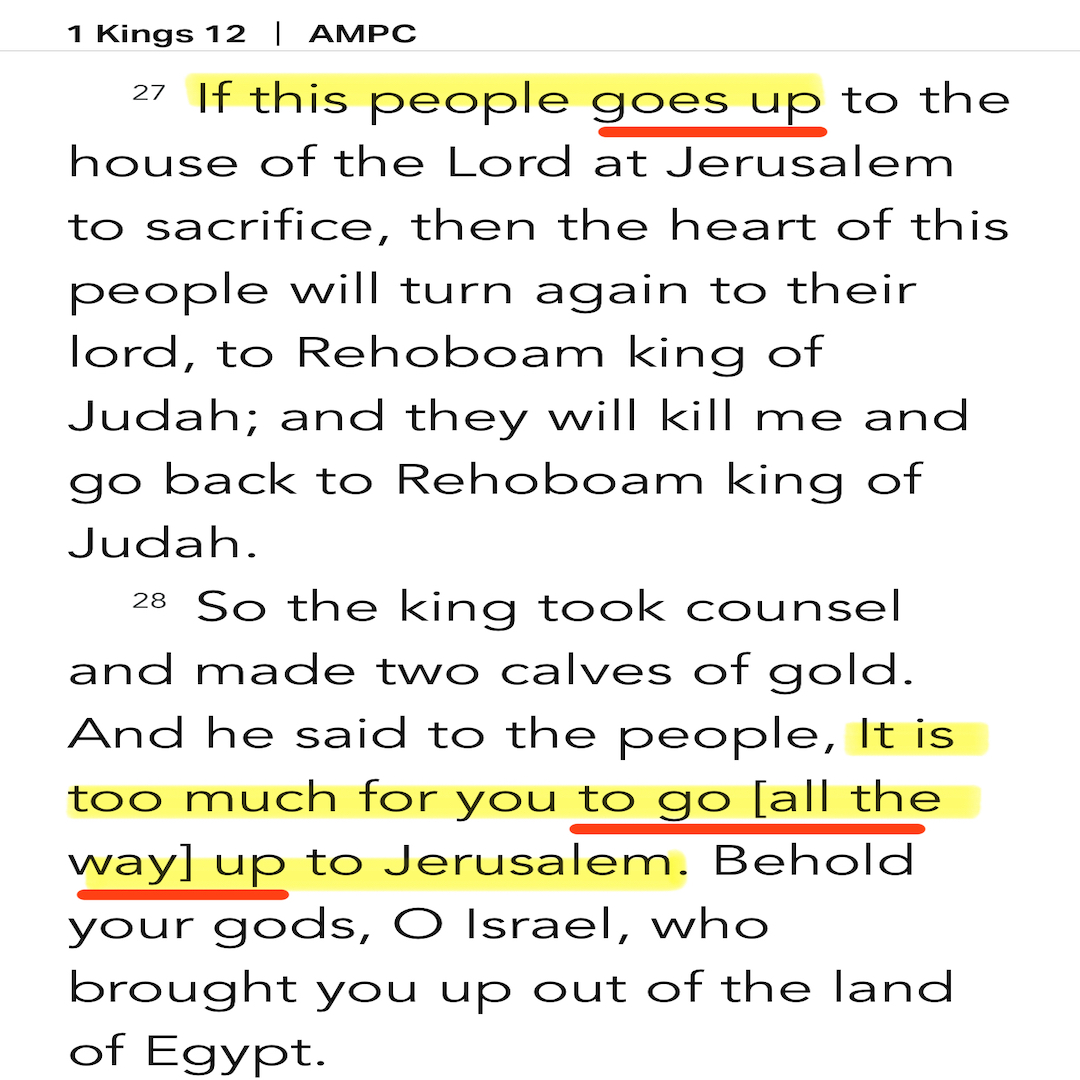





 Craig T. Owens