Thursdays With Oswald—Making Saints

Oswald ChambersThis is a weekly series with things I’m reading and pondering from Oswald Chambers. You can read the original seed thought here, or type “Thursdays With Oswald” in the search box to read more entries.

Making Saints 

     It is not sufficient for a Christian to walk in the light of his conscience; he must walk in a sterner light, in the Light of the Lord. … 

     I am not judged by the light I have, but by the light I have refused to accept. … This is the condemnation, that the Light, Jesus Christ, has come into the world, and I preferred darkness, i.e., my own point of view. The characteristic of a man who begins to walk in the light is that he drags himself into the light all the time. He does not make excuses for things done in the dark, he brings everything to the light, and says, “This is to be condemned; this does not belong to Jesus Christ,” and so keeps in the light. … 

     The New Testament view of a saint is a more rugged type. You and I are a mixture of dust and Deity, and God takes that sordid human stuff and turns it into a saint by Regeneration. A saint does not mean a man who has not enough sin to be bad, but a man who has received from Jesus Christ a new heredity that turns him into another man. … 

     Conscience and character in the saint, then, means the disposition of Jesus Christ persistently manifested.

From The Shadow Of An Agony 

In order to become the saints God intends for us to be, Oswald Chambers says one big thing is required of Christians: Constantly bringing our thoughts and actions into the Light of Jesus.

I think this is what Paul means when he tells us to take captive every thought to make it obedient to Christ (2 Corinthians 10:5). And this is certainly what David invited when he prayed, Search me, O God, and know my heart; test me and know my anxious thoughts. See if there is any offensive way in me, and lead me in the way everlasting (Psalm 139:23-24).

I pray we will always be bringing our thoughts and actions into the Light, and never preferring the darkness of our own point of view!

Rethinking Addiction

AddictionThis is a fascinating video that may just revolutionize the way you think about addictions and addicts.

Near the 4:45 mark of the video the statement is made about a new way of interacting with others. This, I believe, is what the Christian church should be doing. If we aren’t, I doubt we are living out the good news that Jesus taught. If you want to do an interesting study, check out how many times the phrase “let us” is used in the New Testament. Also note that the word saint never appears in the New Testament in the singular, but it is always saintS. This tells me that we were designed to be together.

“Human beings have a deep need to bond and form connections. It’s how we get our satisfaction. If we can’t connect with each other, we will connect with anything we can find—the whirr of a roulette wheel or the prick of a syringe…. We should stop talking about ‘addiction’ altogether, and instead call it ‘bonding.’ A heroin addict has bonded with heroin because she couldn’t bond as fully with anything else.” —Johann Hari

What do you think? Please share your thoughts in the comment below?

Thursdays With Oswald—Becoming A Real Saint

Oswald ChambersThis is a weekly series with things I’m reading and pondering from Oswald Chambers. You can read the original seed thought here, or type “Thursdays With Oswald” in the search box to read more entries.

Becoming A Real Saint

     The real life of the saint on this earth, and the life that is most glorifying to Jesus, is the life that steadfastly goes on through common days and common ways, with no mountain-top experiences. We read that John the Baptist “looked upon Jesus as He walked…”—not at Jesus in a prayer meeting or in a revival service, or Jesus performing miracles; he did not watch Him on the Mount of Transfiguration, he did not see Him in any great moment at all, he saw Him on an ordinary day when Jesus was walking in an ordinary common way, and he said, “Behold the Lamb of God!” That is the test of reality. …

     God’s purpose is to make us real, that is, to make us perfectly at one with all our own powers and perfectly at one with God, no longer children but understanding in our heads as well as in our hearts the meaning of the Redemption, and slowly maturing until we are a recommendation to the redeeming grace of our Lord Jesus Christ.

From The Philosophy Of Sin

Oh, how I want to be a real saint!

Not someone who only shines for Christ when I have a mountain-top experience, but one who shines brightly for Him every day, in every common setting. What an amazing thing for my life to be a recommendation to the redeeming grace of our Lord Jesus Christ!

Thursdays With Oswald—The New Life In Me

Oswald ChambersThis is a weekly series with things I’m reading and pondering from Oswald Chambers. You can read the original seed thought here, or type “Thursdays With Oswald” in the search box to read more entries.

The New Life In Me

     Oswald Chambers points out several things which affirms that one has experienced the new birth of salvation.

     “If Christ is formed in us, the great characteristic is that we know Him and perceive Him for ourselves. We do not need anyone to tell us about Him now, He is our Lord and Master.” 

     “Where do we go in a crisis? If we are born from above and Jesus Christ is Lord and Master, we will go direct as a homing pigeon to Him.” 

     “When Christ is formed in us, we are a satisfaction to our Lord and Master wherever He places us. The point of importance is to know that we are just exactly where He has engineered our circumstances. There is no ‘foreign field’ to our Lord.” 

     “Another evidence of new birth is that we see the rule of God. We no longer see the haphazard of chance for fate, but by the experience of new birth we are in able to see the rule of God everywhere. … We all see the common occurrences of our daily life, but who amongst us can perceive the arm of the Lord behind them? The saint recognizes in all the ordinary circumstances of his life the hand of God and the rule of God, and Jesus says we cannot do that unless we are born from above. … Nothing happens by chance to a saint, no matter how haphazard it seems. It is the order of God.” 

     “Do we seek to stop sinning, or have we stopped sinning? We are always inclined to make theoretical what God makes practical. Learned divines and others talk about the sin question, and make it a doctrinal matter of dispute. In the Bible it is never, Should a Christian sin? The Bible puts it emphatically: A Christian must not sin. … 

     “When we are born into the new realm the life of God is born in us, and the life of God in us cannot sin (1 John 3:9). That does not mean that we cannot sin; it means that if we obey the life of God in us, we need not sin. God never takes away our power to disobey; if He did, our obedience would be of no value, for we should cease to be morally responsible. By regeneration God puts in us the power not to sin.” 

From The Psychology Of Redemption

As you read through this list, what do you think? Are you trying to be a Christian, or are you letting this new birth simply do its work in you?

Thursdays With Oswald—The Honor Of A Saint

Oswald ChambersThis is a weekly series with things I’m reading and pondering from Oswald Chambers. You can read the original seed thought here, or type “Thursdays With Oswald” in the search box to read more entries.

The Honor Of A Saint 

     It is up to us to live the life of a saint in order to show our gratitude to God for His amazing salvation, a salvation which cost us nothing but which cost God everything. In this passage [Galatians 2:20] Paul describes how this point of honor was reached in his life—“I have been crucified with Christ…and that life which I now live in the flesh….” The word “now” is very annoying, if only Paul had said “hereafter”—“This is the kind of life I am going to live after I am dead and in heaven; down here I am compassed about with infirmities and am a miserable sinner.” But he did not, he said “now,” “that life which I now live in the flesh…” i.e., the life men could see, “… I live in faith, the faith which is in the Son of God.” … 

     When the Spirit of God is in us He gives us intuitive discernment, we know exactly what He wants; then the point is, are we going through identification with our Lord in order that that intuitive light may become the discipline of our lives? It is this practical aspect that has been ignored. We have not sufficiently emphasized the fact that we have to live as saints, and that in our lives the honor at stake is not our personal honor, but the honor of Jesus Christ.

From Our Place Of Help

One question comes to my mind when I read this: Is Jesus Christ being honored by the way I live now?

6 Ways To Make Sure Everything You Do Is Sacred

It's all sacredAround 1300 AD, the Church began propagating a myth. It showed up in two words that were created around that time: clergy and laity.

Simply stated, clergy is from a root word that means “the learned men … the ones enlighten for ministry.” And laity is anyone not in that inner circle.

Insecure leaders did this to maintain control. They continued to read the Scriptures in Latin, which few could read, so they made sure that the clergy alone had a Bible, and they alone became the expounders of how the Bible told us to live.

In the clergy-laity divide, they also created a sacred-secular divide.

When Paul addresses the Colossians he does so with anything but a clergy-laity divide in mind. He calls them the holy and faithful brothers in Christ (Colossians 1:2). The KJV translates holy as saints, for that’s how Paul indeed sees them. And he sees them as his very own faith-filled brothers.

Paul also has anything but a sacred-secular divide in mind as he instructs then—whatever you do, whether in word or deed.

He makes it clear that everything we do as faith-filled, holy saints is to be sacred and God-honoring.

How do we do whatever we do in a sacred, God-honoring way? We ask these six questions:

[1] Can it be done with a clear conscience? (Acts 23:1; 24:16)

  • “It is not WHAT a man does that determines whether his work is sacred or secular, it is WHY he does it.” —A.W. Tozer

[2] Will it promote the Gospel? (Philippians 1:27)

[3] Is it a good deed? (Acts 10:38; James 3:13)

[4] Does it point people to God? (1 Peter 2:12; 1 Corinthians 10:31)

[5] Can I do it in the name of Jesus? (Colossians 3:17do it ALL in the name of Jesus)

[6] Does it cause others to be thank-full? (Colossians 3:17giving THANKS to God the Father).

Live according to your high calling, for all you do is sacred!

(To check out more thoughts on Colossians 3:15-17, click here and here.)

9 More Quotes From “Our Portrait In Genesis”

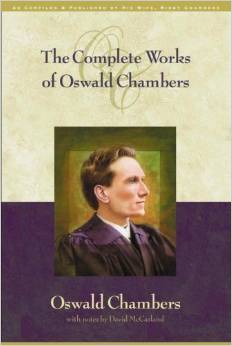
The Complete Works Of Oswald ChambersThere are always way too many quotes for me to share when I’ve finished reading an Oswald Chambers book! Check out my review of Our Portrait In Genesis, in which Chambers is our guide through the book of Genesis. Here is my second helping of quotes from Our Portrait.

“Every time your wits compete with the worship of God you had better take a strong dose of Isaiah 30:15-16—‘In returning and rest shall ye be saved; in quietness and in confidence shall be your strength: and ye would not.’ Beware of restlessness and wits persuading you that God has made a blunder—‘God would never allow me to fall sick after giving me such a blessing’; but He has! No matter what revelations God has made to you, there will be destitution so far as the physical apprehension of things is concerned—God gives you a revelation that He will provide, then He provides nothing and you will begin to realize that there is a famine, of food, or of clothes, or money, and your common sense as well as other people’s says, ‘Abandon your faith in God, do this, and that.’ Do it at your peril. Watch where destitution comes; if it comes on the heels of a time of quiet confidence in God, then thank Him for it and stay starving and He will bring a glorious issue.”

“All the qualities of a godly life are characteristic of the life of God; you cannot imitate the life of God unless you have it, then the imitation is not conscious, but the unconscious manifestation of the real thing. … The life of God has no pretense, and when His life is in you, you do not pretend to feel sweet, you are sweet.”

“The only standard for judging the saint is Jesus Christ, not saintly qualities.”

“Always beware when you can reasonably account to yourself for the action you are about to take, because the source of such clear reasoning is the enthroning of human understanding.”

“The reason we know so little about God’s wisdom is that we will only trust Him as far as we can work things out according to our own reasonable common sense.”

“Beware of obeying anyone else’s obedience to God because it means you are shirking responsibility yourself. … Remember, trust in God does not mean that God will explain His solutions to us, it means that we are perfectly confident in God, and when we do see the solution we find it to be in accordance with all that Jesus Christ revealed of His character.”

“It is in the dark night of the soul that the realization of God’s presence breaks upon us: we never see God as long as, like Esau, we are perfectly satisfied with what we are. When I am certain that ‘in me…dwelleth no good thing,’ I begin to experience the miracle of seeing and hearing, not according to my senses, but according to the way the Holy Spirit interprets the Word of God to me.”

“The true worship of God can only be maintained when the passing moments are seen as occurring in God’s order. If you try to forecast the way God will work you will get into a muddle; live the life of a child and you will find that every haphazard occasion fits into God’s order.”

“The nature of love is to give, not to receive. Talk to a lover about giving up anything, and he doesn’t begin to understand you! Love is not blind; love sees a great deal more than the actual, it sees the ideal in the actual, consequently the actual is transfigured by the ideal. … If you love someone you are not blind to his defects but you see the ideal which exactly fits that one. God sees all our crudities and defects, but He also sees the ideal for us; He sees ‘every man perfect in Christ Jesus,’ consequently He is infinitely patient.”

To read the first set of quotes from Our Portrait In Genesis, click here.

Thursdays With Oswald—The Memory Of Sin

This is a periodic series with things I’m reading and pondering from Oswald Chambers. You can read the original seed thought here, or type “Thursdays With Oswald” in the search box to read more entries.

The Memory Of Sin

     No aspect of Christian life and service is in more need of revision than our attitude to the memory of sin in the saint. When the Apostle Paul said “forgetting those things which are behind,” he was talking not about sin, but about his spiritual attainment. Paul never forgot what he had been; it comes out repeatedly in the Epistles—“For I am the least of the apostles, that am not meet to be called an apostle” (1 Corinthians 15:9); “unto me who am less than the least of all saints, is this grace given” (Ephesians 3:8); “…sinners, of whom I am chief” (1 Timothy 1:15). …

     If one wants a touchstone for the depth of true spiritual Christianity, one will surely find it in this matter of the memory of sin. There are those who exhibit a Pharisaic holiness, they thank God with an arrogant offensiveness that they are “not as other men are”; they have forgotten the horrible pit and miry clay from whence they were taken, and their feet set upon a rock through the might of the Atonement. … 

     May the conviction of God come with swift and stern rebuke upon any one who is remembering the past of another, and deliberately choosing to forget their restoration through God’s grace. When a servant of God meets these sins in others, let him be reverent with what he does not understand and leave God to deal with them. 

From Conformed To His Image (emphasis added)

These are good questions for Christians to ask themselves regularly: (1) Am I remembering the sins of others the way I would want others to remember my sins? (2) Am I remembering my forgiven sins the way that God remembers them (Psalm 103:10-12)?

J.C. Ryle On Prayer

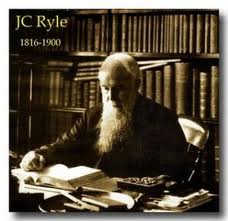
J.C. RyleSome great quotes from J.C. Ryle…

“No prayers can be heard which do not come from a forgiving heart.” —J.C. Ryle

“No time is so well spent in every day as that which we spend up on our knees.” —J.C. Ryle

“If saints could only see their souls as the ten afflicted lepers saw their bodies, they would pray far better than they do.” —J.C. Ryle

“Let us beware of selfish prayers—the prayers which are wholly taken up with our own affairs, and in which there is no place for other souls beside our own. …The greatest kindness we can do to anyone is to speak for them to our Lord Jesus Christ.” —J.C. Ryle

“If Jesus is to save you, you must pray. If your sins are to be forgiven, you must pray. If the Spirit is to dwell in your heart, you must pray. If you are to have strength against sin, you must pray. If you are to dwell with God in Heaven, your heart must talk with God upon earth by prayer. Oh! do not be a prayerless Christian, whatever others may think right.” —J.C. Ryle

“Praying and sinning will never live together in the same heart. Prayer will consume sin or sin will choke prayer.” —J.C. Ryle

“Let us pray more heartily in private, and throw our whole souls more into our prayers. There are live prayers and there are dead prayers; prayers that cost us nothing, and prayers which often cost us strong crying and tears. What are yours?” — J.C. Ryle

“What is the cause of most backslidings? I believe, as a general rule, one of the chief causes is neglect of private prayer.” —J.C. Ryle

“Diligence in prayer is the secret of eminent holiness.” —J.C. Ryle

“Prayer obtains fresh and continued outpourings of the Spirit. He alone begins the work of grace in a man’s heart. He alone can carry it forward and make it prosper. But the good Spirit loves to be entreated. And those who ask most will have most of His influence.” —J.C. Ryle

Links & Quotes

link quote

“People most affected by fear are those who hang around negative people. If you’re going to control the negative thoughts in your life, you’ve got to get away from negative people as much as you can.” —Rick Warren

“Liberty cannot be established without morality, nor morality without faith.” —Horace Greeley

“It’s natural enough in our species, as in others, that the young birds should show off their plumage—in the mating season. But the trouble in the modern world is that there’s a tendency to rush all the birds on to that age as soon as possible and then keep them there as late as possible, thus losing all the real value of the other parts of life in a senseless, pitiful attempt to prolong what, after all, is neither its wisest, its happiest, or most innocent period. I suspect merely commercial motives are behind it all: for it is at the showing-off age that birds of both sexes have least sales resistance!” —C.S. Lewis

“Don’t make a decision, large or small, without sitting before God with an open Bible, an open heart, and open ears. Philippians 2:13 says, ‘God is working in you to help you want to do and be able to do what pleases Him.’” —Max Lucado

“Strange as it may seem, one of the primary purposes of being shaken by suffering is to make our faith more unshakable. Faith is like muscle tissue: if you stress it to the limit, it gets stronger, not weaker. That’s what James means here [James 1:2-3]. When your faith is threatened and tested and stretched to the breaking point, the result is greater capacity to endure. … If you think your suffering is pointless, or that God is not in control, or that He is whimsical or cruel, then your suffering will drive you from God, instead of driving you from everything but God—as it should. So it is crucial that faith in God’s grace includes the faith that He gives grace through suffering.” —John Piper

“The promise, made when I am in love and because I am in love, to be true to the beloved as long as I live, commits me to being true even if I cease to be in love. A promise must be about things that I can do, about actions: no one can promise to go on feeling in a certain way. He might as well promise never to have a headache or always to feel hungry.” —C.S. Lewis

“It’s the lives of the saints, not the arguments of the theologians and philosophers, that covert people.” — Pope Benedict XVI