Jesus Is Everlasting Father

Listen to the podcast of this post by clicking on the player below, and you can also subscribe on AppleSpotify, or Audible. 

Last week we talked about how the title “God” can mean different things to different people. When we are talking about the One True God as He is revealed to us in the Person of Jesus, there is no doubt of Whom we are speaking. The opponents of Christianity knew this too, which is why they tried to get the early saints to not use the name Jesus.  

Isaiah 9:6 says that a Child is born and a Son is given, but this Son is given the unusual title of Everlasting Father. Jesus acknowledged this unusualness in this exchange with the Pharisees in Matthew 22:41-45. 

(Check out all of the Scriptures in this post by clicking here.) 

Everlasting” means continuous existence; existing in perpetuity; the Chief by which all other things are ordered and aligned. We see this in Genesis 1:1, where “In the beginning” signifies God started Time but He existed before that moment. 

In John 1:1, similar words are used,  but here “in the beginning” means if you stand at the moment Time began and were able to look back into the immeasurable eternity that existed before that, God was there. More specifically, the Word of God (Jesus) was there as God. Jesus Himself affirmed this in Revelation 1:8 and 3:14. 

Then in 1 John 1:1, the phrase “from the beginning” means that after Time ends, you can look into the infinite eternity that still exists and God is there. Again, Jesus Himself affirms this in Revelation 22:13. 

Father” this is the first word in our biblical Hebrew dictionary. It means father, the head or founder of a family, the protector of the family. Paul says that Jesus fulfills all of these definitions (Colossians 2:9-10, 1:15-22), and the writer of Hebrew opens his epistle with the same thought (Hebrews 1:1-3). 

No one on earth has seen God the Father. This makes it difficult to follow Him. Which is why Jesus made His appearing among us (John 1:1, 14, 18). 

Paul wanted people to know the mystery of God, namely, Christ” (Colossians 2:2), and he said that Jesus is the Key that unlocks the treasure-trove of God’s rich love for us. Notice Paul’s progression: teaching the Word (1:25-27) so that we mature (1:28), so that we have the full riches of complete understanding, in order that we may know the mystery of God, namely, Christ (2:2-4). 

When Jesus was born, Simeon gave us the same assurance when he saw Jesus and announced that Jesus was the Christ that had been prophesied (Luke 2:25-32), and Jesus Himself told His disciples the exact same thing (John 14:8-9). 

Let people see God’s love through your life, all year-round but especially at Christmas. As we said last week, when we talk about Jesus and live for Jesus, we invite others to God, through Jesus, by the Spirit’s illumination. 

If you have missed any of the other messages in our series Jesus Is…, you can find them all here.

►► Would you please prayerfully consider supporting this ministry? My Patreon supporters get behind-the-scenes access to exclusive materials. ◀︎◀︎
7 Images Of The Church

Husbands, love your wives, just as Christ loved the church and gave Himself up for her to make her holy, cleansing her by the washing with water through the Word. (Ephesians 5:25-26)

Dr. Henry Halley points to seven images the Bible portrays of how Jesus interacts with His saints.

“1. The Shepherd and the sheep emphasizes both the warm leadership and protection of Christ and the helplessness and dependency of believers (John 10:1-18). 

2. The vine and the branches points out the necessity for Christians to depend on Christ’s sustaining strength for growth (John 15:1-8).

3. Christ as high priest and the church as a kingdom of priests stress the joyful worship, fellowship, and service which the church can render to God through Christ (Hebrews 5:1-10; 7:1; 8:6; 1 Peter 2:5-9). 

4. The cornerstone and building stones (Matthew 21:42) accents the foundational value of Christ to everything the church is and does, as well as Christ’s value to the unity of believers. Love is to be the mortar which solidly holds the living stones together (1 Corinthians 3:9; 13:1-13; Ephesians 2:19-22; 1 Peter 2:5). 

5. The head and many-membered body, the church, is a vibrant organism, not merely an organization; it draws its vitality and direction from Christ, the Head, and each believer has a unique and necessary place in its growth (1 Corinthians 12:12-13, 27; Ephesians 4:4). 

6. The last Adam and new creation presents Christ as the initiator of a new creation of believers as Adam was of the old creation (1 Corinthians 15:22, 45; 2 Corinthians 5:17). 

7. The bridegroom and bride beautifully emphasizes the intimate fellowship and co-ownership existing between Christ and the church (Ephesians 5:25-33; Revelation 19:7-8; 21:9).

You can read all of the Bible verses listed in this post by clicking here. 

When I Feel Afraid

Listen to the podcast of this post by clicking on the player below, and you can also subscribe on AppleSpotify, or Audible. 

Can we take just a couple of minutes to talk about fear? This isn’t on the list of anyone’s favorite topics, but it is something we all have to confront. 

The Scriptures I reference in this episode are from John 8:12, 9:5; Revelation 1:8; and Psalm 56:3-4, 10-11. 

I also mentioned how many times the Bible shows us God saying, “Do not be afraid.” Here are several of those instances. 

I shared a whole series of messages called “Do Not Be Afraid” which you can check out here. Some other related posts are: 

But when I am afraid, I will put my trust in You. I praise God for what He has promised. I trust in God, so why should I be afraid? What can mere mortals do to me? … I praise God for what He has promised; yes, I praise the Lord for what He has promised. I trust in God, so why should I be afraid? What can mere mortals do to me? (Psalm 56:3-4, 10-11 NLT)

►► Would you please prayerfully consider supporting this ministry? My Patreon supporters get behind-the-scenes access to exclusive materials. ◀︎◀︎
The Freedom In Fear

Listen to the podcast of this post by clicking on the player below, and you can also subscribe on AppleSpotify, or Audible. 

Our Royal Psalms take us from King David to King Jesus. David went from the anointed king on the run from King Saul, to being king over Judah (2 Samuel 2:4), to being king over “all the tribes” (2 Samuel 5:1-3; 8:15). 

(Check out all of the Scriptures in this post by clicking here.) 

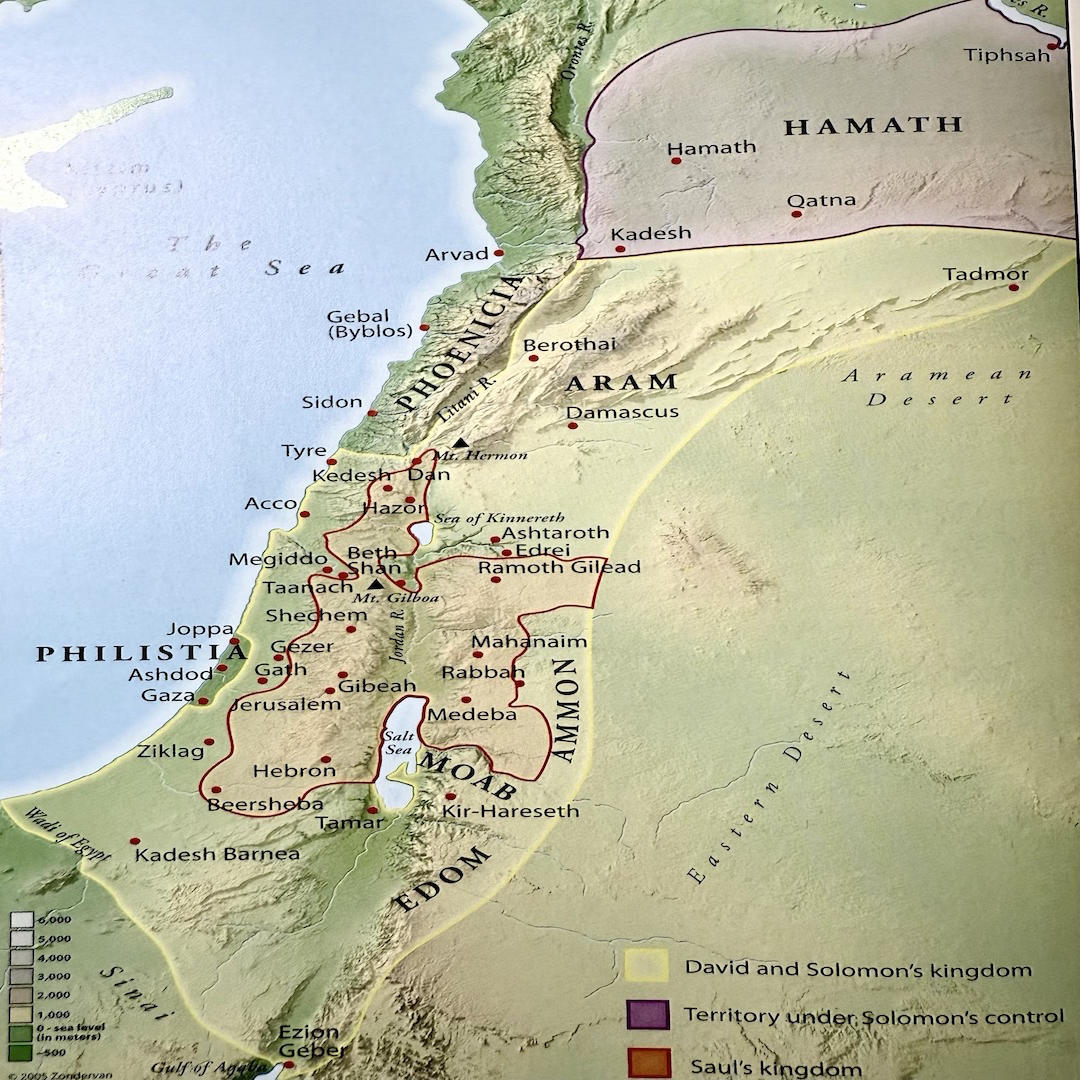
David’s kingdom stretched far and wide (1 Chronicles 22:14-16; 29:10-13). This absolute control King David now wields over every nation surrounding Israel puts fear into the hearts of Israel’s enemies. Fear of David brings freedom for the people of his kingdom.

As the Sons of Korah think about this fear that brings them freedom, they look beyond their earthly king to the King of Heaven and compose this Royal Psalm recorded in Psalm 47. This psalm has majestic terminology for God in almost every verse; including, Lord Most High, great King over all the earth (vv. 2, 7, 9), God reigns over the nations; and God is seated on His holy throne. 

I’m especially intrigued by the word awesome in verse 2. The KJV says “the Lord Most High is terrible” because it does take two Hebrew words to give us the full definition of awesome. First, “Most High” is best thought of with the suffix -est: greatest, highest, noblest. In other words, there is nothing above Him. Then “terrible” is to be held in awe, to be honored, to be reverenced. 

Just as the Israelites had no fear of enemies because David was on the throne, God says the same thing to us: Because the Most High is on the throne, His people have no fear of their enemies. 

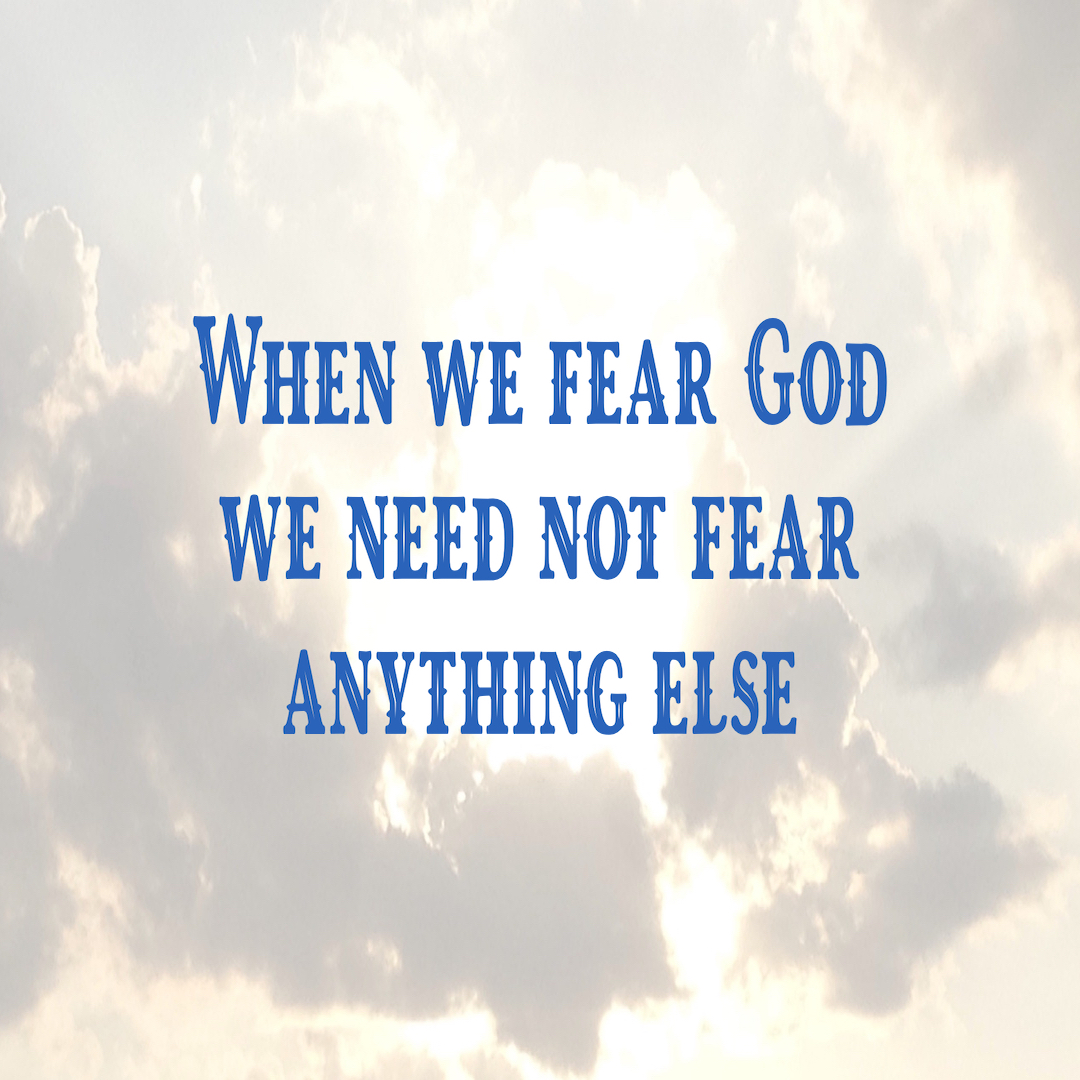
When we fear God we need not fear anything else. 

When we fear God: 

…we hate our own sin (Psalm 36:1-3) 

…we love His mercy that forgives our sin (Psalm 103:2-3, 10-12) 

…we hate sin in the world (2 Timothy 2:26) 

…we love sinners (2 Timothy 2:24-26; Acts 10:38; Jude 20-23) 

…we hate the darkness that traps people (2 Corinthians 4:4) 

…we love shining the light of King Jesus (Philippians 2:15-16) 

…we hate this life (John 12:25) 

…we love eternal life (Romans 3:23-24, 8:18)

When the people of Israel reverenced David as their king, they would be able to know his blessings. When we fear our awesome God, we will also receive His blessings. Take a look at the amazing blessings Jesus Himself—the King of kings—lists for those who reverence His awesome Kingship (Revelation 2:7, 11, 17, 26-28; 3:5, 11-12, 21)! 

God is awesome and asks us to reverence Him and then enjoy life in His freedom. 

If you have missed any of the other royal psalms we have covered, you can find the full list by clicking here. 

►► Would you please prayerfully consider supporting this ministry? My Patreon supporters get behind-the-scenes access to exclusive materials. ◀︎◀︎

A Tour Of The Tabernacle

Listen to the podcast of this post by clicking on the player below, and you can also subscribe on AppleSpotify, or Audible. 

I was absolutely fascinated by a Messianic Jew’s insights on the Old Testament Tabernacle, and how every aspect of it pointed to Jesus the Messiah. 

The overview of the construction of the Tabernacle starts in Exodus 25 and covers the next fifteen chapters in that book. Here are a few of my main takeaways from my friend’s teaching. 

All of the Scriptures I mention can be found here. 

The materials for the Tabernacle are brought as a freewill offering given by freed slaves (Exodus 25:1-2). This gold, silver, bronze, linens, and other materials were gifts from the Egyptians when the Israelites left on the night of the Passover. 

The Tabernacle is at the center of the Israelite camp (Numbers 2:1-34), signifying God’s presence in the center of our lives. When the Israelite community moved out, the tribe of Judah went first. Judah means “praise.” What a great reminder to let praise to God be at the forefront of all we do! 

In Exodus 27:16, the materials to be used for the curtains compromising the entrance to the Tabernacle are blue, purple, and scarlet. The blue is for sky (Heaven), the purple designates royalty, and the scarlet signifies the blood of the sacrifices. Jesus came to earth as royalty from Heaven, and by His shed blood He opens the way for all of us to be with Him in Heaven forever! Jesus said He was the only way to Heaven (Hebrews 2:14-15; John 14:6). 

The bronze altar for cleansing was just inside the entrance (Exodus 27:1-8). The worshiper offered this sacrifice in place of their sin. The priests would then move to the laver to wash off the dirt of the world. It’s important to note that the priests wash at the laver, not in the laver. Jesus is the One who washes us and cleanses us (Ephesians 5:26). 

There are four different coverings over the Holy Place. As the priest progresses farther into the Holy Place, the coverings become thicker, so less outside light is visible. 

  • First covering (Exodus 26:1) was blue, purple, and scarlet yarns (like the colors at the entrance) with cherubim woven into the fabric. The priests looking up would see these angels. 
  • Second covering (v. 7) was goat’s hair. Goats were used for sin offerings, reminding the priests that there was a sacrifice to cleanse them so they could approach the presence of God. 
  • Third covering (v. 14) was a red-dyed ram skin, showing the blood that covers us. 
  • Fourth covering (v. 14) was the durable leather of a badger. Now there would have been very little light from outside, but the angels would still be seen for those inside the Holy Place. 

In the Holy Place was the showbread (sometimes called the bread of presence) pointing to Jesus as our Bread of Life (Exodus 25:23-30; John 6:35). Also in the Holy Place was the lampstand filled oil (vv. 31-37). Only one stick holds the oil and supplies the other six branches. The priests could only work by the light of God. Jesus is our light (John 8:12). And we also find the altar of incense here (30:1-7). This was a unique perfume that wasn’t used anywhere else. The prayers of the saints that arise before the throne in Heaven as said to rise as incense (Psalm 141:2; Revelation 5:8). Worshipers in God’s presence are saturated with the aroma of Jesus (2 Corinthians 2:14-15). 

In the Holy of Holies is the ark of the covenant of the Lord (25:10-22). Inside the ark were the stone tablets that contained the Ten Commandments. On top of the ark, overshadowed by the wings of two huge cherubim angels, was the mercyseat or atonement cover. Notice that mercy is over the Law, and that the blood of the sacrifice of Jesus covers my disobedience and makes me at one with God (the literal definition of atonement). 

How beautifully all of these aspects of the earthly Tabernacle point to Jesus (Hebrews 8:5, 10:1)! And even more amazingly, Jesus fulfilled every requirement in this Tabernacle to make it possible for all who put their faith in Him to enter the Heavenly Tabernacle and remain in His presence for ever and ever! 

►► Would you please prayerfully consider supporting this ministry? My Patreon supporters get behind-the-scenes access to exclusive materials. ◀︎◀︎
The King’s Bride

Listen to the podcast of this post by clicking on the player below, and you can also subscribe on AppleSpotify, or Audible. 

How many of you have taken time to watch a royal wedding? It captivates the attention of so many people when actress Grace Kelly becomes Princess Grace of Monaco, or when a Kate Middleton becomes the Princess Catherine of Wales. There is something that enthralls us when someone who isn’t born to royalty is elevated to such a special place in a fairy tale-like romance and wedding. 

Remember that these Royal Psalms are pointing through the earthly representative to the heavenly Reality. Psalm 45 is a wedding song, quite probably a wedding march for King David’s bride. 

(Check out all of the Scriptures in this post by clicking here.)

I’m intrigued by the preamble to this Psalm, as it is longer and more descriptive than most. 

  • For the director of music—appears 55x in the Psalter. 
  • To the tune of “Lilies”—appears only here and Psalms 69 and 80. 
  • Of the Sons of Korah—these are the skilled worship leaders. There are 11 songs written by them or for them. 
  • A maskil—this means it is to be a reflective song and is used 13 times. 
  • A wedding song—sometimes called a “song of love” in some translations. This Hebrew word is used 9 times in the Old Testament, always in poetic form, but Psalm 45 is the only instance it is said to be a wedding song. 

When we combine the beauty of lilies, the reflection of a maskil, and the skill of the Sons of Korah, we have a unique arrangement for a fairy tale-like romance that is culminating in a royal wedding. 

So I ask you to imagine this royal wedding ceremony where this song is sung from the perspective of the bride who is about to become royalty. As we see King David standing at the front awaiting his bride, let’s watch the scene expand to find King Jesus standing and awaiting His Church. 

  • Psalm 45:1-2 … Hear the bride, “How handsome You are, my Beloved! Oh, how charming!” (Song of Songs 1:16), and hear the wedding guests Revelation 19:6-7. 
  • vv. 3-7 … see the King standing with all the trophies of victories He has won. Verse 7 is quoted by the writer of Hebrews, specifically stating, “But about the Son [God] says…” (Hebrews 1:8-9). Also see Revelation 19:11-16. 
  • v. 8 … the aroma of victory is on the King and imputed to the Bride (Song 1:3; 2 Corinthians 2:14-15; Song 1:12). 
  • vv. 9-15 … the King is enthralled with the beauty of His Bride (Revelation 19:7-8; Song 1:15; Ephesians 5:25-27). 
  • vv. 16-17 … a blessing is pronounced on the couple (Ephesians 5:32). 

When we are enthralled with our King—when we only have eyes and hands and heart for Him—we are a pure virgin in His sight (2 Corinthians 11:2). But we are also a testimony to those who watch us watching our King.  

Just as royal weddings on earth captivate people who are watching the fairy tale-like wedding celebration, so will our devotion to the King intrigue and captivate a watching world. Notice again verse 17, “the nations will praise You for ever and ever.” When we love our King with all our heart, soul, mind, and strength, and then love others with that same love, we will draw the nations to our King (Revelation 22:17). 

If you have missed any of the other messages in our series looking at the Royal Palms, you can find them all here. 

►► Would you please prayerfully consider supporting this ministry? My Patreon supporters get behind-the-scenes access to exclusive materials. ◀︎◀︎
Links & Quotes

On our 100th episode, Greg and I talk about how important it is for leaders to let people learn through their struggle, so we need to reject the temptation to jump in to help them too soon. Check out the full conversation The Struggle is Real (but Necessary).

I have a lot of new video content on my YouTube channel every week. Please check it out and subscribe so you don’t miss anything.

John Piper was asked how to identify false teachers or prophets, and he gives four biblical tests to determine this. But I also appreciate this admonition: “Don’t set the bar so low that you only stop listening to people if they can be properly called false teachers. Lots of people are teachers who are simply misguided and unhelpful in many ways but might not come under the ban of being called a false teacher. Set your standards high. Listen to people who are truly God-centered, Christ-exalting, Bible-saturated, Spirit-dependent, who bear the marks in their lives of authenticity.” 

In imploring Christians to not shrink back from difficult trials but to rise and conquer in the strength of the Spirit, Greg Morse makes this observation: “When the risen Christ walked among His early churches (as He walks among them still), His eye was very keen to observe and His heart very ready to address a particular kind of person in every assembly: ‘the one who conquers’ (Revelation 2:7, 11, 17, 26; 3:5, 12, 21). To each of the seven churches, He summons and strengthens the one who would overcome, prevail, hold fast, keep strong, stand firm, and move forward—the victors in Christ amid a larger group in the church who only profess to know Him.”

Two separate geological studies found a period in history where rock formations were impacted by massive amounts of water. ICR adds, “Because conventional geologists deny the historical accuracy of Genesis, they operate at a loss. They see evidence of massive erosion and tremendous water flow at the end of the Tejas Megasequence and just prior to the Ice Age but are hampered by their uniformitarian thinking to explain it. But the Bible gives us answers. Genesis describes a global flood that peaked on Day 150. The sedimentary rocks across all of the continents confirm this peak occurred at the end of the Zuni Megasequence (at the K-Pg). And the rocks confirm that the Tejas Megasequence records the subsequent receding phase.”

There was a Man who
dwelt in the east centuries ago,
And now I cannot look at a
sheep or a sparrow,
A lily or a cornfield,
a raven or a sunset,
A vineyard or a mountain,
without thinking of Him. —G.K. Chesterton


Clinton Manley addresses the place of physical exercise in the life of a Christian. Before sharing three astute observations about this interaction, he notes, “Body or soul is a false dichotomy. As Paul makes clear in 1 Corinthians 9:24–27, physical fitness and spiritual fitness don’t have to be either-or; they’re best as both-and. The body and soul have an inseparably reflexive relationship: the body affects the soul, and the soul affects the body. God created us to glorify Him by enjoying Him, and the body is the soul’s training partner in the pursuit of spiritual pleasures.”

“Who will trust me with a spiritual body if I cannot control even an earthly body?”  —C.S. Lewis 

A Lost Culture Of Reverence

Listen to the podcast of this post by clicking on the player below, and you can also subscribe on AppleSpotify, or Audible. 

There are several psalms that are regal in their focus—talking about the King’s coronation, or the King ruling on His throne, or the ultimate victory of the King that is coming in the future. Although these royal psalms are extolling God as King, many of these psalms use King David as an object lesson. The idea is seeing how a man after God’s heart (1 Samuel 13:14) became the standard by which all other kings were measured: 

  • Asa did what was right in the eyes of the Lord, as his father David had done (1 Kings 15:11) 
  • Amaziah did what was right in the eyes of the Lord, but not as his father David had done (2 Kings 14:3) 
  • Unlike his father, Ahaz did not do what was right in the sight of the Lord, as his father David had done (2 Chronicles 28:1) 

(Check out all of the Scriptures in this post by clicking here.)

The people followed their king in both righteousness and evil. They were fiercely loyal to their monarch. We don’t really get that loyalty today. “We’re Americans,” we cry, “We live in the land of the free and don’t ever bow our knee to a king!” 

That’s an appropriate response for those living in a democratic republic, but we would do well to learn to bow our knee to a true King. 

After the United States Constitution was adopt adopted, Elizabeth Willing Powel asked Benjamin Franklin, “Well, Doctor, what have we got, a republic or a monarchy?“ Franklin replied, “A republic, if you can keep it.” Franklin went on to say, “In these sentiments, Sir, I agree to this Constitution, with all its faults, if they are such; because I think a General Government necessary for us, and there is no form of government, but what may be a blessing to the people if well administered; and believe further, that this is likely to be well administered for a course of years, and can only end in despotism, as other forms have done before it, when the people shall become so corrupted as to need despotic government.” 

Because of our defiance as free people in our government, we have become lacking in our loyalty, which shows itself in a lack of proper reverence or respect. Just listen to how people talk so disrespectfully or even hatefully about those in “the other political party.” Benjamin Franklin also said, “Only a virtuous people are capable of freedom. As nations become corrupt and vicious, they have more need of masters.” 

Where are the days of the armor bearer who said to Prince Jonathan, “Do all you have in mind. I’m with you heart and soul,” even though Jonathan was proposing an impossible task? Or the loyalty of the men around David who heard him sigh about the water in Bethlehem, and they put their lives at risk to bring him a drink? This was even before he was on a throne, and yet they showed their loyalty to him. I fear that our lost culture of reverence for earthly leaders has eroded our reverence for the King of kings, and vice versa. 

The first royal psalm (Psalm 2) practically open the Psalter. This psalm calls us to consider the differences between earthly kings and the King of kings.  

Notice that earthly kings “conspire”—they angrily boast and rage. They plot (v. 1b) and scheme (AMPC). They take their stand together (v. 2). 

Against Whom? Against the LORD (Jehovah) and against His Anointed One (the Messiah)! 

Much like the fiercely independent people I described us as earlier, these earthly rulers want to call their own shots—they don’t want to take directions from anyone else because they think they know best (v. 3). But notice in v. 1 that the peoples have followed their leaders in their plot. 

God doesn’t rage at them, but He laughs, He scoffs, He rebukes, and the people are terrified when they realize that they cannot overcome Him. In v. 1 we see their plots are “in vain.” 

There is nothing men can do—no matter how powerful they may seem or how many of them “take their stand…together”—to thwart or even delay the plans of Jehovah. 

All of History is His Story. Notice the phrase that God speaks, “I have … I will” (in vv. 6-7; c.f. Daniel 4:25). 

In vv. 7-9 God speaks to His Son—the Messiah, the Anointed One, the King of kings. We hear this repeated in Acts 13:32-33 and in God’s own voice in Matthew 3:17. Then we see the fulfillment of this in passages like Philippians 2:9-11 and Revelation 11:17-18. 

This royal psalm ends with an important conclusion: Therefore (vv. 10-12): 

  • Be wise 
  • Be warned 
  • Serve the King with reverential fear 
  • Rejoice with trembling  
  • Kiss the Son with absolute loyalty and joyful reverence 

Check out another “therefore” in Philippians 2:12-16. This is a call for righteous, reverent living for those who have acknowledged Jesus as their King. It’s only those who live this way who will know the blessed refuge in Him that is unshakable for ever and ever! 

Follow along with our look at all of the royal psalms by clicking here. 

►► Would you please prayerfully consider supporting this ministry? My Patreon supporters get behind-the-scenes access to exclusive materials. ◀︎◀︎
Counting Noses

Listen to the podcast of this post by clicking on the player below, and you can also subscribe on AppleSpotify, or Audible. 

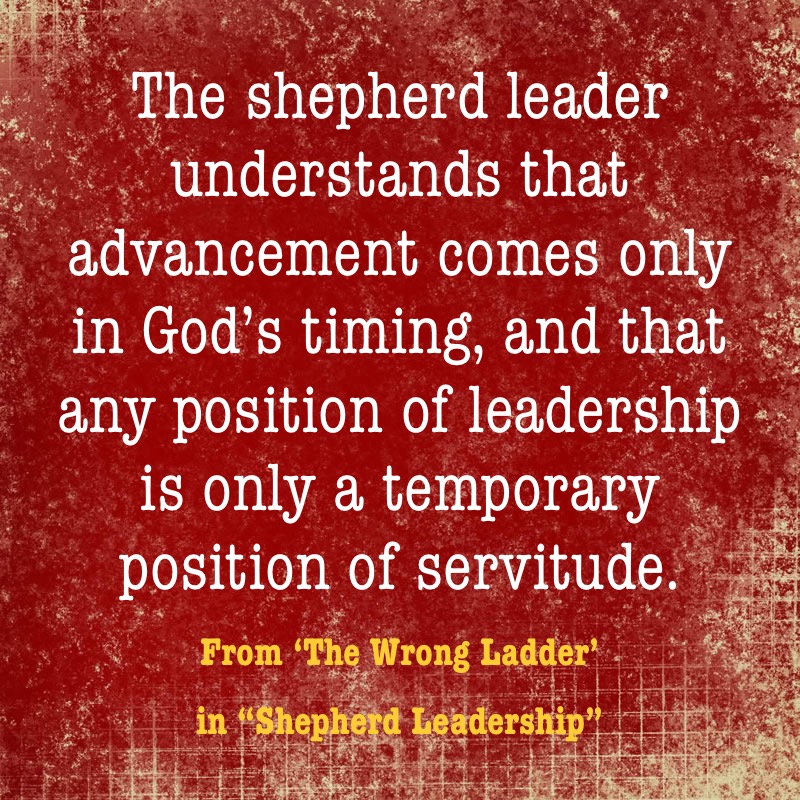
One of the reasons I felt prompted to write Shepherd Leadership was that I saw too many CEO-like metrics being used by pastors to gauge the success of their church. The subtitle of my book is “The Metrics that Really Matter.” 

Check out this excerpt from a recent blog post from T.M. Moore—

     “Even a cursory reading of Revelation 2 and 3 will convince us that Jesus has expectations for His churches. He has in His mind a template and pattern for how a church should be built and what it should look like as it takes on its calling as the Body of the Lord in its community. The seven churches Jesus singled out in these chapters represent the Church in every age and place. His assessment of these churches puts us on notice concerning how we should assess the state of our church at any time and what we must do to bring our expectations into line with His.

     “We’re not very good at this. Counting noses, tallying up contributions, and reporting on baptisms and new members—these are the criteria at which we typically aim and to which we point in determining the health of our churches. But these criteria appear nowhere in Revelation 2 and 3. Jesus is looking for more.” 

You can check out the rest of T.M.’s thoughts here. 

I was honored that T.M. Moore wrote an endorsement of Shepherd Leadership: “Craig Owens has it right: Jesus appointed church leaders to be shepherds over His precious flocks. The combination of Craig’s Biblical understanding, practical insights, and consistent personal practice make Shepherd Leadership a book every pastor should read.” 

To learn more, pick up a copy of my book for yourself. 

I would also encourage you to check out this list of blog posts and video clips where I discuss in more depth the right and wrong metrics for our churches and para-church ministries. 

►► Would you please prayerfully consider supporting this ministry? My Patreon supporters get behind-the-scenes access to exclusive materials. ◀︎◀︎
Links & Quotes

The sooner we start praying, the sooner we can see God move. Let’s make sure that prayer is not our last resort, but our first response!

I have a lot of new video content on my YouTube channel every week. Please check it out and subscribe so you don’t miss anything.

T.M. Moore has a challenging word for those who are called to preach the Gospel. He writes, “Jesus, like Ezekiel set His face like flint to fulfill His appointed mission. And so must we, for whom the Word is both sweet and bitter (cf. Revelation 10:8-11). We must live and proclaim its sweet and bitter message to an impudent and hard-hearted age, beginning in our churches. It is time for judgment to begin from the house of God (1 Peter 4:17). We must speak to our brethren in the Lord, the household of faith, to teach, warn, direct, and to summon them to revival, renewal, and awakening, for a greater knowledge of the Lord and His love, and a fuller realization of His Kingdom presence, promise, and power.”

Then John Piper shares 10 reasons why Christian preaching is a privilege.

“An essential aspect of creativity is not being afraid to fail.” —Edwin H. Land 

I have written before how significant it is that the New Testament uses the phrase “one another” so many times. T.M. Moore writes about this as well, noting, “The more we love Jesus, the more loving our neighbors will come (super)naturally to us as the Spirit of God works in us to will and do of His good pleasure. So, as in everything we do to take up Jesus’ work of building His Church, loving one another begins with loving Jesus.”

After listing a truckload of verses describing Who the Holy Spirit is, Sinclair Ferguson concludes, “Think about all of that! This Spirit—this one and the same Spirit, and no other—‘dwells within thee.’ He is the very Spirit who dwelled in the Lord Jesus. … There are not multiple Holy Spirits—One in Whose grace and power the Lord Jesus lived, One Who indwells you, One Who indwells me, and a multiplicity of other Holy Spirits indwelling an innumerable company of believers. No! There is only One Holy Spirit; and He who thus indwells me as the Spirit of Christ also indwells every believer I shall ever meet.”