Sabbathing For Pastors

Listen to the podcast of this post by clicking on the player below, and you can also subscribe on AppleSpotify, or Audible. 

During a Bible study I was recently leading, I was asked how a pastor finds a day to set aside as a Sabbath day. This is tricky for pastors because Sunday is usually considered a “workday” for us. And even if we can take a “day off” there are still people who need to speak with us.  

Being able to Sabbath is vital for all leaders, but especially for pastors. I spend five chapters in my book Shepherd Leadership talking about the mental, physical, spiritual, and relational health of pastors. If you are a pastor, I encourage you to pick up a copy of my book. If you love your pastor, please get a copy for him or her. 

I was recently interviewed on the Thriving In Ministry podcast specifically on the topic of sabbathing, you can listen to that interview here. You can also check out some other blog posts I’ve written about sabbathing by clicking here.

►► Would you please prayerfully consider supporting this ministry? My Patreon supporters get behind-the-scenes access to exclusive materials. ◀︎◀︎

Recovering Mentally

Listen to the podcast of this post by clicking on the player below, and you can also subscribe on AppleSpotify, or Audible. 

I had a great time on the Thriving In Ministry podcast with Kyle Willis and Dace Clifton. 

Kyle asked me a question about how I recharge myself mentally. A key verse in the Bible for me is 2 Corinthians 10:5 where the the apostle Paul counsels us to capture our thoughts. This is extremely hard to do when we are physically or mentally drained. 

In my younger years, I used to try to “do nothing” as my recovery time. As I matured, I realized that top athletes had a different way to help their body recover, and I began to adapt those practices to my time of mental recovery. Dace also shares a very helpful tip for his mental recovery time. 

In my book Shepherd Leadership: The Metrics That Really Matter I make the case that in order for the sheep to be healthy, the shepherd has to get healthy first. The principle is simple: You cannot give to others what you do not possess yourself. I hope you will pick up a copy of my book to learn how Jesus taught us to be wholly healthy leaders.

I’ll be sharing more clips from this Thriving In Ministry interview soon, so please stay tuned. Shepherd Leadership: The Metrics That Really Matter is available in print or ebook, and in audiobook through either Audible or Apple.

►► Would you please prayerfully consider supporting this ministry? ◀︎◀︎


A Healthy On-And-Off

Listen to the podcast of this post by clicking on the player below, and you can also subscribe on AppleSpotify, or Audible. 

I had a great time on the Thriving In Ministry podcast with Kyle Willis and Dace Clifton. 

The guys asked me a question about how I keep myself healthy, and I pointed them to a principle I observed in the life of Jesus. Check out this excerpt from the chapter “A Healthy Leader’s Sabbath” in my book Shepherd Leadership: The Metrics That Really Matter

     Jesus had a human body just like ours. The demands of ministry caused stress on His body just as it does on our bodies. This is totally natural—this is the way God designed us. Our body helps us meet the demands of each day by releasing a hormone called cortisol. Cortisol helps us by managing how our body uses carbohydrates, fats, and proteins; keeping inflammation down; regulating blood pressure; controlling the sleep-wake cycle; and boosting our energy. … 

     Cortisol is naturally flushed from our bodies by a healthy on-and-off rhythm. God built this into His Creation by giving us daily rhythms of day and night, work and rest, and by providing a weekly Sabbath to rest and reflect. But as most shepherd leaders know, setting aside a consistent Sabbath day is extremely rare. Again, let’s look to Jesus: Do you see Him doing anything—or not doing anything—on the Sabbath day that He didn’t do the other days? On any day of the week, we see Him speaking in a synagogue, healing the sick, teaching crowds of people, giving instructions to His followers, correcting religious leaders, walking with friends, or stopping to eat at someone’s home.  

     Jesus had a healthy on-off rhythm: work-rest, minister-celebrate, expend-refresh. Jesus demonstrated that the Sabbath is not so much a day as it is an attitude of the heart. It’s listening to the Holy Spirit say something like, “You’ve been very busy this afternoon, so it’s time to take a nap” and then obeying that divine prompting. Resting and being refreshed—“sabbathing”—is not a luxury; it’s a necessity! That’s why, after a busy day of ministry, we see Jesus spending time in prayer, or taking a nap while crossing the lake when He didn’t have anyone to teach or heal, or finding time for a retreat with His disciples so they could rest and recuperate. 

I have five chapters in Shepherd Leadership about a leader’s overall health, and two chapters in particular where I talk about practical ways that we can create the time to practice sabbathing.

I’ll be sharing more clips from this Thriving In Ministry interview soon, so please stay tuned. Shepherd Leadership: The Metrics That Really Matter is available in print or ebook, and in audiobook through either Audible or Apple.

►► Would you please prayerfully consider supporting this ministry? ◀︎◀︎

Poetry Saturday—How Firm A Foundation

Listen to the podcast of this post by clicking on the player below, and you can also subscribe on AppleSpotify, or Audible.

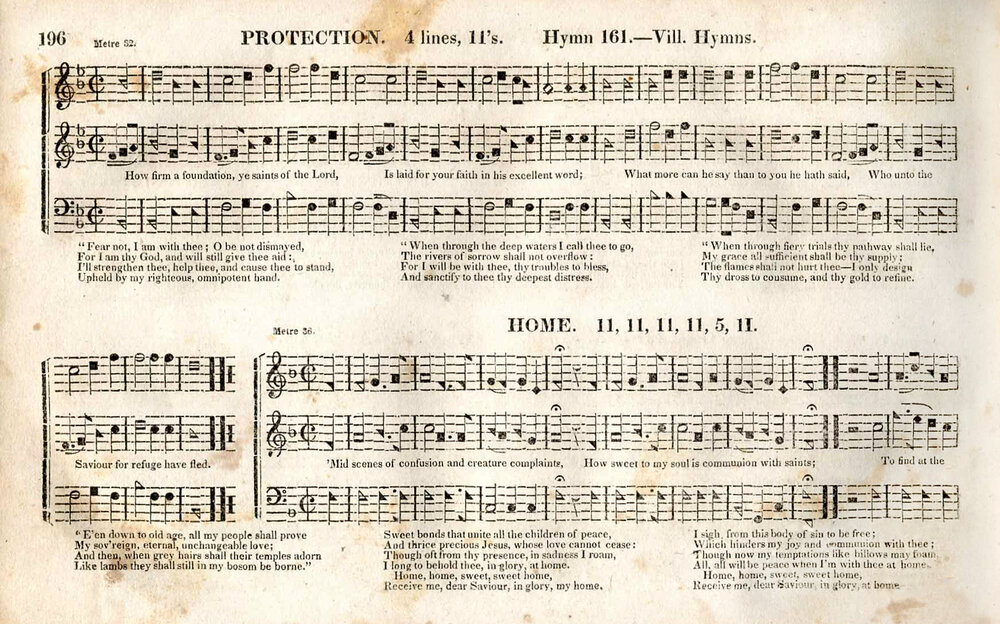
How firm a foundation, ye saints of the Lord,
Is laid for your faith in His excellent Word!
What more can He say than to you He hath said,
To you who for refuge to Jesus have fled?

“Fear not, I am with thee, O be not dismayed,
For I am thy God, and will still give thee aid;
I’ll strengthen thee, help thee, and cause thee to stand,
Upheld by My righteous, omnipotent hand.”

“When through the deep waters I call thee to go,
The rivers of sorrow shall not overflow;
For I will be with thee, thy troubles to bless,
And Sanctify to thee thy deepest distress.”

“When through fiery trials thy pathway shall lie,
My grace, all sufficient, shall be thy supply;
The flame shall not hurt thee; I only design
Thy dross to consume, and thy gold to refine.”

“E’en down to old age all My people shall prove
My sovereign, eternal, unchangeable love;
And then, when grey hairs shall their temples adorn,
Like lambs they shall still in My bosom be borne.”

“The soul that on Jesus hath leaned for repose,
I will not, I will not desert to his foes;
That soul, though all hell should endeavor to shake,
I’ll never, no, never, no, never forsake!” —Richard Keene

►► Would you please prayerfully consider supporting this ministry? ◀︎◀︎

Poetry Saturday—Why Art Thou Weary?

Listen to the podcast of this post by clicking on the player below, and you can also subscribe on AppleSpotify, or Audible.

Sad heart, why art thou weary
With anxious strivings drear?
Thou hast no cause for sadness,
No cause for restless fear.
Thou longest for thy Master,
Then cease and be at rest;
For shall not He who made thee
Know what for thee is best? —Oswald Chambers

►► Would you please prayerfully consider supporting this ministry? ◀︎◀︎

Heart Rate Recovery

Listen to the podcast of this post by clicking on the player below, and you can also subscribe on AppleSpotify, or Audible. 

A few years ago Mark Schultz wrote a song about someone living a go-go-go, overly-busy life and he entitled the song “Running just to catch myself.” Ever been there? 

There’s a Hebrew word that shows up 70 times in the Bible (mostly in the Psalms) that, sadly, many English translations of the Bible have relegated to a footnote. That’s too bad because Selah is such a powerful word. Unless we want to live our lives “running just to catch myself,” we all need a take time to Selah. Look how some have translated this word:

  • “Stop there and consider a little” (Matthew Henry) 
  • “the sacred pause” (Charles Spurgeon) 
  • “pause and calmly think of that” (AMP) 

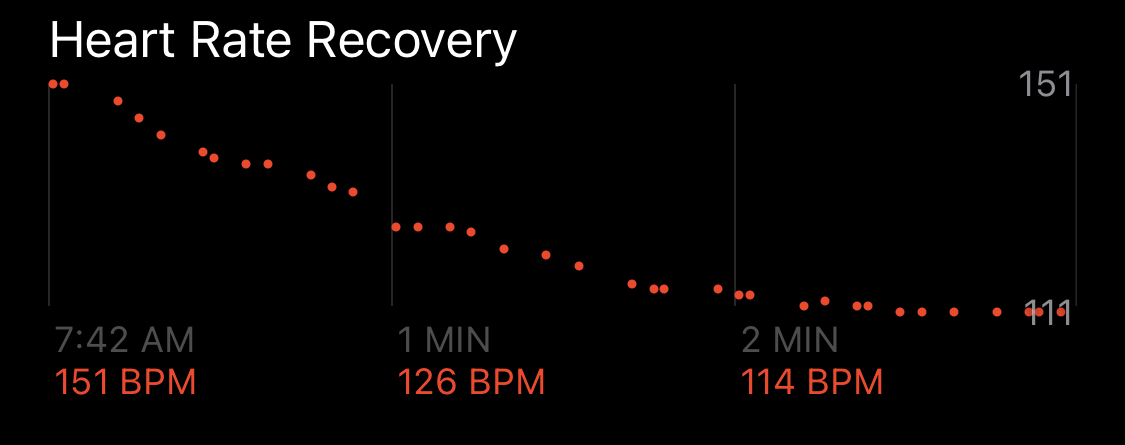
Whether it’s a planned exercise time or just something that frightens or excites us, our heart rate is designed by God to increase—this is how we prepare for fight-or-flight. Doctors say that one of the most vital statistics they now look at to gauge overall cardio health is heart rate recovery (HRR). Doctors want to see a significant increase in HRR after exercise, fright, or excitement. 

A few of the factors that boost HRR:

  • Regular, planned exercise 
  • Getting the proper amount of quality sleep 
  • Reducing stress 

Respond-and-recover is part of a health-building cycle. But if we’re “running just to catch myself” all the time, this time of recovery isn’t happening. Not only are we not recovering well, but we are not properly prepared for the next time our heart needs to start beating faster.   

This HRR is just as vital for us emotionally and spiritually as it is physically: We cannot always be stressed or always be “on.” We need a Selah—a time to stop and consider, a time to take a sacred pause to calmly think. 

This is what David teaches us in Psalm 68. Check out the “bookend verses” where he reminds us that when God arises His enemies are scattered, and that God is awesome and He gives power and strength to His people (vv. 1, 35). And look a the middle verse where David says that when God ascends in victory He gives gifts (v. 18). 

This tells me two things: (1) God is sovereignly in charge (not me or anyone else), and (2) In His love, God delights to use His sovereign power to bless His children. 

The question is not IF I’m going to be confronted by difficult things or difficult people, but HOW will I recover from these confrontations? 

May I suggest a 3-step process to increase your spiritual HRR? 

  1. Acknowledge your situation—don’t try to cover it up or justify it 
  2. Selah—pause to take a deep breath  
  3. During that breath, redirect your thoughts from the difficulty to your awesome God (see 2 Corinthians 10:5; Philippians 4:4-8)

Look at David’s example in this psalm:

Reflect Worship
God defeats enemies (vv. 1-2) Be glad, rejoice, sing (vv. 3-4)
God is a Father and Deliverer (vv. 5-7) Selah (v. 7)
God is sovereignly in control (vv. 8-18) Praise and Selah (v. 19)
God defeated Death (vv. 20-23) Join the procession of worshippers (vv. 24-27) 
God uses His strength to care for His people (vv. 28-31) Sing praises and Selah (vv. 32-35)

As you breathe deeply in this worship of recovery, think on this: “Your sigh can move the heart of Jehovah; your whisper can incline His ear to you; your prayer can stay His hand; your faith can move His arm.” —Charles Spurgeon 

Our Selah pause leads to proper perspective, which allows us to recover more quickly. That, in turn, helps us to be better prepared for the next time we’re confronted by difficulties. 

To check out the other lessons we’ve learned in our ongoing series called Selah, please check out the list I’ve compiled here.

►► Would you please prayerfully consider supporting this ministry? ◀︎◀︎

Jesus Says

Jesus says, “I will… 

…make you fishers of men” (Matthew 7:23; Mark 1:17) 

…acknowledge in Heaven those who acknowledge Me on earth” (Matthew 10:32-33) 

…give you rest” (Matthew 11:28) 

…build My church” (Matthew 16:18) 

…give you the keys of the Kingdom of Heaven” (Matthew 16:19) 

…show you whom you should fear” (Luke 12:5) 

…drive out demons and heal people” (Luke 13:32) 

…never drive away those who come to Me” (John 6:37) 

…give My life for your life” (John 6:51) 

…rise again from the dead” (Matthew 27:63; Mark 14:28; John 2:19) 

…raise up believers to eternal life” (John 6:40, 44, 54) 

…come back to take you to be with Me forever” (John 14:3) 

…do whatever you ask in My name” (John 14:13, 14; 16:28) 

…not leave you as orphans” (John 14:18) 

…ask the Father to give you an Advocate” (John 14:18) 

…give you words and wisdom that are irresistible” (Luke 21:15) 

…see you again and give you eternal joy” (John 16:22)

Oh, what a Savior!

Interrupt Your Anxious Thoughts

Listen to the podcast of this post by clicking on the player below, and you can also subscribe on Apple or Spotify.

David taught us how to pray after we’ve been stabbed in the back. Aren’t you glad that you can pray this prayer just once and everything is all better?! 

Oh, wait. It doesn’t really work that way, does it? At least it hasn’t for me. After I’ve been hurt, it takes quite a while to get to a place of healing. We have cliches for this sort of thing—phrases like “Once bitten, twice shy” and “Fool me once, shame on you; fool me twice, shame on me.” 

We begin to react to the past instead of reflecting and responding in the present.  

It’s interesting that those who compiled the Psalter placed Psalm 55 where they did. There is no introduction that gives us a background or setting, but David still seems to be looking for those “Ziphites” that betrayed him to King Saul. 

Here’s an important physiological and psychological truth: Our brains cannot tell the difference between a real threat and an imagined threat. Our physical bodies react the same way in response to any threat. 

It’s interesting to note that both Selahs in Psalm 55 are in the middle of a sentence, almost as if David is interrupting his own thoughts. Which, I believe, is exactly what he’s doing. 

As this psalm opens David is still praying, but he’s praying about his internal threats: 

  • my thoughts trouble me 
  • I am distraught 
  • I notice the conversations and the stares of potential enemies  
  • my heart is in anguish 
  • I feel like terrors of death, fear and trembling, and horror are closing in on me! 

This leads to David’s fight/flight response (although really, it’s his flight response): “Oh, that I had the wings of a dove! I would fly away and be at rest—I would flee far away and stay in the desert.

David has been listening to himself, and he finally at least attempts to put a halt to these distressing thoughts with his first Selah—which means “pause, and calmly think of that.” 

Most of our natural reactions are driven by fear. But fear—by its very nature—is limiting. Fear keeps us tunnel-visioned on the perceived threat. Fear closes us off to accepting any new information. Fear limits our creative responses. Fear perpetuates more fear. 

So David tries a second time to Selah. He is attempting to interrupt his negative thoughts—to stop listening to himself and start talking to himself. To move from a self-preserving reaction to a God-glorifying response requires a Selah pause to reflect. Reflecting on things like:

  • Where will these thoughts ultimately take me? 
  • How has God responded before? 
  • What does God’s Word say? 
  • Could I imagine Jesus responding the way I’m responding? 
  • What changes can I make? 

I love David’s conclusion: “But as for me, I TRUST IN YOU.” He’s saying, “I’m not going to listen to those negative fears anymore. It’s time to put my trust in God.”  

David had to do this “evening, morning, and noon”—again and again and again! Until finally he could say, “I will cast all my cares on the Lord and He will sustain me; He will never let me fall” (Psalm 55:22). 

This is what Jesus promises us, “Come to Me, all of you who are tired and have heavy loads, and I will give you rest” (Matthew 11:28). 

If you’ve missed any of the messages in our Selah series, you can access them all by clicking here. 

Poetry Saturday—Trinitie Sunday

Lord, who hast form’d me out of mud,
    And hast redeem’d me through Thy bloud,
    And sanctifi’d me to do good;

Purge all my sinnes done heretofore:
    For I confesse my heavie score,
    And I will strive to sinne no more.

Enrich my heart, mouth, hands in me,
    With faith, with hope, with charitie;
    That I may runne, rise, rest with Thee. —George Herbert

10 Quotes From “The Sermons Of Charles Spurgeon”

I share lengthy passages from Charles Spurgeon’s sermons in my weekly Thursdays With Spurgeon feature, along with my short commentaries. But here are some individual quotes from the prince of preachers who were just too good to not share! 

“Would you lose your sorrows? Would you drown your cares? Then go to plunge yourself in the Godhead’s deepest sea—be lost in His immensity. And you will come forth as from a couch of rest, refreshed and invigorated.” 

“Blessed be His dear name, He is unchanged in His love. When He first wrote the covenant, how full His heart was with affection to His people. He knew that His Son must die to ratify the articles of that agreement. He knew right well that He must rend His Best Beloved from His heart and send Him down to earth to bleed and die. He did not hesitate to sign that mighty covenant. Nor did He shun its fulfillment. He loves as much now as He did then. And when suns will cease to shine and moons to show their feeble light, He still will love on forever and forever.” 

“We sweat, we toil, and we fail. How often do we come back weeping because we have toiled, as we think, without success! Yet, Christian man, you have not been without success, for ‘He is still in one mind.’ All this was necessary to the fulfillment of His one purpose. You are not lost; your labor has not rotted under the clod. All, though you see it not, has been working together toward the desired end.” 

“Creation is an arrow from the bow of God, and that arrow goes on, straight on, without deviation to the center of the target that God ordained that it should strike.” 

“Though in the dark hours you and I may slip and often fall, yet His loving-kindness changes not. Your strong arm, O God, will bear us on. Your loving heart will never fail. You will not turn your love away from us or make it cease to pour upon us Your fierce anger, but having begun You will complete the triumphs of Your grace.” 

“God calls upon us, until the world is utterly destroyed with fire, to go on saving men with all our might and main. Every year that passes is meant to be a year of salvation. We rightly call each year the year of our Lord. Let us make it so by more earnest efforts for the bringing of sinners to the Cross of Christ.” 

“The very fact that you are made to groan and cry by reason of God’s long-suffering to guilty men gives you sympathy with Christ and union with Christ, who endured such contradiction of sinners against Himself! … But when, through the long-suffering of God with the ungodly, you are made to suffer, account it to be a mark of your salvation. ‘Rejoice and be exceedingly glad, for great is your reward in heaven, for so they persecuted the prophets who were before you’ (Matthew 5:12).” 

“Blessed be God, the effect of Christ’s medicine does not depend upon the degree to which we can realize how it acts, but if we receive it by faith, if it penetrates into the heart, if it takes possession of the affections, it will work in us that wondrous change by which we will be delivered from the love of sin and saved both from its condemnation and its power! Thank God for a simple gospel!” 

“Although our Lord Jesus Christ is more perfect than any other example—indeed, the only perfect example—yet it is easier to imitate Christ than it is to imitate some of the best of His people.” 

“Because the pill is gilded, you suck down the poison. Because the thing is popular, you patronize it, though it is lustful, it is abominable, it is deceitful!” 

More quotes coming soon, so stay tuned!