More Spirit-Filled Leaders

Listen to the podcast of this post by clicking on the player below, and you can also subscribe on AppleSpotify, or Audible.

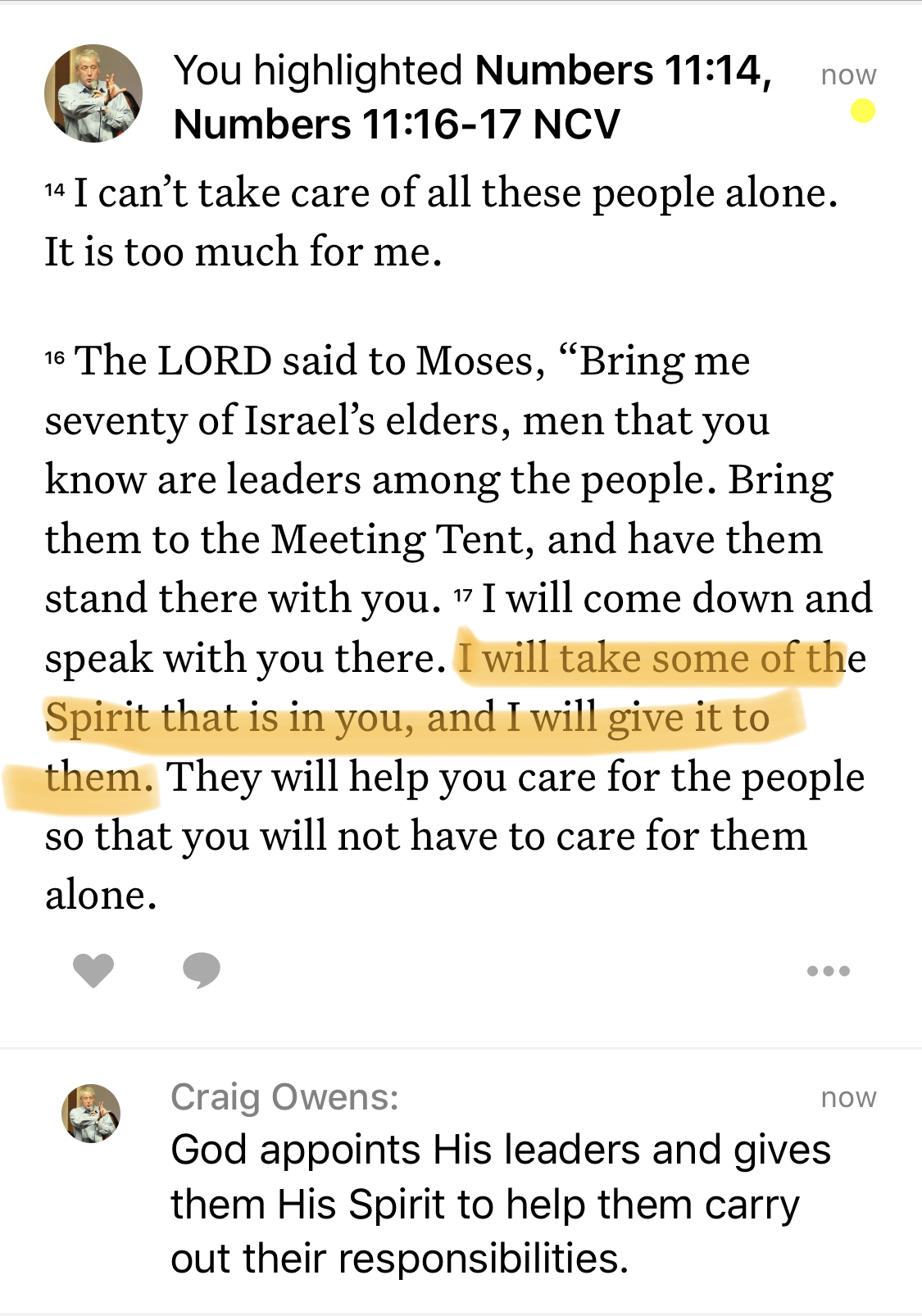
Moses was so right on the mark when he cried out, “I cannot carry all these people by myself; the burden is too heavy for me!” (Numbers 11:14)

It takes a confidently humble man to ask for help (Numbers 12:3). But God gives more grace to that humble person, while He stands aloof from those know-it-alls and those I-can-do-it-all-by-myselfs.

God anointed leaders to assist Moses. He took the same Spirit that was on Moses and imparted it to those 70 leaders. But—note this carefully—the Spirit on Moses was not at all diminished!

Moses’ responsibility was to pick the 70 “who are known to you as leaders” and then the Lord placed His Spirit on them. There were 70 who prophesied but Moses correctly desired “that all the Lord’s people were prophets and that the Lord would put His Spirit on them” (Numbers 11:16-17, 25, 29).

Leadership is necessary, and it is meant to be shared. From the senior leader, this requires:

  1. Humility
  2. Responsibility
  3. Willingness

Oh Lord, raise up more Spirit-empowered leaders!

►► Would you please prayerfully consider supporting this ministry? My Patreon supporters get behind-the-scenes access to exclusive materials. ◀︎◀︎

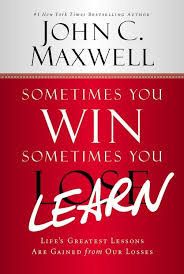
Sometimes You Win—Sometimes You Learn (book review)

Sometimes You WinIf you’re like me, you grew up being able to quickly finish the phrase, “Sometimes you win, sometimes you… lose.” But John Maxwell gives us a far better way to finish this well-worn phrase in his latest book Sometimes You Win—Sometimes You Learn: Life’s Greatest Lessons Are Learned From Our Losses.

As in his other books, Dr. Maxwell shares very candidly about his own missteps, and the lessons he learned from them. He also brings in the insight from other friends and authors who have also learned the value of making mistakes and learning the hard lessons from them.

What always amazes about John Maxwell’s writing is the depth of insight. On the surface you would think there wouldn’t be much to say about learning from our losses except another well-worn cliche, “If at first you don’t succeed, try, try again.” But that try-again spirit is only one part of the learning process. John shows us the value of:

  • Humility
  • Reality
  • Responsibility
  • Improvement
  • Hope
  • Teachability
  • Adversity
  • Problems
  • Bad experiences
  • Change

Following through on all of these aspects leads to the most important step in the learning process: Maturity.

The insight, historical stories, personal anecdotes, and wisdom of other been-there-done-that people are woven together with John’s unique teaching style to give us a book that is highly beneficial. I’d especially recommend this book to parents, coaches and mentors.

I am a Center Street book reviewer.

Thursdays With Oswald—God’s Word In Hard Places

This is a weekly series with things I’m reading and pondering from Oswald Chambers. You can read the original seed thought here, or type “Thursdays With Oswald” in the search box to read more entries.

Oswald Chambers

God’s Word In Hard Places     

To search for a word of God to suit one’s case is never Divine guidance, but guidance by human caprice and inclination. The Holy Spirit Who brings to our remembrance what Jesus has said and leads us into all truth, does so to glorify Jesus Christ. Divine guidance by the Word always makes us realize our responsibility to God…. 

     How often have our misunderstandings of God’s Word proved to us the need for the penetrating words of our Lord, “I have yet many things to say unto you, but you cannot bear them now.” In our prayings, in our desirings, in our patience, does our knowledge of God enable us to say and really mean, “Speak, Lord; for Your servant is listening”? Would we really hear God’s Word, or are we not rather in this immediate tribulation waiting for God to persuade us that our own way is right after all?

From Christian Disciplines

There is a difference between saying, “God get me out of this” and “God, what do You want to get out of this?”

There is a difference between praying, “God, please bless what I’m doing” and “God, please show me what You’re blessing so that I may do it.”

We need to be very careful that we don’t read into Scripture something that will justify what we’re feeling or doing or experiencing. Instead, we need to let the Holy Spirit speak God’s Word to us clearly and without any hidden agenda.

I know your situation may be tough, but don’t try to find a shortcut out of it. Let God accomplish what He wants to accomplish; let His Word be your guide; let the Holy Spirit make that Word come alive to you.

15 Quotes From “Stopping Words That Hurt”

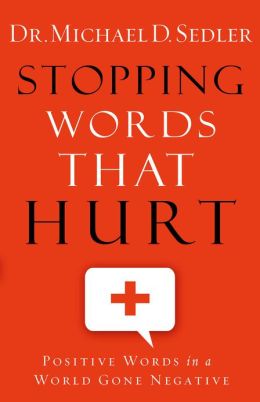
Stopping Words That HurtThere was so much for me to process in Stopping Words That Hurt by Dr. Michael Sedler (you can read my full book review by clicking here). If you’ve ever been hurt by someone else’s words about you, there is help for you in this book. If you’ve ever hurt someone else with the words you’ve spoken, there is help for you in this book.

Bottom line: this book can help cut-off hurtful words and evil reports before they gain momentum. Please read this book!

Here are just a few quotes that stood out to me—

“We are so brainwashed into believing that it is permissible to violate one another verbally that it takes a concentrated effort to begin to have a new thought pattern.”

“It is imperative that you understand this truth: Just listening to an evil report can do tremendous damage to your perspective, viewpoint and overall spirit. … Joining in a negatively-driven conversation, no matter how small the participation, may destroy the testimony of a life. Listening to grumbling and ungodly attitudes eventually contaminates the spirit. The more we allow discontent to be taken in by our spirits, the greater the tendency to compromise our own speech patterns. We are being called to a high standard of living where the rewards for our faithfulness are eternal.”

“It is usual for most of us to listen without questioning. We oftentimes want to support a friend, supervisor or person of influence. In fact, a messenger may single us out because she knows we will not disagree with or question her. Are we being used because of our own gullibility and blindness to negative speech patterns?”

“We must have our antennas up and be prepared when we hear negative comments and subtle innuendos about others.”

“If we are unable to recognize the potential destruction caused by negative words, we will eventually cause injury to those around us. And, sadly, we often deceive ourselves into believing there was justification for our actions.”

“It is rude to knowingly be a part of gossip. It is not good manners to listen to verbal assaults and blatant character assassinations of people who are not present to defend themselves. It is foolishness and ignorance. We must open our eyes and discern when we are listening to evil reports in order to be accepted by the crowd.”

“A bold positive response can put out the fire.”

“Learn to avoid the trap of falling into emotional identification by getting information for yourself. Compare your feelings and thoughts with the Bible’s guidelines. Look for corroboration or contradictions as you assess the situation. And, finally, give a little more weight to the perspective of those who have been faithful, trustworthy and proven people of integrity than the words of a stranger or ‘expert’ who has no track record of honesty.”

“Fear can draw us toward God or pull us away. It can create a desire in us to cling to the truth or alter our perception of the truth. While satan wants to use fear to rob us of our faith in God, we need to continue to speak words of truth and confidence regarding our place with Christ.”

“Impurity occurs when we hear evil reports with our natural ears and minds without seeking spiritual wisdom and understanding. If we accept the words of others as truth, we will become filled with a mixture of philosophies, attitudes and beliefs.”

“A person who has responsibility over others also has great influence. If he or she shares a negative report with the general population, those with unguarded spirits will become contaminated.”

“I speak a strong word of caution to husbands and wives, significant others and close family members. We often take on the offense when a loved one is wronged or slighted. And though they may work through the issue, we still hold on to the anger and bitterness.”

“It is difficult to ‘have ears that hear’ at this point in the process. First of all, we do not see ourselves as defiled or polluted. We think we are right and can handle everything ourselves. We are suspicious about counsel. We question the motives of those giving it. We actually fight the process of cleansing using words such as manipulating, self-centered and controlling to describe the interventions of others. We accuse even our closest friends and supporters of being insensitive and uncaring. Whereas once we received challenges and guidance from others, now we meet each comment or suggestion with disdain and animosity. It is during this phase that people have a tendency to reject the process of cleansing, choosing instead to walk away from purity and to blame and curse others for their lack of support and love.”

“In order to heal with words, we must be willing to be persistent with them. Jesus frequently verbalized His love for His disciples. Once is not enough! Encouragement, praise and positive words continue to feed the soul in the same way water moistures the soil. Soil will eventually dry out and need another dose of fresh water.”

“Great people of God find a way to speak hope into others. They give a sense of purpose, of calling, of future, of destiny to those around them.”

22 Quotes From “The Ragamuffin Gospel”

Ragamuffin GospelThe Ragamuffin Gospel by Brennan Manning really resonated with me. You can read my full book review by clicking here, but below are some of the quotes I especially appreciated.

“The institutional church has become a wounder of the healer rather than a healer of the wounded.” 

“Personal responsibility has replaced personal response. We talk about acquiring virtue as if it were a skill that can be attained, like good handwriting or a well-grooved golf swing. In the penitential seasons we focus on overcoming our weaknesses, getting rid of our hang-ups, and reaching Christian maturity. We sweat through various spiritual exercises as if they were designed to produce a Christian Charles Atlas. Though lip service is paid to the gospel of grace, many Christians live as if only personal disciplines and self-denial will mold the perfect me. The emphasis is on what I do rather on what God is doing. In this curious process God is a benign old spectator in the bleachers who cheers when I show up for morning quiet time.”

“God has a single relentless stance toward us: He loves us. He is the only God man has ever heard of who loves sinners. False gods—the gods of human manufacturing—despise sinners, but the Father of Jesus loves all, no matter what they do.” 

“Jesus comes not for the super-spiritual but for the wobbly and the weak-kneed who know they don’t have it all together, and who are not too proud to accept the handout of amazing grace.”

“The Word we study has to be the Word we pray.”

“We must never allow the authority of books, institutions, or leaders to replace the authority of knowing Jesus Christ personally and directly. When the religious views of others interpose between us and the primary experience of Jesus as the Christ, we become unconvicted and unpersuasive travel agents handing out brochures to places we have never visited.”

“Whatever past achievements might bring us honor, whatever past disgraces might make us blush, all have been crucified with Christ and exist no more except in the deep recess of eternity.” 

“It is unimaginable to picture a wooden-faced, stoic, joyless, and judgmental Jesus as He reclined with ragamuffins.”

“We miss Jesus’ point entirely when we use His words as weapons against others. They are to be taken personally by each of us.” 

“The saved sinner is prostrate in adoration, lost in wonder and praise. He knows repentance is not what we do in order to earn forgiveness; it is what we do because we have been forgiven. It serves as an expression of gratitude rather than an effort to earn forgiveness. Thus the sequence of forgiveness and then repentance, rather than repentance and then forgiveness, is crucial for understanding the gospel of grace.”

“Maybe this is the heart of our hang-up, the root of our dilemma. We fluctuate between castigating ourselves and congratulating ourselves because we are deluded into thinking we save ourselves. We develop a false sense of security from our good works and scrupulous observance of the law. Our halo gets too tight and a carefully disguised attitude of moral superiority results. Or we are appalled by our inconsistency, devastated that we haven’t lived up to our lofty expectations of ourselves. The roller coaster ride of elation and depression continues. Why? Because we never lay hold of our nothingness before God, and consequently, we never enter into the deepest reality of our relationship with Him. But when we accept ownership of our powerlessness and helplessness, when we acknowledge that we are paupers at the door of God’s mercy, then God can make something beautiful out of us.” 

“Honesty is such a precious commodity that it is seldom found in the world or the church. Honesty requires the truthfulness to admit the attachment and addictions that control our attention, dominate our consciousness, and function as false gods. I can be addicted to vodka or to being nice, to marijuana or being loved, to cocaine or being right, to gambling or relationships, to golf or gossiping. Perhaps my addiction is food, performance, money, popularity, power, revenge, reading, television, tobacco, weight, or winning. When we give anything more priority than we give to God, we commit idolatry. Thus we all commit idolatry countless times every day.”

“To be alive is to be broken. And to be broken is to stand in need of grace. Honesty keeps us in touch with our neediness and the truth that we are saved sinners. There is a beautiful transparency to honest disciples who never wear a false face and do not pretend to be anything but who they are. … Getting honest with ourselves does not make us unacceptable to God. It does not distance us from God, but draws us to Him—as nothing else can—and opens us anew to the flow of grace.” 

“When we wallow in guilt, remorse, and shame over real or imagined sins of the past, we are disdaining God’s gift of grace. Preoccupation with self is always a major component of unhealthy guilt and recrimination. … Yes, we feel guilt over sins, but healthy guilt is one which acknowledges the wrong done and feels remorse, but then is free to embrace the forgiveness that has been offered.”

“The evil one is the great illusionist. He varnishes the truth and encourages dishonesty. ‘If we say, “We have no sin,” we are deceiving ourselves, and the truth has no place in us’ (1 John 1:8). satan prompts us to give importance to what has no importance. He clothes trivia with glitter and seduces us away from what is real. He causes us to live in a world of delusion, unreality, and shadows.” 

“At Sunday worship, as in every dimension of our existence, many of us pretend to believe we are sinners. Consequently, all we can do is pretend to believe we have been forgiven. As a result, our whole spiritual life is pseudo-repentance and pseudo-bliss.”

“The way we are with each other is the truest test of our faith. How I treat a brother or sister from day to day, how I react to the sin-scarred wino on the street, how I respond to interruptions from people I dislike, how I deal with normal people in their normal confusion on a normal day may be a better indication of my reverence for life than the antiabortion sticker on the bumper of my car.” 

“A little child cannot do a bad coloring; nor can a child of God do bad in prayer.”

“The call asks, Do you really accept the message that God is head over heels in love with you? I believe that this question is at the core of our ability to mature and grow spiritually. If in our hearts we really don’t believe that God loves us as we are, if we are still tainted by the lie that we can do something to make God love us more, we are rejecting the message of the Cross.” 

“There are some real problems with projecting the perfect image. First of all, it’s simply not true—we are not always happy, optimistic, in command. Second, projecting the flawless image keeps us from reaching people who feel we just wouldn’t understand them. And third, even if we could live a life with no conflict, suffering, or mistakes, it would be a shallow existence. The Christian with depth is the person who has failed and who has learned to live with it.”

“We project into the Lord our own measured standard of acceptance. Our whole understanding of Him is based in a quid pro quo of bartered love. He will love us if we are good, moral, and diligent. But we have turned the tables; we try to live so that He will love us, rather than living because He has already loved us.” 

“No greater sinners exist than those so-called Christians who disfigure the face of God, mutilate the gospel of grace, and intimidate others through fear. They corrupt the essential nature of Christianity.”

The Heavy Responsibility of Shepherding

My dear pastor, our task is not an easy one. It is one of heavy responsibility: Caring for God’s sheep.

They are God’s sheep. They are not your sheep or my sheep. But you and I have been given the stewardship care of God’s precious lambs.

I hope these words God spoken through the prophet Ezekiel don’t describe you. But may all of us pastors take them as a sober reminder of the weightiness of our role as the under-shepherds of God’s flocks…

Then this message came to me from the Lord: “Son of man, prophesy against the shepherds, the leaders of Israel. Give them this message from the Sovereign Lord: What sorrow awaits you shepherds who feed yourselves instead of your flocks. Shouldn’t shepherds feed their sheep? You drink the milk, wear the wool, and butcher the best animals, but you let your flocks starve. You have not taken care of the weak. You have not tended the sick or bound up the injured. You have not gone looking for those who have wandered away and are lost. Instead, you have ruled them with harshness and cruelty. So My sheep have been scattered without a shepherd, and they are easy prey for any wild animal. They have wandered through all the mountains and all the hills, across the face of the earth, yet no one has gone to search for them.

“Therefore, you shepherds, hear the word of the Lord: As surely as I live, says the Sovereign Lord, you abandoned My flock and left them to be attacked by every wild animal. And though you were My shepherds, you didn’t search for My sheep when they were lost. You took care of yourselves and left the sheep to starve. Therefore, you shepherds, hear the word of the Lord. This is what the Sovereign Lord says: I now consider these shepherds My enemies, and I will hold them responsible for what has happened to My flock. I will take away their right to feed the flock, and I will stop them from feeding themselves. I will rescue My flock from their mouths; the sheep will no longer be their prey.” (Ezekiel 34:1-10)

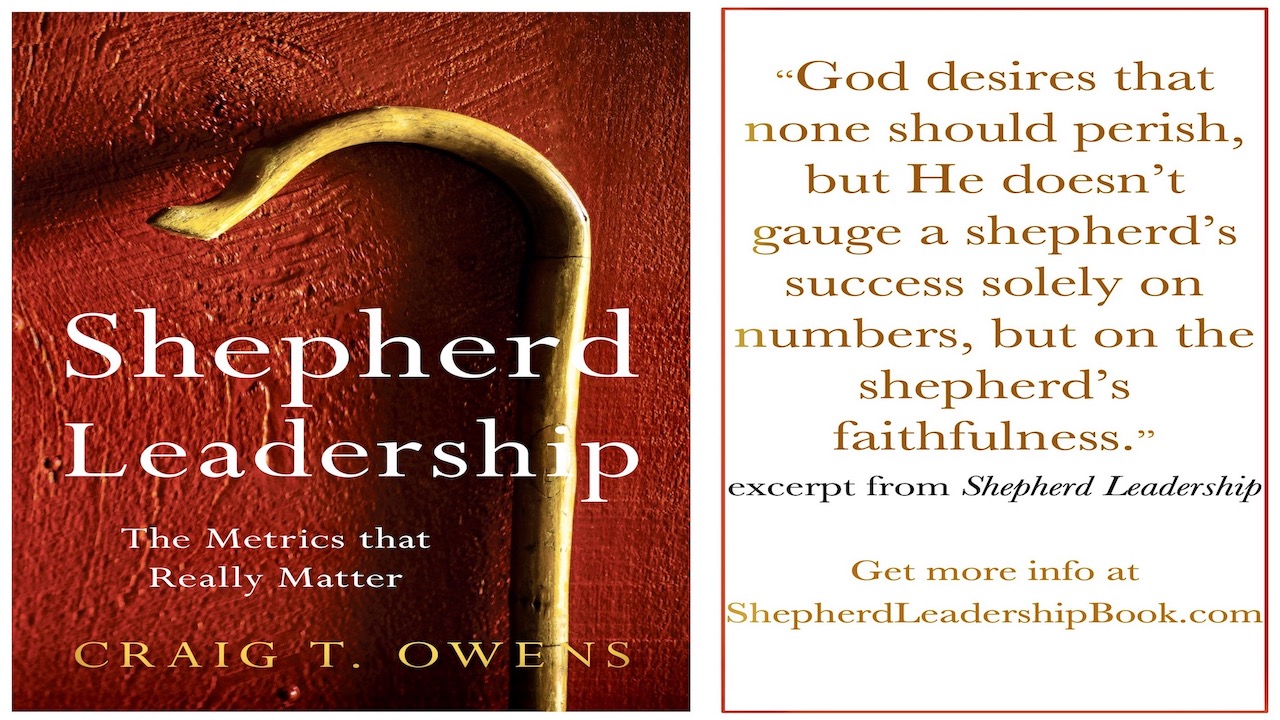
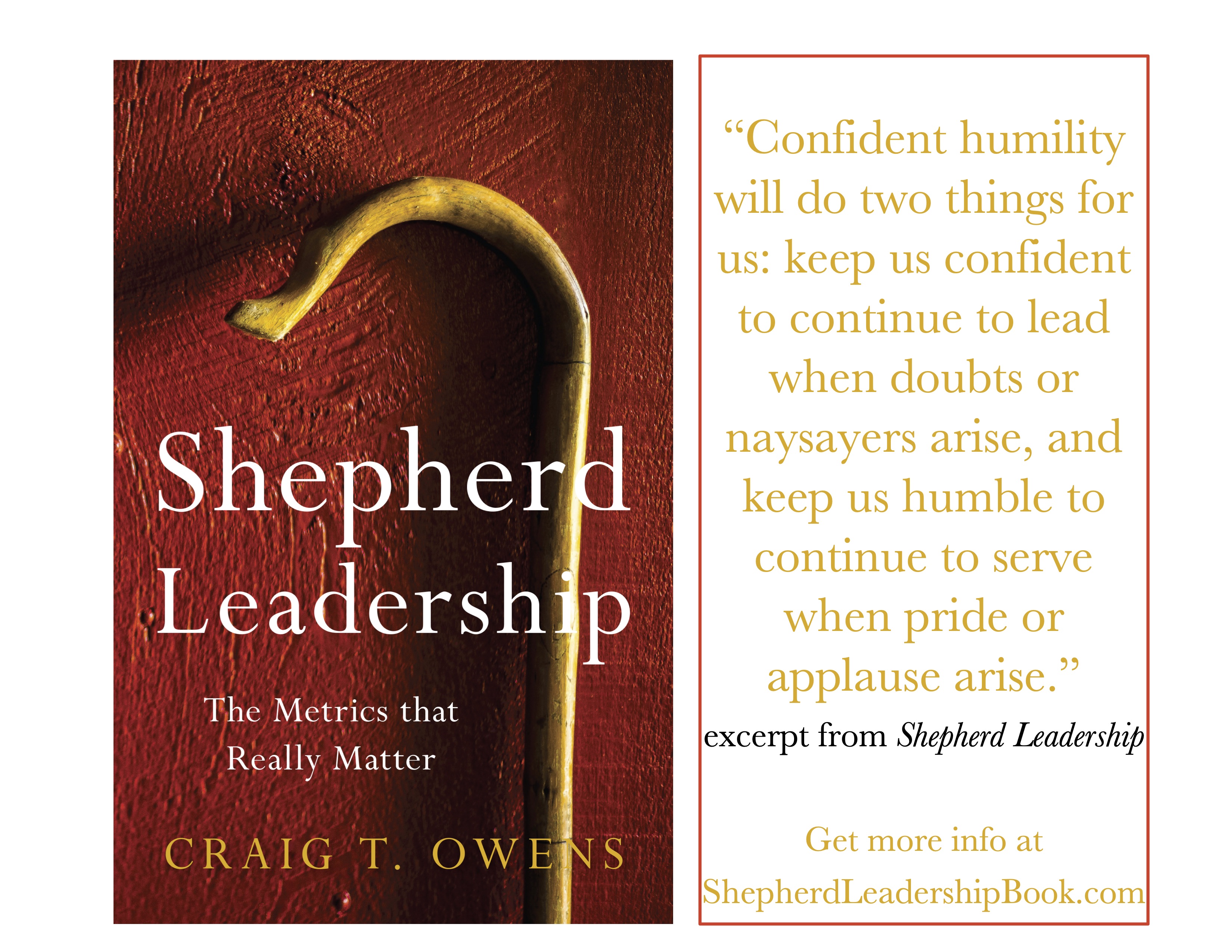
UPDATE: This post was one of the seed thoughts that went into fashioning my book Shepherd Leadership: The Metrics That Really Matter.

Democracy, Immoral Laws, And A Christian’s Responsibility

We know the law is good if one uses it properly. (1 Timothy 1:8)

Whether laws are labeled spiritual or civil, the IF in that verse is very important. Law is intended to restrain unbecoming or immoral activities. Laws are aimed at lawbreakers. But in order for any law to carry weight, it has to be backed up by something more solid than a man’s opinion of what is “right” or “wrong.”

According to Scripture, a law must…

  • …be supported by sound doctrine (1 Timothy 1:10). What defines “sound doctrine” is the word of God, not man-made opinion. Jesus said about the Pharisees, “They worship Me in vain; their teachings are but rules taught by men” (Matthew 15:9). The New Living Translation renders this verse: “Their worship is a farce, for they teach man-made ideas as the commands of God.”
  • …conform to the gospel (1 Timothy 1:11). Literally this means filtered through Scripture. Any law that does not have its foundation set on a biblical principle is, by definition, an immoral, man-made law.

So what is the Christian’s role in the legislative process? I see four responsibilities for Christians:

1. Pray for our elected officials that they would have a God-fearing, biblically-sound perspective in their legislative activities (see 1 Timothy 2:1-2).

2. Stay informed on the law-making activities on both the local, state, and national levels (see Acts 17:11; 1 Chronicles 12:32).

3. Speak out against unbiblical, immoral laws (see Esther 4; 1 Peter 2:17).

4. Disobey immoral laws. The Bible commands us to “give to Caesar what is Caesar’s, and to God what is God’s” (Luke 20:25). We must never give to Caesar what is God’s (see Acts 5:29)!

I love Martin Luther King Jr’s Letter From Birmingham Jail where he addresses Christian pastors about the rightness of peacefully disobeying immoral laws. If you haven’t read this masterpiece, please take time to do so. In this letter, Dr. King wrote:

Over the last few years I have consistently preached that nonviolence demands that the means we use must be as pure as the ends we seek. So I have tried to make it clear that it is wrong to use immoral means to attain moral ends. But now I must affirm that it is just as wrong, or even more, to use moral means to preserve immoral ends.

Christian, you have a responsibility. Pray, be informed, respectfully speak out against immoral laws, and then peacefully disobey when it is necessary.

Strings Attached

Often when someone does something nice for us, we feel a certain obligation to return the favor. What about when God blesses us? Are we obligated to do something back? Are there strings attached to His blessings?

The Israelites left Egypt and were now in a desert, on the way to the Promised Land. Although they were free from slavery, they were also without the daily provision of food that their slave owners had provided them.

And did I mention they were in a desert?!

At this desperate point, the people were seriously thinking about returning to their slave owners.

Then the Lord said to Moses, Behold, I will rain bread from the heavens for you; and the people shall go out and gather a day’s portion every day, that I may prove them, whether they will walk in My law or not. (Exodus 16:4 AMP)

God blessed the Israelites with food, but He wanted something in return: their faithful obedience to Him.

If God has blessed me—and, indeed, He has—He requires me to honor Him with that blessing. Too many people pray and seek God fervently in the ‘lean times,’ and when the answer comes they are thankful only at the moment of blessing. This should not be! God has blessed me so that I will continue to seek Him, and so that I will be a blessing to others.

(Check out what Jesus taught about using the blessings we have been given in Matthew 25:31-46 and Luke 19:12-16.)

So, yes, there are strings attached to God’s blessings. And I want those strings! Without the strings, I am trying to do things my own way; I am severing myself from God, and from His greater future blessings.

“Too Long”?

Check out these words of insight from Seth Godin:

“Too long.” You’re going to hear that more and more often.

The movie, the book, the meeting, the memo… few people will tell you that they ran short.

(Shorter, though, doesn’t mean less responsibility, less insight or less power. It means less fluff and less hiding.)

As a pastor, I laughed when I read few people will tell you that [your sermon] ran short. That is so true!

But Seth’s conclusion is right on target. In the attempt to keep our message at just the right length, we must be cautious of reducing the insight or the power. Instead, get rid of the fluff and the posturing.

A Pastor’s Work

I have blogged before about how heavy I feel the responsibility of being a pastor. When I think of the awesome responsibility God has given me as His under-shepherd to His precious people, I am humbled.

Humility is a good thing.

Since the pastor is “out in front” at every gathering, speaking to the people, leading the church in a particular direction, people tend to view their pastor as their leader. And without humility, the people’s esteem can “puff up” a pastor. Unfortunately, I’ve been around pastors who have gotten a little too, shall I say, “puffy.”

So this dose of godly wisdom from J.C. Ryle is just the preventative medicine I need:

“We should beware of resting our claim to the people’s attention on our outward [pastoral] call only. It will never do to tell our people, ‘We are your ordained ministers, and therefore you must believe and follow whatever we tell you.’ On the contrary, we must tell them to prove our teaching by Scripture, and not to receive it unless it is scriptural. That man has no right to expect the attention of his people, who does not preach the Gospel and live the Gospel. The rule of Paul is clear on this point. He told the Thessalonians to esteem their ministers very highly ‘for their work’s sake’ (1 Thessalonians 5:13). When there is no ‘work’ done, it is vain to expect the people’s esteem.

Pastors, do the work of humbly working as God’s servant to His people. Use your position to serve, not to presume upon others.

Church attendees, make us pastors “prove our teaching by Scripture.” We don’t get to say, “Because I’m the pastor and I say so!”

UPDATE: This post went into my thinking for my book Shepherd Leadership: The Metrics That Really Matter.