How Guys Unintentionally Sabotage Their Relationships

There is a relationship killer that seems to be particularly hard for men. It’s hard because men’s brains are designed in a way that sometimes prohibits them from even seeing this issue.

Bill & Pam Farrel wrote a book called Men Are Like Waffles, Women Are Like Spaghetti. The Farrels identify how men tend to compartmentalize their lives. That is, guys can be so absorbed in one “box” in their life that they are completely oblivious to the other boxes. For instance, when a man is at work he seldom thinks about the other areas of his life (his wife, his kids, the bills that need to be paid, what he’s going to have for lunch).

In addition, men’s brains are also designed to stay in those boxes where things can be quickly fixed. A guy likes fixing things, so the boxes where he can do something and see an immediate result is a box he’s going to keep going back to again and again.

Here’s the trouble… Relationships don’t fit in nice, neat boxes. Neither are relationships something that can be “fixed.” And relationships are never, ever fixed or improved quickly.

So if a guy isn’t aware of these things, he can be unintentionally sabotaging the relationships around him.

King David illustrated this in his unintentional lack of involvement in three of his sons’ lives—

  • Amnon pursued an unhealthy relationship with his step-sister. David got mad but never did anything about it (2 Samuel 13:21).
  • Absalom got revenge for what Amnon did and then fled the country. When David finally allowed him to return to Israel, they never met to resolve what went wrong (2 Samuel 14:28).
  • Adonijah wanted to be king after David, but the Bible says, “His father had never interfered with him by asking, ‘Why do you behave as you do?’” (1 Kings 1:6).

Dave Wills wrote, “We all tend to craft a self-focused view of the world where we emerge as either a hero or a victim in every scene. We’re never the villains in the story. The truth is, though, that we’ve all been the bad guy more often than we’d like to admit. A life of love requires that we look in the mirror and give an honest and humble self-assessment.”

The way to defeat this relationship killer is to become aware of it through humble self-assessment. David learned this truth and shared his prayer with us: “Search me, O God. Show me any areas in my life where I am off-track” (Psalm 139:23-24).

In response to this prayer, the Holy Spirit must have showed David how he had unintentionally starved his relationships with Amnon, Absalom, and Adonijah, because he became highly involved in his son Solomon’s life.

So much so that as Solomon talked to his children about how they should live, he also told them where he had learned how to do this—his father taught him (Proverbs 4:1-4).

Guys, it doesn’t matter how long you’ve been unintentionally in another box. It doesn’t matter how strained the relationship may have become. If you will humbly ask God to search you, reveal to you where you’ve messed up, and ask Him to help you get better … your relationships WILL begin to improve!

Don’t wait another day to pray that “Search me” prayer!

10 Quotes From “Legacy Leadership”

I just finished an outstanding reading plan on YouVersion called Legacy Leadership by Dr. J. Lee Whittington. For anyone interested in the biblical concept of servant-leadership, I highly recommend you check out this reading plan.

Here are a few quotes I especially liked…

“Legacy Leadership is a process of intentional influence that takes place in the context of a relationship.”

“There is a recurring pattern of affirmation and exhortation in Paul’s leadership. He provided a dynamic balance between challenging his followers to grow and acknowledging their progress. He was affirming, but never content.”

“There is a growing trend to attack, criticize, and resent anyone who has talent or achievements that sets them apart from others. This tendency extends to those who resent the efforts of leaders who challenge the status quo. Opponents of change initiatives often attempt to marginalize leaders by attacking their character and questioning their motives. If the messenger is flawed, then the message and vision they offer cannot be trusted. As disappointing as it is, these challenges come with the territory of leadership.

“If I am to lead with integrity, I must always confront my own lack of integrity. This demands a willingness to constantly reflect on my motives and the courage to confront my own hypocrisy. It also requires me to allow myself the discomfort of inviting the scrutiny of both the Lord and others who care enough to confront me about my motives, my attitudes, and my behavior.”

“The most effective leaders are able to exert influence without asserting their formal authority. … Paul deliberately chose to forego the legitimate, reward, and coercive power inherent in his position. Instead, he leaned into another base of power: referent power. Referent power is based on respect and admiration. When this is present, the followers identify with and want to emulate their leader. This power base does not come from the leader’s position or control of resources. Rather, it is based on the leader’s character and integrity. Referent power is based on who the leader is.”

“Legacy Leaders do not lead from a distance. They imitate Jesus who said, ‘I am among you as one who serves’ (Luke 22:27). They are comfortable sharing their lives with their followers.”

“The best relationships between a leader and their followers are those that are characterized by a great deal of mutual trust and shared information. The responsibility for creating this type of relationship rests squarely on the shoulders of the leader.”

“Authentic leaders have a seamless link between their values and their actions. But the congruence between values and attitudes is just the starting point for authentic leadership.  From the perspective of scripture, a leader’s attitudes and actions must be anchored to God’s standards. When a leader’s enacted values are in congruence with their espoused values, and those espoused values are in turn anchored to God’s principles, the leader had moral authority.”

“It’s easy to critique the authenticity of others.  But, if we are really serious about developing our own authenticity, we must focus on ourselves. I read this statement several years ago: ‘If we are to be people of integrity, we must constantly confront our lack of integrity.’”

“Legacy Leaders embrace the principles of servant-leadership and understand that the conscious choice to lead comes after the desire to serve. This inclination is not natural. It must be energized by continuous reliance on the empowering presence of God’s Spirit.”

Comparisons Are Killers

It is always a thrill for me to watch a young leader excel so wonderfully! Yesterday I listened as our youth pastor Josh Schram brilliantly illustrated a key component that can kill relationships or build them up.

Trust me: Josh’s opening illustration is worth the watch in the video below!

Here are a few takeaways I had from Josh’s message…

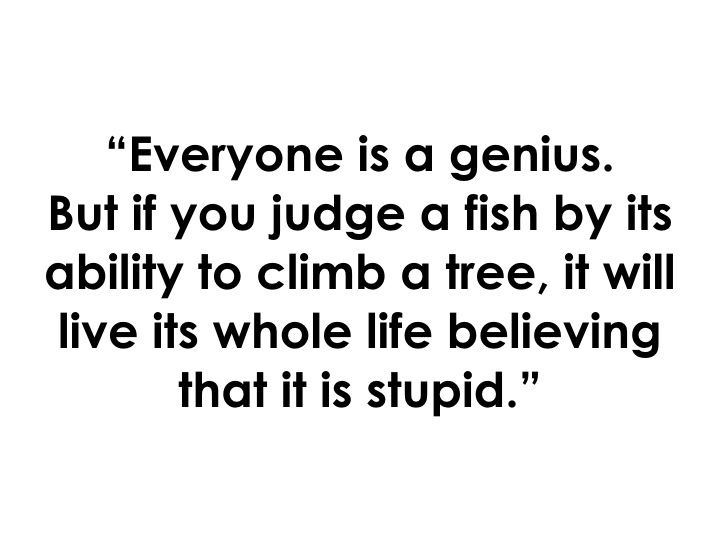
A relationship killer is comparing yourself to others. 

Comparing yourself to others may make you feel superior to them or inferior to them, but neither of these feelings serve a useful purpose, and neither of them honors God.

The fastest way to kill something God is doing in your life is to compare it to what He’s doing in someone else’s life.

When we compare someone else’s highlight reel to our behind-the-scenes mess, it makes us feel less than what God intends because it always increases dissatisfaction. Remember: living this way is comparing yourself to an artificial standard.

Notice how God speaks to us as individuals—Make a careful exploration of who you are and the work you have been given, and then sink yourself into that. Don’t be impressed with yourself. Don’t compare yourself with others. Each of you must take responsibility for doing the creative best you can with your own life. (Galatians 6:4-5, emphasis added)

A relationship builder is examining yourself.

Jesus ran His own race, and we are called on to remove any obstacles that keep us from running our own race too (see Hebrews 12:1-2).

  • Run your own race.
  • Stay in your lane.
  • Stay focused on Jesus.

No one can be a better you than you.

Remember: someone else’s success is NOT your failure (see 1 Corinthians 12:12-26).

I need to ask myself: Am I being the best me I can be with what God has equipped me to be? If the answer is “yes” then everyone else gets better!

Don’t compare your relationship with God or with other people to others’ relationships. Instead, examine yourself to make sure you are being the best you God created you to be!

13 Quotes From “No Limits”

John Maxwell has a unique and gifted way of challenging his readers to move forward by giving them both the motivation and the practical steps to do so. No Limits is no exception. You can check out my full review of his book by clicking here. Below are the first set of quotes from this book that I would like to share with you.

“What stops people from reaching their capacity often isn’t lack of desire. It’s usually lack of awareness.”

“Sad is the day for any man when he is absolutely satisfied with the life that he is living, thoughts that he is thinking, deeds that he is doing, until there ceases to be forever knocking on the door of his soul, a desire to do something greater for God and his fellow-man.”

“Dysfunctional people want others to function on their level. Average people want others to be average. High achievers want others to achieve.”

“Emotionally strong people honor their relationships while at the same time guarding against letting others control them, especially in difficult relationships.”

“What’s the fastest way to make a relationship better? Make yourself better so that you have more to give. That requires an abundance mind-set.”

“How can we make things better? If you’re already successful, this is a fantastic question to ask yourself and your team. Anytime we’re successful, there is a temptation to be lulled into a feeling a false security, to believe that we have arrived. But the greatest detriment to continual success is relying on past success.”

“No one has ever had to work at limiting their capacity. That happens naturally. The world tries to talk us out of working hard. We convince ourselves that we can’t get ahead. We feel down, and we watch our lives go downhill. There are even people who will tell you that others have put you there, that the system is rigged, that successful people have pushed you down and have gotten to the top by stepping on you. Well, I have good news for you … Your production capacity is within your own control.” 

“No one has ever stayed the same, while at the same time rising to a higher level. Being willing to change is one of the prices we pay to grow.”

“Repeated choices to take responsibility give you mental and emotional momentum, which only makes you feel stronger and better about yourself.”

“Everyone sees people’s success without realizing that 90 percent of what leads to it is unseen, yet that 90 percent is what makes it possible.”

“The bottom line is that you cannot manage your life if you do not manage yourself. You cannot maximize your capacity if you cannot increase your discipline.”

“Resilient people don’t focus on the negative experience. They focus on what they can learn from the experience.”

“Winning is overrated. Growing is underrated.”

I will be sharing another batch of quotes from No Limits soon, so stay tuned. To check out other quotes I share daily, please follow me on Twitter and Tumblr.

True Beauty vs. Pornography

God’s design for sex is truly the most beautiful thing that exists between two people. Its counterfeit is called pornography. Porn is simulated, imitated, and purchased; but no price tag can ever buy true beauty.

God demonstrates the purest love in Himself, when one part of the Godhead is the Lover and the other parts of the Godhead are the Beloved. The Lover is constantly discovering the beauty in the Beloved, and then praising that beauty. The Beloved then reciprocates back to the Lover. It’s a love dance! 

Humans are created in God’s image. We are first created to be God’s beloved. Then we are designed to be both lover and beloved in the bonds of marriage. True beauty—real, lasting beauty that pleases God—is discovered. It’s something that starts inside and radiates outside. A true lover takes the time to discover who the beloved truly is.

To see this in action, just look at some of the compliments between husband and wife in the Song of Songs—How beautiful you are, my darling! Oh, how beautiful! … How handsome you are, my lover! Oh, how charming! … Like a lily among thorns is my darling among the maidens. … My lover is mine and I am his. … All beautiful you are, my darling; there is no flaw in you.

True love that sees this kind of beauty cannot be imitated, purchased or simulated. If someone attempts to, it’s called pornography.

The dictionary gives this definition of pornography: sexually explicit materials whose purpose is to elicit sexual arousal. In other words, porn tries to imitate and simulate true beauty at a purchase price.

Jesus identified this sell-out of true love with the Greek word porneia (see Mark 7:14-23). This word means any sexual involvement outside the marriage between a husband and wife. Porneia comes from words that fill out its definition: things like prostitution, idolatry, and slavery.

Your body was not made for porneia but for God (1 Corinthians 6:13). You were made in His image: to be His Beloved, and He your Lover, and then to have a marriage relationship with another image-bearer of God, where you are both lover and beloved, and where you focus on true beauty.

Anything else is imitated, purchased, and simulated. It’s pornography. It’s idolatry.

Christians are told to fight many temptations, but there are only two that we are told not to fight, but to flee: pornography (1 Corinthians 6:18) and idolatry (1 Corinthians 10:14). So our prayer for the purity and enjoyment of God’s true beauty should be: Turn my eyes away from worthless things (Psalm 119:37).

Don’t sell out to the fake beauty in pornography. Discover true beauty exclusively in your spouse!

We’ll be looking at more relationship builders and killers, and I’d love to have you along for this journey of discovery.

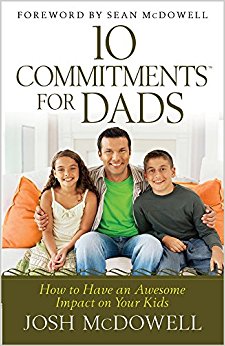
10 Commitments For Dads (book review)

With Father’s Day just around the corner, I’ve got a great book that every Dad needs to check out. Think of this book from Josh McDowell as a Father’s Day gift you will give to yourself and to your family. The book is called 10 Commitments For Dads.

Whether you are a soon-to-be-Dad, a rookie Dad, a veteran Dad, or a Granddad, there is always more to learn and more to do for our kids. Since God has placed His precious children under our care, it’s wise to seek practical, biblically-sound counsel to help us do the best we can. Right at the outset of this book Josh lists seven objectives Dads need to strive for before our kids leave home:

  1. Form a right relationship with God
  2. Develop healthy relationships with others
  3. Have a healthy self-image
  4. Resist sexual pressure
  5. Be a person of integrity
  6. Develop deep and convictions
  7. Know how to handle success and cope with failure

This requires some diligence on a part, beginning with listening to the wise advice Josh shares in this book.

A commitment is not a guarantee, but it is rooted in a strong passion to do the very best that we can do. As Josh leads us through these 10 commitments, you will learn from some of Josh’s successes and missteps, you will learn what the Bible has to say, and you will learn the “whys” behind the “how-to’s” of fatherhood.

10 Commitments offers no quick-fixes for fatherhood, but it does offer hope for those Dads and Granddads who are willing to let God help them do their very best. I would encourage you to also use this book as a discussion starter. You will need the help of your wife, a friend, or a pastor to be at your very best, and the concepts presented in this book are great starting points for evaluations and conversations with your helpers.

Go get this book for yourself, Dad, and then enjoy many, many happy Father’s Days!

I am a Harvest House book reviewer.

What If We Had Higher Expectations?

Humans are hardwired by God to be in relationship with Him and with others.

  1. God is a Triune God so each part of the Godhead is in relationship with the other parts—John tells us in his epistle that God is love, meaning there is both a Lover and a Beloved.
  2. We are created in God’s image—we are made to love and be loved.
  3. God affirmed our need for relationships with others—see Genesis 2:18.
  4. Relationships with others give us a return on investment, help in trouble, encouragement in dark times, and protection from attack—see Ecclesiastes 4:9-12.
  5. Christians being in healthy relationships with others is a testimony to just how powerful God’s love is.

Sadly, Brennan Manning pointed out that Christians “have come a long sad journey from the first century, when pagans exclaimed with awe and wonder, ‘See how these Christians love one another!’”

When I read this, I don’t want to throw in the towel, but I want to reclaim this awe and wonder! 

One of the things that will quickly kill relationships is having low expectations for the other person or for the relationship itself. This can be counteracted by having higher expectations for other people and for our relationships with them.

John Maxwell noted, “People rise or fall to meet our level of expectations for them. If you express skepticism and doubt in others, they’ll return your lack of confidence with mediocrity. But if you believe in them and expect them to do well, they’ll wear themselves out trying to do their best.”

Consider the high expectations that God had for a relationship with us. If He had low expectations, one of the best-known verses in the Bible would be, “God thought a few people in the world had something worth saving, so He sent a handful of angels to tell us His story.”

Instead, the verse tells us: God so loved the entire world that He sent the very best that He had—He sent His One and Only Son!

  • Jesus died for us when we were unworthy of His love
  • Jesus gave us all His authority to represent Him in the world
  • Jesus empowered us with His Holy Spirit to be His witnesses
  • Jesus told us that our love for others would be a blazing sign to that we were His

Since God has this high expectation for us … what would happen if we had the same high expectations for everyone with whom we came into contact? What would happen if we believed the best for everybody, and then gave all that we could to bring the best out of them? I think that once again people would exclaim with awe and wonder,

“See how these Christians love one another!”

We will be talking more about Relationship Builders & Killers this Sunday and I would love if you could join me!

Relationship Builders And Killers

C.S. Lewis reminds us that there is no such thing as a neutral encounter with other people…

“It is a serious thing to live in a society of possible gods and goddesses, to remember that the dullest and most uninteresting person you talk to may one day be a creature which, if you saw it now, you would be strongly tempted to worship, or else a horror and a corruption such as you now meet, if at all, only in a nightmare. All day long we are, in some degree, helping each other to one of these destinations.” —C.S. Lewis

Wow! Think about it: Relationships with other people are what helps us and others grow toward heaven or shrink toward hell.

Fortunately the Bible has a lot to say to us about relationship builders and relationship killers. The builders help us form and nurture relationships that honor God and move others forward, and the killers destroy potentially life-giving relationships while dishonoring God’s design for us.

I hope you will join me this Sunday at Calvary Assembly of God as we begin to identify both the relationship builders that can help us grow, and the relationship killers that are holding us back. It’s going to be an eye-opening journey!

If you missed any of the messages in this series, you can check them out here:

11 Quotes From “Peace In The Face Of Cancer”

This book is a MUST READ for anyone who has been diagnosed with cancer, or is a caregiver to someone with cancer. Lynn Eib’s Peace In The Face Of Cancer will give you insight and encouragement for your journey. Check out my book review by clicking here, and then enjoy a few quotes below.

“We always want people to give us the benefit of the doubt or cut us some slack, but we have to admit, it’s not always easy to do the same for others—especially when our world as been rocked by something as life-threatening as cancer. Our emotions are fragile, our bodies are hurting, and our spirits can be wounded easily. … Nevertheless, if we want to find peace in the face of cancer, sometimes we will have to hear people’s hearts and ignore their words (and perhaps their actions, too).”

“There is a much more reliable source of truth and good news no matter what you’re facing. I guarantee it has the kinds of hopeful words you will want to reverberate through your brain. That source is the Word of God. (For example: Psalm 119:28; Proverbs 1:33)

“God designed us to need each other and to be able to offer one another our talents, our gifts, our insights, and our special brand of encouragement. Please don’t let those differences become a wedge in your relationships. One of the primary ways satan discourages families and friends facing cancer is to get us at odds with one another. Don’t let that deceiver win.”

“Be a friend. Be a shoulder. Be a hugger. Be an asset. Please just be there and God will be there.

If you do this you will be the giver of the greatest gift a suffering friend needs—presence without fixing; love without an agenda.”

“The most loving thing you may do for your loved one today is to be good to yourself. … Do something to lift your spirits so afterward you can once again lift someone else’s.”

“Please don’t surrender to cancer. Even if it ultimately takes your life or your loved one’s life, you never have to become submissive to it. Cancer is not in charge. Those errant cells are not calling the shots. This disease is not in control. God is.”

“Quit searching for life’s Ctrl+Z button and stop pretending you could be in charge of it all. Go ahead and give up the control stick and declare with the psalmist, ‘My future is in Your hands’ (Psalm 31:15). Trust the only One who is all-knowing, all-seeing, and all-powerful. He will lead you into all your tomorrows.”

“No matter what havoc cancer wreaks on your body, it does not have the final say. Those who have everlasting life never lose their battle with cancer because if God doesn’t take the cancer out of them on earth, He takes them out of the cancer and home to Heaven.” 

“Don’t fix your eyes on what is seen. Don’t fix them on pathology reports or CT scans or bloodwork or insurance bills or cancer statistics or anything else you can see. No matter what this life brings, fix your eyes on what is unseen.”

“Your purpose in life never changes. It is the same whether you or your loved one has a lot of cancer, a little cancer, or even no cancer. Your purpose in life—and mine—is to know God and love Him more, and to help others know God and love Him more.” 

I will be sharing more content from this phenomenal book soon. Stay tuned…

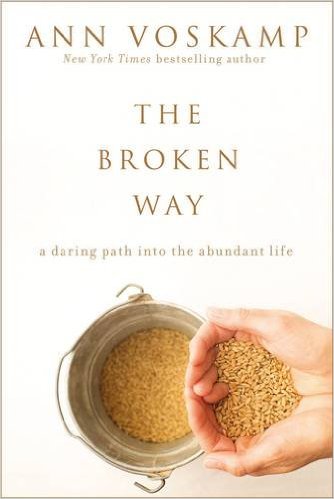
13 More Quotes From “The Broken Way”

Ann Voskamp’s book The Broken Way is a whole new way of looking at pain, disappointment, shortcomings and brokenness. You’ve got to read this book! You can check out my full book review by clicking here.

“The only way to the abundant life is to love the right things in the right ways.”

“The self is ultimately never really sacrificed in giving, but our real self is ultimately found.”

“Sacrifice isn’t so much about losing what you love, but giving your love on to whom you love more. When you sacrifice for what you love, you gain more of what you love.” 

“What matters most is not if our love makes other people change, but that in loving, we change.”

“Be the bread so broken and given that a hungry world yearns for more of the taste of such glory. Be bread so broken and given to a hungry world that your own hunger is filled in communion with God.”

“Until you see the depths of brokenness in you, you can’t know the depths of Christ’s love for you.”

“Reduce repentance to a single act at the beginning of your Christian life and you reduce your whole Christian life to an act.” 

“Relationships only get to exist as long as they keep breathing in the air of mutual forgiveness.”

“The best investment of your life is to love exactly when it’s most inconvenient.”

“The greatest danger to our soul is not success or status or superiority—but self-lies. When you listen to the self-lies hissing that you’re unlovable, unacceptable, unwanted, that’s when you go seeking your identity in success or status or superiority and not in your Savior. Self-lies are the destroyer of the soul because they drown out the sacred voice that can never stop whispering your name: Beloved.”

“Every belittling of self is a belittling of God, a kind of blaspheming of God’s sufficiency and enoughness.”

“Grace embraces you before you prove anything, and after you’ve done everything wrong. Every time you fall down, at the bottom of every hole is grace. Grace waits in broken places. Grace waits at the bottom of things. Grace loves you when you are at your darkest worst, and wraps you in the best light. Grace seeps through the broken places and seeps into the lowest places, a balm for wounds.”

“Believers in Christ are seen by God exactly as Christ is seen by God.”

You can check out the first set of quotes I shared from The Broken Way by clicking here.