(1) God allows the humble to know Him more intimately. For though the Lord is high, yet has He respect to the lowly—bringing them into fellowship with Him—but the proud and haughty He knows and recognizes only at a distance (Psalm 138:6).
(2) God gives the humble help to overcome evil. But He gives us more and more grace—power of the Holy Spirit, to meet this evil tendency and all others fully. That is why He says, “God sets Himself against the proud and haughty, but gives grace continually to the lowly (those who are humble enough to receive it)” (James 4:6).
(3) God gives His favor to the humble. …Clothe (apron) yourselves, all of you, with humility—as the garb of a servant, so that its covering cannot possibly be stripped from you…. For God sets Himself against the proud—the insolent, the overbearing, the disdainful, the presumptuous, the boastful—and He opposes, frustrates, and defeats them, but gives grace (favor, blessing) to the humble (1 Peter 5:5).
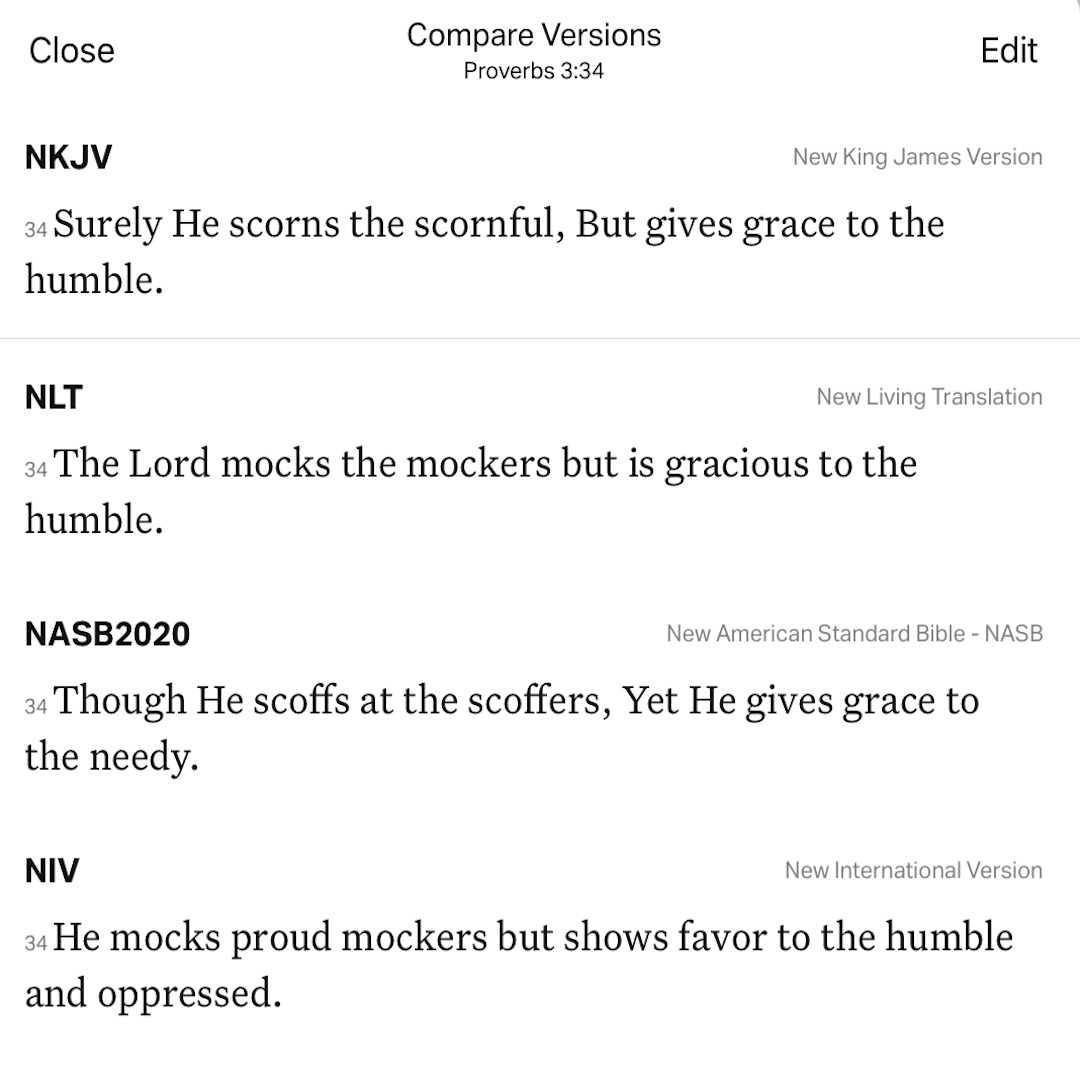
The bottom line—God mocks proud mockers but shows favor to the humble and oppressed (Proverbs 3:34).
Listen to the podcast of this post by clicking on the player below, and you can also subscribe on Apple, Spotify, or Audible.
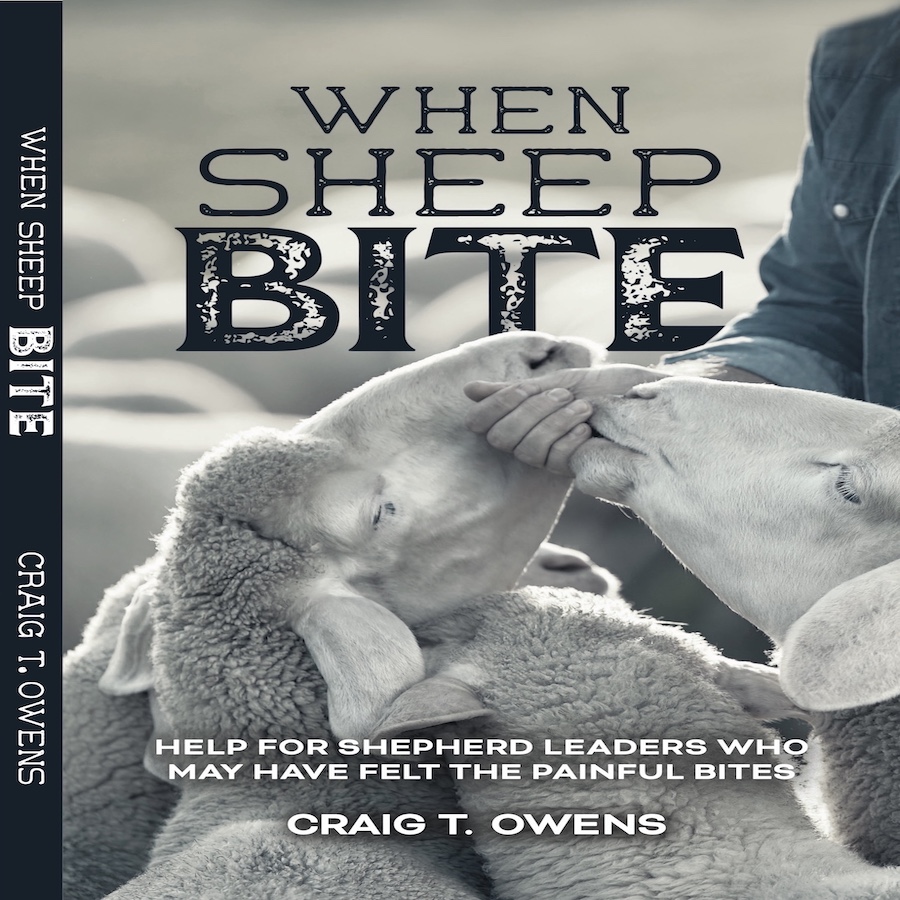
My book When Sheep Bite is a manual of help for church leaders who have been hurt by the very sheep they are attempting to help. This book was birthed from a very painful chapter in my own ministry.
But as dark as that time was, there was a ray of light that helped me to smile during the dark times and for years and years afterwards. Here is an excerpt from the chapter ‘Cry Before Your Confront’ in When Sheep Bite—
We used to have a funny saying in our family. Our puppy would be straining to get free and one of us would cry out, “Release the hound!”
After reading the previous chapter about imprecatory prayers, and hopefully putting that into practice, I hope you felt some relief from your anger. But when you read my reminder that David’s “Get ‘em, God!” cry was for God’s ears only, perhaps you were a little disappointed. Maybe you were hoping for someone to give you a green light to “release the hound” on those biting, kicking, and wayward sheep.
Wouldn’t it be so wonderful to unleash something—anything!—on those difficult sheep? As shepherds, we have so many ways we can dress up our unleashed hounds in biblical-sounding language. Maybe a righteous rebuke like the psalmist recorded: “You rebuke the arrogant, who are accursed, those who stray from Your commands” (Psalm 119:21). Or perhaps a well-timed prophetic thunderbolt like when Samuel was praying and “the Lord thundered with loud thunder against the Philistines and threw them into such a panic” (1 Samuel 7:10). Or even a strategic lightning strike from God’s throne as when the soldiers from King Ahaziah came to forcibly take Elijah to the king (2 Kings 1:11-12).
One of my favorite prayers is a prayer of David’s that is given added emphasis since it is recorded twice in the Scripture (2 Samuel 22 and Psalm 18)—
In my distress I called to the Lord; I cried to my God for help. From His temple He heard my voice; my cry came before Him, into His ears. The earth trembled and quaked, and the foundations of the mountains shook; they trembled because He was angry. Smoke rose from His nostrils; consuming fire came from His mouth, burning coals blazed out of it. He parted the heavens and came down; dark clouds were under His feet. … Out of the brightness of His presence clouds advanced, with hailstones and bolts of lightning. The Lord thundered from heaven; the voice of the Most High resounded. He shot His arrows and scattered the enemy, with great bolts of lightning He routed them. (Psalm 18:6-9, 12-14)
Wow, how good it must have felt for David to unleash these words! And yet we still see that they were words only for God’s ears, spoken when David was alone with the Almighty God. Isn’t there something we can say or do to our obstinate sheep? Yes, there is, but there is something we need to be reminded of first.
After a particularly grueling day of being bitten, kicked, and attacked by the angry sheep in my pasture, I came home and announced, “Tomorrow is ‘Be Kind to Craig Owens Day!” While driving home and licking my wounds, I had determined that I needed a day off—a day to unplug from all of the madness and make sure I was taking care of myself.
Let me add a very important truth here. In fact, it’s so important that I’m going to print it in bold letters: Self-care is not selfish! Far too many shepherds think that taking time off to care for themselves, especially in the midst of all of the chaos, is a selfish thing to do.
Selfish is different. Selfishness is self-centered. Selfishness is saying, “I’m going to take care of myself and I don’t care what happens to others while I’m doing what I want to do.” Self-care is a strategic withdrawal to take care of myself so that I can return to take care of others. It is like the instructions on an airplane to put your own oxygen mask on first before you try to help a small child with their mask. If I pass out, I’m no good to anyone else. Just as Jesus “often withdrew to lonely places and prayed” (Luke 5:16), we must find times to care for ourselves so that we are strengthened to help others when we return to the fray. This concept of self-care is so vital that I have dedicated all of Chapter 12 to explaining this idea to you in more depth.
My family still celebrates the Be Kind to Craig Owens Day “holiday” but we mainly remember it because of something else that happened in our family.
On this inaugural event, I planned a day of reading, praying, walking, and recuperating. I silenced my phone and withdrew for that entire Friday. After a nice evening with my family, I decided to extend my self-care time into Saturday. My daughter and I went out to breakfast, and because we both enjoy animals so much, we decided to stop into a new pet store and play with the puppies for a while.
Almost instantly, both of us were captivated by a very special dog. There was something about her that drew us to her. In short order, we were on the phone with my wife and my sons asking them to join us at the pet store. We ended up walking out of the store that morning with a new addition to our family.
My wife later remarked that this puppy was the best irresponsible decision we ever made. Part of the reason this was true is that this puppy became my constant companion. I took her to my office with me so that I would have a source of unconditional love to offset all of the brutal attacks I was absorbing.
When John Bradford saw a cartful of men going off to Tyburn to be hanged for their crimes, he said to a friend, “There goes John Bradford but for the grace of God.” When I stopped to think what was different between my behavior and the behavior of these biting sheep, I realized it was only the grace of God that had kept me from descending into the same ugly behavior. That’s when I decided to name our new puppy Grace. I wanted to say that name over and over and over again. I desperately needed to be reminded of God’s grace for me. I also needed to be reminded that God wanted my biting sheep to know His grace too.
When we cried out, “Release the hound,” it was because Grace was straining at her leash to overwhelm someone with her love. She wanted nothing more than to show them how much she welcomed them into her presence.
I’ll be honest with you: When some of my biting sheep came storming into my office to berate me for something and Grace wanted to run to them with love and acceptance, I wanted to scold her and keep her back. This, I think, was the attitude of the older brother when his wayward brother returned home and was lovingly welcomed back into the fold by their father (Luke 15:11-32). But when I paused to think of God’s amazing grace that “saved a wretch like me,” I was reminded that God’s grace also wants to restore other wayward, obstinate, unreasonable sheep.
Our annual reminder of this event is really remembering our dog Grace’s “Gotcha Day.” It’s our annual reminder that grace is best seen in times and places that it is least expected.
If you are a church leader, please pick up a copy of When Sheep Bite to help you on your healing journey. And if I can be of assistance to you, please get in touch with me.
Listen to the podcast of this post by clicking on the player below, and you can also subscribe on Apple, Spotify, or Audible.
I don’t know when the last was that you may have tried to get a dozen little kids lined up, but it’s quite an experience! Everyone is vying for their spot. Someone gets mad and yells out, “He cut!” And then the reply is yelled back, “No, I didn’t. She was saving my spot!” This usually results in lots of pushing and shoving as each person tries to reclaim their rightful place in line.
This is the backdrop for Psalm 7. The introduction tells us that Cush is causing David grief. Maybe because Cush is from the tribe of Benjamin like King Saul, and he doesn’t want David cutting in line so he is shoving him back to his proper place.
There’s a musical term David uses, which isn’t used in any other psalm: shiggaion. This means a rhythm that isn’t normal—it’s a freewheeling, irregular, impassioned beat. This also helps set the atmosphere for what’s happening in David’s life. The root word for shiggaion implies a shakeup (or a shoving and pushing) that could lead to someone losing their way.
David tries to do the right thing. He asks for God’s help (v. 1) so that he doesn’t get ripped to shreds (v. 2). He even takes time to ask himself if he has done anything that led to Cush’s shoving (vv. 3-5). But notice these are all David’s attempts to make things right.
Remember that this is a Royal Psalm, but we haven’t heard anything about God as King yet. But now we come to the end of v. 5, which is also the end of David’s own striving. It’s marked by the word Selah.
My little friends push and shove to try to get their place. But all of that stops when I say, “Johnny is my line leader, and this is the way the rest of you are going to line up behind him.” David’s Selah pause was a call to switch from doing things on his own to yielding to the King to sort things out. He was saying, “The King of kings is the Leader and He knows my place in line.”
It’s only after the Selah that we see the royal terms for the Undisputed Leader:
He is the One who will decree justice (v. 6)
He will rule…from on high (v. 7)
He is the Supreme Judge (vv. 8, 11) so David yields his introspection to Him (vv. 3-4, 8-9)
He is God Most High (vv. 10, 17)
Our King has no rival. No one can shove Him. No one can contradict Him. No one can hide anything from Him (vv. 11-16).
We must bow only to the King of kings (Philippians 2:10-11).
We mistakenly bow our knee to man when…
…we aren’t willing to own our mistakes
…we try to administer our own “shove” of justice
…we make our own refuge
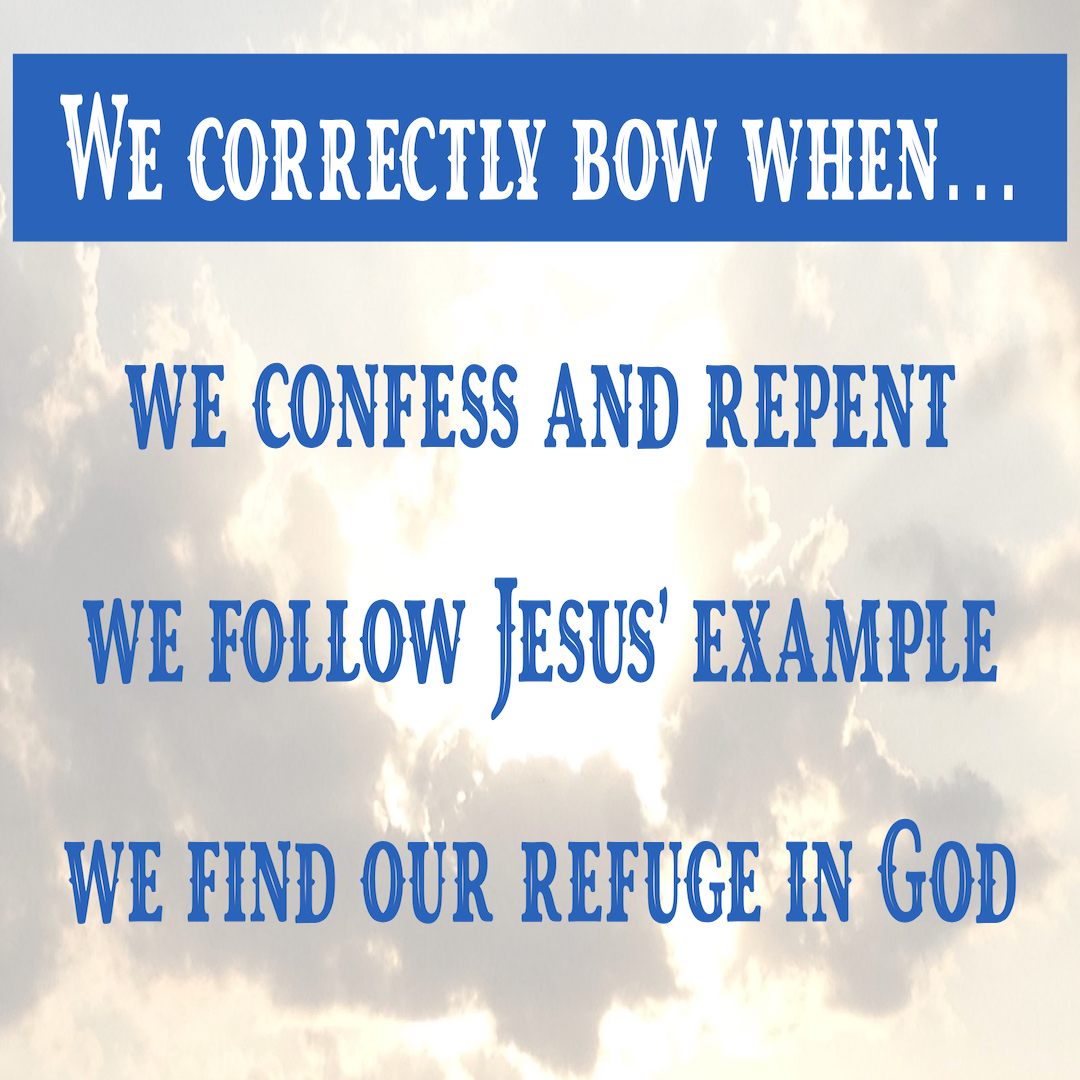
So we bow to the King when…
…we acknowledge, confess, and repent of our sins (vv. 3-5; Psalm 19:12, 69:5)
…we follow the example of Jesus when we’re shoved around (1 Peter 2:21-23)
…find our refuge solely in God (v. 1; c.f. 2:12; Ephesians 6:12; James 4:7)
Our best response in troublesome times—when you feel like you are being shoved around—is to fall to your knees in reverence to the King of kings (v. 17)! The beloved of the Lord shall dwell in safety by Him; He covers him all the day long, and makes His dwelling between his shoulders (Deuteronomy 33:12 AMPC).
Listen to the podcast of this post by clicking on the player below, and you can also subscribe on Apple, Spotify, or Audible.
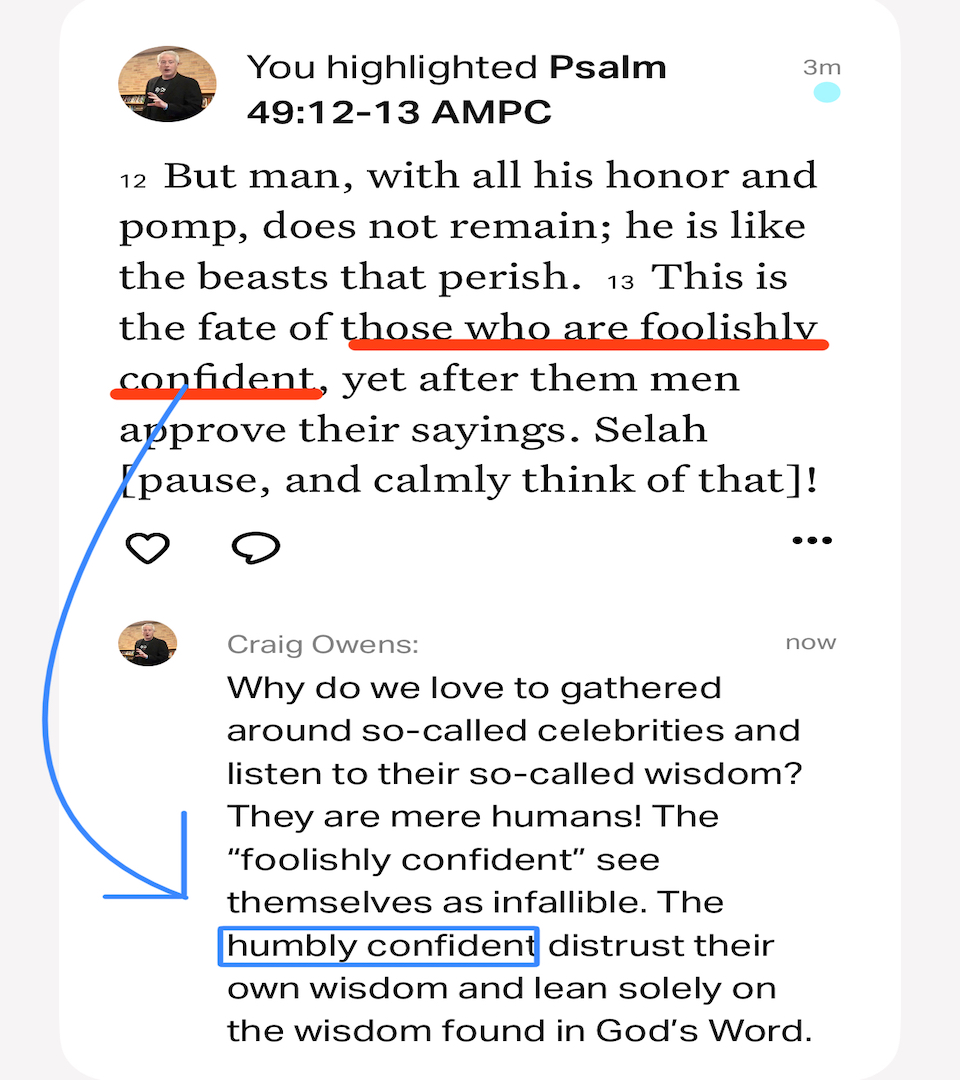
We live in a celebrity-obsessed culture. Sadly, this unbiblical pursuit has infected our churches too. Let’s talk about this on this episode of The Podcast.
In my book Shepherd Leadership, I have two chapters that address a godly leader’s confident humility and humble confidence. You can also check out several blog posts on videos on this subject by clicking here.
Listen to the podcast of this post by clicking on the player below, and you can also subscribe on Apple, Spotify, or Audible.
There are several psalms that are regal in their focus—talking about the King’s coronation, or the King ruling on His throne, or the ultimate victory of the King that is coming in the future. Although these royal psalms are extolling God as King, many of these psalms use King David as an object lesson. The idea is seeing how a man after God’s heart (1 Samuel 13:14) became the standard by which all other kings were measured:
Asa did what was right in the eyes of the Lord, as his father David had done (1 Kings 15:11)
Amaziah did what was right in the eyes of the Lord, butnot as his father David had done (2 Kings 14:3)
Unlike his father, Ahaz did not do what was right in the sight of the Lord, as his father David had done (2 Chronicles 28:1)
The people followed their king in both righteousness and evil. They were fiercely loyal to their monarch. We don’t really get that loyalty today. “We’re Americans,” we cry, “We live in the land of the free and don’t ever bow our knee to a king!”
That’s an appropriate response for those living in a democratic republic, but we would do well to learn to bow our knee to a true King.
After the United States Constitution was adopt adopted, Elizabeth Willing Powel asked Benjamin Franklin, “Well, Doctor, what have we got, a republic or a monarchy?“ Franklin replied, “A republic, if you can keep it.” Franklin went on to say, “In these sentiments, Sir, I agree to this Constitution, with all its faults, if they are such; because I think a General Government necessary for us, and there is no form of government, but what may be a blessing to the people if well administered; and believe further, that this is likely to be well administered for a course of years, and can only end in despotism, as other forms have done before it, when the people shall become so corrupted as to need despotic government.”
Because of our defiance as free people in our government, we have become lacking in our loyalty, which shows itself in a lack of proper reverence or respect. Just listen to how people talk so disrespectfully or even hatefully about those in “the other political party.” Benjamin Franklin also said, “Only a virtuous people are capable of freedom. As nations become corrupt and vicious, they have more need of masters.”
Where are the days of the armor bearer who said to Prince Jonathan, “Do all you have in mind. I’m with you heart and soul,” even though Jonathan was proposing an impossible task? Or the loyalty of the men around David who heard him sigh about the water in Bethlehem, and they put their lives at risk to bring him a drink? This was even before he was on a throne, and yet they showed their loyalty to him. I fear that our lost culture of reverence for earthly leaders has eroded our reverence for the King of kings, and vice versa.
The first royal psalm (Psalm 2) practically open the Psalter. This psalm calls us to consider the differences between earthly kings and the King of kings.
Notice that earthly kings “conspire”—they angrily boast and rage. They plot (v. 1b) and scheme (AMPC). They take their stand together (v. 2).
Against Whom? Against the LORD (Jehovah) and against His Anointed One (the Messiah)!
Much like the fiercely independent people I described us as earlier, these earthly rulers want to call their own shots—they don’t want to take directions from anyone else because they think they know best (v. 3). But notice in v. 1 that the peoples have followed their leaders in their plot.
God doesn’t rage at them, but He laughs, He scoffs, He rebukes, and the people are terrified when they realize that they cannot overcome Him. In v. 1 we see their plots are “in vain.”
There is nothing men can do—no matter how powerful they may seem or how many of them “take their stand…together”—to thwart or even delay the plans of Jehovah.
All of History is His Story. Notice the phrase that God speaks, “I have … I will” (in vv. 6-7; c.f. Daniel 4:25).
In vv. 7-9 God speaks to His Son—the Messiah, the Anointed One, the King of kings. We hear this repeated in Acts 13:32-33 and in God’s own voice in Matthew 3:17. Then we see the fulfillment of this in passages like Philippians 2:9-11 and Revelation 11:17-18.
This royal psalm ends with an important conclusion: Therefore (vv. 10-12):
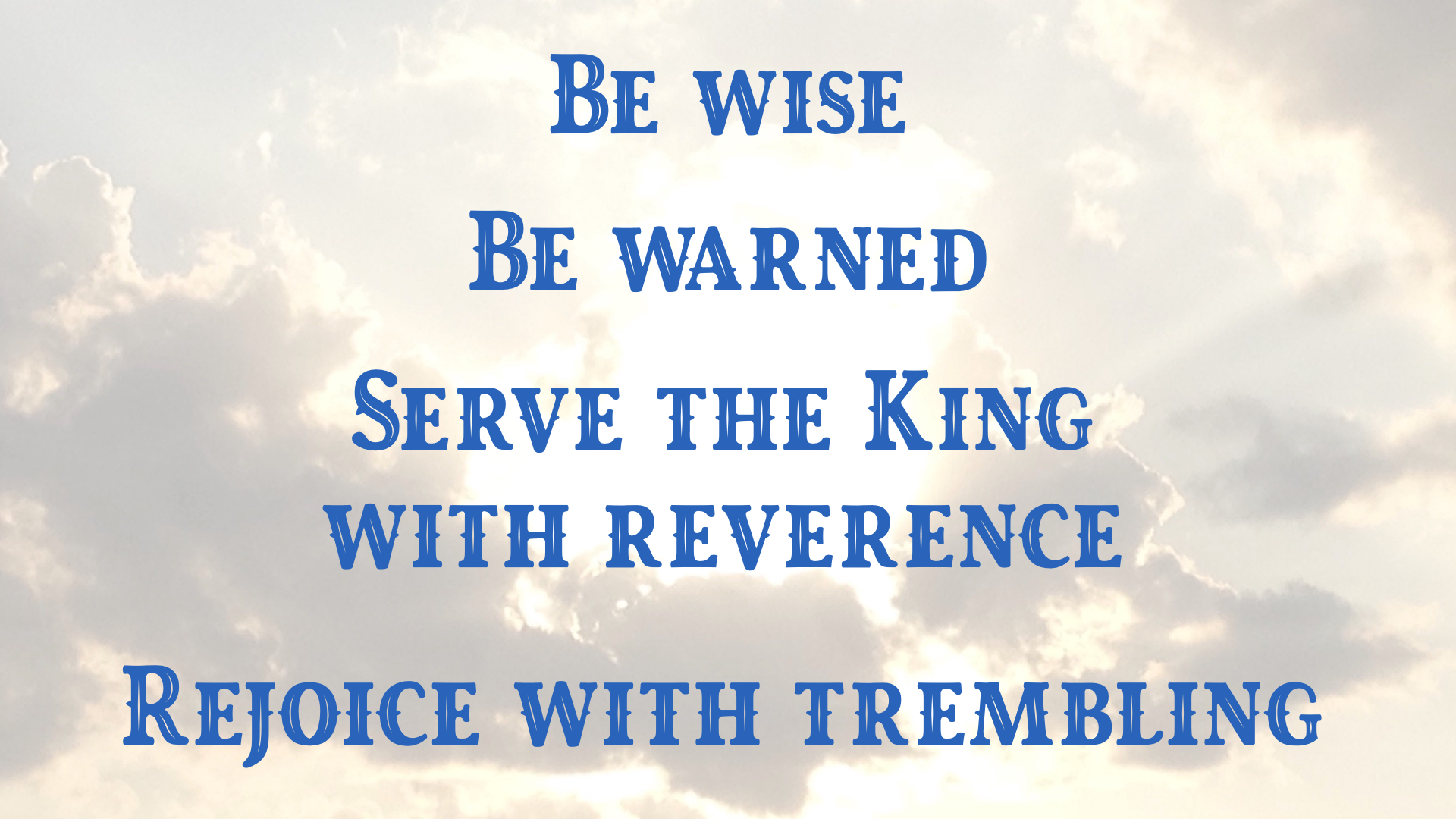
Be wise
Be warned
Serve the King with reverential fear
Rejoice with trembling
Kiss the Son with absolute loyalty and joyful reverence
Check out another “therefore” in Philippians 2:12-16. This is a call for righteous, reverent living for those who have acknowledged Jesus as their King. It’s only those who live this way who will know the blessed refuge in Him that is unshakable for ever and ever!
Follow along with our look at all of the royal psalms by clicking here.
People need to know how much you love them before they will listen to any correction you may need to give them. “Real friends hurt each other.”Check out the full sermon here.
David Mathis shares a faith-building message of confidence during times of crisis. He takes his text from Psalm 46—“Whatever trouble comes, Psalm 46 tells us, with its first word, where to turn. Not to a change in circumstances. Not to our best efforts to fix the problem. Not to our anxious strategies to avoid pain and loss. But rather, turn to God.”
“There is not a facet of our lives, not an interest or occupation, not a nook or cranny of the cosmos, where God does not intend that His glory should shine forth and be known. Indeed, even now He is showing His glory in created things, and even in much of the culture that human beings make to meet their own needs (Psalm 19:1-4; Psalm 68:18). God is manifesting His glory; it is there to be noted and pondered. The task of those entrusted with the Kingdom economy is to serve as docents of the glory of God, bringing His glory to light and making Him known for all to see in these last days. … Our mission in these last days is to glorify God by living out the reality of His indwelling Presence among the people to whom He sends us day by day (cf. Micah 4:1-8). In all our relationships, cultural activities, conversations, families, vocations, and diversions, what will it look like, and how will it appear to others when the glorious Presence of God is being refracted through us?” —T.M. Moore
“The resurrection of Jesus from the dead was the one unvarying refrain of the apostles. This chapter [1 Corinthians 15] is the fullest discussion of it in the New Testament. It is one of the most significant and grandest chapters in the Bible because of the meaning it gives to human life. …The resurrection of Jesus from the dead is the one most important and most established fact in all history. And the story of it has come down to us through the centuries, beautifying human life with the halo of immortality; making us feel sure that because He lives again we too shall live; making our hearts thrill with the thought that we are immortal, that we have begun an existence that shall never end; that nothing can harm us; that death is merely an incident in passing from one phase of existence to another; that wether here or there we are His, doing the thing He has for us to do; that millions of ages after the sun has grown cold, we ourselves shall still be young in the eternities of God.” —Dr. Henry Halley
Would you like to get better sleep and lower your stress levels? Check this out: “If you share a bed with your sweetie, consider incorporating this step into your nighttime routine if you aren’t already: a snuggle sesh…. A study found that couples who cuddled prior to drifting off experienced less stress and more feelings of security in the relationship.”
“The Bible tells us to love our neighbours, and also to love our enemies; probably because they are generally the same people.” —G.K. Chesterton
John Piper is asked an interesting question from Ephesians 6:12—are our adversaries merely flesh-and-blood humans or are demonic forces at work? “Flesh and blood apart from Christ is always under the sway of the spirit of the age, and it’s always under the sway of the prince of the power of the air, and it’s always acting out of its own bodily, mental desires. Therefore, in one sense, there is no separation in our warfare with human sinfulness and demonic schemes. They overlap; they’re intertwined.”
The Bible closes with a vivid picture of Jesus as the undisputed King of kings, and we look forward to that time when all creation bows before Him. Even more so, we cannot wait to be with our King for ever and ever!
The psalmists of Israel also foresaw the coming of this King, especially in the example they had in their King David. Many of the poetic words they penned esteemed Jesus as the King for Whom they longed. David himself not only saw the future coming of the Eternal King, but he also looked back in time to see Jesus reigning as King before time began.
It is these royal psalms that we will be studying as we celebrate the first arrival on Earth of our King and as we anticipate the second coming of our Royal Majesty. The more clear our vision is of this King, the more we will worship Him, follow Him, and invite others to know Him as their own Lord and Master.
Listen to the podcast of this post by clicking on the player below, and you can also subscribe on Apple, Spotify, or Audible.
When I say a rebuke can be loving, let me start off with this reminder: People need to know you truly love them before they will pay attention to a rebuke. If they don’t know you love them and want the best for them, your rebuke will simply make them angry and may create an uncrossable chasm between you.
Nathan was the prophet who confronted David with his sin, saying, “You are the man!” (2 Samuel 12:1-7). Nathan not only took his life into his hands by speaking so boldly against King David, but he risked the lives of his family as well.
Thankfully, David acknowledged his sin, repented, and asked forgiveness (2 Samuel 12:13; Psalm 51:3-12). Instead of being banished, Nathan was honored. In fact, we see Nathan faithfully serving in King David’s inner circle even after the king is dead and King Solomon ascends to the throne.
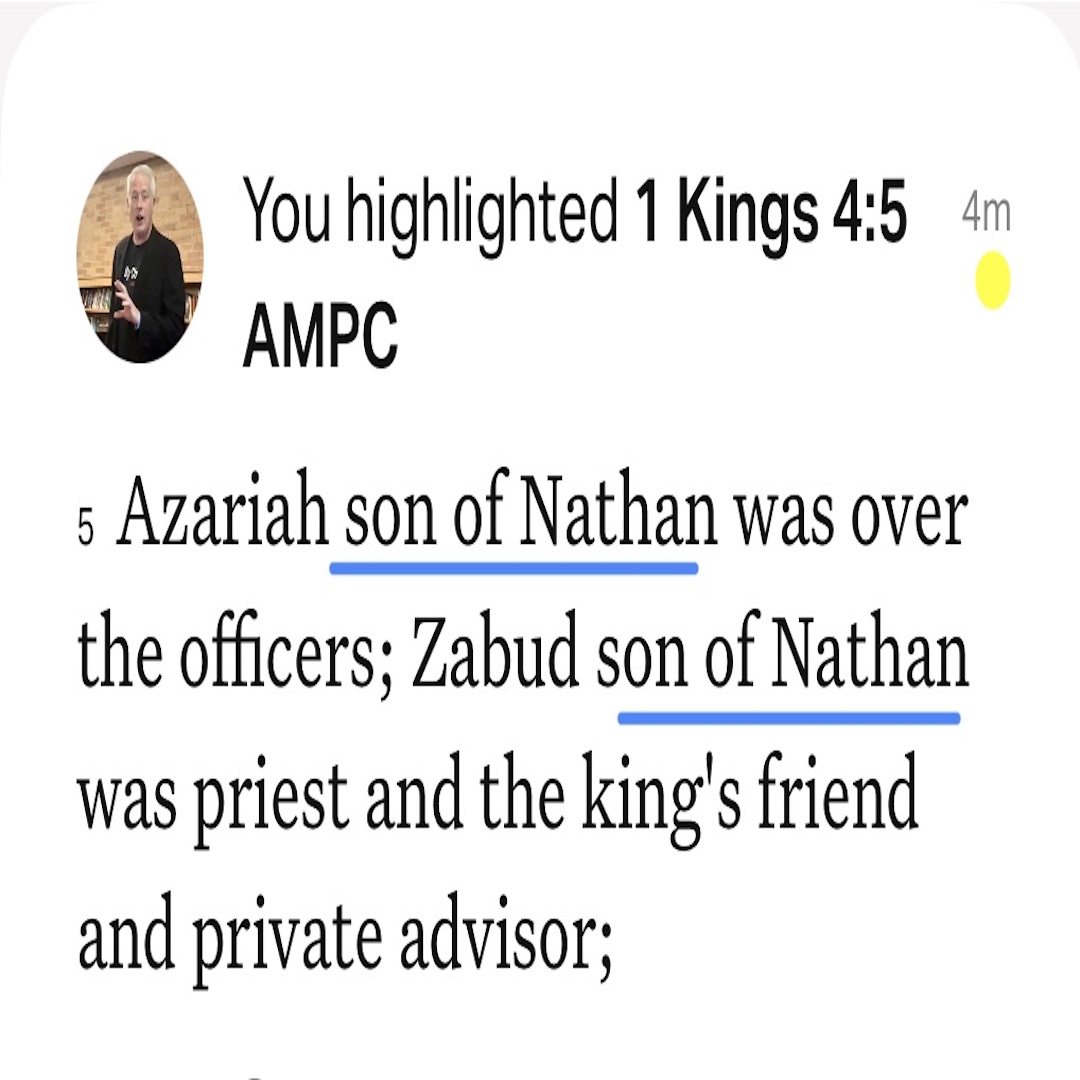
And then during the reign of King Solomon, two of Nathan’s sons are honored with prestigious positions in Solomon’s court. “Azariah son of Nathan was over the officers; Zabud son of Nathan was priest and the king’s friend and private advisor” (1 Kings 4:5).
Solomon wrote, “He who rebukes a man shall afterward find more favor than he who flatters with the tongue” (Proverbs 28:23).
We must speak the truth in love. Not so that we are rewarded here (because that may or may not happen), but because God has called us to this. And He keeps perfect records so that we will be rewarded in Heaven.
Listen to the podcast of this post by clicking on the player below, and you can also subscribe on Apple, Spotify, or Audible.
I would like you to think about a wise, loving friend. One who has years of godly wisdom, empathy, loads of patience, and loving boldness. When you talk with them, you know that you will always get good counsel—even if you may not like exactly what they have shared with you, deep down you know it is still sound wisdom. This is what the Holy Spirit—as our Counselor—does for us.
The Holy Spirit is not merely a force, but He is a Person. Jesus Himself give the Spirit the pronouns “He / Him / His.”
I especially want to key in on those last two attributes where the Holy Spirit is speaking to us.
Samuel grew up during the time of the judges, where everyone did whatever they thought best. This is a time that is described like this, “In those days the word of the Lord was rare; there were not many visions” (1 Samuel 3:1). Visions in the Hebrew language is two words: open communication. In other words, people just weren’t listening for God’s voice.
Samuel had to learn to hear God’s voice as well (see this passage and all of the other biblical references in this post by clicking here).
God doesn’t reveal His heart to those who are unwilling to obey. His persistent call is for obedience to His Word and reliance on His provision. So the word of the Lord had to be revealed to Samuel (v. 7). When Samuel said he was listening (v. 10), that was a posture of readiness to obey.
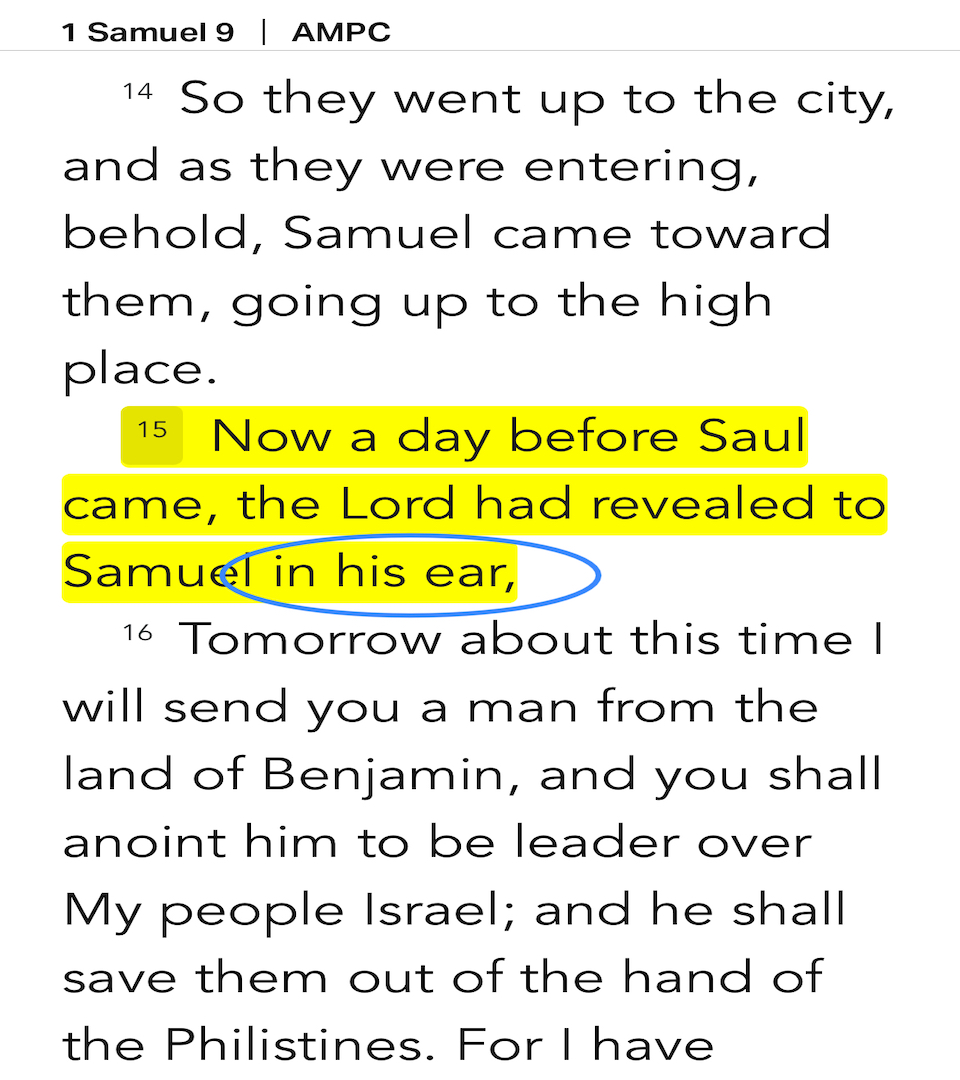
God wants to reveal His heart to His obedient people. I love how God does this later for Samuel, “Now the Lord had told Samuel in his earthe day before Saul came…” (1 Samuel 9:15).
This is how Jesus described the Holy Spirit in John 7:37-39, as streams that flow continuously out of our being. And Jesus also calls Him Counselor (John 14:16).
Isaiah described our Counselor like this, “Whether you turn to the right or to the left, your ears will hear a Voice behind you, saying, ‘This is the way; walk in it’” (Isaiah 30:21).
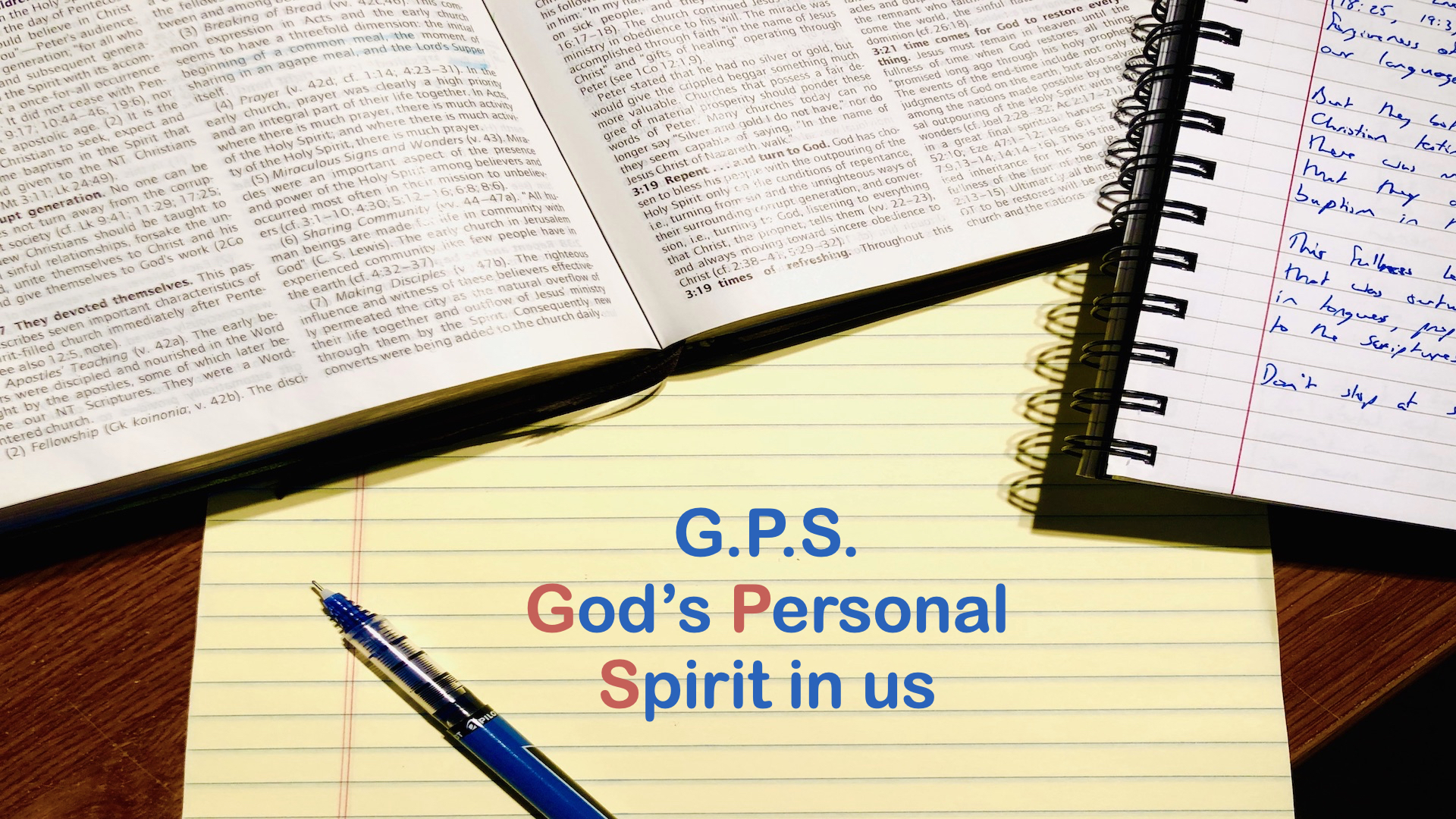
Let’s call this GPS = God’s Personal Spirit in us!
Those who are baptized in the Holy Spirit—utterly yielded to His wisdom—will experience:
More insight into God’s Word—Psalm 119:18
More timely application of God’s Word—2 Timothy 3:16-17
More boldness in prayer—2 Samuel 7:27 (same word for in his ear as Samuel experienced)
All Christians have a deposit of the Holy Spirit in their lives at the moment of salvation. The baptism in the Holy Spirit is a completed yielding to the Counselor’s influence. So don’t stop at salvation, but ask Jesus to send you what the Father has promised (Luke 24:49; Acts 2:33).
Check out all of the messages in our series leading up to Pentecost Sunday by clicking here.
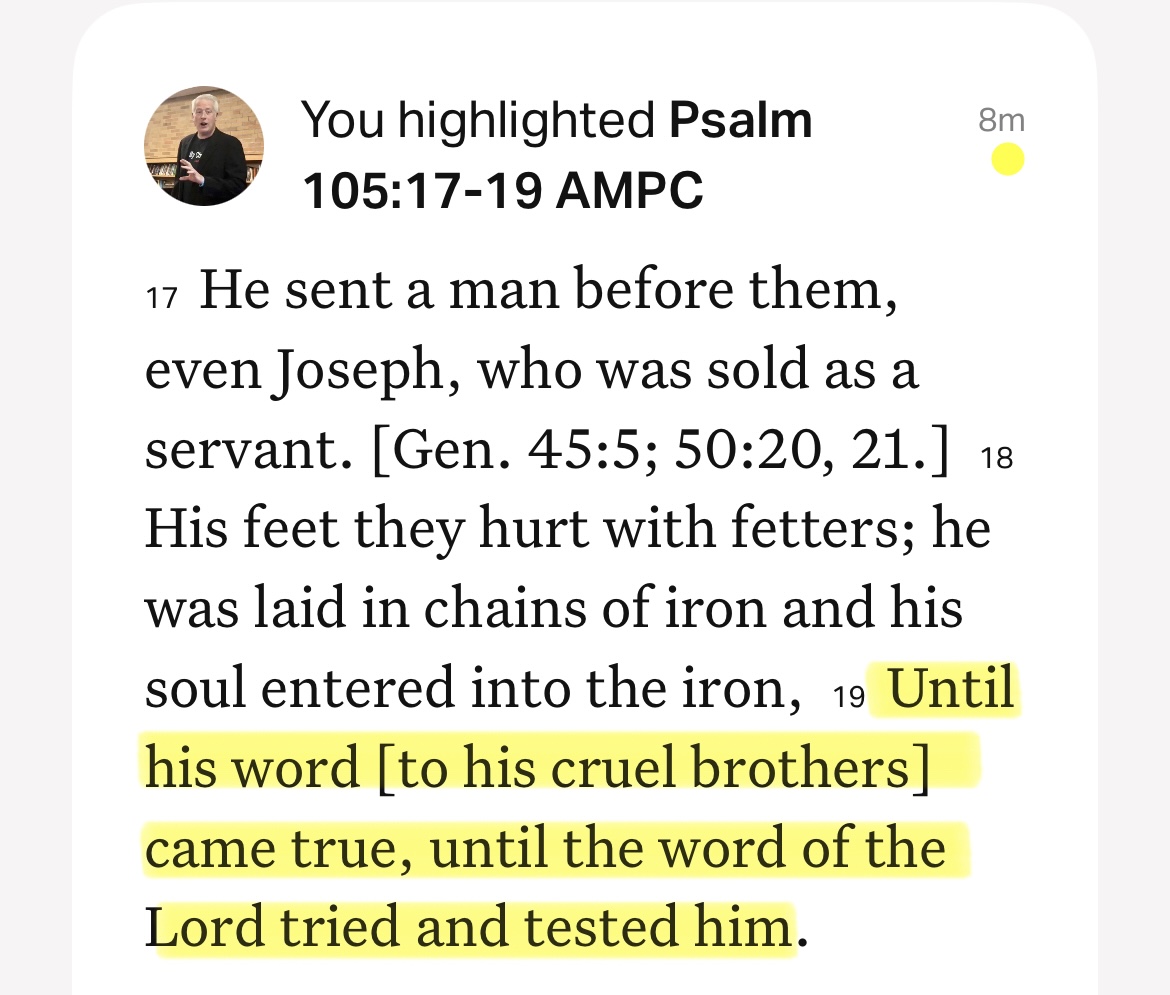
Moreover, [God] called for a famine upon the land of Egypt; He cut off every source of bread [Genesis 41:54]. He sent a man before them, even Joseph, who was sold as a servant [Genesis 45:5; 50:20, 21]. His feet they hurt with fetters; he was laid in chains of iron and his soul entered into the iron, until his word to his cruel brothers came true, until the word of the Lord tried and tested him. The king sent and loosed him, even the ruler of the peoples, and let him go free. He made Joseph Lord of his house and ruler of all his substance [Genesis 41:40]. To bind his princes at his pleasure and teach his elders wisdom. (Psalm 105:16-22 AMPC)
“The word of the Lord tried and tested him.” When we cling to God’s promises despite the seemingly impossible circumstances we are in, that faithful clinging matures us. It both softens our heart and strengthens our trust in God.
Before going through the difficulties, Joseph wasn’t ready to operate effectively in such a lofty leadership position. God uses all things to mold us and shape us for His purpose (Romans 8:28). We certainly see a more mature Joseph standing before Pharaoh than we saw interacting with his brothers earlier in his life.
God called Joseph and he prepared Joseph. All that was lacking was Joseph’s faithful clinging to God and yielding to God’s maturing process. The end result was one of the most impactful leaders that history has ever known!



 (1) God allows the humble to know Him more intimately. For though the Lord is high, yet has He respect to the lowly—bringing them into fellowship with Him—but the proud and haughty He knows and recognizes only at a distance (Psalm 138:6).





 Craig T. Owens