Kept To Keep

Listen to the podcast of this post by clicking on the player below, and you can also subscribe on AppleSpotify, or Audible. 

Last week I reminded you that the main point in Hebrew literature is usually found in the middle. In Psalm 121 that would be the first phrase of verse 5: The Lord watches over you. 

But I notice something that seems contradictory in the New Testament. Whereas the message here is, “God watches over you,” the message in some New Testament verses seems to be, “You watch over yourself” (see for example Matthew 26:41; 1 Thessalonians 5:6; 1 Timothy 4:16). Paul even said to the Christians at Corinth, “I worked harder than all of them” (1 Corinthians 15:10). 

So which is it: Is God watching over us or are we to watch over ourselves? It’s actually both, but something important has to come first. We cannot watch over ourselves unless we are assured that the Lord is watching over us to sustain us. 

Okay, I was being a bit sarcastic when I said those verses seemed contradictory, as I clearly quoted them out of their context. For instance, in that statement from Paul in 1 Corinthians, check out the full verse, “But by the grace of God I am what I am, and His grace to me was not without effect. No, I worked harder than all of them—yet not I, but the grace of God that was with me.” Paul is clearly saying that he could only work hard because he was empowered by God’s grace. Notice that it is decidedly not the other way around: Paul doesn’t say, “I worked hard to earn the grace of God.” 

Remember that these psalms of ascent remind us of our upward look and our upward journey. We need to keep our eyes on the prize, which is God Himself (Psalm 121:1-2). Using the apostle Paul’s life as an example again, he said something very similar—

Not that I have already obtained all this, or have already arrived at my goal, but I press on to take hold of that for which Christ Jesus took hold of me. Brothers and sisters, I do not consider myself yet to have taken hold of it. But one thing I do: Forgetting what is behind and straining toward what is ahead, I press on toward the goal to win the prize for which God has called me heavenward in Christ Jesus. (Philippians 3:12-14) 

The middle verse of Psalm 121 foretells what appears six times in just eight verses: the Hebrew word samar. Depending on the translation of the Bible, this word is either “watch over” or “kept.” In either case, the meaning is a concentrated focus, not turning aside to the left or the right, not distracted, eyes on the ultimate prize. And all six of these instances are God’s unwavering, loving focus on us. In this song, we are told: 

  • God never slumbers or is even momentarily distracted (vv. 3-4) as opposed to other deities that were thought to sometimes be unavailable to their worshippers (see 1 Kings 18:27). Instead, our God watches us so closely that He notices if even a single hair falls from our head (Matthew 10:30-31). 
  • God stands beside us to protect our places of vulnerability (vv. 5-6). The Amplified Bible says, “The Lord is your shade on your right hand—the side not carrying a shield.”
  • God keeps us from the entrapment of evil (v. 7). Jesus told us that He was praying this way for us so we can have confidence to pray this for ourselves (Luke 22:32; Matthew 6:13).  
  • God protects us as His most precious treasure. David uses this same word samar in Psalm 17:8, “Keep me as the apple of Your eye; hide me in the shadow of Your wings.” 
  • God is our eternal Protector. The last phrase of this psalm says He watches over us “both now and forevermore” (v. 8).  

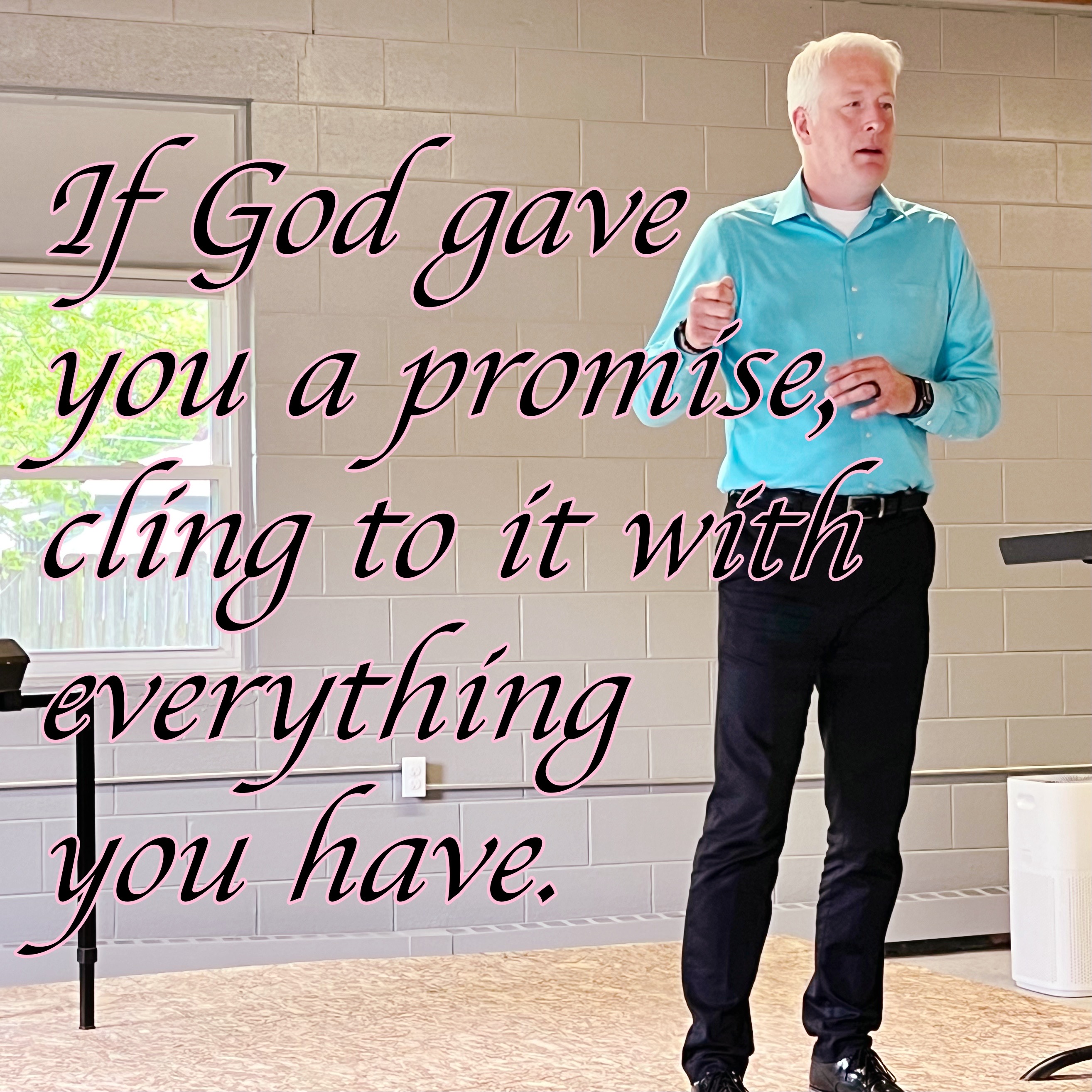
The other places the word samar is used in the Bible is a call for us to keep God’s commands. But just as we saw with Paul that he was committed to running his race well because he was assured of the prize Jesus had secured for him, so for us, we can only keep God’s commands because we are kept secure by God. 

Because we are kept by God we can keep His commands. In Deuteronomy 4, Moses applies the word samar to God’s people. We are to..

  • keep the commands of the Lord (v. 4) 
  • watch ourselves closely so we don’t forget what God has done for us (v. 9) 
  • be careful not to forget the covenant God paid for us (v. 23)
  • keep God’s decrees and commands as way a way to pass on God’s blessing to future generations (v. 40)

If God is not the One keeping and preserving me, it will be impossible for me to keep His commands on my own. The promise of His watchful keeping and preserving should fuel our prayer to watch over ourselves with all diligence. Read His promises, pray His promises, be assured of His ever-present help so that you can use His help to look out for yourself. 

If you’ve missed any of the others messages in our look at the Psalms of Ascent, you can find them all here.

►► Would you please prayerfully consider supporting this ministry? My Patreon supporters get behind-the-scenes access to exclusive materials. ◀︎◀︎

An Unimpressive But Praiseworthy Resume

Listen to the podcast of this post by clicking on the player below, and you can also subscribe on AppleSpotify, or Audible. 

In my book Shepherd Leadership, I have a chapter entitled ‘The Wrong Ladder.’ Let me share two short paragraphs with you to set the stage—

Maybe, like many people, you’ve been working on a plan to climb your own ladder of success. You’ve been careful to get the best education, meet the right people, and put in the right amount of time on each level, all while keeping your eyes and ears open for the next “rung” of the ladder. 

Perhaps this is successful in the corporate world, but I wonder how this idea has crept into the ministry world. Make no mistake: this mindset is prominent in our churches and nonprofit organizations. We may dress it up in churchy language, but the attitude is still there. 

On the pages of Luke’s Gospel, we read a very unimpressive but praiseworthy resume of a vital ministry leader: John the Baptizer. 

His first ministry job begins when “the word of the Lord came to John son of Zechariah in the wilderness” (Luke 3:2). 

A word from God had already been spoken about John’s life that was pretty impressive (Luke 1:13-17, 76-77). From birth, John knew that he was to be the forerunner of the long-awaited Messiah. John could have walked around with quite an ego, but instead, we read, “And [John] grew and became strong in spirit; and he lived in the wilderness until he appeared publicly to Israel” (1:80).

No special education, no ladder-climbing positions, no getting to know all the right people who could open doors for him. He was simply alone with God in the wilderness for nearly 30 years! 

Then just as quickly as he burst on the scene, God took John off the scene (Luke 3:20; Matthew 14:3-11). John knew this would happen—that he was merely a herald, and that his ministry would decrease as Christ’s increased. John shows us that it’s not about how many people are in your church, how big of a budget you’ve raised, or how long you’ve been in a particular position. It’s about faithful obedience. 

It’s about being comfortable with anonymity, if that’s what God chooses. It’s about allowing God to place and remove him when and how He chooses. 

Listen to this observation from Dr. Henry Halley

Assuming that John began his ministry shortly before he baptized Jesus, it lasted about a year and a half. Thirty years in seclusion, one and a half years of public preaching, a year and four months in prison—and then the final curtain. 

This is the resume of the man who ushered in the Savior of the world, and of whom Jesus said there had not been born anyone greater (Matthew 11:11). 

In ‘The Wrong Ladder’ chapter, I concluded with this—

God frequently picks people we would consider the least qualified. He sometimes has one in an unglamorous position for years, and sometimes He catapults somebody immediately to the top. Sometimes God will keep His hand-selected individual in a prominent leadership position until death, and sometimes He will remove that person to a place of obscurity after only a short time. 

God’s ladder of success is nothing like ours! 

May all of us in leadership positions make this our prayer: Father, this is for Your glory, not my advancement. I’m not here to build my following, my resume, my fame. I only want to live and lead and minister for Your glory and for Your fame. Holy Spirit, help me keep this example of John at the forefront of my mind anytime I think about building my own resume. In the name of Jesus I ask. Amen.

►► Would you please prayerfully consider supporting this ministry? My Patreon supporters get behind-the-scenes access to exclusive materials. ◀︎◀︎

Check Your Inputs

Listen to the podcast of this post by clicking on the player below, and you can also subscribe on AppleSpotify, or Audible.

Jesus was the healthiest Person to ever walk planet Earth. When Luke, a physician, tells us about the growth of Jesus, he says first that “Jesus grew in wisdom.” (Luke 2:52). That is our indication that a healthy mind is at the foundation for every other aspect of health. 

But mental health doesn’t stay in your mind—it affects every other part of your life. Likewise, all of the other parts of your life can enhance or drain your mental health. We are created as interconnected beings. For instance, it’s hard to think correctly when you’re physically tired, spiritually drained, or involved in an unhealthy relationship. It’s also true that it’s hard to make good decisions about your physical health, stay focused on God, or handle your relationships successfully if you aren’t thinking correctly. 

We see the apostles writing about our wholly healthiness

Dear friend, I pray that you may enjoy good health and that all may go well with you, even as your soul is getting along well. (3 John 2) 

Now may the God of peace make you holy in every way, and may your whole spirit and soul and body be kept blameless until our Lord Jesus Christ comes again. (1 Thessalonians 5:23 NLT) 

When my laptop is disconnected from the monitors I use at our church building, the message on the screen tells me to “check your inputs.” That’s not just for inanimate technology, but for us too: To maintain good overall health, we need to check our physical, spiritual, mental, and emotional inputs. 

Let’s start with the physical inputs. When we are active during the day our bodies release a stress hormone called cortisol. Stress is not a bad thing—it’s a normal thing. A body that isn’t stressed will atrophy and become susceptible to disease. Balanced, healthy stress is called eustress, and unbalanced, unhealthy stress is called distress. 

Cortisol is naturally flushed from the body in two ways: exercise and sleep. Exercise is important to keep our bodies moving effectively, and sleep helps us recover and helps our brains catalogue our memories (see 1 Timothy 4:8; Psalm 3:5). To fuel our exercise and our sleep requires the energy which we get from a healthy diet. 

So if you’re not thinking healthy thoughts, check your physical inputs: Am I getting the proper amount of sleep? Am I exercising regularly? Am I eating properly? Do I see a doctor for a checkup? 

How about spiritual inputs? Somewhat surprisingly, our spirits are kept healthy very much along the same lines as our physical bodies—proper food, appropriate exercise, and a time of rest. Our spiritual food is God’s Word, our exercise is working out what we’ve studied in the Bible, and our rest is called sabbathing (Jeremiah 15:16; Matthew 7:24-27; James 2:17). Jesus demonstrated all of these in His life and we, too, should follow His example. 

If you’re not thinking healthy thoughts, check your spiritual inputs: Am I reading the Bible regularly? Am I putting what I learn into practice? Am I sabbathing properly?  

Then there our emotional inputs, or the relationships that build us and relationships that drain us. You are always going to encounter people in need, and ministering to those needs is draining (Luke 8:45-46). We also need to be alert to those antagonistic people who purposely drain us (2 Timothy 4:14-15). We can make decisions to place people in our lives who build us up and be cautious of those who drain us (Proverbs 27:3, 5-6, 9, 17). 

Once again, if you’re not thinking healthy thoughts, check your emotional inputs: Do I have healthy people investing in my life? Am I sharpening the iron of others? 

Finally, let’s not forget the mental inputs. Computer programmers are well aware of the acronym GIGO: garbage in, garbage out. If you don’t like the results that are coming out, check what is going in. The apostle Paul gives us an outstanding checklist in Philippians 4:8. 

If your mental health isn’t as healthy as you would like it to be, perhaps you need to talk to your doctor about your physical health, or a mature spiritual friend about your spiritual health, or a Christian counselor about your emotional health. As you consult with these wise people, continue to pray for God’s help. As your Creator, He knows you better than anyone else could and He can give you the wisdom you need as you check your inputs. 

This is part 5 in our series on a Christian’s mental health. If you’ve missed any of the other messages I’ve shared, you can find them all by clicking here. 

►► Would you please prayerfully consider supporting this ministry? My Patreon supporters get behind-the-scenes access to exclusive materials. ◀︎◀︎

Beware Of “I’m Owed This”

Listen to the podcast of this post by clicking on the player below, and you can also subscribe on AppleSpotify, or Audible. 

On Mother’s Day, I shared a word of encouragement from a woman who interacted with the prophet Elisha. As I was studying for this message, I paused to consider an example—actually a warning—that comes from Elisha’s servant Gehazi. 

Because of the miraculous things that God had done through Elisha, word began to spread about God’s power that was on display through this godly prophet. In fact, word even spread to other countries, including the land of Aram where was a highly decorated military commander named Naaman lived. This revered leader was afflicted by leprosy. The king of Aram sent Naaman to Elisha to be cured of this disease (see 2 Kings 5). 

When Naaman came to Elisha, he was given instructions to bathe himself seven times in the Jordan River. Initially, Naaman balked at this, but eventually, he humbled himself in obedience and was miraculously healed of his leprosy! 

Naaman had come to Israel and Elisha with the intention of buying a miracle (just take a look at the treasures that he brought with him). Elisha would not accept money or gifts from Naaman. Not that there’s anything wrong with a prophet receiving gifts, but not when the intention of the giver is to give a bribe. 

This is where Gehazi makes a fatal mistake. Gehazi has a conversation with himself (notice the phrase “he said to himself”) that he should have had with Elisha. He determined that he and Elisha were owed something for their ministry work. Gehazi then compounded this unhealthy conversation by telling one lie after another lie to justify the conclusion he had reached. 

Elisha knew that God keeps track, that God keeps perfect records, that God will reward far better than any man ever could. He said, “Is this the time to take money or to accept clothes?” No! We need to let God determine the timing and the gift. 

As a result, the leprosy that had left Naaman now attacked Gehazi. In reality, it was a leprosy of his heart that merely appeared on his skin. Gehazi was then dismissed from his ministry position with Elisha. 

Sadly, I’ve witnessed many ministry leaders who have derailed their leadership with an “I deserve this” attitude. Thinking “I’m owed this” took their eyes off God and put them on the rewards they thought they should have received. How sad this is! 

We all need to be on guard. The “I’m owed this” lie didn’t just derail Gehazi, it’s also what turned Lucifer into satan. Is it any wonder, then, that satan uses this lying attitude as an effective weapon—from Adam and Eve, to King David, to Gehazi, to Ananias and Sapphira, all the way down to us. 

Our constant prayer should be, “Holy Spirit, guard my heart against the leprosy of entitlement. Help me keep the ‘I’m owed this’ attitude far, far away from my heart’s door.” 

►► Would you please prayerfully consider supporting this ministry? My Patreon supporters get behind-the-scenes access to exclusive materials. ◀︎◀︎

Faith Eternally Rewarded

Listen to the podcast of this post by clicking on the player below, and you can also subscribe on AppleSpotify, or Audible. 

One of the things I remember the most about my Mom is her fierce belief that God had a plan for my life. There were times I struggled in my belief, but she was tenacious in her faith on my behalf. I’m here today doing what I do—which I love doing!—because of my Mom’s faith-filled, persistent prayers. So if I could give two words of encouragement to godly mothers who are praying for their kids it would be this: Don’t quit! 

In 2 Kings we meet a godly woman who very much wanted to be a mother. While she waited and prayed for an answer to this prayer, she kept ministering to others. One of the men who benefitted from her gracious hospitality was the prophet Elisha. Whenever the prophet would pass through Shunem, he would stay that this woman’s house, where she and her husband had prepared a room especially for him. 

It appears this Shunammite woman is married to a man much older than her. They are without a male heir, so if her husband dies she will lose everything—no property, no voice, no source of income. Clearly this has to be a concern for her, but she doesn’t mention this to Elisha when he asks how he can bless her for their care for him. Perhaps she had resigned herself to the thought that her barrenness was a hopeless situation, but Elisha told her that in a year’s time she would become pregnant with a son. She must have been disappointed before because she says, “Don’t mislead your servant,” as if saying, “Don’t get my hopes up again!” 

However, God does give this couple a son, and that little boy is dearly loved! At a very young age, this boy dies suddenly. This could have been a time that anger or depression could have been expected. But not with this woman! 

Remember when we looked at Psalm 42 last week? The psalmist was grateful for the experience he had in God’s presence, but now that there is a setback of some kind he is struggling with the “Where is your God?” taunt from his enemies. 

When God answers our prayer, the devil loves to whisper, “Lucky break. You didn’t really deserve this.” So if anything goes wrong he can lie again, “See, I told you so!” 

This is where we must not merely listen to those thoughts but talk back to them. Perhaps the Shunammite said something like, “You’re right, I didn’t deserve this or earn this gift of my son. This is a gift from God’s grace. God promised this son to me and I believe God will preserve what He gives.” 

Moms, you must cling to God tenaciously in faith-filled prayer! 

This godly mother shows us what tenacious faith looks like. She took her son into Elisha’s room, placing him on the prophet’s bed, and she quickly sends word to her husband that she is going to find Elisha. When her husband asks what is wrong, her faith-filled answer is, “It’s all right.” 

As she gets close to Elisha’s home, he sees her in the distance and sends his servant Gehazi to ask, “Is everything okay?” To which she gives the same faith-filled reply, “Everything is all right.” 

When she finally gets to Elisha, she grabs onto him and says words that must have gotten Elisha’s attention immediately: “As surely as the Lord lives and as you live, I will not leave you.” These are the exact same words Elisha said to Elijah three times on the day Elijah was taken to heaven. Just as Elisha clung to the promise of God’s blessing, so did this mother (see 2 Kings 2:2, 4, 6). 

God did answer her prayer and raised her son back to life. But this wasn’t the end of the blessing. 

Remember that a widow without a son has no standing in the community. To be saved from a famine in Israel, this woman and her family lived for seven years in Philistia. While they were there, her husband died and squatters took over her property. 

But in God’s perfect foresight and timing, this woman and her miracle son walked into the king’s throne room just as Gehazi was telling the king about the miraculous resurrection Elisha prayed for. The king is so moved by this story that he doesn’t just restore her land, but he orders the squatters to pay back to her all of the income they earned from her land during the time she was away! 

Not just restoration, but blessings beyond imagining (see 2 Kings 8:1-6). 

We don’t know who wrote Psalm 116, but it very well could have been this boy who was raised to life. The opening verses talk about God’s deliverance from death, but then the psalm says, “I serve you just as my mother did” (v. 16). 

This woman’s tenacious faith resulted in immediate provision for her, a legacy of faith in her son, and a testimony that is still encouraging us 3000 years later! 

So let me repeat this to godly mothers who are praying for their families: Don’t quit! There are eternal testimonies and rewards coming that you cannot even perceive! 

►► Would you please prayerfully consider supporting this ministry? My Patreon supporters get behind-the-scenes access to exclusive materials. ◀︎◀︎

Links & Quotes

Shalom—the peace that comes from God—could be defined simply as “nothing missing.” But couldn’t it also be defined as “no one missing”? It sure could! What peace there is when no one is missing from Heaven! Check out more of this message hereAnd be sure to check out all of my videos on my YouTube channel.

“A good man is a God-fixated man, ever-receiving, ever-overflowing.” —Dick Brogden, in Proverbs: Amplified and Applied

“Despite the moon’s apparently simple shape, uniformitarian scientists have long had great difficulty explaining how it could form by natural processes apart from a supernatural Creator. One Harvard astrophysicist once quipped that the best explanation for the moon’s existence was observational error—the moon doesn’t really exist!” This is a very interesting post from the Institute for Creation Research.

“Do we not miss very much of the sweetness and efficacy of prayer by a want of careful meditation before it, and hopeful expectation after it? … We too often rush into the presence of God without forethought or humility. We are like people who present themselves before a king without a petition, and what wonder is it that we often miss the end of prayer? We should be careful to keep the stream of meditation always running, for this is the water to drive the mill of prayer. … Prayer without fervency is like hunting with a dead dog, and prayer without preparation is hawking with a blind falcon. Prayer is the work of the Holy Spirit, but He works by means. God made man, but He used the dust of the earth as a material. The Holy Ghost is the Author of prayer, but He employs the thoughts of a fervent soul as the gold with which to fashion the vessel. Let our prayers and praises be not the flashes of a hot and hasty brain but the steady burning of a well-kindled fire.” —Charles Spurgeon, in Spurgeon and the Psalms

What a powerful word to pastors from T.M. Moore’s post First Things First. “Pastors sometimes complain that their people don’t seem very hungry or thirsty for the things of the Lord. Sated on the junk food of getting-and-spending, generously ladled over with pop culture, God’s people have little appetite for Christ or His Word. But what about us? Does our hunger and thirst for Christ make them long for the same? Do they see in us that earnest desire to be with the Lord that tells them they’re missing something of great importance? Loving Christ and delighting to be with Him is infectious. If the people we serve see it in us, they’ll want it for themselves, more than anything this world might offer.”

We don’t read about Jesus getting angry that often, but what usually got Him upset was when people in need were being kept from the God who could meet their needs. Sadly, it was usually man-made rules and practices that kept people away. I don’t want to make Jesus angry, so I need to evaluate anything in my life that may be standing in the way of connecting needy people with a need-satisfying God. 

“So in our broader culture, people no longer sin; they make mistakes. What about our Christian environment? In our case, sin is not denied. Instead it is often redefined to refer to the more flagrant sins of society. We tend to ignore our own sins of pride, selfishness, gossip, and the like. So, effectively, no one sins anymore. The reason is that we have lost sight of the biblical meaning of sin.  Typically, if we are not actually murderers, felons, or adulterers, we tend to think of our common sins as no more serious than a parking violation. We are so used to living with pride, selfishness, envy, gossip, and a whole host of other ‘respectable sins’ that we don’t even think of them as sin. But the fact is that, as serial sinners, we are all as guilty before God as that murderer. You and I sin every day in thought, word, deed, and motive. And whether those sins appear great or small in our own sight, in reality every sin we commit is an act of rebellion against God, a rejection and attempted negation of His sovereignty and rulership over us.” —Jerry Bridges

Links & Quotes

The Holy Spirit can speak to us through other people. Be sure to check out all of my videos on my YouTube channel.

“A time will come when instead of shepherds feeding the sheep, the church will have clowns entertaining the goats.” —Charles Spurgeon

“Every word from God comes with the power to make that word happen.” —Kevin Berry

“The question is not, ‘Should we pray for the lost people of our community?’ The question is, ‘Will we?’ Will we pray for our neighbors, our community, our nation, and our world? Will we seek the peace of the world and the wellbeing of all our fellow humans before the Lord in prayer? [Jeremiah 29:7]
“If we will not, then we must face up to the fact that we are disobeying a divine mandate, abandoning our neighbors to their folly, and stoking the fires of indifference—if not outright scorn—for the unbelieving world around. But if we will pray, who knows what God might be willing to do?
“Those prayers may be prayers of anguish and anger at times; but they must also be prayers for God to work in the hard hearts of our unsaved neighbors, just as He has worked in ours, to bring new life, forgiveness, and hope to those who now live apart from God in a world full of rebellion and sin.” —T.M. Moore

Axis is a great resource to help parents communicate effectively with their pre-teen and teenage children. In the wake of the school shooting in Nashville, Axis posted this: “We have created resources to help parents and caring adults have conversations about violence and school shootings. Consider our Conversation Kit on Violence, our Parent’s Guide to School Shootings, our Parent’s Guide to Talking About Violence, and our Parent’s Guide to Anxiety, for starters.”

This is an excellent post from Fight The New Drug on how to spot online sexual predators.

“Failure is a part of success. There is no such thing as a bed of roses all your life. But failure will never stand in the way of success if you learn from it.” —Hank Aaron

Poetry Saturday—Hasty Foolishness

Listen to the podcast of this post by clicking on the player below, and you can also subscribe on AppleSpotify, or Audible.

This is a poem I wrote for my congregation after we talked about the eloquent silence of Jesus as His response to foolish heckling.

Learn a lesson from our Lord
Often silence cuts like a sword
When we stand upon the Rock
We needn’t bother when fools mock
Bantering with fools just won’t do
Unless you want to be foolish too
To the wisest words they won’t listen
But joy in airing their own opinion
Our Lord knew just what to do
When mockers hurled words untrue
He entrusted things to the King
Who perfectly records everything
Help us follow the example You gave
To not engage with those who rave
May not our hasty words undo
The loving way we shine for You —Craig T. Owens

►► Would you please prayerfully consider supporting this ministry? My Patreon supporters get behind-the-scenes access to exclusive materials. ◀︎◀︎

Links & Quotes

I have a series of nearly 70 posts on the topic of godly leadership. Here is the latest installment about going all in. Be sure to check out all of my videos on my YouTube channel.

T.M. Moore writes persuasively to Christians to encourage them to build for the future. He wrote, “For most Christians today, the Kingdom which Daniel saw, Jesus proclaimed and brought near, and the Spirit inaugurated on that first Christian Pentecost—that Kingdom is little more than a theological idea, or a distant hope. It is not a daily reality to be sought, seized, shared, and strengthened in every nook and cranny of our Personal Mission Fields. Christians today are trapped in their past or mired in their present, and they have little or no sense of what it means to build for the future so that righteousness, peace, and joy in the Spirit increase wherever they live, move, and have their being.”

Whether you know it as the Mesha Inscription, the Mesha Stele, or the Moabite Stone, this 1868 discovery is another piece of archeological evidence lending proof to the historicity of the Bible.

And another piece of research from both paleontologists and entomologists points to the Flood described in the Bible as historically viable. Researchers discovered fossilized giant ants in Canada where evolutionists claim they shouldn’t be. The Institute for Creation Research commented, “There is no need to postulate ants trekking across the Arctic to explain the distribution. Nor is there a need to inject short ‘hyperthermal’ episodes to allow passage from one continent to another. The global Flood explains what we observe the best. The warmer pre-Flood conditions and likely higher oxygen levels explain the large size of the ants. And their fossil distribution is best explained by their transport off the highest pre-Flood hills as the waters were receding.”

“If we were to look at Jesus’s death merely as a result of a betrayer’s deceit and the Sanhedrin’s envy and Pilate’s spinelessness and the soldiers’ nails and spear, it might seem very involuntary. And the benefit of salvation that comes to us who believe might be viewed as God’s way of making a virtue out of a necessity. But once you read Luke 9:51, all such thoughts vanish. Jesus was not accidentally entangled in a web of injustice. The saving benefits of His death for sinners were not an afterthought. God planned it all out of infinite love to sinners like us, and He appointed a time.” —John Piper, Love To The Uttermost reading plan on YouVersion

Rejuvenated Faith

Listen to the podcast of this post by clicking on the player below, and you can also subscribe on AppleSpotify, or Audible. 

I have always appreciated the story of the desperate father who brought his son to Jesus. We get the idea from this story that this Dad had tried everything he could think of to help his boy, but nothing had worked. 

This father heard about Jesus and he believed that Jesus could help them. We read that he brought his son to Jesus, but when he arrived, he found Jesus still on the mountain where He was transfigured, along with Peter, James, and John. The nine remaining disciples apparently tried to address this problem, but they were unsuccessful. 

As Jesus and the three disciples came down the mountain, they found an argument in full boil. The teachers of the law were arguing with the disciples of Jesus. Apparently, each group had its own idea of how to help this demon-possessed boy. 

Now, because of the failure of the disciples to bring relief, this father is experiencing creeping doubts about the original faith he had in Jesus. He says, “If You can do anything, take pity on us and help us.” 

Jesus replied, “‘If you can’? Everything is possible for him who believes.” 

Then this man speaks the honest, but faith-filled words that I believe resonate with so many of us: “I do believe; help me overcome my unbelief!” (Read the full story in Mark 9:14-27.)

He was so wise to continue to come to Jesus even when he was plagued with doubt. His prayer was an honest, bold prayer. In essence, he was saying, “Jesus, I had initial faith in You. But the setback I experienced has caused me to doubt. I want to believe again that You can help me, but only You can rejuvenate my faith.” 

Jesus loves to pray for our faith to be rejuvenated! 

Knowing what Peter was about to encounter, Jesus told him, “I have prayed for you, Simon, that your faith may not fail” (Luke 22:32). Peter did indeed deny Jesus. But even after that denial, Jesus fully restored him. It would have required incredible faith on Peter’s part to allow Jesus to do that (John 21:15-17). Peter’s humble acceptance of Christ’s restoration demonstrated Peter’s rejuvenated faith to trust in his Savior again. 

A good prayer for us may be: 

Jesus, even when I doubt, You are faithful. You pray for my faith to be strengthened so that I can come to You again and again. Jesus, I do believe You! Please rejuvenate my faith to drive out these nagging doubts.

Only Jesus is called “the Author and Perfecter of our faith” (Hebrews 12:2), so only He can rejuvenate our faith. Let’s learn a lesson from this father and continue to come to Jesus—even with our nagging doubts—to have our faith rejuvenated. It’s this faith that moves the hand of God to do miracles on our behalf. 

►► Would you please prayerfully consider supporting this ministry? My Patreon supporters get behind-the-scenes access to exclusive materials. ◀︎◀︎