“If we try to display the excellence of God without joy in it, we will display a shell of hypocrisy and create scorn or legalism. But if we claim to enjoy His excellence and do not display it for others to see and admire, we deceive ourselves, because the mark of God-enthralled joy is to overflow and expand by extending itself into the hearts of others. … God calls us to pray and think and dream and plan and work not to be made much of, but to make much of Him in every part of our lives.” —John Piper
I have blogged quite a bit about the importance of getting enough quality sleep. A new study finds that the link between poor sleep and mental health problems could be related to deficits in brain regions that keep unwanted thoughts out of mind. Check out the full report.
“You may have to fight the battle more than once to win it.” —Margaret Thatcher
Listen to the audio-only version of this podcast by clicking on the player below, or scroll down to watch the video.
When you’re trying to accomplish a task it’s natural to want to search for the quickest way to get it done. But what if that’s not the best way? In this episode Greg and I discuss why rejecting shortcuts and persevering through struggles will make you a better leader, and also allow you to help your team get better as well. Join us for some powerful motivation to kick off the new year!
[0:23] The shortest distance between two points is ____?
[1:04] Why do we want things done so quickly?
[2:36] When difficulty makes us slow down, our natural inclination is to bail.
[3:40] Sometimes slowing down enriches our lives.
[5:22] Leaders have to prepare their team for upcoming hardships, and be willing to fight through them with the team.
[7:12] Greg discusses how going the extra mile separates you from the crowd.
[8:29] Failure informs your success.
[9:27] Greg and I discuss our personal experiences with “shortcut culture” in today’s society.
[16:02] Greg shares a story from his time coaching football that illustrates how a leader can push the team farther.
[18:43] We share action points for leaders to implement this new year.
[22:35] A leadership coach will help you improve and be better equipped to lead your team.
Check out this episode and subscribe on YouTube so you can watch all of the upcoming episodes. You can also listen to our podcast on Spotify and Apple.
Leaders need to give others confidence to try something new. We need to help people get moving so that we can coach what they are doing. For more great leadership insights, check out The Craig and Greg Show.
I have lots of new content every week, which you can check out on my YouTube channel.
A couple of thought-worthy quotes for pastors. First from David Mathis: “Pastors, observe that in and of itself, mocking is no clear reflection of the faithfulness or fruitfulness of preaching Christ. Wise preachers do not take mocking as an indicator of failure, nor as an indicator of success. Twice in Athens some mock Paul, which may seem like a failure compared to his homiletic triumphs elsewhere. However, others say, ‘We will hear you again.’ And then, in the end: ‘some men joined him and believed’ [Acts 17:32-34]. … How foolish it would be to distract ourselves with the mockers. Or to call special attention to the mocking as some great badge of our own faithfulness. Rather, we have the example of Paul at Mars Hill, who, so far as we can tell, wholly overlooks, with a holy disregard, these mockers and concerns himself instead with those asking honest questions.”
…and then one from John Piper: “Preaching is a happy business. Because even if the text is a hard word that devastates the hearers, the preacher connects the hard word with the gracious word and the hopeful word, and he catches them as they fall. So, in the end, all preaching is a happy business.
“A people that values its privileges above its principles soon loses both.” —Dwight D. Eisenhower
“For condemnation to work, we must say to God what the devil has said to us and believe it. If I want to stand before God with excuses that make what He said to me void, I’ll have to quote the devil to God. Does that sound like a good thing to do? God’s will for me is not to condemn me, but to liberate me from everything that holds me back from being what He created me to be through an ongoing relationship. To accomplish that, I need to do the opposite of what I used to do when I walked in condemnation. Instead of quoting to God what the devil is saying, I quote to the devil what God has said.” —Jim Wiegand, in Recruiting To Releasing
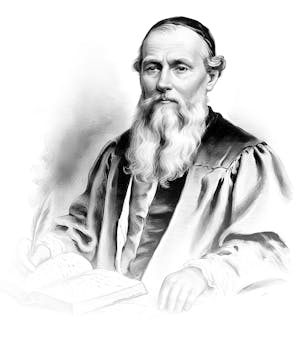
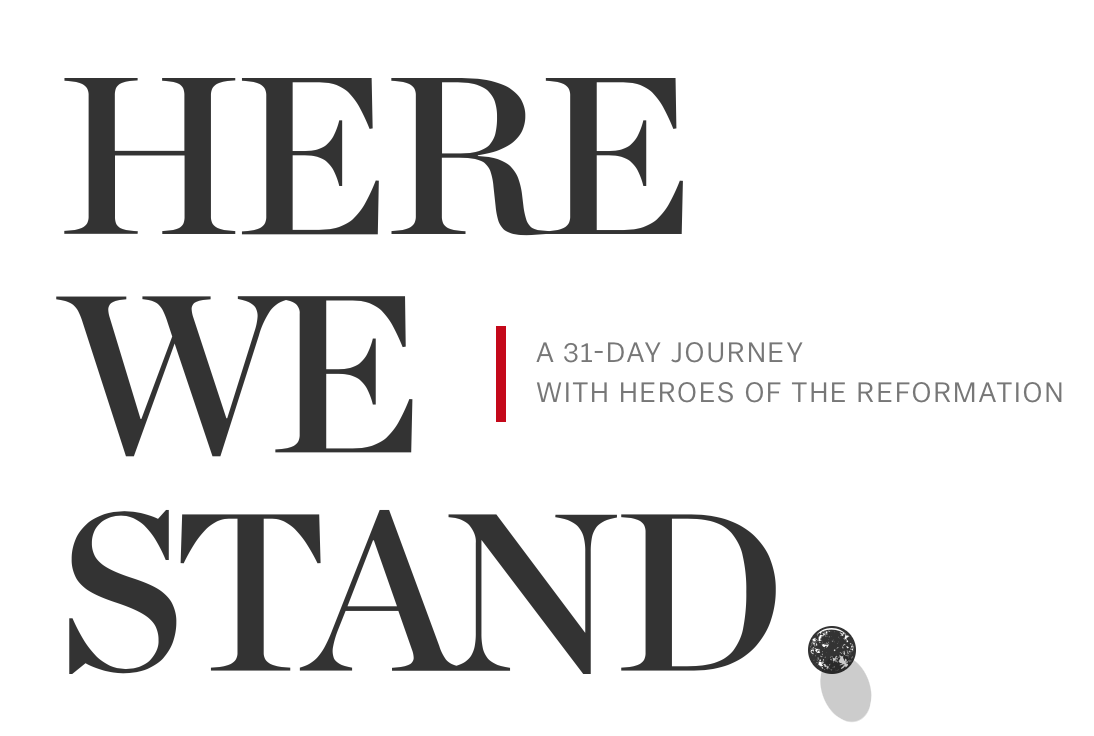
Another great story from the “Here We Stand” series of biographies of notable people during the Reformation. “An attendant asked [King Henry VIII] whom he wished to have at his bedside. The king asked for Thomas [Cranmer]. By the time Cranmer arrived, King Henry was unable to speak. Foxe tells the story. ‘Then the archbishop, exhorting him to put his trust in Christ, and to call upon His mercy, desired him though he could not speak, yet to give some token with his eyes or with his hand, that he trusted in the Lord. Then the king, holding him with his hand, did wring his hand in his as hard as he could (Foxe’s Book of Martyrs, 748).’ The scene sweetly punctuates the most important friendship in the English Reformation. Whatever King Henry believed when he squeezed Cranmer’s hand that day, God used the bond between them to break England free from Roman Catholicism and to recover the one true gospel.”
The ICR reports, “Genesis claims that people in the pre-Flood world routinely attained 900-year lifespans. The best-known example is Methuselah, who had the longest recorded lifespan of 969 years (Genesis 5:27). Skeptics dismiss these great ages as fanciful legends, but recent fossil data are providing unexpected, albeit indirect, corroboration of the Bible’s testimony.” Check out this full report.
“In my experience, each failure contains the seeds of your next success—if you are willing to learn from it.” —Paul Allen, cofounder of Microsoft
Is it okay to pray a prayer written by someone else? Sure! But let’s use those prayers merely as guides to help us form our own personalized prayers to our loving Heavenly Father. I shared a whole series on prayer that you may want to check out.
I have lots of new content every week, which you can check out on my YouTube channel.
T.M. Moore wrote, “The Holy Spirit comes to dwell in believers with an agenda. His agenda is not ours, and unless we can put our agendas aside, we will never line up with His to realize more of the presence, promise, and power of the Kingdom of God. The Spirit has not come to make us ecstatically happy. He has not come to fulfill our every wish. He comes to bring forth in us distinctly Kingdom values and virtues: love, joy, peace, patience, kindness, goodness, faithfulness, gentleness, and self-control. He comes to distribute among us spiritual gifts, God-given abilities to serve one another in caring and sharing ways. He comes to empower us as witnesses for Jesus, both in how we live and what we say. And He comes to build our churches up into Christlikeness by our unified and focused work.”
I am really enjoying these mini-biographies of key leaders in the Reformation presented by Desiring God. One that I found especially fascinating is about Menno Simons—“If you are familiar with the contemporary Mennonites, you may be surprised to learn that the group’s founder started as a Catholic priest who had never read the Bible.” Yet, near the end of his life, Menno wrote, “Although I resisted in former times Thy precious Word and Thy holy will with all my powers…nevertheless, Thy fatherly grace did not forsake me, a miserable sinner, but in love, received me…and taught me by the Holy Spirit until of my own choice I declared war upon the world, the flesh, and the devil…and willingly submitted to the heavy cross of my Lord Jesus Christ that I might inherit the promised kingdom.”
“What strikes me is that there’s a very fine line between success and failure. Just one ingredient can make the difference.” —Andrew Lloyd Webber
This past Sunday I spoke to my congregation about how Christians should behave biblically during an election season. Someone forwarded to me a related graphic from the Pentecostal Evangel magazine (a publication of the Assemblies of God) from 1984. I love these reminders for Christians!
Researchers unveiled the largest brain map ever completed. It was of a fruit fly, whose brain “includes nearly 140,000 neurons and captures more than 54.5 million synapses”! It took four years to complete this map. “All told, the researchers identified 8,453 types of neuron—much more than anyone had expected. Of these, 4,581 were newly discovered.” This level of complexity and order in a fruit fly is astounding to me. Can you imagine what it would take to map the much larger and more complex human brain?! Truly, David was right when he said that we are wonderfully made by our Creator!
“Freely, willingly and joyfully do good to everyone, serve everyone, suffer all kinds of things, love and praise the God who has shown such grace. Thus, it is just as impossible to separate faith and works as it is to separate heat and light from fire!” —Martin Luther
“Faith the mother of all good works justifieth us, before we can bring forth any good work: as the husband marryeth his wife before he can have any lawful children by her.” —William Tyndale
When a teammate seems to choke in a pressure-packed situation, good coaches help them learn from their mistake and get right back into the game. This is how leaders help their teammates go from choke to clutch. Check out the full conversation Greg and I had about this.
I have lots of new content every week, which you can check out on my YouTube channel.
“Most of us who aspire to be tops in our fields don’t really consider the amount of work required to stay tops.” —Althea Gibson, tennis great
“There is only one way forward when vindication is delayed: total forgiveness. And I can give you a motivation to forgive totally greater than any other that could be conceived: you do it for an audience of One. Yes. That’s it. That is how you do it! Total forgiveness comes easily when you realize you are doing it for God and the glory of Jesus Christ!” —R.T. Kendall
ICR reports: “Millions of years of erosion should have toppled all the beautiful sandstone arches out West, yet many hundreds remain.” But following the biblical timeline of Creation and the Flood makes it unsurprising that the arches are still standing.
“A coach is someone who can give correction without causing resentment.” —John Wooden
October is the month Protestants remember the start of the Reformation. The folks at Desiring God have a wonderful resource available by email every day during October called Here We Stand. Each day you will receive an email with a mini-biography of a key character in the Reformation. I am thoroughly enjoying these each day. Sign up here.
None of us are self-made. God created us on purpose and for a purpose. He gave us the gifts we need to accomplish that purpose. We will only find our fulfillment in life in stewarding those God-given gifts and opportunities in ways that glorify God. Not only fulfillment here, but then eternal satisfaction when we hear our Savior say, “Well done, good and faithful servant! Enter into your Master’s happiness!”
Listen to the audio-only version of this podcast by clicking on the player below, or scroll down to watch the video.
You might be checking out this episode with the hope of one day being a leader. Well, Greg and I have good news for you—you already are! Leaders are not just the person at the top, but if you have a leadership mindset you can be a leader in whatever position you currently occupy. Join us as we chat about how important it is to start being a leader before you have the “leader” title.
[0:24] What if you’re not the point leader in your organization?
[1:22] Regardless of your title or position, you are still a leader.
[3:13] Leaders—whether at the top or in the middle—need to try to raise up other leaders.
[5:29] One trait that will increase your value to the organization is cross-training.
[8:20] Another trait is curiosity that keeps you a lifelong learner.
[11:07] An example from Tom Brady about how important passion is for those who aren’t starters yet.
[13:47] Two other important traits for emerging leaders is patience and self-discipline.
[14:37] How do point leader keep their bench players engaged until there is a new leadership position available for them?
[17:07] Mentoring and coaching aren’t the same things. How do we know which one to use in our organizations?
[23:21] What you can do if you don’t have any mentors within your organization?
Check out this episode and subscribe on YouTube so you can watch all of the upcoming episodes. You can also listen to our podcast on Spotify and Apple.
John Piper was asked to weigh-in on the value of repetitive phrases in worship songs. He said, “The issue’s not repetition per se but whether there is enough substance, enough rich content of truth about God woven into the repetitions to justify them, to warrant them. That’s the issue. There’s a difference between repetitions that are called forth by the repeated crescendo of new, glorious truth, and repetitions that serve as a kind of mantra without sufficient truth that is simply used to sustain or intensify a mood. Moods in worship should be awakened and sustained primarily by truth, assisted by music—not primarily by music with a little truth thrown in to justify the singing.”
Pastor John Piper used Psalm 136 as an example in the post above. T.M. Moore also shared this thought about Psalm 136: “The term most frequently used to describe this everywhere-present-and-always-at-work love of God is translated as ‘lovingkindness’ or, in some versions, ‘steadfast love.’ Especially Psalm 136, with its antiphonal arrangement of verses, insists that the cosmos is upheld, sustained, and pervaded by the lovingkindness of God. … It would improve our learning to pray without ceasing if we simply took some time out during the day to thank the Lord for the many ways His steadfast love surrounds, sustains, and swarms us at every moment!”
“When people refer to a man as a man of the Book, meaning the Bible, he’s generally found to be a man of multitudinous books, which simply isolates the one Book to its proper grandeur. The man who reads only the Bible does not as a rule know it or human life.” —Oswald Chambers
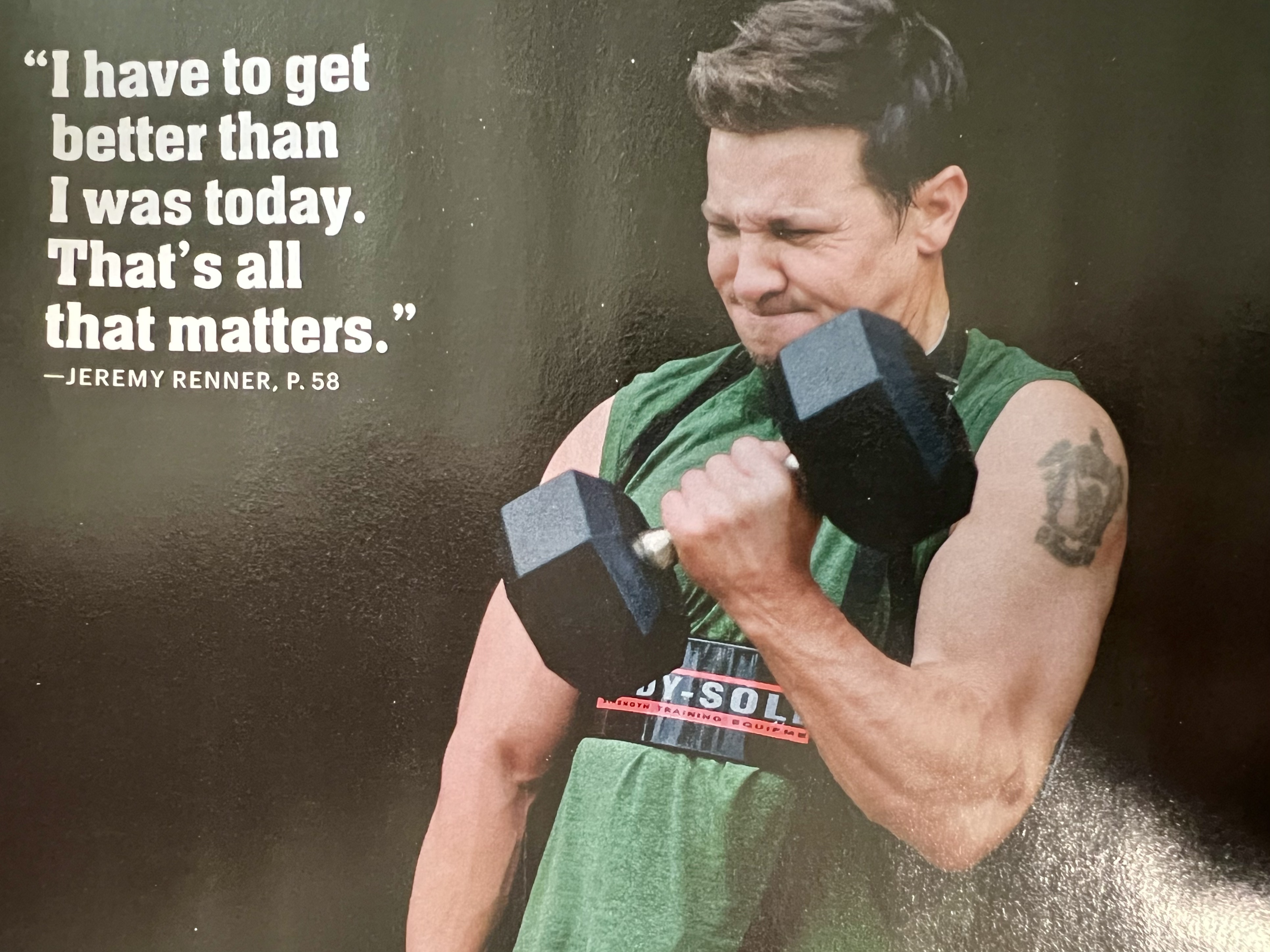
Men’s Health magazine shared an interview with Jeremy Renner, who was nearly killed in a tragic accident. I love his attitude about making today better than yesterday. His words remind me of a poem my grandma used to use to motivate me to keep “besting” what I had already done.
Christopher Ash writes about reading the Psalms through the lens of Jesus. He concludes this way: “I remember seeing on the wall of a church the words of Psalm 20:4: ‘May [the Lord] grant you your heart’s desire and fulfill all your plans!’ How wonderful, you might think. The Bible promises me all that my heart desires. Until you read the psalm and realize that Psalm 20 is a prayer for the king in David’s line. Ultimately, it is a prayer that Jesus will have His heart’s desire granted and that His plans will be fulfilled. And they will! The Psalms are not all about me. If I think they are, I will end up disillusioned. But when I grasp that they are all about Christ, my heart lifts in joy that He is the blessed Man and I belong to Him.”
Listen to the audio-only version of this podcast by clicking on the player below, or scroll down to watch the video.
Stress might have six letters, but it seems like some leaders have a knee-jerk reaction to treat it like a four-letter word. While it might be nice to fantasize about an stress-free life, this is both entirely unrealistic and detrimental to your leadership. The truth is, a mild amount of stress can be helpful to you personally, as well as your organization as a whole. Join us as Greg and I unpack why you should embrace a bit of stress in your life.
[0:14] I have a brain block to start the show!
[0:59] Let’s define stress in a work environment, as opposed to simply work tension.
[1:51] An interesting study about allowing moderate stress to remain in the workplace.
[5:30] Mild stress is helpful for our brains.
[7:37] Stress expands and strengthens our team connections too.
[10:26] Can stress help increase someone’s work performance?
[13:01] Our physical bodies use a stress hormone called cortisol. How can leaders maximize its effects?
[14:38] Stress can help us rise to the challenge in a way that easy times can’t.
[16:02] I share an example of a teammate who grew through stress, as well as a supporting quote.
[18:40] Greg shares a negative example of an organization that became stress-free and drifted toward failure.
[19:30] When times are easy, we can begin to slide into apathy.
[22:40] Should we teach crisis leadership to our teams? If so, how should we do this?
Check out this episode and subscribe on YouTube so you can watch all of the upcoming episodes. You can also listen to our podcast on Spotify and Apple.
Listen to the podcast of this post by clicking on the player below, and you can also subscribe on Apple, Spotify, or Audible.
Have you ever said to yourself…
…I should have known better?
…why I am going through this again?
…I thought I was over this hurdle?
…you would think I would have matured enough by now to not have to deal with this?
Maybe the author of Psalm 129 felt this way: “Here I am on the 10th step and I’m still having to deal with this! When will I finally arrive at the top and be done with these issues?” (compare Psalm 129:1-2 with 124:1-5).
I think those statements—“I should have known better” or “I thought I was over this”—pre-suppose that we will reach a point in our life where we “arrive.” If nothing else, this psalm is a reminder that we are still on the journey, that we are still a work-in-progress, that the saint-ification process is still ongoing. It’s clear from Scripture that we never “arrive” until we arrive in Heaven and hear our Master say, “Well done, good and faithful servant.”
While we are ascending up toward our heavenly home, these great oppressions and plowings remind us that there is still work to be done in us and through us to bring glory to God (Romans 5:3-4; James 1:2-4, 12).
Of his Soviet prison, Alexander Solzhenitsyn said, “I bless you, prison—I bless you for being in my life—for there lying on rotting prison straw, I learned the object of life is not prospering as I had grown up believing, but the maturing of the soul.”
The reality is God is using all of those things for my good and for His glory (Romans 8:28).
What happens as I am oppressed and plowed?
(1) I am refined—Psalm 66:8-12, 16-20. God is removing the impurities from my life.
(2) My prayers are matured. Psalm 129:5-8 is an imprecatory prayer, a prayer that says, “Get ‘em, God!” These have their place, but for us they are to be our emergency release valve (which I discuss in more depth in my book When Sheep Bite). But Jesus calls for our prayers to mature from imprecatory to intercessory (Matthew 5:43-45). In my book I write, “This is the highest level of Christian maturity: To pray like Jesus did for those who insulted Him, slandered Him, and crucified Him, ‘Father, forgive them for they don’t understand what they are doing’ (Luke 23:34)”
(3) I develop more intimate God-dependence—2 Corinthians 1:8-10.
(4) I am better equipped to help others—2 Corinthians 1:3-6.
(5) Others feel more inclined to pray for me—2 Corinthians 1:7, 11.
“God uses broken things. It takes broken soil to produce a crop, broken clouds to give rain, broken grain to give bread, broken bread to give strength.” —Vance Havner
Oppressed? Yes! Defeated? No!
Plowed? Yes! Enslaved by the plow’s cords? No!
God uses this to bring us closer and closer to Him until He can eventually say to us face-to-face, “Well done, good and faithful servant!” That’s when we truly arrive! Until then, we keep on ascending.
Listen to the podcast of this post by clicking on the player below, and you can also subscribe on Apple, Spotify, or Audible.
Let’s review the historical background for the Psalms of Ascent. The Jewish people made four pilgrimages to Jerusalem each year, which sit about 2500 fee above sea level, so this was a physical climb. But this also has a spiritual lesson for us today: We are to continue progressing in our walk with God—upward and onward!
The songs of ascent that these pilgrims sang give us life-changing lessons that we can still apply today.
I’m sure there were some pilgrims who thought, “We have to go to Jerusalem.” Just as there are some people today who may something like, “I have to tithe.” But when you have experienced the blessing that comes from obedience, your “have to” turns to “get to” really quickly!
There is a longing in Psalm 128 for God’s blessing. In fact, we see it in nearly every verse: blessed (v. 1), blessing and prosperity (v. 2), blessed (v. 4), bless and prosperity (v. 5), and peace (v. 6).
We have to remember that our obedience doesn’t earn God’s blessing, but rather our obedience keeps us in the place where we can receive God’s ever-flowing blessings. When I have experienced the blessing that followed even my “have to” attitude, I now joyfully “get to” obey because I know that keeps me in a blessed place.
But even knowing that these blessings are flowing for us, sometimes we still get weary. Sometimes it seems as if we are being faithful but we aren’t seeing the results that perhaps we saw before.
Think about these pilgrims ascending 2500 feet year after year after year. It was challenging enough during the golden days of King David and King Solomon, but can you imagine the feelings of futility during the dark days? Perhaps during the exile when the temple was in ruins, or after the exile when the temple didn’t look as it did before and there were overlords ruling Israel? And then it was unquestionably true that the older a pilgrim got, the harder the climb became for them.
But the struggle keeps us reliant on God. Like Solomon said, “The way of life winds upward for the wise, that he may turn away from hell below” (Proverbs 15:24). The longer I walk, the more I get to rely on God’s help, and the sweeter He becomes to me!
I love the line in the hymn Great is Thy Faithfulness, “Strength for today and bright hope for tomorrow—blessings all mine with ten thousand beside.” Because of God’s blessings that I’ve already experienced, I can trust Him for more, even in the struggle of the climb.
Look at some of these promises that come out in other biblical translations.
Blessedare those who fear God (NIV) = “How joyful are those who fear the Lord” (NLT)
Blessing and prosperity will be yours (NIV) = “You will enjoy the fruit of your labor” (NLT) and “You will eat what you worked so hard to grow” (NET)
The middle of this psalm is in verses 3-4. Remember above when I said nearly every verse contains a word of blessing? I didn’t list verse 3, but there is language in this verse that makes it pregnant with blessing—Your wife will be like a fruitful vine within your house; your sons will be like olive shoots around your table.
You may ask, “How is this a blessing?”
The phrase “under their own vine and under their own fig tree” appears throughout the Old Testament. It described a blessed, prosperous, happy, and peaceful home. It was a home at peace within because there was also peace without.
This described the golden era of King Solomon—During Solomon’s lifetime Judah and Israel, from Dan to Beersheba, lived in safety, everyone under their own vine and under their own fig tree (1 Kings 4:25).
After the northern kingdom of Israel fell and the southern kingdom of Judah was surrounded by the Assyrian forces of King Sennacherib, the king’s field commander tried to entice them the people with similar words—
Do not listen to Hezekiah. This is what the king of Assyria says: “Make peace with me and come out to me. Then each of you will eat fruit from your own vine and fig tree and drink water from your own cistern until I come and take you to a land like your own—a land of grain and new wine, a land of bread and vineyards, a land of olive trees and honey. Choose life and not death! Do not listen to Hezekiah, for he is misleading you when he says, ‘The LORD will deliver us.’” (2 Kings 18:31-32)
Notice that he said the land would be “a land like your own.” He was trying to get them to compromise, to no longer listen to God’s voice, to no longer climb up into God’s presence. Much like satan tempted Adam and Eve to eat the forbidden fruit with the promise, “You will be like God.”
But these blessings in Psalm 128 don’t come from fearful “have to” obedience to man, but from reverencing God above all else. So the longing of verses 1-4 become the prayer of verses 5-6 (notice the word may used three times in these verse).
The focus of our longing—where we need to keep our eyes—is on God’s heavenly throne: Zion, Jerusalem, Israel (vv. 5-6; Micah 4:1-5).
In an earlier story, Caleb may have gotten tired while he waited for God to fulfill His promise to him, but he always trusted God as he walked on (see Joshua 14:9-12).
What promises of God are you still praying for?
What are you longing to see accomplished?
What has God already done that you can look back on?
The Hill, though high, I covet to ascend, The Difficulty will not me offend; For I perceive the Way to life lies here. Come, pluck up Heart, let’s neither faint nor fear;
Better, though difficult, the Right Way to go,
Than wrong, though easy, where the End is Woe. (John Bunyan)
Don’t give in.
Don’t give up.
Keep climbing.
Like Caleb say, “It may have been 85 years of walking and climbing, but I’ll keep climbing. GOD, GIVE ME THIS HILL!”
If you would like to check out the other songs of ascent that we’ve already studied, please click here.











 Craig T. Owens