Why do Christians lift their hands to God? This is a clip from one of the sermons in our series looking at the worship songs that Israelite pilgrims sang as they ascended to Jerusalem to celebrate the feasts.
“Civil governments are established by God [Romans 13:1] to restrain the criminal elements of human society—even though these officers are often filled and run by evil people. We must divorce our feelings about the people that hold these offices from the authority of the office itself.” —Dr. Henry Halley
“Outstanding leaders go out of their way to boost the self-esteem of their personnel. If people believe in themselves, it’s amazing what they can accomplish.” —Sam Walton
This article opens with this thought: “Scientists will probably never fully understand photosynthesis as additional research uncovers even more fascinating mysteries.” It then goes on to outline how plants use quantum mechanics nearly perfectly to manage the flow of energy during photosynthesis. Truly this is more evidence of an All-Wise Creator.
In sharing a mini-biography of Henry Martyn, this article outlines how God prepares missionaries for the field to which He has called them. “God used [Martyn’s] classical education at Cambridge alongside his spiritual maturity formed by intentional mentorship to get him ready for his unique task of engaging Muslims and translating the Bible.”
T.M. Moore has an outstanding series for pastoral leaders. In a recent post, Moore wrote, “Paul’s vision was too vast, too all-encompassing, too transformative, too urgent, and too other-worldly to stop with, say, a vision that focused on more members, better facilities, larger budgets, additional staff, or regular ‘growth.’ None of these, nor any of a thousand other ways church leaders might express their hopes for their churches, is a proper vision for church leaders.” I was grateful for T.M.’s endorsement of my book Shepherd Leadership where I talk about the biblical metrics for church leaders.
“One of the dangers of having a lot of money is that you may be quite satisfied with the kinds of happiness money can give, and so fail to realize your need for God. If everything seems to come simply by signing checks, you may forget that you are at every moment totally dependent on God.” —C.S. Lewis
Let’s change our leadership mentoring perspective. It’s not whether you dropped the ball or not, it’s what you learned from the time you dropped the ball. This is how we help others move forward. Check out the full Craig and Greg Show episode where we talk more about “untraditional” performance reviews.
I have lots of new content every week, which you can check out on my YouTube channel.
If it hadn’t been for J.R.R. Tolkien’s influence, C.S. Lewis may have remained an atheist. And if it hadn’t been for C.S. Lewis’ encouragement, the world may never have been able to enjoy Tolkien’s Lord of the Rings series. This truly was a friendship that blessed the world! A book that explores this relationship further is A Hobbit, A Wardrobe, and A Great War.
“We don’t all have to be geniuses to innovate in the way we use culture. For example, what if we were to repudiate, once and for all, all gossip and all carping and complaining, and instead were to work hard day by day to redirect our tongues toward building others up (Ephesians 4:29)? We would have to innovate some new ways of engaging people in conversation, by getting to know people and taking a real interest in them, becoming better listeners, asking good questions, making sure all our words were seasoned with grace, and always speaking truth in love. Would that not be a radical and innovative improvement on much of what passes for conversation today? If every believer just worked a bit harder to innovate new forms of conversation, I’m persuaded the world would certainly notice the difference!” —T.M. Moore
J. Warner Wallace is a cold-case detective and a premier Christian apologist. Some Christians believe that we only need to use Scripture to form our trust in Scripture. In this video, Wallace explains from Scripture how even Jesus used evidence outside of Scripture to make His case that He was who Scripture said He was.
It is interesting how many modern-day scientists will accept without fact that an asteroid impacted Earth “millions of years ago” to trigger massive changes that resulted in the extinction of dinosaurs, but will flatly disregard the Flood recorded in the Bible. As a result of their false assumptions, they reach conclusions (like believing they have refuted Bergmann’s Rule) that are quickly refuted. Check out this insightful post.
If you are doing all the calculating with your money, then Jesus says you’re not rich toward God. Check out this full sermon here.
“When God brings new opportunities the path forward is often unknown; it’s a risky journey to start. After all, if you can see the path to the finish line, you do not need to trust the Lord. Why would God give a golden opportunity to those unwilling to trust Him for the unknown?” —Roger Parrott, Opportunity Leadership
(For security reasons, I cannot share a link to the following but I can verify its veracity). “Sam” is a Christian in an Arabic country who has been instrumental in starting and leading a church in his country for several years. He was arrested two months ago and held in prison for 55 days. He was interrogated the first 8 days, then left in solitary confinement for 47 days: the bright lights always on, Some Christians were able to meet with him after his release, listen to his story, share Scripture together, pray with and encourage him. Here is one of their main takeaways from their conversation with Sam.
“So, Sam, how did you make it 55 days in prison?”
Sam said, “The Holy Spirit was with me and was with my mouth. He gave me the words to say. But the devil also sat right next to me twisting Scripture.” Sam continued, “Tell those that will go to prison it is very important not only to know the Scripture but to be able to interpret it correctly as the accuser (I found out by experience) is so adept at twisting God’s Word to both tempt and discourage us.”
Listen to the podcast of this post by clicking on the player below, and you can also subscribe on Apple, Spotify, or Audible.
Jesus sent us and the Holy Spirit empowers us to take the Good News to all nations—all the streets (Luke 24:47-49; Acts 1:8). As we move away from Jerusalem and into Judea, we should expect to see more differences with our audience. And then as we move into Samaria, there will probably be more differences than similarities. Regardless of how little we may have in common with those on other streets, the Holy Spirit still empowers us to witness there.
When we don’t live on someone else’s street, we tend to make some pretty big assumptions about them. For example, until I married a school teacher, I thought, “How nice it must be to be done with work by 3:00 every afternoon and have three months off in the summer!”
Mistakenly, we think we can so easily fix the problems people on other streets have—we think we can show them how simple it is to correct anything out of balance on their street. These are natural thought patterns when so little of our circles overlap.
If you live on Main Street, two streets which are quite different from you are Easy Street and Skid Row. When it comes to finances, there tends to be extremes in our thoughts about the Samaritans that live on those streets—
Those on Easy Street only cares about themselves
Those on Skid Row should work harder
Those on Easy Street have too much—it’s not fair!
Those on Skip Row don’t have enough—it’s not fair!
But here’s the thing: It’s really not about the money but it’s about our attitude about the money.
In Luke 21:1-6, Jesus saw both rich people from Easy Street placing their tithe in the temple treasury, and a poor widow from Skid Row doing the same. Jesus said this widow put in more than anyone else. He was talking in terms of quality, not quantity.
While they were still in the temple, the disciples pointed out how beautifully embellished the temple was. These decorations came from the money those on Easy Street had contributed. Jesus told them not to focus on the temporal temple but on the eternal Kingdom of God.
As I said, Jesus doesn’t have a problem with money, but He does warn us about our ungodly attitude toward money (Luke 8:1-3; Matthew 27:57; Acts 4:32-5:4; Exodus 20:17; Luke 12:13-22).
Even though Easy Street and Skid Row seem to be at opposite ends of the spectrum, I think we are effective witnesses for Jesus on these streets in exactly the same way.
(1) Guard your attitude about money. Remember that Gad often provides for us by giving us a skill, and then making a job available that can use our skill. So let’s be thankful for our God-given jobs. Then we guard our attitude about money by tithing regularly, and making sure that when we bless others financially, we do it without expecting any fanfare (Colossians 3:23; Malachi 3:10; Matthew 6:2-3).
(2) Let God be unique as unique with these folks on Easy Street and Skid Row as He is with you on Main Street. Don’t try to be someone else, and don’t expect others to be you—simply obey what God has spoken to your heart, just as you allow others to obey what God has spoken to their hearts.
(3) Don’t tell, but show how you use the resources God has given to you. It’s not our place to “preach” to others about how they should or shouldn’t be handling their finances, but simply live out the biblical principles outlined above, and let your life show your godly attitude.
(4) Always turn the focus to the eternal. Just as Jesus did with His disciples in the temple, He always reminded people that this world with its perks or tragedies is only temporary. What ultimately matters is where we will spend eternity (Luke 13:1-5).
Money is always a touchy subject with people, so let’s make sure we have our own attitude aligned with Scripture before we try to bring the subject up with others.
If you’ve missed any of the other messages in our Takin’ Him To The Street series, you can find them all here.
Listen to the podcast of this post by clicking on the player below, and you can also subscribe on Apple, Spotify, or Audible.
Max Lucado wrote,
“The United States economy endured ten recessions between 1948 and 2001. These downturns lasted an average of ten months apiece and resulted in the loss of billions of dollars. Every five years or so, the economy dumps its suitors and starts over. What would you think of a man who did the same with women? What word would you use to describe a husband who philandered his way through nine different wives over fifty years? And what word would you use to describe wife number ten? How about this one? Fool. Those who trust money are foolish. They are setting themselves up to be duped and dumped into a dystopia of unhappiness.” —Max Lucado, Fearless
Yikes! It sounds like money can be a scary thing. So let’s consider statement #12 in our series asking “Is that in the Bible?”—Money is the root of all evil. Is that in the Bible? No!
That phrase is close to one that is in the Bible, but “close” misses the real meaning. What Paul actually wrote to Timothy is, “For the love of money is a root of all kinds of evil” (1 Timothy 6:10).
That three-word phrase “love of money” is actually just one word in Greek, and it means “friend of silver.”
The Bible teaches that money itself is neither good nor evil. It’s merely a tool like a hammer that is used for building something or for destroying something. If the hammer builds or destroys, it’s not the hammer that is good or evil but the attitude of the one gripping the hammer determines the good or evil outcome.
So too with money. Money keeps the lights on, puts gas in our car, clothes on our backs, and food in our stomachs, it even helps people share the Gospel here and around the world. It’s our attitude toward money that leads us to good or evil thoughts and actions.
In describing people who were a friend of silver, Paul uses phrases like this to describe them: teaches false doctrine … does not agree to sound instruction…and godly teaching … who think godliness is a means to financial gain … want to get rich … eager for money (1 Timothy 6:3-5, 9-10).
In 1923 a group of the world’s most successful financiers gathered at the Edgewater Beach Hotel in Chicago. Together these men controlled more wealth than the United States Treasury! They met together to discuss how they could use their present wealth to gain even more wealth. Their plan was put into place and it began to reap the results they planned: they expanded their influence and their bank accounts.
Then six years later, on October 29, 1929, Black Tuesday happened. The worst day for the New York Stock Exchange ever and the beginning of the Great Depression in the USA.
What about that group of wealthy financiers who wanted more, more, more?
Charles Schwab—president of Carnegie Steel Company—lived the last years of his life on borrowed money and died penniless
Arthur Cutten—the world’s largest wheat speculator—died insolvent
Richard Whitney—president of the NYSE—served a prison term for embezzlement
Albert Fall—a member of the president’s cabinet—also went to prison
Jessie Livermore—the “bear of Wall Street,” Leon Frazer—president of the Bank of International Settlements, and Ivar Kreuger—head of the world’s largest monopoly (a match company)—all committed suicide
Their friendship with silver—their love of Money—led to their disastrous downfalls.
Jesus said, “No one can serve two masters. Either you will hate the one and love the other, or you will be devoted to the one and despise the other. You cannot serve both God and Money” (Matthew 6:24).
The word Jesus used for “Money” is Mammon: wealth personified and deified. When we make Money our god—Money (with a capital “M”)—we naturally begin to covet what isn’t ours. Nothing satisfies and so we covet to possess more and more and more.
Remember Jesus we cannotserve two masters. If we replace God with Mammon, it is inevitable that we will break all of the Ten Commandments. Has anyone ever made an idol to their Money, or murdered for money, or committed adultery, or stolen, or told lies? They sure have!
Paul described those who worship Mammon this way—
Those who want to get rich fall into temptation and a trap and into many foolish and harmful desires that plunge people into ruin and destruction. For the love of money is a root of all kinds of evil. Some people, eager for money, have wandered from the faith and pierced themselves with many griefs. (1 Timothy 6:9-10)
But those who worship God, Paul described like this—
But godliness with contentment is great gain. For we brought nothing into the world, and we can take nothing out of it. But if we have food and clothing, we will be content with that. (1 Timothy 6:6-8)
Simply put: Contentment with God kills Mammon’s covetousness!
Want to know how to check your attitude toward money? When you think about giving God His tithe, or when the Holy Spirit prompts you to give to a missionary, what thought comes to your mind? Do you think, “Ugg, I have to give this” or do you rejoice to say, “Yes, I get to give this”? The answer to that question will give you a really good indication of how much pull Mammon has over your heart.
We all have a choice to make: yield to God or yield to Mammon. But remember only God can give us contentment today and pleasures that last for eternity.
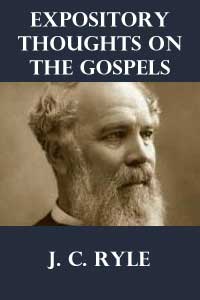
In my current Bible reading time, I am reading J.C. Ryle’s Expository Thoughts On The Gospels as a read-along companion with my Bible. Bishop Ryle correctly feels the weight and effectiveness of prayer in the life of a Christian. Here are some of his quotes regarding prayer.
“If afflictions drive us nearer to Christ, the Bible, and prayer, they are positive blessings.”
“It is not for us to prescribe either the time or the way in which our requests are to be answered.… Let us rather ‘continue in prayer,’ ‘watch unto prayer,’ ‘pray always and not faint.’”
“Why is it that there is so much apparent religious working and yet so little result in positive conversions to God—so many sermons, and so few souls saved—so much machinery, and so little effect produced—so much running here and there and yet so few brought to Christ? Why is all this? The reply is short and simple: there is not enough private prayer. The cause of Christ does not need less working, but it does need among the workers more praying. … The most successful workmen in the Lord’s vineyard are those who are, like their Master, often and much upon their knees.”
“If we would have good ministers we must remember our Lord’s example and pray for them. Their work is heavy. Their responsibility is enormous. Their strength is small. Let us see that we support them and hold up their hands by our prayers.”
“Let us bear these rules in mind every Sunday morning before we go to hear the Word of God preached. Let us not rush into God’s presence careless, reckless, and unprepared, as if it mattered not in what way such work was done. Let us carry with us faith, reverence, and prayer. If these three are our companions, we shall hear with profit and return with praise.”
“Let a petition for more faith form a part of all our daily prayers. As ever we would have peace, and calmness, and quietness of spirit, let us often say, ‘Lord, increase our faith.’”
“Let us strive and pray that the same mind may be in us which was in our blessed Master. Like Him, let us be willing to go anywhere, do anything, suffer anything when the path of duty is clear and the voice of God calls. Let us set our faces steadfastly to our work when our work is plainly marked out, and drink our bitter cups patiently when they come from a Father’s hand.”
“We must seek to have knowledge as well as zeal. Zeal without knowledge is an army without a general, and a ship without a rudder. We must pray that we may understand how to make a right application of Scripture.”
“Prayer is one of the best and most powerful means of helping forward the cause of Christ in the world. … Not all believers have money to give to missions. Very few have great intellectual gifts or extensive influence among men. But all believers can pray for the success of the Gospel—and they ought to pray for it daily.”
“Prayer is one of the principal weapons which the minister of the Gospel ought to use. To be a true successor of the apostles, he must give himself to prayer as well as to the ministry of the Word (Acts 6:4). He must not only use the sword of the Spirit, but pray always, with all prayer and supplication (Ephesians 6:17, 18). This is the way to win a blessing on his own ministry. This, above all, is the way to procure helpers to carry on Christ’s work.”
“Daily bread and daily mercy are by far the first and principal things that mortal man needs. He is the rich man who possesses them. He is the wise man who is not ashamed to pray for them every day.”
“Nothing that concerns God’s people is too little for Him to manage or for them to bring before Him in prayer.”
“‘He spoke a parable to this end: that men ought always to pray, and not to give up.’ These words, be it remembered, are closely connected with the solemn doctrine of the second advent, with which the preceding chapter concludes. It is prayer without fainting during the long weary intervals between the first and second advents which Jesus is urging His disciples to keep up.”
“Let us often pray that we may have wisdom from above in order to answer rightly when perplexing questions are put to us. The servant of Christ must expect a portion like his Master. He must count it no strange thing if the wicked and worldly-minded endeavor to entangle him in his talk, and to provoke him to speak unadvisedly with his lips.”
“Whatever other means of relief we use, let us pray. The first Friend we should turn to ought to be God. The first message we should send ought to be to the throne of grace.”
[Each chapter in the Book of Proverbs contains thoughts that fit into a theme; they are not just random thoughts gathered together. In this “Saturday In The Proverbs” series, I will share a theme that I see in each chapter. But the cool thing about God’s Word is that you may see an entirely different theme. That’s great! If you do, I would love for you to share it in the comments below.]
There are earthly riches and there are heavenly riches. There are temporary gains and there is eternal wealth. This Proverb helps direct us to true riches that last forever.
Good character and a good reputation are better than money (v. 1)
God alone decides what is truly valuable (v. 2)
Prudence helps you avoid bankruptcy (v. 3)
Humbly fearing God is the path to eternal wealth (v. 4)
A perverse pursuit of wealth is a hard and painful path (v. 5)
Better godly children than gobs of money (vv. 6, 15)
Debt enslaves (v. 7)
Cutting corners to make a buck will come back to bite you (v. 8)
Generosity leads to more blessings (v. 9)
Don’t pay attention to those who scoff at God’s ways (vv. 10, 24, 25)
A grace-filled, pure lifestyle will get you noticed and rewarded (v. 11)
God rewards those who do things His way (vv. 12, 17-21)
I loved the financial insights that John Thornton presented in Jesus’ Terrible Financial Advice. The advice is “terrible” in that it flies in the face of conventional financial wisdom and puts it in the proper biblical light. Check out my full review of this book by clicking here.
“As God waits patiently to receive our all, wonder, and appreciation for all He is and does, an idol steps in to accept our applause. Like an insidious illusionist, the idol misdirects our attention to itself. … What does an idol do? Nothing. That’s all an idol can do. Nothing. Nothing but steal God’s glory.”
“Jesus is not trying to impoverish us when He tells us to store up treasures in heaven.”
“Here is where some people mistakenly make it about the money. They wrongly conclude that rich people can’t make it to heaven, but poor people can. This is a grave error. In truth, no one can enter the kingdom of heaven, rich or poor, without God.”
“If we are seeking heaven because our life here is so good that we don’t want it to end, or simply because we don’t want to go to hell, we’ve missed the point. We’ve made the same mistake this young man made [Mark 10]. So doing what Jesus always did, He redirected the young man to the right thing. The greatest good. He redirected the young man to God. Jesus clarifies that no one is good but God Himself. … What makes eternal life good isn’t the length. It’s the company. God Himself is what is good about heaven [John 17:3].”
“Regardless of how much of a blessing of wealth has the potential to be, it becomes a curse for us when it separates us from the love of God.”
“Don’t wrongfully conclude that rich people can’t make it, but poor people can. Or that poor people are godly, but rich people are not. If we do this, we miss the point entirely. We think that Jesus is just calling out rich people. We think He is talking about people’s financial position, when He’s really talking about our heart condition. … At the end of the day, answer to the question ‘Does Jesus want you rich or poor?’ is obvious. The answer is yes! Jesus wants you. And the answer is all about God’s goodness, not ours.”
“The number one theme related to wealth in the Bible is that it is a blessing from God.”
“Whenever we conclude that the plans we have for our lives are better than the plans God has for us, or that the gifts we have for ourselves are better than His gifts, the false master Money steps up. Money promises to put us in charge. With it, we can smooth the way or save the day. Don’t worry. Be happy. But God has a better plan for our lives. We were made to live for so much more. And He is more. God wants us to understand and know Him, His ‘kindness, justice and righteousness,’ for in these He delights (Jeremiah 9:24). God’s plan is to complete us.”
“Wealth becomes a curse for us when we choose it over God.”
“In a society where we have taken independence, individual freedom, and self-love to cult status, submission is taboo. We want to be our own master. Money offers us what we want, so we love it or fear it, trading in the true God for a false one. But Jesus shows us we have it all wrong. He shows us that submission to His Father is the only way to be truly free. Free to live life to the full. The only way to live a life that matters is to find our sole purpose in Him.”
When a trained and certified financial advisor says you’re making a mistake with your finances, you will probably listen to him. But what if the one giving the terrible financial advice is Jesus? John Norton (a CPA with a Ph.D. in accounting) looks at the financial advice of Jesus in a whole new light in his book Jesus’ Terrible Financial Advice.
I’ll be honest with you: this book is not at all what I expected. When I hear someone say that Jesus gave “bad financial advice,” I just assume it’s a tongue-in-cheek lead in to a discussion on tithing or giving to missions. But as the subtitle of the book hints, John Norton flips the table on every financial concept that you’ve ever heard taught by the world’s financial experts.
Many people wrongly think that Jesus was anti-wealth, and that to be a truly “sold-out” follower of Jesus, Christians have to give up all semblance of nice things. But that’s not what Jesus taught or lived! Neither did Jesus say that Christians are to pursue wealth on earth. Does that sound like confusing double-talk? Far from it! It’s the truth that John unpacks in this very readable book. John tells us right up front, “I relied on just one rule while writing this book: ‘If my theology disagrees with God, one of us is wrong, and it’s not Him.’”
If you’ve ever struggled with how a Christian is supposed to handle the wealth and possessions of this world, this book will come as a welcome insight into what Jesus really wants for His children: freedom to glorify God!
“Like Jesus’ early followers, we are at a crossroads. He flips the tables on everything we thought we knew about peace, prosperity, and the pursuit of happiness. Jesus’ teachings about money and wealth hit us where we live, shake us free from a life that leads to death, and leave us immeasurably more blessed than we ever imagined. All with the single-minded purpose of bringing glory to His Father.” (John Thornton)
I believe you will be as pleasantly surprised at this book as I was.
John Wesley was deeply introspective about his faith in Jesus Christ. He once wrote—
“I did go thus far for many years…using diligence to eschew all evil, and to have a conscience void of offense; redeeming the time; buying up every opportunity of doing all good to all men; constantly and carefully using all the public and all the private means of grace; endeavoring after a steady seriousness of behavior, at all times, and in all places; and, God is my record, before Whom I stand, doing all this in sincerity; having a real design to serve God; a hearty desire to do His will in all things; to please Him who had called me to ‘fight the good fight,’ and to ‘lay hold of eternal life.’ Yet my own conscience beareth me witness in the Holy Ghost, that all this time I was but almost a Christian.”
To help keep himself on the right path, Wesley came up with this list of questions he regularly asked himself. This is a list any Christian would do well to read through regularly—
Am I consciously or unconsciously creating the impression that I am better than I am? In other words, am I a hypocrite?
Am I honest in all my acts and words, or do I exaggerate?
Do I confidentially pass onto another what was told me in confidence?
Am I a slave to dress, friends, work, or habits?
Am I self-conscious, self-pitying, or self-justifying?
Did the Bible live in me today?
Do I give it time to speak to me everyday?
Am I enjoying prayer?
When did I last speak to someone about my faith?
Do I pray about the money I spend?
Do I get to bed on time and get up on time?
Do I disobey God in anything?
Do I insist upon doing something about which my conscience is uneasy?
Am I defeated in any part of my life?
Am I jealous, impure, critical, irritable, touchy or distrustful?
How do I spend my spare time?
Am I proud?
Do I thank God that I am not as other people, especially as the Pharisee who despised the publican?
Is there anyone whom I fear, dislike, disown, criticize, hold resentment toward or disregard? If so, what am I going to do about it?
I recently read The Quotable Billy Graham (you can read my book review here), and I was struck by how relevant his words are, even 50 years after they were spoken. Here are a few quotes on faith.
“I wonder if the church has not failed this generation of young people by failing to make the Christian faith the thrilling, joyful, triumphant experience that it really is.”
“You best demonstrate your faith in a bank by putting your money in it. You best show your faith in the doctor by trusting him in times of illness. You best prove your faith in a boat by getting aboard. You best demonstrate your faith in Christ by trusting Him with your life and receiving Him unconditionally as your Savior.”
“One of the differences I have with some theologians is that they try to reduce the whole content of the Christian faith to an intellectual gymnastic exercise. Christianity cannot be reduced to reason alone.”
“We are rich in the things that perish, but poor and the things of the spirit. We are rich in gadgets, but poor in faith. We are rich in goods, but poor in grace. We are rich in know-how, but poor in character. We are rich in words, but poor in deeds.”
“If you are a Christian, there is no excuse for not having daily victory in your life by renouncing sin and by faith letting the Spirit of God have control of your life.”
“Whenever anyone asks me how I can be so certain about who and what God really is, I am reminded of the story of the little boy who was out flying a kite. It was a very fine day for kite flying, the wind was brisk and large billowy clouds were blowing across the sky. The kite went up and up until it was entirely hidden by the clouds.
‘What are you doing?’ a man asked the little boy.
‘I’m flying a kite,’ he replied.
‘Flying a kite, are you?’ the man said. ‘How can you be sure? You can’t see your kite.’
‘No,’ said the boy, ‘I can’t see it, but every little while I feel a tug, so I know for sure that it’s there!’
“Don’t take anyone else’s word for God. Find Him for yourself, and then you too will know by the wonderful, warm tug on your heartstrings that He is there for sure.”



 Why do Christians lift their hands to God? This is a clip from one of the sermons in our series looking at the worship songs that Israelite pilgrims sang as they ascended to Jerusalem to celebrate the feasts.







 Craig T. Owens