Links & Quotes

Don’t judge your creative efforts by the world’s likes (or even by its silence). If you did your best with the talents that God gave you, the applause from nail-scarred hands is all that really matters.

I have a lot of new video content on my YouTube channel every week. Please check it out and subscribe so you don’t miss anything.

“It will be vain for me to stock my library, or organize societies, or project schemes, if I neglect the culture of myself; for books, and agencies, and systems, are only remotely instruments of my holy calling; my own spirit, soul, and body, are my nearest machinery for sacred service; my spiritual faculties, and my inner life, are my battle axe and weapons of war.” —Charles Spurgeon 

John Piper shares four observations and applications from Philippians 4:8 in answer to a question about how to guard our minds from the impurity in the world. 

“A man who has faith must be prepared not only to be a martyr, but to be a fool.” —G.K. Chesterton 

The paleontological evidence of dinosaur fossils is most easily explained by the Flood described in the Bible. ICR reports, “Virtually every dinosaur fossil ever found is ensconced in sedimentary or (rarely) volcanic sediments, indicating a sudden and catastrophic deposition. … So why would paleontologists entertain bizarre extinction explanations such as slipped discs, sunspots, or magnetic reversals? Because if a scientist dismisses the global Flood out of hand, then anything goes when trying to explain the dinosaur demise.”

Don’t Let Your Gratitude Get Hijacked

Listen to the podcast of this post by clicking on the player below, and you can also subscribe on AppleSpotify, or Audible. 

Last week I mentioned that I was a bit surprised that scientists had done so much research on the benefits of gratitude because science tends to have an over-reliance on the tangible world. But it’s hard to ignore that there are so many intangibles (like gratitude) which make a tangible difference in people’s lives. 

We get ourselves into trouble if we focus exclusively on the tangible or intangible. We also get ourselves into trouble if we don’t use all of the resources God has given us. 

The Bible tells us that we have been created in the image of God, and that one of the things that separates us from the other creatures in the world is our soul (Genesis 2:7). Our soul is compromised of our mind, our will, and our emotions. 

(Check out all of the Scriptures I mention in this post by clicking here.) 

We cannot allow any one of these to lay dormant or even considered less valuable than the others, nor we can allow any one of these to bully the others. 

  • If my emotions dominate (especially emotions like fear or anger) I can give into fight-or-flight—Psalm 106:7 
  • If my mind dominates, I can become dark and confused—Romans 1:21 NLT 
  • If my willpower dominates, I tend to be very selfish—Isaiah 14:13-14 

When my emotions flare up, when my mind is dark, or when I feel selfish, I need to remember to engage the other two parts of my God-breathed soul. This is where gratitude comes into play. 

I love reading the Psalms when I’m battling the negative emotions that seem to rush in during trying times. The psalmists were so honest about what they were feeling. Check out a couple of examples in Psalm 7:17 and 9:1-2 where we see David engaging his mind and his will to make the choice to be grateful to God despite his circumstances. 

In the New Testament, we see a similar response from Paul and Silas when they are falsely imprisoned in Philippi (see Acts 16:22-26). Despite their cruel circumstances, they chose to life thankful worship to God. Luke write that the other inmates were listening, and so was the jailer and his family, who ended up accepting Jesus as their Savior. 

I’ve got three important words for you when dark times threaten to hijack your gratefulness:

TALK TO YOURSELF

We see another psalmist doing this in Psalm 42:1-6. He asks his soul why it is so downcast, and then he says, “I chose to remember God in all His goodness and I chose to praise Him!” These words are repeated again in Psalm 42:11 and 43:5, which tells me that giving thanks to God is not a one-and-done thing, but something that needs to be continually repeated. 

You can get some conversation starters for your self-talk in two simple ways:

  1. Write down your gratitude 
  2. Talk about your gratitude 

Keep a gratitude journal: Write something down at the end of each and every day. Write it down. Re-read it regularly. Tell others about it. And then be ready for others to ask you about Jesus—just like the Philippian jailer—when they notice how thankful you are! 

Use your mind to talk back to your fears and worries, and then engage your willpower. Don’t let your gratitude get hijacked by the circumstances around you, but allow your thankfulness to help you reframe your circumstances into God’s plan. 

Check out the other messages in our Be Thankful series by clicking here. 

►► Would you please prayerfully consider supporting this ministry? My Patreon supporters get behind-the-scenes access to exclusive materials. ◀︎◀︎

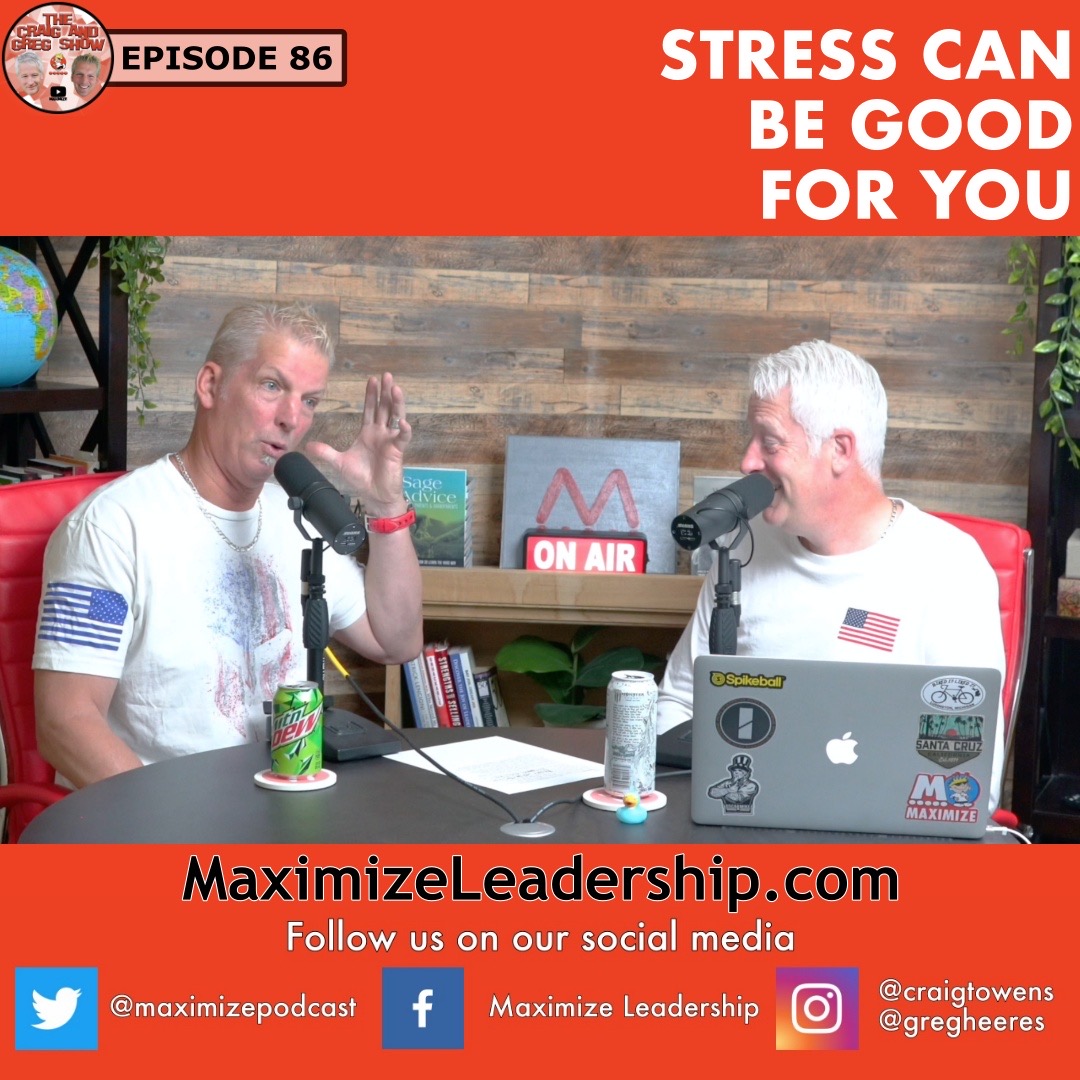
The Craig And Greg Show: Stress Can Be Good For You

Listen to the audio-only version of this podcast by clicking on the player below, or scroll down to watch the video.

Stress might have six letters, but it seems like some leaders have a knee-jerk reaction to treat it like a four-letter word. While it might be nice to fantasize about an stress-free life, this is both entirely unrealistic and detrimental to your leadership. The truth is, a mild amount of stress can be helpful to you personally, as well as your organization as a whole. Join us as Greg and I unpack why you should embrace a bit of stress in your life.

  • [0:14] I have a brain block to start the show! 
  • [0:59] Let’s define stress in a work environment, as opposed to simply work tension.
  • [1:51] An interesting study about allowing moderate stress to remain in the workplace.
  • [5:30] Mild stress is helpful for our brains.
  • [7:37] Stress expands and strengthens our team connections too.
  • [10:26] Can stress help increase someone’s work performance?
  • [13:01] Our physical bodies use a stress hormone called cortisol. How can leaders maximize its effects?
  • [14:38] Stress can help us rise to the challenge in a way that easy times can’t.
  • [16:02] I share an example of a teammate who grew through stress, as well as a supporting quote.
  • [18:40] Greg shares a negative example of an organization that became stress-free and drifted toward failure.
  • [19:30] When times are easy, we can begin to slide into apathy.
  • [22:40] Should we teach crisis leadership to our teams? If so, how should we do this?
  • [23:47] We love to coach leaders who are dealing with crisis in their organizations. 

Check out this episode and subscribe on YouTube so you can watch all of the upcoming episodes. You can also listen to our podcast on Spotify and Apple.

Links & Quotes

If your mental health is struggling remember GIGO: garbage in, garbage out. We need to look at all our inputs: physical, emotional, and spiritual. Check out this full message by clicking hereAnd be sure to check out all of my videos on my YouTube channel.

In a post entitled The Quest For Immortality, John Stonestreet reminds us that we are more than just the physical bodies we have. He wrote, “Attempts to achieve immortality have continued (and continued to fail) right up to our own time. Medieval European alchemists believed they could produce ‘the philosopher’s stone,’ which would perfect the imperfect, turning lead into gold and making mortal life immortal. Enlightenment thinkers of the late 18th century rejected the mysticism of alchemy but continued to speculate about the means to attain physical immortality. Mary Shelley’s Frankensteinwas written as a cautionary tale about scientific hubris, in response to the more modern attempts of medicine and biology to preserve, extend, and improve life.” Check out this full post.

“You have to train your mind as much as your body.” —Venus Williams

“Peace is the normal condition and set of the soul of those who know the Kingdom’s presence in their lives. And only Jesus can give us the peace that overcomes the fears and troubles of the world, so that His Kingdom citizens may ‘be of good cheer’ [John 16:33] in all they do, come what may.”

“Hatred and anger are the greatest poison to the happiness of a good mind.” —Adam Smith

“Hard work beats talent when talent doesn’t work hard.” —Anonymous

I really love the He Gets Us presentation of Jesus. Check them out! I used the example Jesus showed us of proper self-care in my book Shepherd Leadership.

My Rebel Mind

Listen to the podcast of this post by clicking on the player below, and you can also subscribe on AppleSpotify, or Audible. 

…Peter took [Jesus] aside and began to rebuke Him (Mark 8:32). 

Can you imagine someone rebuking Jesus?! 

It’s even harder to comprehend when we realize that just three verses earlier Peter made such a bold declaration about Jesus more explicitly than anyone else ever had: “You are the Messiah!” 

This is similar to what happened when Jesus preached His first public sermon in Luke 4:16-30. Luke tells us that the people went from speaking well of Jesus to wanting to kill Him in just a matter of a couple of minutes.

Why? How could this happen so quickly?

In his Gospel, Matthew records Peter’s rebuke this way: “Never, Lord! This shall never happen to You!” (Matthew 16:22). This was Peter’s response to Jesus predicting His cruel mistreatment at the hands of the religious leaders, and His impending crucifixion. 

In the sermon in Luke 4, the people wanted their Messiah to only focus on the Jews and let the rest of the world burn. When Jesus said He was on-mission to save all people everywhere, they were furious with Him. They were angry because He wasn’t going to do things their way. “After all,” they probably thought, “our way is the most logical way.” 

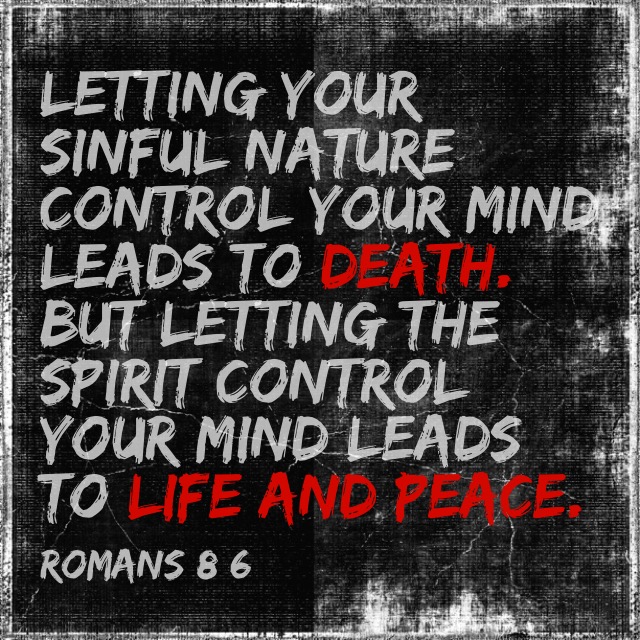
You and I are also in danger of going from praising to rebuking in just a matter of minutes. It can happen so naturally. By naturally I mean that our sinful nature must not be allowed to get its own way.

After Peter rebuked Jesus, He told him, “You do not have in mind the concerns of God, but merely human concerns” (Mark 8:33). Our mind of flesh is hostile to the mind controlled by the Holy Spirit.

There are things that may seem unpleasant or illogical to my natural mind, but I must not be controlled by that mind. I must listen to, and obey, what the Holy Spirit reveals to me. That means I must allow my mind to be transformed to “the concerns of God.” 

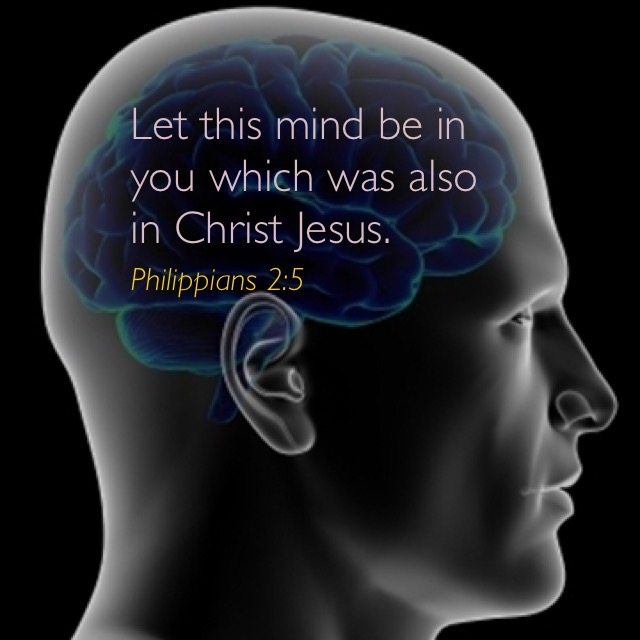
Our daily prayer must be like the prayer Jesus prayed just moments before His arrest: Father, not My will, but Your will be done. If I continue to do things my way, my natural mind will naturally rebuke Jesus, and I can go from praise to rebuke in a matter of moments. I don’t ever want to be guilty of rebuking Jesus, so I desire to “have the same mindset as Christ Jesus” (Philippians 2:5). I hope you will join me in this prayer.

►► Would you please prayerfully consider supporting this ministry? My Patreon supporters get behind-the-scenes access to exclusive materials. ◀︎◀︎

Poetry Saturday—An Exercise For The Mind Of Christ

The mind—ah!, what a precious gift!
But what a task each day to sift
from every thought just those that lift
and raise us to God’s glory.

But take from Paul each day one phrase,
and seek just one of many ways
which someone dear its truth displays,
and note it, to God’s glory.

Then, when the day at last is through,
share what this person means to you,
how in this one this phrase is true,
for God’s delight and glory.

The mind is precious, but untrained
unless its ways are all constrained
to serve the Lord. Thus shall be gained
for us, eternal glory! —T.M. Moore, inspired by Philippians 4:8

On Living In A [COVID-19] Age

In 1948, World War II had come to a close and the nuclear age had dawned. The Cold War was beginning to ratchet up and the fear of nuclear annihilation was gripping people’s hearts. 

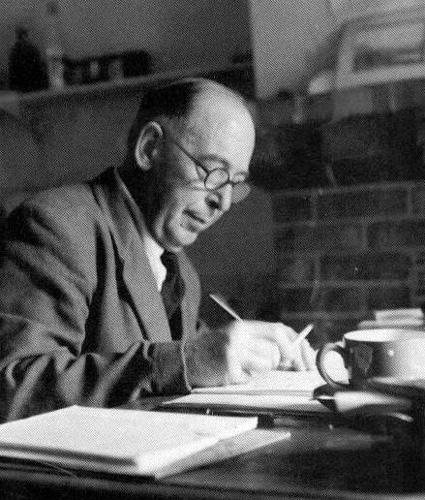
In this environment, C.S. Lewis wrote an essay entitled On Living In An Atomic Age. I have changed the word “atomic” for “COVID-19,” and I think you will see the relevance. 

In one way we think a great deal too much of the COVID-19 virus. “How are we to live in a COVID-19 age?” I am tempted to reply: “Why, as you would have lived in the sixteenth century when the plague visited London almost every year, or as you would have lived in a Viking age when raiders from Scandinavia might land and cut your throat any night; or indeed, as you are already living in an age of cancer, an age of syphilis, an age of paralysis, an age of air raids, an age of railway accidents, an age of motor accidents.”

In other words, do not let us begin by exaggerating the novelty of our situation. Believe me, dear sir or madam, you and all whom you love were already sentenced to death before the COVID-19 virus was invented: and quite a high percentage of us were going to die in unpleasant ways. We had, indeed, one very great advantage over our ancestors—anesthetics; but we have that still. It is perfectly ridiculous to go about whimpering and drawing long faces because the scientists have added one more chance of painful and premature death to a world which already bristled with such chances and in which death itself was not a chance at all, but a certainty.

This is the first point to be made: and the first action to be taken is to pull ourselves together. If we are all going to be destroyed by the COVID-19 virus, let that virus when it comes find us doing sensible and human things—praying, working, teaching, reading, listening to music, bathing the children, playing tennis, chatting to our friends over a pint and a game of darts—not huddled together like frightened sheep and thinking about viruses. They may break our bodies (a microbe can do that) but they need not dominate our minds.

For Christians, I would urge you to think in ways in which I am certain C.S. Lewis would agree: 

Set your minds on things above, not on earthly things. (Colossians 3:2) 

Finally, brothers and sisters, whatever is true, whatever is noble, whatever is right, whatever is pure, whatever is lovely, whatever is admirable—if anything is excellent or praiseworthy—think about such things. (Philippians 4:8) 

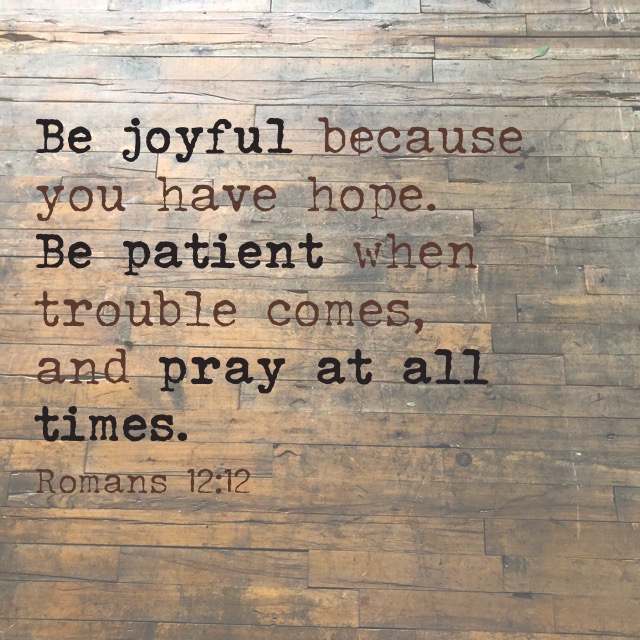
Be joyful because you have hope. Be patient when trouble comes, and pray at all times. (Romans 12:12)

Poetry Saturday—Mind Is The Master

Mind is the Master power that moulds and makes,
And Man is Mind, and evermore he takes
The tool of Thought, and, shaping what he wills,
Brings forth a thousand joys, a thousand ills:—
He thinks in secret, and it comes to pass:
Environment is but his looking-glass. —James Allen, in As A Man Thinketh

10 Quotes From “As A Man Thinketh”

As A Man Thinketh feels a lot like the biblical book of Proverbs, stimulating us to think about our habitual thought patterns. Check out my full book review by clicking here.

“As the plant springs from, and could not be without, the seed, so every act of a man springs from the hidden seeds of thought, and could not have appeared without them.” 

“Man is made or unmade by himself; in the armory of thought he forges the weapons by which he destroys himself; he also fashions the tools with which he builds for himself heavenly mansions of joy and strength and peace.” 

“The soul attracts that which it secretly harbors; that which it loves, and also that which it fears; it reaches the height of its cherished aspirations; it falls to the level of its unchastened desires.” 

“Good thoughts and actions can never produce bad results; bad thoughts and actions can never produce good results. This is but saying that nothing can come from corn but corn, nothing from nettles but nettles. Men understand this law in the natural world, and work with it; but few understand it in the mental and moral world (though its operation there is just as simple and undeviating), and they, therefore, do not co-operate with it.” 

“Blessedness, not material possessions, is the measure of right thought; wretchedness, not lack of material possessions, is the measure of wrong thought.” 

“A man only begins to be a man when he ceases to whine and revile.” 

“Men imagine that thought can be kept secret, but it cannot; it rapidly crystallizes into habit, and habit solidifies into circumstance.” 

“They who have no central purpose in their life fall an easy prey to petty worries, fears, troubles, and self-pityings.” 

“This is the royal road to self-control and true concentration of thought. Even if he fails again and again to accomplish his purpose (as he necessarily must until weakness is overcome), the strength of character gained will be the measure of his true success, and this will form a new starting-point for future power and triumph.” 

“The oak sleeps in the acorn; the bird waits in the egg; and in the highest vision of the soul a waking angel stirs. Dreams are the seedlings of realities. Your circumstances may be uncongenial, but they shall not long remain so if you but perceive an Ideal and strive to reach it. You cannot travel within and stand still without.” 

9 More Quotes from “The Way Of The Warrior”

Erwin McManus’ book The Way Of The Warrior will unleash something in you to want to become the warrior for peace that God intended you to be! Check out my full book review by clicking here. 

“There is no territory more critical or difficult for you to take than that of your inner world. … Every battle that you will ever face in the outside world must first be one in your inner world.” 

“When your mind is shaped by hope, you do not see simply two paths; you see an endless number of paths filled with opportunity, possibility, and beauty. However, if your mind-set is shaped by cynicism or fear or doubt, then the only paths you see in front of you are the ones that are filled with pain and disappointment, with failure and hardship.” 

“The warrior knows that honor is not found in the victory. Honor is found in the nobility of the battle. If the battle is not worthy of the warrior’s life, there is no honor in its victory. In the same way, the warrior knows there is no dishonor in defeat. Failure and defeat are not the same. To fear defeat is to surrender victory. There is only a good fight and a good death for the one whose life is given to the noble. The warrior never claims victory for themselves but only for others. In the same way, the warrior never gives blame for defeat but owns it for themselves. The warrior owns defeat, and therefore defeat never owns the warrior. The warrior who lives and dies with honor enters each eternity undefeated.” 

“Here is the hard reality: even if it’s not your fault, it’s still your responsibility. Though the wounding wasn’t your fault, the healing is your responsibility. Though your past may not be your fault, your future is your responsibility. Though their choices were not your fault, your choices are your responsibility. Don’t let those who are at fault keep their hold on your life by relinquishing your power to change and to be free of them.” 

“Energizing and exhausting are not diametrically opposed. The things that give you energy also cost you energy, but that cost has a return. The things that energize you the most might actually cost you the most energy. They might be the hardest things that you do. They might be the most difficult challenges in your life. But when they are energizing, you do not find yourself in a deficit of energy, because whatever it costs you, the return is greater.” 

“The warrior finds their strength because they fight only battles that matter.” 

“Worry consumes your energy without productivity. … Worry is a waste of energy. Emotions such as anxiety and stress are the result of unharnessed energy misdirected by our fears and doubts. … When you doubt, you hesitate. When the warrior hesitates, he faces certain defeat. … When you doubt, your energy wars against itself. It becomes unharnessed and unfocused and loses its power. There is a strength that comes when you have confidence that even if you fail, you’ve given yourself to the right battle. We spend too much of our lives trying to make sure we are right about the what, the where, the when, and the how, and too little time making sure we are right about the why.” 

“We transmit to one another what occupies our souls. Your soul is the conduit of your energy. If your soul is empty, you will consume energy from the world around you. … When you are full of life, you become a conduit of life. You will become a source of what is good and beautiful and true. People will naturally draw inspiration from your life. They will see you as a source of hope.” 

“This is the paradox that the warrior has come to know. They know they are not the source of their own strength. The fire that burns within the warrior is an eternal fire. The warrior knows their strength because they know their weakness. It was Jesus who said, ‘Apart from the Father I can do nothing.’ The warrior understands there is no weakness in this. The warrior has found their strengths and their weaknesses. Jesus spoke to Paul about this: ‘My power is made perfect in weakness.’ The way of the warrior is to know that God is our strength. The warrior boasts all the more gladly about their weaknesses so Christ’s power may rest on them. The warrior knows they were created by God who is Spirit. Though we appear as flesh and blood, every cell in our bodies is energy. All our energy comes from God. What we do with our energy is up to us.” 

Check out some of the other quotes from The Way Of The Warrior that I shared here.