Poetry Saturday—The Nativity

Among the oxen (like an ox I’m slow)
I see a glory in the stable grow
Which, with the ox’s dullness might at length
   Give me an ox’s strength.

Among the asses (stubborn I as they)
I see my Savior where I looked for hay;
So may my beastlike folly learn at least
   The patience of a beast.

Among the sheep (I like a sheep have strayed)
I watch the manger where my Lord is laid;
Oh that my baa-ing nature would win thence
   Some wooly innocence! —C.S. Lewis

Learning Perseverance

I have shared three lessons I learned going through dark times in my life (you can check them out here, here, and here), but we aren’t even close to exhausting all of the lessons that can be learned in the night. I want to teach you one principle that will allow for lifelong learning and application of these nighttime lessons. 

The apostle Paul shared how he had matured during his times of struggle. He told the Corinthians he realized that God had delivered him in the past, was delivering him now, and would continue to deliver him in the future (see 2 Corinthians 1:3-11). The key is to hang in long enough to actually see how God brings about the deliverance and teaches the lessons. 

Paul told the Corinthians, “No temptation has overtaken you except what is common to mankind. And God is faithful; He will not let you be tempted beyond what you can bear. But when you are tempted, He will also provide a way out so that you can ENDURE it (1 Corinthians 10:13). And the writer of Hebrews said, “So do not throw away your confidence; it will be richly rewarded. You need to PERSEVERE so that when you have done the will of God, you will receive what He has promised” (Hebrews 10:35-36). 

The Greek word translated “persevere” means keeping focused on the goal despite the struggles that it takes to get there. Jesus used this same Greek word at the conclusion of His parable of the sower: “The seed on good soil stands for those with a noble and good heart, who hear the Word, retain it, and by PERSEVERING produce a crop”; a crop that Jesus said was a hundred times more than what was sown (see Luke 8:5-15). 

I love riding my bike on the White Pine Trail by my house. My long rides have a really fun stretch where I am flying downhill! But as fun as that part is, I’m not really building anything of lasting value. However, when I am coming back uphill and I want to quit because my legs are burning and I can hardly breathe, that becomes a valuable struggle. I cannot build endurance by any other way than to push myself just a little bit farther each time. When I want to quit, I pedal just a few more feet. Gradually, the uphill becomes less daunting. 

A friend gave me a t-shirt I like to wear on my rides. When I put it on the blue-lettered message on the shirt says, “Do It!” but as I struggle uphill and the sweat begins to pour off my body, a new message emerges: “Don’t Quit! 

I have learned that easy roads teach very few valuable lessons. 

So here are three thoughts to help you persevere in your struggling times: 

  1. Keep your eyes on Jesus and on His eternal rewards (Hebrews 12:1-3; James 1:2-4, 12) 
  2. Keep persevering friends close by—notice the “let us” phrases the writer of Hebrews uses 
  3. On your worst day, don’t quit but commit to going one day longer (Romans 5:3-4) 

[check out all of the verses by clicking here]

Remember that as you struggle and persevere, you are not only building your own endurance, but you are strengthening yourself to be able to help others. So we can be thankful IN the night because God is building our endurance for the next night, and our endurance for our friend’s next night. 

If you have missed any of the other lessons in this series called Thankful In The Night, you can access the full list by clicking here. 

Learning Contentment

A mark of a maturING saint is one who when he realizes he is in a trough begins to praise God in anticipation of the blessings which are coming! Even the most mature Christian you know hasn’t “arrived”; we are all a work-in-progress. Going through the dark nights is one way God helps mature our understanding of contentment. 

You know the differences between a need and a want: a need is something vital, something I require to survive; a want is something that would be nice to have. 

In good times I can convince myself that my wants are really the same as my needs. In the bright, sunny times a lot of wants mistakenly get called needs. But in the dark nights, this confusion is quickly clarified! 

In Philippians 4, Paul explains what he has learned about needs as he went through some very challenging, dark times. When he says he knows what a need is, he isn’t exaggerating a bit (see 2 Corinthians 11:24-28). And yet the Amplified Bible has Paul saying, “Not that I am implying that I was in any personal want.” 

That’s because Paul was learnING contentment. The verb tense here means I have learned, I am learning, and I will keep on learning. It was an ongoing process that helped him clarify needs from wants. The word Paul uses for content is unique in all the New Testament and it means independent of external circumstances, or as the Amplified Bible says, “satisfied to the point where I am not disturbed or disquieted in whatever state I am. 

Paul uses another unique word in verse 12 when he says “I have learned.” This is a different Greek word from the previous verse. This time it means disciplined by experience to know how to respond. In other words, Paul disciplined himself to reflect on the lessons he learned in the night. The cliche “Experience is the best teacher” isn’t necessarily true. Lots of people go through experiences and never learn a single thing. Instead, we should say, “Evaluated experience is the best teacher.” That’s exactly what Paul is saying here: “I have learned lessons in my time of meditation after going through a dark night.” 

The English dictionary defines contentment in two important phrases: 

  1. Satisfied with what I have. In Psalm 16, David learned that he had everything he needed in God, and Jesus reminded us that “your Father knows what you NEED before you ask Him” (Matthew 6:8).
  2. Satisfied with who I am. Paul knew that “God, who set me apart from my mother’s womb and called me by His grace, was pleased” (Galatians 1:15). God made Paul on purpose and for a purpose, and Paul was satisfied with who he was in Christ. God made you on purpose too! 

Our relationship with Jesus is a maturING one. It’s only IN Christ that I can be satisfied with what I have, and satisfied with who I am. It’s only IN the night that my wants get separated from my needs, by learnING contentment.

I can be thankful in the night because I am learning contentment. 

If you’ve missed any of the other messages in this series called Thankful In The Night, you can access the full list by clicking here. 

Poetry Saturday—When Sorrow Walked With Me

I walked a mile with Pleasure—
She chattered all the way
But left me none the wiser
For all she had to say.
I walked a mile with Sorrow
And ne’er a word said she,
But, oh, the things I learned from her
When Sorrow walked with me. —Robert Browning Hamilton

The Craig And Greg Show: Leaders Are Learners

On this episode of “The Craig And Greg Show” we discuss:

  • the importance of leaders being lifelong learners
  • the many health benefits of learning
  • the science of how our brains process new information
  • how important it is to involve a mentor or a learning partner
  • questions for leaders to ask themselves

Check out this episode and subscribe on YouTube so you can watch all of the upcoming episodes.

Get more information at Maximize Leadership.

A Spiritual Clinic (book review)

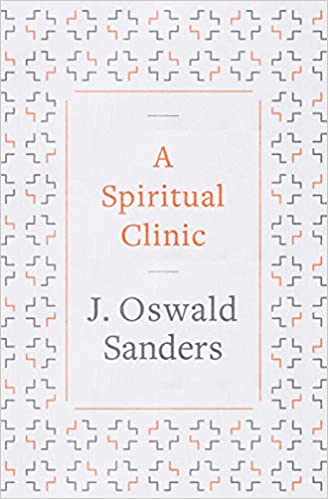
Some of the most formative leadership books I read early in my leadership journey were written by J. Oswald Sanders. Books like Spiritual Maturity and Spiritual Leadership. It’s my desire to be a lifelong learner, and in that pursuit, I need an external, objective source to help keep me on track. Sanders’ book A Spiritual Clinic is just the check-up I needed! 

In the physical world, we may get a check-up from our primary care physician, a counseling session with a mental health professional, or perhaps a regular check-up with a spiritual advisor like a pastor or mentor. All of these are healthy if they are all grounded in the principles in God’s Word. 

Sanders brings us to his spiritual clinic for a well-rounded check-up of our spiritual leadership. He says, “[This book’s] thesis is that the complex strains and problems which the Christian worker encounters in the contemporary world find their answer, not in tranquilizers or stimulants, but in a correct understanding and application of scriptural principles, and effectiveness in Christian work is the natural outcome of conformity to spiritual laws enunciated in the Scriptures.” 

So “doctor” Sanders holds up the mirror of God’s Word to our activities to see how we are performing in light of God’s standards. He addresses topics like stress, learning, suffering, depression, spiritual ups-and-downs, and our conscience. He zeros-in on leadership topics like ambition, authority, discipleship, use of time, and understanding God’s calling. 

Each chapter is short but packed with so many principles that it should take you quite a while to evaluate and implement. This is time well spent! 

I am a Moody Publisher book reviewer. 

Thursdays With Spurgeon—Getting Into The Truth

This is a weekly series with things I’m reading and pondering from Charles Spurgeon. You can read the original seed thought here, or type “Thursdays With Spurgeon” in the search box to read more entries.

Getting Into The Truth 

     The difficulty is the truth is not so easy to discover. There is no man born in this world by nature who has the truth in his heart. … Then since we are not born with the truth, we have the task of searching for it. … But here is the difficulty, that we cannot follow without a guide the winding path of truth. Why is this?

     First, because of the very great intricacy of truth itself. Truth itself is no easy thing to discover. … The most earnest student of Scripture will find things in the Bible that puzzle him. However earnestly he reads it, he will see some mysteries too deep for him to understand. He will cry out, ‘Truth! I cannot find you.’ … But we bless God it is said, ‘When the Spirit of truth has come, He will guide you into all truth’ [John 16:13]. … 

     We also need a guide because we are so prone to go astray. … David says, ‘I have gone astray like a lost sheep’ (Psalm 119:176). … If grace did not guide a man, he would go astray though there were hand-posts all the way to heaven. 

     The ‘Spirit of truth’ [is] not an influence or an emanation but actually a Person. ‘When the Spirit of truth has come, He will guide you into all truth.’ … He is infallible. … He is ever-present. …  

     Man can guide us to a truth, but it is only the Holy Spirit who can guide us into a truth. ‘When He, the Spirit of trying has come, He will guide you into’—mark that word—‘truth.’ … You may be brought to a chamber where there is an abundance of gold and silver, but you will be no richer unless you effect an entrance. It is the Holy Spirit’s work to unbar the two-leaved gates and bring us into a truth so we may get inside it. 

From The Holy Spirit: The Great Teacher 

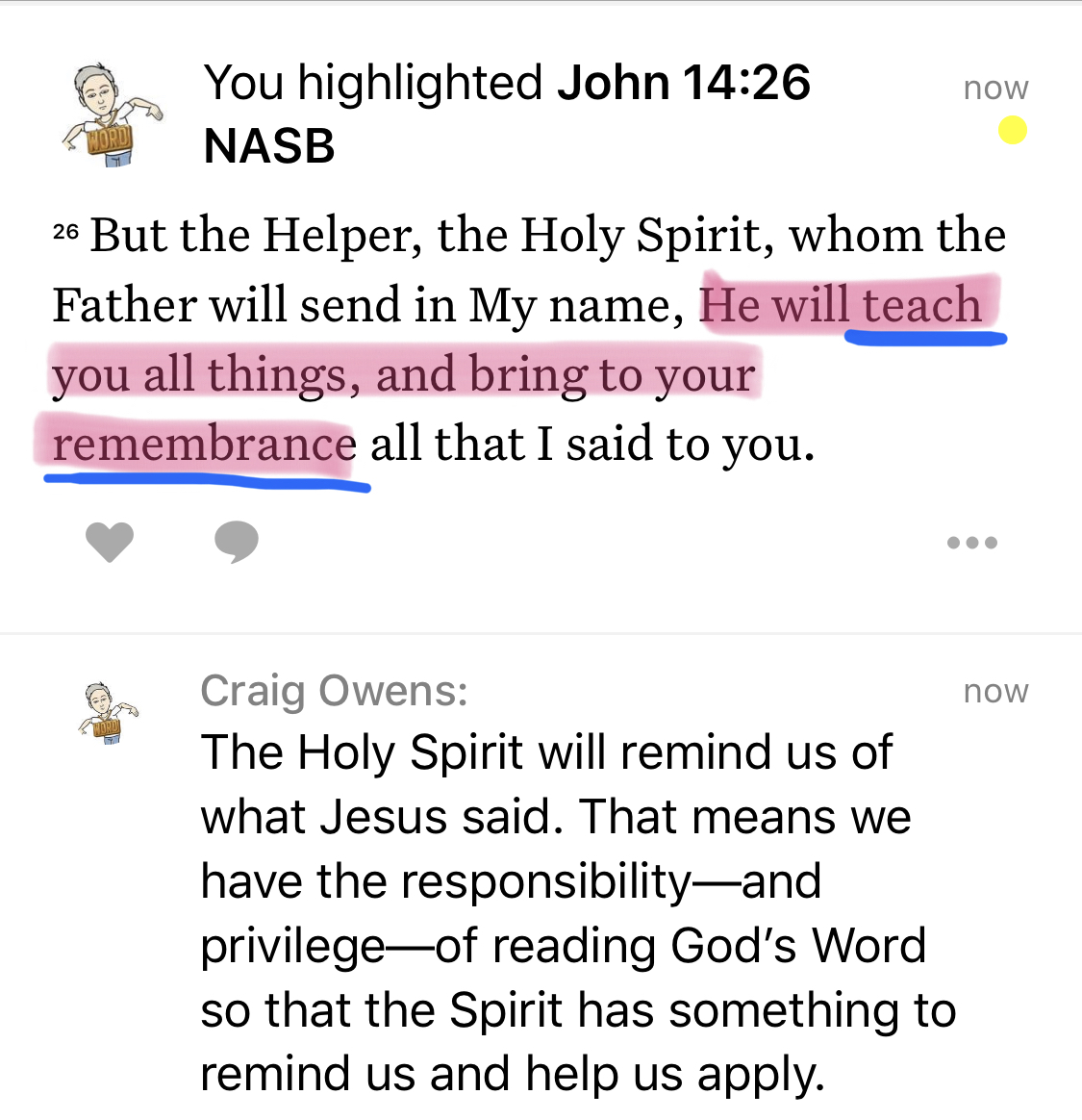
I have often said that the greatest Expositor of Scripture is the Holy Spirit. He is the One who inspired the biblical authors, and He is also the One living in a Christian to illuminate the biblical texts. 

Before you open your Bible, pray this prayer from the psalms, “Open my eyes to see wonderful things in Your Word” (Psalm 119:18). And then listen to the Spirit’s voice as He takes you into the truth that will enrich your life and bring God greater glory. Just like those first Christians who were baptized in the Holy Spirit became skilled in their understanding of Scripture, you can experience the exact same thing today!

I have a whole series of messages on the power of Pentecostal Christians that you can read by clicking here and here.

Thursdays With Spurgeon—In Pursuit Of Truth

This is a weekly series with things I’m reading and pondering from Charles Spurgeon. You can read the original seed thought here, or type “Thursdays With Spurgeon” in the search box to read more entries.

In Pursuit Of Truth 

     The disciples had been instructed concerning certain elementary doctrines by Christ, but He did not teach His disciples more than what we should call the ABCs of religion. He gives His reasons for this in the twelfth verse: ‘I still have many things to say to you, but you cannot bear them now’ [John 16:12]. His disciples were not possessors of the Spirit. They had the Spirit so far as the work of conversion was concerned, but not as to the matters of bright illumination, profound instruction, prophecy, and inspiration. Jesus says, ‘I am now about to depart, and when I go from you, I will send the Comforter to you. You cannot bear these things now. Howbeit, when He, the Spirit of truth, is come, He will guide you into all truth’ [John 16:13]. The same promise that He made to His apostles stands good to all His children. …  

     We think it is right that the Christian ministry should be not only arousing but instructing, not merely awakening but enlightening, that it should appeal not only to the passions but to the understanding. We are far from thinking doctrinal knowledge to be of secondary importance. We believe it to be one of the first things in the Christian life, to know the truth and then to practice it. …  

     What we call curiosity is something given us of God impelling us to search into the knowledge of natural things. That curiosity, sanctified by the Spirit, is also brought to bear in matters of heavenly science and celestial wisdom. … A true Christian is always intently reading and searching the Scriptures that he may be able to certify himself as to its main and cardinal truths. …  

     Depend on this: The more you know of God’s truth, all things being equal, the more comfortable you will be as a Christian. …  

     Knowledge of truth will make us very serviceable in this world. We will be skillful physicians who know how to take the poor distressed soul aside, to put the finger on his eye and take the scale off for him that heaven’s light may comfort him. … There is nothing like the real truth and the whole truth to make a man useful.  

From The Holy Spirit: The Great Teacher 

Throughout the public ministry of Jesus, the Gospels tell us of His apostles simply not understanding that Jesus was fulfilling Old Testament prophecy in all that He was doing. But all of that changed after the Day of Pentecost when then followers of Jesus were baptized in the Holy Spirit! 

Beginning with Peter’s sermon on the Day of Pentecost and throughout the rest of the New Testament, we see how the Christians took Old Testament Scriptures and applied them in the new understanding the Holy Spirit gave them of the work of Jesus. As a result, radical changes began to take place not only within the Church but throughout society as well. 

As Spurgeon noted, “The same promise that He made to His apostles stands good to all His children.” That promise of the Holy Spirit’s empowerment, illumination, creativity, and application of Scripture is still available for all Christians today! 

Don’t limit your Christian testimony or your effectiveness in the world by keeping the Holy Spirit relegated to some unknowable, mysterious work. Allow Him to be the driving force in all that you think and do! 

I have a whole series of messages on the power of Pentecostal Christians you can read by clicking here and here.

The Core Curriculum Of The Spirit

“The Law of God teaches us how to love Him and our neighbors (Matthew 22:34-40). The Law of God is critical for seeking the Kingdom of God (Matthew 5:17-19). The Law of God liberates us from the blinding and binding power of sin (James 2:8-13). The Law of God marks the path of love that Jesus walked, and that all must walk who would follow Him (1 John 2:1-6; 5:1-3). The Law of God provided the framework within which the apostles ordered their churches (cf. 1 Corinthians 5, 9; James 2:5; 1 John 5). The Law of God is the core curriculum of the Spirit, as He brings us into the presence of God’s glory and transforms us into the image of Jesus Christ (Ezekiel 36:26-27; 2 Corinthians 3:12-18). Neglecting the Law of God is a major cause for the decline of true and selfless love in the world; it licenses the progress of evil; and it threatens to render the prayers of Law-neglecting believers an ‘abomination’ or, we might say, ‘a dead and a useless thing’ (Matthew 24:12; Proverbs 28:4, 9). 

[all Scriptures from the above paragraph are here]

“It’s no wonder the psalmist, echoing Moses, insisted that the righteous person, the one who embodies the goodness of God in all his ways, meditates on the Law of God day and night, hides it in his heart and embodies it in all his ways (Psalm 119:9-11; Deuteronomy 6:1-9), keeps it diligently, delights in and loves it, and hastens to make sure his feet follow in its path (cf. Psalm 1; Psalm 119:4, 5, 35, 59, 60, 97). 

[all Scriptures from the above paragraph are here]

“If you are missing the Law of God in your relationship with Jesus, you are depriving yourself of a most important resource for bringing the goodness of God to light in the land of the living. The good works outlined in the Law of God are those ‘ordained of old’ which God intends us to do in all our ways (Ephesians 2:10). Yes, understanding the Law can be difficult. But we can learn from the prophets, Jesus, and the apostles how to read, study, and meditate in this most important corpus of Biblical literature, and thus we can discover the true freedom for goodness and love that God has prepared for us.” —T.M. Moore 

Apples Of Gold In Pictures Of Silver (book review)

The title of this book comes from the King James Version of the Bible: “A word fitly spoken is like apples of gold in pictures of silver” (Proverbs 25:11). A picturesque phrase for words that are challenging and uplifting. 

This book came to me from my Grandfather’s library. Originally published in 1889, my Grandfather had an autographed copy from 1901. The words in this book have stood the test of time. 

The first section of the book contains quotes, poems, and other life-guiding words to be read each day of the year. The subsequent sections are targeted to specific seasons of life. They are “Apples of Gold for…

  • … Children
  • … Youths 
  • … Lasses 
  • … Young Men 
  • … Young Women
  • … Early Married Life
  • … Middle-Aged 
  • … The Old
  • … Mothers 
  • … Dark Days 
  • … Bright Days” 

Each of these sections contains short stories, quotes, and poetry to both recover from a stumble and help the reader grow to new levels of maturity and success. 

I realize this book is out of print and probably unavailable to most, but there is an important principle from these types of books: Never stop learning. Find sources of wisdom that have stood the test of time, and let others’ hindsight be your foresight as you strive to keep on growing. In the case of Apples Of Gold In Pictures Of Silver, the editors approached this book from a biblical worldview, making sure that all of the counsel they printed aligned with God’s Word. 

I would encourage you to find these types of books to help you grow through life.