The Core Curriculum Of The Spirit

“The Law of God teaches us how to love Him and our neighbors (Matthew 22:34-40). The Law of God is critical for seeking the Kingdom of God (Matthew 5:17-19). The Law of God liberates us from the blinding and binding power of sin (James 2:8-13). The Law of God marks the path of love that Jesus walked, and that all must walk who would follow Him (1 John 2:1-6; 5:1-3). The Law of God provided the framework within which the apostles ordered their churches (cf. 1 Corinthians 5, 9; James 2:5; 1 John 5). The Law of God is the core curriculum of the Spirit, as He brings us into the presence of God’s glory and transforms us into the image of Jesus Christ (Ezekiel 36:26-27; 2 Corinthians 3:12-18). Neglecting the Law of God is a major cause for the decline of true and selfless love in the world; it licenses the progress of evil; and it threatens to render the prayers of Law-neglecting believers an ‘abomination’ or, we might say, ‘a dead and a useless thing’ (Matthew 24:12; Proverbs 28:4, 9). 

[all Scriptures from the above paragraph are here]

“It’s no wonder the psalmist, echoing Moses, insisted that the righteous person, the one who embodies the goodness of God in all his ways, meditates on the Law of God day and night, hides it in his heart and embodies it in all his ways (Psalm 119:9-11; Deuteronomy 6:1-9), keeps it diligently, delights in and loves it, and hastens to make sure his feet follow in its path (cf. Psalm 1; Psalm 119:4, 5, 35, 59, 60, 97). 

[all Scriptures from the above paragraph are here]

“If you are missing the Law of God in your relationship with Jesus, you are depriving yourself of a most important resource for bringing the goodness of God to light in the land of the living. The good works outlined in the Law of God are those ‘ordained of old’ which God intends us to do in all our ways (Ephesians 2:10). Yes, understanding the Law can be difficult. But we can learn from the prophets, Jesus, and the apostles how to read, study, and meditate in this most important corpus of Biblical literature, and thus we can discover the true freedom for goodness and love that God has prepared for us.” —T.M. Moore 

Apples Of Gold In Pictures Of Silver (book review)

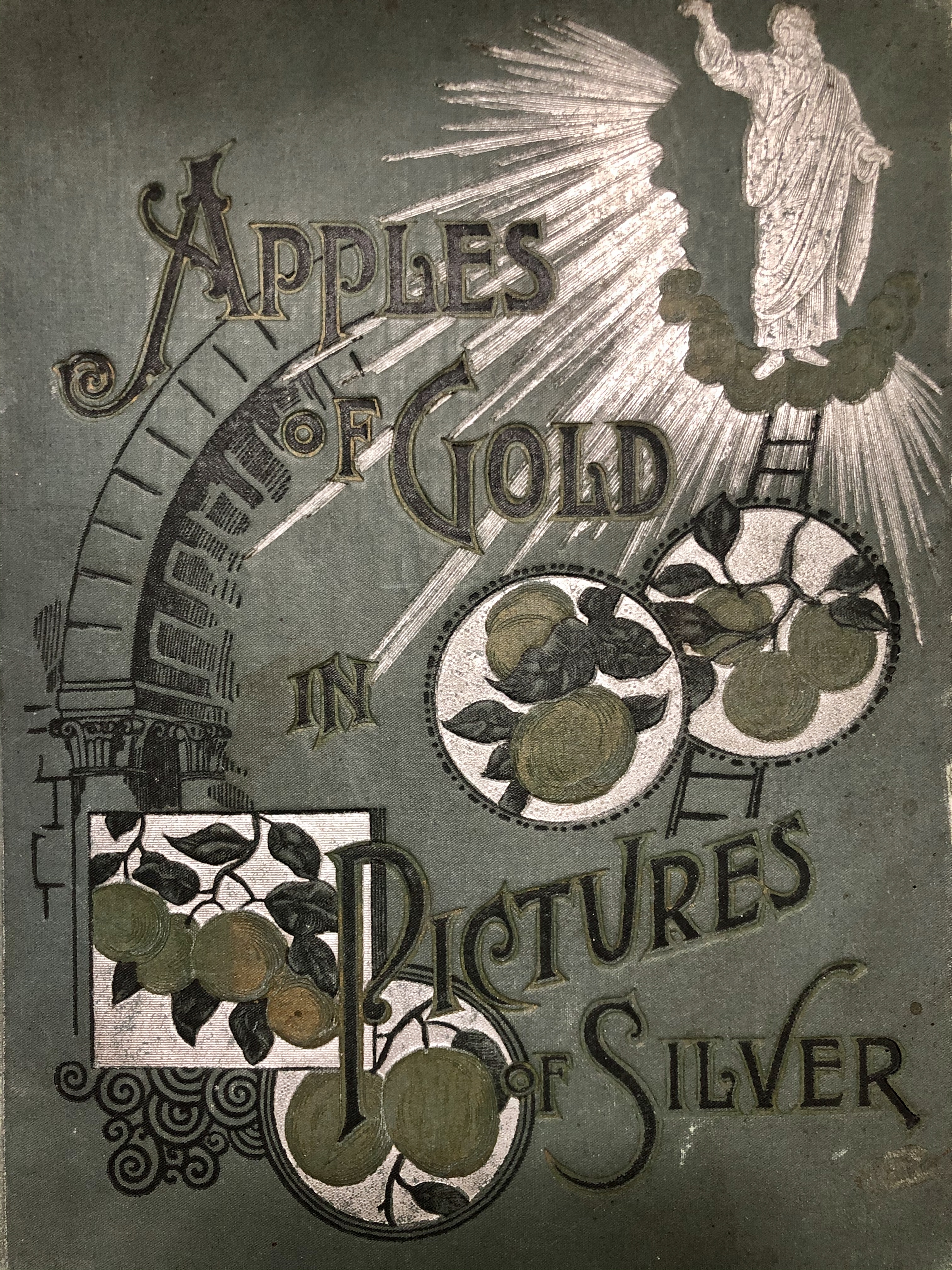
The title of this book comes from the King James Version of the Bible: “A word fitly spoken is like apples of gold in pictures of silver” (Proverbs 25:11). A picturesque phrase for words that are challenging and uplifting. 

This book came to me from my Grandfather’s library. Originally published in 1889, my Grandfather had an autographed copy from 1901. The words in this book have stood the test of time. 

The first section of the book contains quotes, poems, and other life-guiding words to be read each day of the year. The subsequent sections are targeted to specific seasons of life. They are “Apples of Gold for…

  • … Children
  • … Youths 
  • … Lasses 
  • … Young Men 
  • … Young Women
  • … Early Married Life
  • … Middle-Aged 
  • … The Old
  • … Mothers 
  • … Dark Days 
  • … Bright Days” 

Each of these sections contains short stories, quotes, and poetry to both recover from a stumble and help the reader grow to new levels of maturity and success. 

I realize this book is out of print and probably unavailable to most, but there is an important principle from these types of books: Never stop learning. Find sources of wisdom that have stood the test of time, and let others’ hindsight be your foresight as you strive to keep on growing. In the case of Apples Of Gold In Pictures Of Silver, the editors approached this book from a biblical worldview, making sure that all of the counsel they printed aligned with God’s Word. 

I would encourage you to find these types of books to help you grow through life.

Bible Gateway’s Bible Audio App (review)

Typically, I post book reviews. So what’s a review of an audio app doing here? Quite simply, the Bible Gateway Bible Audio App is a wonderful companion piece to the Book of books—the Bible. 

I am a voracious reader, but my all-time, hands-down, nothing-else-is-even-close book is my Bible. I enjoy finding new ways to interact with God’s Word, so I am always on the lookout for study aids or companion pieces. This audio Bible meets this desire very nicely! 

I enjoy how streamlined this app is. Not a lot of options or distractions on the screen. Just pick your passage, select which version you would like to listen to, and tap the big play button. It’s that simple! If you would like to look at the screen while you listen, the verses appear one-by-one at the top of the screen as they are being read. Other options include playback speed, repeat options, and a sleep timer. 

I recently recommended this app to a friend of mine and he wrote, “I have two learning disabilities: dyslexia and ADD. I found the audio easy to listen to and appreciate the large print text. This app is now the first thing and last thing I do every day!” 

The free version of this app is more than adequate, but for a small fee, you can upgrade to add even more versions to your library, which you may then listen to even when you’re not on a WiFi. 

Bible Gateway is owned by Zondervan. Some of the other Zondervan Bible study tools I have reviewed in the past (and I am still using today) include:

I downloaded this audio app for free, and you can too by clicking here. 

Warnings To The Churches (book review)

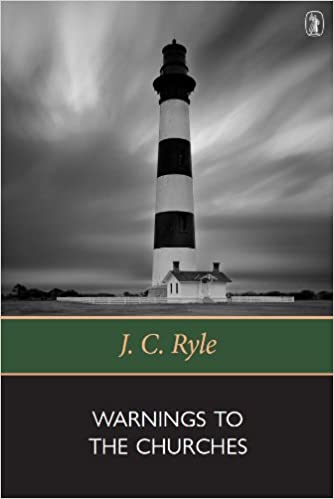
J.C. Ryle died in 1900, placing his writings two centuries before our own. And yet his Warnings To The Churches sound an alarm that is just as relevant to the Church and her leaders as if it were written last week! 

Bishop Ryle spoke and wrote with an authority that sounded much like the Old Testament prophets thundering, “Thus saith the Lord!” And at the same time, you can also hear his ardent love for Christ’s Bride as tenderly as the beloved disciple John, who called himself “the disciple whom Jesus loved.” Taken together, that means Ryle’s words are steeped in authoritative, loving Scripture. 

He pulls no punches in pointing out how even Church leaders have bought into a definition of “church” that doesn’t quite line up with the way Jesus defined it. He reminds pastors of their heavy responsibility to preach the Word of God in all its purity. Just like Jesus, Ryle warns church leaders of the “leaven of the Pharisees and Sadducees.” And he calls for loving confrontation of those leaders who have succumbed to the “leaven” just as Paul confronted Peter. 

This is a challenging book to read simply because of the gut-level honest introspection that it will require. I certainly couldn’t read through this book thinking I’ve got my act together, and I doubt few others will be able to either. If you are a church leader and you would like Ryle’s iron to sharpen your iron, Warnings To The Churches is a definite must-read for you.

Thursdays With Spurgeon—Comments On Commentaries

This is a weekly series with things I’m reading and pondering from Charles Spurgeon. You can read the original seed thought here, or type “Thursdays With Spurgeon” in the search box to read more entries.

Comments On Commentaries

     It has been said that the passage I have taken for my text [Isaiah 7:1-17] is one of the most difficult in all the Word of God. It may be so. I certainly did not think it was until I saw what the commentators had to say about it, and I rose up from reading them perfectly confused! One said one thing, and another denied what the other had said. And if there was anything that I liked, it was self-evident that it had been copied from one to the other and handed through the whole of them! 

     One set of commentators tells us that this passage refers entirely to some person who was to be born within a few months after this prophecy….

     Well, that seems a strange frittering away of a wonderful passage, full of meaning, and I cannot see how they can substantiate their view when we find the evangelist Matthew quoting this very passage in reference to the birth of Christ [Matthew 1:22-23]….

     I find, moreover, that many of the commentators divide the sixteenth verse from the fourteenth and fifteenth verses, and they read the fourteenth and fifteenth verses exclusively of Christ, and the sixteenth verse of Shear-Jashub….

     Then another view, which is the most popular of all, is to refer the passage, first of all, to some child who was then to be born, and afterward, in the highest sense, to our blessed Lord Jesus Christ. … 

     But I think that if I had never read those books at all, but had simply come to the Bible without knowing what any man had written upon it, I would have said, ‘There is Christ here as plainly as possible! Never could His name had been written more legibly than I see it here.’ 

From The Birth Of Christ

Spurgeon was not advocating that we never consult commentaries because elsewhere he said about the use of commentaries: “I find it odd that he who thinks so highly of what the Holy Spirit teaches him speaks so little of what the Holy Spirit teaches others also.” 

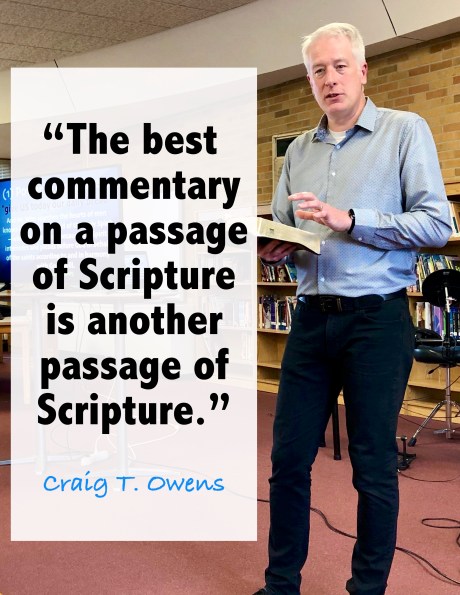
But what I believe Spurgeon is advocating here is this important principle—The best commentary on a passage of Scripture is another passage of Scripture. Which is why he used the passage in Matthew to help him understand the passage in Isaiah.

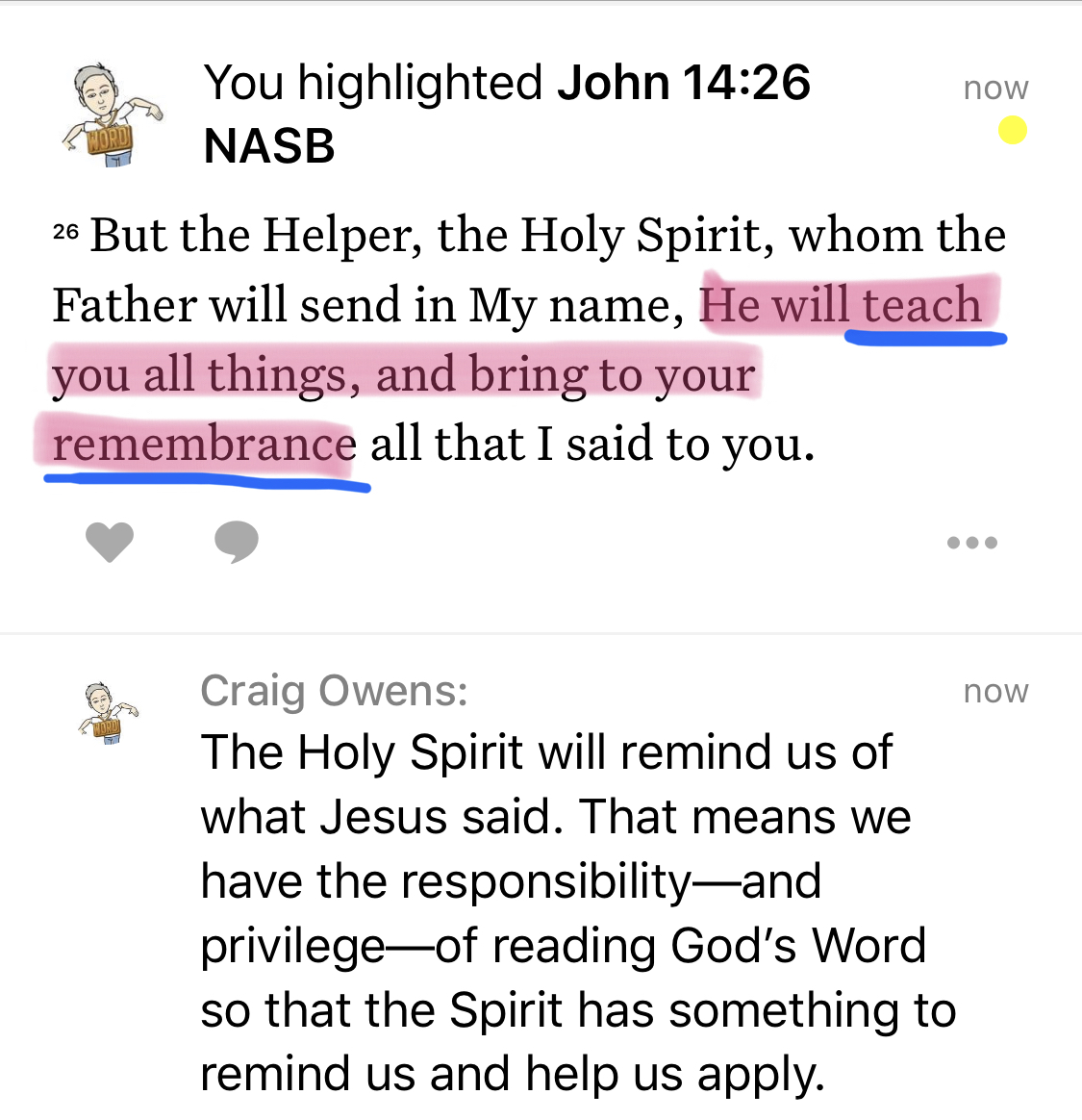
God makes Himself clear in His Word. The same Holy Spirit that inspired the pen of those who wrote the words in the Bible is the same Holy Spirit in you that can illuminate those words to your heart and mind. 

Commentators have their place. I believe that place is after you have prayed through and wrestled with a passage of Scripture for yourself. Think of commentators as the answers in the back of your math book. After you have worked through the equations for yourself, go to the answer key to verify your answers. If you simply look up the answer before you wrestle with the problem, how have you benefitted yourself? 

And always remember that God’s Word is infallible, but men are fallible. Commentators may provide an insight that helps you see something more clearly, but they are never a substitute for God’s very own word on a matter. 

Should you use commentaries? Sure! Find a good one, but consult it only after you have asked the Holy Spirit to help illuminate the passage, and after you have allowed the commentary of Scripture itself to shine its light on the difficult verse or passage.

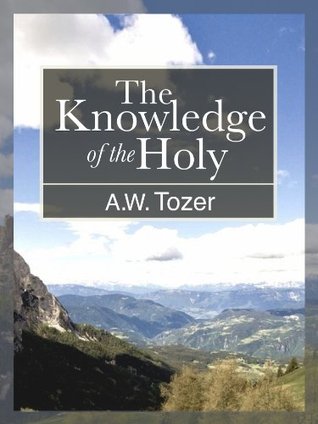
10 Quotes From “The Knowledge Of The Holy”

A.W. Tozer helps us think long and deep about the greatness of God, opening windows of insight that many have not contemplated previously. Check out my full book review of The Knowledge Of The Holy by clicking here. 

“With our loss of the sense of Majesty has come the further loss of religious awe and consciousness of the divine presence. … The decline of the knowledge of the holy has brought on our troubles. A rediscovery of the majesty of God will go along way toward curing them.” 

“What comes into our minds when we think about God is the most important thing about us.” 

“The man who comes to a right belief about God is relieved of ten thousand temporal problems, for he sees at once that these have to do with matters which at the most cannot concern him for very long; but even if the multiple burdens of time may be lifted from him, the one mighty single burden of eternity begins to press down upon him with a weight more crushing then all the woes of the world piled one upon another. …

“But unless the weight of the burden is felt, the gospel can mean nothing to the man; and until he sees a vision of God high and lifted up, there will be no woe and no burden. Low views of God destroyed the gospel for all who hold them.” 

“Among the sins to which the human heart is prone, hardly any other is more hateful to God than idolatry, for idolatry is at bottom a libel on His character. … The essence of idolatry is the entertainment of thoughts about God that are unworthy of Him.” 

“The heaviest obligation lying upon the Christian Church today is to purify and elevate her concept of God until it is once more worthy of Him—and of her.” 

“When the Spirit would acquaint us with something that lies beyond the field of our knowledge, He tells us that this thing is like something we already know, but He is always careful to phrase His description so as to save us from slavish literalism.” 

“An attribute of God is whatever God has in anyway revealed as being true of Himself.” 

“We might be wise to follow the insight of the enraptured heart rather than the more cautious reasonings of the theological mind.” 

“If we ever think well it should be when we think of God.” 

“The harmony of His being is the result not of a perfect balance of parts but of the absence of parts.… An attribute, then, is not a part of God, it is how God is…. The divine attributes are what we know to be true of God. He does not possess them as qualities; they are how God is as He reveals Himself to His creatures.” 

The Knowledge Of The Holy (book review)

One definition of a Christian mystic is someone who engages in deep, prayerful pondering of the nature of God, as He is revealed in the Scriptures, and then emerges from those intimate encounters to share with us what he or she has learned. I would put A.W. Tozer in this category, especially in his book The Knowledge Of The Holy—The Attributes of God: Their Meaning in the Christian Life. 

Tozer himself described the Christian mystic more fully than I could in his book The Christian Book Of Mystical Verse. In that book, Tozer shared some poetic verses from some of his favorite mystical thinkers. He noted, “The hymns and poems found here are mystical in that they are God-oriented; they begin with God, embrace the worshipping soul, and return to God again.” 

In The Knowledge Of The Holy, Tozer takes us on his own personal journey into the immeasurable depths of God’s greatness. Whereas many theologians tend to focus on one attribute of God at a time, Tozer has a God-given ability to help us see all of God’s attributes operating in their infinite fullness. 

Even as Tozer plunges deep into the attributes of God’s self-existence, self-sufficiency, omniscience, omnipotence, omnipresence, love, mercy, justice, grace, and sovereignty, he reminds us, “Because God is immutable He always acts like Himself, and because He is a unity He never suspends one of His attributes in order to exercise another.” 

This is not a book you can ready lightly or casually, or even quickly. This is a book that invites you to read slowly and reverently each of the short chapters, and then to meditate long on the immenseness of an All-Powerful, All-Loving God who wants to reveal Himself to you. 

The Knowledge Of The Holy is a soul-expanding book!

Hard Work, Not Good Luck

“The thoughtless, the ignorant, and the indolent, seeing only the apparent effects of things and not the things themselves, talk of luck, of fortune, and chance. Seeing a man grow rich, they say, ‘How lucky he is!’ Observing another become intellectual, they exclaim, ‘How highly favored he is!’ And noting the saintly character and wide influence of another, they remark, ‘How chance aids him at every turn!’ They do not see the trials and failures and struggles which these men have voluntarily encountered in order to gain their experience; have no knowledge of the sacrifices they have made, of the undaunted efforts they have put forth, of the faith they have exercised, that they might overcome the apparently insurmountable, and realize the Vision of their heart. They do not know the darkness and the heartaches; they only see the light and joy, and call it ‘luck.’ They do not see the long and arduous journey, but only behold the pleasant goal, and call it ‘good fortune,’ do not understand the process, but only perceive the result, and call it chance.” —James Allen, in As A Man Thinketh

10 Quotes From “Cultivation Of Christian Character”

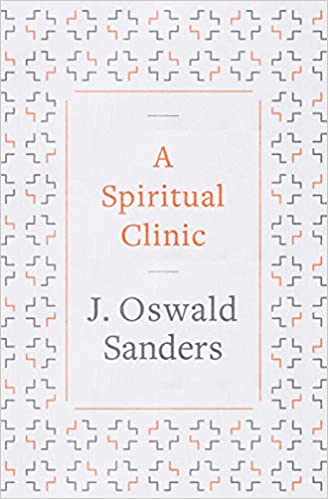
J. Oswald Sanders has given us a short but powerfully effective book for developing more Christlikeness in each and every Christian. Check out my full book review by clicking here. 

“In a word, spiritual maturity is Christlikeness.” 

“Christ set the standard in everything. He was never petulant, always calm; never rebellious, always obedient; never fearful, always courageous; never vacillating, always resolute; never pessimistic, always cheerful; never subtle, always sincere; never grasping, always generous; never acting from expediency, always from principle. He is the pattern of spiritual maturity.” 

“So then our spiritual maturity or immaturity is seen in the manner in which we react to the changing circumstances of life. … It has to be learned. Is it not striking that it is recorded of Christ that ‘though He were a Son, yet He learned obedience by the things which He suffered; and being made perfect, He became the author of eternal salvation’ (Hebrews 5:8-9)? He alone was fully mature. The rest of us are ‘going on to maturity.’ In all of us there are some expressions of our personality in which we react immaturely instead of as mature men of God.” 

“The highest manifestation of spiritual maturity is love. We are only as mature as we are mature in love.” 

“God forbid that we should ever cease to love the gospel in its simplicity, but we must not be content to stay there. We must go on to appreciate increasingly the gospel in its profundity.” 

“There is a place for a constructive contending for the faith. The church has degenerated sadly since Pentecostal days and the servant of the Lord has an important part to play in its revival.” 

“It is possible to get to heaven without living a consecrated life, but the journey there will be barren and disappointing, since consecration is the doorway to undreamed-of joy. Neglect it, fail to seek it, and life will be greatly impoverished. Welcome it, and life becomes inexpressibly enriched.” 

“When we dedicate our lives to God, He consecrate us to His service. We dedicate our lives to Him that He may work His will in us. He consecrates us to Himself that He might make us holy.” 

“It has been suggested that in consecration we bring our lives to God as a blank sheet of paper with our names signed at the bottom. Confident of His love, we invite Him to fill in the details as He will.” 

“It is a life separated to the glory of God. Inherent in the word ‘consecration’ is the idea of separateness. There must of necessity be separation from sin if there is to be separation to God. … The consecrated Christian hates evil, but he has a passion for the right and for the glory of God and Christ. He tests all his actions by the one standard, ‘Is this for the glory of God?’ He will do anything, suffer anything, if only God is glorified. Nothing is too costly to give to the Master.” 

10 Quotes From “As A Man Thinketh”

As A Man Thinketh feels a lot like the biblical book of Proverbs, stimulating us to think about our habitual thought patterns. Check out my full book review by clicking here.

“As the plant springs from, and could not be without, the seed, so every act of a man springs from the hidden seeds of thought, and could not have appeared without them.” 

“Man is made or unmade by himself; in the armory of thought he forges the weapons by which he destroys himself; he also fashions the tools with which he builds for himself heavenly mansions of joy and strength and peace.” 

“The soul attracts that which it secretly harbors; that which it loves, and also that which it fears; it reaches the height of its cherished aspirations; it falls to the level of its unchastened desires.” 

“Good thoughts and actions can never produce bad results; bad thoughts and actions can never produce good results. This is but saying that nothing can come from corn but corn, nothing from nettles but nettles. Men understand this law in the natural world, and work with it; but few understand it in the mental and moral world (though its operation there is just as simple and undeviating), and they, therefore, do not co-operate with it.” 

“Blessedness, not material possessions, is the measure of right thought; wretchedness, not lack of material possessions, is the measure of wrong thought.” 

“A man only begins to be a man when he ceases to whine and revile.” 

“Men imagine that thought can be kept secret, but it cannot; it rapidly crystallizes into habit, and habit solidifies into circumstance.” 

“They who have no central purpose in their life fall an easy prey to petty worries, fears, troubles, and self-pityings.” 

“This is the royal road to self-control and true concentration of thought. Even if he fails again and again to accomplish his purpose (as he necessarily must until weakness is overcome), the strength of character gained will be the measure of his true success, and this will form a new starting-point for future power and triumph.” 

“The oak sleeps in the acorn; the bird waits in the egg; and in the highest vision of the soul a waking angel stirs. Dreams are the seedlings of realities. Your circumstances may be uncongenial, but they shall not long remain so if you but perceive an Ideal and strive to reach it. You cannot travel within and stand still without.”