Christ’s Passionate Journey

In some of our favorite action movies, when the crucial moment for our hero has finally arrived, filmmakers will often switch into slow motion filming. They want you to feel the tension. They want you to see the emotion etched on the face of our hero. They want to make sure you don’t miss a single detail of this pivotal moment in the story. 

The same thing happens in the life of Jesus.

The four Gospels record 3+ years of the life of Jesus on earth. But when Jesus is approaching the Cross—the crucial moment of His ministry—all the Gospel writers go into slow motion. 

For example, Mark doesn’t mention anything about the birth of Jesus and only gives us one verse to tell about satan’s temptation of Jesus in the wilderness. But he uses nearly 40% of his writing to describe the last week of Christ’s life. The numbers are similar for Matthew and Luke, with John devoting almost one-half of his account to Christ’s Passion Week. 

Clearly, there is something happening here that the Gospel writers want to ensure that we don’t miss a single detail! 

Jesus knew all that was about to happen to Him. When Peter swung his sword at the soldiers that came to arrest Him, Jesus said, “Do you think I cannot call on My Father, and He will at once put at My disposal more than twelve legions of angels? But how then would the Scriptures be fulfilled that say it must happen in this way” (Matthew 26:53-54). 

Every step that Jesus took toward the Cross was a step of love. Every word He spoke in His final moments before His death was calculated to sink deep into the memories of all who observed this story. 

We are going to go into “slow motion” as well as we look closely at each day of Christ’s final week of ministry. From His dinner in Bethany to His resurrection, we’ll slow down and ponder deeply the love message Jesus is still conveying to us. 

Here are the days we explored on this journey:

Stop Letting Fear Limit Your Life

Listen to the podcast of this post by clicking on the player below, and you can also subscribe on AppleSpotify, or Audible.

It’s inescapably true: We let fears limit us when we listen to them. 

John Piper wrote, “I call you today to stop defining and limiting your future in terms of your past and start defining it in terms of your God.”

When we have a spirit of fear instead of the confidence that comes from a right relationship with God through Jesus, the smallest of things sends us ducking for cover! “As for those of you who may be left, I will also bring weakness into their hearts in the lands of their enemies. And the sound of a driven leaf will chase them, and even when no one is pursuing they will flee as though from the sword, and they will fall.” (Leviticus 26:36 NASB) 

God says, “Fear not—there is nothing to fear—for I am with you; do not look around you in terror and be dismayed, for I am your God. I will strengthen and harden you to difficulties, yes, I will help you; yes, I will hold you up and retain you with My victorious right hand of rightness and justice.” (Isaiah 41:10 AMPC)

“When God calls you to be free from fear (to overcome this natural emotion and have peace), He does not leave the command hanging in the air. He puts pillars under it. Five of them in Isaiah 41:10. That’s the nature of all biblical commands. They come with divine support.

  1. Fear not . . . God is with you.
  2. Fear not . . . God is your God.
  3. Fear not . . . God will strengthen you.
  4. Fear not . . . God will help you.
  5. Fear not . . . God will uphold you.” —John Piper

When we grasp that God is with us, that God is helping us, that God is bigger than the things we wrongly fear, there is nothing we cannot do! 

As Jonathan said to his young armor-bearer, “Come, and let us go over to the garrison of these uncircumcised; it may be that the Lord will work for us. For there is nothing to prevent the Lord from saving by many or by few.” (1 Samuel 14:6 AMPC)

O Sovereign Lord! You made the heavens and earth by Your strong hand and powerful arm. Nothing is too hard for You! (Jeremiah 32:17 NLT)

“Because you’re not yet taking God seriously,” said Jesus. “The simple truth is that if you had a mere kernel of faith, a poppy seed, say, you would tell this mountain, ‘Move!’ and it would move. There is nothing you wouldn’t be able to tackle.” (Matthew 17:20 MSG)

►► Would you please prayerfully consider supporting this ministry? ◀︎◀︎

What’s Your Knee-Jerk Response To Trouble?

The patellar reflex is a helpful diagnostic tool for a doctor to check the health of your central nervous system. It’s commonly called the knee-jerk response. But beyond the medical world, it’s also come to mean “an immediate unthinking emotional reaction to certain stimuli.” This has implications for the health of our prayer life too. 

When Jesus talked about praying He never said, “If you pray,” but always “When you pray.” He assumed it would be a vital part of a Christian’s life. He also used a verb tense which would add an “ing” to the verb, so He was really saying, “When you are maintaining an ongoing dialogue with your Father.” 

So when something unexpected happens to us, Jesus wants us to say, “Why, my Father already knows about this!” This is the knee-jerk reaction Jesus wants to see. 

We see this on full display when Peter and John are told by the Jewish religious authorities not to talk about Jesus publicly anymore. When these men reported this threat to the rest of the church, notice their knee-jerk response: “When they heard this, they raised their voices together in prayer to God.” 

There are two interesting things I notice in their prayer. The first thing is how they used the Lord’s Prayer (Matthew 6:9-13) as the template of their prayer. 

  • Our Father in HeavenSovereign Lord.
  • Hallowed be Your nameYou made the heaven and the earth and the sea, and everything in them.
  • Your kingdom come, Your will be done on earth as it is in heavenYour power and will decided beforehand what would happen. 
  • Forgive us our debts, as we also have forgiven our debtors“Consider their threats” was like saying, “Forgive us for inappropriate thoughts and forgive them for speaking ignorantly against Your name.”
  • Give us today our daily breadEnable Your servants to speak Your word with great boldness today. 
  • Lead us not into temptation, but deliver us from the evil one. For Yours is the kingdom, and the power and the glory foreverStretch out Your hand to heal and perform miraculous signs and wonders. May Your name be glorified!

The second thing I see in their prayer is that they stood on a biblical promise. They quoted the words of David from Psalm 2—words that had been penned nearly 1000 years earlier—and applied them to their present situation. 

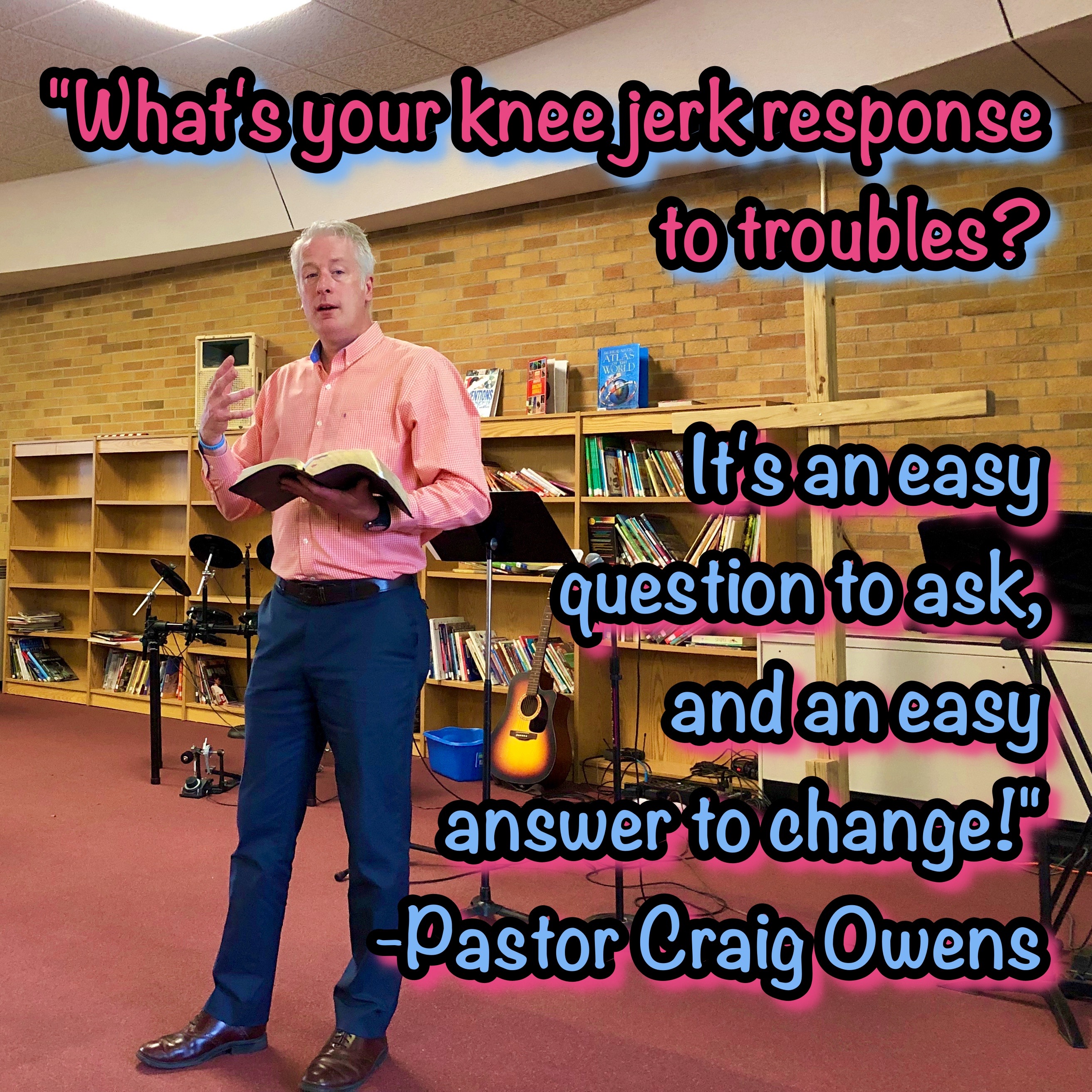
What’s your knee jerk response to troubles? It’s an easy question to ask, and an easy answer to change.

When something comes at you from out of the blue, learn to say, “Why, my Father already knows about this!” Then find a biblical promise you can claim and turn that promise into a prayer modeled on Christ’s prayer. Pray that again and again until God provides the answer. 

Let’s make prayer our first response and not our last resort! 

Thursdays With Oswald—Swine And Testimonies

Oswald ChambersThis is a weekly series with things I’m reading and pondering from Oswald Chambers. You can read the original seed thought here, or type “Thursdays With Oswald” in the search box to read more entries.

Swine And Testimonies

     Jesus Christ is inculcating the need to examine carefully what we present in the way of God’s truth to others [Matthew 7:6]. … 

     Over and over again men water down the Word of God to suit those who are not spiritual, and consequently the Word of God is trampled under the feet of “swine.” Ask yourself, “Am I in any way flinging God’s truth to unspiritual swine?” “Be careful,” Jesus says, “not to give God‘s holy things to ‘dogs.’” …  

     Our Lord never tells us to confess anything but Himself, ‘Whosoever…shall confess ME before men…’ (Matthew 10:32). Testimonies to the world on the subjective line are always wrong, they are for saints, for those who are spiritual and who understand; but our testimony to the world is our Lord Himself, confess Him, “He saved me, He sanctified me, He put me right with God.” … 

     If we are only true to a doctrine of Christianity instead of to Jesus Christ, we drive our ideas home with sledge-hammer blows, and the people who listen to us say, “Well, that may be true”; but they resent the way it is presented. When we follow Jesus Christ the domineering attitude and the dictatorial attitude go and concentration Jesus comes in. 

From Studies In The Sermon On The Mount

The apostle Paul also talked about wanting to make sure that Jesus was seen above all else. More harm than good is done when we talk about our personal experiences with God, which have now become our personal doctrines about God. 

Let God be as unique with others as He is with you. Don’t make other people fall in line with what you believe. Just point them to Jesus. As Chambers says, our testimony should be nothing but “He saved me, He sanctified me, He put me right with God.” Anything else, and we run the risk of casting pearl before swine. 

9 Quotes From “God’s Promises”

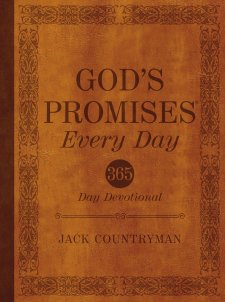
God’s Promises by Jack Countryman is a wonderful resource to help you use the Bible to enhance your prayer life and build your faith. Check out my full review of this fantastic book by clicking here.

“Each day we can look forward to God’s Spirit going before, clearing the way, leading the path, and giving us the guidance we need. … But God doesn’t stop at mere survival. He doesn’t just satisfy and strengthen. Though there will be difficulties and times of drought in our lives, God guides us to His living waters. He enables us to flourish ‘like a watered garden,’ where His blessings always bloom.” [Isaiah 58:11] 

“When life darkens our door with its troubles and trials, satan wants nothing more than for us to feel forsaken and alone—but we are not! God stands by our side; He guides, counsels, and comforts. Rest assured, no matter what you face in the coming year, nothing can separate you from the love of your Father (Romans 8:38-39). Therefore walk boldly into each new day, knowing that you follow the footsteps of the One who never leaves you.” [Deuteronomy 31:8] 

“Troubles are never pleasant at the time, but they quickly turn into tools when entrusted to God. Our Lord will take our times of troubles and trials—even the hard feelings we experience in them—then use them to teach us to fully rely on Him and His provision.” [Psalm 138:7] 

“Our God is a loving God, but He isn’t Santa Claus or a genie in a bottle. Our God loves to give good gifts, but in His economy the best gifts are not tangible or material. Yes, our God feels compassion when we hurt, but He still allows hardships into our lives that will refine our character and strengthen our faith. Against the backdrop of these truths, we can better understand the often-misread statement that God will give us the desires of our hearts. The real promise of this verse is that, as we pray, read His Word, and grow closer to the Lord, He will change our hearts so that what we desire for ourselves is what He desires for us.” [Psalm 37:4] 

“Mercy. We don’t deserve it. We haven’t done—can’t possibly do—anything to earn it. And yet we are promised that this unbelievably lavish gift is ours when we choose to follow Jesus. Why? Why would such a perfect and powerful God gives such a gift to ones so undeserving? He tells us in Titus 3:4: because of ‘the kindness and love of God our Savior toward man.’ And He not only gave us mercy, He also ‘poured out on us abundantly’ His own Spirit, to live and work within us, making us more and more like the Savior who died to save us.” [Titus 3:4-6] 

“Our God is not some fickle, capricious, changeable sort of God. He does not search out ways to be angry or displeased with His people. In fact, He so wants to be pleased with us that He gave us the example of His Son to follow.” [Ephesians 5:2] 

“When our burdens and sorrows seem too heavy for us to bear, God offers to carry them for us, inviting us to cast them upon Him (Psalm 55:22). And when the sorrow is so great that we feel we cannot put one foot in front of the other, God gives us this promise: ‘I will carry you; I will sustain you’ (Isaiah 46:4).” 

“Perhaps nothing is as devastating as being betrayed by someone you love and trust. Know that Jesus—betrayed by Judas, denied by Peter—fully understands. He will enable you to recover. The key, as hard as it is, is to pray for that person and ask God to bless him or her. When you pray to God—and you may have to do this again and again—you release the anger and disappointment that come with being betrayed. It is difficult to despise someone you lift up in prayer. And though retaliating is a natural response, it’s not a godly one. Praying is always the best option. Allow the Lord to receive your hurt and to replace it with His peace.” [Psalm 3:4, 6] 

“When we place our faith in Christ, the stormy seas of our lives—churned up by our own sins—are stilled. And while the storms may still rage around us in this sin-plagued world, they do not rage within us. That does not mean our troubles and tribulations are over, but it does mean we can rest in knowing God will see us through them.” [Romans 5:1] 

Be The 1-In-10

“…ten men who were lepers…” (Luke 17:12). 

Lepers were outcasts in society. Unable to participate in normal daily activities, unable to go to the temple to worship God, even unable to be with their family. These ten lepers encountered Jesus and did two positive things. But 9-of-10 lepers also did two sad things. 

(+) They knew to call on Jesus for help—“Jesus, Master, have pity on us!” 

(+) They took Jesus at His word. Their healing happened as they obeyed Christ’s words—“‘Go, show yourselves to the priests.’ And as they went, they were cleansed.” 

(-) Only one cleansed leper came back to praise God for his healing. 

(-) Only one was pronounced “well” by Jesus. All ten lepers were “cleansed,” which simply meant they were ceremonially clean and could once again participate in daily life and temple worship. But only one was made completely “well.” The Greek word is sozo, which means saved from eternal destruction. The same word is used to describe what Jesus came to do for us: “You shall call His name Jesus, for He shall save [sozo] His people from their sins” (Matthew 1:21). 

“What a rare thing is thankfulness.… ‘Were there not ten cleansed? But where are the nine?’ The lesson before us is humbling, heart-searching, and deeply instructive. The best of us are far too like the nine lepers. We are more ready to pray than to praise, and more disposed to ask God for what we have not, than to thank Him for what we have. … If we would be anxious for nothing, we must make our requests known to God not only with prayer and supplication, but with thanksgiving (Philippians 4:6).” —J.C. Ryle (emphasis mine) 

Probably all of us experience daily blessings from our good God, yet many of us never acknowledge Him as the Source of those blessings. We just accept the blessing and then keep on walking. 

Let’s be the 1-in-10! 

Let’s be quick to recognize God’s blessings. Let’s always remember that He does more than give us strength for today, but He saves [sozo] us entirely from eternal destruction. Let’s be the ones who always return—day after day after day—to give glory to God! 

Thursdays With Oswald—Don’t Judge Others

This is a weekly series with things I’m reading and pondering from Oswald Chambers. You can read the original seed thought here, or type “Thursdays With Oswald” in the search box to read more entries.

Don’t Judge Others

     This statement of our Lord’s [Matthew 7:2] is not a haphazard guess, it is an eternal law which works from God’s throne right down (see Psalm 18:25-26). … Life serves back in the coin you pay; you are paid back not necessarily are the same person, but the law holds —“for in the same way you judge others, you will be judged, and with the measure you use, it will be measured to you.” …

     In Romans 2, this principle is applied still more definitely—I am guilty myself of what I criticize in another. Every wrong I see in you, God locates in me; every time I judge you, I condemn myself. “You, therefore, have no excuse, you who pass judgment on someone else, for at whatever point you judge the other, you are condemning yourself, because you who pass judgment do the same things” [v. 1]. …

     We have judged our fellow-men as sinners; if God had judged us like that we would be in hell. God judges us through the marvelous Atonement of Jesus Christ.

From Studies In The Sermon On The Mount

Jesus warns us against judging people by a different standard that even God Himself uses! Can you imagine that we think we actually know better than God does who should be punished and who should be spared?!

The trouble is, we cannot see inside the other person’s heart so we judge by mere outward appearances. We ended up judging the other person by their actions, but we judge ourselves by our intentions. How utterly unfair! 

We are in a far better place to simply let the Holy Spirit help us deal with the beams in our own eyes (Matthew 7:3-5), and let the Holy Spirit deal with others too. There is no good in my being involved in any judgments at all! 

When Fear Must Go

Listen to the podcast of this post by clicking on the player below, and you can also subscribe on AppleSpotify, or Audible.

I love the balancing thought of being humbly confident in God’s presence (or if you like: being confidently humble).

Humble to know I have nothing in myself that gives me access to God’s presence and love and power, but confident to know that God through Christ’s work on the Cross desires to have me with Him. 

C.S. Lewis wisely noted: “Humility is not thinking less of yourself, it’s thinking of yourself less.” Fear comes in when I’m thinking about me—how unworthy I am, how I messed up, how I wish I would have….

Fear leaves when I set my thoughts on Christ—how absolutely worthy He is, how He has accomplished everything for me, how He is working all things together for good. 

There is no fear in love—dread does not exist—but full-grown, complete, perfect love turns fear out of doors and expels every trace of terror! For fear brings with it the thought of punishment, and so he who is afraid has not reached the full maturity of love—is not yet grown into love’s complete perfection. (1 John 4:18)

It is humbly confident (and confidently humble) to keep my mind off me and take all my thoughts to His perfect love. That’s when fear must go!

“The mark of God’s people is not incapacitating fear, but rather contrite courageous confidence in God. … The good news of the Bible is not that we are not worms, but that God helps worms who trust Him.” —John Piper, commenting on Isaiah 41:14

►► Would you please prayerfully consider supporting this ministry? My Patreon supporters get behind-the-scenes access to exclusive materials. ◀︎◀︎

Poetry Saturday—Christ In Me

What would it be like? To have Christ within?
To have my voice, but Him speaking.
My steps, but Christ leading.
My heart, but His love beating
in me, through me, with me.
What’s it like to have Christ on the inside?

To tap His strength when mine expires
or feel the force of heaven’s fires
raging, purging wrong desires.
Could Christ become my self entire?

So much Him, so little me
that in my eyes it’s Him they see.
No longer I, but Christ in me. —Max Lucado

Thursdays With Oswald—The Holy Spirit’s Spring-Cleaning

This is a weekly series with things I’m reading and pondering from Oswald Chambers. You can read the original seed thought here, or type “Thursdays With Oswald” in the search box to read more entries.

The Holy Spirit’s Spring-Cleaning

     A man’s character cannot be summed up by what he does in spots, but only by what he is in the main trend of his existence. … In Matthew 7 our Lord is dealing with the need to make character. First up: The uncritical temper.

     Criticism is part of the ordinary faculty of the man, he has a sense of humor—a sense of proportion, he sees where things are wrong and pulls the other fellow to bits; but Jesus says, “As a disciple, cultivate the uncritical temper.” In the spiritual domain, criticism is love turned sour. In a wholesome spiritual life there is no room for criticism. …  

     No human being dare criticize another human being, because immediately he does he puts himself in a superior position to the one he criticizes. … That is never the work of the Holy Ghost. The Holy Ghost alone is in the true position of a critic; He is able to show what is wrong without wounding and hurting. … If we let these searchlights go straight down to the root of our spiritual life we will see you why Jesus says, “Don’t judge”; we won’t have time to. Our whole life is to be lived so in the power of God that He can pour through us rivers of living water to others. …  

     Jesus says of criticism, “Apply it to yourself, never to anyone else.” … It is impossible to develop the characteristics of a saint and maintain a critical attitude. The first thing the Holy Spirit does is to give us a spring-cleaning….

From Studies In The Sermon On The Mount

The dictionary defines criticism as the act or art of analyzing and evaluating or judging the quality of something. Jesus is looking for disciples whose character-in-action brings glory to our heavenly Father. 

One area in which we all need to have the loving, penetrating searching of the Holy Spirit is in the area of our criticism We can criticize—but only ourselves; never others. We can criticize ourselves—but only in the loving eyes of the Holy Spirit who knows best how to give us a proper spring-cleaning.