Links & Quotes

As I was studying the Book of Jude, I came across this phrase, “Though you already know all this, I want to remind you.” This prompted these three quick thoughts that I want to share with my fellow pastors.

I have a lot of new video content on my YouTube channel every week. Please check it out and subscribe so you don’t miss anything.

Using the words from Isaiah 40:10-11, Sarah Young has Jesus speaking these words to us: “Adverse circumstances become growth opportunities when you affirm your trust in Me no matter what.”

Ken Blanchard has long used a challenge for leaders to catch their teammates doing something right. That phrase has now become the title of a biography about Ken. He says, “Great leaders who want to encourage and motivate their people set up a positive cycle:

  1. A great leader catches someone doing something right and praises them. 
  2. The leader’s praise helps the person feel good about themselves. 
  3. People who feel good about themselves produce good results. 
  4. A great leader notices when people produce good results. 
  5. See #1.”

This is a very encouraging read for men! Scott Hubbard writes, “You may not have ability for preaching and teaching, as Timothy did. But the Holy Spirit does not leave any Christian giftless. … You may have a small vision for your life; God does not.”

An amazing series from T.M. Moore on the law in a Kingdom economy. T.M. writes, “Christians don’t keep the Law to be saved; we keep it because we are saved, because it is the path that Jesus walked (1 John 2:1-6); and we recognize its value for helping us realize more of the life of holy, righteous, and good works for which we have been redeemed (Romans 7:12; Ephesians 2:8-10).” 

Geologists have discovered what Creationists already proposed about plate tectonics related to the Flood described in the Bible. “Flood geologists have predicted that plate motion slowed at the end of the Flood year, and now conventional scientists are finding it to be true.”

The Assemblies of God has always responded to popular religious trends with solid biblical exegesis. The “latter day rain” movement in the 1940s is a good example.

“Mature leaders swallow their egos and recognize God as their power source. They walk confidently in His authority, but never assume credit for it. Faith enables them to stretch, while humility enables them to stoop.” —John Maxwell

Training For The Fight

Listen to the podcast of this post by clicking on the player below, and you can also subscribe on AppleSpotify, or Audible. 

Last week I challenged all of us to ask the Holy Spirit to check our attitude to ensure we indeed have the attitude of a secure servant. This is especially true when we remember that we are in the midst of a spiritual battle and that Jude writes this letter to us to encourage us to “contend for the faith.” 

When Jesus told His parable about the sower, here’s what He said about the seed that fell on the hard path (Mark 4:15 AMPC). Jesus said the forces of evil want to try to bring down the Kingdom of God (Matthew 11:12).

(All the Scriptures I use in this post may be viewed here.)  

Are we willing to engage in this intense battle? Will we strive with the forces of darkness for the sake of seeing lost people saved? God told Isaiah that it was so easy to give in—to throw our hands up (Isaiah 64:5-7). Paul extolled a Christian brother named Epaphras for his willingness to wrestle in prayer for the saints (Colossians 4:12). 

Indeed wrestling for the saints is what Jude had in mind. 

I like the phrase “contend for the faith” in the Message paraphrase: “Fight with everything you have in you.” 

The Greek word Jude uses here is the only time it’s used in the New Testament. It means:

  1. To enter a contest—1 Corinthians 9:24-26 
  2. Contend with adversaries—Colossians 4:12; Ephesians 6:12 
  3. Struggle through difficulties—Colossians 1:28-29 
  4. Endeavor with strenuous zeal to obtain victory—1 Timothy 6:12; 2 Timothy 4:7 

The root word is agonizimai which sounds a lot like our English word “agonize.” This is an all-in mentality. Sitting on the sidelines, casually interacting, dabbling in it every once in a while won’t lead to victory. 

The stakes are too high, our enemy is cunning and desperate, so nothing less than agonizing training that will not quit no-matter-what will do! 

What exactly are we training to do? 

Too many view salvation as just saved from Hell. That’s part of it, but not all of it. We’re also saved to display the glory of God. The first part is accepting Jesus as Savior; the second part is accepting Jesus as Lord. The salvation we share is not either-or, but it is both-and: Jesus is both our Savior and Lord. 

We need to strive to obtain the fullness of Christ’s nature in us. People should be able to see and feel a difference in our lives without us even opening our mouths. Francis of Assisi said, “Preach always; if necessary, use words.” To that end, he offered this prayer—

“Lord, make me a channel of Thy peace, that
where there is hatred, I may bring love;
where there is wrong, I may bring the spirit of forgiveness;
where there is discord, I may bring harmony;
where there is error, I may bring truth;
where there is doubt, I may bring faith;
where there is despair, I may bring hope;
where there are shadows, I may bring light;
where there is sadness, I may bring joy.”

Will you be all-in?
Will you wrestle in prayer?
Will you let go of earthly things so you can cling to Jesus?
Will you display His light through your life?
Will you be ready to use words, if necessary?

Let’s make sure we are ready to contend for the faith the right way! 

P.S. Speaking of prayer, my new book Amen Indeed is a prayer guide for pastors. Please consider giving a copy of this book to your pastor! 

If you’ve missed any of the other messages in our series Earnestly Contend, you can find them all here. 

►► Would you please prayerfully consider supporting this ministry? My Patreon supporters get behind-the-scenes access to exclusive materials. ◀︎◀︎
Eyes On The Eternal

Listen to the podcast of this post by clicking on the player below, and you can also subscribe on AppleSpotify, or Audible. 

Most of our Royal Psalms have taken us from King David to King Jesus. Psalm 72 is a bit different because King David is speaking some of his last words as a blessing and a reminder to King Solomon. Jesus, Peter, and those in a church prayer meeting all affirmed that David’s words were inspired by the Holy Spirit (Matthew 22:43; Acts 1:16, 4:25), so these words in Psalm 72 are just as inspired. 

(Check out all of the Scriptures in this post by clicking here.)

The introduction to this psalm in the NIV says “Of Solomon.” But because the Hebrew word for “of” can also be “for” and since v. 20 says these are the final words of David, I think we can say that this psalm is of David and for Solomon. 

David has received God’s promise of an heir always on the throne of his kingdom. Here is the first transfer of power, and David is foreseeing the blessing that Solomon will be to the Israelite nation because of the endowment of God’s righteousness. Those blessings for his subjects include: 

  • fair judgments (v. 2; 1 Kings 10:1-3) 
  • prosperity (v. 3; 1 Kings 10:7, 27) 
  • safety from enemies (v. 4; 1 Kings 10:26) 
  • longevity (v. 5; 1 Kings 10:8) 
  • favor (vv. 6-7; 1 Kings 10:9) 

Historically, we know of the fulfillment of these things. We can especially see it in the visit of Queen Sheba in 1 Kings 10. 

In this next paragraph, as we have seen with other royal psalms, there is a modulation back-and-forth between King Solomon and King of kings Jesus (vv. 8-11). Verse 8 is the ends of the earth rule of Jesus; vv. 9-10 are the local rule under Solomon; v. 11 then speaks of all kings…all nations bowing to Jesus as the King of kings. 

This modulation reminds us that no earthly king can ever stand-in for the Eternal King. After the static of switching back-and-forth, from our perspective at this point in history a flashback event becomes crystal clear. 

  • David gives instructions and a warning to Solomon (1 Kings 2:1-4) 
  • Solomon wields his power in Israel (2 Chronicles 1:1) 
  • Solomon falters under his power by becoming intoxicated by it (1 Kings 3:3; 11:1-4)
  • Solomon’s kingdom is diminished (1 Kings 11:10-13) 

This is not the case for our King of kings! His kingdom has no end because His rule has no end (Isaiah 9:6-7; Luke 1:32-33). 

The devil tried to limit Jesus by offering Him a shortcut, but Jesus stood firm. So the remainder of this Royal Psalm can only be fulfilled by Jesus:

  • vv. 12-14 foreshadow the prophecy of Jesus Isaiah 61:1-2 and its fulfillment in Luke 4:21 
  • vv. 15-17 foretell all nations being blessed forever under the lordship of King Jesus 

Don’t get caught up in looking at what’s before your eyes right now. Don’t get discouraged by the voice that’s in your ears right now. Don’t get mesmerized by the glittery things of earth. Keep your focus on the Eternal King. David’s conclusion to this Royal Psalm is that we worship our King above all else (Psalm 72:18-19). 

And David’s final words should echo from our lips as well: Amen and Amen! 

If you’ve missed any of the other messages on these Royal Psalms, you can find them all here. 

►► Would you please prayerfully consider supporting this ministry? My Patreon supporters get behind-the-scenes access to exclusive materials. ◀︎◀︎
Staggering Seduction

Listen to the podcast of this post by clicking on the player below, and you can also subscribe on AppleSpotify, or Audible. 

The northern tribes of Israel had been defeat by the Assyrians and gone into exile because of their persistent and unrelenting sins against God. You would think that this would be a vivid enough warning to get the attention of the people of Judah, but sadly it wasn’t. 

King Manasseh sinned and then doubled-down on his sinning. The prophets thundered their warnings, and Manasseh not only kept his sins going but he kept pulling more and more people down into sin with him. 

Isaiah pointed to the example of Israel’s sin—

     Woe to Samaria the crown of pride of the drunkards of Ephraim [the ten tribes], and to the fading flower of its glorious beauty, which is on the head of the rich valley of those overcome and smitten down with wine! … But even these reel from wine and stagger from strong drink: the priest and the prophet reel from strong drink; they are confused from wine, they stagger and are gone astray through strong drink; they err in vision, they stumble when pronouncing judgment. (Isaiah 28:1, 7 AMPC) 

Notice the words like reel and stagger, as though intoxicated by alcohol. 

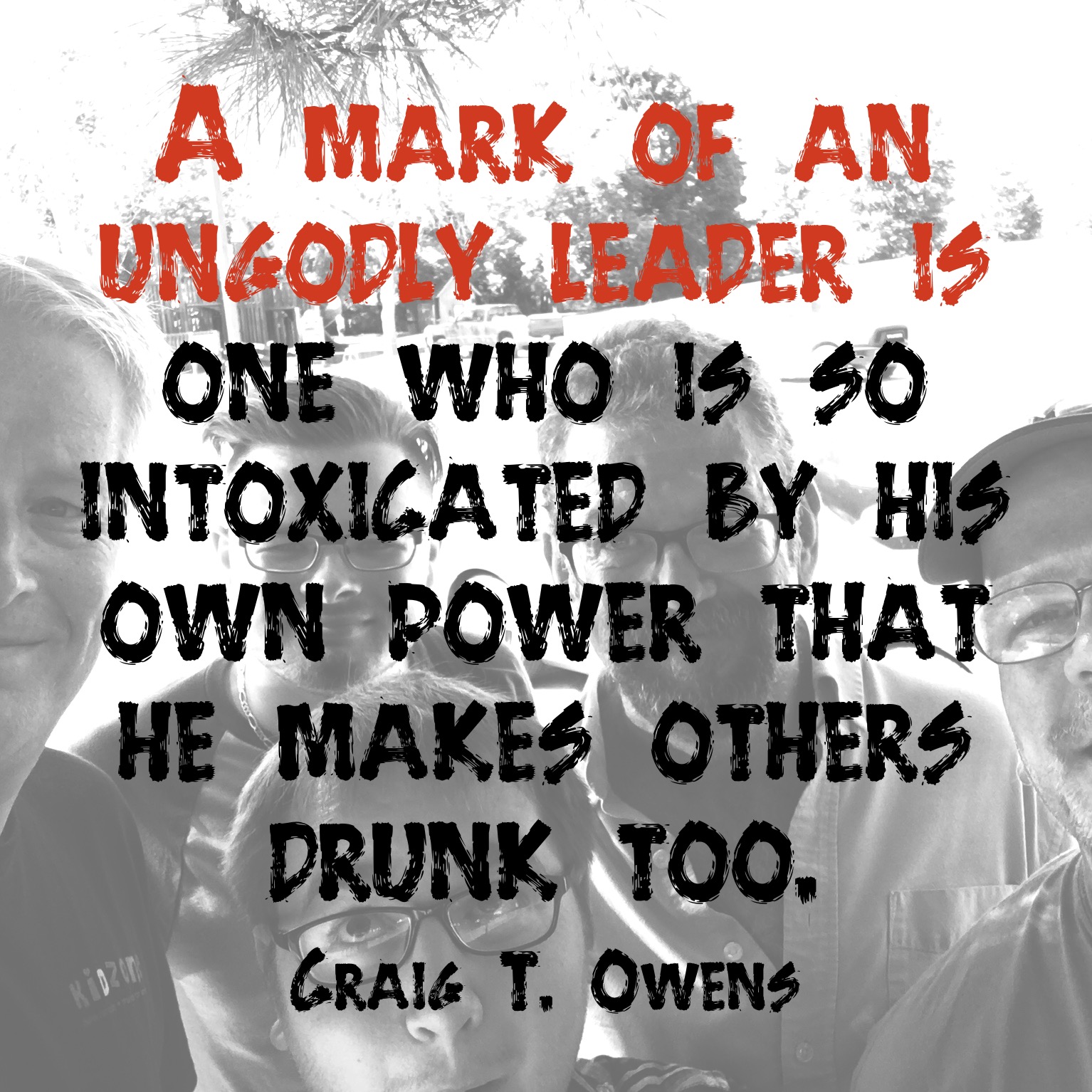
A mark of an ungodly leader is one who is so intoxicated by his own power that he makes others drunk too. 

Look at this description of Manasseh: “But the people [of Judah] would not listen; and Manasseh seduced them to do more evil than the nations did whom the Lord destroyed before the Israelites!” (2 Kings 21:9). 

The Hebrew word translated “seduced” is the same Hebrew word that Isaiah used for the staggering and going astray of a drunkard. 

This is the power that leaders have for both good and evil. A sober-minded, godly leader can encourage people toward righteousness, but an ungodly leader who is intoxicated by his power seduces people to join him in his unrighteousness. Manasseh was described as “making Judah sin, by doing evil in the sight of the Lord” (v. 16).

Certainly there are people who choose a sinful lifestyle during the tenure of a godly leader, and there are people who steadfastly choose righteousness during the tenure of an ungodly leader. But the Bible issues strong warnings to those leaders who misuse their God-appointed positions of leadership to lead people astray (see Ezekiel 3:17-21, 33:1-9). 

Leaders, be on guard that a position of leadership doesn’t seduce you to stray from righteousness. Don’t forget that God chose you for this role, so to Him you will have to stand to give an accounting of your leadership. I pray you can say that you soberly and sincerely pursued righteousness and led your people in that pursuit as well. I want you to hear, “Well done, good and faithful servant” and not, “Depart from Me.” 

This is part 86 in my series on godly leadership. You can check out all of my posts in this series by clicking here.

►► Would you please prayerfully consider supporting this ministry? My Patreon supporters get behind-the-scenes access to exclusive materials. ◀︎◀︎

God’s Loving “Stop!”

Listen to the podcast of this post by clicking on the player below, and you can also subscribe on AppleSpotify, or Audible. 

Does it sound loving when the Bible says that God’s hand was against His people to defeat them when they went out to battle? It’s actually one of the most loving things God could do for them. 

Check out the full message from which I took this clip. 

Not only does Judges 2:15 say, “Whenever Israel went out to fight, the hand of the Lord was against them to defeat them,” but these words from Isaiah 63 are just as startling—

In all their distress [God] too was distressed, and the angel of His presence saved them. In His love and mercy He redeemed them; He lifted them up and carried them all the days of old. Yet they rebelled and grieved His Holy Spirit. So He turned and became their enemy and He Himself fought against them. (Isaiah 63:9-10) 

But this got their attention: “Then His people recalled the days of old” (v. 11), repented of their evil ways, and turned wholeheartedly back to God. 

Remember that the opposite of love is not hate, but the opposite of love is apathy. If God simply ignored their sin, He would not be loving them. It is God’s love that causes His loving hand to be against us in our sinful ways so that we will recall, repent, and return. 

►► Would you please prayerfully consider supporting this ministry? My Patreon supporters get behind-the-scenes access to exclusive materials. ◀︎◀︎

The Mind Of God

Listen to the podcast of this post by clicking on the player below, and you can also subscribe on AppleSpotify, or Audible. 

Last week we talked about the Voice of the Holy Spirit. I love the phrase from 1 Samuel 9:15 where God “told Samuel in his ear” about Saul’s arrival and what he should say to Saul. Then the Holy Spirit’s Voice for all of us is foretold in Isaiah 30:21. 

It’s great hearing the Spirit’s Voice, but He also empowers us to know the Mind of God. 

This is not something that automatically comes to every Christian at the moment they invite Jesus to be their Lord and Savior, as we see mention of immature Christians throughout the New Testament. 

Even after Jesus is resurrected from the dead, we see His followers as unsure, troubled men. We meet their…

  • lack of faith—Luke 24:11; Mark 16:14 
  • wonderment—Luke 24:12 
  • troubled minds—Luke 24:37; John 20:19 
  • lack of understanding of Scripture—Luke 24:44 

(Check out all of the Scriptures in this post by clicking here.)

This is all post-resurrection but pre-conversion, but look at what happens next. After Jesus breathes on them (John 20:22), they are peaceful (vv. 19, 21, 26) and they can now understand the Scriptures (Luke 24:45-48). 

As we’ve said, we shouldn’t stop at salvation. Certainly, Jesus wanted more for His followers than merely salvation. He wants His disciples empowered for witnessing and disciple-making (Luke 24:48; Acts 1:4-5, 8). 

Check out these examples of the Holy Spirit sharing with us the mind of God:

  • Joseph—Genesis 41:16, 38-40 
  • Daniel—Daniel 2:19-23, 27-28, 47 
  • Peter—Acts 2:14f; 3:17-26; 4:8-12 
  • Stephen—Acts 7 
  • Philip—Acts 8:30-35 

And just in case you think this is just for “super spiritual” people, look how the Holy Spirit helps the whole Church share the Gospel—

After they prayed, the place where they were meeting was shaken. And they were all filled with the Holy Spirit and spoke the Word of God boldly. … Those who had been scattered preached the word wherever they went. (Acts 4:31, 8:4).

This was always God’s plan! Paul harkens back to prophecies like Isaiah 55:8-9, Isaiah 40:13, and Jeremiah 31:33 when he writes about Christians having “the mind of God” in 1 Corinthians 2:6-16. 

He says, “These are the things revealed to us by His Spirit” (v. 10). 

What things? “Things God has prepared for those who love Him”—things which human eyes haven’t seen, human ears haven’t heard, human minds haven’t conceived (v. 9). These are the the very thoughts of God Himself! 

Just as my spirit is the only one that knows what’s really in my mind, the Holy Spirit is the only One Who knows the mind of the Father and Son (v. 11). We have been given the Holy Spirit “so that we may understand what God has freely given us” (v. 12). Contrast this with the dull, unfruitful minds of both unbelievers (2 Corinthians 4:4) and carnal Christians (Philippians 3:18-19). 

This mind of God is given to us for our edification so that we can be empowered witnesses and disciple-makers. So don’t stop at salvation, but be baptized in the Holy Spirit, and then keep on being filled with the Spirit. 

If you’ve missed any of the messages in this series, you can check them all out here. 

►► Would you please prayerfully consider supporting this ministry? My Patreon supporters get behind-the-scenes access to exclusive materials. ◀︎◀︎
The Voice In Your Ear

Listen to the podcast of this post by clicking on the player below, and you can also subscribe on AppleSpotify, or Audible. 

I would like you to think about a wise, loving friend. One who has years of godly wisdom, empathy, loads of patience, and loving boldness. When you talk with them, you know that you will always get good counsel—even if you may not like exactly what they have shared with you, deep down you know it is still sound wisdom. This is what the Holy Spirit—as our Counselor—does for us. 

The Holy Spirit is not merely a force, but He is a Person. Jesus Himself give the Spirit the pronouns “He / Him / His.” 

Then take a look at just the beginning of the Book of Acts. The Holy Spirit does things a person does

  • He speaks God’s Word (1:16; 4:25) 
  • He empowers (2:4) 
  • He can be lied to (5:3, 9) 
  • He can witness events (5:32) 
  • He can be resisted (7:51) 
  • He can encourage (9:31) 
  • He gives wisdom (6:10) 
  • He gives direction (8:29, 10:19) 

I especially want to key in on those last two attributes where the Holy Spirit is speaking to us. 

Samuel grew up during the time of the judges, where everyone did whatever they thought best. This is a time that is described like this, “In those days the word of the Lord was rare; there were not many visions” (1 Samuel 3:1). Visions in the Hebrew language is two words: open communication. In other words, people just weren’t listening for God’s voice. 

Samuel had to learn to hear God’s voice as well (see this passage and all of the other biblical references in this post by clicking here). 

God doesn’t reveal His heart to those who are unwilling to obey. His persistent call is for obedience to His Word and reliance on His provision. So the word of the Lord had to be revealed to Samuel (v. 7). When Samuel said he was listening (v. 10), that was a posture of readiness to obey. 

God wants to reveal His heart to His obedient people. I love how God does this later for Samuel, “Now the Lord had told Samuel in his ear the day before Saul came…” (1 Samuel 9:15). 

This is how Jesus described the Holy Spirit in John 7:37-39, as streams that flow continuously out of our being. And Jesus also calls Him Counselor (John 14:16). 

Isaiah described our Counselor like this, “Whether you turn to the right or to the left, your ears will hear a Voice behind you, saying, ‘This is the way; walk in it’” (Isaiah 30:21). 

Let’s call this GPS = God’s Personal Spirit in us! 

Those who are baptized in the Holy Spirit—utterly yielded to His wisdom—will experience:

  1. More insight into God’s Word—Psalm 119:18 
  2. More timely application of God’s Word—2 Timothy 3:16-17 
  3. More boldness in prayer—2 Samuel 7:27 (same word for in his ear as Samuel experienced) 

All Christians have a deposit of the Holy Spirit in their lives at the moment of salvation. The baptism in the Holy Spirit is a completed yielding to the Counselor’s influence. So don’t stop at salvation, but ask Jesus to send you what the Father has promised (Luke 24:49; Acts 2:33). 

Check out all of the messages in our series leading up to Pentecost Sunday by clicking here. 

►► Would you please prayerfully consider supporting this ministry? My Patreon supporters get behind-the-scenes access to exclusive materials. ◀︎◀︎

Grief From God

Listen to the podcast of this post by clicking on the player below, and you can also subscribe on AppleSpotify, or Audible. 

The insidious thing about leprosy is that it kills the body’s pain receptors. Lepers may walk on a broken ankle, utterly mangling their foot. Or they may stick their hand in the first without realizing it.  

Pain is important to us—it tells us that something isn’t right and that we should seek help. Just as there is a danger if we ignore physical pain, there is a greater danger if we ignore spiritual pain. It’s a greater danger because eternal separation from God is far more deadly than mere physical death. 

Moses warned the Israelites of the danger of spiritual complacency, or we could call it spiritual leprosy. Check out the warning in Deuteronomy 8:10-14, 17. It didn’t take too long for this spiritual numbness to set it (see the fulfillment of Moses’ words in Judges 2:10-15). 

(Check out all of the Scriptures in this post by clicking here.) 

When we read in Judges 2, “The hand of the Lord was against them,” this is actually a very loving statement. Think about it: What would happen if God continued to give them success in their sinful endeavors? 

We can see this a little more clearly in Isaiah 63:7-10 where we see that God’s love is both redemptive and corrective. His fighting against His people caused them to recall God’s ways and wait on Him once again (63:11; 64:4-5). Notice the last question of verse 5, “How can we be saved?” 

It starts with remembering—that’s what Moses said at the beginning of this journey, and it’s also what Jesus says at the end (Revelation 2:5). 

We have to meditate on God’s Word because it…

  • …is a mirror (James 1:22-25) 
  • …is a bright, revealing light (Psalm 90:8 AMPC) 
  • …surgically brings healing (Hebrews 4:12-13; Psalm 119:67, 70) 
  • …prompts godly sorrow without condemnation (Romans 8:1-2; 2 Corinthians 7:8-9) 

Only when this grief is turned to joy again can God use us to minister to others. We are able to comfort and redirect others because God has comforted and redirected us back onto His path. 

David became enamored with his spiritual success and forgot God’s laws. His sin caused God to turn and fight against him. In his deep grief, David cried out to God (Psalm 51:7-13). It was only after David repented that his grief was lifted and he was able to teach others about our loving God. 

Let’s not ignore our grief, but instead let’s ask God what He is trying to tell us through that grief. Remember, in our distress He is distressed and will carry us. But if our spiritual leprosy has taken us away from God, He will lovingly fight against us to get us to return to Him! 

You can check out all of the other messages in this series by clicking here. 

►► Would you please prayerfully consider supporting this ministry? My Patreon supporters get behind-the-scenes access to exclusive materials. ◀︎◀︎
Again And Again And Again

Listen to the podcast of this post by clicking on the player below, and you can also subscribe on AppleSpotify, or Audible. 

I don’t know if this ever happens to you, but I’ve lost count of the number of times that this happens to me. I open up my Bible and begin reading right where I left off the day before, and as I’m reading, my attention is riveted by words that seem to pop off the page! 

I look at them again and see that this passage contains highlights or underlining or notations from when I read here before. Yet I’m left scratching my head saying, “How did I miss this when I read this passage earlier?!” 

I know this is because I’m a different person now than I was the last time I was reading this passage. I’ve learned some things and hopefully I have grown in the process. Quite simply, the Holy Spirit knew I wasn’t ready earlier for the new concept that jumped off the page at me. 

The other day I was reading in the Book of Romans and I noticed something that Paul wrote—

     And, moreover, that the Gentiles might glorify God for His mercy. As it is written: “Therefore I will praise You among the Gentiles; I will sing the praises of Your name.” Again, it says, “Rejoice, you Gentiles, with His people.” And again, “Praise the Lord, all you Gentiles; let all the peoples extol Him.” And again, Isaiah says, “The Root of Jesse will spring up, One who will arise to rule over the nations; in Him the Gentiles will hope.” (Romans 15:9-12) 

Look at that wording: “As it is written … again it says … and again … and again….” Paul is telling us that God tells us the same thing in different ways, at different times, and through different voices. It’s the same message, but it resonates a little differently in each place. As God’s Word speaks to us again and again and again, we see the richness and fullness of the message. 

In v. 9, Paul quotes David in 2 Samuel 22:50 and Psalm 18:49. 

In v. 10, the quotation is from Moses in Deuteronomy 32:43.

In v. 11, an anonymous psalmist in Psalm 117:1 is quoted. 

And in v. 12, Paul quotes the prophet Isaiah in Isaiah 11:10. 

(Check out all of these Scriptures for yourself by clicking here.)

The Jews considered the Holy Scripture to be divided into three sections: The Law, the Prophets, and the Writings. Look again what Paul did: 

  • He quotes Moses from the Law 
  • He quotes Isaiah from the Prophets
  • He quotes David and the anonymous psalmist from the Writings

Jesus said, “Do not think that I came to destroy the Law or the Prophets. I did not come to destroy but to fulfill” (Matthew 5:17). And after His resurrection, as He walked and talked with a couple of disciples, He reminded them, “This is what I told you while I was still with you: Everything must be fulfilled that is written about me in the Law of Moses, the Prophets and the Psalms” (Luke 24:44). 

One of the reasons that the consistent message of the Scripture is repeated again and again and again is so that everyone will have a chance to hear it and believe it. 

There is such a beauty in this! I encourage you to take the time to look up the cross-references that many Study Bibles have put together. As you read the “it is written” statements in the Bible, I hope you will be encouraged as you see it throughout all the Bible again and again and again! 

Check out the book reviews I’ve shared on these study Bibles: 

I would also recommend 3 Bible studies for you to try and 2 more Bible studies for you to try. 

►► Would you please prayerfully consider supporting this ministry? My Patreon supporters get behind-the-scenes access to exclusive materials. ◀︎◀︎
Joyful Proof

Listen to the podcast of this post by clicking on the player below, and you can also subscribe on AppleSpotify, or Audible. 

This whole series of messages is about how God can turn our grief into joy. On Easter Sunday we celebrate the most joy-filled event in all of history: the resurrection of Jesus! 

At our Good Friday service, we talked about how the day was anything but good for those who were there. The day is only good for people who have been rescued from eternal, inescapable grief. 

The Bible tells us that all of us have sinned and the penalty for that sin is eternal separation from God (Romans 3:23, 6:23a). But Jesus died in our place (Romans 5:8) to turn our eternal grief into eternal joy. Check out this out: God promises to exchange the cup of wrath and judgment with the cup of righteousness and peace (Isaiah 51:17-22). That’s exactly what Jesus accomplish with this death and resurrection! 

(Check out all of the biblical references in this post by clicking here.) 

On Friday, no one was joyful. In fact, it was just the opposite: Grief gripped their hearts and held them in fear. Probably the only one who was happy on that day was the devil. 

On Saturday, the clouds of grief and fear darkened even more. It was the Sabbath day, and the Jewish followers of Jesus would still have to attend the synagogue and go through the motions of the day. Can you imagine how hollow and meaningless all of the activities seemed? 

Then Sunday morning arrived. Jesus had predicted this (Matthew 12:40), but when some of the women who attended to His needs during His years of ministry came to the tomb, they were completely unprepared for what they found (Luke 24:1-7). 

Jesus told them that they would see their grief turned to joy (John 16:20, 22; Luke 22:53), but when these ladies told His disciples, they still couldn’t comprehend it (Luke 24:9-12, 19-24). 

Grief can so grip our emotions, that it will effect us physically as well: our eyes are clouded, our mind is fuzzy, and our ears seem stuffed with cotton (John 20:14-16; Luke 24:15-17). 

So what finally convinced them? Their own hearts! 

Solomon wrote, “He has planted eternity in the human heart” (Ecclesiastes 3:11). The AMPC says: He also has planted eternity in men’s hearts and minds—a divinely implanted sense of a purpose working through the ages which nothing under the sun but God alone can satisfy. 

Mary finally saw Jesus and saw her grief turned to joy when she heard Jesus say, “Mary.” 

These men on the road said their hearts burned in them when Jesus explained the Scripture to them (Luke 24:31-32, 27). 

And when the other disciples were locked away for fear of the Jews (John 20:19), Jesus spoke to them about how His Word was fulfilled in His actions (Luke 24:44-46). 

There is a hymn that ends, “You ask me how I know He lives, He lives within my heart.” There is something unmistakable and irrefutable when someone knows what it is to have their sins forgiven—to have their grief turned to unquenchable joy! 

In fact, the best proof of a risen Savior is seeing a life freed from gripping grief that used to plague them.  

If you don’t know Jesus as your Savior, the thought of the end of life and what comes next probably fills you with a sense of uneasiness. It doesn’t have to be this way! 

If you do know Jesus, please remember that your best testimony is a life that doesn’t get bogged down in the same grief the world experiences. When you can show supernatural joy while everyone else is gripped by grief, people will turn to you (1 Peter 3:15). 

Please check out the other messages in this series called Grief Into Joy by clicking here. 

►► Would you please prayerfully consider supporting this ministry? My Patreon supporters get behind-the-scenes access to exclusive materials. ◀︎◀︎