If Jesus hadn’t come to earth in the flesh and lived here victoriously over sin, we would have a loophole to keep on sinning. But He did indeed live a sinless life, die to pay our penalty, and was resurrected to indwell and empower us to overcome sinful lusts.
So, since Christ suffered in the flesh for us, for you, arm yourselves with the same thought and purpose—patiently to suffer rather than fail to please God. For whoever has suffered in the flesh—having the mind of Christ—is done with intentional sin—has stopped pleasing himself and the world, and pleases God—so that he can no longer spend the rest of his natural life living by his human appetites and desires, but he lives for what God wills. (1 Peter 4:1-2 AMPC)
What a gift Jesus has purchased for us: Freedom from the ensnaring power of sin!
Listen to the podcast of this post by clicking on the player below, and you can also subscribe on Apple, Spotify, or Audible.
Gratitude is our shield against the negativity, and gratitude is also our sword against the ambushers. But using these pieces of our armor is exhausting, which means we also need a way to recover from the attacks of negativity.
Jesus began His public ministry with a sermon that prompted Luke to record that “everyone spoke well of Him.” But in less than 60 seconds, after Jesus outlined how His ministry would unfold, Jesus is being criticized to the point where those same praising people are now ready to throw Jesus off a cliff (Luke 4:18-29)!
Elbert Hubbard wrote, “If you have something others don’t, know something others don’t, or do something others aren’t doing, then, rest assured, you will be criticized. … To avoid criticism say nothing, do nothing, and be nothing.”
Even though Hubbard is probably right, Christians don’t have the option to “say nothing, do nothing, be nothing,” because Jesus has called us to go into all the world, preach the Good News, and be salt and light. That means we will be victims of criticism. We can use our shield and sword of gratitude, but we are also going to need some medicine to help us recover too.
“Sticks and stones may break my bones but words will never hurt me” is a lie. Words do hurt.
Jesus told us these stinging words would be thrown at us like sticks and stones in Luke 6:22. When we are criticized, we have to be careful not to get embittered. How does that happen? We are naturally self-protective, so criticized people become critical and cynical unless they can be healed and have joy restored.If we hold on to our hurts, bitterness can fester in our hearts (Hebrews 12:14-15).
Look at David in Psalm 69. He acknowledged the attacks from his enemies and how it made him feel, but then he applies the healing medicine of gratitude—
But as for me, afflicted and in pain—may Your salvation, God, protect me. I will praise God’s name in song and glorify Him with thanksgiving. (Psalm 69:29-30)
Our healing is in our thanking!
Medical research has shown that gratitude improves physical health—it reduces stress and resets the heart’s healthy rhythm. This is just as true spiritually: gratitude is our medicine.
You may be thinking, “How can I bless critical people? How can I be grateful when I’m surrounded by such hostility?”
David also wrote Psalm 23 for us. This is the psalm that begins, “The Lord is my Shepherd, I shall not be in want.” But notice especially the words of verse 5: “You prepare a table before me in the presence of my enemies. You anoint my head with oil; my cup overflows.”
It is precisely in the presence of enemies that God invites us to abide with Him and to receive His medicine of anointing. But I also see that our Good Shepherd doesn’t just give us adequate blessings, but overflowing blessings—enough for me and more to share with those around me.
In the New Testament Greek, one word for “bless” is eulogeo which literally means “good words.” Jesus, Paul, and Peter all tell us that when we are victims of the sticks and stones of negative words, we are to respond by saying good words both to God and to those who are hurling evil words at us (Matthew 5:43-44; 1 Corinthians 4:12; 1 Peter 3:9).
Peter shows us exactly how Jesus did this when He was hanging on the Cross and enduring the sneers, mocking words, and insults from those surrounding Him (1 Peter 2:21-23; Luke 23:35-39). Instead of throwing evil words back at them, Jesus blessed them by saying, “Father, forgive them for they do not know what they are doing” (Luke 23:34).
Listen to the podcast of this post by clicking on the player below, and you can also subscribe on Apple, Spotify, or Audible.
It would be nice if complainers were satisfied just complaining to themselves, but they’re not. Do you know the cliché misery loves company? It’s just as true for complainers: They really want others to join them in their bellyaching!
I think a good word for what these negative people do is ambush. The dictionary says that means to lie in wait with hostile intent. Jesus told His followers that this ambushing behavior was going to happen. In Luke 6:22, He uses the word “when” not “if”—
Blessed are you when people hate you, when they exclude you and insult you and reject your name as evil, because of the Son of Man.
We see this vividly portrayed in the life of Daniel. This man had done nothing but helpful things since the moment he arrived in Babylon. He faithfully served foreign kings, never wanted any recognition for himself, saved lives, interpreted dreams, and explained confusing things. He had a great work ethic and impeccable integrity. But the complainers still wanted to ambush him (see Daniel 6:1-5).
One psalmist described these ambushers in terms of a hunting lion: His mouth is full of lies and threats; trouble and evil are under his tongue. He lies in wait near the villages; from ambush he murders the innocent. His eyes watch in secret for his victims (Psalm 10:7-8).
Doesn’t this sound like what the devil does too? Be alert and of sober mind. Your enemy the devil prowls around like a roaring lion looking for someone to devour (1 Peter 5:8).
Jerusalem was surrounded by three armies that were lying in wait to ambush the Israelites. After God told the people of Jerusalem that He would deliver them, King Jehoshaphat sent out his army with the worshippers at the front of the ranks. Then listen to how worship not only thwarted the ambushers but boomeranged their evil plans back on themselves—
As they began to sing and praise, the Lord set ambushes against the men of Ammon and Moab and Mount Seir who were invading Judah, and they were defeated. The Ammonites and Moabites rose up against the men from Mount Seir to destroy and annihilate them. After they finished slaughtering the men from Seir, they helped to destroy one another. (2 Chronicles 20:22-23)
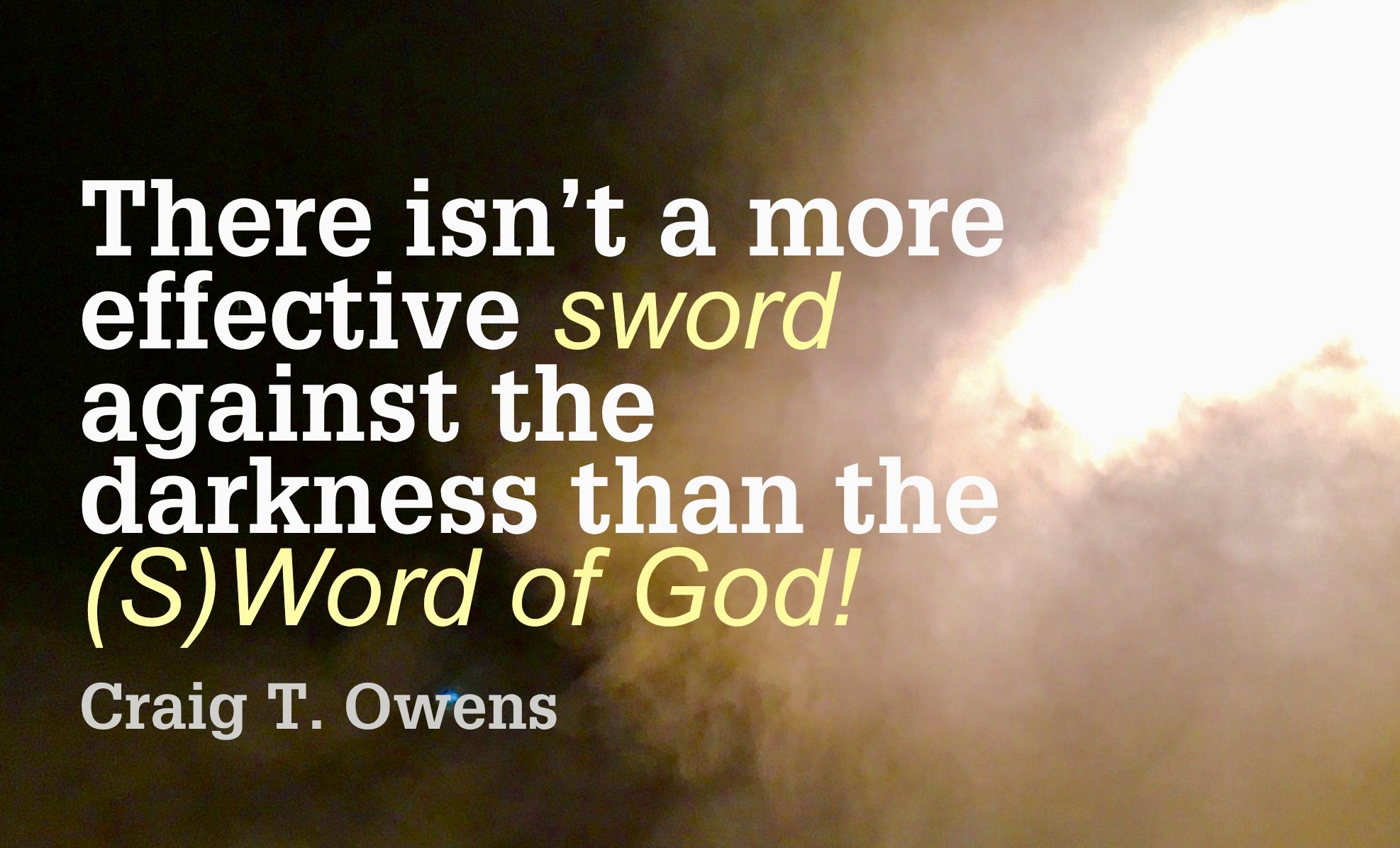
When we worship God and sing our grateful praise to Him, we put the sword of God in our mouths. And there isn’t a more effective sword against the darkness than the (S)Word of God (Hebrews 4:12; Revelation 1:16; Ephesians 6:17)!
Paul told the church at Colosse that singing our praise to God with other saints was an encouragement to all who heard those worshipful songs (Colossians 3:15-17).
So when the ambushers are surrounding you, use your thankful songs as a shield, as a sword, and as an encouragement to others!
If you’ve missed any of the other messages in our series The Great Attitude of Gratitude, you can find them all here.
This is just one example of the power of a leader’s storytelling. Check the full conversation Greg and I had on The Craig And Greg Show. I have lots of new content every week, which you can check out on my YouTube channel.
“We are all born ignorant, but one must work hard to remain stupid.” —Benjamin Franklin
George Jeffreys was born with a limiting speech impediment, but with the empowering of the Holy Spirit, George and his brother Stephen led incredible Pentecostal revivals in England and Wales. They were said to be the greatest evangelists since George Whitefield and John Wesley. Someone asked Jeffreys how long a revival should last, and he responded, “Thank God, a revival started in my heart 30 years ago, and it has never stopped; it will never end.” He continued by saying, “As long as Jesus is kept in the front, and made the center of fellowship and blessing and unity, the revival will never end.” Check out this mini biography about his life.
John Stonestreet uses the example of C.S. Lewis’ Aslan to talk about how God can speak to us through our pain. John writes, “Pain is never the point of God’s plans, any more than it is the purpose of physical exercise. Never pushing ourselves to the point that it hurts means never improving our health. On the other hand, seeking pain is more likely to do harm than to aid our wellbeing. In and of itself, pain is not good, but it is meaningful. Pain indicates that something is wrong and needs to be addressed.”
“The best way to make a dream come true is to wake up.” —Dame Anna Wintour
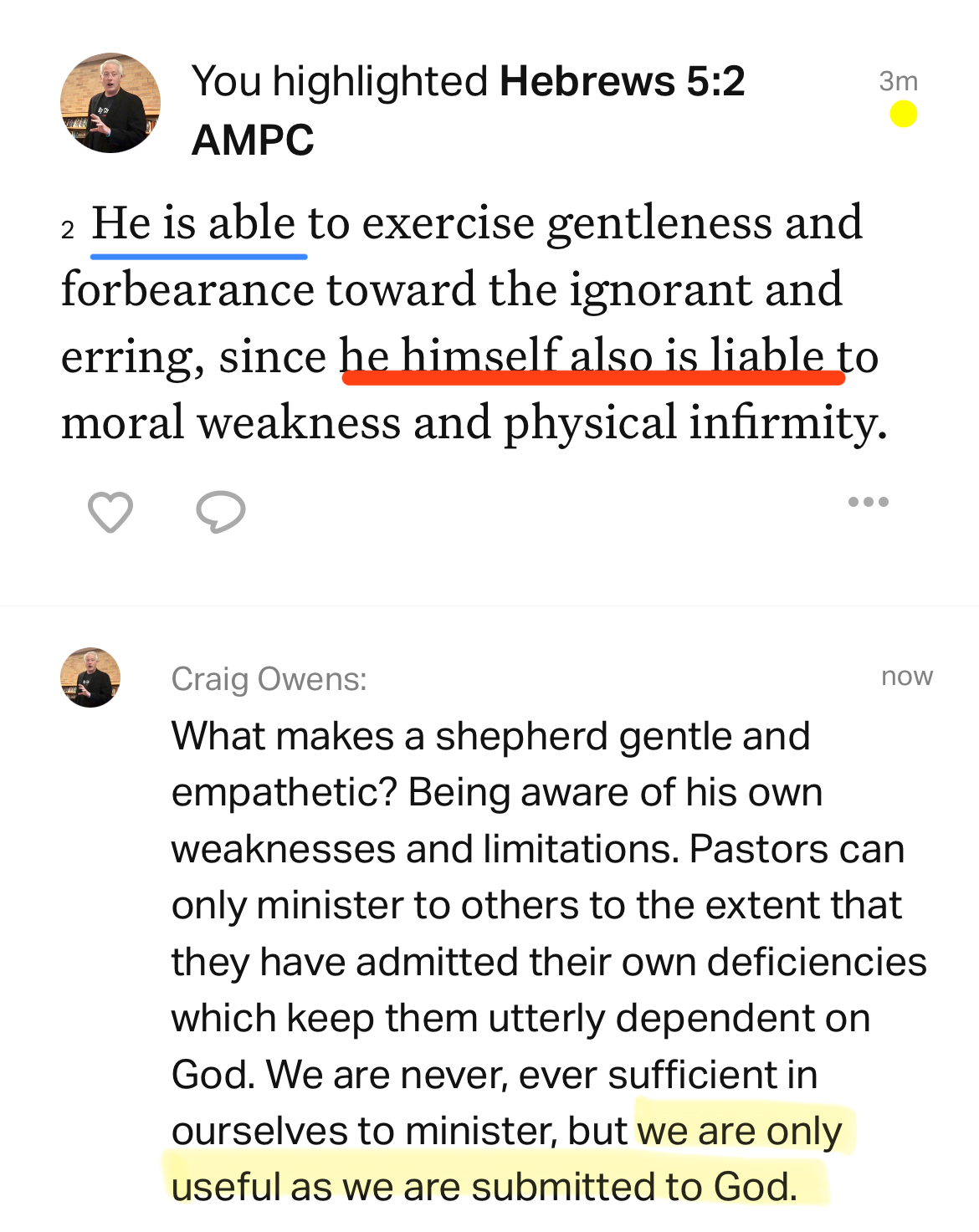
Because of the extensive prayer, research, and work I put into my book Shepherd Leadership, I am frequently drawn to passages of Scripture that reinforce the idea of pastors as shepherds. I was meditating on Hebrews 5:2 the other day, and I shared some of my thoughts with some of my pastor friends.
Healthy leaders look in the mirror first before they confront a teammate on something that needs to change. Check out the full conversation Greg and I had on The Craig and Greg Show about defeating the two-headed leadership killer of ignorance and arrogance. I have lots of new content every week, which you can check out on my YouTube channel.
“I am often, I believe, praying for others when I should be doing things for them. It’s so much easier to pray for a bore than to go and see him.” —C.S. Lewis, Letters to Malcolm: Chiefly on Prayer
“The greatest weapon against stress is our ability to choose one thought over another.” —William James
The most empowered and empowering person is the one who remains in Jesus.
“Whereas three or more incidents of intense stress within a year (say, serious financial trouble, being fired, or a divorce) triple the death rate in socially isolated middle-aged men, they have no impact whatsoever on the death rate of men who cultivate many close relationships.” —Daniel Goleman, Richard Boyatzis & Annie McKee, Primal Leadership
T.M. Moore has an outstanding series of posts on how Christians should interact with the governments in the lands in which they live. I highly recommend this series to you. T.M. wrote, “We have seen that justice is a jewel of many facets. In its obligatory facet, justice requires that we love our neighbors simply because they are made in the image of God. We must regard them, and do with them, as we wish to be regarded and done with ourselves. In its preventive facet, justice demands that we use forethought in all our actions to make sure, as far as possible, that our neighbor or his property is not injured by what we do. Distributive justice encourages us to share generously with our neighbors and others in need. Restorative justice comes into play when the balance of neighbor love has become disturbed and the one guilty of disturbing it is required to set things right again. Each of these forms of justice, grounded in the Law of God, is very much a part of life in our society today. It is simply mindless or prejudicial to insist that we should have no input from Scripture or the Law of God, either in the public square or in the making of public policy. Our nation was founded on Biblical principles of justice, and to deny this is to rewrite history past and to put in jeopardy history to come.”
The Greek word translated as “consider” in Hebrews 3:1 means to observe closely, to consider attentively, to fix your eyes or mind upon it. In its context, this verb is usually directing us to the end result of being in awe, kindling a renewed faith, and being rejuvenated with a new resolve to move forward.This is what happens especially when we consider Jesus❣️
Listen to the podcast of this post by clicking on the player below, and you can also subscribe on Apple, Spotify, or Audible.
When Luke says first that “Jesus grew in wisdom,” that is our indication that a healthy mind is at the foundation for every other aspect of health (Luke 2:52). We don’t see Jesus anxious or worried, we don’t see Him confused in His thinking, or even indecisive of what to say or do. So by studying the life of Jesus—and the Scriptures on which He relied—we, too, can improve our mental health.
This may sound unbelievable when you first read this, but I believe that at their foundation, anxiety and assurance are remarkably similar. The similarity is that they both have faith.
The dictionary defines faith as a strong or unshakeable belief in something. The biblical definition of faith is remarkably similar: “Faith is confidence in what we hope for and assurance about what we do not see” (Hebrews 11:1).
Using those definitions of faith, let me point out the similarity and the difference between the anxious mind and the assured mind:
Anxiety is faith or expectation that something bad is going to happen.
Assurance is faith or expectation that something good is going to happen.
But the biggest difference of all is seen in the mental health of the one worried and anxious about the bad things that are coming versus the one who is confidently assured of the good things that are coming.
If we are going to be mentally healthy people, we need to shift our faith from anxiety to assurance every single time we feel the worry building in our hearts. This isn’t just changing our mindset but knowing what we believe and why we believe it.
Assurance and anxiety both believe in the unseen. The assured person believes in God’s promises to provide all that we need, while the anxious person doubts their own abilities and resources will be able to sustain them.
As a result, the assured person has an abundance mindset, while the anxious person has a scarcity mindset.
These feelings can be traced back to our faith about the origins of the universe. The assured person believes that God transcends this universe—that He existed before time began and spoke all created things into existence (Hebrews 11:3). But the anxious person is still trying to find answers in constantly-changing theories about the universe’s beginning.
Finally, the person who sees the universe and their own life as accidental becomes quite anxious and uneasy when they think about death, and what may or may not come on the other side. But the one who trusts God as their Creator is confident that God is their eternal reward (Hebrews 11:6).
Hebrews 11 is filled with the accounts of assured people who shifted their faith away from anxiety—believing something bad was going to happen—to the assurance that God was bringing about something incredibly good! Hebrews 12 then invites Christians today to remember that cloud of witnesses and keep our eyes on Jesus, who is described as the Author and Perfecter of our faith, so that we don’t lose hope (Hebrews 12:1-3).
I’ve previously shared seven strategies for a Christian to maintain a strong mental health. Our eighth strategy is a constant shifting of our faith away from anxiety to assurance. Every single time an anxious thought tempts us to believe something bad is coming, we need to make a shift toward the assurance of God’s goodness.
Really quickly, here is how we can use the first seven strategies to help us make that shift:
Pray for the Holy Spirit to help you make a new path.
Notice your fearful or anxious words and pull them out by the root.
Confront the thought patterns that are causing fear or anxiety.
Talk back to those fearful thoughts with the truth from God’s Word.
Check the inputs that may be causing fear (poor diet, not taking time for solitude, anxious friends, etc.).
Focus on today—I like the words of the song “strength for today and bright hope for tomorrow!”
Don’t look to escape, but take time to de-escalate.
Listen to the podcast of this post by clicking on the player below, and you can also subscribe on Apple, Spotify, or Audible.
I have always appreciated the story of the desperate father who brought his son to Jesus. We get the idea from this story that this Dad had tried everything he could think of to help his boy, but nothing had worked.
This father heard about Jesus and he believed that Jesus could help them. We read that he brought his son to Jesus, but when he arrived, he found Jesus still on the mountain where He was transfigured, along with Peter, James, and John. The nine remaining disciples apparently tried to address this problem, but they were unsuccessful.
As Jesus and the three disciples came down the mountain, they found an argument in full boil. The teachers of the law were arguing with the disciples of Jesus. Apparently, each group had its own idea of how to help this demon-possessed boy.
Now, because of the failure of the disciples to bring relief, this father is experiencing creeping doubts about the original faith he had in Jesus. He says, “If You can do anything, take pity on us and help us.”
Jesus replied, “‘If you can’? Everything is possible for him who believes.”
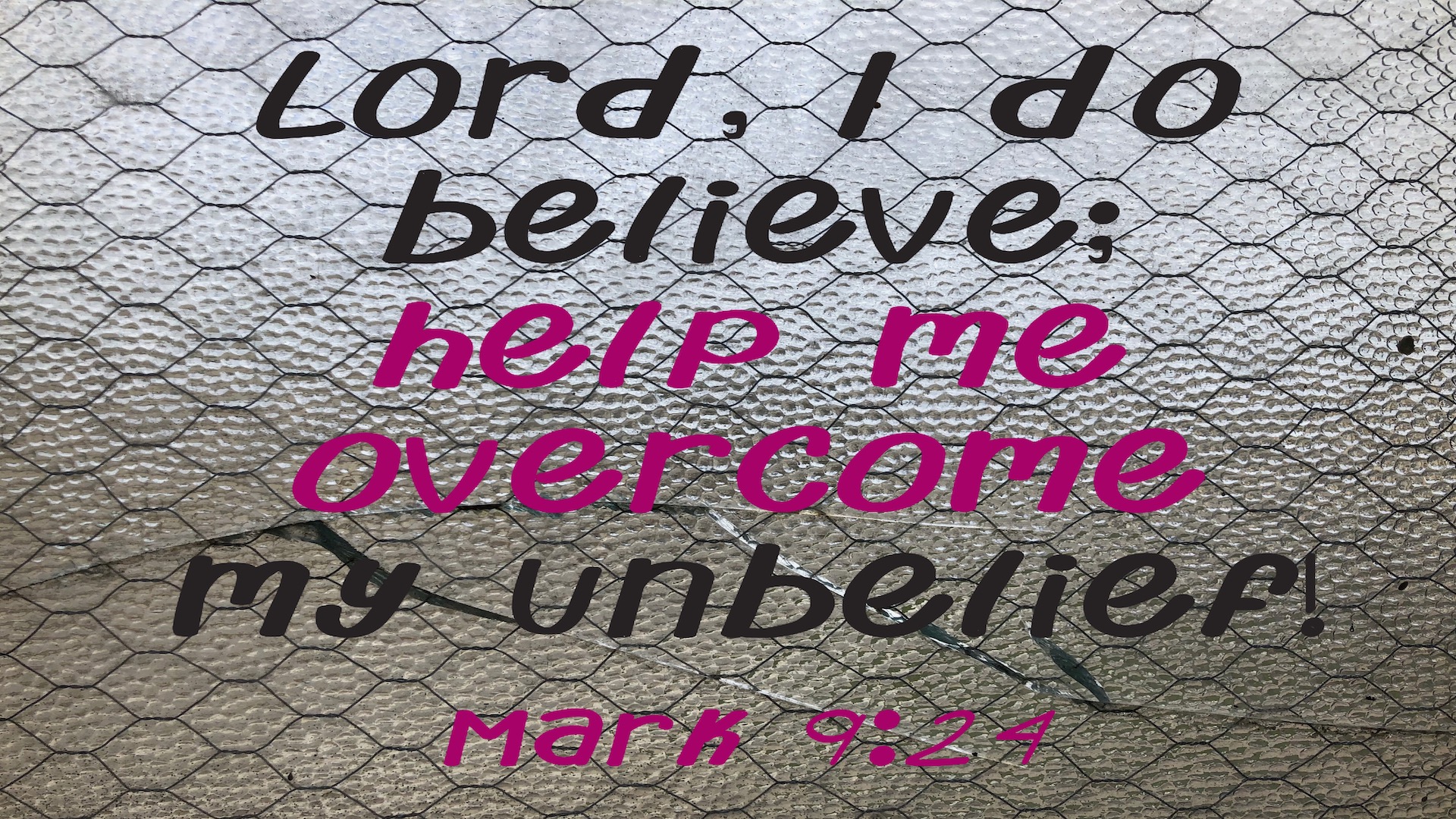
Then this man speaks the honest, but faith-filled words that I believe resonate with so many of us: “I do believe; help me overcome my unbelief!” (Read the full story in Mark 9:14-27.)
He was so wise to continue to come to Jesus even when he was plagued with doubt. His prayer was an honest, bold prayer. In essence, he was saying, “Jesus, I had initial faith in You. But the setback I experienced has caused me to doubt. I want to believe again that You can help me, but only You can rejuvenate my faith.”
Jesus loves to pray for our faith to be rejuvenated!
Knowing what Peter was about to encounter, Jesus told him, “I have prayed for you, Simon, that your faith may not fail” (Luke 22:32). Peter did indeed deny Jesus. But even after that denial, Jesus fully restored him. It would have required incredible faith on Peter’s part to allow Jesus to do that (John 21:15-17). Peter’s humble acceptance of Christ’s restoration demonstrated Peter’s rejuvenated faith to trust in his Savior again.
A good prayer for us may be:
Jesus, even when I doubt, You are faithful. You pray for my faith to be strengthened so that I can come to You again and again. Jesus, I do believe You! Please rejuvenate my faith to drive out these nagging doubts.
Only Jesus is called “the Author and Perfecter of our faith” (Hebrews 12:2), so only He can rejuvenate our faith. Let’s learn a lesson from this father and continue to come to Jesus—even with our nagging doubts—to have our faith rejuvenated. It’s this faith that moves the hand of God to do miracles on our behalf.
Listen to the podcast of this post by clicking on the player below, and you can also subscribe on Apple, Spotify, or Audible.
Caiaphas’ bold claim couldn’t be backed up, but every bold claim Jesus made was backed up. In the process of looking at those claims, we’ve actually already read another bold claim—one that was repeated three times. It is a bold claim made by the Roman governor Pontius Pilate.
When Jesus was first brought to Pilate, he attempted to “pass the buck” by sending Jesus to King Herod Antipas. Since Herod sent Jesus right back to Pilate, the governor took that as support for his bold claim. Check out what Pilate said:
I have found no basis for your charges against Jesus
neither has Herod
Jesus has done nothing to deserve death
I have found in Him no grounds for the death penalty (Luke 23:13-22)
Even Pilate’s wife supported him by saying, “Don’t have anything to do with that innocent Man” (Matthew 27:19).
Pilate’s role in this case was as a modern-day judge. A judge weighs the evidence from the prosecution, compares that with the laws on the books, weighs the evidence from the defendant, and then makes his ruling. Pilate rules multiple times: Not guilty. But the accusers keep coming back with their loud voices but no more evidence. Even though “[Pilate] knew it was out of self-interest that they had handed Jesus over to him” (Matthew 27:18), the shouts of the religious leaders finally prevailed (Luke 23:23-25).
Why was Pilate’s claim of the innocence of Jesus so bold? Because the Bible tells us, “ALLhave sinned and fall short of the glory of God” (Romans 3:23).
These religious elites had been trying to find an accusation against Jesus almost since the beginning of His public ministry. Many of these same accusers were present on the day they hauled a woman caught in the act of adultery before Jesus (John 8:2-11). They claimed she deserved to be stoned to death, but Jesus simply said, “Let those without any sin throw the first stone at her.” Jesus once again allowed His eloquent silence to work on their hearts, as they knew that not one of them was without sin, so they all dropped their stones and left.
Jesus freed this woman from her sin when He refused to condemn her. After all, He was the only sinless One who could have been justified in throwing the first stone, but He knew that “God did not send His Son into the world to condemn the world, but to save the world through Him” (John 3:17).
Jesus doesn’t condemn us, but He doesn’t want us to stay in our sin either, which is why He then told this woman, “Go now and leave your life of sin.”
Jesus called all of us to live a perfect life: “Be perfect, therefore, as your heavenly Father is perfect” (Matthew 5:48). Yet like those men in John 8, we all would have to drop our stones and leave.
And satan loves to remind God’s saints of this. John shares with us that “the accuser of our brothers and sisters…accuses them before our God day and night” (Revelation 12:10). The accuser wants to keep us trapped in the guilt of our sin—wants to see us condemned to an eternity separated from God’s presence.
But when someone has placed their faith in the sacrifice Jesus made for us with His death on the Cross, Jesus takes us into Himself and there is now no condemnation for those IN Jesus because there is nothing in Jesus to be condemned! Because of what Jesus did, it’s not us who is condemned, but sin is condemned! As a result, we no longer have to live according to the sinful nature and suffer the condemnation of sin, but instead when we are in Jesus, “the righteous requirements of the law” are fully met in us (see Romans 8:1-4).
We cannot do this on our own, but only through the power of the blood of Jesus. Look at the rest of this passage from Revelation: “For the accuser of our brothers and sisters, who accuses them before our God day and night, has been hurled down.They triumphed over him by the blood of the Lamb” (Revelation 12:10-11).
What amazing news! The writer of Hebrews gives us more details in this passage:
For by one sacrifice [Jesus] has made perfect forever those who are being made holy. The Holy Spirit also testifies to us about this. First He says: “This is the covenant I will make with them after that time, says the Lord. I will put My laws in their hearts, and I will write them on their minds.” Then He adds: “Their sins and lawless acts I will remember no more.” (Hebrews 10:14-17)
When we are in Jesus—when we have accepted by faith His work on the Cross—God can make the same bold claim to the devil that Pilate made to the religious leaders: “I find no basis for a charge!” This is how we can then fulfill the righteous requirement Jesus gives us to “Be perfect, therefore, as your heavenly Father is perfect.”



 The writer of Hebrews assures us that Jesus had to be made like us in every way so that He could experience every temptation that plagues us.









 Craig T. Owens