There’s something about gratitude that distinguishes people. Think about it: would you rather hang around with grumblers or grateful people?
The gratitude of Paul and Silas certainly made them stand out from the crowd when they were in Philippi. Wrongly accused, beaten, and thrown in prison, but instead of bellyaching, they were praising God. Later on, when Paul wrote his letter to the Christians in Philippi, the theme of gratefulness permeates his letter.
The distinguishing mark is actually in the title: The GReat ATTITUDE spells out GRATITUDE!
Join us this Sunday as we launch a series of messages perfectly timed for this season of Thanksgiving where we’ll be learning how great the attitude of gratitude truly is! We would love to have you join us in person, but you can also check out the messages at 10:30 each Sunday morning on Facebook and YouTube.
If you’ve missed any of the messagesin this series, check them out here:
There is a psychological term called “projection” where we see in others what is really in ourselves. This is something Christians MUST guard against doing. Instead of going to the other person first, let’s go to our knees in prayer first. This is a short clip from a full-length teaching video I provided exclusively for my Patreon supporters.
“Blessed are those who can give without remembering and can take without forgetting.” —Elizabeth Bibesco
Listen to the podcast of this post by clicking on the player below, and you can also subscribe on Apple, Spotify, or Audible.
It’s not uncommon to hear children on the playground complaining, “That’s not fair!” Common but somewhat expected.
Unfortunately, it still seems to be common among adults who feel they got the short end of the deal to grouse, “That’s not fair!” Common but immature. Sadly, I have to admit that there are times that I find myself complaining that I didn’t get a fair deal.
If anyone could complain about not getting His “fair share” it would be God. He gives His all to people who easily forget His blessings, quickly chase after other things, and still grumble that they aren’t getting a fair deal.
God never complains, but He does ask questions: “My people, what have I done for you? How have I burdened you? Answer Me” (Micah 6:3). In the next two verses, God twice calls on His people to “remember” all that He has done for them.
We must answer God. But it seems to me that our obedience to Him is the only reasonable response to all of the blessings He has poured out on us. God doesn’t demand burdensome sacrifices from us, but He simply wants us to act justly, love mercy, and walk humbly before Him (v. 8).
What God asks of me is out of all proportion with what He has given me, who He is for me today, and the future He has secured for me.
Fair? No way, it’s completely unfair. God gives me everything and what He asks in return is so minor. Let’s make it our daily joy to act justly, to love mercy, and to walk humbly before our loving God!
“Ministers should be persons of the same quiet, lamb-like spirit that Christ was of, the same spirit of submission to God’s will, and patience under afflictions, and meekness towards men; of the same calmness and composure of spirit under reproaches and sufferings from the malignity of evil men; of the same spirit of forgiveness of injuries; of the same spirit of charity, of fervent love and extensive benevolence; the same disposition to pity the miserable, to weep with those who weep, to help men under their calamities of both soul and body, to hear and grant the requests of the needy, and relieve the afflicted; the same spirit of condescension to the poor and mean, tenderness and gentleness towards the weak, and great and effectual love to enemies.” —Jonathan Edwards
“God has promised to supply all our needs. What we don’t have now, we don’t need now.” —Elizabeth Elliot
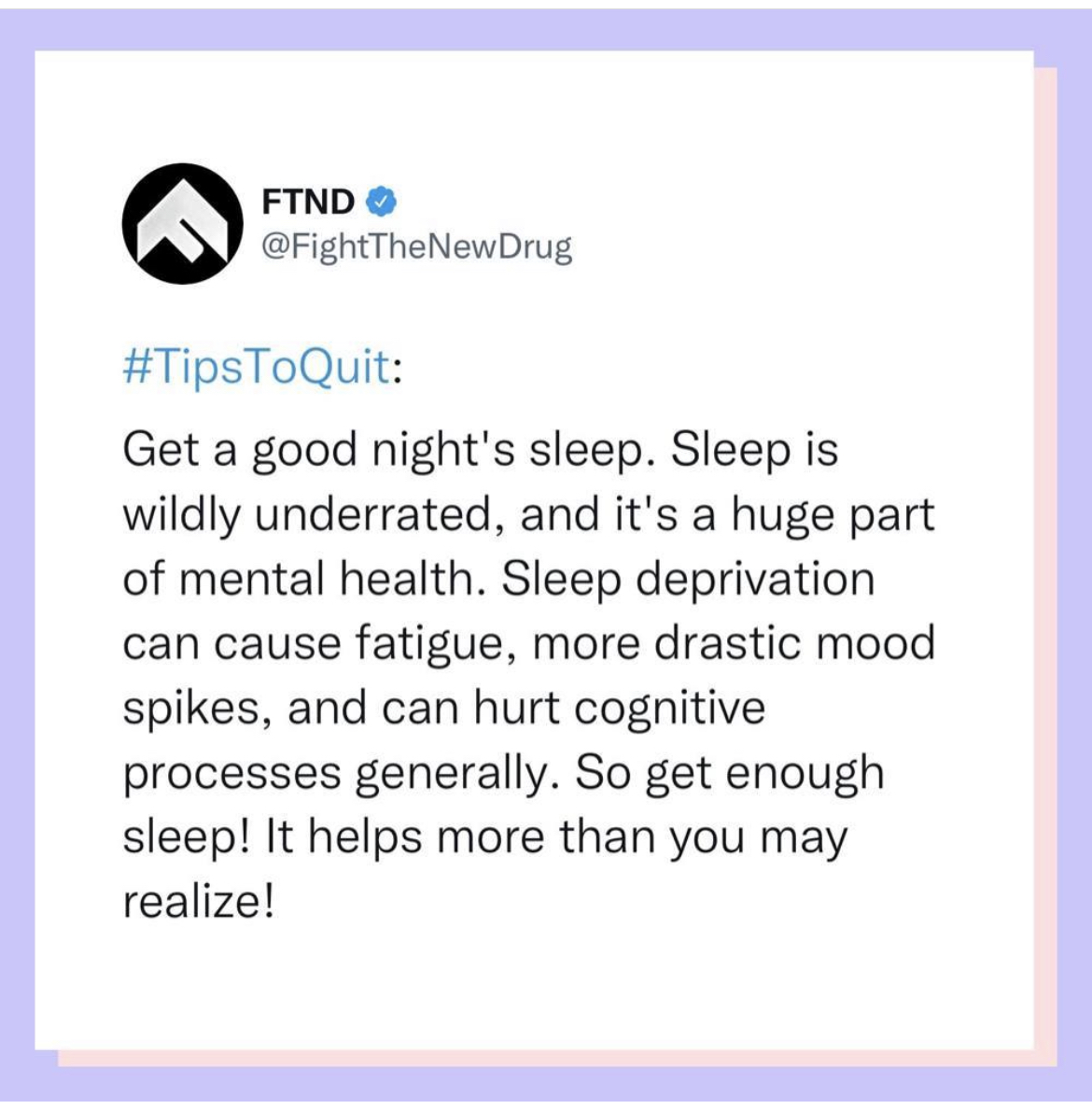
In my book Shepherd Leadership: The Metrics That Really Matter, I talk about how important it is for us to get a good night’s sleep to keep our leadership skills sharp. Sleep is also vitally important to help in the battle against overcoming temptations.
A groundbreaking paper was released this year that appears to debunk evolutionary theories once again. Check out this commentary from John Stonestreet’s podcast.
“There’s no such thing as a spiritual vacuum in the cosmos. Whatever of our time, attention, interest, or strength is not devoted to the Lord, and His Kingdom and glory, will become susceptible to being taken over by contrary interests. These often take the form of false teachers who appeal to our selfish interests and encourage us to make of the faith of Jesus Christ a kind of spiritual smorgasbord for whatever we think we need. We leave off the solid food of sound doctrine and dabble in the sweets and crunchies of mere self-interest—if we spend any time in the Word of God at all. Our mind enters a period of arrested development which will become permanent atrophy unless serious measures are engaged.” —T.M. Moore
“Always make your gratitude greater than your success.” —Dan Sullivan & Catherine Nomura
This Gift was not an after-thought. God didn’t say, “I’ve tried everything else and nothing has worked so I guess I have to send My Son.” NO! The Gift was foretold right from the very moment Adam and Eve sinned (Genesis 3:15, 21). In fact, we can even say it was planned before the beginning of Time, as John describes Jesus as “the Lamb who was slaughtered before the world was made” (Revelation 13:8).
John also writes for us one of the most beautiful and succinct statements of God: God IS Love (1 John 4:8).
Paul wrote an inspired definition of love. Check out what happens when we put “God” in place of “love” in 1 Corinthians 13:4-8—
God is patient, God is kind. God does not envy, God does not boast, God is not proud. God does not dishonor others, God is not self-seeking, God is not easily angered, God keeps no record of wrongs. God does not delight in evil but rejoices with the truth. God always protects, God always trusts, God always hopes, God always perseveres. God’s love never fails.
This description of God means that He wasn’t forced to send Jesus as the ransom for our sins, but rather that His love foreknew the perfect moment to send this Gift for us.
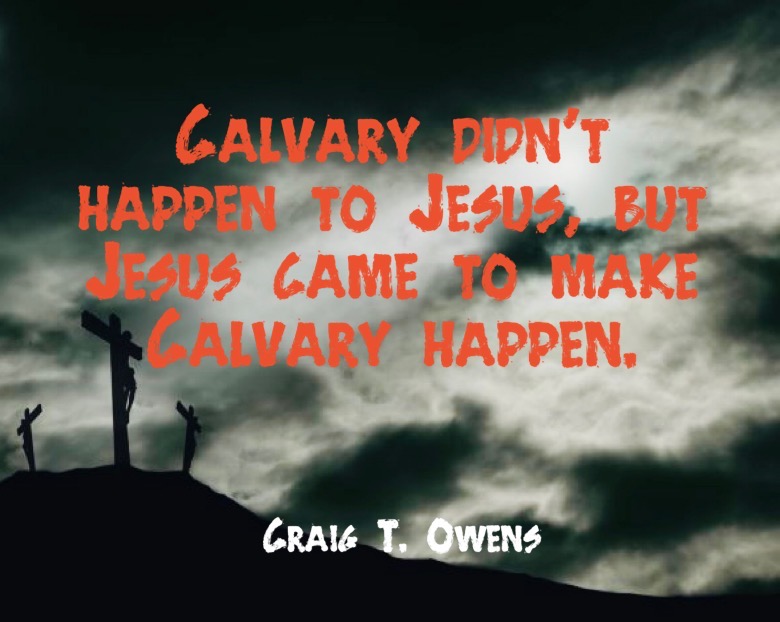
Neither did Jesus feel trapped by this plan His Father made. Calvary didn’t happen to Jesus, but Jesus came to make Calvary happen (John 17:24; Hebrews 12:2; John 10:17-18).
Jesus made His Gift unmistakable:
He predicted the unmistakable events leading up to Calvary—Matthew 20:17-19, 26:2; Mark 10:32-34; Luke 18:31-33; John 13:19
He predicted the unmistakable way He would die—John 3:14, 12:32-33
And His Father unmistakably confirmed all of this—John 12:27-28
Just before His crucifixion, Jesus gave His followers an unmistakableexample of love to follow. He said that His love radiating out of His followers would show the world an unmistakable picture of His love (see John 13:3-5, 12-17, 34-35).
I may say, “Thank you so much” when I open someone’s gift, but my true gratitude is seen in what I do with their gift after that. Do I put it on a shelf and forget about it? Or do I cherish it, use it, and tell others all about the one who gave the gift to me? This is just as true with how I treat the Love Gift that I was given in Jesus.
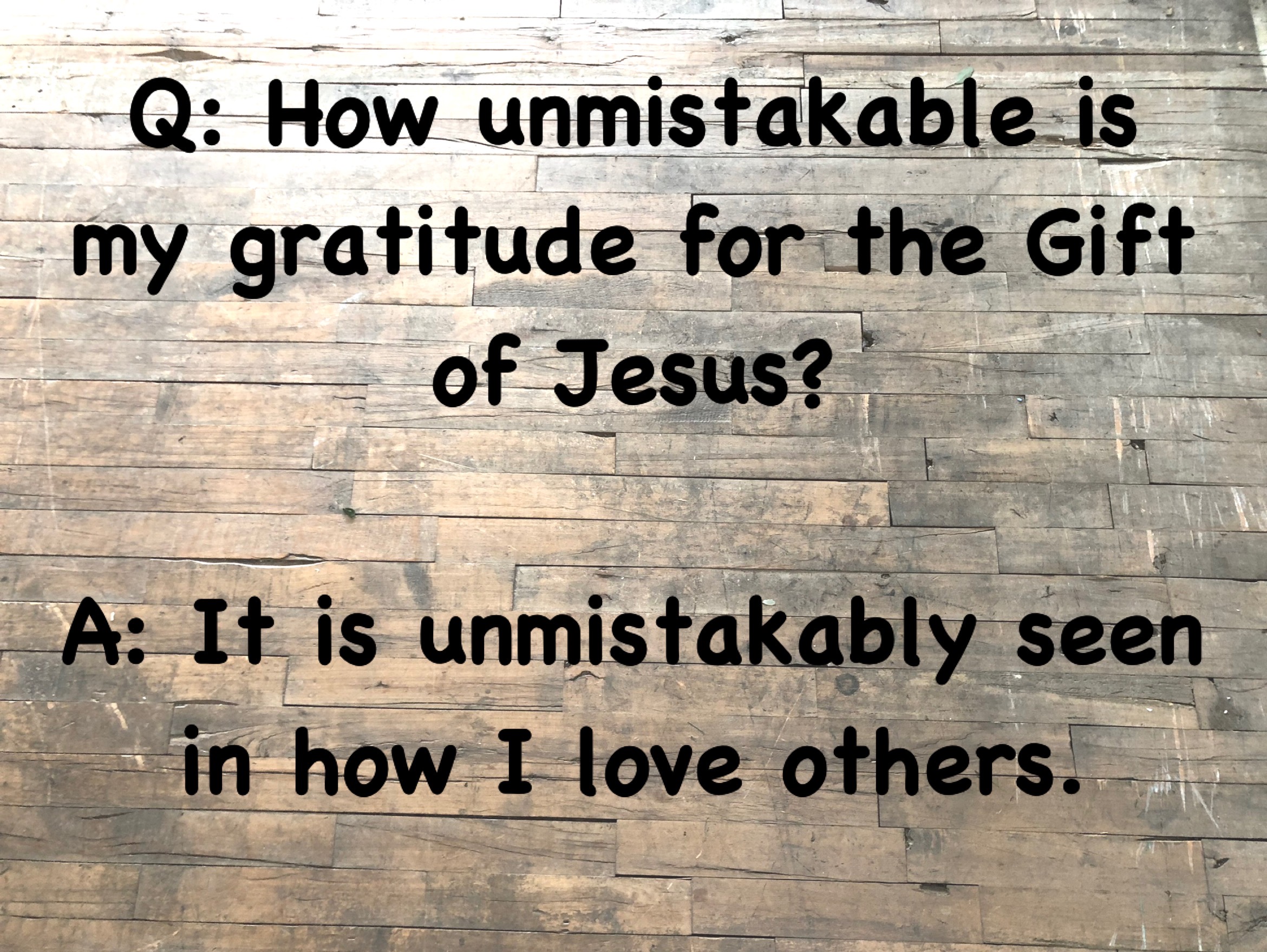
Q: How unmistakable is my gratitude for the Gift of Jesus?
A: It is unmistakably seen in how I love others.
Here’s the test: Can I put my name in 1 Corinthians 13:4-8—
Craig is patient, Craig is kind. Craig does not envy, Craig does not boast, Craig is not proud. Craig does not dishonor others, Craig is not self-seeking, Craig is not easily angered, Craig keeps no record of wrongs. Craig does not delight in evil but rejoices with the truth. Craig always protects, Craig always trusts, Craig always hopes, Craig always perseveres. Craig’s love never fails.
The Holy Spirit wants all Christians to be able to truthfully insert their names in that statement. He wants to help us make necessary changes that will allow the amazing Gift of Jesus to be unmistakably seen by everyone.
God’s plan is unmistakable. The death of Jesus is unmistakable proof of God’s love. Now, let’s make sure that our love is also empowered by the love of God shining unmistakably out of everything we say and do.
[1:27] what leaders do that will undermine their leadership
[2:48] why it’s more fun to be around grateful people
[4:12] Craig shared about the impact grateful teammates have had on him
[4:52] why is it so easy to complain?
[6:28] leaders need to speak positive things into this around them
[7:42] leaders need to shut down complaining teammates quickly
[8:39] Greg challenges leaders to confront their own negative attitude
[10:00] leaders need to create a place of safety to help others to develop to their full potential
[12:08] Greg reminds leaders that busyness can restrict gratitude
[13:29] criticism is both a mindset and a “heartset”
[13:59] how many of our criticism come from our assumptions about others?
[15:06] poor leaders have a misunderstanding of what gratitude does
[15:55] some ways leaders can express gratitude to their teammates
[17:57] another look at the problem of assumptions
[19:08] a grateful person attracts others to them
[21:00] Craig gives leaders a challenge to help bolster their attitude of gratitude
Check out this episode and subscribe on YouTube so you can watch all of the upcoming episodes. You can also listen to our podcast on Spotify and Apple.
Listen to the podcast of this post by clicking on the player below, and you can also subscribe on Apple, Spotify, or Audible.
If anxiety kills joy, what kills anxiety? Anxiety—the joy-killer—is itself killed when joy is expressed.
Being grateful forwhat you have kills the anxiety of what you don’t have.
Being thankful forwhat you have kills the fear of what you may be missing.
Being grateful forwhat you have kills the anxiety of the bad stuff that may never even happen.
If joy kills anxiety, how can we develop more of it? Most people would say, “If you’re happy, give thanks” or “If you’re happy, honk.” But really it’s the other way around: “If you want to be happy, honk!”
Don’t fret or worry. Instead of worrying, pray. Let petitions and praises shape your worries into prayers, letting God know your concerns. Before you know it, a sense of God’s wholeness, everything coming together for good, will come and settle you down. It’s wonderful what happens when Christ displaces worry at the center of your life. (Philippians 4:6-7)
Honking your thanks is not only good for you, but it’s good for everyone around you who hears your “honk! honk!” of gratitude. David experienced this in Psalm 34:1-3. Even when he was at a low point, when he started praising God other anxious people began to experience joy as well.
the difference between patriotism and nationalism both in our country and in your organization [1:35]
Greg explains how leaders need to lead inside out [2:42]
I share one sure-fire way for leaders to evaluate potential new leaders, and how this relates to citizenship [3:27]
leaders can change the culture without having an office or a title [4:25]
the value of team building and how it relates to patriotism [5:10]
Chuck Colson said politics are downstream from culture, so what happens in your backyard will ultimately affect Washington, D.C. [5:45]
how my grandfather changed his business culture [6:43]
Greg explains how gratefulness and patriotism are directly related [8:13]
wherever you are, you can make a difference—your daily actions have a cumulative effect [12:43]
Check out this episode and subscribe on YouTube so you can watch all of the upcoming episodes. You can also listen to our podcast on Spotify and Apple.
Listen to the podcast of this post by clicking on the player below, and you can also subscribe on Apple or Spotify.
I waited patiently for the Lord … You are my God, do not delay (Psalm 40:1, 17).
These bookend verses—the first and last verses of the 40th Psalm—are humorous to me. I wonder: Is David saying something like, “I’ve waited long enough, c’mon, God, let’s get moving”?
Not exactly.
The first part of this psalm is a backward look that recounts all that God has already done for David: He heard me, He lifted me out of a pit, He set me on a firm place, He put a new song in my mouth (vv. 1-3). While the end of this psalm is David’s anticipation of what is still to come: the enemies of God turned back, and the saints of God rejoicing in His deliverance (vv. 11-17).
The backward look in gratitude fuels the forward look in expectant hope.
In the meantime, in the middle of this psalm—between the backward look and the forward look—David is living as a testimony of God’s goodness and faithfulness:
many will see how God has delivered me and put their trust in Him
I speak of Your deeds
I listen to You and proclaim what You speak to me
I do not hide Your righteousness
I speak of Your faithfulness (vv. 3-16)
This is a good lesson for us: Our continual praise and proclamation of God’s goodness is what connects our gratitude to our hope!
So in looking at these bookends verses again, I think that what David is saying is something like, “Father, I have so many good things already to say about how You have provided for me, so do not delay in moving again so that I have even more to share with others! Let many see Your hand on my life so that they too may learn to fear and trust You. Amen.”