Links & Quotes

God’s grace is so amazing. It keeps coming in like waves on a shore. God’s grace is unearned by our efforts, undeserved despite our sins, and unending for all of eternity! Check out this full message hereI have lots of new content every week, which you can check out on my YouTube channel.

“The humble servant of God is grateful for God’s past blessings, unashamed of his daily dependence on God, and confidant of God’s loving reply to every new request.” —Craig T. Owens

“There’s no shame in failing. The only shame is not giving things your best shot.” —Robin Williams

I’ve often said that praying, “God, here are my plans; please bless them” is an arrogant prayer. Instead, humility prays, “God, what would You have me do.” Proverbs 19:21 makes this point clearly. In his commentary on The Book of Proverbs, Dick Brogden noted on this verse, “God always gets His way over man’s ideas. In our hubris we think we know better than God, so we either make plans and then ask for His endorsement or we stand in judgment of what He is doing as if He should have asked us to endorse His plans. Folly judges only by results in Machiavellian crudity, but things going right doesn’t necessarily mean they were right, and things going wrong doesn’t necessarily mean we were wrong. Let us remember we are prophets, priests, and proclaimers, not pragmatists.”

“You don’t have to be a fantastic hero to do certain things—to compete. You can be just an ordinary chap, sufficiently motivated to reach challenging goals.” —Sir Edmund Hillary

Speaking of an exemplary work ethic, David Mathis writes, “However firsthand your experience as a soldier, athlete, or farmer, Scripture stands ready to fill in, supplement, recast, or override our personal experiences (or lack thereof) and teach us a Christian work ethic—for our own joy, the good of others, and the glory of Christ.” The biblical text Mathis uses to help us learn this Christian work ethic is 2 Timothy 2:1-7.

Marvin Olasky has a sobering and insightful post entitled “United States of Abortion.” He wrote, “For nearly four centuries, the frequency of abortion in America has depended on how citizens and residents answered five questions.” The five questions—and his five answers—are a mini history lesson on which all Christians should reflect.

Wave Nunnally has a fascinating look at the ritual purity that was required in order to enter various parts of the Temple in Jerusalem.

“If you are ever inclined to pray for a missionary, do it at once, wherever you are. Perhaps he may be in great peril at that moment.” —Amy Carmichael

From the vastly large solar system to the microscopic level, the beauty and genius of our Creator is seen. A new report published in the journal Nature delves into the complexity of our tiny cilia. Only an all-wise Creator could fashion something so precise!

If you are looking for an easily accessible online library (especially for researching older books), check out the Internet Archive.

Though a professing atheist, Richard Feynman poetically mused that “you might say the ‘hand of God’ wrote that number, and ‘we don’t know how He pushed His pencil.’” What number is that? Physicists call it alpha (α): “That number is 0.00729735256—approximately 1/137. This is the fine-structure constant. It appears everywhere in the equations of quantum physics.” Another remarkable signpost to a magnificent Creator!

I Only Have Eyes For You

Listen to the podcast of this post by clicking on the player below, and you can also subscribe on AppleSpotify, or Audible. 

Love should be blind. That is, we should be so enamored with the one we love that we are blind to all others. There are some sweet lyrics to a 1932 song called “I only have eyes for you”—

My love must be a kind of blind love
I can’t see anyone but you
and, dear, I wonder if you’ll find
love an optical illusion too

Are the stars out tonight?
I don’t know if it’s cloudy or bright
‘cause I only have eyes for you, dear
The moon may be high
But I can’t see a thing in the sky
‘cause I only have eyes for you

I don’t know if we’re in a garden
or on a crowded avenue
you are here and so am I
maybe millions of people go by
but they all disappear from view
‘cause I only have eyes for you

Instead of having dedicated eyes, what would you think of someone who was constantly “checking out” those other than their sweetheart? That’s what the song of ascent in Psalm 123 calls on us to contemplate. 

Notice the use of the word “eyes” four times in just the opening two verses. The psalmist is asking us, “Do you only have eyes for God, or are you glancing elsewhere?” 

The call throughout the Bible, from beginning to end, has always been for a steadfast, loving eye for our loving God. From Moses to Jesus, the call is to love God above all else—to only have eyes for Him (Deuteronomy 6:5; Mark 12:30). I think this is why Jesus taught us to pray for a daily look to our Father’s hand for each moment’s provision (Matthew 6:11). 

This is not a begrudging “have to look” but an “I cannot help but continually look.” David said it this way, “Blessed be the Lord, Who daily loads us with benefits” (Psalm 68:19)!  

When we continually keep our eyes on our loving Heavenly Father, we see more and more of His graceful favor toward us. It’s the proud and arrogant (in verses 3-4) that think they have to take care of themselves, or that they have to keep their eyes open to other possibilities. 

God loves to shower His favor on those who only have eyes for Him: “Out of His fullness we have all received grace in place of grace already given” (John 1:16). This reminds me of the waves on the shore, where one wave of grace continually follows the previous wave of grace, which is quickly followed by yet another wave of grace. In fact, this idea is beautifully captured in the Amplified Bible’s rendering of this verse—

For out of His fullness (abundance) we have all received—all had a share and we were all supplied with—one grace after another and spiritual blessing upon spiritual blessing and even favor upon favor and gift heaped upon gift. 

God’s grace is unearned by our efforts, undeserved despite our sins, and unending for all of eternity!  

This song of ascent assures us that the humble servant who only has eyes for God is:

  • grateful for past blessings 
  • unashamed of his total dependence on God’s provision 
  • confidant in God’s favorable reply for every single request (Matthew 6:8; Luke 12:32)

So the questions we need to ask ourselves are simply, “Where are my eyes? Do I only have eyes for my God, or do I keep my options open? Do I humbly and confidently bring my petitions to God, or do I take matters into my own hands?” 

Since this is a song of ascent, let’s make sure that our song to God is always, “I only have eyes for You!” 

If you’ve missed any of the other messages in our series looking at these Psalms of Ascent, you can find them all by clicking here. 

►► Would you please prayerfully consider supporting this ministry? My Patreon supporters get behind-the-scenes access to exclusive materials. ◀︎◀︎

The Pinnacle Of A Leader’s Health

Listen to the podcast of this post by clicking on the player below, and you can also subscribe on AppleSpotify, or Audible. 

In my book Shepherd Leadership, I take five chapters to unpack the lessons we can learn from the health of Jesus. Yes, Jesus was mentally, physically, spiritually, and relationally healthy. 

On the 200churches podcast with Jeff Keady we talked about a chapter in my book called “The Pinnacle of a Shepherd’s Health.” In that chapter I wrote—

     The phrase Dr. Luke uses about Christ’s growth is, “Jesus grew in favor with men” [Luke 2:52]. People liked having Jesus around. The word Luke uses for favor is from the same root word that is also translated “grace.” Jesus was a graceful Man. Or we could say that He was a Man so full of grace that when He was jostled, only grace spilled out of Him. 

     What does it mean when someone is graceful? It means they are pleasant to be around. It means you feel safe around them, knowing they will never belittle you or put you down. It means that their focus is on your agenda, not their own agenda. It means they are a “there you are!” person, not a “here I am!” person. The bottom line: grace-full people are full of grace for others. 

The way we react as leaders says more about our health than our planned actions do. Once again, let me share with you a passage from Shepherd Leadership

     Let’s return to our perfect example in Jesus. He was treated rudely and spoken to condescendingly, even by people who should have been His allies. Then there were those on a constant mission to try to trip Him up or get Him to say or do something that would have undermined His credibility. Yet Jesus never spoke inappropriately nor acted childishly. Jesus never had to say, “My bad, I misspoke there,” or “Sorry, I shouldn’t have done that.” 

     We can make all of our plans to behave in loving ways toward the sheep under our care, but what happens when the sheep ignore us, bite us, or leave us? As boxer Mike Tyson noted, “Everyone has a plan until they get punched in the mouth.” Surely the best indication of our overall healthiness and servant-like attitude is not so much our actions but our reactions. 

If your reactions are less than what you would like them to be, I believe you will find a lot of excellent content in my book that can help you. 

If you want to catch up on some of the other clips I’ve already shared from this interview, you can find them here, and I’ll be sharing more clips from this 200churches interview soon, so please stay tuned. Shepherd Leadership: The Metrics That Really Matter is available in print or ebook, and in audiobook through either Audible or Apple. 

►► Would you please prayerfully consider supporting this ministry? My Patreon supporters get behind-the-scenes access to exclusive materials. ◀︎◀︎

Giving Preference To Others

Listen to the podcast of this post by clicking on the player below, and you can also subscribe on AppleSpotify, or Audible.

Be kindly affectionate to one another with brotherly love, in honor giving preference to one another” (Romans 12:10). 

What does it mean to give preference to a friend or loved one? Here are a few suggestions to get the ball rolling. 

Giving preference means I am…

  1. …speaking their “language.” I am a classic Doer, which means my style is, “Ready, Fire! aim.” I need to give grace to those who move a bit slower than me.
  1. …moving at their “speed.” My temperament is highly choleric, so I get fired up quickly and attack situations head-on. I need to give grace to those temperaments that are less emotional and want to handle things more strategically. 
  1. …sensitive to their “fears.” It’s insensitive for me to say, “It’s no big deal” about something that troubles them. Empathy is important so I can see and feel things like they see and feel them. 
  1. …helping them battle their “demons.” Perhaps viewing pornography isn’t a temptation for me, but it may be for someone else. So I need to seek out resources and accountability to help them fight this battle like I was fighting my own battle. 
  1. …avoiding their “stumbling blocks.” Perhaps I can watch certain genres of movies without compromising my Christian testimony, but it may cause my brother or sister a lot of grief. If I am going to prefer them in love, I will avoid talking about those movies in their presence, and I certainly won’t try to get them to “lighten up” to see things my way. 

Agape love is never selfish—it doesn’t want “my way” but it wants others to be edified. So, ultimately, what it means to give preference to another is to only promote those things that will build them up. Remember: saints is always plural in the New Testament, so we must build each other up to bring out the saintliness in all of us. 

►► Would you please prayerfully consider supporting this ministry? My Patreon supporters get behind-the-scenes access to exclusive materials. ◀︎◀︎

The Craig And Greg Show: Forgiveness Frees Your Leadership

Listen to the audio-only version of this podcast by clicking on the player below, or scroll down to watch the video.

On this episode of “The Craig And Greg Show” we talk about: 

  • [0:41] Greg and I talk about what may be the most overlooked leadership builder a leader’s toolbox. 
  • [1:34] What is it about forgiveness that people struggle with?
  • [2:34] How can leaders make forgiveness a core value in their organizations?
  • [3:40] I share a memorable joke about unforgiveness.
  • [5:10] Grudges prohibit followers from freely following because suspicion becomes the dominating factor in the organization.
  • [6:13] Forgiven faults need to be forgotten faults.
  • [6:41] Unforgiveness leads to stunted growth both personally and organizationally.
  • [8:25] Does unforgiveness undermine trust? I shares a painful time I experienced attacks.
  • [10:00] I named my dog as a personal reminder of how to handle difficult people.
  • [10:50] Forgiveness is paramount to servant leadership.
  • [12:58] The Bible calls our hypocritical unforgivers.
  • [13:37] An example of a petty leader’s strategy of unforgiveness.
  • [14:21] Forgiveness isn’t easy, but it takes maturity to do it.
  • [14:46] Both forgiveness and holding grudges are barometers of leadership.
  • [15:22] There is incredible freedom in forgiveness.
  • [16:09] There is a perceived power in holding grudges.
  • [16:38] Forgiveness serves others on our team.
  • [17:06] Forgiveness looks forward to better things.
  • [17:59] The personal experiences that Craig and Greg have had make them well-equipped to work as your coach. Check out our coaching huddles!

Check out this episode and subscribe on YouTube so you can watch all of the upcoming episodes. You can also listen to our podcast on Spotify and Apple.

Poetry Saturday—I Have Made Thy Word My Choice

Listen to the podcast of this post by clicking on the player below, and you can also subscribe on AppleSpotify, or Audible.

Lord, I have made Thy Word my choice,
My lasting heritage;
There shall my noblest pow’rs rejoice,
My warmest thoughts engage.

I’ll read the histories of Thy love,
And keep Thy laws in sight;
While through Thy promises I rove,
With ever fresh delight.

’Tis a broad land of wealth unknown,
Where springs of life arise,
Seeds of immortal bliss are sown,
And hidden glory lies.

My faith and love and every grace
Fall far below Thy Word, 
For perfect truth and righteousness
Dwell only with the Lord. —Isaac Watts

►► Would you please prayerfully consider supporting this ministry? My Patreon supporters get behind-the-scenes access to exclusive materials. ◀︎◀︎

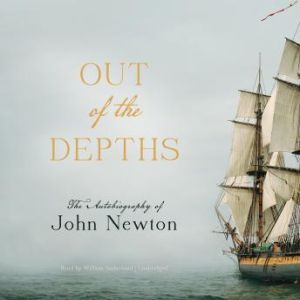
Out Of The Depths (book review)

Listen to the podcast of this post by clicking on the player below, and you can also subscribe on AppleSpotify, or Audible. 

I’ve heard it reported (and I quite believe it) that “Amazing Grace” is the best-known song in the world. This song of God’s unfathomable grace was written by a pastor who was once a slave trader. Out Of The Depths is the autobiography of slave-trader-turned-pastor John Newton. 

This story is told largely through the re-printing of letters that John Newton wrote to a friend over a lengthy correspondence. The original letters were not preserved, so as Mr. Newton wrote them again, he said that he added details that he hadn’t included in the first writing. Then the book closes with some remembrances of a dear friend, and a compilation of some short maxims that Pastor Newton used in his sermons and in conversations with friends. 

One of the real benefits of Newton writing these letters so long after the actual events is his ability to look back at the lessons he learned through his various trials. Granted, many of his trials were brought on by his own stubbornness, but still the beginning of the message of grace from his memorable hymn is heard in the recounting of these stories. 

Another key aspect of his story is his relationship with his wife. She and her family were much more committed Christians than Newton was at the time he began to show an interest in his bride-to-be, but neither she nor her family allowed the courtship to proceed until Newton had entirely surrendered his life to Jesus Christ. Their marriage was a source of great strength and encouragement to Pastor Newton. 

I highly recommend this book to those who enjoy learning about the key figures of church history. 

►► Would you please prayerfully consider supporting this ministry? ◀︎◀︎

Graceful Christians

Listen to the podcast of this post by clicking on the player below, and you can also subscribe on AppleSpotify, or Audible. 

Our Advent series this year has been called “People Will Talk,” but we have one more person to learn from who says nothing. We have none of her words inside quotation marks, and yet Luke was inspired by the Holy Spirit to share her story with us. Her wordless message speaks volumes, if we’re willing to listen. 

Anna, like Simeon, was one of the “Quiet in the Land.” Luke describes her as “very old.” The Greek phrase can either mean that she was a widow for 84 years after seven years of marriage, or simply that she was 84 years old. In either case, we don’t see her sitting withdrawn and inactive because of her old age, but we see her taking the initiative. She is the one who comes up to Joseph, Mary, and Jesus. 

Luke also calls her a “prophetess.” Not someone bitter about her widowhood, but someone who truthfully and lovingly spoke God’s Words. Throughout the Bible, we see that a prophet or prophetess is less foretelling the future than they are forth-telling the promises of God. Of course the “-ess” at then end of “prophet” reminds us that Anna is a woman. As a woman she was excluded from certain parts of the temple, but instead of picketing or making a scene Luke says she spends her time worshipping, fasting, praying, and waiting for the fulfillment of God’s promised Messiah.

I imagine that her mere presence must have changed the atmosphere wherever she went! 

I’m not sure if Charles Dickens had Anna in mind when he wrote A Christmas Carol, but the way the Ghost of Christmas Present added his blessing to busy people is what I imagine Anna’s role being in the temple—

“But soon the steeples called good people all, to church and chapel, and away they came, flocking through the streets in their best clothes, and with their gayest faces. And at the same time there emerged from scores of bye-streets, lanes, and nameless turnings, innumerable people, carrying their dinners to the bakers’ shops. The sight of these poor revelers appeared to interest the Spirit very much, for he stood with Scrooge beside him in a baker’s doorway, and taking off the covers as their bearers passed, sprinkled incense on their dinners from his torch. And it was a very uncommon kind of torch, for once or twice when there were angry words between some dinner-carriers who had jostled each other, he shed a few drops of water on them from it, and their good humor was restored directly. For they said, it was a shame to quarrel upon Christmas Day. And so it was! God love it, so it was!” 

Both Anna in the New Testament and Hannah in the Old Testament mean graceful. Or as I like to remember that word: someone full of grace. When she approaches Joseph, Mary, and Jesus, Luke says she “gave thanks.” This comes from a unique Greek word in the New Testament. The root word is usually translated confession, which means saying the same words as others. But the prefix Luke adds means “in place of.” This means that Anna was speaking thankful words in place of the other words being spoken around her. 

Anna spoke counter-culturally. Instead of being a cultural thermometer, she was serving as a thermostat to change the culture around her. This is the same kind of lifestyle that Jesus calls us to live. And it’s a lifestyle that Paul sums up in one succinct verse: “Let your gentleness [or we could say ‘grace-fullness’] be evident to all. The Lord is near” (Philippians 4:5). 

After Ebenezer Scrooge’s encounter with the three spirits, his life was transformed—

“Scrooge was better than his word. He did it all, and infinitely more.… He became as good a friend, as good a master, and as good a man, as the good old city knew, or any other good old city, town, or borough, in the good old world. 

“Some people laughed to see the alteration in him, but he let them laugh, and little heeded them; for he was wise enough to know that nothing ever happened on this globe, for good, at which some people did not have their fill of laughter in the outset; and knowing that such as these would be blind anyway, he thought it quite as well that they should wrinkle up their eyes in grins, as have the malady in less attractive forms. His own heart laughed: and that was quite enough for him. 

“…And it was always said of him, that he knew how to keep Christmas well, if any man alive possessed the knowledge. May that be truly said of us, and all of us! And so, as Tiny Tim observed, God bless Us, Every One!” 

As Christians, may both our actions and our reactions be so grace-filled, and may our gentleness be so evident to everyone all year long, and may we live so counter-culturally that people cannot help but see that we are grace-filled by the Spirit of Jesus Christ! 

If you’ve missed any of the messages in this Advent series, you can find the full list of messages by clicking here. 

►► Would you please prayerfully consider supporting this ministry? ◀︎◀︎

Poetry Saturday—Will Ye Also Go Away?

Listen to the podcast of this post by clicking on the player below, and you can also subscribe on AppleSpotify, or Audible.

When any turn from Zion’s way,
(As numbers often do,)
Methinks I hear my Saviour say,
Wilt thou forsake Me too?”

Ah, Lord! with such a heart as mine,
Unless Thou hold me fast,
My faith will fail, I shall decline,
And prove like them at last.

‘Tis Thou alone hast power and grace,
To save a wretch like me;
To whom then shall I turn my face,
If I depart from Thee.

Beyond a doubt I rest assur’d
Thou art the Christ of God;
Who hast eternal life secur’d,
By promise and by blood.

The help of men and angels join’d,
Could never reach my case!
Nor can I hope relief to find,
But in Thy boundless grace.

No voice but Thine can give me rest,
And bid my fears depart;
No love but Thine can make me blest,
And satisfy my heart. —John Newton

►► Would you please prayerfully consider supporting this ministry? ◀︎◀︎

Thursdays With Spurgeon—It’s Not About Me

This is a weekly series with things I’m reading and pondering from Charles Spurgeon. You can read the original seed thought here, or type “Thursdays With Spurgeon” in the search box to read more entries.

Listen to the podcast of this post by clicking on the player below, and you can also subscribe on iTunes or Spotify.

It’s Not About Me

Look to Me, and be saved, all you ends of the earth! For I am God, and there is no other. (Isaiah 45:22 NKJV)

     To whom does God tell us to look for salvation? Oh, does it not lower the pride of man when we hear the Lord say, ‘Look to Me, and be saved, all you ends of the earth’? … How frequently you who are coming to Christ look to yourselves. ‘Oh!’ you say, ‘I do not repent enough.’ That is looking to yourself. ‘I do not believe enough.’ That is looking to yourself. ‘I am not worthy.’ That is looking to yourself. 

     ‘I cannot discover,’ says another, ‘that I have any righteousness.’ It is quite right to say that you have not any righteousness. But it is quite wrong to look for any. It is ‘Look to Me.’ God will have you turn your eye off yourself and look to Him. The hardest thing in the world is to turn a man’s eye off himself. As long as he lives, he always has a predilection to turn his eye inside and look at himself, whereas God says, ‘Look to Me.’ … 

     It is not a consideration of what you are but a consideration of what God is and what Christ is that can save you.

     For God has committed them all to disobedience, that He might have mercy on all (Romans 11:32). He has passed a sentence of condemnation on all so that the free grace of God might come upon many to salvation. ‘Look! Look! Look!’ This is the simple method of salvation. ‘Look to Me, and be saved, all you ends of the earth!’

From Sovereignty And Salvation

One of the greatest—and most effective—lies that satan keeps whispering is that you have to do something to be saved. Or you have to do something to stay in God’s favor. Or your salvation is hanging by a flimsy thread. 

No, no, no! A thousand times no! 

When Jesus said, “It is finished,” He meant just that: everything is done. Salvation is a free gift of God’s grace extended to you through faith in Jesus alone. Jesus paid it all, so there is absolutely nothing you or I can add to it. For it is by grace you have been saved, through faith—and this is not from yourselves, it is the gift of God—not by works, so that no one can boast (Ephesians 2:8-9). 

Tell the devil he is a liar. Then, as Spurgeon said, look away from yourself and what you think you have to do and look only to the completed work of Calvary. True freedom and eternal joy come to the heart that looks away from itself and keeps its gaze on its Savior! When Jesus said, “It is finished,” He meant it! It is no longer what I must do, but what Jesus already did!

►► Would you please prayerfully consider supporting this ministry? ◀︎◀︎