This is a weekly series with things I’m reading and pondering from Charles Spurgeon. You can read the original seed thought here, or type “Thursdays With Spurgeon” in the search box to read more entries.
All The Trinity In Salvation
We are, alas, too apt to forget that while there are distinctions as to the persons in the Trinity, there are no distinctions of honor—and we do frequently ascribe the honor of our salvation, or at least the depths of its mercy and the extremity of its benevolence, more to Jesus Christ than we do to the Father. This is a very great mistake.
What if Jesus came? Did not His Father send Him? If He were made a Child, did not the Holy Spirit beget Him? If He spoke wondrously, did not His Father pour grace into His lips that He might be an able minister of the new covenant? If His Father did forsake Him when He drank the bigger cup of gall, did He not love Him still? And did He not, by and by, after three days, raise Him from the dead and at last receive Him up on high, leading captivity captive?
Ah, beloved, he who knows the Father, the Son, and the Holy Spirit as he should know them never sets one before another. He is not more thankful to one than the other; he sees them at Bethlehem, at Gethsemane, and on Calvary all equally engaged in the work of salvation.
From The Incarnation And Birth Of Christ
All of the Godhead is involved in our salvation. God doesn’t separate Himself—He is One.
Leah became pregnant and gave birth to a son… (Genesis 29:32).
Jesus said that ALL the Scripture pointed to Him (John 5:39). That means even the various names of people in the Scripture give us some insight into the nature of Jesus.
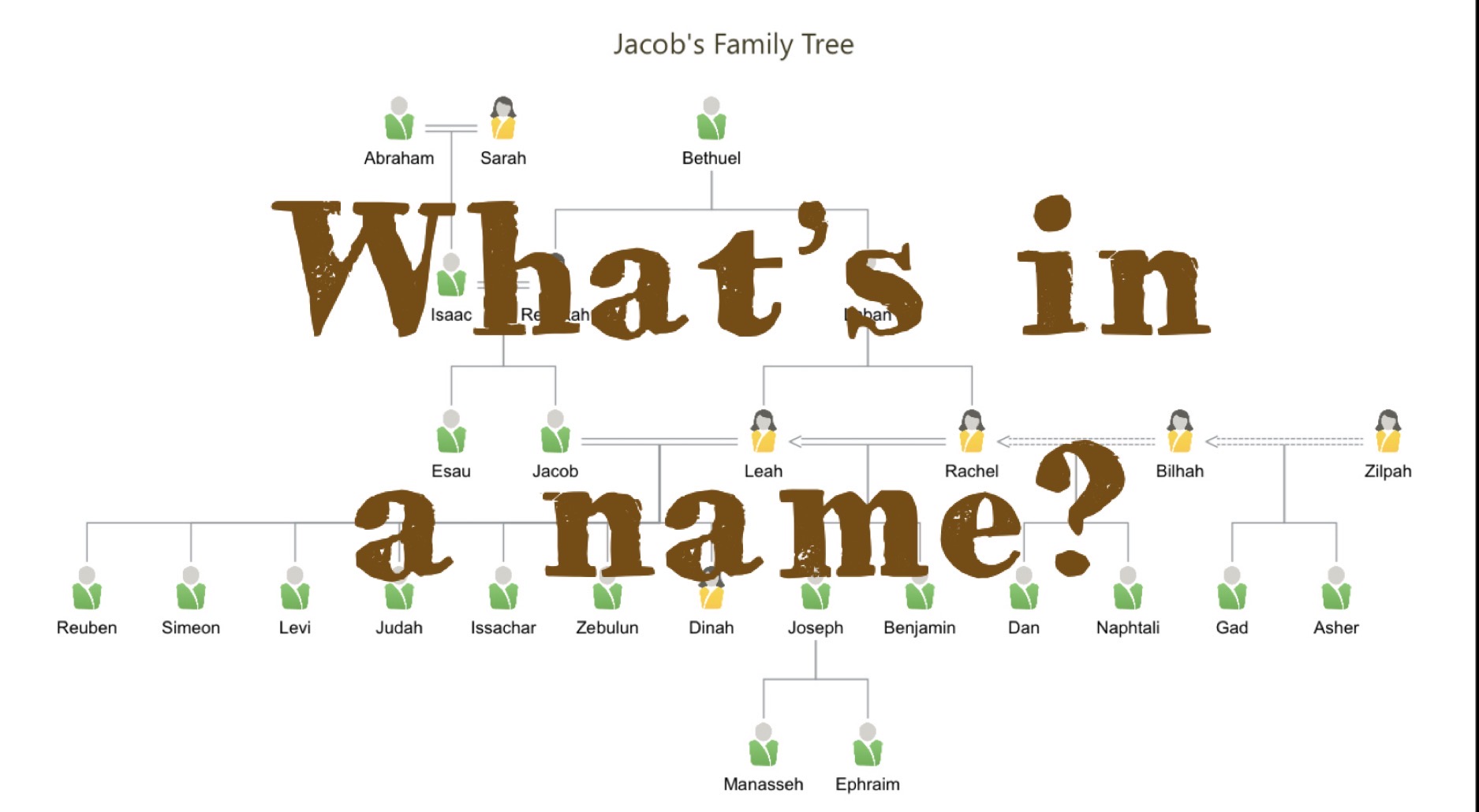
Consider Jacob and his sons, who become the fathers of the tribes of the nation of Israel. Jacob the deceiver is transformed into Israel the guileless, and the names of his sons point to what Jesus does to transform all of us into His righteous brothers and sisters.
[Check out the links posted below to read all the Scripture references.]
Reuben—God sees my misery and sends His Son (Genesis 29:32; John 3:16).
Simeon—God sent His Son when I was unlovable (Genesis 29:33; Romans 5:6-8).
Levi—after I am saved from my sins, I am joined to God (Genesis 29:34; Ephesians 2:1-5).
Judah—my salvation brings praise to God (Genesis 29:35; John 15:8).
Dan—God has vindicated me in Jesus (Genesis 30:6; John 8:11).
Naphtali—Christ’s righteousness has given me victory over my struggles (Genesis 30:8; Romans 8:1; 1 Corinthians 15:54-56).
Gad—God’s favor now advances toward me like an unstoppable troop (Genesis 30:11; Romans 8:31-39).
Asher—I am now able to enjoy God’s happiness (Genesis 30:13; Matthew 25:21, 34).
Issachar—God IS my reward (Genesis 30:18; Revelation 3:20-21).
Joseph—God has taken away my disgrace and added His blessing (Genesis 30:24; Romans 8:1, 32).
Manasseh—God has made me forget my past (Genesis 41:51; Psalm 103:12).
Ephraim—God has made me abundantly fruitful (Genesis 41:52; 1 Peter 2:9-10).
Benjamin—I am God’s son (Genesis 35:18; Ephesians 2:6)!
God has done ALL this—and more!—through Jesus!
When you read the Bible, don’t rush through it. Slow down. Meditate on it. Soak in it. And then see how the Holy Spirit will illuminate truth to you.
[Please check out the Bible references I’ve listed above for yourself. All of the Genesis references are here, and all of the other references are here.]
Not one word in Scripture is wasted: not one word is redundant or replaceable. When Jesus taught us to pray to a Heavenly Father, He taught us to say, “OUR Father.” That means we are all His children, with His Holy Spirit helping us to grasp this—The Spirit Himself testifies with our spirit that WE are God’s children. Now if WE are children, then WE are heirs—heirs of God and co-heirs with Christ… (Romans 8:16-17).
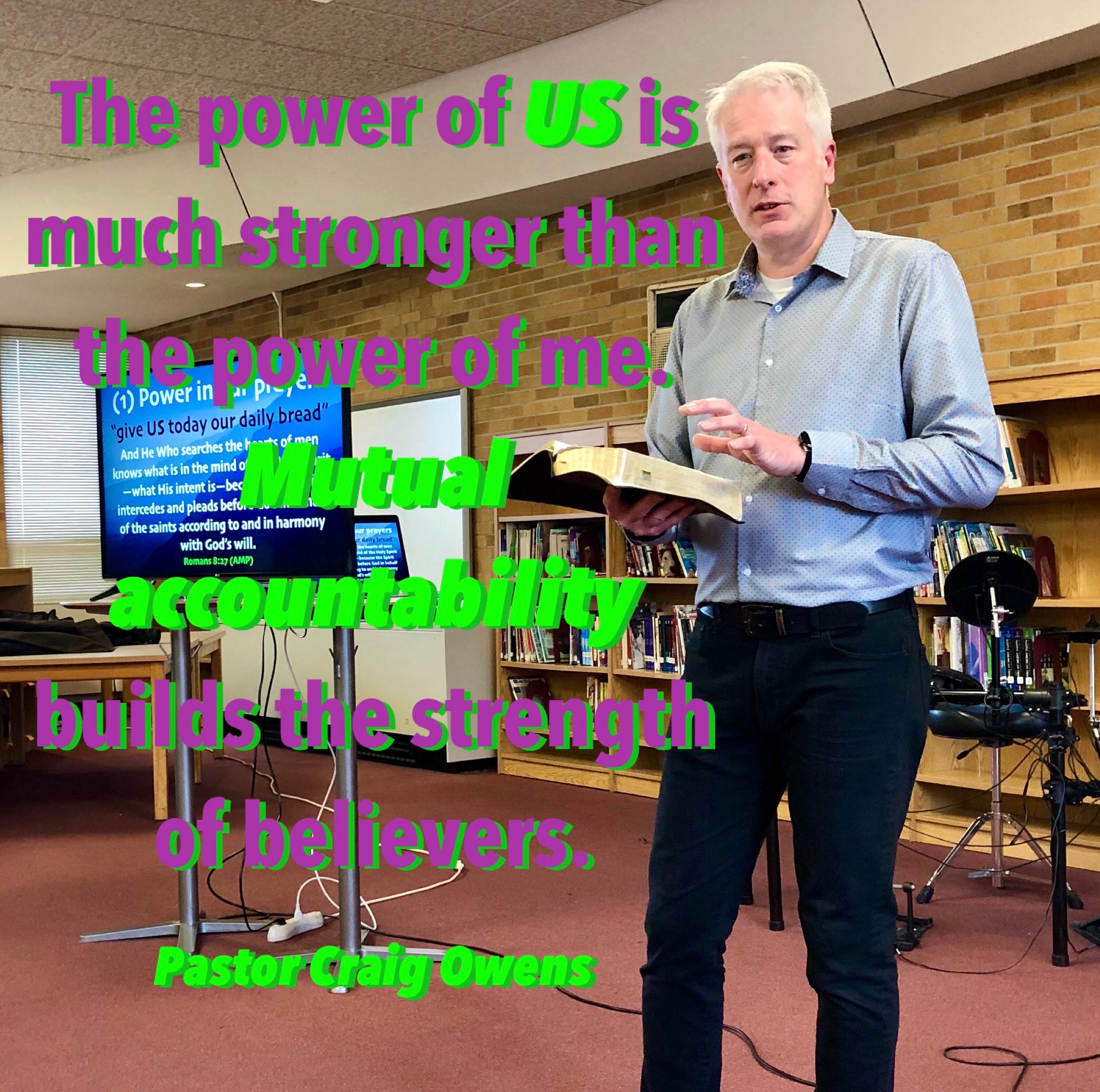
Did you know that the word saints never appears in the singular in Scripture? No one person is singled out for his or her saintliness. Because we are saintS, praying together to OUR Father, this means accountability. For some people, accountability is a bad word. It seems to them to feel like someone is looking over their shoulder or checking up on them. But Christians should never feel this way! I like how Ken Blanchard defines this: “Accountability means: We owe each other for something we’ve agreed upon.”
What have the saints of God agreed upon? That God is our Father, that Jesus is His Son and our Brother, and that the Holy Spirit is our Helper. We’ve agreed that if we are brothers and sisters in God’s family, we are mutually accountable to one another.
In the context of the prayer Jesus taught us to pray, being mutually accountable means:
Power in our prayers—give US today our daily bread. Jesus talks about the power in agreement, and the apostle Paul emphasizes how the Holy Spirit helps believers harmonize in prayer with each other and with God’s will (Matthew 18:19-20; Romans 8:27).
Strengthening of our character—forgive US our debts, as WE also have forgiven our debtors. Jack Hayford points out that, “The believer’s best defense against self-deception is through mutual accountability to one another.” In order for our character to be strengthened, we have to allow others to speak into our lives—even the lovingly painful words (Proverbs 27:17, 6).
Protection from falling to temptation—lead US not into temptation, but deliver US from the evil one. Samson became entangled with a prostitute when he was all by himself; Elijah became depressed when he sent his servant away; David fell into sin when he was alone; Peter denied Christ when all of the other disciples had run away. That’s why the writer of Hebrews counsels us to stick close to our Christian family members (Hebrews 10:21-25).
In an earlier post, I noted that how we view God is going to determine what we pray and what we expect after we pray. Coming together and praying together will help us see God better. Just as the angels around the throne are always crying out to each other “Holy! Holy! Holy!”, when we come together we can show our fellow saints what we’ve learned about our holy Father’s love and power. This is both an encouragement to others and allows others to be an encouragement to us too. Then together we can pray more boldly and expect great things in response to our prayer.
Being mutually accountable to the saints in prayer…
… hallows God as our Father
… glorifies Jesus as our Brother
… honors the Spirit as our Helper
God never intended that you would have to walk through life alone. He wants us to share the journey with fellow saints—His family made up of our brothers and sisters. This praying family truly honors God’s name!
This is a weekly series with things I’m reading and pondering from Charles Spurgeon. You can read the original seed thought here, or type “Thursdays With Spurgeon” in the search box to read more entries.
Our Father In Heaven
I believe that this prayer [“Our Father in heaven, hallowed be Your name”] was never intended for universal use. Jesus Christ taught it not to all men, but to His disciples, and it is a prayer adopted only to those who are the possessors of grace and are truly converted. In the lips of an ungodly man, it is entirely out of place. Does not one say, “You are of your father the devil, and the desires of your father you want to do” (John 8:44)? Why then should you mock God by saying, “Our Father in heaven”?
Let none despise this prayer. It is matchless, and if we must have forms of prayer, let us have this first, foremost, and chief. But let none think that Christ would tie His disciples to the constant and only use of this. Let us rather draw near to the throne of heavenly grace with boldness, as children coming to a father, and let us tell forth our wants and our sorrows in the language that the Holy Spirit teaches us. …
If we say, “Our Father in heaven,” we must remember that our being sons involves the duty of obedience to God. When I say “my Father,” it is not for me to rise up and go in rebellion against His wishes. If He is my Father, let me note His commands and let me reverentially obey. If He has said, “Do this,” let me do it, not because I dread Him, but because I love Him. And if He forbids me to do anything, let me avoid it. …
We are one in the family of God and no one is ahead of the other. One may have more grace than another, but God does not love one more than another. One may be an older child than another, but he is not more a child. One may do mightier works and may bring more glory to his Father, but he whose name is the least in the kingdom of heaven is as much the child of God as he who stands among the king’s mighty men. Let this cheer and comfort us when we draw near to God and say, “Our Father in heaven.” …
And after you have prayed that, rise up and act it. Say not “our Father” and then look upon your brethren with a sneer or frown. I beseech you, love like a brother and act like a brother. Help the needy. Cheer these sick. Comfort the fainthearted. Go about doing good; minister to the suffering people of God wherever you find them. Let the world take notice of you—that you are when you are on your feet what you are upon your knees—that you are a brother to all the brotherhood of Christ, a brother born for adversity, like your Master Himself.
…if someone desires to be a church leader,he desires an honorable position (1 Timothy 3:1).
Desires—Paul uses two different Greek words for this one English word. The first word is orego. In the (+) sense it means to stretch out in order to grasp something. In the (-) sense it means to give one’s self up to the love of money.
The second word is epithymeo. In the (+) sense it means to long for a good thing (see Matthew 13:17; Luke 22:15). In the (-) sense it means to covet what is forbidden (see Matthew 5:28; James 4:2).
So (+) or (-) leadership comes down to desire. If I want a leadership position for whatI can get, that is a (-) desire. Should you then seek great things for yourself? Do not seek them… (Jeremiah 45:5).
But if I desire a leadership position for what I can give, that is a (+) desire. Not so with you. Instead, whoever wants to become great among you must be your servant, and whoever wants to be first must be slave of all. For even the Son of Man did not come to be served, but to serve, and to give His life as a ransom for many (Mark 10:43-45).
With these differing desires in mind, the list of qualifications for church leaders in verses 2-7 and 8-13 should be viewed through the (+)/(-)desire lenses:
Why should I be above reproach: (-) so that I can get something, or (+) so that I can serve others better?
Why should I be faithful in marriage: (-) so that I look good, or (+) so that I am strengthened by my spouse to serve?
Why should I be temperate, self-controlled, respectable, hospitable, an able teacher, sober, gentle, agreeable, content, and so on? The answers to those questions determine what desire I have.
A godly leader desires to glorify God and serve others, so a godly leader willingly submits to the Holy Spirit to address any area of (-) desire that may derail the God-honoring (+) desires. Just as Jesus is the Ultimate Servant-leader, I too must “have the same mind as Christ Jesus” (Philippians 2:5).
A mark of a godly leader is one who desires leadership with a (+) desire.
This is part 43 in my series on godly leadership. You can check out all of my posts in this series by clicking here.
The Lord was with Joseph so that he prospered… (Genesis 39:2).
This idea is repeated throughout Joseph’s life:
the Lord gave him success in everything he did (v. 3)
the Lord blessed the household of the Egyptian because of Joseph (v. 5)
the Lord was with him; He showed him kindness and granted him favor in the eyes of the warden (v. 21)
the Lord was with Joseph and gave him success in whatever he did (v. 23)
For 11 years as a slave in Potiphar’s house and 2 years as a prisoner in jail, God not only blessed Joseph but He also blessed those around Joseph because of Joseph.
This wouldn’t have happened if Joseph had been bitter over his situation.
He didn’t demonstrate a bad attitude, but an outstanding work ethic.
He didn’t look for opportunities to subvert and scheme, but he submitted and served.
These principles are echoed in the New Testament as well:
Let your light shine before men so that they may see your good deeds and glorify your Father in heaven (Matthew 5:16)
Slaves, obey your masters with respect(Ephesians 6:5)
Work well whether your boss is watching you or not (Colossians 3:22-23)
Whatever you do, do it for God’s glory (1 Corinthians 10:31)
Live such good livesthat others may see your good deeds and glorify God on the day he visits us (1 Peter 2:12-20)
This attitude is one that receives both God’s blessing and man’s favor. When we steward this blessing and favor well, we bring even more glory to God!
Whether as a slave, a prisoner, or a prime minister, God blessed Joseph and He blessed those around Joseph because of Joseph’s attitude. Can the same be said of our lives?
This is a weekly series with things I’m reading and pondering from Charles Spurgeon. You can read the original seed thought here, or type “Thursdays With Spurgeon” in the search box to read more entries.
Not Puffed Up, Not Despised
We magnify our office, though we would not magnify ourselves. We hold that nothing can dignify a man more than being appointed to an office in a Christian church. I would rather be a deacon of the church than lord mayor of London. A minister of Christ is, in my estimation, an infinitely higher honor than the world can bestow. My pulpit is to me more desirable than a throne, and my congregation is an empire more than large enough. An empire before which the empires of the earth dwindle into nothing in everlasting importance.
Why does God give to one man a special call by the Holy Spirit to be a minister and pass by another? There is another man more gifted, perhaps, but we dare not put him in a pulpit because he has not had a special call. … The man whom some would perhaps think most suitable for the office is passed by and another chosen. There is a manifestation of God’s sovereignty in the appointment to office in putting David on a throne, and making Moses the leader of the children of Israel through the wilderness, in choosing Daniel to stand among princes, in electing Paul to be the minister to the Gentiles and Peter to be the apostle of the circumcision. And you who have not the gift of honorable office must learn the great truth contained in the question of the Master, “Is it not lawful for Me to do what I wish with My own things?” [Matthew 20:15]
We say again, the sovereignty of God is here displayed in the distribution of gifts honorable. Learn here, O Christian man, if you have gifts, to cast the honor of them at the Savior’s feet, and if you possess them not, learn not to murmur. Remember that God is equally as kind when He keeps back as when He distributes His favors. If any among you is exalted, let him not be puffed up. If any is lowly, let him not be despised. For God gives to every vessel His measure of grace. Serve Him after your measure and adore the King of heaven who does as He pleases.
From Divine Sovereignty
Why does one person have one gift, and not another gift?
Why does one Christian have one gift and another Christian many gifts?
Why does one person rise to notoriety and another remains anonymous?
Why did God choose David? Or Moses? Or Joshua? Or Saul/Paul?
God is sovereign and He knows what He is doing!
This should awaken in us a humble confidence. We are humbled that God would choose us for anything, but we are also confident that since He did choose us and place us where we needed to be that nothing can remove us or diminish what God is doing through us.
Don’t get puffed up. Don’t feel despised. God knows exactly what He is doing!
Although most nativity scenes show the wise men visiting Jesus alongside the shepherds the night He was born, in reality the Magi showed up much later.
They came first to Israel’s capital city—Jerusalem—and went to the man who currently bore the title King of the Jews—Herod—with an odd question, “Where is He who has been born King of the Jews? We’ve come to worship Him.”
The call to come to worship the Christ has always stirred different responses in people’s hearts. But I have noticed that the responses today aren’t any different than they were over 2000 years ago at Christ’s first Advent.
King Herod—when King Herod heard this he was disturbed.
The word disturbed means an inward commotion, someone robbed of any calmness; someone who has become restless and agitated.
King Herod wasn’t all that different from a lot of people today who have their personal lives organized according to their own plans. They have everything figured out. They are masters of their own fate. They know how everything is supposed to work. They are god of their own world.
But inside it’s a different story. They may not acknowledge it to anyone else, but they are uneasy. King Herod was political, not religious. He knew how to play the games with the right Jewish leaders and Roman politicians to get and keep his throne. So when he hears, “Where is He who is born KING OF THE JEWS?” you can understand why he instantly becomes so agitated! He feels like his well-ordered world and best-laid plans are about to crash in on him!
All Jerusalem—King Herod…was disturbed, and all Jerusalem with him.
The people of Jerusalem had a love-hate relationship with King Herod. If you were on his side, he could be quite generous with his gifts and favorable with his influence. But if you were against him, he could be incredibly cruel (just take a look at verse 16!).
So when Herod got upset, you can imagine why the citizens of Jerusalem were as well. They all longed for the Messiah—the Christ—to come and set them free, but in the meantime they were trying to keep their options open. They wanted the Messiah, if they could have Him, but they didn’t want to abandon Herod yet, just in case the Messiah couldn’t follow through.
Religious leaders—Herod…called together all the people’s chief priests and teachers of the law.
Of all the people looking for the Christ, you would think the chief priests and teachers of the law would be the most excited! When Herod asked them for the birthplace of the Messiah, they immediately knew the answer, but after they delivered this information to King Herod they aren’t mentioned again in this narrative. Bethlehem was only 6 miles away, but they didn’t do a single thing! The Messiah being born in such a lowly manner didn’t fit the image they had concocted in their minds. Later on, Jesus would challenge them on this (see John 5:38-40).
Magi—Magi from the east came to Jerusalem.
Whereas the Jewish religious leaders were only 6 miles away, the Magi that came from the east might have been anywhere from 400-800 miles away. They left the comforts of their home to travel perhaps as long as 4 months. But, Oh! the journey was so worth the effort! They got to see the Christ with their very own eyes! We read that they were overjoyed, and that they bowed down and worshiped Him and opened their treasures.
What’s your idea about Jesus?
King Herod wanted a Savior that would enable him to continue to run his own life, but he didn’t want a King that would call the shots.
The people of Jerusalem wanted access to God’s power, but they didn’t want to give their full allegiance to Jesus.
The religious leaders wanted Jesus to fit their mold, but they didn’t want to have to change anything about their own lives.
Only the Magi accepted Jesus as both Savior and King, willingly laying everything at His feet.
What about you? What’s your idea about Jesus? He isn’t just a Baby in a manger; He’s also King and Judge and Ruler and Lord. When you hear the call to come worship Him, what will your response be?
This is a weekly series with things I’m reading and pondering from Charles Spurgeon. You can read the original seed thought here, or type “Thursdays With Spurgeon” in the search box to read more entries.
God Sovereignly Gives Gifts
…Am I not permitted to do what I choose with what is mine? (Matthew 20:15)
There is no attribute of God more comforting to His children than the doctrine of divine sovereignty. Under the most adverse circumstances, in the most severe troubles, they believe that sovereignty has ordained their afflictions, and that sovereignty overrules them and that sovereignty will sanctify them all. …
On the other hand, there is no doctrine more hated by worldlings, no truth of which they have made such a football, as the great, stupendous, but yet most certain doctrine of the sovereignty of the infinite Jehovah. Men will allow God to be everywhere except on His throne. … When God ascends His throne, His creatures then gnash their teeth. And when we proclaim an enthroned God and His right to do as He wills with His own, to dispose of His creatures as He thinks well, without consulting them in the matter, then it is that we are hissed and execrated. …
O you who are gifted with a noble frame, a comely body—boast not yourself therein, for your gifts come from God. Oh, glory not, for if you glory you become uncomely in a moment. The flowers boast not of their beauty, nor do the birds sing of their plumage. Be not vain, you daughters of beauty. Be not exalted, you sons of comeliness. And, all you men of might and intellect, remember that a sovereign Lord bestows all you have. …
Therefore I say do not exalt yourself above measure, but use what God has given you, for it is a royal gift and you should not lay it aside. But if the sovereign Lord has given you one talent and no more, lay it not up in a napkin, but use it well. … Bless God that you have more than others and thank Him also that He has given you less than others, for you have less to carry on your shoulders. And the lighter your burden, the less cause you will have to groan as you travel on toward the better land. Bless God, then, if you possess less than your fellows, and see His goodness in withholding as well as in giving.
From Divine Sovereignty
God does all that He does on purpose. Just because you or I cannot perceive His purpose doesn’t mean that there is no purpose. There is!
God is sovereign. We can fight against this, or we can see it as the amazing comfort that God intends for it to be. Since God is sovereign, I can rest assured that I am where He needs me to be, equipped with all He has given me to bring Him glory in that place!
I think all of you can finish this poem: ’Twas the night before Christmas and all through the house not a creature was stirring, not even a mouse.
Haddon Sundblom’s painting for Coca-Cola
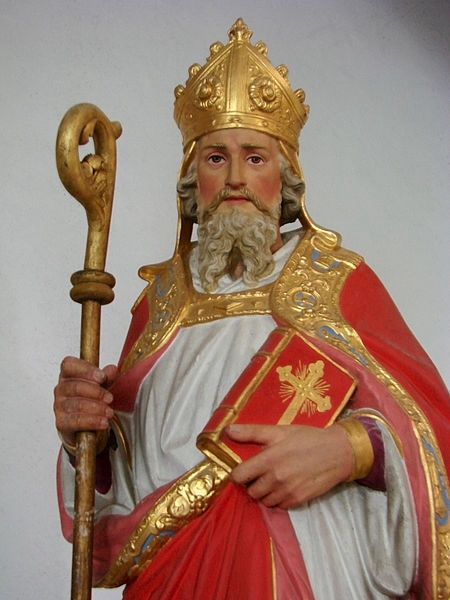
This poem was written in 1837 by Clement Moore. Most people assume the title of the poem is the first line of the poem, but Moore’s original title is actually “A Visit From St. Nicholas.” And we all know what St. Nicholas (aka Santa Claus) looks like, right? Actually, this well-known painting of Santa Claus is the creation of Haddon Sundblom for Coca-Cola in 1930, but it’s not too far off from the original St. Nicholas.
Nicholas of Myra
Nicholas of Myra was a Christian bishop who lived in the 3rd century AD. It was discovered by some of his peers that he would anonymously throw bags of money through the open windows of the poor people in his town. Some of the coins landed in these poor families’ shoes and socks as they were drying by the fireplace. The myth grew that without your stockings hung by the fireplace you wouldn’t receive any gifts. After Nicholas died in 342 AD he was declared a saint, so his popular practice of blessing the poor spread and took on a life of its own.
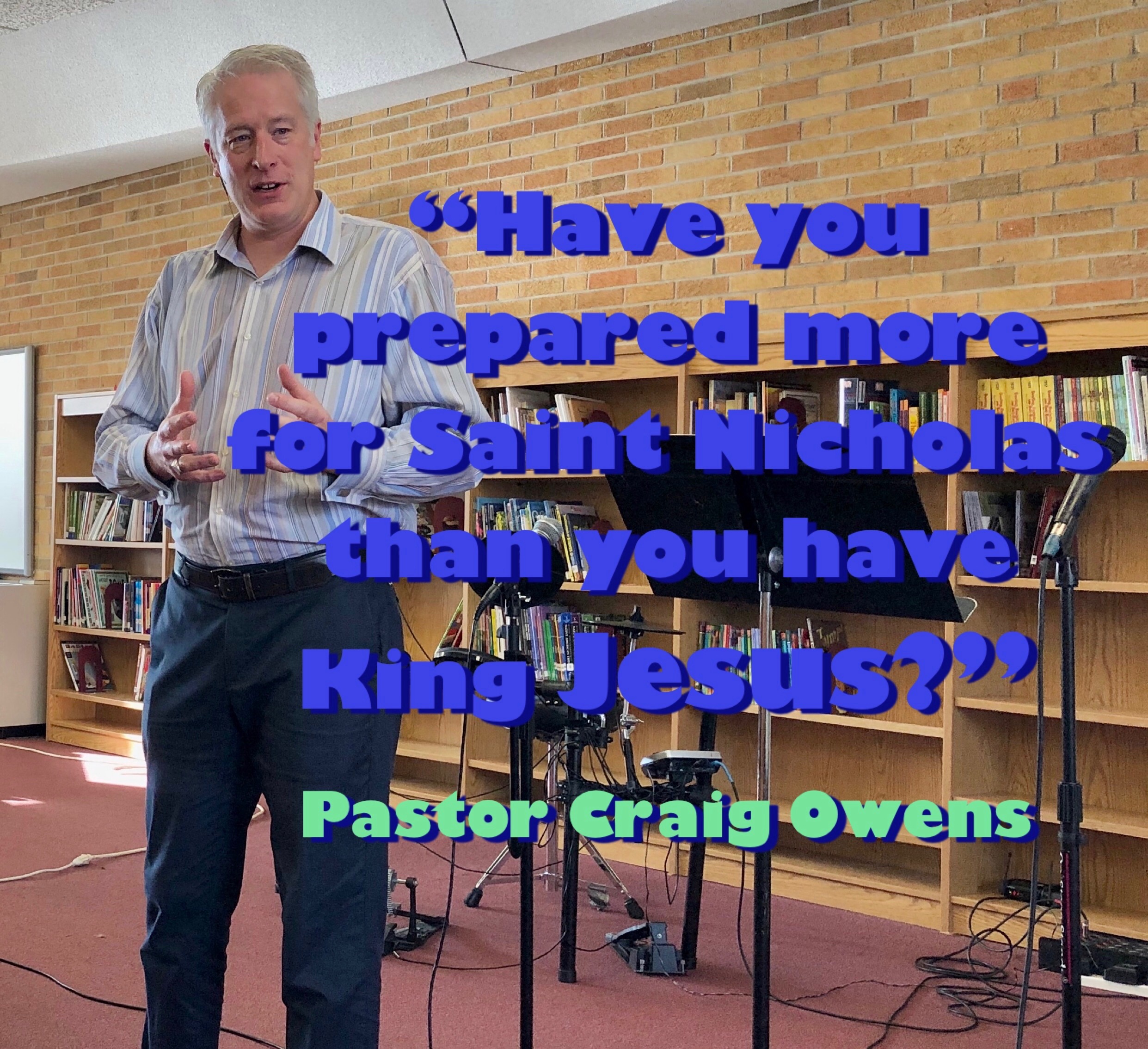
I’m struck by a contrast from the line in Moore’s poem that “the stockings were all hung by the chimney with care.” This tells us how well people prepare for the “arrival” of St. Nicholas each Christmas, but let’s contrast that with how ill-prepared—if they even know they need to prepare!—people are for the absolutely certain fact of the arrival of King Jesus!
Just as the vast majority of Israelites weren’t prepared for the Messiah’s first Advent in Bethlehem in the 1st century, how many people are still unprepared for His second Advent which could occur at any moment?
Think about the contrasts between the legend of St. Nicholas (i.e. Santa Claus) and the certainty of Jesus Christ:
St. Nicholas was a poor monk who has now become richer than imaginable. Jesus is the King of kings who left all His riches and kingly rights to become poor.
St. Nicholas was a servant who has now been elevated to royalty status. Jesus is Absolute Royalty who became a servant.
St. Nicholas lives in a castle at the North Pole; there wasn’t even a room for Jesus at His birth, or even later in His adult life.
St. Nicholas is a fable that people venerate; Jesus is the Truth that people mock.
There was no room in any inn, although Joseph knocked and knocked. Jesus is still knocking today, except today it’s on the door of your heart (Revelation 3:20). Will you let Him in? Or will you continue to allow your heart and mind to be dominated by myths and legends?
Advent is a time for reflection. I don’t think we could ask a more heart-searching question than this—
Am I more prepared for St. Nicholas than I am for King Jesus?



 This is a weekly series with things I’m reading and pondering from Charles Spurgeon. You can read the original seed thought here, or type “Thursdays With Spurgeon” in the search box to read more entries.