What Godly Leaders Do

Listen to the podcast of this post by clicking on the player below, and you can also subscribe on AppleSpotify, or Audible. 

As Paul is coming to the close of his letter to the believers in Rome, he writes these beautiful words, “I myself am convinced, my brothers and sisters, that you yourselves are full of goodness, filled with knowledge and competent to instruct one another” (Romans 15:14). 

(Check out all of the Scriptures in this post by clicking here.)

I love the high esteem Paul has for the Christians in Rome. He’s not looking for what’s wrong with them, but for what’s praiseworthy in them. 

A mark of a godly leader is one who is always looking for the best in the people around him. 

Leaders see the best in people—even if the people don’t see it in themselves yet. (Check out this short video.) 

Leaders point out the specific qualities they see in their people—virtues like goodness, knowledge, and competence. 

Leaders continue to sharpen their people, challenging them to excel even more. “Yet I have written you quite boldly on some points to remind you of them again” (v. 15). 

Leaders enjoy spending time with their people and are refreshed by them. 

   But now that there is no more place for me to work in these regions, and since I have been longing for many years to visit you, I plan to do so when I go to Spain. I hope to see you while passing through and to have you assist me on my journey there, after I have enjoyed your company for a while. … So that I may come to you with joy, by God’s will, and in your company be refreshed (vv. 23-24, 32). 

Leaders pray for their people and ask their people to pray for them. “I urge you, brothers and sisters, by our Lord Jesus Christ and by the love of the Spirit, to join me in my struggle by praying to God for me. Pray that I may be kept safe from the unbelievers in Judea and that the contribution I take to Jerusalem may be favorably received by the Lord’s people there” (vv. 30-31; see Paul’s prayer for them in 16:25-27). 

Leaders publicly compliment their people (16:1-15). 

And leaders protect and empower their people. “I urge you, brothers and sisters, to watch out for those who cause divisions and put obstacles in your way that are contrary to the teaching you have learned. Keep away from them. … The God of peace will soon crush satan under your feet. The grace of our Lord Jesus be with you” (16:17, 20). 

I want to be this kind of leader. In order to do that, I need the help of the Holy Spirit. I must listen to His voice in order to make the changes I need to make so that I may lead in the most Christ-glorifying way possible, and help those around me live even more in their God-given gift zone.

This is part 85 in my series on godly leadership. You can check out all of my posts in this series by clicking here.

►► Would you please prayerfully consider supporting this ministry? My Patreon supporters get behind-the-scenes access to exclusive materials. ◀︎◀︎

Year-End Review (2024 Edition) 

Listen to the podcast of this post by clicking on the player below, and you can also subscribe on AppleSpotify, or Audible

I take some time at the end of each calendar year for a quick recap of everything we have learned during this year at Calvary Assembly of God. I do this because I want to make sure we are all on the same page with each other before we move into a new year. And I also think it’s very important that we are continually reminded and reassured of what God has done for us. In our series on gratitude we talked about the dangers of forgetting to remember and re-tell the blessings of God. We see in the letters from the apostles both a re-telling of their own words, and reusing and amplifying the words of Jesus and other apostles. 

You can click on the sermon series title to find a list of all of the sermons in that series. Clicking on those individual sermons will give you a short written recap of that message, and it will also give you the link to watch the video of the full sermon. 

Kingdom Praying. Jesus made it clear time and time again that He came to reveal the Kingdom of God to us. He described what the Kingdom was like and told us that He came to be the means by which we could enter God’s Kingdom. He also told us how God’s children could access the power and privileges of our Heavenly Father through the means of prayer. He assured us with words like, “Do not be afraid, little flock, for your Father has been pleased to give you the Kingdom” (Luke 12:32). Jesus said quite simply that we had access to our Father through prayer. And then to make sure we didn’t miss out on this awesome privilege, He instructed us, “This, then, is how you should pray” (Matthew 6:8). 

Jots and Tittles. As we get closer to the death and resurrection of Jesus, there are an increasing number of prophecies that are fulfilled in these events. Jesus appears to have been very attentive to making sure that each and every one of these prophecies were fulfilled to the smallest detail. Near the beginning of His public ministry, Jesus noted that not one iota—or “one jot or tittle” in the Old English vocabulary—of any of God’s promises would be left unfulfilled (Matthew 5:18). It’s amazing that Jesus so carefully attended to all of these, but it’s also important to ask ourselves what these fulfilled prophecies mean to us today. 

Takin’ Him to the Streets. Just before Jesus ascended to Heaven, He told His followers that they would have the joyful responsibility of taking the good news of forgiveness and eternal life to all the highways and byways of every nation. Later on, Paul would get more specific about all of the groups to which he was taking the message of Jesus (see Luke 24:46-47; 1 Corinthians 9:20-22). That commission is still in effect for Christians today: We are to share the gospel with everyone—from easy street to skid row, from Wall Street to Main Street, and every street in between. The streets on which you live and work are different from the streets where I travel. In fact, all of us live on different streets, but everyone we meet on every street needs to hear about Jesus. In this new series of messages, we are going to learn how the Holy Spirit can help us be ready to take Jesus to those on each street where God sends us. 

Ascending. Every year, Jews from around the world made four pilgrimages up to Jerusalem for various feasts and sacrifices. These journeys reminded them of God’s goodness as they went to the Temple to worship, and they helped refocus on God’s ways as they returned to their regular routines. Jerusalem is over 2500 feet above sea level, so the pilgrimage there was a physical workout as well as a spiritual workout. These workouts were beneficial for God’s people, preparing them to minister in their cities in the following months. The Book of Psalms contains 15 songs that these pilgrims would sing to and with each other as they traveled up to Jerusalem. These Psalms of Ascent are still instructive for Christians today. 

Living in your Gift Zone. God created each and every human being uniquely. We all come in different shapes and sizes, but we all share one thing in common: He created each of us with a unique personality and a unique gift package. By unique, I truly mean that we are all one-of-a-kind creations that have never existed in all of history! Here’s another thing we all have in common: We usually live in a comfort zone that is far smaller than our gift zone. Living this way keeps us from soaring through life in the way that God intended. He wants each of us to know our gifts, and to use our gifts in a way that benefits our world and brings Him glory. It starts with believing that we are indeed gifted by our Creator. Then we must have the courage to step out of our comfort zone into the much larger gift zone God has given us. 

Is that in the Bible? A meme that makes me chuckle every time I see it is a “quote” attributed to Abraham Lincoln in which he says, “The problem with quotes found on the internet is that they are often not true.” (Not to spoil the joke for you, but unless Lincoln knew how to time travel to the future, I don’t think he knew about the modern internet!). I love this meme because it captures something that so many people fall into: a quick acceptance of a statement without verifying its source or thinking through the implications of the statement’s truthfulness. In this series I think you may be surprised to discover just how many phrases we call biblical aren’t, and how many phrases there are that we never realized are actually in the Bible. 

Be Thankful. It’s so easy to spot the negative things. It’s so easy to gripe about the bad stuff with others. It’s so easy to complain about what’s wrong with the world. But the Bible repeatedly calls the saints of God to rise above this downward pull of negativity. In fact, for those who have a relationship with their Heavenly Father, who call Jesus their Savior, and who call the Holy Spirit their Counselor, there is really only one way to live: Grateful! 

Christ’s Advents. The word Advent means the appearing—something that bursts onto the scene. At this time of year we are actually thinking about TWO Advents. We look backward in gratitude to celebrate the first Advent of Jesus when He was born in a manger in Bethlehem. And then we look forward in joyful expectation to the second Advent of Jesus when He will return to earth again as King of kings. As Christians live in this time between the two Advents, our celebration and expectation should bring four noticeable attributes from our lives: hope, peace, joy, and love. 

I also shared a couple of messages that weren’t a part of a series. My Mother’s Day and Father’s Day sermons, and a sermon on how Christians should live in a political season

This next year promises to be another amazing time of learning and growing. If you live in northern Kent County and don’t have a home church, I would love for you to visit us

►► Would you please prayerfully consider supporting this ministry? My Patreon supporters get behind-the-scenes access to exclusive materials. ◀︎◀︎

Let’s Grow Together

Listen to the podcast of this post by clicking on the player below, and you can also subscribe on AppleSpotify, or Audible. 

We’ve now learned about all three circles that help us discover our God-implanted gifts: 

  • Passion—what thrills you? 
  • Pain—what kills you? 
  • Proficiency—what fulfills you? 

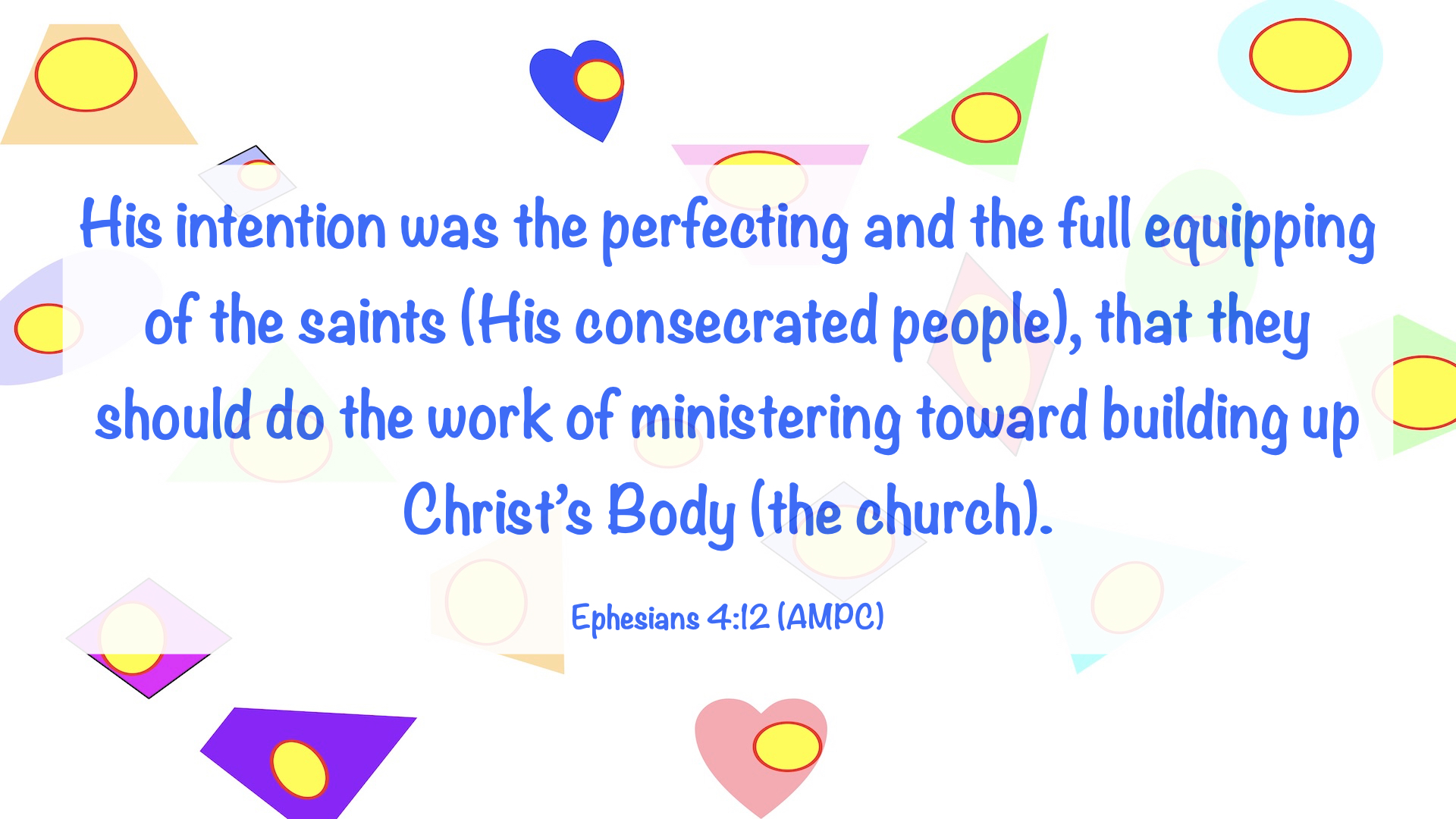
What do you do with these gifts? What’s the whole purpose in learning about them? I think the goal as saints is to help the Body of Christ mature in ways that brings God glory (Ephesians 4:12-16). 

(Check out all of the Scriptures in this post by clicking here.) 

Solomon also gives a great word picture of friends using their gifts for each other—“As iron sharpens iron, so a friend sharpens a friend” (Proverbs 27:17 NLT). 

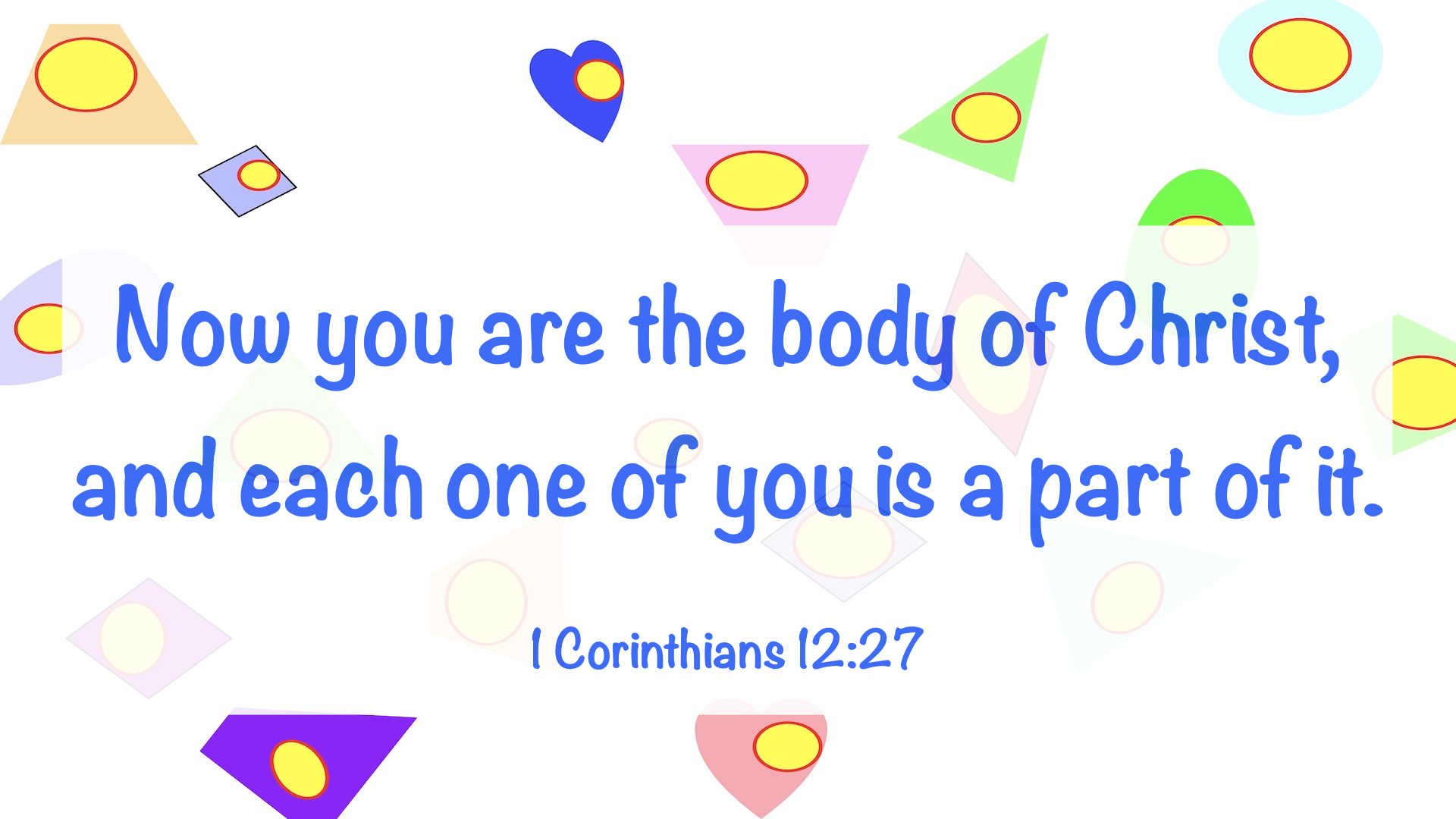
In an earlier message in this series, I talked about the thousands of enzymes in our human bodies. Each enzyme has just one task, and each task is indispensable to the health of the whole body. It is exactly the same in the Body of Christ—your gift-in-action is indispensable to the health of the whole Body.

How do you squander your grace gift? I think these are five basic ways:

  1. Not discovering it—“I have a gift?” 
  2. Devaluing it—“My gift is nothing special.” 
  3. Overvaluing it—“My gift is super-important.” 
  4. Laziness—“My gift is fine just the way it is.” 
  5. Selfishness—“My gift is just for me.” 

We need to discover our own gifts, but then we need to work on making the switch from “me” to “we.” I want to excel in using my gift so that I can help you excel in using your gift so that we can help another brother or sister excel in using their gift. 

Oswald Chambers said, “The Book of God is insistent on this: we cannot develop a holy life alone, it would be a selfish life, without God in it and wrong. … Beware of isolation; beware of the idea that you have to develop a holy life alone. It is impossible to develop a holy life alone, you will develop into an oddity and a peculiarism, into something utterly unlike what God wants you to be. The only way to develop spiritually is to go into the society of God’s own children, and you will soon find how God alters your set.” 

Frequently we need another brother or sister in Christ to help nudge us into discovering and using our gifts. For example, look how…

  • Mordecai assured Esther (Esther 4:13-14) 
  • Matthias was chosen by those in the upper room (Acts 1:21-26) 
  • The first deacons were unanimously chosen by the Church (Acts 6:3-6) 
  • Barnabas and Saul were chosen by the Holy Spirit and confirmed by other prophets and teachers in the church (Acts 13:1-3) 
  • Paul encouraged his proteges to appoint elders who were recognized by others in the church (Titus 1:5; 1 Timothy 3:1f) 

Consider this poem—

For want of a horseshoe nail the shoe was lost.
For want of a shoe the horse was lost.
For want of a horse the rider was lost.
For want of a rider the message was lost.
For want of a message the battle was lost.
For want of a battle the kingdom was lost.
And all for the want of a horseshoe nail.


Listen to the Holy Spirit. Listen to the confirming words from fellow saints—words like “You are gifted,” “You are so good at…,” and “How did you know how to do that?” Then step out of your comfort zone and soar into your gift zone! 

If you’ve missed any of the other messages in our Living in your gift zone series, you can check them all out here. 

►► Would you please prayerfully consider supporting this ministry? My Patreon supporters get behind-the-scenes access to exclusive materials. ◀︎◀︎

Stewarding Your Gifts Into Strengths

Listen to the podcast of this post by clicking on the player below, and you can also subscribe on AppleSpotify, or Audible. 

We have been learning about how God gifts us so that He can use us to build His kingdom. Discovering these gifts and then living in this gift zone is going to require us to stretch out of our comfort zone. So far, we’ve looked at two factors: 

  • Passion—what thrills you? 
  • Pain—what kills you? 

As you look back, the things that thrill you and kill you have probably remained consistent through your life. You may recall moments where implementing your gifts went very well and times when it didn’t go so well. The former makes us ready to try again and maybe expand a little further, but the latter tempts us to shrink back into our comfort zone. The key is to find out how we can be more consistent in using our gifts productively. 

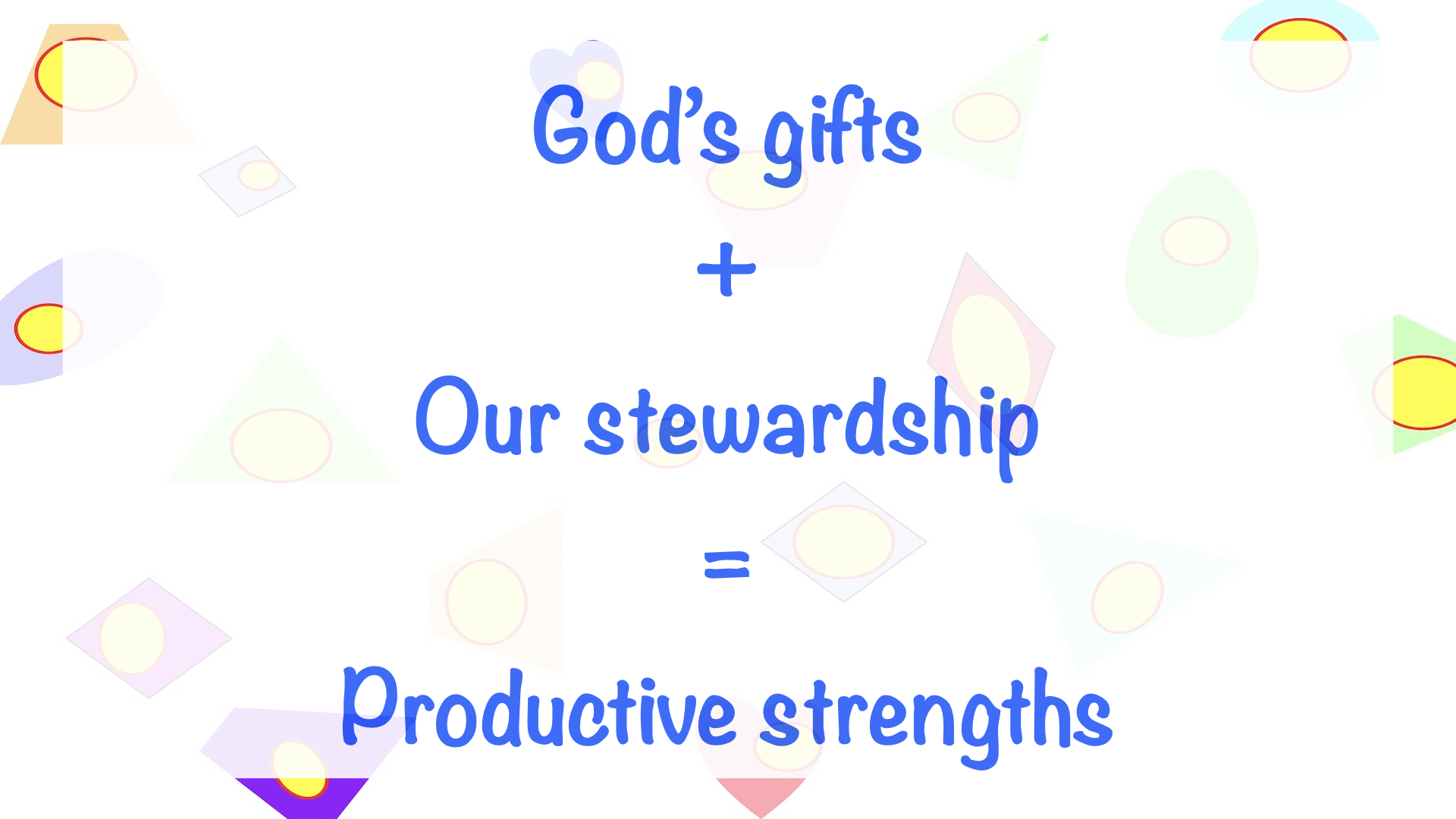
It looks like this: God’s gifts + Our stewardship = Productive strengths. 

God gives the gifts as only He knows best (Psalm 139:16; Romans 12:6; 1 Corinthians 12:11) and then we steward these gifts into productive strengths. 

(Check out all of the Scriptures in this post by clicking here.) 

What does stewardship mean? 

  • The dictionary defines it as the responsible overseeing and protection of something considered worth caring for and preserving. 
  • The Bible always portrays a steward as the one in charge of the precious things in a household—in our case, the Church. 

Jesus makes the role of a steward very clear in his parable found in Matthew 25:14-27. Notice three important things:  

  1. The master gave gifts to everyone of his servants, but he gave “each according to his ability” (vv. 14-15). 
  2. The wise servants stewarded the master’s gift by that way they “put his money to work” (vv. 16-18) 
  3. The master demanded accountability of all of his servants. Two servants acknowledged “you entrusted me” with these gifts (vv. 19-23), while one said, “I was afraid” (vv. 24-27). 

God created each of us on purpose and for a purpose. He gave us the gifts we need to accomplish that purpose. We will only find our fulfillment in life in stewarding those God-given gifts and opportunities in ways that glorify Him. Not only fulfillment here, but then eternal satisfaction when we hear our Savior say, “Well done, good and faithful servant! Enter into your Master’s happiness!” 

The only servants that heard the “well done” from their master were those who realized it was “your money…entrusted” to me. I like how Eugene Peterson brings this out in his paraphrase: 

Make a careful exploration of who you are and the work you have been given, and then sink yourself into that. Don’t be impressed with yourself. Don’t compare yourself with others. Each of you must take responsibility for doing the creative best you can with your own life. (Galatians 6:4-5 MSG) 

So let’s add one more circle to the passion and pain circles, and that is the circle of proficiency. This is what fulfills us because we can do it so well; it feels so natural for us to be doing this. Proficiency is what really brings together the passion and the pain, and it helps us find the sweet spot. 

Let me give you a couple of examples—one from the Old Testament and one from the New Testament. 

Nehemiah was killed that Jerusalem was in shambles and the people were disgraced (Nehemiah 1:3-4)—that’s what killed him. Nehemiah didn’t go to wall-building school, but he effortlessly strategized, cast vision, organized, planned, procured, and adapted—that’s his proficiency. The wall was built in 52 days, Israel’s enemies were disgraced, and the people had a place to worship again (Nehemiah 6:15-16, 9:1-3)—that’s what thrilled him. 

The apostles and the first deacons in the New Testament church saw that some of the widows were being overlooked in the food distribution (Acts 6:1)—this is what killed them. These new leaders didn’t go to food-distribution school, but they effectively strategized, cast vision, organized, planned, procured, and adapted (v. 3)—this is their proficiency. The widows were cared for, the Word of God spread, and more people became Christians (v. 7)—that’s what thrilled them. 

God gives gifts—we feel that in what thrills us and what kills us. We steward those gifts into productive strengths—we stick with what we fulfilled in doing. Our productive strengths then glorify God as we strengthen and grow the Body of Christ. 

Let me give you four things to consider about your area of proficiency:

  1. What comes easily to me? 
  2. Where do I see both the steps and the completion before others do? 
  3. Where do I experience the greatest ROI of my time and efforts? 
  4. What do I do that thrills me because I ran to because it was killing me, and now it fulfills me to keep doing it? 

With all three of these circles, please take some time to ponder what your sweet spot is. And if you’ve missed any of the messages in this series, you can find them all here. 

►► Would you please prayerfully consider supporting this ministry? My Patreon supporters get behind-the-scenes access to exclusive materials. ◀︎◀︎

What Can Your Pain Tell You?

Listen to the podcast of this post by clicking on the player below, and you can also subscribe on AppleSpotify, or Audible. 

Have you ever been trying to finish a DIY project and you’re getting frustrated because there’s one part you cannot seem to complete? Then you phone a friend. They come over, look at the situation, pull the perfect tool out of their toolbox, and quickly fix the problem. You are amazed and they think, “It’s no big deal. I just happened to have the right tool for the job and the skill to know how to use it.”  

We are all gifted, but in different ways. 

God has uniquely prepared you for the situations you will face in your life. David declared, “All the days ordained for me were written in Your book before one of them came to be” (Psalm 139:16). That tells me that your loving Creator knew the challenges and opportunities you would have, and He has already placed the perfect tool in your toolbox that you will need to excel in that moment. 

We have already talked about how your passion helps you discover your areas of giftedness. Finding out what thrills you and what fills you is one key step on this journey. There’s another aspect of this discovery process that at first seems almost the opposite, but I think they are actually two sides of the same coin. 

If passion is what thrills me, then pain is what kills me. I think a good word for this is zeal. In the biblical context, zeal would be anger at the things that keep people from experiencing all that God has for them—things that keep them from knowing the fullness of God’s glory. 

As Moses grew older, it killed him that the Jewish people were now enslaved by the Egyptians and kept from worshiping God in their own place (Exodus 2:11-12). 

(Check out all of the Scriptures in this post by clicking here.)

We see Moses’ zeal misapplied at first (I mean, he did commit a murder!). This about the differences between a river powerfully flowing within its banks, and a flood when the river overflows its banks. When we use our God-implanted zeal in ways that He hasn’t sanctioned, we make a mess like that flood. But when we use our zeal to glorify God, it is as powerful as a mighty river within its banks. 

We see perfect zeal in Jesus. We see Him cleansing the temple so all worshipers could come close to God (John 2:13-17). We see his anger over the religious rules that kept people trapped in their disease( Mark 3:1-5; Luke 13:10-16). 

If passion asks, “What is God passionate about that thrills my heart too?” then pain asks, “What breaks God’s heart that also breaks my heart?” or “What’s broken that I would love to fix?” 

Zeal moves us to action! 

When we move forward in our zeal, others may say we are meddling or we are sticking our nose in places where it shouldn’t be. But we simply cannot help ourselves. 

In Moses’ initial zeal—without God’s commission—he committed murder and then fled to the wilderness. 

Stephen says, “Moses was well educated in all the wisdom of the Egyptians and was powerful in speech and action” (Acts 7:22). The word Stephen uses for “educated” means Moses was fully trained to interact success with is culture. And he also says Moses was “powerful” in speech and action. 

So why does Moses say of himself that he is not “eloquent” and “slow of tongue” (Exodus 4:10)? Literally, Moses is saying, “I might make the same mistake that I made previously.” 

Moses looked back on his initial stumble and was fearful he may misfire again. He was comfortable staying in his restricted comfort zone, but this attitude made God angry (Exodus 4:10-12). 

Saul in his zeal for the rules and traditions of Judaism, persecuted the Christians. After he became a Christian, we see the same zeal—calling out Barnabas and Peter, and asking the Galatians who has bewitched them to stay entangled with meaningless traditions. 

We usually discover our giftedness by looking backward. The devil would love for us to see our previous missteps as disqualifications for future service. But God says that He can use all of these things for His glory (Romans 8:28). We have to surrender our fears to Him if we want to soar out of our comfort zone and into our comfort zone. 

Let me give you three things to consider:

  1. What do you find yourself praying about more than anything else? 
  2. What do you move toward that others ignore or move away from?  
  3. What topic do you talk about all the time?  

Here’s your homework: Think about the three things to consider regarding pain, and then consider where your passion circle and your pain circle may overlap. 

If you’ve missed any of the messages in our series Living In Your Gift Zone, you can find them all here. 

►► Would you please prayerfully consider supporting this ministry? My Patreon supporters get behind-the-scenes access to exclusive materials. ◀︎◀︎
What’s Your Passion?

Listen to the podcast of this post by clicking on the player below, and you can also subscribe on AppleSpotify, or Audible. 

A quick recap: We are all gifted by God, but we typically restrict ourselves to a comfort zone which is much smaller than our God-given gift zone. In order to maximize our impact for the Kingdom of God, we are going to have to get uncomfortable with staying comfortable—we are going to have to trust God as we push out further into our gifts. 

Last week I gave you a homework assignment to think about the things you love to do. Why do we need to know this? Because it is one of the indicators of our areas of giftedness. 

In the whole carrot-versus-stick discussion, you will find that most people are motivated by reward way more than they are by the fear of punishment. Look at how these God-fearing men were motivated by the God’s rewards:

  • David—1 Samuel 17:26-27, 29-30 
  • Paul—1 Corinthians 9:24; 2 Timothy 4:8 
  • Jesus—Hebrews 12:2; Philippians 2:9-11 

(Check out all of the Scriptures in this post by clicking here.)

Who’s more likely to get the reward: the one who loves what they are doing or the one who hates what they are doing? We are more likely to stick with what we love doing, and you are going to love doing what you are gifted by God to do. 

Why we do what we do is much more important that what we do (Isaiah 1:11, 13, 15; Matthew 7:22-23). 

We have been gifted by God to do great things. When we do those great things, we are rewarded and it brings God glory. That realization should answer the question of why we do what we do (Ephesians 2:10). 

The way we see the world, what motivates us, and how we act are all determined by our gifts. We are working on the same Great Commission, but how we live that out will be different because of our different gifts. 

In the Old Testament, the saints wanted Zion to be strong and God-glorifying: 

  • David fought battles and wrote worship songs 
  • Solomon gave wise proverbs 
  • Josiah brought about reforms 
  • Ezra encouraged the Israelite governor and high priest 
  • Daniel encouraged the Babylonian rulers 
  • Nehemiah built the wall

In the New Testament era, the saints should all want the Body of Christ to be strong and God-glorifying. Toward that goal, we still need warriors, worshipers, wisemen, reformers, teachers, counselors, workers. 

Toward that goal, we all have a part to play (Ephesians 4:12). Check out the example of Paul in…

  • …Thessalonica: Paul was in the synagogue on three Sabbaths (Acts 17:1-2; 2 Thessalonians 3:8)  
  • …Corinth: Paul was synagogue on the Sabbath days, but after Silas and Timothy arrived, Paul was able to be preaching every day for 18 months (Acts 18:1-5, 11) 

What’s the difference? Silas and Timothy used their gifts so that Paul could use his. Without the “enzyme” of Silas and Timothy’s gifting, the whole Body of Christ would have been impoverished. 

One of the things that will help your spot your areas of giftedness is noticing what you are passionate about—What do you love to do? 

Let me give you three things to consider:

  1. When can I do this again? vs. When will this be over? 
  2. When I do this, I’m tired but fulfilled vs. When I do this, I’m tired. 
  3. I would do this without pay vs. I would rather find something else to do. 

Our prayer should echo what Paul prayed:

For this reason, since the day we heard about you, we have not stopped praying for you. We continually ask God to fill you with the knowledge of His will through all the wisdom and understanding that the Spirit gives, so that you may live a life worthy of the Lord and please Him in every way: bearing fruit in every good work, growing in the knowledge of God. (Colossians 1:9-12)

If you’ve missed any of the messages in our series Living in Your Gift Zone, you can find them all here. 

►► Would you please prayerfully consider supporting this ministry? My Patreon supporters get behind-the-scenes access to exclusive materials. ◀︎◀︎

We Are All Gifted

Listen to the podcast of this post by clicking on the player below, and you can also subscribe on AppleSpotify, or Audible. 

Last week I concluded by saying I wanted to help all of us discover our God-given gifts so that we could stretch outside of our comfort zone. Remember that your comfort zone is much smaller than your gift zone. 

I’m concerned that some people might be confused about what I mean by “gifts.” Some people look at someone who can preach, or write, or sing, or compose music, or paint, and say, “They are so gifted! I could never do anything like that.” Yes, those are very visible gifts, but let’s not limit “gifts” to just those kinds of things. 

God has designed our physical bodies to do some astounding things! We see some people using their bodies to run fast, jump high, lift heavy things, or catch a ball, and we may marvel at their talents. These amazing feats are only possible because of a thousand other gifts. Even the simplest of tasks is far from simplistic. Isaac Newton noted, “In the absence of any other proof, the thumb alone would convince me of God’s existence.” 

Something that is invisible to the human eye but indispensable to absolutely everything that happens in our physical bodies is the vital functions of enzymes. 

Enzymes are proteins that help facilitate metabolism, or coordinate a chemical reaction. Some enzymes build things up and some break things down. Enzymes help with things like… 

  • turning the food we eat into energy 
  • breathing 
  • building muscle 
  • nerve function 
  • ridding our bodies of toxins 

There are thousands of individual enzymes in the body. Each type of enzyme only has one job. 

For example, consider the enzyme sucrase. If it is deficient in the body, sucrose from food isn’t broken down to glucose and fructose. As a result we would experience dehydration, malnutrition, and developmental delay. 

Every enzyme is vital. It’s not coincidental at all the the New Testament uses the analogy of our physical bodies to portray the Body of Christ (Romans 12:3-6; 1 Corinthians 12:6, 18, 27). 

(Check out all of the verses in this post by clicking here.)

In the New Testament church it’s easy to spot the highly visible gifts like preaching, evangelism, and church leadership, just as it’s easy to spot physical accomplishments like a professional athlete or a world-class pianist. But let’s not overlook the thousands of indispensable “enzymes” in the Church that allow the Body of Christ to function in a healthy way. 

Read through the Book of Acts and you will see gifts in the form of people who…

  • agreed together in prayer 
  • affirmed God-honoring, biblical decisions 
  • organized feeding programs 
  • hosted people in their homes (house churches) 
  • prepared food for others 
  • handed out that food 
  • sewed clothes for those who needed them 
  • faithfully visited the sick and imprisoned 
  • earned a paycheck to pay for ministry expenses 
  • distributed funds to those in need 
  • used their official positions open doors or provide protection 
  • wrote important correspondence

Peter wrote, “God has given each of you a gift from His great variety of spiritual gifts. Use them well to serve one another” (1 Peter 4:10). 

What happens if an “enzyme” is missing? Quite simply: The Church cannot grow to our full potential (1 Corinthians 12:26 AMPC; Ephesians 4:12-13). 

Each of us needs all of us. All of us needs each of us. Jesus hasn’t just saved you from death, He has also saved you to life—an abundant life for you, for the Body of Christ, and for those who don’t know Him as their Lord and Savior yet. 

You are gifted. More precisely said: You ARE a gift! 

If you’ve missed any of the other messages in this series, you can check them all out here. 

►► Would you please prayerfully consider supporting this ministry? My Patreon supporters get behind-the-scenes access to exclusive materials. ◀︎◀︎

Getting Uncomfortable With Staying Comfortable

Listen to the podcast of this post by clicking on the player below, and you can also subscribe on AppleSpotify, or Audible. 

We as a Church are underperforming. How do I know this? Look at the way the world treats Christians; specifically, look at what’s NOT happening. 

  • By this all will know that you are My disciples, if you have love for one another” (John 13:35). Jesus said this right after He served His disciples by washing their feet. Is this happening today: Do people know you are a Christian by the way you put your love into servant-hearted action, or do they just know what you are against? 
  • “Be prepared to give an answer to everyone who asks you to give the reason for the hope that you have” (1 Peter 3:15). When was the last time someone saw your hope-filled life in such contrast to everyone else’s response that they said, “How can I have what you have?” 

(Find all of the Scriptures I’ve used in this post by clicking here.)

Peter said our adversary prowls like a lion. He is perfectly willing to bide his time, picking the strategy that works best. One of his favorite strategies is lies—sometimes half-truths or out-of-context truths. 

…Woe to the earth and the sea, because the devil has gone down to you! He is filled with fury, because he knows that his time is short. … The dragon was enraged with the woman and went off to make war against the rest of her offspring—those who obey God’s commandments and hold to the testimony of Jesus (Revelation 12:12, 17). 

Lies are his native tongue. He lied to Adam and Eve right in the beginning (Genesis 3:1, 4-5), and he still lies now (Revelation 12:10). Jesus contrasted this with the truth that He came to proclaim (John 8:42-45). 

The devil has learned that with many people, outright attacks drive them TO God. We see this in the oldest book of the Bible (Job 1:6f, 20-22), and in modern times (churches were filled after the 9-11 terrorist attacks). 

What the devil would rather do is lie to you to keep you comfortable. In The Screwtape Letters, Screwtape implores Wormwood to keep his patient indifferent and comfortable. Indeed, we all have a comfort zone and we love to stay in it. 

King Saul went from 3000 men to 600 men, from a full armory to only two swords, from defeating the Ammonites to being hemmed in by the Philistines. King Saul was enjoying life as the king, hanging out with his friends, sitting under a pomegranate tree, far away from his enemies. Life was good for Saul, life was familiar and comfortable. Saul was living in his comfort zone. But the comfort zone is a lousy place to live. 

In the comfort zone you only tell stories, but never live an adventure. In the comfort zone, you only hear about what God has done for others, but you never experience Him move in miraculous ways for yourself. 

God has given us all gifts so that we can live as overcomers and bring Him glory, but we settle for living only in our comfort zone. Our comfort zones are always way smaller than our gift zones, and the devil is perfectly happy to see us stay there.

Moses was comfortable in the desert, but God sent him in His power (Exodus 3:11, 14). 

David was comfortable in the pasture, but God equipped him to lead a whole nation (2 Samuel 7:18; Psalm 78:70-71). 

Jeremiah was comfortable being an anonymous priest, but God gave him words to prophesy to a wayward nation (Jeremiah 1:4-8). 

Saul was comfortable as a Pharisee, but God sent him to tell the world the Jesus is the Messiah (Acts 8:3; 1 Timothy 1:16). 

What lies have kept you in your comfort zone? 

  • Maybe a parent said, “You’ll never amount to anything.” 
  • Maybe a teacher said, “You’re slow.” 
  • Maybe a classmate said, “You’re weird.” 
  • Maybe the devil said, “You cannot make a difference in the world.” 

You need to silence those lies with God’s truth: 

  • God created me on purpose and for a purpose—Psalm 139:13-17 
  • He has given me all the gifts I need to soar—2 Peter 1:3-4 
  • He wants to help me, if I will trust Him—Isaiah 41:10, 13-14 

Charles Spurgeon said, “The extent of power God can infuse into a person is immeasurable; when divine strength is granted, human weakness ceases to be a hindrance.” 

So, friends, it’s time to get uncomfortable with staying comfortable. It’s time to stretch and soar out of your comfort zone and into more of your gift zone! 

How do you discover your gifts? That’s what we are going to unpack in this series over the next few weeks, I hope you will continue to follow along. And you can catch up on anything you may have missed in our series called Living in Your Gift Zone by clicking here. 

►► Would you please prayerfully consider supporting this ministry? My Patreon supporters get behind-the-scenes access to exclusive materials. ◀︎◀︎