Kept To Keep

Listen to the podcast of this post by clicking on the player below, and you can also subscribe on AppleSpotify, or Audible. 

Last week I reminded you that the main point in Hebrew literature is usually found in the middle. In Psalm 121 that would be the first phrase of verse 5: The Lord watches over you. 

But I notice something that seems contradictory in the New Testament. Whereas the message here is, “God watches over you,” the message in some New Testament verses seems to be, “You watch over yourself” (see for example Matthew 26:41; 1 Thessalonians 5:6; 1 Timothy 4:16). Paul even said to the Christians at Corinth, “I worked harder than all of them” (1 Corinthians 15:10). 

So which is it: Is God watching over us or are we to watch over ourselves? It’s actually both, but something important has to come first. We cannot watch over ourselves unless we are assured that the Lord is watching over us to sustain us. 

Okay, I was being a bit sarcastic when I said those verses seemed contradictory, as I clearly quoted them out of their context. For instance, in that statement from Paul in 1 Corinthians, check out the full verse, “But by the grace of God I am what I am, and His grace to me was not without effect. No, I worked harder than all of them—yet not I, but the grace of God that was with me.” Paul is clearly saying that he could only work hard because he was empowered by God’s grace. Notice that it is decidedly not the other way around: Paul doesn’t say, “I worked hard to earn the grace of God.” 

Remember that these psalms of ascent remind us of our upward look and our upward journey. We need to keep our eyes on the prize, which is God Himself (Psalm 121:1-2). Using the apostle Paul’s life as an example again, he said something very similar—

Not that I have already obtained all this, or have already arrived at my goal, but I press on to take hold of that for which Christ Jesus took hold of me. Brothers and sisters, I do not consider myself yet to have taken hold of it. But one thing I do: Forgetting what is behind and straining toward what is ahead, I press on toward the goal to win the prize for which God has called me heavenward in Christ Jesus. (Philippians 3:12-14) 

The middle verse of Psalm 121 foretells what appears six times in just eight verses: the Hebrew word samar. Depending on the translation of the Bible, this word is either “watch over” or “kept.” In either case, the meaning is a concentrated focus, not turning aside to the left or the right, not distracted, eyes on the ultimate prize. And all six of these instances are God’s unwavering, loving focus on us. In this song, we are told: 

  • God never slumbers or is even momentarily distracted (vv. 3-4) as opposed to other deities that were thought to sometimes be unavailable to their worshippers (see 1 Kings 18:27). Instead, our God watches us so closely that He notices if even a single hair falls from our head (Matthew 10:30-31). 
  • God stands beside us to protect our places of vulnerability (vv. 5-6). The Amplified Bible says, “The Lord is your shade on your right hand—the side not carrying a shield.”
  • God keeps us from the entrapment of evil (v. 7). Jesus told us that He was praying this way for us so we can have confidence to pray this for ourselves (Luke 22:32; Matthew 6:13).  
  • God protects us as His most precious treasure. David uses this same word samar in Psalm 17:8, “Keep me as the apple of Your eye; hide me in the shadow of Your wings.” 
  • God is our eternal Protector. The last phrase of this psalm says He watches over us “both now and forevermore” (v. 8).  

The other places the word samar is used in the Bible is a call for us to keep God’s commands. But just as we saw with Paul that he was committed to running his race well because he was assured of the prize Jesus had secured for him, so for us, we can only keep God’s commands because we are kept secure by God. 

Because we are kept by God we can keep His commands. In Deuteronomy 4, Moses applies the word samar to God’s people. We are to..

  • keep the commands of the Lord (v. 4) 
  • watch ourselves closely so we don’t forget what God has done for us (v. 9) 
  • be careful not to forget the covenant God paid for us (v. 23)
  • keep God’s decrees and commands as way a way to pass on God’s blessing to future generations (v. 40)

If God is not the One keeping and preserving me, it will be impossible for me to keep His commands on my own. The promise of His watchful keeping and preserving should fuel our prayer to watch over ourselves with all diligence. Read His promises, pray His promises, be assured of His ever-present help so that you can use His help to look out for yourself. 

If you’ve missed any of the others messages in our look at the Psalms of Ascent, you can find them all here.

►► Would you please prayerfully consider supporting this ministry? My Patreon supporters get behind-the-scenes access to exclusive materials. ◀︎◀︎

True Friends

Listen to the podcast of this post by clicking on the player below, and you can also subscribe on AppleSpotify, or Audible. 

Wounds from a sincere friend are better than many kisses from an enemy (Proverbs 27:6 NLT). 

Proverbs 27 may have more wisdom about our friends than any other chapter in this book. But sprinkled throughout the entire book of Proverbs is outstanding wisdom about our closest relationships. Allow me to share just a few observations with you.

(Click here to see all of the verses I reference below.)

In a previous post where I noted the conjunctions “but” and “and,” I see this—The righteous choose their friends carefully, BUT the way of the wicked leads them astray (12:26). Righteous friends keep me on the right path. 

Friends love me through my worst moments (17:17) because they have committed to stick closer than a brother to me (18:24).

I must be careful not to make friends with a hot-tempered person (22:24), and to be cautious of people who want to be friends with me only for what I can give them (19:4). 

My true friends will wound me in love to help me become the best that God intended me to be (27:5-6, 9, 17), so I must never forsake these friends (27:10). 

False friends will gossip to me and about me, but my true friends will guard my secrets and guard my reputation (16:28; 17:9). 

In order to have true friends, I first have to be a true friend.

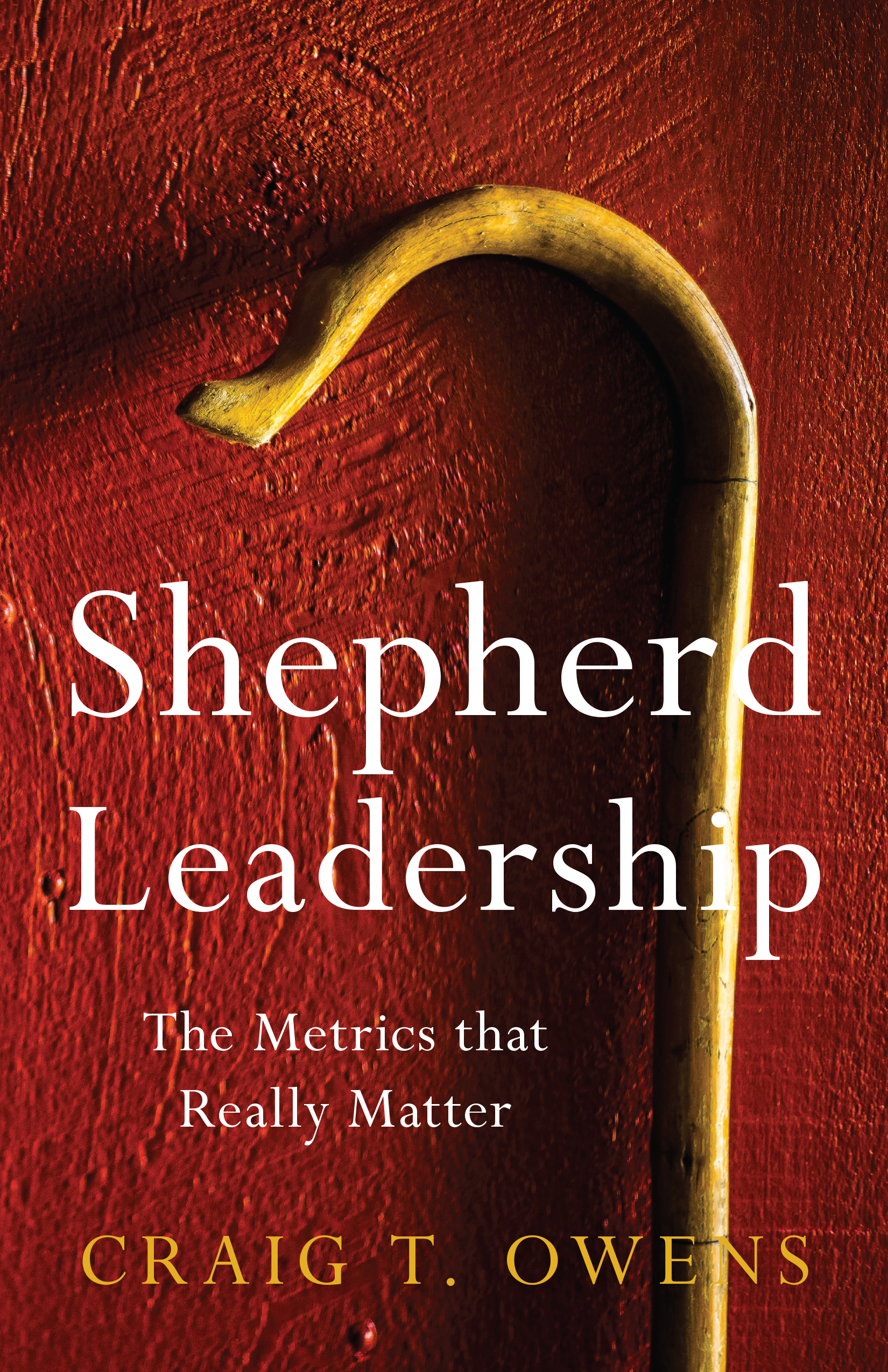
In my book Shepherd Leadership: The Metrics That Really Matter, I noted how true friends will help us go farther and avoid the stumbles that could cut short our leadership influence. 

David was the gold standard for every king of Israel who followed him. Numerous times throughout the history of Israel, we will see a note that a certain king either followed God like David, or turned from God unlike David. Yet there exists a wart on David’s portrait: an adulterous affair with the wife of a man in his inner circle, and then subsequent lies and a murder to cover up the affair. “The thing David had done displeased the Lord” (see 2 Samuel 11). 

But I’d like to turn your attention to when this affair occurred: “In the spring, at the time when kings go off to war…David remained in Jerusalem” (2 Samuel 11:1). He was without his usual comrades. The men who knew David best, who could probably sense if something was amiss, weren’t around to warn him. When David tried to find out the identity of the bathing beauty on the roof next door to his palace, an unnamed attendant tried to remind him, “Isn’t that Bathsheba, the wife of Uriah?” but David dismissed him. 

Elijah was arguably the most forceful and fearless prophet in Israel’s history. Not only did he stand up to the evil kings of Israel, but he spoke out against the kings of surrounding nations, too. In answer to Elijah’s prayer, God brought a drought on the land, and again in answer to Elijah’s prayer, God sent rain. Elijah challenged the 450 prophets of the god Baal and the 400 prophets of the goddess Asherah to a duel to the death, which ended up in a decisive victory for Yahweh. Yet, shortly after this massive victory, Elijah was depressed to the point that he wanted to die. 

What led to Elijah’s depression? Something very similar to David’s slide into adultery: He was alone. Elijah ran away from Queen Jezebel’s death threat, left his servant behind, and proceeded all by himself into the desert. It was when he was without a comrade that he prayed to God, “I’ve had enough. Take my life” (see 2 Kings 17–19). 

And what about Peter? He boldly claimed his loyalty to Jesus, even to the point of wielding a sword at the guards who came to arrest his Master. But when Peter was alone, after the other disciples fled, he denied three times that he knew Jesus (Matthew 26:33, 51, 69–75). 

God designed us to be in relationship with others. His statement to Adam in some of the earliest words of the Bible—“It is not good for you to be alone”—are words for us still today. —from the chapter “Going Farther” 

We need true, God-fearing friends close to us. Ask God to bring those friends around you, and ask the Holy Spirit to make you into that kind of friend for those He does bring around you. 

►► Would you please prayerfully consider supporting this ministry? ◀︎◀︎

Thursdays With Spurgeon—Wart Warning

This is a weekly series with things I’m reading and pondering from Charles Spurgeon. You can read the original seed thought here, or type “Thursdays With Spurgeon” in the search box to read more entries.

Listen to the podcast of this post by clicking on the player below, and you can also subscribe on iTunes or Spotify.

Wart Warning  

     At the instigation of his wife, Abraham adopted means that were not justifiable in order that he might obtain the promised heir [see Genesis 16]. He used means that may not be so vicious to him as they would be in men of modern times, but that were suggested by an unbelieving policy and were fraught with evil. He takes Hager to wife. He could not leave it to God to give him the promised seed. He could not leave it with God to fulfill His promise in His own time and justifies himself in turning aside from the narrow path of faith to accomplish, by doubtful methods, the end that God Himself had promised and undertaken to accomplish! How shorn of splendor is Abraham seen when we read, ‘And Abraham heeded the voice of Sarah’ (Genesis 16:2). That business of Hagar is to the patriarch’s deep discredit and reflects no honor at all upon either him or his faith. 

     Look at the consequences of his unbelieving! Misery soon followed. Hager despises her mistress. Sarah throws all the blame on her husband. The poor bondwoman is so harshly dealt with that she flees from the household. … One marvels that such a man as Abraham allowed one who had been brought into such a relationship with him to be heedlessly chased from his house while in a condition requiring care and kindness! 

     We admire the truthfulness of the Holy Spirit that He has been pleased to record the faults of the saints without extenuating them. Biographies of good men in Scripture are written with unflinching integrity—their evil recorded as well as their good. These faults are not written that we may say, ‘Abraham did so-and-so; therefore we may do it.’ No, brothers and sisters, the lives of these good men are warnings to us as well as examples, and we are to judge them as we should judge ourselves—by the laws of right and wrong.

From Consecration To God

In my book Shepherd Leadership: The Metrics That Really Matter, I also talk about the faults that we see in God’s leaders. In looking at David’s adulterous affair with Bathsheba, Elijah’s slide into depression, and Peter’s denial of Jesus, I see something similar: They were alone. 

David stayed in Jerusalem while his army went to fight, Elijah left his servant behind and went into the wilderness alone, and Peter was separated from his fellow disciples. Just like with Abraham, all of these other men were brought back into close fellowship with God. But all of these men now have a “wart” on their biography. 

“God designed us to be in relationship with others. His statement to Adam in some of the earliest words of the Bible—‘It is not good for you to be alone’—are words for us still today. As I mentioned earlier [in my book], you will not find the word ‘saints’ in the singular in the New Testament. Instead, you will find such phrases as ‘one another,’ ‘each other,’ and ‘all together’ prominently displayed throughout the New Testament church. Let me say it again: God designed us to be in relationship with others. If you want to go far in your shepherding, you cannot try to go alone.” —from the chapter in Shepherd Leadership called ‘Going Farther’ 

Let’s be forewarned by these examples. Stay close to God, but also stay close to godly friends that will help you in the hard times. Don’t let a wart blemish your record.

►► Would you please prayerfully consider supporting this ministry? ◀︎◀︎


Why We Need Loving Friends

Listen to the podcast of this post by clicking on the player below, and you can also subscribe on AppleSpotify, or Audible. 

Check out this excerpt from chapter 13 of my book Shepherd Leadership: The Metrics That Really Matter

David was the gold standard for every king of Israel who followed him. Numerous times throughout the history of Israel, we will see a note that a certain king either followed God like David, or turned from God unlike David. Yet there exists a wart on David’s portrait: an adultrous affair with the wife of a man in his inner circle, and then subsequent lies and a murder to cover up the affair. “The thing David had done displeased the Lord” (see 2 Samuel 11). 

But I’d like to turn your attention to when this affair occurred: “In the spring, at the time when kings go off to war … David remained in Jerusalem” (2 Samuel 11:1). He was without his usual comrades. The men who knew David best, who could probably sense if something was amiss, weren’t around to warn him. When David tried to find out the identity of the bathing beauty on the roof next door to his palace, an unnamed attendant tried to remind him, “Isn’t that Bathsheba, the wife of Uriah?” but David dismissed him. 

Elijah was arguably the most forceful and fearless prophet in Israel’s history. Not only did he stand up to the evil kings of Israel, but he spoke out against the kings of surrounding nations, too. In answer to Elijah’s prayer, God brought a drought on the land, and again in answer to Elijah’s prayer, God sent rain. Elijah challenged the 450 prophets of the god Baal and the 400 prophets of the goddess Asherah to a duel to the death, which ended up in a decisive victory for Yahweh. Yet, shortly after this massive victory, Elijah was depressed to the point that he wanted to die. 

What led to Elijah’s depression? Something very similar to David’s slide into adultery: He was alone. Elijah ran away from Queen Jezebel’s death threat, left his servant behind, and proceeded all by himself into the desert. It was when he was without a comrade that he prayed to God, “I’ve had enough. Take my life” (see 2 Kings 17–19). 

And what about Peter? He boldly claimed his loyalty to Jesus, even to the point of wielding a sword at the guards who came to arrest his Master. But when Peter was alone, after the other disciples fled, he denied three times that he knew Jesus (Matthew 26:33, 51, 69–75). 

God designed us to be in relationship with others. His statement to Adam in some of the earliest words of the Bible—“It is not good for you to be alone”—are words for us still today. 

In a recent episode of “The Craig And Greg Show,” Greg and I discussed one of our favorite verses in the Bible: Wounds from a friend can be trusted, but an enemy multiplies kisses (Proverbs 27:6). 

If you want to go far, don’t try to go alone. If you want an accountability partner that can keep warts away from your leadership legacy, don’t go alone. If you want to extend your leadership influence, don’t go alone. If you want to honor God’s investment in you, don’t go alone. Get those friends around you who love you enough to speak the truth! 

►► Would you please prayerfully consider supporting this ministry? ◀︎◀︎

Voice Of A Prophet (book review)

Listen to the podcast of this post by clicking on the player below, and you can also subscribe on Apple or Spotify.

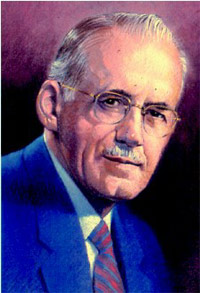
I’ve always appreciated A.W. Tozer’s prophetic voice. By that I mean, his unabashed call for Christians to live up to the Christlike standard given to us in the Scriptures. But in Voice Of A Prophet, Tozer hits a little closer to home for me (and for all of us who are in ministry positions) as he specifically calls on pastors to live up to the prophetic standard given to us in the Bible. 

Sometimes people misunderstand the title “prophet” to be one who foretells future events. At times, that is the function of a prophet, but primarily the prophet is more of a forthteller than a foreteller. The prophet is called upon to boldly proclaim God’s truth and tell forth where godly people are falling short. Prophets are God’s messengers to God’s people, usually sent to reawaken His people to truths that they have forgotten or strayed from. 

Tozer calls modern-day pastors and preachers—those he calls “the sons of the prophets”—to look to the prophetic fathers of the Scripture. He calls us to live up to the God-fearing standard of the prophets like Elijah, Isaiah, John the Baptist, and Jesus. He forthtells how too many have succumbed to the voice of culture instead of adhering to the voice of their Lord, and how they have traded “Thus saith the Lord” for “Thus saith me.” 

The opening chapter of Voice Of A Prophet reprints a prayer that Tozer wrote out when he was ordained in 1920. Part of that prayer for himself should remain a prayer for all who are called by God to be pastors today: “Let me stand before the great or minister to the poor and lowly; that choice is not mine, and I would not influence it if I could. I am Thy servant to do Thy will, and that will is sweeter to me than position or riches or fame and I choose it above all things on earth or in heaven.”

Voice Of A Prophet is an important read for those in pastoral ministry. FAIR WARNING: You will be challenged and convicted by Tozer’s timeless words! But if you will heed those words, God will be pleased to bless your efforts. I would also recommend this book to anyone who would like to know how they can better support and pray for their pastor, as I think they will find valuable insights in this book. 

Would you please prayerfully consider supporting this ministry?

Yea Or Nay

“One of the greatest curses of the modern evangelical movement, in my opinion, is that we are somehow becoming ‘popular.’ Just as soon as you become popular, something goes out of your life, or more accurately, something has gone out of your life before you get popular.

“Historically, the Christian had to be emphatic. He had two words: yea or nay. When God was talking to him, he said yes, and when the devil was talking to him he said no. When God said, ‘Do this,’ he said, ‘Yes, Lord.’ When sinners tempted him to stray, he said an emphatic no.

“The trouble with us now is that we are double-minded. That is why we are weak. Scripture speaks of the double-minded man. He is ‘unstable in all his ways’ (James 1:8). Elijah illustrated this when he said, ‘How long halt ye between two opinions? If the Lord be God, follow Him: but if Baal, then follow him’ (1 Kings 18:21). We need to be on one side or the other. Wholly committed to our high calling in Christ Jesus.” —A.W. Tozer, in The Wisdom Of God

A Double Portion

“I am convinced that we don’t get a double portion of God’s Spirit by watching Elijah walk away while standing at Jericho. When we choose to remain behind, we also leave behind all that God desires to do in us and for us and through us. If we want to inherit a double portion of the spirit of Elijah, we need to walk in the steps of Elijah until he leaves no more footprints. …

“Don’t wait to be asked—volunteer. Volunteer to go forward. Volunteer to go further. Volunteer to go harder. You cannot pioneer out of obligation. It is not an adventure if it is not your choice. You have to want it. You have to want more. If you are going to be greedy, this is the right place to be greedy. Want everything God has for you. Want more than others think you can obtain. Why settle for a single portion if a double portion can be yours for the asking? …

“Perhaps the reason so few of us have received a double portion of God’s Spirit is that the lives we have chosen require so little of God because they require so little of us. … I want to live the kind of life that cannot be lived without the fullness of Christ in my life.” —Erwin McManus, in The Last Arrow (emphasis added)

7 Bible Study Ideas From D.L. Moody

Pleasure & ProfitAs I read D.L. Moody’s book Pleasure & Profit In Bible Study, I made note of several ideas that could stimulate a great Bible study. Check out my review of this book by clicking here, then check out these great study-starters:

“If you are impatient, sit down quietly and commune with Job. If you are strong-headed, read of Moses and Peter. If you are weak-kneed, look at Elijah. If there is no song in your heart, listen to David. If you are a politician, read Daniel. If you are getting sordid, read Isaiah. If you are chilly, read of the beloved disciple. If your faith is low, read Paul. If you are getting lazy, watch James. If you are losing sight of the future, read in Revelation of the promised land.” —Richard Baxter 

“Every chapter [of Mark] but the first, seventh, eighth and fourteenth begins with ‘And,’ as if there was no pause in Christ’s ministry.”

“Matthew begins with Abraham; Mark with Malachi; Luke with John the Baptist; but John with God Himself. Matthew sets forth Christ as the Jew’s Messiah. Mark as the active worker. Luke as a man. John as a personal Savior.”

“[In John’s Gospel] the word repent does not occur once, but the word believe occurs ninety-eight times.”

“Dr. A. T. Pierson says: Let the introduction cover five P’s; place where written; person by whom written; people to whom written; purpose for which written; period at which written.” 

“Some time ago a man wanted to take my Bible home to get a few things out of it, and when it came back I found this noted in it:

  • Justification, a change of state, a new standing before God.
  • Repentance, a change of mind, a new mind about God.
  • Regeneration, a change of nature, a new heart from God.
  • Conversion, a change of life, a new life for God.
  • Adoption, a change of family, new relationship towards God.
  • Sanctification, a change of service, separation unto God.
  • Glorification, a new state, a new condition with God.”

“I was wonderfully blessed by taking the seven ‘Blesseds’ of the Revelation. … Or you may take the eight ‘overcomes’ in Revelation…. I have been greatly blessed by going through the ‘believings’ of John. Every chapter but two speaks of believing. … Take the six ‘precious’ things in Peter’s Epistles. And the seven ‘walks’ of the Epistle to the Ephesians. And the five ‘much mores’ of Romans 5. Or the two ‘receiveds’ of John 1. Or the seven ‘hearts’ in Proverbs 13, and especially an eighth. Or ‘the fear of the Lord’ in Proverbs.” 

“No scripture is exhausted by a single explanation. The flowers of God’s garden bloom, not only double, but seven-fold: they are continually pouring forth fresh fragrance.” —Charles Spurgeon

Thursdays With Oswald—Solitude

This is a weekly series with things I’m reading and pondering from Oswald Chambers. You can read the original seed thought here, or type “Thursdays With Oswald” in the search box to read more entries.

Oswald Chambers

Solitude 

     Solitude with God repairs the damage done by the fret and noise and clamor of the world. … The disaster of shallowness ultimately follows the spiritual life that takes not the shining way upon the Mount of God. Power from on high has the Highest as its source, and the solitudes of the Highest must never be departed from, else that power will cease. 

From Christian Disciplines 

We live in a go, go faster, then go some more world. Everything is urgency and immediacy. It is vital for Christians to find times of solitude to tune out the clamor and tune in to God’s Voice.

The prophet Elijah was one who learned that God was not in the noise, but in the still, small Voice (see 1 Kings 19:1-13). Are we quieting ourselves enough to hear His Voice? If we don’t, we run the risk of spiritual burnout, just as Elijah experienced. Find Make some time for solitude this week.

Bible-Taught Or Spirit-Taught

A.W. Tozer“We must be willing to obey if we would know the true inner meaning of the teachings of Christ and the apostles. I believe this view prevailed in every revival that ever came to the church during her long history. Indeed a revived church may be distinguished from a dead one by the attitude of its members toward the truth. The dead church holds to the shell of truth without surrendering the will to it, while the church that wills to do God’s will is immediately blessed with a visitation of spiritual powers. Theological facts are like the altar of Elijah on Carmel before the fire came, correct, properly laid out, but altogether cold. When the heart makes the ultimate surrender, the fire falls and true facts are transmuted into spiritual truth that transforms, enlightens, sanctifies. The church or the individual that is Bible taught without being Spirit taught (and there are many of them) has simply failed to see that truth lies deeper than the theological statement of it.” —A.W. Tozer

What do you think, pastor? Is your church Bible taught, or Spirit taught? Is there a difference? If so, how can you move your church into this deeper place?