A.L.I.V.E.—The “A” Is For Apologetics

This is part 1 of a 5-part series with a simple premise: “I can know Jesus is A.L.I.V.E. because of…” and then I am presenting evidence for each of the five letters. This is a look at the letter A” for Apologetics for the resurrection of Jesus.

For some of my evidence, I am going to use historical texts from the Bible. When I say “historical” I mean that in the scholarly definition: this Book is attested to by historians and literary critics to be an accurate record of actual historical facts. You can read more of the apologetics for the Bible’s authenticity in a post I previously published here.

I would ask you to weigh the evidence for three possibilities concerning the claims of Christians regarding the death and resurrection of Jesus.

(1) Jesus didn’t actually die.

The Romans didn’t invent crucifixion, but they perfected it to be one of the most gruesome forms of torturous death that history has ever known. This leads one to wonder how could anyone go through the torture Jesus did and survive?

A team of medical examiners, after examining the historical account of Jesus’ death concluded: “The difficulty surrounding exhalation leads to a slow form of suffocation. Carbon dioxide builds up in the blood, resulting in a high level of carbonic acid in the blood. The body responds instinctively, triggering the desire to breathe. At the same time, the heart beats faster to circulate available oxygen. The decreased oxygen (due to the difficulty in exhaling) causes damage to the tissues and the capillaries begin leaking watery fluid from the blood into the tissues. This results in a build-up of fluid around the heart (pericardial effusion) and lungs (pleural effusion). The collapsing lungs, failing heart, dehydration, and the inability to get sufficient oxygen to the tissues essentially suffocate the victim. The decreased oxygen also damages the heart itself (myocardial infarction) which leads to cardiac arrest. In severe cases of cardiac stress, the heart can even burst, a process known as cardiac rupture. Jesus most likely died of a heart attack.”

Besides that, the dead body of Jesus was also thoroughly examined by both the Romans who conducted the crucifixion (see Mark 15:43-45) and His friends who prepared His body for burial (John 19:38-40).  In addition, two contemporary historians who aren’t friendly to the cause of Christianity (Tacitus and Josephus) both attested to Christ’s death by crucifixion.

(2) Jesus didn’t actually rise from the dead.

Some say the disciples were delusional from their intense grief. But Jesus was seen on more than one occasion, sometimes by one person, sometimes by twos, and several times by large groups (see 1 Corinthians 15:3-8). Some of Jesus’ closest friends weren’t convinced by second-hand testimony but had to see Jesus for themselves (John 20:19-20, 24-28). All four biblical accounts record women seeing the resurrected Jesus. This is significant because women were not allowed to serve as “legal witnesses,” so this wouldn’t have helped the “delusional” disciples at all.

Some say the disciples stole the body of Jesus. But this is problematic because of the armed guards at the tomb of Jesus (Matthew 27:62-66; 28:11-15). 

(3) Jesus was crucified and resurrected.

Sir Arthur Conan Doyle’s Sherlock Holmes said, “When you have eliminated the impossible, whatever remains, however improbable, must be the truth.” So after looking at the shortcomings and difficulties of the first two options, let’s consider this third possibility: that it happened just as the historical records in the Bible indicate.

Cold-case detective J. Warner Wallace said of this third possibility, “The last explanation (although it is a miraculous, supernatural explanation) suffers from the least number of liabilities and deficiencies. If we simply enter into the investigation without a pre-existing bias against anything supernatural, the final explanation accounts for all of the evidence without any difficulty. The final explanation accounts for the evidence most simply and most exhaustively, and it is logically consistent…. The final explanation is also superior to all other accounts (given that it does not suffer from all the problems we see with the other explanations).”

Check out the video where I discuss all of these points in more detail, and join me either in person or on Facebook Live for the next four Sundays as we continue looking at the evidence supporting the resurrection of Jesus.
10 Steps To Help Someone Through A Tragedy

Christians should be the best at loving others and supporting them through a tragedy. When someone’s world is rocked by an unexpected heartache like a miscarriage, a suicide, a difficult medical diagnosis, or even a hurricane, here is my list of 10 steps to help someone through this trying time. You may watch this short video, or see the list of 10 items below…

  1. Just be there for them.
  2. Listen.
  3. Listen.
  4. Listen to them some more.
  5. Don’t try to “fix” their problem.
  6. Weep with those who weep.”
  7. Don’t defend God (like Job’s friends tried to do).
  8. Pray for the Holy Spirit to give you insight.
  9. Remind them of their responsibility now—your choices to go forward, how will you honor their memory, how can you help others in a similar situation, what does this make you think about your eternity?
  10. Stay in touch for the long haul. Remember the birthday of their dead loved one; be there for the anniversary date of a marriage, the day their loved one died; go to those doctor’s appointments with them; roll up your sleeves and work alongside them. Use your creativity to proactively be there for them.

Viewing Abortion As Slavery

In our American history, we have many valuable lessons. Some of these lessons come from sad chapters that now we have the benefit of hindsight to see the error of our ways. But with this hindsight, there should come insight into the issues which currently face us.

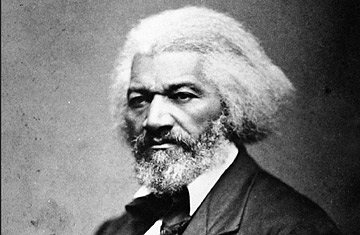
Slavery was an abhorrent evil that plagued our country. Thankfully there were strong men who forcefully and persuasively spoke out against the horrors of slavery; men like Frederick Douglass. His address “What To The Slave Is The Fourth Of July?” is a masterpiece of statesmanship!

Those under the oppression of slavery had no choice. They weren’t allowed speak for themselves, so they depended upon free men and women to speak for them.

Much the same today, babies who are aborted in the womb have no choice, no voice. They cannot speak for themselves, so it is up to us to speak out for them against this abhorrent evil that plagues our country.

I would ask you to consider some of the words of Frederick Douglass where the terms for slavery are replaced with the terms for abortion.

“Standing with God and the crushed and bleeding [aborted baby] on this occasion, I will, in the name of humanity which is outraged, in the name of liberty which is fettered, in the name of the Constitution and the Bible, which are disregarded and trampled upon, dare to call in question and to denounce, with all the emphasis I can command, everything that serves to perpetuate [abortion]—the great sin and shame of America! … 

“The feeling of the nation must be quickened; the conscience of the nation must be roused; the propriety of the nation must be startled; the hypocrisy of the nation must be exposed; and its crimes against God and man must be proclaimed and denounced. … 

“Let it be thundered around the world, that, in tyrant-killing, king-hating, people-loving, democratic, Christian America, the seats of justice are filled with judges, who hold their offices under an open and palpable bribe, and are bound, in deciding in the case of [an unborn baby’s] liberty, hear only [the abortionist]! … 

“A religion which favors [‘choice’] against the [unborn baby]; which exalts the proud above the humble; which divides mankind into two classes, [pro-choice] and [pro-life]; which says to the [baby in the womb, you don’t matter]; and to the [abortionist, continue on]; it is a religion which may be professed and enjoyed by all the robbers and [killers] of mankind; it makes God a respecter of persons, denies His fatherhood of [all human life], and tramples in the dust the great truth of the brotherhood of man. … 

“The American church is guilty, when viewed in connection with what it is doing to uphold [abortion]; but it is superlatively guilty when viewed in connection with its ability to abolish [abortion]. The sin of which it is guilty is one of omission as well as of commission. … Let the religious press, the pulpit, the Sunday school, the conference meeting, the great ecclesiastical, missionary, Bible and tract associations of the land array their immense powers against [abortion]; and the whole system of crime and blood would be scattered to the winds….

“O! had I the ability, and could I reach the nation’s ear, I would, to-day, pour out a fiery stream of biting ridicule, blasting reproach, withering sarcasm, and stern rebuke. For it is not light that is needed, but fire; it is not the gentle shower, but thunder. We need the storm, the whirlwind, and the earthquake. The feeling of the nation must be quickened; the conscience of the nation must be roused; the propriety of the nation must be startled; the hypocrisy of the nation must be exposed; and its crimes against God and man must be proclaimed and denounced.”

Poetry Saturday—Abide With Me

Abide with me: fast falls the eventide;
The darkness deepens; Lord, with me abide.
When other helpers fail and comforts flee,
Help of the helpless, O abide with me.

Swift to its close ebbs out life’s little day;
Earth’s joys grow dim, its glories pass away.
Change and decay in all around I see.
O Lord who changes not, abide with me.

I need Your presence every passing hour.
What but Your grace can foil the tempter’s power?
Who like Yourself my guide and strength can be?
Through cloud and sunshine, O abide with me.

I fear no foe with You at hand to bless,
Though ills have weight, and tears their bitterness.
Where is death’s sting? Where, grave, your victory?
I triumph still, if You abide with me.

Hold now Your Word before my closing eyes.
Shine through the gloom and point me to the skies.
Heaven’s morning breaks and earth’s vain shadows flee;
In life, in death, O Lord, abide with me. —Henry Francis Lyte

Thursdays With Oswald—No Fear Of Death

Oswald ChambersThis is a weekly series with things I’m reading and pondering from Oswald Chambers. You can read the original seed thought here, or type “Thursdays With Oswald” in the search box to read more entries.

No Fear Of Death

     Death means extinction of life as we understand it; our dead are gone and have left an aching void behind them. They do not talk to us, we do not feel their touch, and when the bereaved heart cries out, nothing comes back but the hollow echo of its own cry. The heart is raw, no pious chatter, no scientific cant can touch it. It is the physical calamity of death plus the thing behind which no man can grasp, that makes death so terrible. …

     Every attempt to comfort a bereaved soul apart from the revelation of Jesus Christ brings a vain speculation. We know nothing about the mystery of death apart from what Jesus Christ tells us; but blessed be the Name of God, what He tells us makes us more than conquerors, so that we can shout the victory through the darkest valley of the shadow that ever a human being can go through. … 

     Jesus Christ can deliver from the dread of death—“that through death He might bring to naught him that had the power of death, that is the devil” [Hebrews 2:14]. Death has no terror for the man who is rightly related to God through Jesus Christ. … 

     It is not within the power of human tongue or archangel’s tongue to state what an awful fact death is, and what a still more awful fact life is. But thank God, there is the greatest deliverance conceivable from all that life may bring and from all that death may bring. Jesus Christ has destroyed the dominion of death, and He can make us fit to face every problem of life, more than conqueror all along the line.

From The Fighting Chance 

Through His death on the Cross and bodily resurrection from the grave, Jesus Christ has defeated Death for all who place their faith in this victory He won for us (see 1 Corinthians 15:55-57).

The Apostle Paul tells us that Christians grieve when a loved one dies, but we don’t grieve as those who have no hope (1 Thessalonians 4:13). When one who knows Jesus as their Savior dies, we have a rock-solid, unshakable hope that they are fully alive with Christ in Heaven, and that we who also know Jesus as Lord and Savior will one day be reunited with them.

So for the Christian, death brings absolutely no fear! 

Poetry Saturday—The Monster Death

Break off your tears, ye saints, and tell
How high your great Deliverer reigns;
Sing how He spoiled the hosts of hell,
And led the monster death in chains:
Say, Live forever, wondrous King!
Born to redeem, and strong to save;
Then ask the monster, Where’s thy sting?
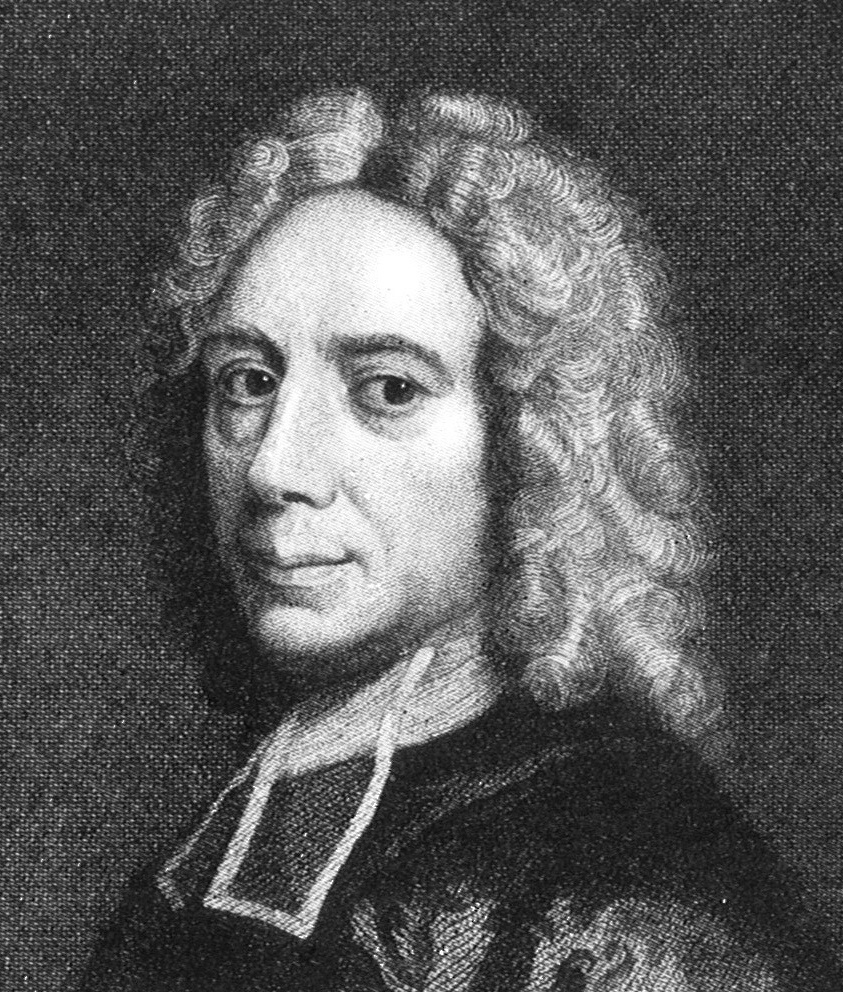
And, Where’s thy victory, boasting grave? —Isaac Watts

Poetry Saturday—Desire

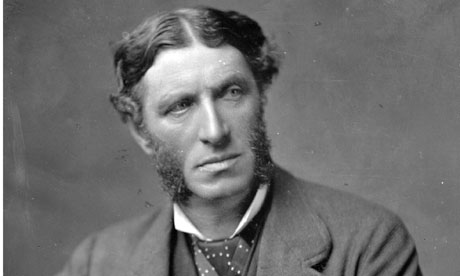
Matthew ArnoldThou, who dost dwell alone;
Thou, who dost know Thine own;
Thou, to whom all are known,
From the cradle to the grave—
Save, O, save!

From the world’s temptations;
From tribulations;
From that fierce anguish
Wherein we languish;
From that torpor deep
Wherein we lie asleep,
Heavy as death, cold as the grave—
Save, O, save!

When the soul, growing clearer,
Sees God no nearer;
When the soul, mounting higher,
To God comes no nigher;
But the arch-fiend Pride
Mounts at her side,
Foiling her high enterprise,
Sealing her eagle eyes,
And, when she fain would soar,
Make idols to adore;
Changing the pure emotion
Of her high devotion,
To a skin-deep sense
Of her own eloquence;
Strong to deceive, strong to enslave—
Save, O, save! —Matthew Arnold

Poetry Saturday—A Hundred Years From Now

cloudsIt will not make much difference, friend,
A hundred years from now,
If you live in a stately mansion
Or on a floating river scow;
If the clothes you wear are tailor-made
Or pieced together somehow,
If you eat big steaks or beans and cake
A hundred years from now.

It won’t matter about your bank account
Or the make of car you drive,
For the grave will claim your riches and fame
And the things for which you strive.
There’s a deadline we all must meet
And no one will turn up late,
It won’t matter then all the places you’ve been,
Each one will keep that date.

We will only have in eternity
What we gave away on earth,
When we go to the grave we can only save
The things of eternal worth,
What matters, friend, the earthly gain
For which some men always bow?
For your destiny will be sealed, you see
A hundred years from now. —Walden Parker

12 Quotes From “Churchill’s Trial”

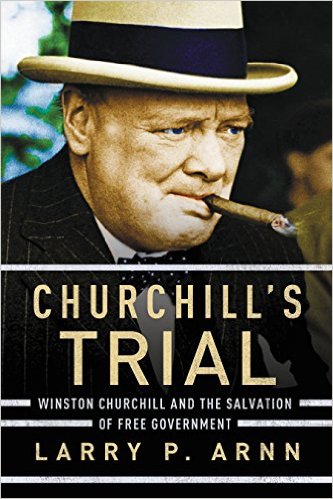
Churchill's TrialIn Churchill’s Trial, Larry Arnn has given us a fascinating look at Winston Churchill’s battle to keep freedom alive, both in the moment of crisis and after the crisis has passed. You can read my full book review by clicking here. Below are a few of the quotes I highlighted as I read.

“Mankind has never been in this position before. Without having improved appreciably in virtue or enjoying wiser guidance, it has got into its hands for the first time the tools by which it can unfailingly accomplish its own extermination. That is the point in human destinies to which all the glories and toils of men have at last lead them. They would do well to pause and ponder upon their new responsibilities. Death stands at attention, obedient, expectant, ready to serve, ready to shear away the peoples en masse; ready, if called upon, to pulverize, without hope of repair, what is left of civilization. He awaits only the word of command. He awaits it from a frail, bewildered being, long his victim, now—for one occasion only—his master.” —Winston Churchill 

“Science is necessary, and also science is a master. As the human ability to make grows, the human ability to control the engines by which we make diminishes. The logical problem is relentless: we may stay as we are and lead shorter lives of pain and trouble, or we may use our capacity to make our lives easier and safer. If we do that we will gain power, and we can use that power against ourselves.” —Larry Arnn

“No material progress, even though it takes shapes we cannot now conceive, or however it may expand the faculties of man, can bring comfort to his soul.” —Winston Churchill 

“We must never cease to proclaim in fearless tones the great principles of freedom and the rights of man which are the joint inheritance of the English-speaking world and which through Magna Carta, the Bill of Rights, the Habeas Corpus, trial by jury, and the English common law find their most famous expression in the American Declaration of Independence. …

“All this means that the people of any country have the right, and should have the power by constitutional action, by free unfettered elections, with secret ballot, to choose or change the character or form of government under which they dwell; that freedom of speech and thought should reign; that courts of justice, independent of the executive, unbiased by any party, should administer laws which have received the broad ascent of large majorities or are consecrated by time and custom. Here are the title deeds of freedom what should lie in every cottage home. Here is the message of the British and American peoples to mankind. Let us preach what we practice—let us practice what we preach.” —Winston Churchill

“There is enough for all. The earth is a generous mother; she will provide in plentiful abundance food for all her children if they will but cultivate her soil in justice and in peace.” —Bourke Cockran

“Human relations are not a contest in which the advantage of some requires the disadvantage of others. That means in turn that government need not have the authority to allocate resources, at least not comprehensively. A government with such power would be in one sense at war with any citizens who have more than others, effectively with all citizens but the few poorest.” —Larry Arnn

“In republics, the greater danger is that the majority may not sufficiently respect the rights of the minority.” —James Madison

“He who molds public sentiment goes deeper than he who enacts statutes or pronounces decisions.” —Abraham Lincoln

“Democracy properly understood means the association of all through the leadership of the best.” —Winston Churchill

“Our hearts will ache…if we have not a vision above material things.” —Winston Churchill

“If men were angels, no government would be necessary. If angels were to govern men, neither external nor internal controls on government would be necessary.” —James Madison

“We now watch the workings of a written Constitution enforced by a Supreme Court according to the letter of the law, under which anyone may bring a test case challenging not merely the interpretation of the law, but the law itself, and if the Court decides for the appellant, be he only an owner of a few chickens, the whole action of the Legislature and the Executive becomes to that extent null and void.” —Winston Churchill 

More quotes coming soon…

9 Quotes From “Your Joy Will Turn To Sorrow”

Your Sorrow Will Turn To JoyAlthough Your Joy Will Turn To Sorrow is intended to be read each morning and evening of Holy Week (check out my book review here), the content is so good that it will benefit you anytime you decide to read it! Here are some quotes that especially caught my attention.

“The only Savior who truly saves, only saves through suffering. The Cross was the only means of making us sinners right before a holy God. Our salvation was purchased with suffering, and it will be sealed and preserved with suffering (James 1:2-4), not comfort. We are promised comfort in the Christian life (2 Corinthians 1:4), but not the cheap, temporal imitation we’ve grown accustomed to in our modern world.” —Marshall Segal

“Jesus did not come to purchase the approval of others. No, He ‘was despised and rejected by men; a Man of sorrows, and acquainted with grief; and as One from whom men hide their faces He was despised’ (Isaiah 53:3). Why? Because it is God’s approval we desperately need. And God’s approval doesn’t come by popular opinion, but by divine intervention—the substitution of His own Son in our place.” —Marshall Segal

“The irony of Mark 14 is that Judas could see the value of the ointment rolling down Jesus’ head, but he couldn’t see the value of Jesus. He was a pawnbroker with cataracts. That’s why he took such offense at the woman. The woman, on the other hand, could see both the value of the ointment and the value of Jesus. That’s why she broke the flask.” —Jonathan Bowers

“No one understands better than God how difficult it can be for a human to embrace the will of God. And no human has suffered more in embracing the will of God the Father than God the Son. When Jesus calls us to follow Him, whatever the cost, He is not calling us to do something He is either unwilling to do or is never done Himself.” —Jon Bloom

“So, now, we say with an entirely different meaning, let His blood be on us, not defiantly as the crowds that crucified Him, but desperately—with gratitude and hope and adoration—as those who depend wholly on His sacrifice. Jesus, let Your blood be on us. Let it cover us. Let the blood that flows from Your head, Your hands, Your feet wash over us and cleanse us from all our iniquity. We proclaim Jesus’ death. We rejoice in his death, not because we believe He was a fraud or a lunatic, but because it is by His death, by His wounds, by His blood that we are healed.” —Marshall Segal

“Jesus spoke of this joy as He faced the torture of Good Friday. He faced denial, faced betrayal, faced beatings, faced splinters and nails and spears—He could not stop talking about joy! Only joy would keep Him going. Joy was on His mind, joy was on His tongue, and joy was drawing Him, not away from suffering, but into it (Hebrews 12:2). Jesus went to the Cross for joy: to buy joy, create joy, and offer joy. As the world celebrated the savage killing of God, out of this sea of foaming rebel hostility emerged a blood-bought, inextinguishable joy.

“If the killing of the Author of life could not extinguish this joy Jesus speaks about, nothing can—and nothing ever will. No opposition from the world, no opposition to the gospel, and no cultural despising of Christ will overcome the resurrection joy of Jesus.” —Tony Reinke

“If Christ is still dead, death reigns, and all our joys our vain. So hoard every plastic Easter egg you find, because whatever you find inside is all the joy you have to grab. Or, as Paul says, ‘If the dead are not raised, let us eat and drink, for tomorrow we die’ (1 Corinthians 15:32). But if death is dead, and if the dead are raised—if Christ is risen from the dead!—brothers and sisters, let us feast and celebrate, for the daunting light of our inextinguishable and inexhaustible eternal pleasures have broken into the darkness, offering us a life of joy in Christ that cannot fade or rust or be stolen away!” —Tony Reinke

“Easter has now become our annual dress rehearsal for that great coming Day. When our perishable bodies will put on the imperishable. When the mortal finally puts on immortality. When we join in the triumph song with the prophets and the apostles, ‘O death, where is your victory? O death, where is your sting?’ (Hosea 13:14; 1 Corinthians 15:55).” —David Mathis

“Indeed, even agony will turn to glory, but Easter doesn’t suppress our pain. It doesn’t minimize our loss. It bids our burdens stand as they are, in all their weight, with all their threats. And this risen Christ, with the brilliance of the indestructible life in His eyes, says, ‘These too I will claim in the victory. These too will serve your joy. These too, even these, I can make an occasion for rejoicing. I have overcome, and you will more than conquer.’ 

“Easter is not an occasion to repress whatever ails you and put on a happy face. Rather, the joy of Easter speaks tenderly to the pains that plague you. Whatever loss you lament, whatever burden weighs you down, Easter says, ‘It will not always be this way for you. The new age has begun. Jesus has risen, and the Kingdom of the Messiah is here. He has conquered death and sin and hell. He is alive and on His throne. And He is putting your enemies, all your enemies, under His feet.’” —David Mathis