


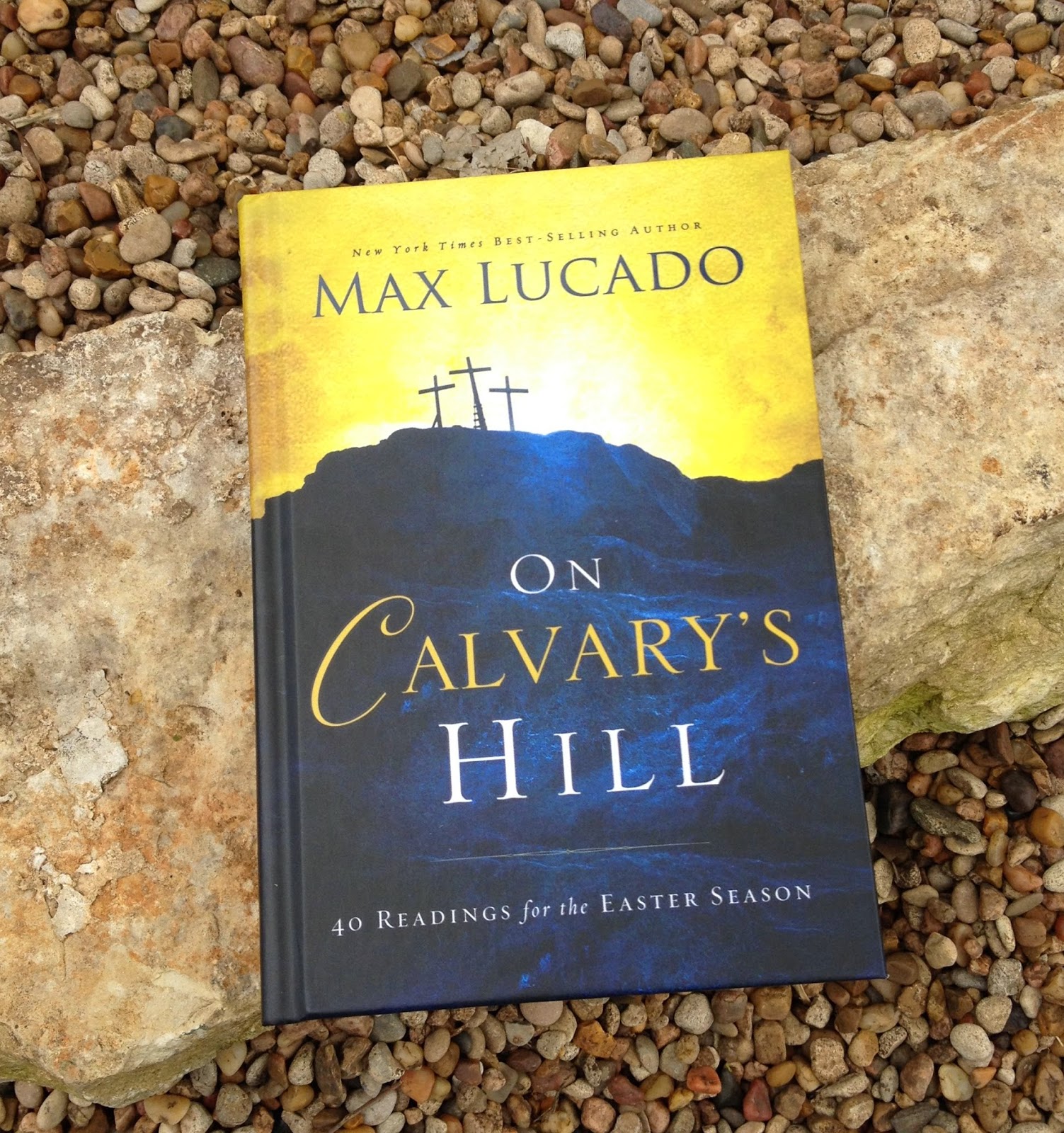
 “Six hours, one Friday. To the casual observer the six hours are mundane. A shepherd with his sheep, a housewife with her thoughts, a doctor with his patients. But to the handful of awestruck witnesses, the most maddening of miracles is occurring. God is on a Cross. The Creator of the universe is being executed. Spit and blood are caked to His cheeks, and His lips are cracked and swollen. Thorns rip His scalp. His lungs scream with pain. His legs knot with cramps. Taut nerves threaten to snap as pain twangs her morbid melody. Yet, death is not ready. And there is no one to save Him, for He is sacrificing Himself. It is no normal six hours . . . it is no normal Friday. For worse than the breaking of His body is the shredding of His heart. His own countrymen clamor for His death. His own disciple planted the kiss of betrayal. His own friends ran for cover. And now His own Father is beginning to turn His back on Him, leaving Him alone. Let me ask you a question: What do you do with that day in history? What do you do with its claims? If it really happened . . . if God did commandeer His own crucifixion . . . if He did turn His back on His own Son . . . and if He did storm satan’s gate, then those six hours that Friday were packed with tragic triumph. If that was God on that Cross, then the hill called Skull is granite studded with stakes to which you can anchor your soul forever.” —Max Lucado, On Calvary’s Hill
Six Hours, One Friday
April 19, 2019 — Craig T. OwensSovereign Love
April 15, 2019 — Craig T. OwensListen to the podcast of this post by clicking on the player below, and you can also subscribe on Apple, Spotify, or Audible.
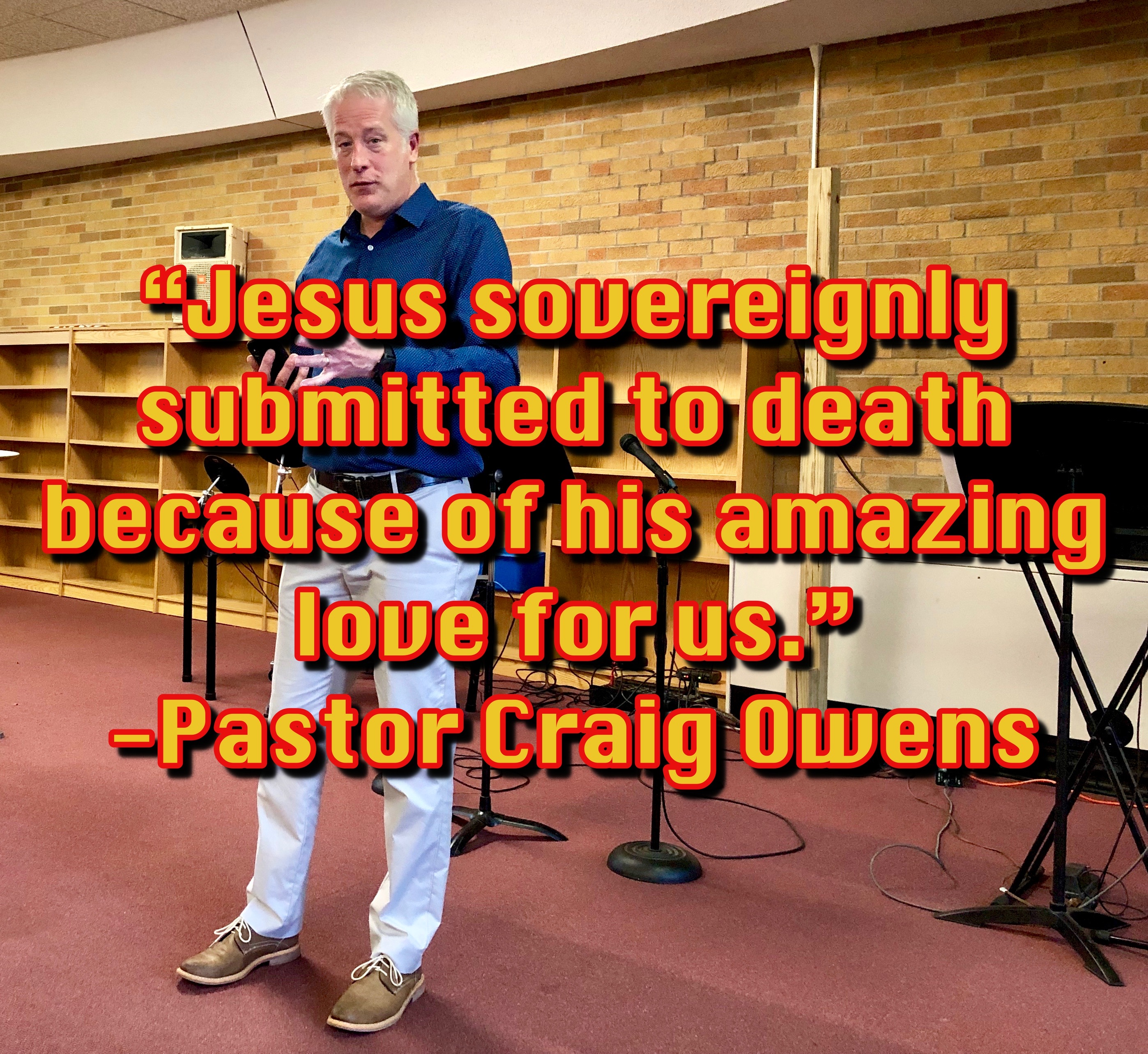 Jesus is on His passionate journey toward the Cross. Every step on this journey is a step of love.
After Jesus finished His last supper with His disciples, they all went to one of their favorite places to pray—the Garden of Gethsemane. It was a place they all knew well. Including Judas, who had been looking for an opportunity to turn Jesus over to the religious authorities when He was out of the public eye.
Jesus knew this time was coming (Matthew 10:33-34; John 13:1, 3; 18:4), and His knowing prompted His serving. So we can say that His foot-washing service was as much a reminder to Himself as it was to His followers.
After they entered the garden to pray, events began to unfold at a fast pace, ultimately culminating in Jesus being crucified.
But let us never forget that through all of this horrific, inhumane mistreatment and torture, Jesus remains the King of kings, the Son of God. In fact, very God Himself.
The Jewish religious leaders knew this too (John 8:54-59; 10:31-33). And without “knowing it” the soldiers that came to arrest Jesus knew it as well.
Just look at the absolute authority of the King of kings. Grown men—religious leaders and hardened soldiers—fall to their knees at just three words: “I am He.”
Christ’s kingdom has overruling authority. It collects no taxes, it has no standing army, it requires no checks-and-balances because its Sovereign IS Truth and Love. This unequaled, unrivaled power was contained in Jesus—“You would have no authority over Me unless it was given you from above.”
Which makes His submission to Pilate and others even more amazing! One word from Him could have crushed legions and toppled governments—yet for love’s sake, He submitted. Let that sink in—Sovereignty submitted.
What appeared to be the cruelty of man was the sovereignty of God.
No one can take My life from me. I sacrifice it voluntarily. For I have the authority to lay it down when I want to and also to take it up again. For this is what My Father has commanded. (John 10:18)
“Christ’s death was not the death of a martyr, who sinks at last overwhelmed by enemies, but the death of a triumphant conqueror, who knows that even in dying He wins for Himself and His people a kingdom and a crown of glory.” —J.C. Ryle
Christ has bought us out from under the doom of that impossible system by taking the curse for our wrongdoing upon Himself. For it is written in the Scripture, “Anyone who is hanged on a tree is cursed” (as Jesus was hung upon a wooden Cross). (Galatians 3:13 TLB)
Sovereign love submitted to the cruelty of man SO THAT you and I could be saved from the inescapable doom that will inevitably crash down on us. Jesus loved us so much that He allowed the Cross to happen to Him.
The question now remains—what are you doing with this sovereign love?
Do you know Jesus as your Savior? Have you received this gift He willingly, lovingly purchased for you on the Cross?
If you have, let me ask you another question: Christian, are you living in a way that leads others to this sovereign love too (John 13:34-35)?
Anytime you see the Cross, remember what sovereign love did there for you.
►► Would you please prayerfully consider supporting this ministry? My Patreon supporters get behind-the-scenes access to exclusive materials. ◀︎◀︎
7 Quotes From “He Chose The Nails”
April 10, 2019 — Craig T. Owens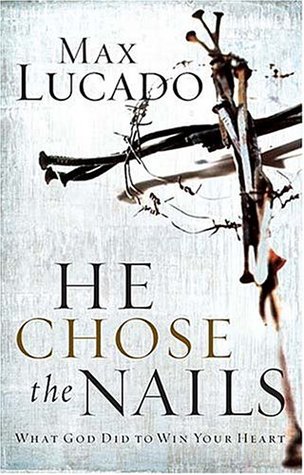 Max Lucado takes us in for a closer look at the Cross and all that Jesus did there for us. Please check out my full book review and then read this book—you will be glad you did!
“Maybe you’ve never spit on anyone, but have you gossiped? Slandered? Have you ever raised your hand in anger or rolled your eyes in arrogance, have you ever blasted your high beams in someone’s rearview mirror? Ever made someone feel bad so you would feel good? That’s what the soldiers did to Jesus. When you and I do the same, we do it to Jesus too. ‘I assure you, when you did it to one of the least of these My brothers and sisters, you were doing it to Me!’ (Matthew 25:40 NLT). How we treat others is how we treat Jesus. …
“Allow the spit of the soldiers to symbolize the filth in our hearts. And then observe what Jesus does with our filth. He carries it to the Cross. Through the prophet He said, ‘I did not hide My face from mocking and spitting’ (Isaiah 50:6). Mingled with His blood and sweat was the essence of our sin.”
“‘He canceled the record that contained the charges against us. He took it and destroyed it by nailing it to Christ’s Cross’ (Colossians 2:14 NLT). Between His hands and the wood there was a list. A long list. A list of our mistakes: our lusts and lies and greedy moments and prodigal years. A list of our sins. Dangling from the Cross is an itemized catalog of your sins. The bad decisions from last year. The bad attitudes from last week. There, in broad daylight for all of heaven to see, is a list of your mistakes. … The list God has made, however, cannot be read. The words can’t be deciphered. The mistakes are covered. The sins are hidden. Those at the top are hidden by His hand; those down the list are covered by His blood. Your sins are ‘blotted out’ by Jesus (KJV). ‘He has forgiven you all your sins: He has utterly wiped out the written evidence of broken commandments which always hung over our heads, and has completely annulled it by nailing it to the Cross’ (Colossians 2:14 Phillips).”
“Seats at God’s table are not available to the sloppy. But who among us is anything but. Unkempt morality. Untidy with truth. Careless with people. Our moral clothing is in disarray. Yes, the standard for sitting at God’s table is high, but the love of God for His children is higher. So He offers a gift.… a seamless robe… a robe worn by His Son, Jesus.”
“What appeared to be the cruelty of man was actually the sovereignty of God. Matthew tells us: ‘And when Jesus had cried out again in a loud voice, He gave up His spirit. At that moment the curtain of the temple was torn into from top to bottom’ (27:50-51). It’s as if the hands of heaven had been gripping the veil, waiting for this moment.”
“Why is the Cross the symbol of our faith? To find the answer look no farther than the Cross itself. Its design couldn’t be simpler. One beam horizontal—the other vertical. One reaches out—like God‘s love. The other reaches up—as does God’s holiness. One represents the width of His love; the other reflects the height of His holiness. The Cross is the intersection. The Cross is where God forgave His children without lowering His standards.”
“‘Just look what they did to me!’ we defy and point to our hurts. ‘Just look what I did for you,’ Jesus reminds and points to the Cross. Paul said it this way: ‘If someone does wrong to you, forgive that person because the Lord forgave you’ (Colossians 3:13). You and I are commanded—not urged, commanded—to keep no list of wrongs.”
“Knowing His last deeds would be forever pondered, don’t you think Jesus chose them carefully? Deliberately? Of course He did. There were no accidents that day. Jesus’ last moments were not left up to chance. God chose the path; He selected the nails. Our Lord planted the trio of crosses and painted the sign. God was never more sovereign than in the details of the death of His Son. … The message: ‘I did it for you. I did it all for you.’”
He Chose The Nails (book review)
April 9, 2019 — Craig T. OwensMax Lucado has an inimitable style of writing that immediately draws us into his subject—in this book the focal point is what Jesus did for us on the Cross—gets us to look at it in a new light, and then helps us walk away with a fuller understanding. The title of this book is really the answer to the sub-title—Q: What did God do to win your heart? A: He Chose The Nails.
In keeping with the theme of God answering the book’s question of how He won your heart, all but two of the chapters use statements from God as their title. Statements like “I will bear your dark side,” and “I forgive you,” and “I understand your pain,” and “I will love you forever.” In each chapter, Max takes us nearer to the Cross and to the Savior who bled and died there to show us how much God loves us.
This is a book that can easily be read together with your family or a group of friends; especially if you then utilize the study guide questions for each chapter at the back of the book. This is a book that could be read rather quickly, but because Max paints such a vivid picture of God’s unexpected love you will want to read slowly and savoringly. This is a book that could be read at any time, but I would recommend you read it during the days and weeks approaching Good Friday and Resurrection Sunday.
Whether reading alone or with friends, reading quickly or slowly, reading it during the Lenten season or at another time, I can promise you that your heart will beat more strongly with the assurance of God’s overwhelming, mind-blowing love for you.
Weeping And Rejoicing
April 6, 2019 — Craig T. Owens “First, I would bid you stand and see the place where the Lord lay with emotions of deep sorrow. O come, my beloved brother, thy Jesus once lay there. He was a murdered man, my soul, and thou the murderer.
His chief tormentors were,
Each of my crimes became a nail,
And unbelief the spear.’
And did my Sov’reign die?’
“I slew Him—this right hand struck the dagger to His heart. My deeds slew Christ. Alas! I slew my best beloved: I killed Him who loved me with an everlasting love. Ye eyes, why do ye refuse to weep when ye see Jesus’ body mangled and torn? Oh! give vent to your sorrow, Christians, for ye have good reason to do so…. My soul was drowning. From heaven’s high portals He saw me sinking in the depths of hell. He plunged in.
‘He SANK beneath His heavy woes,
To raise me to a crown;
There’s ne’er a gift His hand bestows.
But cost His heart a groan.’
“Ah! we may indeed regret our sin, since it slew Jesus.
“Now, Christian, change thy note a moment. ‘Come, see the place where the Lord lay,’ with joy and gladness. He does not lie there now. Weep, when ye see the tomb of Christ, but rejoice because it is empty. Thy sin slew Him, but His divinity raised Him up. Thy guilt hath murdered Him, but His righteousness hath restored Him. Oh! He hath burst the bonds of death; He hath ungirt the cerements of the tomb, and hath come out more than conqueror, crushing death beneath His feet. Rejoice, O Christian, for He is not there—He is risen.” —Charles Spurgeon
Unmistakable
March 13, 2019 — Craig T. Owens …I tell you before it comes… (John 13:19)
Jesus made His passion, crucifixion, and resurrection unmistakable.
He told us the Scriptures that He would fulfill (13:18).
He told us the details of His crucifixion and resurrection (John 3:14).
And He received the “stamp of approval” from His Father (13:31-32).
When Jesus came into Jerusalem, was arrested by the religious leaders, condemned by Pilate, crucified by Roman soldiers, and resurrected three days after His death, no one should have been surprised because Jesus made it unmistakable!
Jesus also told us how to make our belief in all He did for us unmistakable too—“By this will all know that you are My disciples, if you have love for one another” (v. 35).
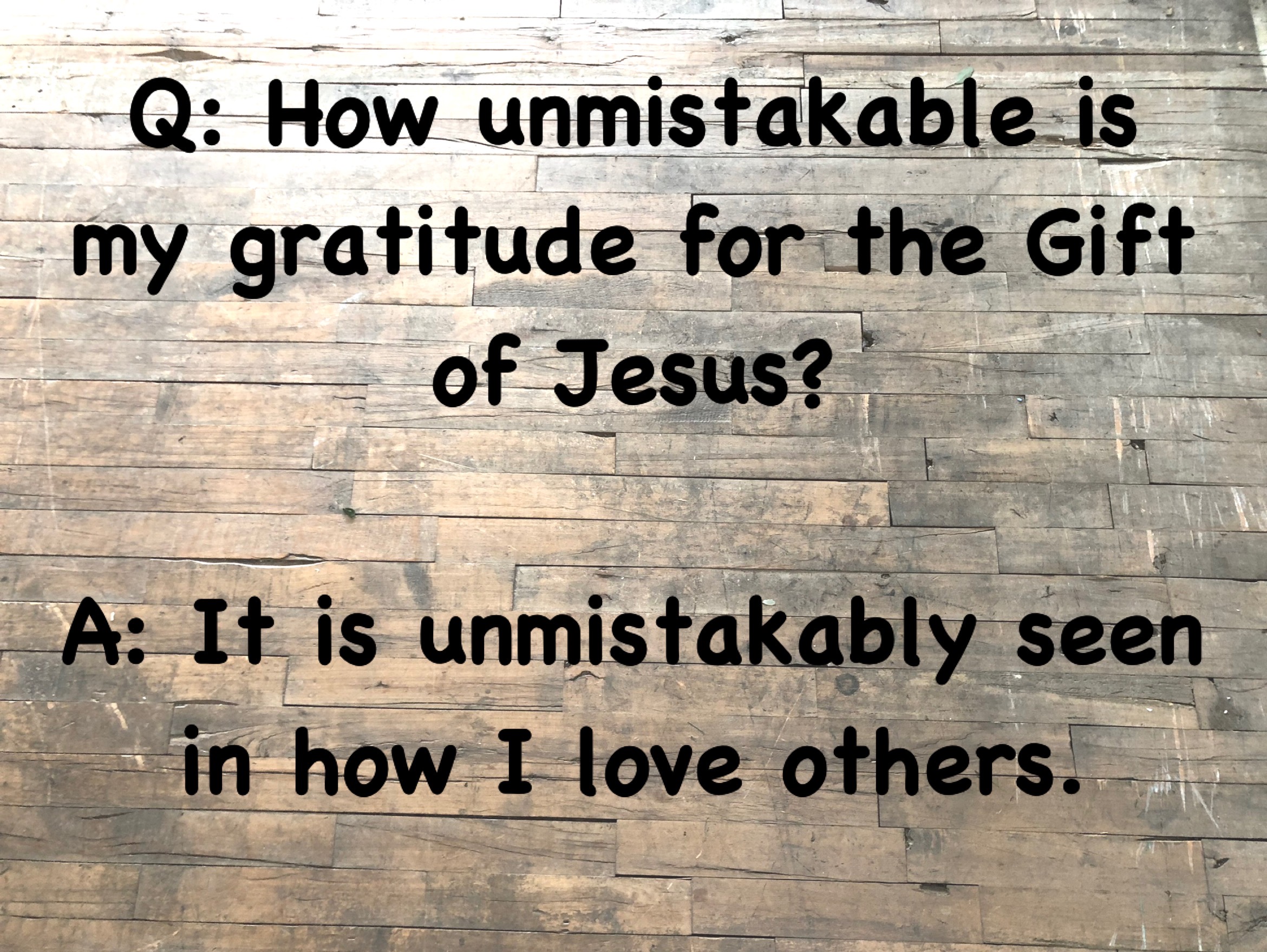
Q—How unmistakeable is my gratitude for the Gift of Jesus?
A—It is unmistakably seen in how I love others!
Passion Timeline
March 9, 2019 — Craig T. Owens As we approach Christ’s Passion Week, I think it’s a good time to slow down and remember all of the events that took place during a very short time.
The Faithlife Illustrated Study Bible has an excellent infographic on the timeline of these events. You can click on the image above to access a larger view, or you can check it out on the website.
I also invite you to join me at Calvary Assembly of God as we are taking a slow walk on Christ’s Passionate Journey toward the Cross and the empty tomb. We’re spending one week looking at each of the 8 days of His Passion Week. If you cannot join us in person, please check out our Facebook Live broadcast.
One Saturday In Bethany
March 4, 2019 — Craig T. Owens Six days before His crucifixion and burial, Jesus was prepared for His burial by the most unlikely of people. This story takes place in Bethany, where Jesus spends a lot of time during His earthly ministry.
As was customary, the most influential men in the village would try to entice visiting guests to join them for dinner. Simon—a Pharisee and a former leper—was the one who extended the invitation to Jesus. Simon is a former leper because one who still had active leprosy wouldn’t have been allowed in his own home, let alone allowed to host guests. I think (as you will see in a moment) that Simon had been healed of his leprosy by Jesus.
Although it was customary for someone like Simon to host visiting guests, in this case, the religious leaders were scheming to arrest Jesus. In other words, there was an ulterior motive for Simon to have Jesus in his home.
Which is probably why Simon neglected his host’s duties: No welcoming kiss, no foot-washing, no anointing. All normal hospitality is ignored. Jesus appears to ignore the snub and simply recline at the table. But another guest takes Simon’s incredible rudeness personally.
Mary was standing or sitting along the wall in Simon’s house, as many common villagers would in that day. Luke tells us that Mary had lived a sinful life. But while sitting at Jesus’ feet earlier she heard the good news that Jesus could forgive sins, she placed her faith in Him, and her lifestyle changed 180-degrees
Mary is overcome by emotion at the inhospitable—rude!—way Jesus is being treated and tears began to well up in her eyes. Since Jesus is reclining at the table, His feet would have been pointed in her direction, and she began to use her tears to wash His feet. Then—horror of horrors—she uncovers and lets down her hair in public(!) and begins to dry His feet.
Simon the Pharisee judges Mary by her past. Simon twice says, “Does Jesus even know what kind of woman she is? Does He know she is a sinner?” Mary is in big trouble: she is publicly pointing out the rudeness of the host, she is touching a man that is not her husband, and she has uncovered and let down her hair in public.
Jesus responds not to Mary, but to Simon: “Simon, I have something to tell you,” He says and then shares a short but powerful parable of a creditor who had two debtors. One owed him the equivalent of a year-and-a-half’s wages, and the other owed about two months’ wages. Since neither could pay, the creditor forgave both of them.
Jesus asked Simon, “Which of the two forgiven debtors do you think would be most grateful?” Simon correctly responds, “The one who was forgiven more.”
Jesus points out that Mary’s acts didn’t bring her forgiveness, but that her acts were a loving response to the forgiveness she had already received. Jesus said things like, “You have been forgiven,” and “Your sins are forgiven,” and “Your faith has saved you.”
Jesus took the anger that was focused on Mary and redirected it to Himself, as Isaiah prophesied the Messiah would do (see 53:4-5).
At the same time He is also challenging Simon, “Don’t you have something to be grateful for? Weren’t you once a physical leper? Mary was a spiritual leper, but she has been forgiven and is now overwhelmingly grateful. What about you?”
Mary was forgiven. She gave all she had in worship. Her anointing oil was lavishly poured out. It was worth a year’s wages, but she spent it all on Jesus. She anointed Him for His burial. The aroma of the oil remained on Jesus throughout His Passion Week and through His crucifixion. The aroma remained on Mary’s hands and hair. The aroma remained in Simon’s house. The memory was fixed in the memories of everyone in that room.
What about Simon? Did he ever acknowledge his gratitude? Or was he more concerned with receiving praise from men?
Have you received the forgiveness Jesus offers you? Can people tell you’ve been forgiven by your willingness to stand up for Him? Can people tell you’ve been forgiven by your willingness to give up everything for Him?
I hope you can join me this Sunday as we continue our slow, deliberate walk alongside Jesus on His passionate journey to the Cross and the resurrection.
Christ’s Passionate Journey
February 27, 2019 — Craig T. Owens In some of our favorite action movies, when the crucial moment for our hero has finally arrived, filmmakers will often switch into slow motion filming. They want you to feel the tension. They want you to see the emotion etched on the face of our hero. They want to make sure you don’t miss a single detail of this pivotal moment in the story.
The same thing happens in the life of Jesus.
The four Gospels record 3+ years of the life of Jesus on earth. But when Jesus is approaching the Cross—the crucial moment of His ministry—all the Gospel writers go into slow motion.
For example, Mark doesn’t mention anything about the birth of Jesus and only gives us one verse to tell about satan’s temptation of Jesus in the wilderness. But he uses nearly 40% of his writing to describe the last week of Christ’s life. The numbers are similar for Matthew and Luke, with John devoting almost one-half of his account to Christ’s Passion Week.
Clearly, there is something happening here that the Gospel writers want to ensure that we don’t miss a single detail!
Jesus knew all that was about to happen to Him. When Peter swung his sword at the soldiers that came to arrest Him, Jesus said, “Do you think I cannot call on My Father, and He will at once put at My disposal more than twelve legions of angels? But how then would the Scriptures be fulfilled that say it must happen in this way” (Matthew 26:53-54).
Every step that Jesus took toward the Cross was a step of love. Every word He spoke in His final moments before His death was calculated to sink deep into the memories of all who observed this story.
We are going to go into “slow motion” as well as we look closely at each day of Christ’s final week of ministry. From His dinner in Bethany to His resurrection, we’ll slow down and ponder deeply the love message Jesus is still conveying to us.
Here are the days we explored on this journey:
- Saturday
- Palm Sunday
- What Christians Often Miss About Zeal (Monday)
- Jesus Prepares Us For The Path (Tuesday)
- Sabbathing (Wednesday)
- Love Securely (Maundy Thursday)
- Sovereign Love (Good Friday)
- Supernatural Interference (Resurrection Sunday)
Book Reviews From 2018
January 1, 2019 — Craig T. Owens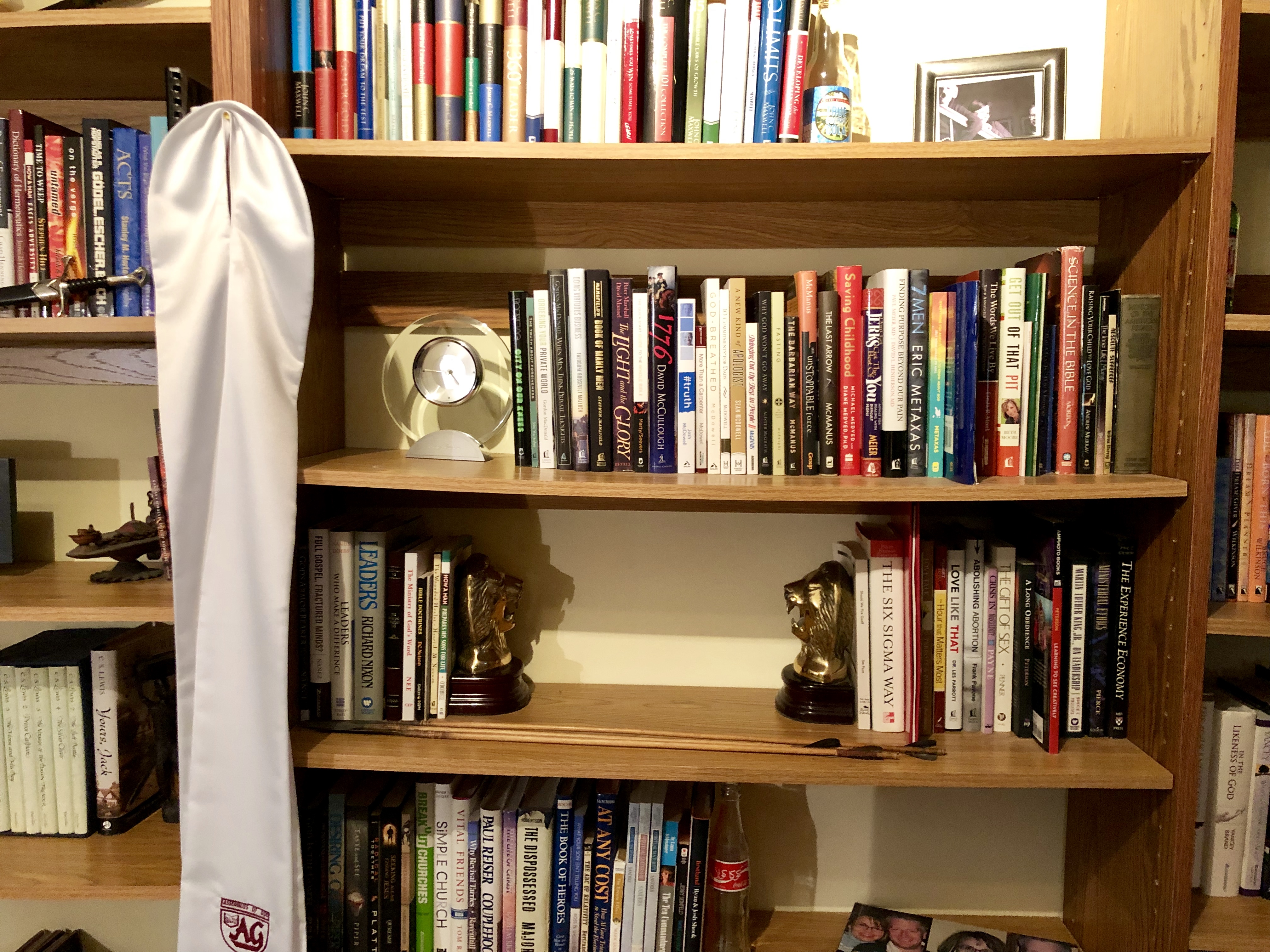 I love reading, and I love sharing my love of good books with others! Here is a list of the books I read and reviewed in 2018. Click on a title to be taken to that review.
Brothers, We Are Not Professionals
Developing the Leader Within You 2.0
How To Listen So People Will Talk
Jesus’ Terrible Financial Advice
Seeking Allah, Finding Jesus (expanded anniversary edition)
The Case For Christ Daily Moment Of Truth
Theodore Roosevelt: An Autobiography
Here are my book reviews for 2011.
Here are my book reviews for 2012.
Here are my book reviews for 2013.
Here are my book reviews for 2014.
Here are my book reviews for 2015.
Here are my book reviews for 2016.
Here are my book reviews for 2017.
My most-viewed posts


 Craig T. Owens