Listen to the audio-only version of this podcast by clicking on the player below, or scroll down to watch the video.
Stress might have six letters, but it seems like some leaders have a knee-jerk reaction to treat it like a four-letter word. While it might be nice to fantasize about an stress-free life, this is both entirely unrealistic and detrimental to your leadership. The truth is, a mild amount of stress can be helpful to you personally, as well as your organization as a whole. Join us as Greg and I unpack why you should embrace a bit of stress in your life.
[0:14] I have a brain block to start the show!
[0:59] Let’s define stress in a work environment, as opposed to simply work tension.
[1:51] An interesting study about allowing moderate stress to remain in the workplace.
[5:30] Mild stress is helpful for our brains.
[7:37] Stress expands and strengthens our team connections too.
[10:26] Can stress help increase someone’s work performance?
[13:01] Our physical bodies use a stress hormone called cortisol. How can leaders maximize its effects?
[14:38] Stress can help us rise to the challenge in a way that easy times can’t.
[16:02] I share an example of a teammate who grew through stress, as well as a supporting quote.
[18:40] Greg shares a negative example of an organization that became stress-free and drifted toward failure.
[19:30] When times are easy, we can begin to slide into apathy.
[22:40] Should we teach crisis leadership to our teams? If so, how should we do this?
Check out this episode and subscribe on YouTube so you can watch all of the upcoming episodes. You can also listen to our podcast on Spotify and Apple.
Listen to the podcast of this post by clicking on the player below, and you can also subscribe on Apple, Spotify, or Audible.
Of all the things that rob a Christian of peace and robust mental health, stress has to be near the top of the list. There are so many stressors in our lives that to not find a way to actively de-stress is to choose to remain stressed. This is sort of like fertilizing the weeds, as we learned in our second mental health strategy.
A certain amount of stress is good for us—doctors call this eustress. Our bodies have been designed by God with a hormone called cortisol that helps us respond to stressful situations, and He also designed that the unused cortisol be flushed from our bodies as we sleep and exercise. However, when we become stressed, many times sleep and exercise are squeezed out of our lives.
Men’s Health magazine reported, “You personally may dictate when you’ll die. After studying 1633 men for 30 years, Purdue scientists found that worrying takes 16 years off your life. Negative thinking triggers the release of cortisol, a stress hormone that can be dangerous when elevated for long periods of time.”
The eustress can degrade into distress if we’re not attentive to this downward slide. The excess cortisol that is allowed to remain in our bodies leads to unhealthy responses—like sleeplessness, starvation or binge eating, and little to no exercise. These unhealthy factors are further exacerbated by our diminished coping skills that come from the damage done to the hippocampus in our brain. Lingering cortisol kills the neurons in this memory center of our brains, which makes it harder for us to recall past lessons that could help us resolve stress.
Sadly, distress can become its own downward cycle as the unhealthy responses and diminished coping skills negatively impact our lives, creating even more stressors.
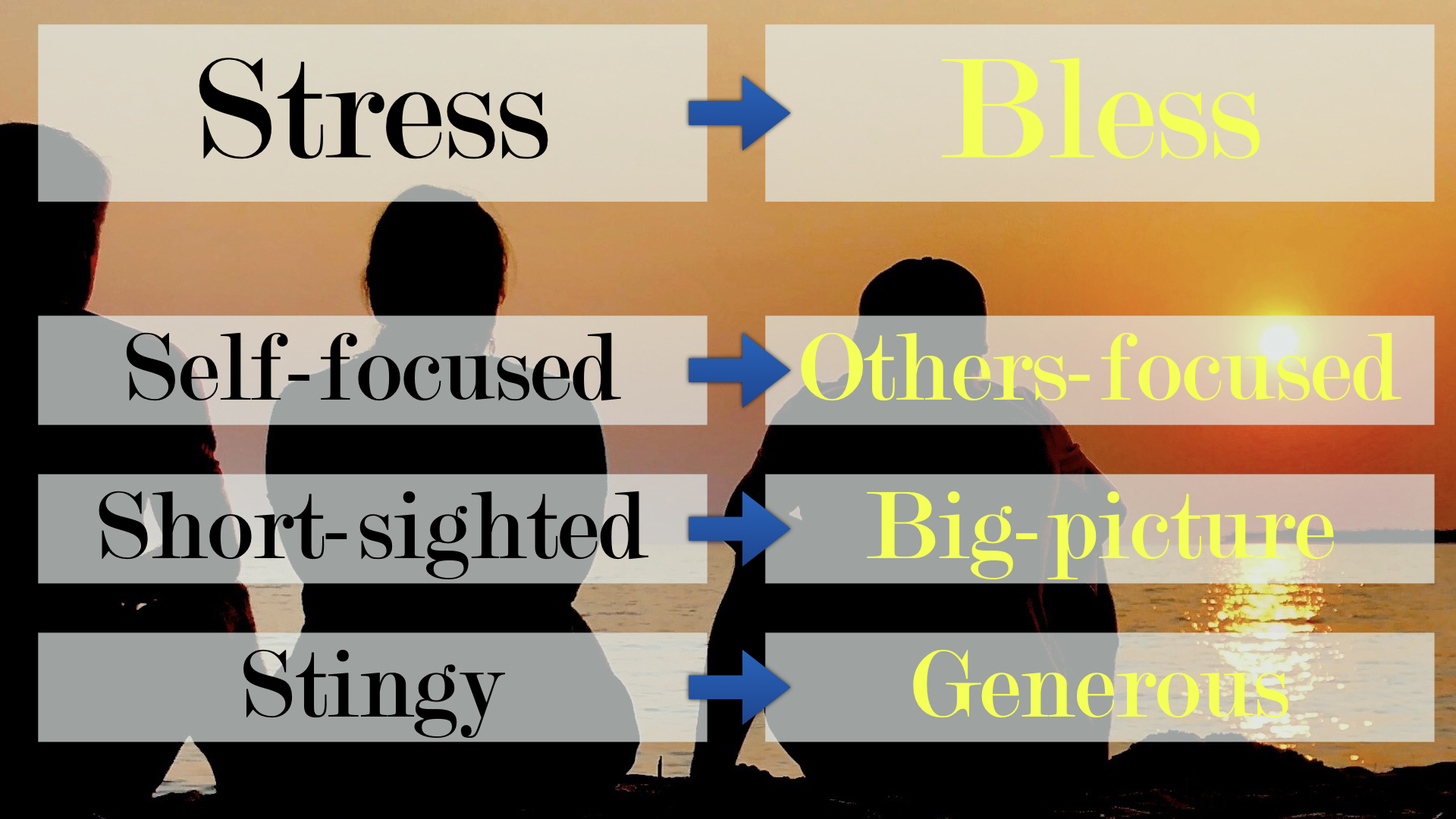
Stress makes us:
Self-focused
Short-sighted
Stingy with our time, possessions, and even God’s promises
But there is a word of hope for us. William James noted, “The greatest weapon against stress is our ability to choose one thought over another.”
I want to give you one thought—one word, one action—to combat stress: Bless.
Blessing others takes the focus off myself. Blessing God puts the focus on Him.
In the Gospels, we see people who had suffered the ravages of stress, encounter Jesus, find freedom, and then begin to bless others as a preventative to returning to their stress-filled lives. We can see a few examples in healed women, a man delivered from demons, and a woman who had lived a less-than-virtuous life (Luke 8:1-3, 26-39; 7:36-50).
Frequently, the Old Testament psalmists shared how blessing God and others brought them out of their stressful situations. A great example comes from David when he chose to bless God in a stressful place, and ended up being a blessing to other afflicted people around him (Psalm 34:1-6).
Instead of remaining self-focused we become others-focused
Instead of being short-sighted we get a big-picture orientation
Instead of being stingy with our possessions and God’s promises we become generous
Remember that in the distress cycle I mentioned earlier the brain cells in the hippocampus were being damaged? The excess cortisol literally kills those neurons. The good news is that the hippocampus is one of the few places in the brain that experiences neurogenesis after cortisol is flushed. When you replace stressing with blessing, and the cortisol is regularly flushed from your body, brain cells are regenerated in your hippocampus. In essence, you are developing both a new brain and a new mind.
The apostle Paul wrote, “Put off, concerning your former conduct, the old man which grows corrupt according to the deceitful lusts, and be renewed in the spirit of your mind, and that you put on the new man which was created according to God, in true righteousness and holiness” (Ephesians 4:22-24 NKJV).
Don’t let stress steal life from your years and years from your life. De-stress by blessing God and blessing those around you.
Listen to the podcast of this post by clicking on the player below, and you can also subscribe on Apple, Spotify, or Audible.
Doctors and scientists have repeatedly shown how important sleep is for us physically, mentally, emotionally, and even spiritually. So it’s an important question to ask: Are you getting enough sleep?
Listen to the podcast of this post by clicking on the player below, and you can also subscribe on Apple, Spotify, or Audible.
I had a great time on the Thriving In Ministrypodcast with Kyle Willis and Dace Clifton.
The guys asked me a question about how I keep myself healthy, and I pointed them to a principle I observed in the life of Jesus. Check out this excerpt from the chapter “A Healthy Leader’s Sabbath” in my book Shepherd Leadership: The Metrics That Really Matter—
Jesus had a human body just like ours. The demands of ministry caused stress on His body just as it does on our bodies. This is totally natural—this is the way God designed us. Our body helps us meet the demands of each day by releasing a hormone called cortisol. Cortisol helps us by managing how our body uses carbohydrates, fats, and proteins; keeping inflammation down; regulating blood pressure; controlling the sleep-wake cycle; and boosting our energy. …
Cortisol is naturally flushed from our bodies by a healthy on-and-off rhythm. God built this into His Creation by giving us daily rhythms of day and night, work and rest, and by providing a weekly Sabbath to rest and reflect. But as most shepherd leaders know, setting aside a consistent Sabbath day is extremely rare. Again, let’s look to Jesus: Do you see Him doing anything—or not doing anything—on the Sabbath day that He didn’t do the other days? On any day of the week, we see Him speaking in a synagogue, healing the sick, teaching crowds of people, giving instructions to His followers, correcting religious leaders, walking with friends, or stopping to eat at someone’s home.
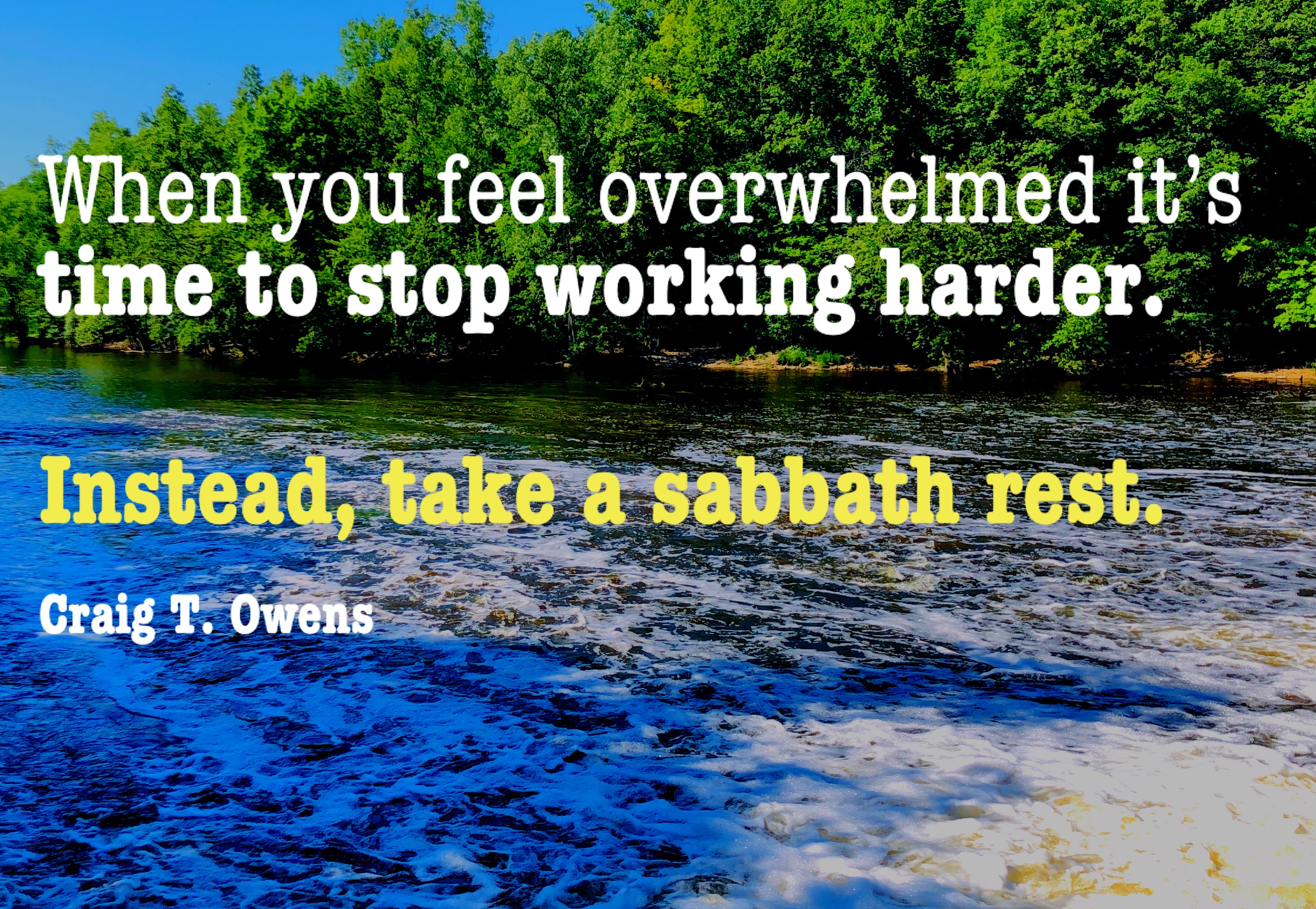
Jesus had a healthy on-off rhythm: work-rest, minister-celebrate, expend-refresh. Jesus demonstrated that the Sabbath is not so much a day as it is an attitude of the heart. It’s listening to the Holy Spirit say something like, “You’ve been very busy this afternoon, so it’s time to take a nap” and then obeying that divine prompting. Resting and being refreshed—“sabbathing”—is not a luxury; it’s a necessity! That’s why, after a busy day of ministry, we see Jesus spending time in prayer, or taking a nap while crossing the lake when He didn’t have anyone to teach or heal, or finding time for a retreat with His disciples so they could rest and recuperate.
I have five chapters in Shepherd Leadership about a leader’s overall health, and two chapters in particular where I talk about practical ways that we can create the time to practice sabbathing.
I’ll be sharing more clips from this Thriving In Ministry interview soon, so please stay tuned. Shepherd Leadership: The Metrics That Really Matter is available in print or ebook, and in audiobook through either Audible or Apple.
Oh, wait. It doesn’t really work that way, does it? At least it hasn’t for me. After I’ve been hurt, it takes quite a while to get to a place of healing. We have cliches for this sort of thing—phrases like “Once bitten, twice shy” and “Fool me once, shame on you; fool me twice, shame on me.”
We begin to react to the past instead of reflecting and responding in the present.
It’s interesting that those who compiled the Psalter placed Psalm 55 where they did. There is no introduction that gives us a background or setting, but David still seems to be looking for those “Ziphites” that betrayed him to King Saul.
Here’s an important physiological and psychological truth: Our brains cannot tell the difference between a real threat and an imagined threat. Our physical bodies react the same way in response to any threat.
It’s interesting to note that both Selahs in Psalm 55 are in the middle of a sentence, almost as if David is interrupting his own thoughts. Which, I believe, is exactly what he’s doing.
As this psalm opens David is still praying, but he’s praying about his internal threats:
my thoughts trouble me
I am distraught
I notice the conversations and the stares of potential enemies
myheart is in anguish
I feel like terrors of death, fear and trembling, and horror are closing in on me!
This leads to David’s fight/flight response (although really, it’s his flight response): “Oh, that I had the wings of a dove! I would fly away and be at rest—I would flee far away and stay in the desert.”
David has been listening to himself, and he finally at least attempts to put a halt to these distressing thoughts with his first Selah—which means “pause, and calmly think of that.”
Most of our natural reactions are driven by fear. But fear—by its very nature—is limiting. Fear keeps us tunnel-visioned on the perceived threat. Fear closes us off to accepting any new information. Fear limits our creative responses. Fear perpetuates more fear.
So David tries a second time to Selah. He is attempting to interrupt his negative thoughts—to stop listening to himself and start talking to himself. To move from a self-preserving reaction to a God-glorifying response requires a Selah pause to reflect. Reflecting on things like:
Where will these thoughts ultimately take me?
How has God responded before?
What does God’s Word say?
Could I imagine Jesus responding the way I’m responding?
What changes can I make?
I love David’s conclusion: “But as for me, I TRUST IN YOU.” He’s saying, “I’m not going to listen to those negative fears anymore. It’s time to put my trust in God.”
David had to do this “evening, morning, and noon”—again and again and again! Until finally he could say, “I will cast all my cares on the Lord and He will sustain me; He will never let me fall” (Psalm 55:22).
This is what Jesus promises us, “Come to Me, all of you who are tired and have heavy loads, and I will give you rest” (Matthew 11:28).
Just to be clear, we’re not talking about a problem-free nor a stress-free life. That’s simply not possible. Our bodies were created to deal with stress in a healthy way. But stress that is unhealthy, or unnecessarily prolonged, or not flushed properly from the body becomes anxiety. Anxiety is the culprit responsible for a whole list of bad things!
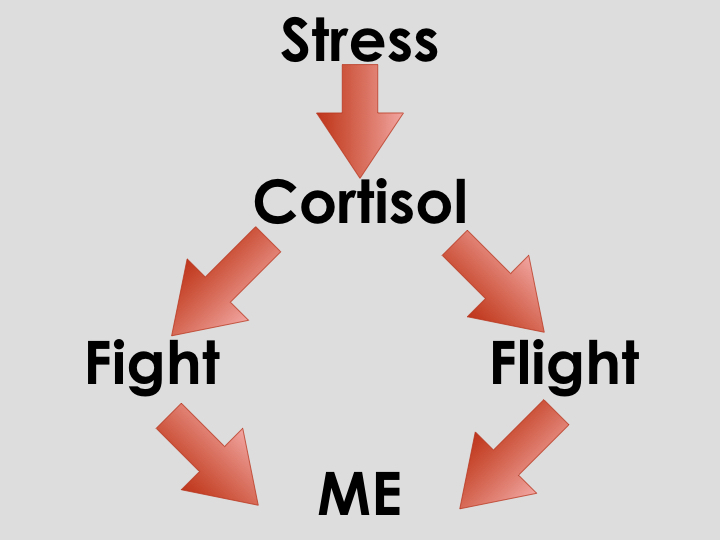
When we face a stressor, our bodies release a hormone called cortisol. The main function of this hormone is to prepare us to fight or flight. Sometimes this looks like over-engaging in problem-solving, and sometimes it looks like a complete withdrawal from life. Sometimes cortisol leads to sleeplessness and a diminished appetite, and sometimes it makes people sleepy and craving comfort food.
But the bottom line is the fight-or-flight response is very me-focused!
The strategies Paul lists for us take the focus off me and put it on God. He especially counsels us to pray to God and to praise God. Between these two healthy responses is something unexpected. He writes, “Let your gentleness be evident to all. The Lord is near.”
What in the world does gentleness have to do with relieving stress?!
First, let’s consider the motivation: The Lord is near. I think this could mean:
The Lord’s name is near, as in we are called “Christians” and so we should act in a way that glorifies God.
The Lord is near to help us.
The Lord’s return is closing in where we will have to give an account of how we have lived our lives.
Then there is this word gentleness. This word means:
moderation
considerate of others
patience toward our situation and toward others
or as The Message says: Make it as clear as you can to all you meet that you’re on their side, working with them and not against them.
Cortisol is naturally removed from our physical bodies through rest and exercise. Anxiety is naturally removed from our emotional lives the same way—resting in God’s presence (honk!) and gently and considerately exercising a blessing for someone else.
THE BEST WAY TO DE-STRESS IS TO BLESS!
When anxiety builds:
Honk
Bless
Repeat
Don’t let stress win by making you self-centered. Defeat stress and anxiety by praising God and blessings others. And then make that a daily habit!
“Laughter increases the number and activity of some white blood cells called ‘T’ and ‘B’ cells, natural killers that fight viral infections and some types of cancer cells. It multiplies the antibody IgA, which fights upper respiratory tract infections. A hearty chuckle builds up gamma interferon, which stimulates the various components of the immune system.
“Laughing speeds up our heart rate, and some have likened this to ‘internal jogging.’ It’s an aerobic activity that works the diaphragm and increases the body’s ability to use oxygen. That’s why after a big laugh you often feel the need to sigh and take a big breath of air. It sure beats thirty minutes on the treadmill.
“As we laughed, our blood pressure temporarily is elevated; however, that is followed by a prolonged, mild decrease in blood pressure. Laughter also lowers various hormone levels—the kind associated with the fight-or-flight response—and makes us feel less stressed, more relaxed. That’s why people say things like ‘I laughed so hard I couldn’t get up’ or ‘I laughed so hard I fell over.’
It’s no secret that being tired can lead to a lot of not-so-nice consequences. Everything from automobile crashes, to poor work performance, to foot-in-mouth statements, to giving in to temptations, to health issues are all traced back to not getting enough peaceful sleep.
But did you know that sweet sleep is something God wants to give you?
Psalm 127 says, “God grants sleep to those He loves.” Guess what? God loves you, and wants you to have a peaceful night’s sleep!
Here are some benefits to getting solid sack time:
Muscles are repaired—the body “turns off” muscles during sleep so they can repair themselves.
The hormone leptin, that regulates your appetite, is adjusted.
Your blood pressure is lowered.
Your heart rate is lowered.
The energy-producing cells we all need are restocked.
Your immune system is re-energized.
Memories are consolidated from short-term memory banks to long-term memories.
The hormones that allow you to concentrate are replenished.
Your “database” of decision-making options is re-calibrated.
Bottom line—you get healthier physically, mentally, emotionally, relationally, and spiritually.
All of this God wants to give to those He loves. “God loves me, so I’m going to sleep peacefully tonight!”
The problem is we often sabotage God’s blessing of sweet sleep by our own poor decisions during the day. So here are seven things you can do to cooperate with God’s blessing of sleep:
Reduce stress. Stress causes your body to release cortisol, which prepares your body for fight-or-flight. This means when you’re trying to quiet down for the night, your body is still screaming, “Go, go go!” Stress is mainly triggered by worrying over things outside of our control, so check out what Jesus said to us about not worrying—Matthew 6:25-34.
Reduce late-day caffeine. Caffeine has a half-life of six hours, so if you are pouring it into your body late in the date, you might fall into bed exhausted but the caffeine is keeping your brain buzzing. As a result, you don’t have the normal deep sleep patterns.
Eliminate emotional caffeine. Arguments with other people release cortisol and adrenaline in your bloodstream. If these disagreements are happening later in the day, your body is fighting against God’s plan for your tranquil sleep. So take care of any disagreements quickly (Ephesians 4:26).
Exercise. Getting some movement into your daily routine flushes cortisol and adrenaline from your bloodstream.
Go to bed and get up at the same time. There’s a reason God made the sun to rise and set at predictable times. Your body also functions best on a predictable schedule.
Reduce “blue lights” close to bed time. The blue light waves of dawn tell our bodies to stop releasing melatonin, the sleepy hormone. The red light waves of dusk tell our bodies to increase melatonin so we can go to sleep. But when we’re staring into the blue light of our phones and tablets, our body is being sent a conflicting signal.
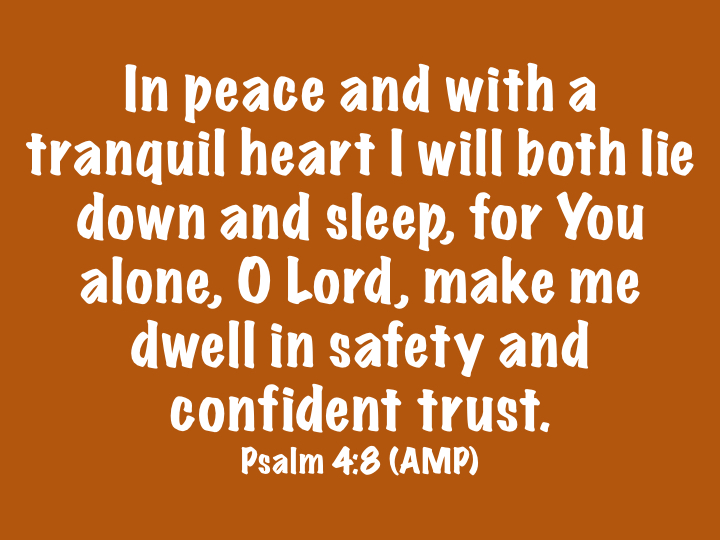
Pray. Two great passages you can pray before bedtime are Psalm 4:8 and Proverbs 3:24. Claim those promises of sweet sleep!
God loves you. He wants to give you the blessing of peaceful sleep. If you’re going to sleep peacefully tonight, make sure you are not sabotaging what God wants to give you.
Charles Stone gave us a very practical book in Brain-Savvy Leaders (you can read my full review by clicking here). Obviously out brain works best when we’re healthy, so check out some quotes from this book on brain health.
“Gratefulness is actually good for brain and body health.”
“At the end of our chromosomes lie protective caps called telomeres that are linked to longevity. Apparently, the longer your telomeres, all else being equal, the longer you live. Long-term stress shortens them, and mindfulness apparently helps lengthen them. For a Christian, mindfulness practices, such as meditation on Scripture and reflective prayer, which we often do in our devotional time, may possibly help us live longer.”
“The hypothalamus acts as a controller to the master hormone gland, the pituitary gland. … Chronic stress can damage our body and even kill neurons in the hippocampus. However, since the hippocampus is one of the few structures that can grow neurons, called neurogenesis, when stress decreases and cortisol levels out, the brain can regrow neurons here.”
“When we feel bored we don’t get as much oxygen and blood flow. When the brain lacks engagement over long periods of time (we are bored), dendrites can atrophy. When that happens, we can lose brain real estate.”
“Neuroscientists have found that stuffing, denying, or a ignoring our emotions reinforces them, affects short-term memory, increases blood pressure, and robs our brain’s prefrontal cortex of the mental energy it needs.”
“Chronic anxiety and stress cause what scientists call allostatic load…. When our body secretes too much cortisol over long periods of time, these problems can affect us: impaired immunity, weight gain, greater emotional reactivity, heart problems, decreased memory, and diminished brain functioning.”
“Exercise increases a key protein necessary for a healthy brain.”
I shared some quotes about how we learn from Brain-Savvy Leaders earlier, and you can read them here.
I love technology. But along with all of the technology comes a whole lot of noise. Not necessarily the noise that your ears pick up, but the noise in your mind.
We’ve got Facebook for the latest social updates
Twitter and blogs for the latest news and commentary
Flickr, Twitpic, and Intragram for the latest pictures
LinkedIn for the latest business interactions
Smart phones for instant messaging
And if we miss out on any of those things, we feel left behind.
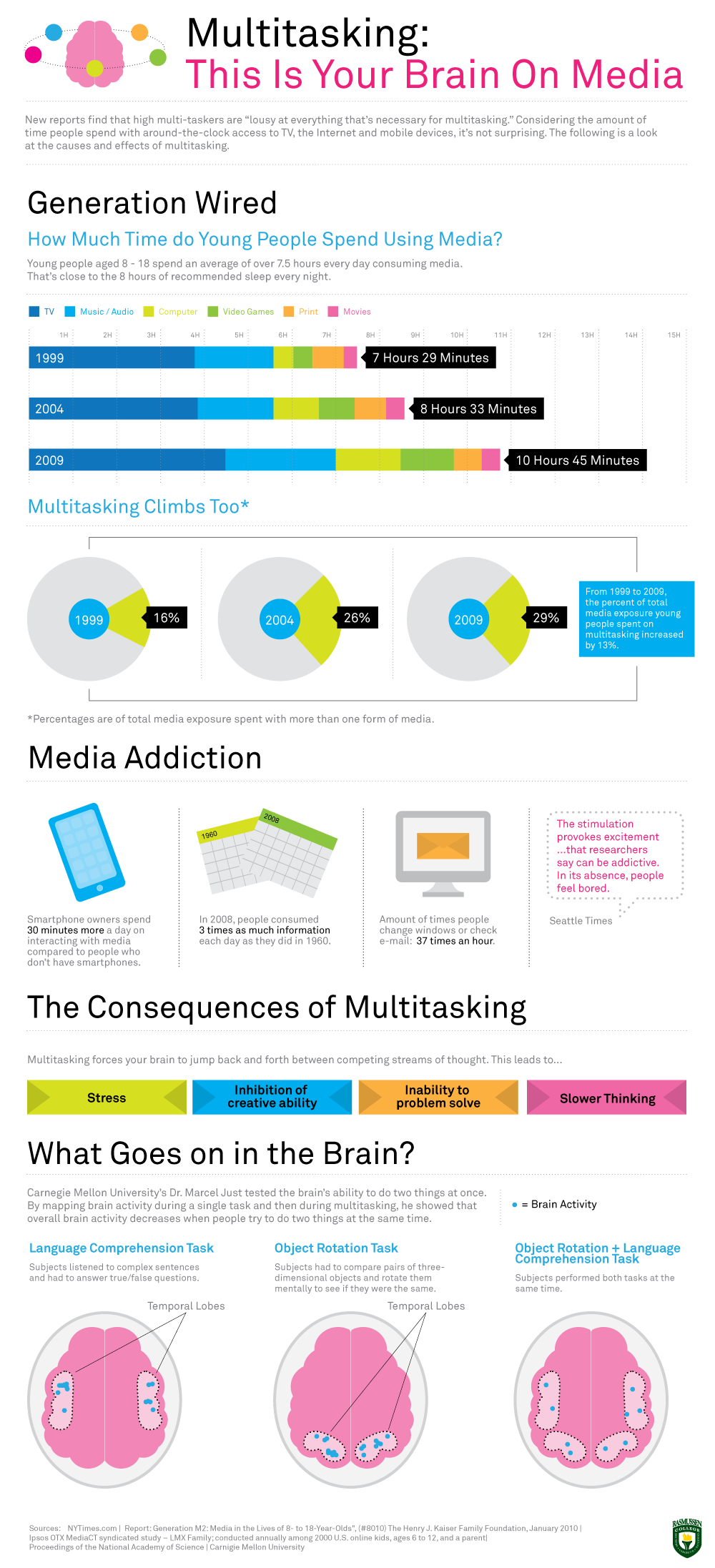
Here’s the ironic thing about all of this social media. Trying to keep up with everything and everyone raises the level of cortisol (a stress hormone) in our bodies. And cortisol actuallyincreases anti-social behavior.
In the midst of trying to tune in and keep up with all of these other voices, we often miss out on the most important Voice.
Jesus says: Listen! I am standing and knocking at your door. If [not when] you hear My voice and open the door, I will come in and we will eat together. (I added the bracketed commentary.)
Today I’m trying to quiet all of the other voices and just listen to The Voice. So today is a media/technology fast.
No blogging (I wrote this post yesterday)
No Twitter or Facebook
No texting
No iPod or TV or computer time
I’m taking time to make sure I’m tuning into the most important Voice. I challenge you to try it too. Listen to see what Jesus has to say to you.



 Stress might have six letters, but it seems like some leaders have a knee-jerk reaction to treat it like a four-letter word. While it might be nice to fantasize about an stress-free life, this is both entirely unrealistic and detrimental to your leadership. The truth is, a mild amount of stress can be helpful to you personally, as well as your organization as a whole. Join us as Greg and I unpack why you should embrace a bit of stress in your life.






 Craig T. Owens