5 Blessings You Should Expect From Your Church Experience

Place of peaceKing David loved God, and he loved God’s people. He was passionate about everyone getting as deeply connected with God as he was, so he wrote worship songs, setup worship teams, and organized the temple for worshippers.

The first song of ascent he wrote was one anticipating how good it was going to be when everyone got to the temple in Jerusalem to worship.

In fact, David was so excited about what he was expecting to happen in their worship together that he practically glowed with joy! Really! The word for rejoiced in his song means to be so cheerful and happy that you make others around you bright by your happiness. 😀

What was it that David thought was going to happen? First of all, we need to look at the name Jerusalem. Traditionally this means the City of Peace, but the two words that make up “Jerusalem” are much richer than that. Yes, -salem means “peace.” But the first part of the word (yara-) literally means water flowing through, or an arrow being shot out.

In other words, David anticipated that we are going to a peaceful place to be sent out full of peace, to take that peace to others who don’t have it, but desperately need it.

While we are in our “Jerusalem” (for us in the New Testament, this is our “church,” even if it’s just two or three people getting together), here are five blessings you should expect—

  1. Unity—with all the “tribes” joining together.
  2. Praise—joining together to tell God how great He is!
  3. Learning—we come together to learn God’s statutes.
  4. Judgment—what?! How is judgment a blessing? If you are nervous about being judged, just remember Who does the judging in God’s temple: the Holy Spirit. He judges us in a loving way, and in a way that allows us an opportunity to see our sin, repent from it, and experience unconditional forgiveness. That is exciting!
  5. Peace, security, prosperity—the word shalom is used multiple times in the closing verses of this song. The best definition of shalom is: nothing missing, nothing broken. In other words, when we gather together to worship we should expect that God will heal any dis-ease we have, that He will supply what has fallen short, that He will fill up what’s empty.

With those five blessings in mind, here’s the declaration all Christians can make—

Inside these walls…
we live in unity
we praise the Lord
we learn God’s laws
we judge ourselves by God’s standards
repenting, confessing, forgiving, and being forgiven
we fight for peace
we bless God and one another
We descend back to the valleys
to take this message to valley-dwellers
that they, too, may pilgrimage
with us to Jerusalem
It starts here in God’s family!
It starts with me!


Check out the full video of this message, where I explain each of these ideas more fully. And if you’re in the area, join us on Sunday as we continue our look at the Psalms of Ascent.

If you’ve missed any of the messages in this series, you can access the complete list by clicking here

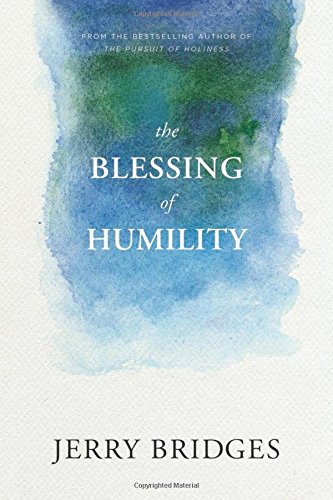
6 Quotes On Meekness From “The Blessing Of Humility”

The Blessing Of HumilityAs I stated in my review of Jerry Bridges’ book The Blessing Of Humility, reading through these thoughts slowly—Beatitude by Beatitude—would bring about the most life-changing impact. In that spirit, I will be sharing some noteworthy quotes one Beatitude at a time. Here are some quotes on blessed are the meek (Matthew 5:5)…

“Meekness is not being timid, spineless, unassertive, and easily dominated. It is not a natural niceness. In fact, it has nothing to do with one’s personality or temperament.”

“There is then a twofold expression of meekness: first toward God and then toward other people. Meekness toward God involves: (1) responsiveness to His Word; (2) submission to His Providence.”

“As I reflect on our evangelical community to the extent I am aware of it, it seems we are more knowers of the Word than doers of the word. … Instead we too often use the Scriptures not as a means of judging ourselves but as a means of judging others, especially those whose sins are more flagrant than ours. The meek person, in contrast, searches the Scriptures (or listens to it taught) not to judge others but to allow the Holy Spirit to judge him or her. In fact, the meek person earnestly desires the Spirit to use His Word to effect a deep change in his or her inner being.”

“Thomas Watson wrote that meekness toward other people consists of three things: the bearing of injuries, the forgiving of injuries, and the returning of good for evil.”

“Because we have been forgiven so much, we have an obligation to forgive those who sin against us. Yet our motive for forgiving should not be our obligation but the realization of how much we have been forgiven.”

“Meekness towards man means bearing patiently with the hurtful actions of others and dealing gently with their failures, not only in the assurance that all of these are under God’s providential control, but in the knowledge that, left to ourselves, we have no claim to be any stronger than the weakest of our friends or any better than the worst of our enemies.” —John Blanchard

I have previously shared quotes on:

Quotes on the next Beatitude will be posted soon. Stay tuned…

20 Useful Maxims

Useful MaximsI thoroughly enjoyed reading Useful Maxims by Brian Ridolfi (check out my review of his book by clicking here). Here are 20 of Brian’s useful maxims that caught my highlighter.

  1. Going to church is good; going to God is better.
  2. Progress is not good if you are progressing in the wrong direction.
  3. Good demeanor does not validate bad behavior.
  4. Broken commandments break down integrity.
  5. The Bible’s meaning is not hidden from men; men hide from its meaning.
  6. Actions are better indicators of character than rhetoric.
  7. The indifferent make no difference.
  8. Remaining weak takes strength. It takes power not to use power.
  9. Great men step in when everyone else steps out.
  10. Moral arguments which are entirely material are entirely immaterial.
  11. Peacemakers and saltshakers dispense enrichment.
  12. A grudge will keep you deep in sludge. Points of contention are points of retention.
  13. Revenge is hard to reverse.
  14. Never put faith in people who have no faith.
  15. Everything goes when anything goes.
  16. Your sin is not just your problem.
  17. Parental neglect prompts government parenting.
  18. Where no one fears God, everyone fears man.
  19. The right battle is lost with the wrong weapon.
  20. Insecurity secures instability.

Watch for more maxims soon. Or follow me on Twitter and Tumblr to read some of Brian Ridolfi’s maxims.

Thursdays With Oswald—Working Out God’s Will

Oswald ChambersThis is a weekly series with things I’m reading and pondering from Oswald Chambers. You can read the original seed thought here, or type “Thursdays With Oswald” in the search box to read more entries.

Working Out God’s Will

     We do not enter into the life of God by imitation, or by vows, or by ceremonies, or by Church membership; we enter into it by its entering into us at Regeneration. The Cross of Jesus Christ is the gateway into His life. … 

     The world is that system of things which organizes its life without any thought of Jesus Christ. … 

     Nothing blinds in the mind to the claims of Jesus Christ more effectually than a good, clean-living, upright life based on self-realization. For a thing to be satanic does not mean that it is abominable and immoral. The satanically managed man is moral, upright, proud, and individual; he is absolutely self-governed and has no need of God. … 

     When by the Cross of Christ we have entered into the experience of identification with our Lord, then there comes the practical working out of Matthew 11:29, “Take My yoke upon you, and learn of Me; for I am meek and lowly in heart.” … 

     God will bring across our path people who embody the characteristics that we have shown to Him—stubbornness, pride, conceit, opinionatedness, sensuality, a hundred little meannesses. “Now,” He says, “love them as I have loved you.” 

From The Psychology Of Redemption

So God’s will is not something we learn by going to church, or imitating someone we think to be a godly person. God’s will is living like Jesus:

  • Totally abandoned to God’s will
  • Staying linked to Jesus
  • Loving the people that God brings across our path like God loves us

How are you doing?

7 Quotes For Leaders Who Love The Church

Catalyst devotionsI recently completed an excellent reading plan on YouVersion called Catalyst: Devotions For Leaders Who Love The Church. Here are some quotes I especially liked…

“Too often we view leadership as purely outward, thinking only of how we will climb the next mountain, or overcome the next obstacle without considering who we will be when we do. But true leadership, great leadership, starts within.” 

“Your capacity for life changing leadership is directly related to your willingness to be led, not your eagerness to perform. Lean in to the promises of God, allow Him to mature you in goodness, knowledge, self-control, perseverance, and love; true hallmarks of a leader worth following.”

“The more we look, act, love, and lead like Jesus, the more impactful our leadership will be to the world around us.” 

“There is no choosing to lead through the Spirit of God without choosing to be changed by the Spirit. … What is not cultivated in secret cannot be called upon in public. We have to pray for the transformative power of the Spirit to work His way in our hearts and minds, changing us forever, so our leadership is not a facade, but a reflection of His power at work within us.”

“Jesus calls us further, calls us to more, and through His power we have to change the landscape of leadership in our world. We must demonstrate that leadership through Christ speaks life and value into people’s hearts. That the way we treat the Father’s children matters, and is our greatest end.” 

“Father, help me to see Your children the way You do. Give me eyes to look beyond what my flesh sees, and to focus on how to affirm, love, and care for those You’ve entrusted me to lead. Create in me a compassionate heart, one that turns first to You in worship and then towards Your children with love.”

“God, this world is Yours, everything in it is Yours. I am Yours, do with my life what You will. Help me to release the things of my flesh, so that I may be transformed according to Your Spirit. Give me a heart for those around me, a burden for my community that compels me to fulfill the mission You have may give me. Teach me to clothe myself in You, to speak Your words and offer Your hands. May my leadership radiate You, and draw people towards Jesus.”

Thursdays With Oswald—Christ’s Temptations And Ours

Oswald ChambersThis is a weekly series with things I’m reading and pondering from Oswald Chambers. You can read the original seed thought here, or type “Thursdays With Oswald” in the search box to read more entries.

Christ’s Temptations And Ours

     The first temptation of Our Lord comes to us on this line—“Be sensible, You are here for the service of men, and surely it is the most practical thing to feed them and satisfy their needs.” The clamor abroad today is all on this line, “Put man’s needs first; never mind about the first commandment, the second commandment is the all-important one” (see Mark 12:29-31). … The insistent demand in the world today to put men’s needs before God’s will is the outcome of the reasoning of human wits and wisdom…. So long as our wits and human solutions are on the throne, to satisfy the needs of men is ostensibly the grandest thing to do. … 

     Our Lord was then asked to compromise: “You will become the King of men and the Savior of the world by judicious compromise; build Your kingdom on broad-minded lines; be judicious, You know there is evil in the world; then use it wisely, and don’t be so intense against sin; don’t talk about the devil and hell; don’t be so extreme and say a man needs to be born from above. Tolerate my rule of the world, call things ‘necessary evils’; tell man sin is not anarchy, but a disease; fall down and worship me and my way of looking at things, and I will withdraw and the whole world will be Yours.” … Will the Church that bows down and compromises succeed? Of course it will; it is the very thing that the natural man wants. … 

     satan tried to put Jesus Christ on the way to becoming King of the world and Savior of men in a way other than that pre-determined by God. The devil does not tempt us to do wrong things; he tries to make us lose what God has put into us by regeneration, the possibility of being of value to God. When we are born from above the central citadel of the devil’s attack is the same in us as it was in Our Lord—to do God’s will in our own way. … 

     Every temptation of satan will certainly seem right to us unless we have the Spirit of God. Fellowship with our Lord is the only way to detect them as being wrong. 

From The Psychology Of Redemption

Wow! Lots to contemplate here!

What do you think about the temptation of Jesus? Have you seen the same sort of temptations come your way?

One more thought from Chambers: “Temptation must come, and we do not know what it is until we meet it. When we do meet it, we must not debate with God, but stand absolutely true to Him no matter what it costs us personally, and we will find that the onslaught will leave us with higher and purer affinities than before.

8 Ways Pastors Can Minister Like The Apostle Paul

PreachingThe Apostle Paul reminded the Thessalonians of how he ministered among them (“You know…” [1 Thessalonians 2:1]). This gives all of us pastors now an example of how to minister.

(1) “With the help of God we dared to tell you His gospel” (v. 2). I cannot minister out of my own strength; everything must flow from God’s strength.

(2) The message “does not spring from error or impure motives, nor are we trying to trick you” (v. 3). I must constantly allow the Holy Spirit to check my motives and check my theology.

(3) “We speak as men approved by God to be entrusted with the gospel”( v. 4a). I am merely a vessel that God chooses to use to share His gospel. This must keep me humble.

(4) “We are not trying to please men but God, Who tests our hearts” (v. 4b). I minister only for God’s approval, only for the applause of Nail-Scarred hands. “We were not looking for praise from men” (v. 6).

(5) “We were gentle among you, like a mother caring for her little children … We dealt with each of you as a father deals with his own children, encouraging, comforting and urging you to live lives worthy of God” (vv. 7, 11, 12).

(6) “We loved you so much that we were delighted to share with you not only the gospel of God but our lives as well” (v. 8). Paul didn’t just show up to preach, but he was in day-to-day interaction with the saints.

(7) “We worked night and day in order not to be a burden to anyone while we preached the gospel of God to you” (v. 9). My salary should not be too much of a burden for my congregation.

(8) “Holy, righteous and blameless we were among you” (v. 10). My life of integrity adds weight to the message that I preach (v. 5).

May all of us who are pastors live and minister like this!

Praying For Your Congregation

I heart my churchPastors often ask for their congregation to pray for them. This is a good thing! But the Apostle Paul gives pastors a model for praying for their congregation.

In his letter to the Church at Philippi, Paul says, “And this is my prayer…” (Philippians 1:9).

First, notice the motivation for Paul’s prayer: thankfulness. He’s not skeptical nor cynical. He doesn’t browbeat them for any shortcomings. He doesn’t think, “Ministry would be great if it weren’t for these people.” No! He was full of thanks that bubbled up in joyful prayer for these precious people (vv. 3, 4).

Paul also had an attitude of confidence for this congregation. He believed they could carry out ministry responsibilities, and that in the process they could continue to mature in Christ (vv. 5, 6).

Paul had affection for this church: he really liked these people! It’s one thing to love someone (after all, Jesus commanded us to do that), but something entirely different when we like being around people. The King James Version says Paul greatly longed after these folks. The Greek is even better—it says he doted on them (v. 8).

With this in mind, look how Paul prayed for these precious folks on whom he doted. He prayed that…

  • …their love might abound
  • …they would increase in knowledge and insight
  • …their level of spiritual discernment would help them always see the best
  • …their purity and blamelessness would remain intact all the days of their life
  • …they would be filled with God’s righteousness
  • …they would bring glory to God

Pastor, this is a great prayer to pray over the precious people on whom you dote!

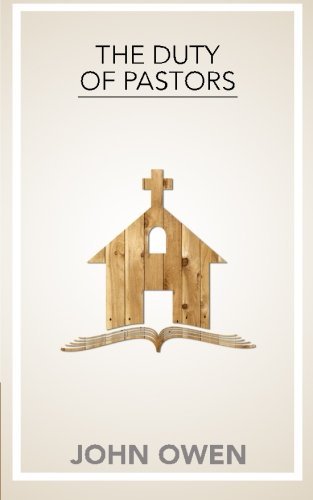
11 Quotes From “The Duty Of Pastors”

The Duty Of PastorsJohn Owen has some fascinating insights on pastors and ministers (hint: they’re not the same thing) in his book The Duty Of Pastors. Here are some of the quotes I liked from this book. Remember this book was written in the 17th-century, so don’t let the Old English keep you from discovering the rich truths in these passages.

“Why should any speak where the Holy Ghost is silent? … Where things are obscured, it is a safer way to prove the practice of men by God’s precept, charitably supposing them to have been obedient, than to wrest the divine rule to their observation, knowing how prone men are to deify themselves by mixing their inventions with the worship of God.”

“The lights which God maketh are sufficient to rule the seasons for which they are ordained. As, in creating of the world, God ‘made two great lights, the greater light to rule the day, and the lesser light to rule the night;’ so, in the erection of the new world of His church, He set up two great lights, the lesser light of the Old Testament to guide the night, the dark space of time under the law, and the greater light of the New Testament to rule the glorious day of the gospel. And these two lights do sufficiently enlighten every man that cometh into this new world. There is no need of the false fire of tradition where God sets up such glorious lights.”

“All faithful ministers of the gospel, inasmuch as they are ingrafted into Christ and are true believers, may, as all other true Christians, be called priests; but this inasmuch as they are members of Christ, not ministers of the gospel. It respecteth their persons, not their function, or not them as such.”

“Thus, this metaphorical appellation of priests is, in the first place an intimation of that transcendent privilege of grace and favour which Jesus Christ hath purchased for everyone that is sanctified with the blood of the covenant.”

“Not to lose myself and reader in this digression, the sum is, the unspeakable blessings which the priesthood of Christ hath obtained for us are a strong obligation for the duty of praise and thanksgiving; of which that in some measure we may discharge ourselves, He hath furnished us with sacrifices of that kind to be offered unto God.” 

“That the name of priests is nowhere in the Scripture attributed peculiarly and distinctively to the ministers of the gospel as such. … And yet, when Christ ascended on high, He gave some to be prophets, for the edification of His body, Eph. iv. 11; none, as we find, to be priests. Priests, then (like prelates), are a sort of church-officers whom Christ never appointed.”

“Never fear the equity of what God sets thee upon. No excuses of disability or any other impediment ought to take place; the Lord can and will supply all such defects.”

“God never sendeth any but whom He doth so extraordinarily and immediately call and ordain for that purpose; and that this may be manifested unto others, He always accompanieth them with His own almighty power, in the working of such miracles as may make them be believed, for the very works’ sake which God by them doth effect.”

“We do not read of any such miracles wrought by the prophet Amos, and yet he stands upon his extraordinary immediate vocation, ‘I was no prophet, neither was I a prophet’s son, but the Lord took me,’ etc. It sufficeth, then, that they be furnished with a supernatural power, either in, 1. Discerning; 2. Speaking; or 3. Working. … The sum is, that seeing such men pretend that their revelations and miracles are from heaven, let us search whether the doctrine they seek to confirm by them be from heaven or no.”

“There is a general obligation on all Christians to promote the conversion and instruction of sinners, and men erring from the right way.”

“For a public, formal, ministerial teaching, two things are required in the teacher: first, Gifts from God; secondly, Authority from the church (I speak now of ordinary cases). He that wants either is no true pastor.”

Be sure to check out my review of The Duty Of Pastors by clicking here.

8 Quotes From “Light & Truth—Acts and the Larger Epistles”

Light & Truth [Acts]Horatius Bonar had great insight into the application of Scriptures. Check out my review of this commentary from Dr. Bonar by clicking here. Below are a few quotes that caught my attention. The reference in brackets after the quote is the biblical passage on which Bonar is commenting.

“Our Bible is of God; yet it is also of man. It is both divine and human. It comes to us from God’s Spirit; it comes also from man’s spirit. It is written in the language of the earth, yet its words are the words of him ‘Who speaketh it from heaven.’ Natural, yet supernatural; simple, yet profound; undogmatical, yet authoritative; very like a common book, yet very unlike also; dealing often with seeming incredibilities and contradictions, yet never assuming any need for apology, or explanation, or retraction; a book for humanity at large, yet minutely special in its fitnesses for every case of every soul; throughout its pages, from first to last, one unchanging estimate of sin as an infinite evil, get always bringing out God’s gracious mind toward the sinner, even in his condemnation of the guilt; such is the great Book with which man has to do, which man has to study, out of which man has to gather wisdom for eternity.” [Acts 1:1

“One of the great characteristics of the whole interval between Christ’s first and second coming is the world’s rage, secret and open, against the Father and the Son. … It is very useless anger. It accomplishes nothing. It is like an angry child striking a huge rock with its fist. It is the mere display of impotent hatred, or the temporary gratification of their dislike of God, and their rejection of His purpose regarding His Son. … It calls light darkness, and darkness light; good evil, and evil good; but the light and the darkness, the good and evil, still remain as they were. All the enlightenment of the age, all the appliances of modern progress, are impotent against God and His Christ, against His truth, and His church, and His Word.” [Acts 4:25]

“This is one of the many repetitions of the Pentecostal scene which occurred in early days. Most unscriptural is the statement of some that the giving of the Spirit at Pentecost was a thing done once for all, not to be repeated, and that we are not to pray for or expect such things again. The whole of the ‘Acts of the Apostles’ is a direct refutation of this piece of human fancy. Wherever the apostles went there was a repetition of Pentecost, whether at Jerusalem, or Samaria, or Antioch, or Corinth. Every conversion is the repetition of Pentecost; it is doing the same thing for an individual soul as was done for three thousand then, by a similar process, and by the same power—the power of the Holy Spirit. The Holy Ghost is the heritage of the church. The Old Testament saints possessed Him; and still more the New. This is our heritage, the heritage of every believing man.” [Acts 11:15

“Beware of seeking anything less than the baptism of the Holy Ghost. Our whole life is to be a reception of the Spirit. He is to be continually coming down on us, and filling us. Let us open our mouth wide that He may fill it. Let us beware of anything that would present itself as a substitute for the living Spirit. Many such things may we expect in these last days from satan as an angel of light.” [Acts 11:15]

“We are tempted in our day to be ashamed of the gospel. It is thought to be bare, unintellectual, almost childish by many. Hence, they would overlay it with argument and eloquence, to make it more respectable and more attractive. Every such attempt to add to it is being ashamed of it.” [Romans 1:16

“We must have a righteousness, else we cannot stand before God; we cannot have merely a religion.” [Romans 4:6-8]

“The prodigal did not work for the ‘best robe,’ but got it all ready-made from his father’s hands; Joseph did not work for his coat of many colors, but received it as the gift of his father’s love; Adam did not work for the skins with which the Lord God clothed him: so it is with the sinner in his approach to God, and in God’s approaches to him. ‘Righteousness without works’ is given him; nay, put upon him as a raiment, a divine raiment, to fit him for drawing near to God.” [Romans 4:6-8

“When the night is darkest, and the stars are hidden, and the clouds are black, then we think most of the clear fair day, and long for its dawn. When the storm is roughest, with the waves and wind roaring around the laboring vessel, then we are troubled, and look eagerly out for the glad and sunny calm. When winter binds the earth in its chain of frost, and wraps it in snow and ice, then we begin to ask for spring, with its flowers, and songs, and verdure. So with the saint, as represented by the apostle here. This is night, and storm, and winter to him; he is ever thinking of the day, and the calm, and the spring.” [Romans 8:19-23]

More quotes are here.