7 Ways For Christians To Point Others To Jesus

Have you ever had a really bad job? How about a job that you said, “This job is killing me”? They probably weren’t as bad as the job Ernest Shackleton advertised for:

“Men Wanted for Hazardous Journey. Small wages, bitter cold, long months of complete darkness, constant danger, safe return doubtful. Honor and recognition in case of success.”

And probably not as bad as the help wanted ad for the Pony Express:

“Wanted. Young, skinny, wiry fellow not over 18. Must be expert riders, willing to risk death daily. Orphans preferred.”

Several times in his letter to Christians, the Apostle Peter tells Christians that living in a Christ-honoring way on earth is going to be tough. So are Christians just supposed to grin and bear it? Are they just supposed to slap a smile on their face and hang on until the end?

In a word: No! 

Instead, Peter points out seven ways Christians can live so that they will point others to Jesus.
  1. Live in reverent fear of an All-Righteous Judge who doesn’t miss a thing we say or do (1:17)
  2. Live such good lives that consistently glorify God (2:12)
  3. Live as the best of citizens, respecting those in leadership (2:13-17)
  4. Live as good employees (2:18)
  5. Live as Christ’s ambassadors by following the example of Jesus (2:19-24)
  6. Live with your spouse faithfully and submissively (3:1, 7)
  7. Live focused on eternity (4:1-2)

(you can read all the passages from 1 Peter here)

When the first Christians lived this way, everyone spoke well of them and held them in high regard because Christians…

  • Transformed life for women
  • Built the first hospitals
  • Founded the first free medical dispensaries
  • Established orphanages and homes for the aged
  • Made life better for children
  • Brought a dignity to marriage

“Anyone who asks the question: ‘What has Christianity done for the world?’ has delivered himself into a Christian debater’s hands. There is nothing in history so unanswerably demonstrable as the transforming power of Christianity and of Christ on the individual life and on the life of society.” —William Barclay 

Bottom line—We need to live so that people will say “I those Christians!”

If you’ve missed any messages in this series, you may find the complete list by clicking here.

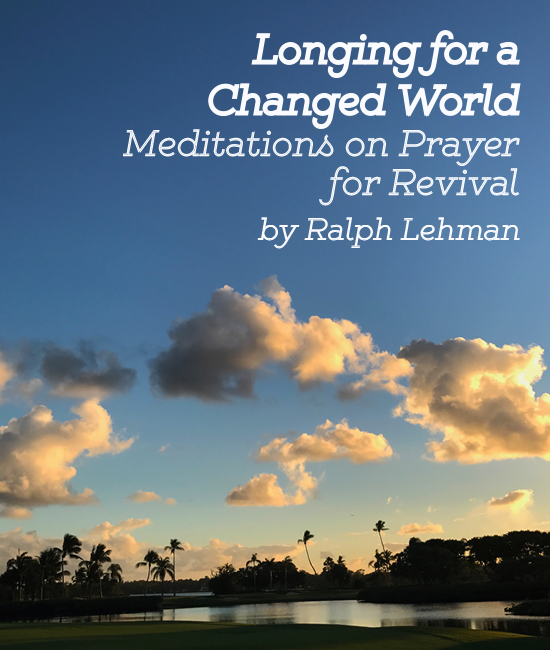
13 Introspective Questions From “Longing For A Changed World”

As Ralph Lehman made his case for Christian to (re)establish a prayer focus for revival in his book Longing For A Changed World, he asked several penetrating questions. Here are a few of them for you to consider.

“[Josiah’s revival] was one revival that began with the leaders of government. Are we praying for our leaders?”

“Our government has entered many areas that were once considered to be the Church’s sphere of ministry. How can we lead our churches back into these areas?”

“Have you considered that you are grieving the Spirit when you deprive Him of conversing with God by choosing not to pray?”

“As men of prayer, should we not strive to be like the great prayer warriors of the Bible?”

“Tertullian, a church father who lived in the Roman Empire around 200 A.D., stated that the Roman emperor and his armies benefited greatly from the prayers of the Christians who interceded on their behalf. Can we present the same argument to our political leaders today?”

“What would we be willing to leave or to set aside for the sake of more time in prayer, seeking the Kingdom and righteousness of God?”

“Do we seek the Lord of revival, or merely desire His blessings?”

“If we do not enjoy God’s presence, through His Word and prayer, we are missing the true blessing God intends for us—the blessing of Himself. If we will not seek the presence of God day by day, how can we expect Him to go with us in our daily lives?”

“If God was willing to take the Israelites into the Promised Land without His presence [Exodus 33:3-4], what does this say to the proponents of the ‘health and wealth’ gospel?”

“Even though we have been blessed immeasurably by living here in the United States, do our hearts long for God’s rule to be acknowledged in our land? Do we yearn to abide in His presence? Or are we idle in our contentment with the milk and honey?”

“Sometimes, our areas of giftedness become spheres where we fail to ask God for strength. Have you considered your strengths may be the very areas that satan exploits?”

“Are we praying for revival, are we also praying that we would conduct ourselves in such a way that the world would take notice, even if this meant for us to suffer?”

“Is the God of today’s church big enough to surprise us?”

You can check out some other quotes from Longing For A Changed World by clicking here, and my full book review is available here.

The Most Christ-like Person In The World

“The most Christ-like person in the world is the man who never finds his fellow-man a nuisance. It is easy to feel Christian in the moment of prayer and meditation; it is easy to feel close to God when the world is shut out. But that is not religion—that is escapism. Real religion is to rise from our knees before God to meet men and the problems of the human situation. Real religion is to draw strength from God in order to give it to others. Real religion involves both meeting God in the secret place and men in the market place. Real religion means taking our own needs to God, not that we may have peace and quiet and undisturbed comfort, but that we may be enabled graciously, effectively and powerfully to meet the needs of others.” —William Barclay

Longing For A Changed World (book review)

I grew up with this axiom ringing in my ears: “The Church moves forward on its knees.” Lately, however, it seems that the Church is attempting to move forward in every way she can think of, and only turning to prayer as a last resort. Ralph Lehman has given the Church a clarion call to return to its only reliable posture for success: Constant, unwavering prayer. Longing For A Changed World will challenge you to return to this dependable supply of prayer once again.

This book is written as a series of short challenges for us to (re)consider how indispensable prayer is for both the individual Christian and the collective Church. Ralph recalls both biblical and historical revivals in which prayer played the vital role of bringing people back to their knees in humble prayer to God for His help.

The subtitle of this book is Meditations on prayer for revival. At the close of each chapter, Ralph has included questions on which you can reflect. I found these introspective questions to be quite confronting as I compared my prayer life to those revival-starting prayers of the past.

Ralph mentions that women have an almost innate desire and propensity to turn to God in prayer, while men typically try to “fix” things themselves before asking for prayer. So Longing For A Changed World is really targeted at the men in our churches, although anyone who desires to see the Church revived will benefit greatly from reading this book.

Please don’t put off prayer any longer! This book will help rekindle your passion for prayer!

I am a Waxed Tablet Publications book reviewer.

Attend To The Questions

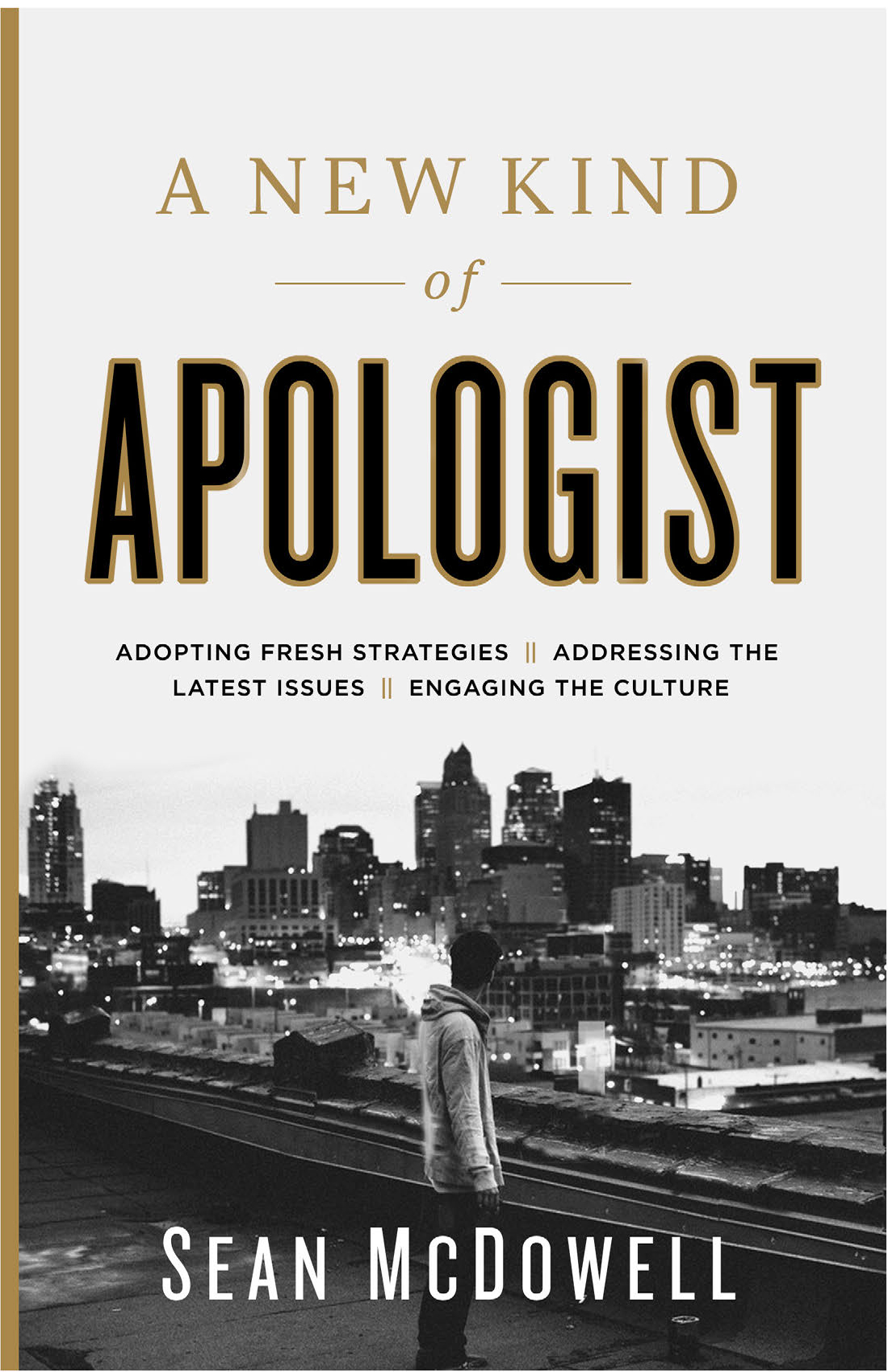
“For people burdened to say and defend the goodness and truthfulness of Christianity, it is tempting to hurriedly skip past the questions in our rush to demonstrate our answers. Such an impulse makes sense. Christianity, after all, has the most profound answers to offer the world’s most difficult questions. But if the work of apologetics involves more than building up the faithful, its primary orientation should be toward helping those who are already traveling to arrive. It is persuasion that apologetics hopes for, not only defenses or justifications of the Christian position as true or reasonable. We should point the way home rather than shout from the balcony of our bedrooms about how good looking it is. We have to care about the means of travel, not just the intellectual destination. We have to attend to the questions if we are going to help people find answers.” —Matthew Anderson, in A New Kind Of Apologist

For other quotes from this book, please click here.

Thursdays With Oswald—Second Mile Christianity

This is a weekly series with things I’m reading and pondering from Oswald Chambers. You can read the original seed thought here, or type “Thursdays With Oswald” in the search box to read more entries.

Second Mile Christianity

     To go the second mile means always do your duty, and a great deal more than your duty, in a spirit of loving devotion that does not even know you have done it. … The supreme difficulty is to go the second mile with God, because no one understands why you are being such a fool. The summing up of Our Lord’s teaching is that it is impossible to carry it out unless He has done a supernatural work in us. … 

     The interests of the Son of God and of the disciple are to be identical. How long it takes to manifest that identity depends on the private history of the disciple and his Lord. … 

     We do not need the grace of God to stand crises; human nature and pride will do it. We can buck up and face the music of a crisis magnificently, but it does require the supernatural grace of God to live twenty-four hours of the day as a saint, to go through drudgery as a saint, to go through poverty as a saint, to go through an ordinary, unobtrusive, ignored existence as a saint, unnoted and unnoticeable. The “show business,” which is so incorporated into our view of Christian work today, has caused us to drift far from Our Lord’s conception of discipleship. It is instilled in us to think that we have to do exceptional things for God; we have not. We have to be exceptional in ordinary things, to be holy in mean streets, among mean people, surrounded by sordid sinners. That is not learned in five minutes. 

From So Send I You

Jesus calls His disciples to go the second mile. Others won’t understand us, and few (if any) people will applaud us for doing so.

Like a novice runner, maybe we can’t go the whole second mile the first time out. Maybe not even the second or third time. But can we go a bit further the second time than we did the first? And a bit further the third time than we did the second? That’s what discipleship is all about: Letting Jesus help us go a bit further each time.

If you stick with it, soon you will be going the second mile and not even realize it. Other may not realize it either, but God always sees when we do, and He is pleased!

C.S. Lewis Asks, Is There Such A Thing As “Christian Obstinacy”?

“There are times when we can do all that a fellow creature needs if only he will trust us. In getting a dog out of a trap, in extracting a thorn from a child’s finger, in teaching a boy to swim or rescuing one who can’t, in getting a frightened beginner over a nasty place on a mountain, the one fatal obstacle may be their distrust. We are asking them to trust us in the teeth of their senses, their imagination, and their intelligence. We ask them to believe that what is painful will relieve their pain and that what looks dangerous is their only safety. We ask them to accept apparent impossibilities: that moving the paw farther back into the trap is the way to get it out—that hurting the finger very much more will stop the finger hurting—that water which is obviously permeable will resist and support the body—that holding onto the only support within reach is not the way to avoid sinking—that to go higher and onto a more exposed ledge is the way not to fall. …

“But if we succeed, we do so because they have maintained their faith in us against apparently contrary evidence. …

“Now to accept the Christian propositions is ipso facto to believe that we are to God, always, as that dog or child or bather or mountain climber was to us, only very much more so. …

“There is, you see, no real parallel between Christian obstinacy in faith and the obstinacy of a bad scientist trying to preserve a hypothesis although the evidence has turned against it. Unbelievers very pardonably get the impression that an adherence to our faith is like that, because they meet Christianity, if at all, mainly in apologetic works. And there, of course, the existence and beneficence of God must appear as a speculative question like any other. Indeed, it is a speculative question as long as it is a question at all. But once it has been answered in the affirmative, you get quite a new situation. To believe that God—at least this God—exists is to believe that you as a person now stand in the presence of God as a Person. What would, a moment before, have been variations in opinion, now become variations in your personal attitude to a Person. You are no longer faced with an argument which demands your assent, but with a Person who demands your confidence.” —C.S. Lewis, in The World’s Last Night

Is Christ’s Gospel Full Of Abundant Life Or Not?

“Since a saint’s gloom reflects unkindness on God Himself, how can we recommend His satisfying love if it does not satisfy us? The world thinks the Christian life is depressing anyway, a dry meal where very little wine of joy is tasted. Why will you confirm their deception, Christian? Why should they have your example as evidence against Jesus and His Word, which promises peace and joy to everyone who comes to this table?

“God forbid that your behavior, which should hold forth ‘the word of life’ and demonstrate the reality of it in the eyes of the world, ever disagree or throw doubt on His Word (Philippians 2:16). …

“When unbelievers see Christians sad as they hold the cup of salvation in their hands, they suspect that the wine is not so good as preachers say it is. … Christian, do not give unbelievers reason to imagine, by seeing you limping through the race, that they must forfeit happiness if they become Christians and spend the rest of their lives in a house of mourning, with a team of losers.

“Is Christ’s Gospel full of abundant life or not?” —William Gurnall, in The Christian In Complete Armor (emphasis mine)

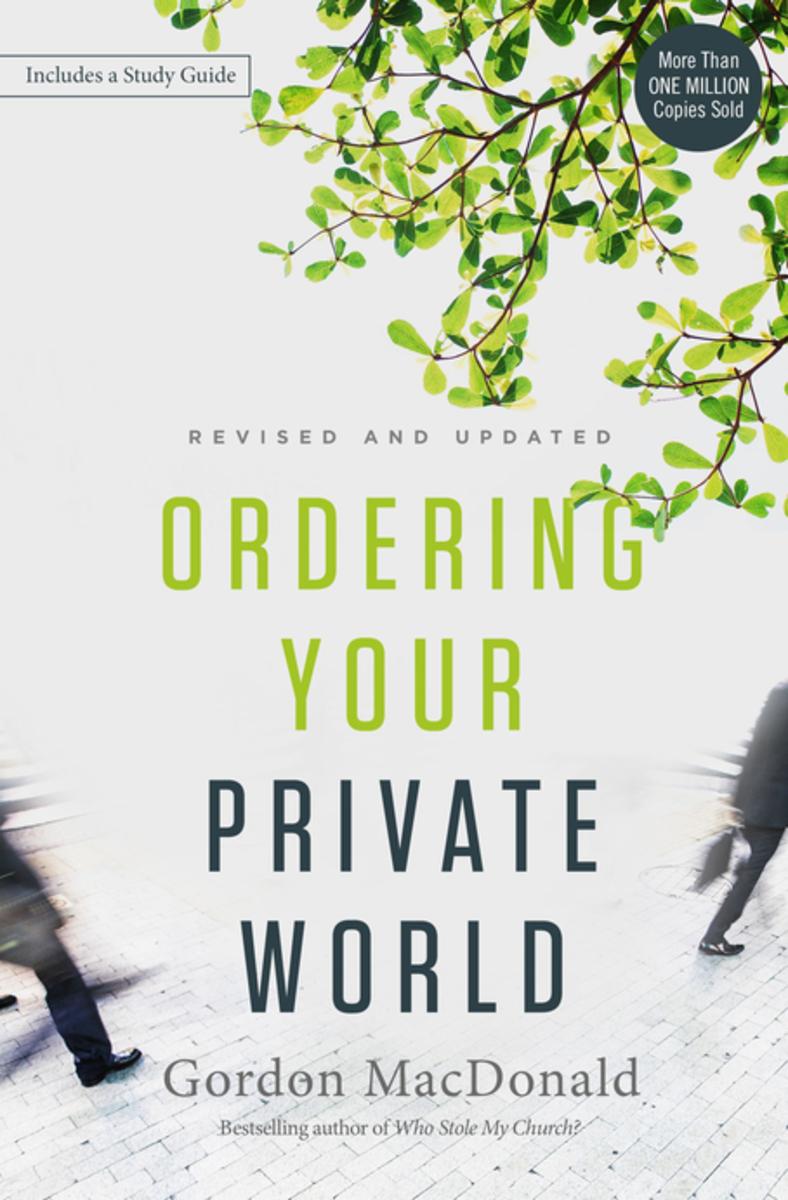
8 Quotes From Gordon MacDonald In “Ordering Your Private World”

In the quiet solitude of our inner lives is where real growth takes place. Or said another way: if we won’t make time to order our private world, our public world will be limited in its scope and effectiveness. Gordon MacDonald unpacks some fantastic principles to help us in his newly updated and expanded book Ordering Your Private World. Check out my full book review by clicking here, and then enjoy these quote from Gordon MacDonald.

“There is a busyness that reflects a plan of activity, a pattern of priorities, and a sense of purposefulness. It is a good and satisfying busyness through which one grows and increases competence. But there is also a busyness (a destructive busyness, actually) that reflects a chaotic way of life—a way of doing in which one is simply responding to the next thing in the day. The next thing! It makes no difference whether it has significance; it’s just the next thing, and one does it because it’s there to do.”

“A soul—our spiritual space—is empty when one tries to do soul-based things but makes little or no effort to keep that soul filled.”

“Driven people boast of their drivenness. They have forgotten how to play. Spiritual activity seems a waste of time. They are usually too busy for the pursuit of ordinary relationships in marriage, family, or friendship, or even to carry on a relationship with themselves—not to speak of one with God. Because driven people rarely think they have accomplished enough, they seize every available minute to attend more meetings, to study more material, to initiate more projects. They operate on the precept that a reputation for busyness is a sign of success and personal importance. Thus, they attempt to impress people with the fullness of their schedules.”

“Our careers, our assets, our natural and spiritual gifts, our health—are these things owned, or merely managed in the name of the One who gave them? Driven people consider them owned; called people do not. When driven people lose those things, it is a major crisis. When called people lose them, nothing of substance changes. The private world remains the same, perhaps even stronger.”

“It is worth taking time to ask how Our Lord’s command of time is demonstrated. … The first thing that impresses me is that Jesus clearly understood His mission. … A second insight into Jesus’ personal organization of time is that He understood His own limits. … Jesus included a third important element in His strategy of time budgeting, for He set time aside for the training of the Twelve.”

“Unmanaged time flows toward my weaknesses. Unmanaged time comes under the influence of dominant people in my world. Unmanaged time surrenders to the demands of all emergencies. Unmanaged time gets invested in things that gain public acclamation.”

“The unthinking Christ-follower does not realize it, but he is dangerously absorbed into the culture about him. Because his mind is untrained and unfilled, it lacks the ability to produce the hard questions with which the world needs to be challenged. The private world of a Christ-follower will be weak, defenseless, and disorganized if serious attention has not been given to this sector of intellectual growth.”

“We do not develop our intellects merely for our own personal advancement, but we put our thinking power to work for the use of others. … As my mind grows, it may make possible the growth of others.”

13 More Quotes From “How Great Is Our God”

Scholars, tradesmen, politicians, theologians, pastors, and martyrs—all have spoken or written about the greatness of God over the past two millennia. In How Great Is Our God we are treated to a sampling of these writings. Check out my full book review by clicking here, and then enjoy this second set of quotes.

“Some of us, no doubt, have to live outwardly solitary lives. We all live alone after fellowship and communion. We die alone, and in the depths of our souls we all live alone. So let us be thankful that the Master knows the bitterness of solitude, and has Himself walked that path. Jesus Christ’s union with the Father was deep, close, constant; altogether transcending any experience of ours. But still He sets before us the path of comfort for every lonely heart: ‘I am not alone, for the Father is with Me.’ If earth be dark, let us look to Heaven. If the world holds no friend, let us turn to Him who never leaves us. If dear ones are torn from our grasp, let us grasp God.” —Alexander Maclaren

“The blessedness of individuals must not be determined by the value of their known wealth, but according to the voice of their conscience within them.” —Ambrose

“If God gave you not only earth but heaven, that you should rule over sun, moon, and stars, and have the rule over the highest of the sons of men, it would not be enough to satisfy you, unless you had God Himself.” —Jeremiah Burroughs

“Father in Heaven! What is a man without You! What is all that he knows, vast accumulation though it may be, but a chipped fragment if he does not know You!” —Soren Kierkegaard

“Great are You, O Lord, and greatly to be praised; great is Your power, and Your wisdom is infinite. You awaken us to delight in Your praise; for You made us for Yourself, and our heart is restless, until it rests in You. They that seek the Lord shall praise Him: for they that seek shall find Him, and they that find shall praise Him. I will seek You, Lord, by calling on You; and will call on You, believing in You; for to us You have been preached.” —Augustine

“In the Old Testament, there are twenty times as many references to the second coming of Christ, as to His first coming. … The Cross must ever precede the Crown. He came with the Cross, fulfilling Isaiah 53; and now He is coming with the Crown, the Messiah and King.” —Aimee Semple McPherson

“The Word is the one Shepherd of things rational which may have an appearance of discord to those who have not ears to hear, but are truly at perfect concord. … For all the Scripture is the one perfect and harmonized instrument of God, which from different sounds gives forth one saving voice to those willing to learn, which stops and restrains every working of an evil spirit.” —Origen

“So desperate is the need that we have no time to engage in vain babblings. While we are discussing the exact location of the church of Galatia, men are perishing under the curse of the law; while we are setting the date of Jesus’ birth, the world is doing without its Christmas message.” —J. Gresham Machen

“If the Christian plan is true, then all others are false. If others are true, then there was no need of the sacrifice on the Cross.” —Albert Barnes

“I want through the day to walk with God; God has taken charge of me, He is going with me Himself; I am going to do His will all day in His strength; I am ready for all that may come.” —Andrew Murray

“When the time for the Advent of the Antichrist approaches, people’s minds will grow cloudy from carnal passions, and dishonor and lawlessness will grow stronger. Then the world will become unrecognizable. People’s appearances will change, and it will be impossible to distinguish men from women due to their shamelessness in dress and style of hair. 

There will be no respect for parents and elders, love will disappear, and Christian pastors, bishops, and priests will become vain men. At that time the morals and traditions of Christians and the Church will change. People will abandon modesty, and dissipation will reign. Falsehood and greed will attain great proportions; and lust, adultery, homosexuality, secret deeds, and murder will rule in society. 

At that future time, the churches of God will be deprived of God-fearing and pious pastors, and woe to the Christians remaining at that time; they will completely lose their faith because they will lack the opportunity of seeing the light of knowledge from anyone at all.” —Nilus the Elder (d. 430 AD) 

“It is the Bible itself that drives us out beyond ourselves and invites us, without regard to our worthiness or unworthiness, to reach for the last highest answer. … We need only dare to follow this drive, this spirit, this river, to grow out beyond ourselves toward the highest answer. This daring is faith; and we read the Bible rightly when we read it in faith. The Bible unfolds to us as we are met, guided, drawn on, and made to grow by the grace of God.” —Karl Barth

“Who is regulating affairs on this earth today—God or the devil? That God reigns supreme in Heaven, is generally conceded; that He does so over this world, is almost universally denied—if not directly, then indirectly. More and more are men relegating God to the background. … Therefore we need not be surprised that men exclude Him from the realm of human affairs. … In light of this [Isaiah 55:8-9], it is only to be expected that much of the Bible conflicts with the sentiments of the carnal mind, which is at enmity against God.” —Arthur Pink

You can check out the first set of quotes I shared from How Great Is Our God by clicking here. Stay tuned: more quotes coming soon!