If (book review)

Amy Carmichael was a committed follower of Jesus Christ! She served as a missionary in India, where she operated an orphanage, for 55 years. During all that time, she never took a furlough, but remained at her post, faithfully loving Indian children with God’s love. She wrote a number of books, but perhaps the most hard-hitting is a little book simply called If.

This isn’t a book for everyone. In fact, Amy herself wrote, “It is clear, I think, that such a booklet as this is not meant for everyone, but only for those who are called to be undershepherds.” By ‘undershepherds,’ Amy is referring to those who feel God has called them into full-time vocational ministry.

(A little side-note. I feel the Bible is clear that all followers of Christ are to be involved in ministry [see Ephesians 4:11-16], but God has appointed some to positions where their ministry is also their vocation. These ‘undershepherds’ [see 1 Peter 5:2-3] will have to give account to God for the handling of their vocational ministry [Hebrews 13:17]. It is to these folks that Amy writes.)

Amy set the bar high for herself. She expected to be continually growing in her level of commitment to Christ, and she expected that her outward life would continually show greater devotion to her Savior. If comes out of Amy’s personal introspection in the Holy Spirit’s presence on how she was progressing in her faith-walk with God.

If is written as a series of challenges that all follow the same format: “If I don’t measure up to God’s standard in this area … then I know nothing of Calvary love.” I realize this sounds challenging. In fact, this book smacked me right between the eyes! This is why If is only for a small segment of people.
How To Respond To Bad Pastors

God has ordained that His leaders oversee and administer His ministry. But problems arise in the church when humans change the “His” to “my.”

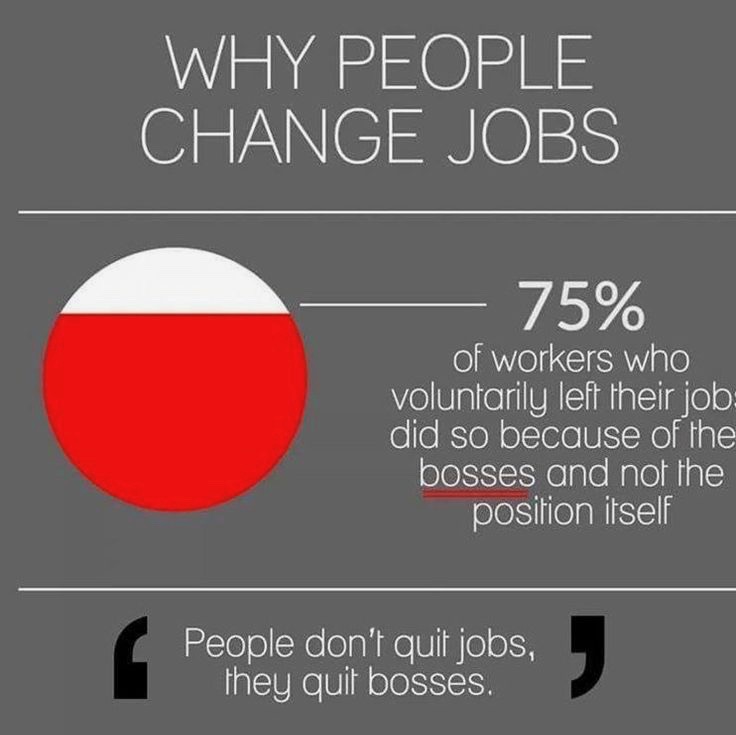
I read a statistic that 75% of people who voluntarily left their jobs did so because of a problem with their boss. In other words, 3-out-of-4 people didn’t quit their job, they quit their boss. In my personal experience this is equally as true in the church world—Most people don’t quit their church, they quit a bad pastor.

Sadly, those who do quit their church usually do so the wrong way. As a result they become either de-churched (they don’t attend anywhere), or cynical in the next church they do attend.

Who is a bad pastor?

  • One who is no longer effective because he is stuck in an old way of doing things
  • One who is theologically off
  • One who is unwilling to admit an error, ask forgiveness, and make amends
  • One who uses his position to build his kingdom instead of God’s kingdom

We have a great example of how to handle a bad spiritual leader in the story of David and Saul (see 1 Samuel 24). David had done nothing wrong, yet Saul was trying to kill him. At one point David’s men urged David to take matters into his own hands, and he almost did. He got close enough to Saul to cut off a corner of his robe, but quickly discovered that was too close. Immediately after doing so David was conscience-stricken!

Then look how David responded:

  • David rebuked his men as he reminded them that Saul was their “master” and “the Lord’s anointed.”
  • David “bowed down and prostrated himself” before Saul as he apologized.
  • David called him his “master,” “father,” and “the Lord’s anointed.”
  • David said he would leave the matter in God’s hands, allowing God to “judge between you and me.”
  • And twice David declared, “My hand will not touch you!”

This humble reply got Saul’s attention. Saul wept as he said, “You have treated me well, but I have treated you badly.” Saul then asked David to be kind to his descendants.

Then this conclusion—David gave Saul his oath, and then went away to a safe place.

The New Testament captures these same ideas for today’s Christians. We are told not to lightly entertain an accusation against spiritual leaders (1 Timothy 5:19), but to submit and obey to biblically-correct leaders (Hebrews 13:17).

The Bible gives us only two options for dealing with spiritual leaders…

SUBMIT & OBEY or WALK AWAY

Two wrongs don’t make a right. Responding in an unscriptural way to an unscriptural pastor’s way is just as wrong as what the pastor was doing wrong in the first place!

So give the bad pastor your oath that you will not lay a hand (or a word!) on them, and then remove yourself to a safe place. Submit and obey, or walk away and leave them in God’s capable hands.

If you’ve missed any messages in this series, you may find the complete list by clicking here.

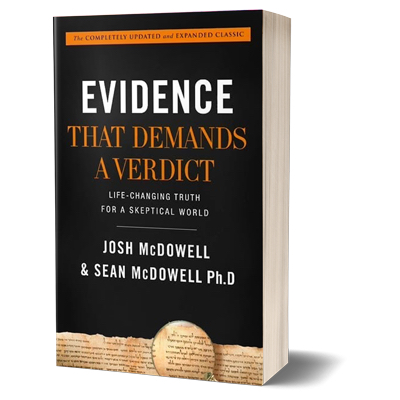
Evidence That Demands A Verdict (book review)

The Apostle Peter wrote a letter to Christians in which he called them “aliens and strangers” because of their belief in a personal Creator and Lord. In this letter, he tells Christians to “always be prepared to give an answer” to those skeptics who want to know about their faith in God. In Evidence That Demands A Verdict, Josh and Sean McDowell have given Christians a key component to help them be prepared to give sound answers.

This book is massive (at just under 900 pages)! But it is an encyclopedia of evidence that will prepare Christians to respond to any argument that an atheist or skeptic may bring up. To be honest with you, the Table of Contents is usually one of the first places I study in books I’m reading, but I usually end up skimming through it pretty quickly. But in Evidence, I was pleasantly surprised at the layout. Not only will you find a listing of the chapters, but a brief description of the contents. At the opposite end of the book, the Subject Index is also quite extensive. I know these are not things usually bragged on in a book review, but for a book this size—and for the numerous times you undoubtedly will be returning to prepare to answer a skeptic—these two reference points are extremely handy!

The first edition of Evidence (written by just Josh) came out nearly 20 years ago. If anything, the evidence for the beliefs that Christians hold has been further validated through research, archeological discoveries, and the like. So it was time for this classic book to be updated. The additional apologetic insights from Sean in this edition is a very nice addition.

Whether you read Evidence when it was first released or not, every Christian that wants to answer Peter’s directive for preparedness needs to get this new edition.

I am Thomas Nelson book reviewer.

C.S. Lewis Asks, Is There Such A Thing As “Christian Obstinacy”?

“There are times when we can do all that a fellow creature needs if only he will trust us. In getting a dog out of a trap, in extracting a thorn from a child’s finger, in teaching a boy to swim or rescuing one who can’t, in getting a frightened beginner over a nasty place on a mountain, the one fatal obstacle may be their distrust. We are asking them to trust us in the teeth of their senses, their imagination, and their intelligence. We ask them to believe that what is painful will relieve their pain and that what looks dangerous is their only safety. We ask them to accept apparent impossibilities: that moving the paw farther back into the trap is the way to get it out—that hurting the finger very much more will stop the finger hurting—that water which is obviously permeable will resist and support the body—that holding onto the only support within reach is not the way to avoid sinking—that to go higher and onto a more exposed ledge is the way not to fall. …

“But if we succeed, we do so because they have maintained their faith in us against apparently contrary evidence. …

“Now to accept the Christian propositions is ipso facto to believe that we are to God, always, as that dog or child or bather or mountain climber was to us, only very much more so. …

“There is, you see, no real parallel between Christian obstinacy in faith and the obstinacy of a bad scientist trying to preserve a hypothesis although the evidence has turned against it. Unbelievers very pardonably get the impression that an adherence to our faith is like that, because they meet Christianity, if at all, mainly in apologetic works. And there, of course, the existence and beneficence of God must appear as a speculative question like any other. Indeed, it is a speculative question as long as it is a question at all. But once it has been answered in the affirmative, you get quite a new situation. To believe that God—at least this God—exists is to believe that you as a person now stand in the presence of God as a Person. What would, a moment before, have been variations in opinion, now become variations in your personal attitude to a Person. You are no longer faced with an argument which demands your assent, but with a Person who demands your confidence.” —C.S. Lewis, in The World’s Last Night

Thursdays With Oswald—The One God Uses

Oswald ChambersThis is a weekly series with things I’m reading and pondering from Oswald Chambers. You can read the original seed thought here, or type “Thursdays With Oswald” in the search box to read more entries.

The One God Uses

     Missionary enterprise, to be Christian, must be based on the passion of obedience, not on the pathos of pity. … In the New Testament the emphasis is not on the needs of men, but on the command of Christ, “Go ye.” … 

     Any sense that the cause of Christ will be benefited if I give myself to it, or any trace of listening to the suggestion of others that I should be of value in my Lord’s service, receives no encouragement from Jesus. … 

     What is the test we put first for work at home or abroad? Sentimentally, we put the call of God first, but actually we are inclined to fix on the abilities of certain people. Our Lord pays not the remotest attention to natural abilities or natural virtues; He heeds only one thing—Does that man discern Who I am? does he know the meaning of My Cross? The men and women Jesus Christ is going to use in His enterprises are those in whom He has done everything. … 

     The one who says “Yes, Lord, but…” is always the one who is fiercely ready, but never goes. … 

     Beware of the inclination to dictate to God as to what you will allow to happen if you obey Him.

From So Send I You

God uses specific people for His service. They are ones who are:

  • Obedient to His call to “Go”
  • Humble
  • Changed from the inside out by Christ’s Atonement
  • Quick to follow
  • Not dictating to God the “where” or “when” or even the outcome of their obedience

Are you one whom God can use?

The Christian’s Secret Weapon

Over the past couple of weeks, people have been rattled by both real and imagined catastrophic events. We experienced a fabulous astronomical sight in a full solar eclipse, wept for our fellow citizens in Texas and Florida as hurricanes battered their businesses and homes, and then dealt with doomsayers who predicted the end of the world and the second coming of Jesus Christ.

Peter spent a lot of time right next to Jesus, soaking up His teaching and observing how Jesus lived. One thing Peter never saw in Jesus was panic.

So it’s not unexpected that Peter would write to followers of Jesus: Don’t fear what the world fears (1 Peter 3:14). Instead, Peter counsels his friends to keep their focus on Jesus.

Don’t run around in fear, but instead in your hearts set apart Christ as Lord. Some other translations say things like…

    • …revere Christ as Lord
    • …acknowledge Him as Lord
    • …worship Christ as Lord of your life
    • …keep your hearts at attention, in adoration before Christ (see 1 Peter 3:15)

In other words: let Jesus Christ be your focal point.

When you live this way—focused on the eternal Jesus and not the temporary shakings on earth—Earthlings are bound to notice that there is something different about you. So Peter tells us to always be prepared to give an answer to everyone who asks you the reason for the hope that you have.

Hope—not wishful thinking, but a rock-solid, joyful, confident expectation!

This hope is the Christian’s secret weapon!

This hope is unshakable during difficult times. This hope is unshakable on death’s doorstep. This hope is unshakable when the end of the world is predicted.

The Christian who has a personal experience of the hope that Jesus brings is never at the mercy of the happenings in the world nor the arguments from non-Christians.

But Peter cautions us to never use this hope as a club. He tells us to make sure we never use hope as a means of feeling superior to others. Instead we are to speak to others about our hope gently, respectfully, and with a clear conscience.

So here’s my question to you, fellow Christian: Can those around you see your hope? When they’re fearful and running for cover, do they see you right alongside them, or do they see you standing firm in hope as you keep your eyes fixed on Jesus. Your hope is a powerful persuader for a personal relationship with Jesus Christ!

If you’ve missed any messages in this series, you may find the complete list by clicking here.

Thursdays With Oswald—How God Prepares Us For His Service

Oswald ChambersThis is a weekly series with things I’m reading and pondering from Oswald Chambers. You can read the original seed thought here, or type “Thursdays With Oswald” in the search box to read more entries.

How God Prepares Us For His Service 

     Preparation is not something suddenly accomplished, but a process steadily maintained. It is easy to imagine that we get to a settled state of experience where we are complete and ready; but in work for God it is always preparation and preparation. … 

     In writing to the Philippians Paul mentions two “perfections”: “not as though I…were already perfect” (3:12); “Let us therefore, as many be perfect…” (3:15). The first refers to the perfection of attainment; the second to the perfection of adjustment to God. … When we are sanctified, we are perfectly adjusted to God, but we have done nothing yet, we are simply perfectly fit to begin. … Think of Christ’s eyes fastening on us and pointing us out before God as He says—“Father, that is My work; that is the meaning of Gethsemane, that is the meaning of Calvary. I did all that man’s work in him, all that woman’s work in her; now You can use them.” … 

     When we are first put right with God, it is the great general principles that are at work, then God begins to make the conscience sensitive here and there. Don’t quench the Spirit. His checks are so tiny that common sense cannot detect them. … When He checks, never debate, but obey at once. … He does not come with a voice like thunder, with strong emphatic utterance—that may come ultimately; but at the beginning His voice is as gentle as a zephyr. At the same time it carries an imperative compulsion—we know the voice must be obeyed. The “go” of preparation is to let the Word of God scrutinize.

From So Send I You

When we invited Jesus into our lives to be our Lord and Savior, we are perfectly ready to be used in service for God.

Now begins the saint-ifying process. The Holy Spirit will gently, but insistently, point out what we need to address. The more sensitive we are to those “checks,” and the quicker we are to obey the Spirit’s prompting, the better prepared we are to answer God’s call to “go.”

Are you letting the Voice of God scrutinize you, so that you can be prepared to be used in service for Him?

Thursdays With Oswald—Ready For God … No Matter What

Oswald ChambersThis is a weekly series with things I’m reading and pondering from Oswald Chambers. You can read the original seed thought here, or type “Thursdays With Oswald” in the search box to read more entries.

Ready For God—No Matter What

     The greatest need of the missionary is to be ready to face Jesus Christ at any and every turn…. The great battle all along is not so much against sin, as against being so absorbed in work that we are not ready to face Jesus Christ. … This attitude of being ready to face Him means more and more disentanglement from so-called religious work, and more and more intense spiritual reality in so-called secular work. The whole meaning of the Christian life from Our Lord’s standpoint is to be ready for Him. … 

     Jesus appears in the most illogical connections, where we least expect Him…. When we are rightly related to God, life is full of spontaneous joyful uncertainty and expectancy—we do not know what God is going to do next; and He packs our life with surprises all the time. …  

     Readiness implies a right relationship to God and a knowledge of where we are at present. We are so busy telling God where we should like to go. Most of us are waiting for some great opportunity, something that is sensational, then we cry—“Here am I; send me.” … But readiness for God and for His work means that we are ready to do the tiniest thing or the great big thing, it makes no difference. … 

     Remember there is no such thing as prominent service and obscure service; it is all the same with God. 

From So Send I You (emphasis mine)

I fear that many Christians have the idea that “missionary work” or “ministry work” is a separate calling from their “real work.” But according to both the biblical examples and these thoughts from Oswald Chambers, ALL work can be spiritual / missionary / ministry work if we are simply ready for God to use us.

What about you? Are you ready to be surprised by God? Are you ready to be His ministry whenever and wherever He wants to use you?

How “Alien” Is Your Christianity?

Peter pulls no punches as he calls Christians for what they are (or perhaps what they really should be): aliens … strangers … peculiar people.

But how can that be, especially in the United States of America? Survey after survey says that upwards of 95% of Americans claim to believe in God, and fully 8-out-of-10 of every American call themselves a Christian.

You only need to take a look at our schools, our government, or our entertainment to see how “alien” biblical values are with current cultural trends. I think all of us have experienced that when we try to live by a biblical standard, people roll their eyes at us (at best) or maybe outright mock us. Perhaps the term “aliens” is not so much for what we say we believe, but how we live what we believe.

That’s why Peter calls us peculiar (1 Peter 2:9). This word means a people so focused on what God wants, that they don’t have time to worry about what the world wants. Peculiar people are so focused on “Your kingdom come and Your will be done” that they don’t pay attention to “keeping up with the times.”

Peter says that the inevitable outcomes of this peculiar lifestyle are accusations of wrong doing, unjust treatment, insults, and slander, just to name a few (see 1 Peter 2:12, 19, 21-23; 3:16).

When we are treated this way, Peter tells Christians about their alien response:

  • Love one another deeply
  • Live good lives doing good deeds
  • Do not retaliate with insults or threats
  • Live in such a hope-filled way that others can’t help to ask you about it (see 1:22; 2:12, 23; 3:15)

So… how “alien” is your Christianity? Are you doing so many good things that it catches the attention of others? Are you responding to mistreatment in a Christ-honoring manner? Do you speak with others gently and respectfully? Is your life so full of hope in your eternal home in Heaven that people can’t help but ask you for the reason for the hope you have?

Don’t worry about being popular; be peculiar. Be so alien to this world’s values that you compel others to encounter Jesus Christ as you have! 

If you’ve missed any messages in this series, you may find the complete list by clicking here.

10 Steps To Help Someone Through A Tragedy

Christians should be the best at loving others and supporting them through a tragedy. When someone’s world is rocked by an unexpected heartache like a miscarriage, a suicide, a difficult medical diagnosis, or even a hurricane, here is my list of 10 steps to help someone through this trying time. You may watch this short video, or see the list of 10 items below…

  1. Just be there for them.
  2. Listen.
  3. Listen.
  4. Listen to them some more.
  5. Don’t try to “fix” their problem.
  6. Weep with those who weep.”
  7. Don’t defend God (like Job’s friends tried to do).
  8. Pray for the Holy Spirit to give you insight.
  9. Remind them of their responsibility now—your choices to go forward, how will you honor their memory, how can you help others in a similar situation, what does this make you think about your eternity?
  10. Stay in touch for the long haul. Remember the birthday of their dead loved one; be there for the anniversary date of a marriage, the day their loved one died; go to those doctor’s appointments with them; roll up your sleeves and work alongside them. Use your creativity to proactively be there for them.