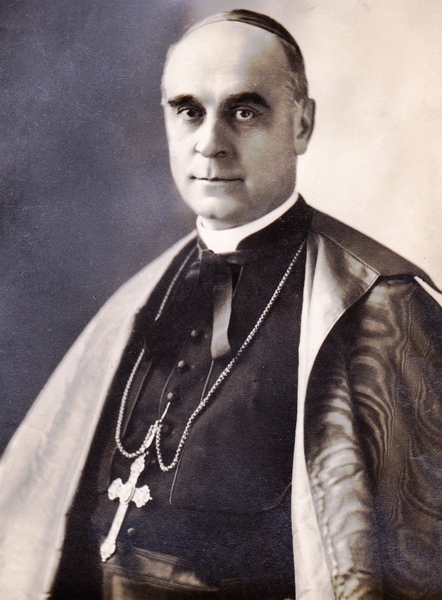
Poetry Saturday—A Private Litany Of Humility

From the desire of being praised, deliver me, Jesus.
From the desire of being honored, deliver me, Jesus.
From the desire of being preferred, deliver me, Jesus.
From the desire of being consulted, deliver me, Jesus.
From the desire of being approved, deliver me, Jesus.
From the desire of comfort and ease, deliver me, Jesus.
From the fear of being humiliated, deliver me, Jesus.
From the fear of being criticized, deliver me, Jesus.
From the fear of being passed over, deliver me, Jesus.
From the fear of being forgotten, deliver me, Jesus.
From the fear of being lonely, deliver me, Jesus.
From the fear of being hurt, deliver me, Jesus.
From the fear of suffering, deliver me, Jesus.
That others may be loved more than I,
Jesus, grant me the grace to desire it.
That others may be chosen and I set aside,
Jesus, grant me the grace to desire it.
That others may be praised and I unnoticed,
Jesus, grant me the grace to desire it.
O Jesus, meek and humble of heart, make my heart like Yours.
O Jesus, meek and humble of heart, strengthen me with Your Spirit.
O Jesus, meek and humble of heart, teach me Your ways.
O Jesus, meek and humble of heart,
help me put my self-importance aside
to learn the kind of cooperation with others
that makes possible the presence of your Abba’s household. Amen. —Rafael Cardinal Merry Del Val
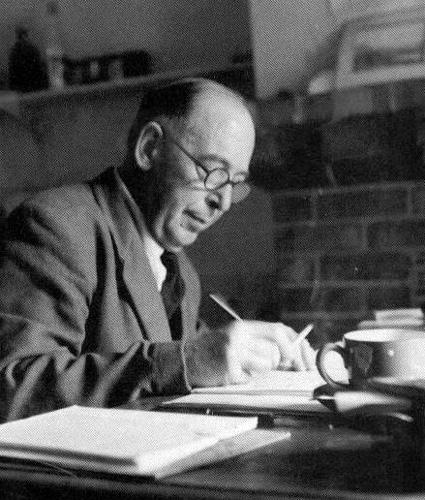

An Ordinary Simple Christian

“An ordinary simple Christian kneels down to say his prayers. He is trying to get into touch with God. But if he is a Christian he knows that what is prompting him to pray is also God: God, so to speak, inside him. But he also knows that all his real knowledge of God comes through Christ, the Man who was God—that Christ is standing beside him, helping him to pray, praying for him. You see what is happening. God is the thing to which he is praying—the goal he is trying to reach. God is also the thing inside him which is pushing him on—the motive power. God is also the road or bridge along which he is being pushed to that goal. So that the whole threefold life of the three-personal Being is actually going on in that ordinary little bedroom where an ordinary man is saying his prayers. The man is being caught up into the higher kinds of life—what I called Zoe or spiritual life: he is being pulled into God, by God, while still remaining himself.” —C.S. Lewis

Thursdays With Oswald—The Power Is In The Solitude

Oswald ChambersThis is a weekly series with things I’m reading and pondering from Oswald Chambers. You can read the original seed thought here, or type “Thursdays With Oswald” in the search box to read more entries.

The Power Is In The Solitude

     If we want to know the universal sovereignty of Christ, we must get into solitude with Him. It is not sufficient for someone else to tell us about Him; we must perceive with our own eyes Who He is, we must know Him for ourselves. … 

     We must get to the place of real solitude with Christ. He is our mountain-height and our sea-calm; He is the recreating power; He is the universal Sovereign. He tells us to consider the lilies; we say—“No, we must consider life.” We mistake the mechanism of life for life itself, and that idea has become incorporated into Christian work. In the active work we do for God we do not really believe that Jesus Christ is sovereign Lord; if we did, we should fuss less and build more faith in Him. We cannot do the Savior’s work by fuss, but only by knowing Him as the supreme sovereign Lord. … 

     Our Lord’s word “go” simply means “live,” and Acts 1:8 describes the “going.” Jesus did not say to the disciples—“Go into Jerusalem, go into Judea, go into Samaria, go into the uttermost part of the earth”; but—“You shall be My witnesses” in all these places: He undertakes to establish the goings. So many people are obsessed with this idea—“What are you going to do?” I hope none of us are going to do anything: I hope we are going to be what He wants us to be. … 

     The key to the missionary is the absolute Sovereignty of the Lord Jesus Christ. We must get into real solitude with Him, feed our soul on His Word, and He will engineer our circumstances.

From So Send I You 

Jesus gave a command to all His followers—including all of us today—All authority in heaven and on earth has been given to Me. Therefore go (Matthew 28:18-19). Jesus is saying to us, “Preach and teach out of a living experience of Myself.” In this respect, we are all missionaries.

Oswald Chambers reminds us missionaries that the only way we will be effective in our goings is by spending adequate time in solitude and worship with Our Lord. If we don’t, then we are trying to do ministry on our own, trying to engineer our own circumstances. But the missionary who is spending time with Jesus finds that He directs all our goings and engineers all our circumstances.

The power to testify about Jesus comes from our time of solitude with Jesus.

Thursdays With Oswald—Prayer Is The Work

Oswald ChambersThis is a weekly series with things I’m reading and pondering from Oswald Chambers. You can read the original seed thought here, or type “Thursdays With Oswald” in the search box to read more entries.

Prayer Is The Work 

     The key to the missionary problem is in the hand of God, not of man, and according to Our Lord, the key is prayer, not work, as that word is popularly understood, because work may mean evading spiritual concentration. Our Lord says—“Pray therefore…” [Matthew 9:38]. … 

     We are apt to think of prayer as a common-sense exercise of our higher powers in order to prepare us for work; whereas in the teaching of Jesus, prayer is not to fit us for the “greater works,” prayer is the work. Prayer is the outcome of our apprehension of the nature of God, the means whereby we assimilate more and more of His mind, and the means whereby He unveils His purposes to us. …  

     God is not impressed by our earnestness, He nowhere promises to answer prayer because of our agony in intercession, but only on the ground of Redemption. We have “boldness to enter into the holiest by the blood of Jesus,” and in no other way. … 

     The armor is for the battle of prayer [see Ephesians 6:11-20]. “Take up the whole armor of God … stand therefore …” and then pray. The armor is not to fight in, but to shield us while we pray. Prayer is the battle. … 

     We have to live depending on Jesus Christ’s wisdom, not on our own. He is the Master, and the problem is His, not ours. We have to use the key He gives us, the key of prayer. Our Lord puts the key into our hands, and we have to learn to pray under His direction. That is the simplicity which He says His Father will bless.

From So Send I You

In light of these thoughts from Oswald Chambers, how does this change your view of prayer?

Looking Ahead To The Second Advent

Celebrating Advent means both looking back at Christ’s First Advent in Bethlehem and looking ahead to His Second Advent at the end of time. Faith in the First Advent fuels hope in the Second Advent. Let’s take a look at the events leading up to and surrounding Christ’s Second Advent to help us appreciate what was begun at His First Advent.

Overarching all of the end times events is a Christian’s blessed hope: “The resurrection of those who have fallen asleep in Christ and their translation together with those who are alive and remain unto the coming of the Lord is the imminent and blessed hope of the church.”

The word “rapture” doesn’t appear in Scripture, but we get this word from the Latin word raptu, which comes from the Greek word harpazo. We first see it when Philip is “caught away” from the Ethiopian’s presence in the desert (Acts 8:39). This is the same word Paul uses when he says that Christians will be “caught up” to meet Christ in the air (see 1 Thessalonians 4:13-17).

Note that the rapture of the Church is not the Second Coming of Christ. His Second Coming takes place at the end of the period known as the Tribulation when Jesus returns to earth as a conquering King and establishes His Millennial Reign on earth (Revelation 19:11-16; 20:1-4).

During Christ’s Millennial Reign, the devil and his cohorts are locked up until the end of the 1000-year reign and are allowed to tempt people one final time. The devil will succeed in tempting quite a few people, as he will once again muster a sizable army to attack Christ and His followers. This decisive battle will culminate in the final judgment.

“There will be a final judgment in which the wicked dead will be raised and judged according to their works. Whosoever is not found written in the Book of Life, together with the devil and his angels, the beast and the false prophet, will be consigned to the everlasting punishment in the lake of fire” (Revelation 20:11-15).

After this will come the New Heavens and New Earth where Christians will commune with God for ever and ever (Revelation 21:1-5, 22-27; 22:1-5, 12-21).

In light of Christ’s First Advent in Bethlehem, and His soon return (His Second Advent), how are Christians to live? In a word: HOPEFUL!

In all of these passages discussing the end times, hope-filled words are used—

  • therefore encourage each other with these words
  • wait for the blessed hope—the glorious appearing of our great God and Savior 
  • stand firm … let nothing move you
  • Jesus says, I am coming soon! My reward is with Me

Jesus also pointed out that Heaven is a place “prepared for you since the creation of the world,” while Hell is “prepared for the devil and his angels.” GOD WANTS YOU WITH HIM IN HEAVEN!

As you rejoice in the First Advent, remember that Christ’s First Coming was to provide a way for you to have your sins forgiven and be able to spend eternity with Him. So as we look forward in hope to Christ’s Second Advent we say with the Apostle John, “Amen. Come, Lord Jesus!”

Thursdays With Oswald—The Destination Is Not The Goal

Oswald ChambersThis is a weekly series with things I’m reading and pondering from Oswald Chambers. You can read the original seed thought here, or type “Thursdays With Oswald” in the search box to read more entries.

The Destination Is Not The Goal

     In natural life we have ambitions and aims which alter as we develop; in the Christian life the goal is given at the beginning, viz., Our Lord Himself. “Till we all come in the unity of the faith, and of the knowledge of the Son of God, unto a perfect man, unto the measure of the stature of the fullness of Christ” [Ephesians 4:13]. We do not start with the idea of what the Christian life should be, we start with Christ, and we end with Christ. Our aims in natural life continually alter as we develop, but development in the Christian life is an increasing manifestation of Jesus Christ. …  

     “And He went on His way through cities and villages, teaching, and journeying on unto Jerusalem” (Luke 13:22). Our Lord was not fanatical. Had He been a fanatic, He would have said—“Because I am going up to Jerusalem there is no need to stay in this village or that; I have only one duty, and that is to go up to Jerusalem.” Our Lord took plenty of time to do His duty in the cities and villages that He went through on His way to Jerusalem. Nothing made Him hurry through the villages where He was persecuted, or linger in those where He was blessed. …  

     The aim of the missionary is not to win the heathen, not to be useful, but to do God’s will. He does win the heathen, and he is useful, but that is not the aim; his aim is to do the will of his Lord.

From So Send I You 

The Christian’s goal is not Heaven. The Christian’s goal is not winning a bunch of people to Christ. The Christian’s goal is not even being an effective Christian.

The Christian’s goal is to be like Jesus, making Him increasingly visible in my daily life.

God will do amazing things through us as we journey through this life, and Heaven is a wonderful reward for a Christian. But those things should never be our focal point. May our focal point always be this: I want to know Jesus more, and I want His life to be seen in me. I want His will to be done, and His glory to be seen.

Questions To Ask Myself

“When you are tempted to walk toward vanity, look at Christ’s holy walk and ask yourself…

  • Am I like Him in my thoughts and in the way I spend my time?
  • If He were physically living on earth right now, would He do what I am doing?
  • Would He not choose His words more carefully than I do?
  • Would silly speech come from His lips?
  • Would He enjoy my friends?
  • Would He spend a fortune pampering His body, and swallow enough food at one meal to feed hungry people for a week?
  • Would He be fashion-conscious, even if that made His appearance ridiculous and offensive?
  • Would His hands be busy with games that drive time away?
  • Should I do anything that would make me unlike Christ?”

—William Gurnall, in The Christian In Complete Armor

Transforming Grace (book review)

Not too long ago I read that the song “Amazing Grace” was the best-known song in the entire world. People who know Jesus as their Savior certainly can attest to how amazing grace is. But what about after someone becomes a Christian? What happens with grace then? Jerry Bridges dives into this topic with his eye-opening look at Transforming Grace.

In the opening lines of the preface, Bridges states, “The Bible teaches we are not only saved by grace, but we also live by grace every day of our lives.” This is a concept that many Christians miss, and as a result feel like they are living their lives on what Bridges calls “the performance treadmill.” In other words, far too many Christians mistakenly think that God’s grace saved them, but now it will be their own righteous works that will keep them saved.

In 13 chapters, Bridges dismantles the “performance” mindset and helps Christians see the freedom and joy that come from a proper understanding of how grace transforms and empowers our lives every day.

To help transfer Bridges’ lessons into everyday application, I also highly recommend getting a couple of friends together for this journey. Not only read Transforming Grace together, but then take some time to work through the discussion guides for each chapter. These guides will give you some Scriptures to ponder, and some discussion-starting questions to talk about with your friends. This time will help you go from learner-to-liver with the concepts of transforming grace.

I am a NavPress book reviewer.

10 More Quotes From “The Christian In Complete Armour”

William Gurnall penned wise words for Christian warriors nearly 400 years ago, but their timelessness is still evident today. Check out a few more quotes from The Christian In Complete Armour. 

“When we consider satan’s many years of experience in studying natural knowledge, we will not accept his predictions as prophecies but see him as a learned naturalist with a short and dark text of natural causes. … Neither satan nor any other creature is able to foretell events which do not arise from natural causes nor follow moral and political probabilities. Prophecies in Scripture are locked up in the cabinet of the divine will to prove their heavenly extraction. They must come from God, Who can tell us what only He knows.”

“Look closely at the label to see whether the armor you wear is the workmanship of God or not. There are many imitations on the market nowadays. It is satan’s game, if he cannot keep the sinner satisfied in his naked, lustful state, to coax him into some flimsy thing or other that by itself will neither do him good nor satan harm. Perhaps it is church attendance, or good works, or some self-imposed penance by which he intends to impress both God and man. … Thus thousands perish who supposed they were armed against satan, death, and judgment—when all along they were miserable and naked. … God’s armor can never be made to fit over the suit [a self-satisfied man] has fashion for himself.”

“Knowledge is to faith as sunshine is to the farmer. Without it, faith cannot see to do her work. Nor can the work, once finished, be adequately inspected in the dim light of half-truths. If you do not ground yourself in the truth of the Gospel, satan will play upon your ignorance to thwart your spiritual growth.”

“You give satan a dangerous advantage if you see his wrath and fury bent in general against the saints, and not against you specifically: satan hates me; satan accuses me; satan temps me. Conversely, you lose much comfort when you fail to see the promises and providences of God as available for your own specific needs: God loves me; God takes care of me.”

“Until the love of a sin is quenched in the heart, the fire will never die out. How is this accomplished? Jerome says one love extinguishes another—that is, the love of Christ must quench the love of sin.”

“If you are a Christian, what is there to fear? You have no life to lose if you have already given yourself to Christ. And while God has not promised immunity from suffering, He has undertaken to bear your losses and pay you a hundredfold, though your reward may not come until another world.”

“A thief has no legal right to the wallet he takes from his victim simply because he puts it in his pocket and claims it is his own. Nor is the wrong thus committed ever made right by the passing of time. Years may go by before he is discovered; he will be as guilty on the day of his arrest as on the day he perpetrated the crime. Now a thief on the throne is no different from one in the alley. satan has indeed kept his stolen title a long time, but he is no less a criminal than on the day he first took Adam’s heart from God.”

“I grieve to see the soul fallen so far beneath its divine origin! The body, which was intended to be its servant, has instead become its master, and rules with a merciless hand.”

“When you cause anyone to sin, you take the devil’s office out of his hands. Let him do it himself if he can, but never allow him to use you as his hireling. Tempting someone else to sin is worse than sinning yourself. Those who tempt others plant their own wickedness in fertile fields and raise up new seed to the devil.”

“One reason we are so easily persuaded to sin is because we do not understand satan’s purpose. … Shall I tell you? Do you think your pleasure or profit is his goal? Not likely! His aspirations are all for himself. He has a personal grudge against God, and he brings you, by sinning, to join his quarrel. What he fails to mention is that you jeopardize your very soul to defend his pride and lust. But he is hardly worried about your welfare. He loses no more sleep over your certain damnation than a demented general does over the men he sends on a suicide mission. Knowing this, why would you ever join satan in his fight against God?”

You can read my full review of William Gurnall’s book by clicking here. I have shared other quotes from The Christian In Complete Armour here, here, and here.

Live Dead Journey (book review)

Live Dead is a call to missionaries to leave the comfortable and the familiar behind to take the message of Jesus where it hasn’t been taken before. In Live Dead Journey you will see twelve different mission fields in the Arabic world through the eyes of Live Dead personnel who are living and serving in those cities.

In each of twelve stops, you will have a fantastic tour of a key city in the Arabic world. Then you will hear from each of these missionaries how they are empowered to minister in such challenging fields. Each of them credits abiding time with Jesus, but they will share with you how this is personalized to each of them, in fitting with their own personality and temperament.

Live Dead is not to be undertaken lightly, but it’s an all-in commitment. “If we are to finish the task, there will be a cost. It will take blood and boldness, sweat and suffering, tears and tenacity. Some will be imprisoned, some will die, some will spend a lifetime of labor with little credit and little reward. All will have to live dead.” But the eternal rewards are so worth it!

Although this book is featuring the Arabic world, any Christian who desires to make an impact in his or her community will find ample encouragement in the words of these front-lines missionaries. As an added benefit, you will also know how to pray for and support these Live Dead missionaries.

I am a Live Dead Publishing book reviewer.