What Do We Do With Really Bad Leaders?

Listen to the podcast of this post by clicking on the player below, and you can also subscribe on AppleSpotify, or Audible. 

How are Christians supposed to respond to really, really bad guys, especially those in positions of leadership?  

Check out this episode of The Podcast. 

The Scriptures that I reference in this video are Acts 12:1-17; 1 Peter 2:17; Acts 4:24; 1 Timothy 2:1-2; Acts 26.

I have shared a couple of other posts about our interactions with leaders. Check out:

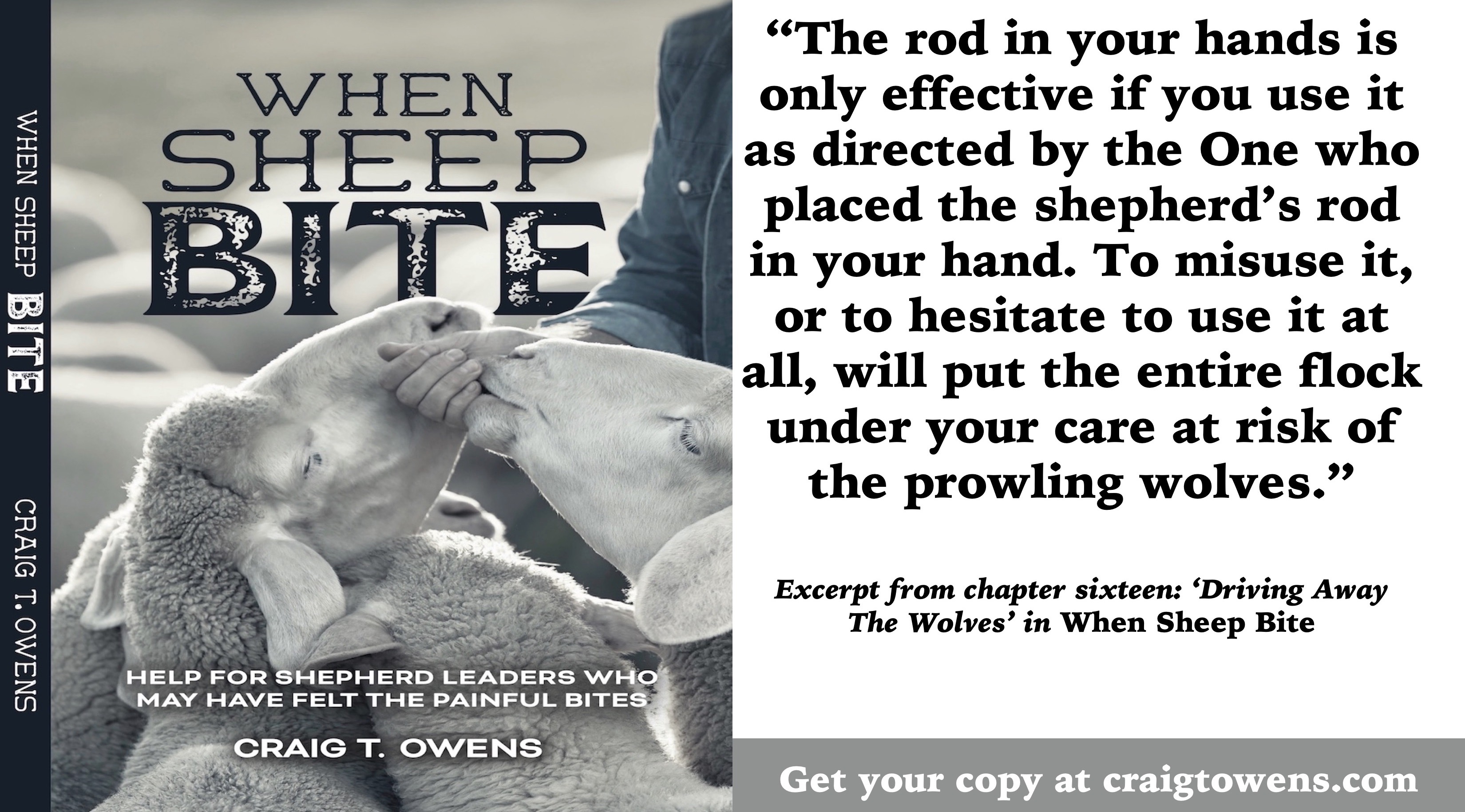
Get more information on When Sheep Bite here. 

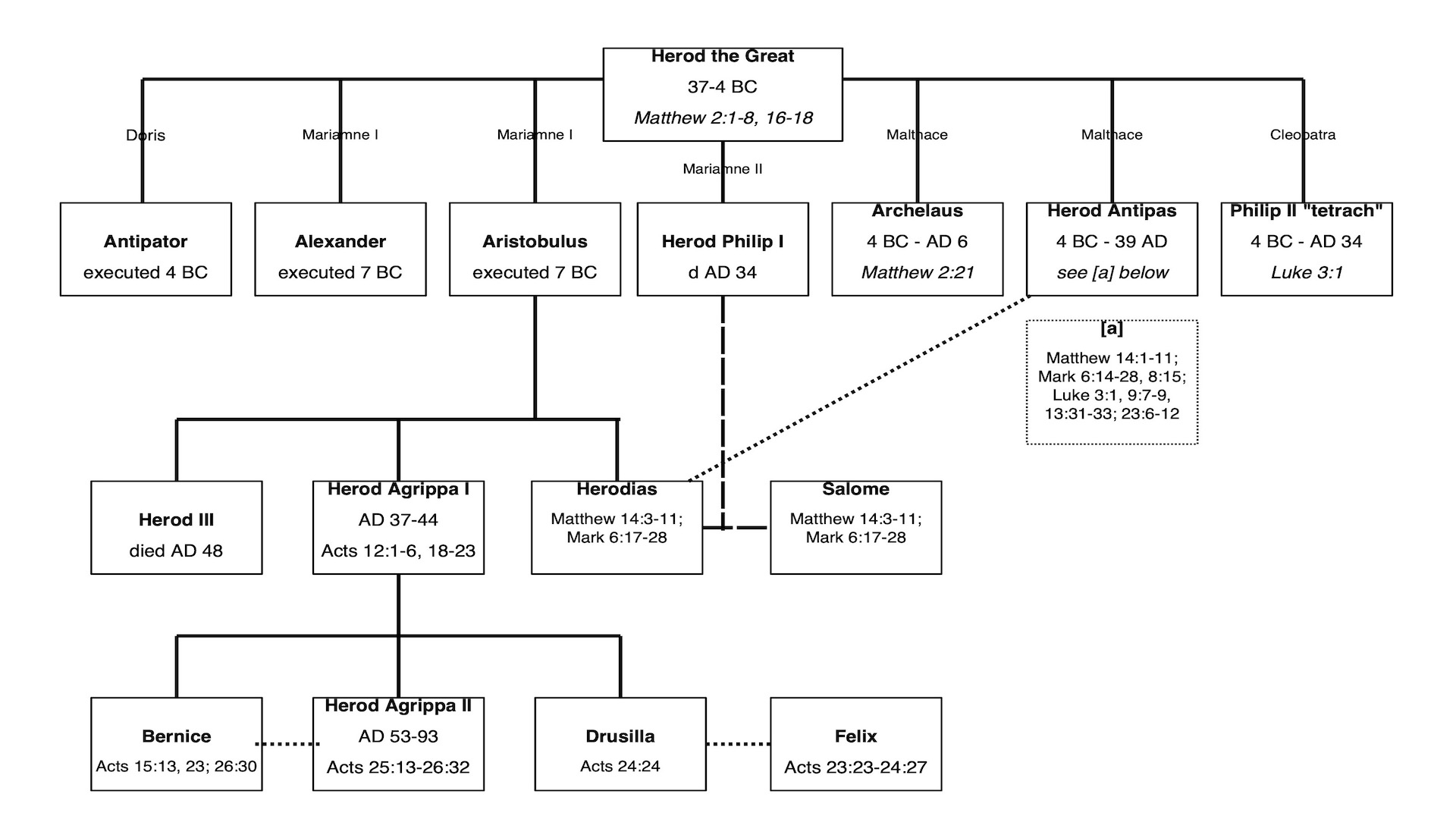
Check out the family tree of King Herod the Great:

►► Would you please prayerfully consider supporting this ministry? My Patreon supporters get behind-the-scenes access to exclusive materials. ◀︎◀︎

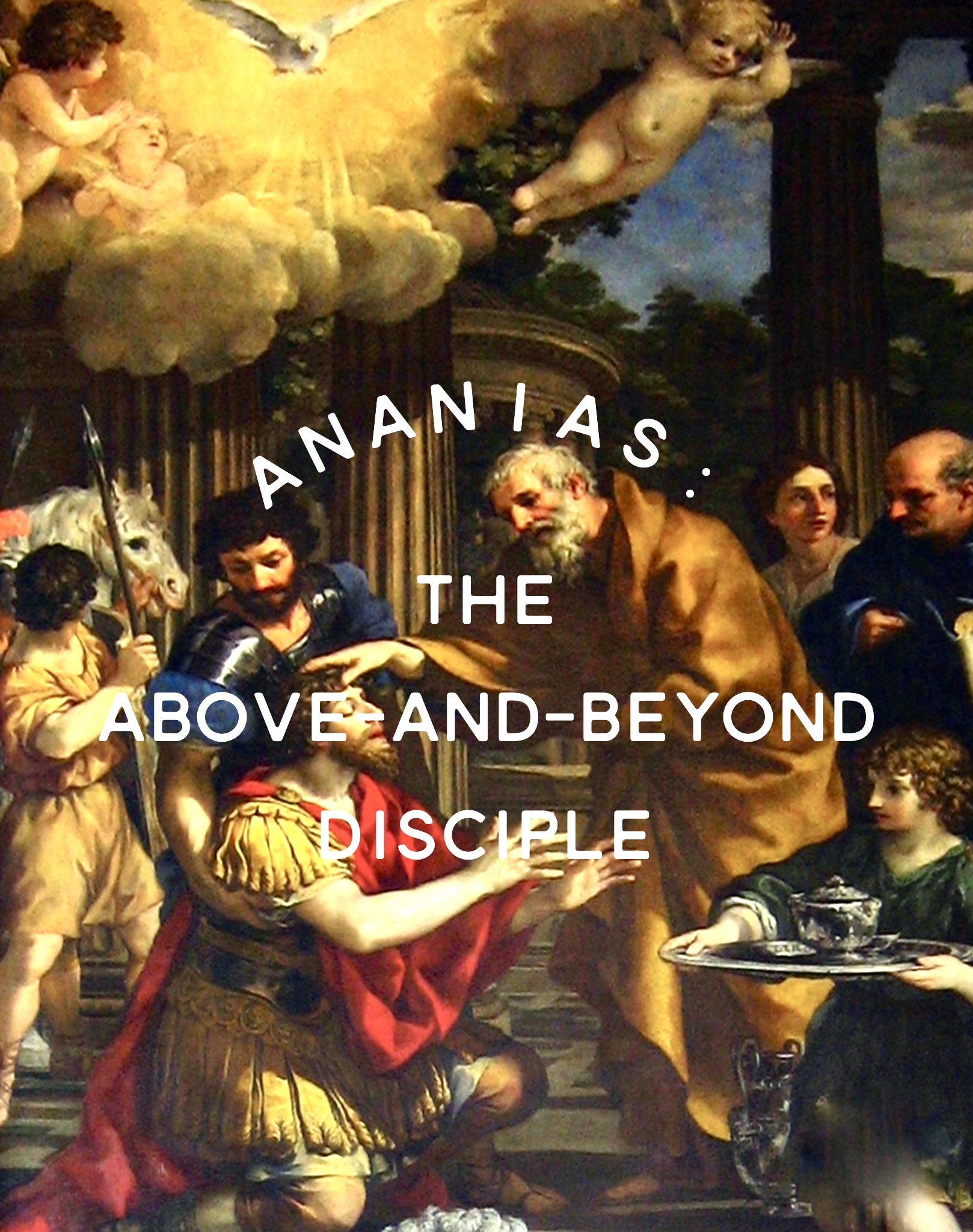
The Above-And-Beyond Disciple

Listen to the podcast of this post by clicking on the player below, and you can also subscribe on AppleSpotify, or Audible. 

It is nearly impossible to overstate how fearful Christians in the first century were of the Jewish zealot named Saul of Tarsus. Saul called himself “extremely zealous for the traditions of my fathers” (Galatians 1:14) as he sought to seek out and destroy all who were followers of The Way. 

(Check out all of the verses in this post by clicking here.)

Not only was he personally bent on his ruthless mission, but he had the full sanctioning of the Sanhedrin (Acts 8:3, 9:1-2). This was the religious body that had successfully goaded Pontius Pilate into crucifying Jesus. 

So you can imagine the apprehension in Ananias’ heart when Jesus calls him to visit with Saul after he had encountered Jesus for himself. Ananias said, “I’ve heard all about this man and the harm he has done. And I also know he has come to my city with the authority to drag Christians off to prison” (Acts 9:13-14). 

Ananias’ interaction with Jesus seems to me to echo the prayer that Jesus prayed in the Garden of Gethsemane. It is as if Ananias is praying, “Is there another way? But not my will but Yours be done, Lord” (see Luke 22:42). 

Ananias is called a disciple of Jesus (Acts 9:10), and Paul even refers to him later as “a devout observer of the law and highly respected by all the Jews” (22:12). In other words, Ananias is an early church leader. What he does or doesn’t do here will set the pace for other Christians. 

So I love the fact that Ananias didn’t just begrudgingly do only what Jesus instructed him, but he said and did only what Christ’s love could empower him to say and do. 

Jesus told Ananias to lay his hands on Saul and pray for the restoration of his sight (9:12). Ananias did more. He laid his hands on him in such a loving way (9:17), that Luke uses the same word as when Jesus laid His hands on people for their healing (c.f. Luke 13:13). Ananias even called him “brother Saul” (9:17). 

Jesus told Ananias to simply pray for Saul’s physical healing, but Ananias did more: he prayed for Saul to be baptized in the Holy Spirit as well (9:17, 22:13). 

Jesus told Ananias what His plan was for Saul’s ministry, but He didn’t tell Ananias that he had to repeat that to Saul. Ananias did more: He reaffirmed to Saul what Jesus had already said to him and encouraged him to get up, be baptized, and began to do what Jesus had told him to do (9:15-16, 22:14-16). 

When Ananias called Saul “brother,” he used the term that fellow Christians used for each other (Philippians 4:1; Hebrews 2:11; 1 John 3:14). That means that Ananias is the first one to recognize the genuine conversion of Saul the persecutor to Paul the Christian. 

When the love of Jesus is in us, we will not be looking for ways to begrudgingly obey what Jesus tells us, but we cannot wait to lavishly do more loving things out of the overflow of Christ’s love in us. What a fantastic example Ananias has give all of us who call ourselves Christians! 

►► Would you please prayerfully consider supporting this ministry? My Patreon supporters get behind-the-scenes access to exclusive materials. ◀︎◀︎
Links & Quotes

I shared this video last week with my Patreon supporters. When we’re unclear about all that God has asked us to do, the first step is to obey the part that is clear to us. Check out my blog post Clearing up the Confusion for more insight on how Peter handled this.

I have lots of new content every week, which you can check out on my YouTube channel.

T.M. Moore calls on Christians to recognize the God-given authority our leaders have. Not just recognize, but submit to that authority: “We show that we believe the Lord and trust in His Word, and we demonstrate the evidence of that faith when we submit to our church leaders as unto the Lord (Colossians 3:23-24). Submitting to proper authorities is an integral component of full faith. If we want to gain the benefit God intends for us from those appointed to lead, we’re going to have to learn to submit.”

“Talent is never enough. With few exceptions the best players are the hardest workers.” —Earvin Magic Johnson

“Take your job seriously, but don’t take yourself too seriously.” —Alex Trebek

The American Bible Society reports that Gen Z is engaged with Scripture less than any other generation. But here is a sad outcome: “Scripture Engagement is associated with significantly lower anxiety levels among all Americans, but especially among Generation Z. The anxiety score for Bible Engaged Gen Z respondents (3.4) is less than half that of the anxiety score for Bible Disengaged Gen Z respondents (7.1).”

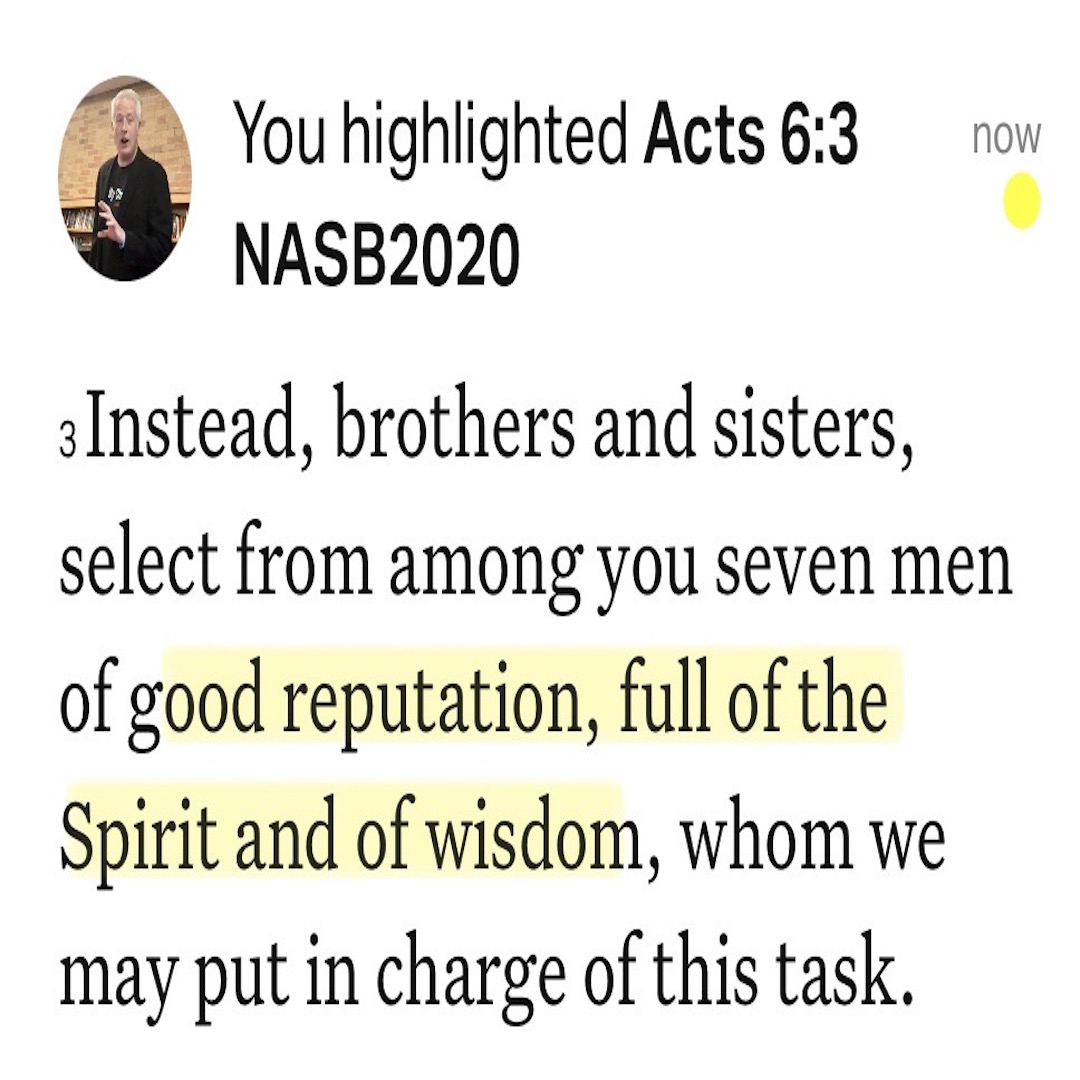
What if the qualifications in Acts 6:3 were the only qualifications we used for selecting folks for ministry assignments: (a) good reputation, (b) full of the Holy Spirit, and (c) full of wisdom?

Unwittingly Fulfilling

For those who live in Jerusalem, and their rulers, recognizing neither Him [Jesus] nor the declarations of the prophets which are read every Sabbath, fulfilled these by condemning Him. And though they found no grounds for putting Him to death, they asked Pilate that He be executed. When they had carried out everything that was written concerning Him, they took Him down from the Cross and laid Him in a tomb. (Acts 13:27-29) 

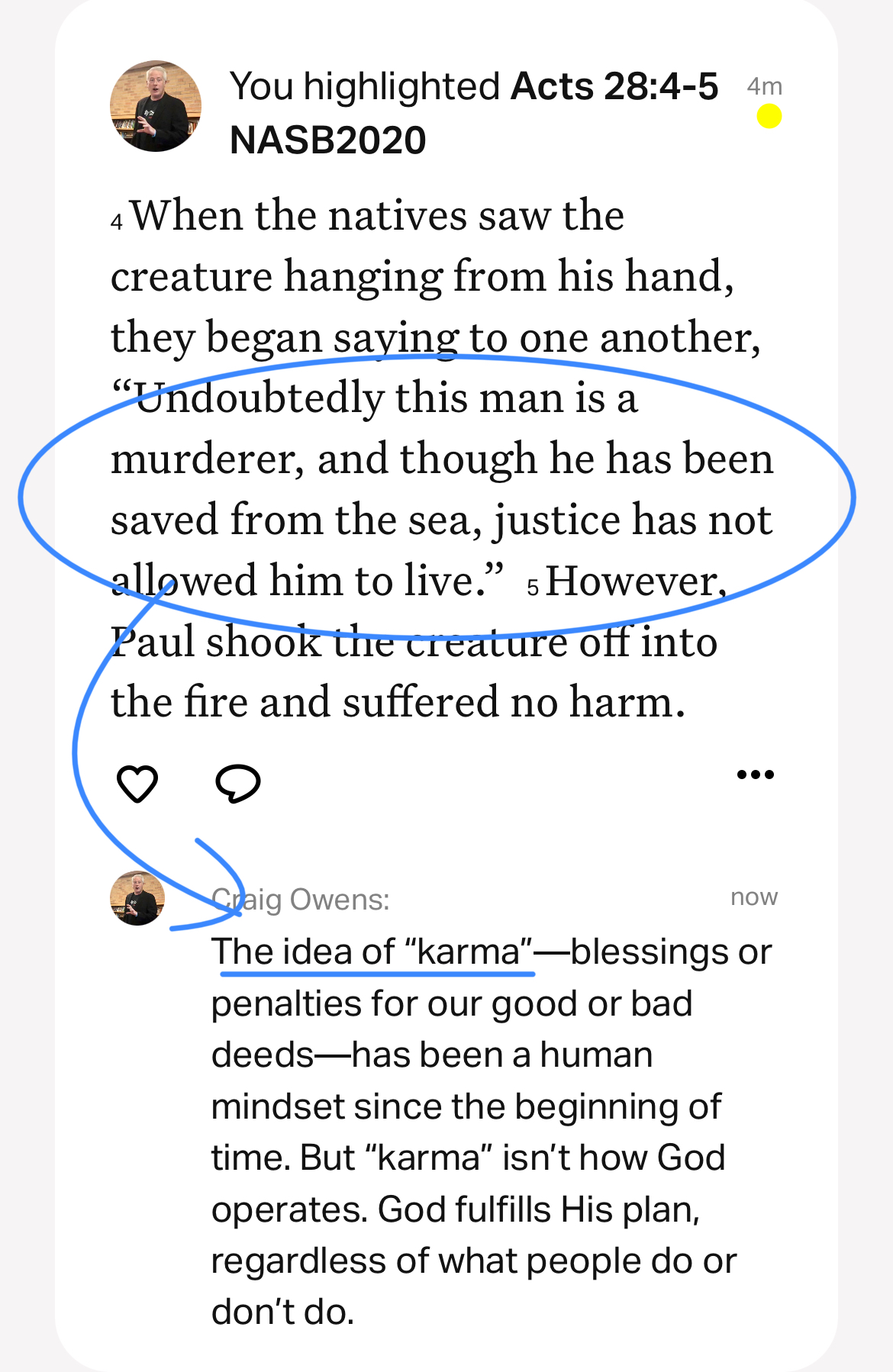
The prophetic words about Jesus were fulfilled by people who didn’t even realize they were fulfilling God’s pre-ordained plan! It is still true today: Nothing can thwart or delay God’s design, and people are still unwittingly fulfilling that design. 

God always gets the final word, the decisive word, and the best word. 

Here is an example from the public ministry of Jesus: A Christlike Response To Skeptics. 

Jesus is fulfilling every promise that His Father made, so we can live confidently and joyfully in that assurance. Check out my post Walking Boldly In Dark Places.

Can Criticism Ever Be A Good Thing?

Listen to the podcast of this post by clicking on the player below, and you can also subscribe on AppleSpotify, or Audible. 

Don’t be too quick on this one: I’m wondering if criticism can ever be a good thing?  

Check out this episode of The Podcast. 

The Scriptures that I reference in this video are found in Acts 10-11 

I mentioned my blog post where I talk more about Peter’s rooftop vision and how we went from confused to enlightened. The post is Clearing Up the Confusion.

In the chapter on the bite of criticism, I wrote this—

     Treating our critic as an opponent we have to defeat is sure to injure them and provide an opening for the enemy of our souls to pounce. Perhaps instead we should consider these wise words from A.W. Tozer: “Never be afraid of honest criticism. If the critic is wrong, you can help him; and if you’re wrong, he can help you. Either way, somebody’s helped.” 

     On the other hand, if you come into your meeting with a critic with a humble, willing-to-learn attitude, you will immediately soften the mood in the room. This kind of quietness keeps tempers from flaring (Proverbs 15:1). 

     See beyond the criticism to the critic. … Keep reminding yourself that this is a person to be loved, not an argument to be dismantled. 

Get more information on When Sheep Bite here. 

►► Would you please prayerfully consider supporting this ministry? My Patreon supporters get behind-the-scenes access to exclusive materials. ◀︎◀︎
Clearing Up The Confusion

Listen to the podcast of this post by clicking on the player below, and you can also subscribe on AppleSpotify, or Audible. 

The apostle Peter had a very unusual encounter with a vision and with the voice of Jesus. 

It was so unusual that Luke records that Peter was “wondering“ and later on “still thinking“ about what he had seen and heard, and what the implications of the vision were (Acts 10:17, 19). In the KJV, the word for “wondering” is translated “doubted within himself.” The Greek words that Luke uses here mean perplexed and entirely at a loss. In essence, Peter was asking, “What did I just see? What in the world does this even mean?!” 

(Check out all of the Scriptures in this post here.) 

The vision came to Peter as he was praying on the roof of Simon‘s house. Because he was still on the roof when some men from Cornelius the centurion arrived, I believe this means that Peter stayed in an attitude of prayer while he was still wondering. That is an excellent posture for us to remain in as well when we are unclear as to what to do next. 

As I mentioned, Luke says that Peter “was still thinking” about what he had seen and heard (v. 19). This is a different Greek word which means to revolve in mind. In other words, Peter didn’t brush it off or think it was simply too complex for him to grasp, but he continued to look at it, wondering about what it could mean. 

I believe Peter is desirous to obey God, but he just doesn’t know what that obedience is supposed to look like. Instead of shutting down or launching out too quickly, Peter continues to wait for some illumination. 

It was at this point—while still in a prayerful, thoughtful posture—that the Holy Spirit could speak to him. The Holy Spirit simply said, “there are some men here to see you. You must not hesitate to go with them“ (vv. 19-20). 

Although Peter couldn’t see this yet, his obedience would actually be the first step toward understanding and applying the vision. 

It was as Peter talked with his visitors that afternoon, and then as he heard Cornelius‘ story the next day, that the application became clear to him. We can gather this when we hear Peter say, “God has shown me“ (v. 28). As he was retelling this story to some Jewish Christians later, he also said, “then I remembered what the Lord had said” (11:16). 

For Peter and his companions that traveled with him, God’s message in the vision became crystal clear when they all saw “that the gift of the Holy Spirit had been poured out even on Gentiles” (10:45-47). 

Here are some important takeaways for all of us. When God speaks a word to us that seems to be confusing, we must stay in a prayerful, expectant posture. Don’t brush it off, and don’t jump to any conclusions. Like Peter, stay in prayer and wait for a clearer word from the Holy Spirit. When the Holy Spirit reveals something else to you, walk forward in the part that is clear. It is as you are walking in obedience that God‘s full message will become clear to you. 

►► Would you please prayerfully consider supporting this ministry? My Patreon supporters get behind-the-scenes access to exclusive materials. ◀︎◀︎
Don’t Let Your Gratitude Get Hijacked

Listen to the podcast of this post by clicking on the player below, and you can also subscribe on AppleSpotify, or Audible. 

Last week I mentioned that I was a bit surprised that scientists had done so much research on the benefits of gratitude because science tends to have an over-reliance on the tangible world. But it’s hard to ignore that there are so many intangibles (like gratitude) which make a tangible difference in people’s lives. 

We get ourselves into trouble if we focus exclusively on the tangible or intangible. We also get ourselves into trouble if we don’t use all of the resources God has given us. 

The Bible tells us that we have been created in the image of God, and that one of the things that separates us from the other creatures in the world is our soul (Genesis 2:7). Our soul is compromised of our mind, our will, and our emotions. 

(Check out all of the Scriptures I mention in this post by clicking here.) 

We cannot allow any one of these to lay dormant or even considered less valuable than the others, nor we can allow any one of these to bully the others. 

  • If my emotions dominate (especially emotions like fear or anger) I can give into fight-or-flight—Psalm 106:7 
  • If my mind dominates, I can become dark and confused—Romans 1:21 NLT 
  • If my willpower dominates, I tend to be very selfish—Isaiah 14:13-14 

When my emotions flare up, when my mind is dark, or when I feel selfish, I need to remember to engage the other two parts of my God-breathed soul. This is where gratitude comes into play. 

I love reading the Psalms when I’m battling the negative emotions that seem to rush in during trying times. The psalmists were so honest about what they were feeling. Check out a couple of examples in Psalm 7:17 and 9:1-2 where we see David engaging his mind and his will to make the choice to be grateful to God despite his circumstances. 

In the New Testament, we see a similar response from Paul and Silas when they are falsely imprisoned in Philippi (see Acts 16:22-26). Despite their cruel circumstances, they chose to life thankful worship to God. Luke write that the other inmates were listening, and so was the jailer and his family, who ended up accepting Jesus as their Savior. 

I’ve got three important words for you when dark times threaten to hijack your gratefulness:

TALK TO YOURSELF

We see another psalmist doing this in Psalm 42:1-6. He asks his soul why it is so downcast, and then he says, “I chose to remember God in all His goodness and I chose to praise Him!” These words are repeated again in Psalm 42:11 and 43:5, which tells me that giving thanks to God is not a one-and-done thing, but something that needs to be continually repeated. 

You can get some conversation starters for your self-talk in two simple ways:

  1. Write down your gratitude 
  2. Talk about your gratitude 

Keep a gratitude journal: Write something down at the end of each and every day. Write it down. Re-read it regularly. Tell others about it. And then be ready for others to ask you about Jesus—just like the Philippian jailer—when they notice how thankful you are! 

Use your mind to talk back to your fears and worries, and then engage your willpower. Don’t let your gratitude get hijacked by the circumstances around you, but allow your thankfulness to help you reframe your circumstances into God’s plan. 

Check out the other messages in our Be Thankful series by clicking here. 

►► Would you please prayerfully consider supporting this ministry? My Patreon supporters get behind-the-scenes access to exclusive materials. ◀︎◀︎
Links & Quotes

Let’s not let the candidate for whom we vote be something that separates us from others in the Body of Christ. As the apostle Paul says, “Let’s agree together in the Lord.” Check out my full sermon How Christians Can Live Biblically in an Election Season.

I have lots of new content every week, which you can check out on my YouTube channel.

“It was from Joppa (Acts 10:5) that God sent Jewish Peter to Gentile Cornelius. In this same Joppa, 800 years before, God had to use a little extra persuasion on Jewish Jonah to get him to go to Nineveh, a city of Gentiles (Jonah 1:3).” —Henry Halley, Halley’s Study Bible 

“We don’t stop playing because we grow old; we grow old because we stop playing.” —George Bernard Shaw 

“No big challenge has ever been solved, and no lasting improvement has ever been achieved, unless people dare to try something different.” —Tim Cook, CEO of Apple

Jesus went to the Cross to fulfill His Father’s “predetermined plan.” This brought glory to God and joy to Jesus. God has a plan for your life, too. He sees you, He planned for you, He equipped you. As you live for Him, your life is also bringing glory to your Heavenly Father and joy to your heart. Unlike Jesus, you may not see how your part fits into God’s plan, but you will know it completely when you hear your Savior say, “Well done, good and faithful servant!”

The Confirming Details

Listen to the podcast of this post by clicking on the player below, and you can also subscribe on AppleSpotify, or Audible. 

A couple of years ago I was in a car accident, but I never saw the car that hit me. Fortunately, the driver in the vehicle right behind me, a driver who was nearly hit by the car who hit me, and another driver waiting at the same intersection all shared their stories with the sheriff’s deputy. All of their stories had slightly different details, but putting all of their accounts together, they gave the deputy a complete story of what happened.

This is one of the features throughout the Bible that repeatedly convinces me that the events are both historically accurate and divinely inspired. I love reading the Old Testament prophecies that are fulfilled in the New Testament, the different perspectives the four Gospel writers give of the public ministry of Jesus, and the details in the epistles that correspond with the historical accounts found elsewhere (both inside and outside Scripture). 

Luke was one of the Gospel writers who also wrote a sequel called the Book of Acts. In this historical record of the early church, he documents many confirming details. For example, consider the story of Saul’s encounter with Jesus on the road to Damascus. Luke tells us the story in Acts 9, and then repeats the story as Paul is telling it to different audiences in chapters 22 and 26. Without the details that Luke records, skeptics could easily chalk up Saul’s experience to a hallucination or even madness, as Governor Festus claimed in Acts 26:24. 

(Check out all of these biblical passages by clicking here.)

For instance, the bright light that got Saul’s attention was seen by both Saul and his companions that were traveling with him. These were Jews who shared Saul’s hatred of Christianity, so they would have no desire to bolster Saul’s story after he himself became a Christian. The brilliance of this light knocked all of the travelers to the ground (9:3–8; 22:6–7, 11; 26:13–14). 

Everyone heard the voice of Jesus speaking to Saul, although Saul was the only one who could understand His words spoken to him in the Aramaic language (9:4–7; 22:7–9; 26:14). 

All of Saul’s companions and a Jewish Christian named Ananias could attest to Saul’s physical blindness after being exposed to this bright light (9:8, 17–18; 22:11–13). 

Ananias confirmed what Jesus had said to Saul, although he was in Damascus (and not on the road with him) when Jesus spoke to Saul. This was because Ananias had also been given a vision of what was happening with Saul, and what Jesus had said to him (9:10–17; 22:12–16). 

All of these confirming details assure us that Saul was not hallucinating, nor did he concoct some fantastic tale to thrill his audiences. This was an actual historical event that is attested to by many sources. 

This is the consistent evidence we find throughout all of Scripture. This means that we can trust both the divine inspiration and the historical reliability of everything we read in the Bible.

►► Would you please prayerfully consider supporting this ministry? My Patreon supporters get behind-the-scenes access to exclusive materials. ◀︎◀︎

Let’s Grow Together

Listen to the podcast of this post by clicking on the player below, and you can also subscribe on AppleSpotify, or Audible. 

We’ve now learned about all three circles that help us discover our God-implanted gifts: 

  • Passion—what thrills you? 
  • Pain—what kills you? 
  • Proficiency—what fulfills you? 

What do you do with these gifts? What’s the whole purpose in learning about them? I think the goal as saints is to help the Body of Christ mature in ways that brings God glory (Ephesians 4:12-16). 

(Check out all of the Scriptures in this post by clicking here.) 

Solomon also gives a great word picture of friends using their gifts for each other—“As iron sharpens iron, so a friend sharpens a friend” (Proverbs 27:17 NLT). 

In an earlier message in this series, I talked about the thousands of enzymes in our human bodies. Each enzyme has just one task, and each task is indispensable to the health of the whole body. It is exactly the same in the Body of Christ—your gift-in-action is indispensable to the health of the whole Body.

How do you squander your grace gift? I think these are five basic ways:

  1. Not discovering it—“I have a gift?” 
  2. Devaluing it—“My gift is nothing special.” 
  3. Overvaluing it—“My gift is super-important.” 
  4. Laziness—“My gift is fine just the way it is.” 
  5. Selfishness—“My gift is just for me.” 

We need to discover our own gifts, but then we need to work on making the switch from “me” to “we.” I want to excel in using my gift so that I can help you excel in using your gift so that we can help another brother or sister excel in using their gift. 

Oswald Chambers said, “The Book of God is insistent on this: we cannot develop a holy life alone, it would be a selfish life, without God in it and wrong. … Beware of isolation; beware of the idea that you have to develop a holy life alone. It is impossible to develop a holy life alone, you will develop into an oddity and a peculiarism, into something utterly unlike what God wants you to be. The only way to develop spiritually is to go into the society of God’s own children, and you will soon find how God alters your set.” 

Frequently we need another brother or sister in Christ to help nudge us into discovering and using our gifts. For example, look how…

  • Mordecai assured Esther (Esther 4:13-14) 
  • Matthias was chosen by those in the upper room (Acts 1:21-26) 
  • The first deacons were unanimously chosen by the Church (Acts 6:3-6) 
  • Barnabas and Saul were chosen by the Holy Spirit and confirmed by other prophets and teachers in the church (Acts 13:1-3) 
  • Paul encouraged his proteges to appoint elders who were recognized by others in the church (Titus 1:5; 1 Timothy 3:1f) 

Consider this poem—

For want of a horseshoe nail the shoe was lost.
For want of a shoe the horse was lost.
For want of a horse the rider was lost.
For want of a rider the message was lost.
For want of a message the battle was lost.
For want of a battle the kingdom was lost.
And all for the want of a horseshoe nail.


Listen to the Holy Spirit. Listen to the confirming words from fellow saints—words like “You are gifted,” “You are so good at…,” and “How did you know how to do that?” Then step out of your comfort zone and soar into your gift zone! 

If you’ve missed any of the other messages in our Living in your gift zone series, you can check them all out here. 

►► Would you please prayerfully consider supporting this ministry? My Patreon supporters get behind-the-scenes access to exclusive materials. ◀︎◀︎