11 Quotes From “Man—The Dwelling Place Of God” by A.W. Tozer

A.W. Tozer’s 50-year-old publication Man—The Dwelling Place Of God still rings with timely truth for today. You can check out my full book review by clicking here.

“I long ago decided that I would rather know the truth than be happy in ignorance. If I cannot have both truth and happiness, give me truth. We’ll have a long time to be happy in heaven.”

“Shakespeare may be enjoyed without penitence; we may understand Plato without believing a word he says; but penitence and humility along with faith and obedience are necessary to a right understanding of the Scriptures.”

“Faith and morals are two sides of the same coin. Indeed the very essence of faith is moral. Any professed faith in Christ as personal Savior that does not bring the life under plenary obedience to Christ as Lord is inadequate and must betray its victim at the last. The man that believes will obey; failure to obey is convincing proof that there is not true faith present.”

“There are two kinds of love: the love of feeling and the love of willing. The one lies in the emotions, the other in the will. Over the one we may have little control. It comes and goes, rises and falls, flares up and disappears as it chooses, and changes from hot to warm to cool and back to warm again very much as does the weather. Such love was not in the mind of Christ when He told His people to love God and each other. … The love the Bible enjoins is not the love of feeling; it is the love of willing, the willed tendency of the heart.

“Let no one interpret the Scriptures for you in such a way as to rule out the Father’s gift of the Spirit. Every man is as full of the Spirit as he wants to be. Make your heart a vacuum and the Spirit will rush in to fill it.”

“I am among those who believe that our Western civilization is on its way to perishing. It has many commendable qualities, most of which it has borrowed from the Christian ethic, but it lacks the element of moral wisdom that would give it permanence. Future historians will record that we of the twentieth century had intelligence enough to create a great civilization but not the moral wisdom to preserve it.”

“The church today is suffering from the secularization of the sacred. By accepting the world’s values, thinking its thoughts and adopting its ways we have dimmed the glory that shines overhead. We have not been able to bring earth to the judgment of heaven so we have brought heaven to the judgment of the earth. Pity us, Lord, for we know not what we do!”

“David Brainerd once compared a man without the power of the Spirit trying to do spiritual work to a workman without fingers attempting to do manual labor. The figure is striking but it does not overstate the facts. The Holy Spirit is not a luxury meant to make deluxe Christians, as an illuminated frontispiece and a leather binding make a deluxe book. The Spirit is an imperative necessity.”

“I do not believe that it is the will of God that we should seek to be happy, but rather that we should seek to be holy and useful. The holy man will be the useful man and he’s likely to be a happy man too; but if he seeks happiness and forgets holiness and usefulness, he’s a carnal man.”

“That religion may be very precious to some persons is admitted, but never important enough to cause division or risk hurting anyone’s feelings. In all our discussions there must never be any trace of intolerance; but we obviously forget that the most fervent devotees of tolerance are invariably intolerant of everyone who speaks about God with certainty. And there must be no bigotry, which is the name given to spiritual assurance by those who do not enjoy it.”

“The truly spiritual man is indeed something of an oddity. He lives not for himself but to promote the interests of Another. He seeks to persuade people to give all to his Lord and asks no portion or share for himself. He delights not to be honored but to see his Savior glorified in the eyes of men. His joy is to see his Lord promoted and himself neglected.”

Man—The Dwelling Place Of God (book review)

It’s an awesome thing to ponder that Almighty God wants to live and commune with you and me! I can think of no better person to illuminate this amazing thought than the prophetic voice of A.W. Tozer in his book Man—The Dwelling Place Of God.

Although this book is 50 years old, the message still rings true for this generation. Tozer points out that God wants to dwell with man, to reveal Himself to us in powerful and personal ways, but this comes at a price. That price is not trying to control God, but letting Him be in charge.

The book is made up of 39 chapters, the majority of which are fairly short and can be read in just a few minutes. But the application of the truths in these short chapters will be something that you will need to ponder for quite awhile. God is Lord and Master; He is not a genie in a bottle that grants us our wishes if we rub the bottle the right way. God has laid out for us how He will bless us in His Word and, Tozer says, it’s time for us to take God’s Word more seriously.

Tozer makes it clear that we cannot live however we want to live and then ask God to bless our life with His presence. Instead, God has already shown us in His Word, in the life of His Son Jesus, and in the ongoing witness of the Holy Spirit the kind of life He longs to bless. It’s now up to us to place our lives in that place where God’s blessings and presence will flow.

A.W. Tozer speaks with the authority of a prophet of God, and for those who are willing to listen and apply his words, God’s presence and blessing can be expected.

The Value Of Gospel Truths

The fundamental truths of the Gospel are landmarks to keep us safely within the boundaries set by God. Suppose your grandfather owned some property which at one time had been carefully surveyed. He was there when they set the stakes and could have paced it off blindfolded. But he never took the time to show anyone else the markings.

“Over the years, the markers rotted, were rooted up, or washed away. Now your grandfather has died and left the land to you. But a dishonest neighbor claims it is his, and as proof of ownership points to the burgeoning crop of corn he has planted. You discover the deed and land description have been lost. Since you do not really know the proper boundary lines yourself, how will you defend your case in court? You will probably end up losing your property because no one ever told you where it ends and your neighbor’s begins.

The spiritual parallel is this: Every fundamental truth has some evil neighbor (i.e., heresy) butting up against it, eager to plant a crop of lies upon the sacred ground of God’s Holy Word and thus fool the saints. And the very reason that a spirit of error has encroached so far upon the truth in the last few years is because ministers have not walked the boundaries of the Gospel with their people and acquainted them with these primary truths.” —William Gurnall, The Christian In Complete Armor (emphasis added)

I have shared other quotes from The Christian In Complete Armor herehere, and here.

6 Quotes From “The Dawn Of Christianity”

Robert J. Hutchinson makes the history around the birth, life, death, and resurrection of Jesus, as well as the history of Christ’s followers after His resurrection, come to life in The Dawn Of Christianity. Check out my full review by clicking here.

“Skeptics make much of the fact that historians have no independent corroboration from outside sources of most of the events described in the Gospels, but this is common with ancient history and hardly unique to Christianity. For example, virtually everything historians know about the Three Hundred, the Spartan warriors who held off a Persian invasion at the mountain pass of Thermopylae in 480 BC, comes from the writings of a single Greek author, Herodotus. What’s more, the earliest copy historians have of Herodotus’s chronicle of this event, The Histories, dates to the tenth century AD—or more than 1,350 years after it was written! In comparison, historians have a cornucopia of historical sources and archaeological evidence about Jesus of Nazareth and the early Christian community. For example, more than fifty papyrus manuscripts of New Testament texts exist that date before AD 300. The earliest of these manuscripts, a papyrus fragment from the Gospel of John known as P52, dates to around AD 125 or just thirty years after the original was likely written.”

“Around 20 BC, the half-Jewish King Herod the Great set himself the task of renovating and expanding the temple and surrounding area. There had been a small natural plateau there before, fixed atop the ridge in the northeastern corner of Jerusalem; but Herod wanted something far more spectacular. He therefore enclosed this natural plateau on all sides with four immense retaining walls, some more than one hundred feet high, made up of massive rectangular ashlars, or cut stones, that weighed as much as 415 tons each. These stones are so large that even modern cranes and bulldozers would have some difficulty moving them. Herod then filled in this entire quadrangle with stones and dirt, creating an artificial hilltop plaza—roughly 1,500 feet long by 1,000 feet wide—of more than thirty-five acres. In modern terms, Herod’s Temple Mount is so large that about twenty-six American football fields could fit in the space available. This massive engineering marvel has endured for two thousand years and still stands today, almost wholly intact.”

“Simon the Rock continued to loudly protest that he was willing to die, if need be, but would never deny Jesus. The other disciples said the same. This is one of those incidents that even many skeptics believe must be historical under the ‘criterion of embarrassment,’ which means that the Christian community was unlikely to invent a story that cast such a bad light on its leaders; therefore, it must have actually happened.” 

“Recent archaeological discoveries are showing that the New Testament in general, and the Gospels in particular, are far more reliable historical sources than previous generations of New Testament experts realized.”

“All four Gospels report that this board, what the Romans called the titulus, held the inscription ‘The King of the Jews.’ John’s Gospel alone reports that Jesus’ name was also on the titulus, ‘Jesus of Nazareth, the King of the Jews,’ and that it was written in Hebrew, Latin, and Greek (19:19-20). In Latin the charge read Iesus Nazarenus Rex Iudaeorum, which is why, to this day, the letters INRI appear at the top of crucifixes.”

“In 1968, archaeologists uncovered a first-century tomb at Giv’at ha-Mivtar, northeast of Jerusalem. Inside the tomb they found in ossuary containing the skeleton of a crucified man—the first and only relic of a crucified man found in Israel. Inscribed on the ossuary was his name in Hebrew: Yehochanan. On top of the bone of his right heel was a wooden board, and through the board, and his heel, was a 4.5-inch iron nail.”

The Dawn Of Christianity (book review)

Sometimes when people are reading the Gospels and the Book of Acts in the New Testament of the Bible they forget what an accurate history is presented at a pivotal time in world events. In The Dawn Of Christianity, Robert J. Hutchinson makes the history behind, surrounding, and after the biblical accounts come to life in a fresh way.

The Dawn Of Christianity tells the history surrounding Jesus of Nazareth and His followers almost in a novel-like format. Hutchinson masterfully puts together the four Gospel accounts and Luke’s history of the early church in chronological order, and then brings in archaeological, geographic, and anthropological resources like a supporting cast to the biblical account. Along the way, we are introduced to extra-biblical characters, places, and customs that add a new depth of understanding to the history presented in Scripture.

Hutchinson notes, “Recent archaeological discoveries are showing that the New Testament in general, and the Gospels in particular, are far more reliable historical sources than previous generations of New Testament experts realized.” Indeed, he makes good use of as many pertinent finds as possible to enhance his storytelling.

The Dawn Of Christianity spans the time from just before the birth of Jesus Christ of Nazareth and then tracks the spread of Christianity for about 20 years following Christ’s ascension into heaven. It’s a fascinating and enlightening story for both Bible aficionados and skeptics alike.

I am a Thomas Nelson book reviewer.

9 More Quotes From “The Christian In Complete Armour”

William Gurnall penned wise words for Christian warriors nearly 400 years ago, but their timelessness is still evident today. Check out a few more quotes from The Christian In Complete Armour

“The devil cannot think of anything he had rather glory in than to wound God’s name with His own sword. He coaxes man to sin and then brags that God made him do it. … Instead of letting satan wrest Scripture from us by his wily stratagems, let us be excited to bless God for the sword He has furnished us out of His grace.”

“The Sword of the Spirit in another person’s hand will not defend you.”

“God calls all mankind—some by the voice of natural conscience and others by the loud shout of His Word—to join Him ‘against the mighty’ (Judges 5:23). He does this not because He needs our help but because He prefers to reward obedience rather than to punish rebellion.”

“‘The eyes of the Lord are in every place, beholding the evil and the good’ (Proverbs 15:3). He sees when you close your closet door to pray in secret and rewards your sincerity; but He also sees when the door is closed for you to sin in secret—and He will not fail to reward your hypocrisy.”

“When the Spirit convicts you of sin, satan will try to convince you, ‘It is such a little one—spare it.’ Or he will bribe the soul with a vow of secrecy: ‘You can keep me and your good reputation, too. I will not be seen in your company to shame you among your neighbors. You may shut me up in the attic of your heart, out of sight, if only you will let me now and then have the wild embraces of your thoughts and affections in secret.’”

“The Christian ought to rely on divine strength because this plan results in the greatest advancement of God’s own glory (Ephesians 1:4, 12). If God had given you a lifetime supply of His grace to begin with and left you to handle your own account, you would have thought Him generous indeed. But He is magnified even more by the open account He sets up in your name. Now you must acknowledge not only that your strength comes from God in the first place, but that you are continually in debt for every withdrawal of strength you make throughout your Christian course.”

“Here is a word for Christians. Knowing your strength lies wholly in God and not in yourself, remain humble—even when God is blessing and using you most. Remember, when you have your best suit on, who made it and who paid for it! God’s favor is neither the work of your hands nor the price of your own worth. How can you boast of what you did not buy? If you embezzle God’s strength and credit it to your own account, He will soon call an audit and will take back what was His all along.”

“As an earthly parent you rejoice to see your own good qualities reproduced in your children. God, the perfect Parent, longs to see His attributes reflected in His saints. It is this image of God reflected in you that so enrages hell; it is this at which the demons hurl their mightiest weapons. When God defends you, He also defends Himself. Now knowing that the quarrel is God’s, surely He will not have you go forth to war at your own expense!”

“Your Heavenly Father is so eager to care for you, that while you are timidly asking for a nibble of peace and joy, He is longing for you to open your mouth wide so He can fill it. The more often you ask, the better; and the more you ask for, the more He welcomes you.”

You can read my full review of William Gurnall’s book by clicking here. I have shared other quotes from The Christian In Complete Armour here and here.

Viewing Abortion As Slavery

In our American history, we have many valuable lessons. Some of these lessons come from sad chapters that now we have the benefit of hindsight to see the error of our ways. But with this hindsight, there should come insight into the issues which currently face us.

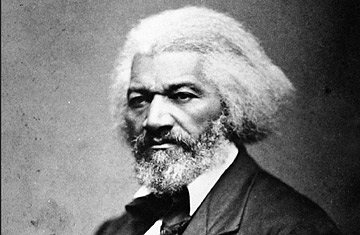
Slavery was an abhorrent evil that plagued our country. Thankfully there were strong men who forcefully and persuasively spoke out against the horrors of slavery; men like Frederick Douglass. His address “What To The Slave Is The Fourth Of July?” is a masterpiece of statesmanship!

Those under the oppression of slavery had no choice. They weren’t allowed speak for themselves, so they depended upon free men and women to speak for them.

Much the same today, babies who are aborted in the womb have no choice, no voice. They cannot speak for themselves, so it is up to us to speak out for them against this abhorrent evil that plagues our country.

I would ask you to consider some of the words of Frederick Douglass where the terms for slavery are replaced with the terms for abortion.

“Standing with God and the crushed and bleeding [aborted baby] on this occasion, I will, in the name of humanity which is outraged, in the name of liberty which is fettered, in the name of the Constitution and the Bible, which are disregarded and trampled upon, dare to call in question and to denounce, with all the emphasis I can command, everything that serves to perpetuate [abortion]—the great sin and shame of America! … 

“The feeling of the nation must be quickened; the conscience of the nation must be roused; the propriety of the nation must be startled; the hypocrisy of the nation must be exposed; and its crimes against God and man must be proclaimed and denounced. … 

“Let it be thundered around the world, that, in tyrant-killing, king-hating, people-loving, democratic, Christian America, the seats of justice are filled with judges, who hold their offices under an open and palpable bribe, and are bound, in deciding in the case of [an unborn baby’s] liberty, hear only [the abortionist]! … 

“A religion which favors [‘choice’] against the [unborn baby]; which exalts the proud above the humble; which divides mankind into two classes, [pro-choice] and [pro-life]; which says to the [baby in the womb, you don’t matter]; and to the [abortionist, continue on]; it is a religion which may be professed and enjoyed by all the robbers and [killers] of mankind; it makes God a respecter of persons, denies His fatherhood of [all human life], and tramples in the dust the great truth of the brotherhood of man. … 

“The American church is guilty, when viewed in connection with what it is doing to uphold [abortion]; but it is superlatively guilty when viewed in connection with its ability to abolish [abortion]. The sin of which it is guilty is one of omission as well as of commission. … Let the religious press, the pulpit, the Sunday school, the conference meeting, the great ecclesiastical, missionary, Bible and tract associations of the land array their immense powers against [abortion]; and the whole system of crime and blood would be scattered to the winds….

“O! had I the ability, and could I reach the nation’s ear, I would, to-day, pour out a fiery stream of biting ridicule, blasting reproach, withering sarcasm, and stern rebuke. For it is not light that is needed, but fire; it is not the gentle shower, but thunder. We need the storm, the whirlwind, and the earthquake. The feeling of the nation must be quickened; the conscience of the nation must be roused; the propriety of the nation must be startled; the hypocrisy of the nation must be exposed; and its crimes against God and man must be proclaimed and denounced.”

10 Quotes From “#Truth”

Josh McDowell has a book that is perfect for this generation of youth. #Truth is a 365-day devotional that brings biblical truth to bear on the issues today’s students face every day. You can check out my full book review of #Truth by clicking here. Below are a handful of quotes that caught my attention.

“All healthy relationships require a willingness to be known and have things pointed out so that all offenses can be addressed.”

“If a person is unwilling to forgive others, it’s a clear sign he or she hasn’t really experienced God’s mercy and grace. When people refuse to forgive those who wronged them, God knows that any confession of their own sins is less than genuine and sincere. How could anyone who truly experiences God’s amazing grace of forgiveness not also give mercy and grace to others?”

“Jesus died and rose again so that you could be set free from sin and death and enjoy the benefits of spiritual freedom. That freedom is not a license to live however you want to live, but to live as God meant you to live.” 

“Don’t believe the lie that you are alone and no one cares. Since Christ sees you as a member of His body, accept this as your new reality and realize that you are always wanted and very much needed.”

“Jesus too had a totally different view of this world than those around Him. … Because you have accepted Jesus as the Truth and follow Him, you too see the world differently. You see the world through a spiritual lens that makes you sort of like an alien.”

“Jesus’ Kingdom message is a whole new way to see God, yourself, life, and relationships. It is a view of the world defined by Jesus and His Word. … Loving God and making Him the first priority in your life develops a Kingdom mindset that brings everything into perspective—love God and those around you as you love yourself [Matthew 22:37-39].”

“This life is short in comparison to eternity, and God wants your thoughts to include Him and make His Kingdom a priority in your life. … Letting heaven fill your thoughts is about keeping Jesus first in your life.”

“Only those who have been made alive to God and have His Spirit can listen and understand the spiritual insights of Scripture.”

“When you read from the Bible you are reading God’s words as if He were writing them for you. … Scripture is a supernatural book that has come from God Himself.”

“Jesus felt misunderstood. He spent years telling His followers who He was and why He came to earth. ‘But they didn’t understand any of this…and they failed to grasp what He was talking about’ (Luke 18:34). Because Jesus faced misunderstanding He is able to identify with your hurt and give you the help you need when you need it.”

9 Quotes From “Know Who You Are”

Tim Tebow is not only an upbeat athlete, he is an enthusiastic encourager to others too. His latest book is called Know Who You Are—Live Like It Matters. Although mainly written to help homeschool families with some journaling ideas, this book is jam-packed with uplifting thoughts. You can check out my full book review by clicking here.

“The world does not define you: Not the clothes you wear. Not the kind of music you listen to. Not the mistakes you’ve made. Not the trophies you’ve won. You are not defined by what others think of you, good or bad, or how many people follow or like you on Instagram or Snapchat or Facebook. You are not defined by the talents you have or don’t have. There is only one thing, one Person, who defines your identity. His name is Jesus Christ.”

“If you do the right thing just to do the right thing, you’re going to wear yourself out at some point. We should always do the right thing because we want to honor Jesus, because we want to be like Him in everything we think, say, and do. … This is why we seek to have integrity. This is why we build good character. This is why we do the right thing. Because Jesus did it first and our mission is to be like Him.”

“What happens when we hide God’s Words in our hearts? We grow our faith. When we grow our faith, we root our identity deeper and deeper in Whose we are. We become empowered with what we need so we can face the highs and lows of life.”

“When our identity is grounded in God, we live differently. Our priorities change. Our relationships reflect this truth—or at least they should. We aren’t desperate for attention because God fulfills all our needs. Instead of using people to make us look good, we learn how to be faithful friends. We treat others with love, respect, and kindness. We watch what we say. We apologize when we make mistakes.”

“If you hear a rumor about someone else, stop it from going any further. Don’t repeat it. You can also turn the conversation into something positive. Say something nice about that person. Show some grace. That’s a sure way to honor God and fan the flames of love.”

“If we mean it when we say ‘I’m sorry,’ do you know what that does for us? It keeps our hearts tender. Not weak, just open to God shaping us into the young men and women He has created us to be.”

“We live in such a me-focused world. We take pictures of ourselves all the time. We tell the world on Facebook and Instagram what we’re doing, what we like, where we are going. We want all eyes on us. But that’s not what we’re called to do as Christians. We’re called to be others-minded. We are called to love others. We’re called to serve others. We are called to be like Jesus to a world who doesn’t know Him.”

“The stand you take may not be the biggest deal to the entire world, but it can be a big deal for one person. For instance, you don’t have to feed all of Africa, but feeding one person can have more of an impact than you may realize.”

“We are never going to be perfect in this life. But we can stretch and we can change. If you want to live bigger, you need to grow. No matter how many times you get knocked down or mess up, you need to hold on to God’s promises. You need to believe that He has a better plan. You need to cling to His truth. And day by day, moment by moment, you will become more and more like Jesus.”

Where Preachers Are Powerless

To my dear pastor friends, please ponder carefully these wise words from Oswald Chambers:

“As preachers and teachers we are powerless to make saints. Our duty is to put the seed into the right place and leave the rest to God. …

“Modern evangelism makes the mistake of thinking that a worker must plough his field, sow the seed, and reap the harvest in half-an-hour. Our Lord was never in a hurry with the disciples, He kept on sowing the seed and paid no attention to whether they understood Him or not. He spoke the truth of God, and by His own life produced the right atmosphere for it to grow, and then left it alone, because He knew well that the seed had in it all the germinating power of God and would bring forth fruit after its kind once it was put in the right soil. …

“Sow the Word of God, and as sure as God is God, it will bring forth fruit. …

“Sow emotions, and the human heart will not get beyond you. There are men and women at work for God who steal hearts from God, not intentionally, but because they do not preach the Word of God. They say, ‘I don’t want anyone to think about me’; that should never need to be said. If the thought of ourselves is lurking anywhere as we preach, we are traitors to Jesus Christ. Our duty is to get people through to God. … See that you sow the real seed of the Word of God, and then leave it alone.” —Oswald Chambers, in The Servant As His Lord

These words prompt me to take a close look into God’s mirror to see if I’m preaching in a way that God can bless. How about you?