Rejoicing At The Coming Of The Judge

In Psalm 50, we read the first-of-twelve psalms written by King David’s handpicked worship leader, a man named Asaph. On the day that Asaph first took up his position as worship leader, David gave him a special song, which definitely influenced Asaph’s songwriting.  

Psalm 50 has a pretty easy outline: an introduction in the first six verses, followed by 17 verses of God speaking to His people—speaking to you and me! In between the introduction and God’s speaking is the word selah.

Selah means a time for us to pause and carefully consider. So Asaph is essentially saying, “God is getting ready to speak with us, so we need to selah—pause from what we are doing so that we can pay careful attention to His words!”  

Asaph sets the stage in the first verse, telling us that the Mighty One, God, the Lord speaks. The words that are about to be spoken come from THE I AM—the All-Sufficient One, the Omnipotent, the All-Knowing, All-Powerful Ruler of the Universe. Asaph also reminds us that He is coming as THE Judge.

When you hear that THE All-Powerful, All-Knowing One is THE Judge that has summoned you into His courtroom, it’s quite likely that your heart would skip a beat. Especially when God lists some of the sins you and I are guilty of breaking in verses 16-20. 

It’s also possible that the news that you have to appear before THE Judge could cause you to rejoice. What? How can we rejoice at that?! David taught Asaph this concept in the song he gave him: God’s people should rejoice over God’s judgments. 

You see, in Psalm 50 God says, “I do not rebuke you for your sacrifices, or for all your attempts to follow the rules.” It’s not in the practices of the law that we find salvation.

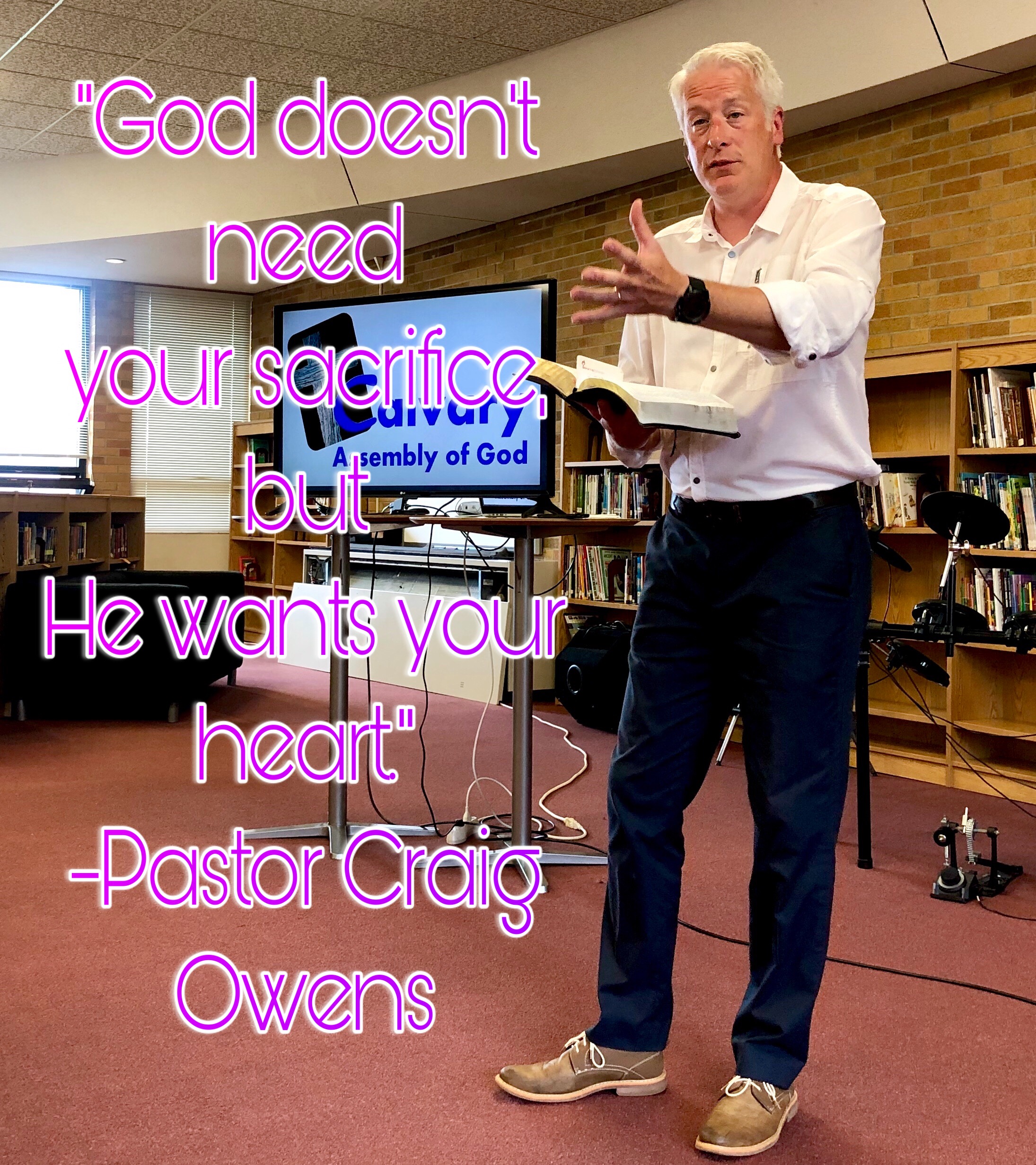
God doesn’t need our sacrifices, but He wants our hearts. 

In order to win our hearts for Himself, THE Judge did something absolutely mind-blowing—THE I AM became flesh like us. And then He became the once-for-all sacrifice for our sins, paying our penalty Himself when He died on the Cross (see Hebrews 2:14-17; 7:17-27). 

This is why we can rejoice when we hear we have to stand before THE Judge. When you have placed your faith in what Jesus did for you on the Cross, when THE Judge opens His perfect record book to your page He will read this inscription written in the crimson red blood of Jesus: PAID IN FULL!

This is why we can rejoice at the thought of seeing THE Judge face to face!

Join me next Sunday as we wrap up this summer looking at the Selahs in the Psalms. We plan to restart this series next summer, unless the Judge calls us home before then!

Thursdays With Spurgeon—Following The Prompting

This is a weekly series with things I’m reading and pondering from Charles Spurgeon. You can read the original seed thought here, or type “Thursdays With Spurgeon” in the search box to read more entries.

Following The Prompting

     I once while preaching at New Park Street Chapel. I had passed happily through all the early parts of divine service on the Sabbath evening and was giving out the hymn before the sermon. I opened the Bible to find the text, which I had carefully studied as the topic of discourse, when, on the opposite page, another passage of Scripture sprang upon me like a lion from a thicket with vastly more power then I had felt when considering the text that I had chosen. The people were singing and I was sighing. I was in a strait between two, and my mind hung as in the balances. I was naturally desirous to run in the track that I had carefully planned, but the other text would take no refusal and seemed to tug at my skirts, crying, “No, no, you must preach from me! God would have you follow me.” I deliberated within myself as to my duty, for I would neither be fanatical nor unbelieving, and at last I thought within myself, Well, I should like to preach the sermon that I have prepared, and it is a great risk to run to strike out a new line of thought, but as this text constrains me, it may be of the Lord, and therefore I will venture upon it, come what may.

     I had brought myself into great difficulty by obeying what I thought to be a divine impulse, and I felt comparatively easy about it, believing that God would help me and knowing that I could at least close the service should there be nothing more to be said. I had no need to deliberate, for in one moment we were in total darkness. The gas had gone out…. Having no manuscript, I could speak just as well in the dark as in the light…. When the lamps were lit again, I saw before me an audience as rapt and subdued as ever a man beheld in his life. … Thus, providence befriended me. I cast myself upon God, and His arrangements quenched the light at the proper time for me. Some may ridicule, but I adore; others may even censure, but I rejoice.

From The Autobiography of Charles Spurgeon

God can speak to pastors as clearly in his or her sermon preparation time as He can in the very moments before the sermon begins. The key is our obedience to follow the prompting of the Holy Spirit. 

Spurgeon would never advocate that preachers “wing it” every time they step into the pulpit. His own life showed a man of diligent study of the Scripture. But neither would Spurgeon say that preachers have to stick to their prepared remarks no matter what. What I think he would say is: Trust God when you’re studying for a sermon, and trust God when you’re delivering a sermon. Allow the Spirit to change your course at any moment. 

Is this a bit nerve-wracking? Spurgeon would say, “Yes, only when deliberating whether to strike out on the new course.” But notice how once he obeyed that prompting, he felt completely at ease.

Spurgeon also reminds us, “I do not see why a man cannot speak extemporaneously upon a subject that he fully understands. Any tradesman, well versed in his line of business, could explain it without needing to retire for meditation, and surely I ought to be equally familiar with the first principles of our holy faith. I ought not to feel at a loss when called upon to speak upon topics that constitute the daily bread of my soul.”

12 Quotes From “The Autobiography Of Charles Spurgeon”

Charles Spurgeon lived exactly as he preached. What a delight that is! Check out my full book review of his Autobiography by clicking here. Also, be sure to check out my weekly Thursdays With Spurgeon series, where I share longer passages from this Prince of Preachers. 

“My sole hope for heaven lies in the full atonement made upon Calvary’s Cross for the ungodly. On that I firmly rely. I have not the shadow of a hope anywhere else.” 

“While my brief term on earth shall last, I should be the servant of Him who became the Servant of servants for me.” 

“For I am persuaded there are more delights in Christ, yea, more joy in one glimpse of His face than is to be found in all the praises of this harlot-world, and in all the delights that it can yield to us in its sunniest and brightest days.” 

“I have found, in my own spiritual life, that the more rules I lay down for myself, the more sins I commit. The habit of regular morning and evening prayer is one that is indispensable to a believer’s life, but the prescribing of the length of prayer, and the constrained remembrance of so many persons and subjects, may gender unto bondage and strangle prayer rather than assist it.” 

“There is nothing that more tends to strengthen the faith of the young believer than to hear the veteran Christian, covered with scars from the battle, testifying that the service of his Master is a happy service, and that, if he could have served any other master, he would not have done so, for His service is pleasant and His reward everlasting joy.” 

“I went to my chamber and told my little griefs into the ears of Jesus. They were great griefs to me then, though they are nothing now. When on my knees I just whispered them into the ear of Him who had loved me with an everlasting love, oh, it was so sweet! If I had told them to others, they would have told them again, but He, my blessed Confidant, knows all my secrets, and He never tells again.” 

“That God predestined, and yet that man is responsible, are two facts that few can see clearly. They are believed to be inconsistent and contradictory to each other. If, then, I find taught in one part of the Bible that everything is foreordained, that is true; and if I find, in another Scripture, that man is responsible for all his actions, that is true. And it is only my folly that leads me to imagine that these two truths can ever contradict each other.” 

“It was said of an old Greek philosopher that he wrote over his door, ‘None but the learned may enter here.’ But Christ writes over His door, ‘He who is simple, let him turn in hither.’” 

“I used to think, sometimes, that if they had degrees who deserved them, diplomas would often be transferred and given to those who hold the plow handle or work at the carpenter’s bench; for there is often more divinity in the little finger of a plowman than there is in the whole body of some of our modern divines. ‘Don’t they understand divinity?’ someone asks. Yes, in the letter of it, but as to the spirit and life of it, D.D. often means Doubly Destitute.” 😀

“When I came to New Park Street Chapel, it was but a mere handful of people to whom I first preached; yet I can never forget how earnestly they prayed. Sometimes they seemed to plead as though they could really see the Angel of the covenant present with them, and as if they must have a blessing from Him. More than once, we were all so awestruck with the solemnity of the meeting that we sat silent for some moments while the Lord’s power appeared to overshadow us. All I could do on such occasions was to pronounce the benediction and say, ‘Dear friends, we have had the Spirit of God here very manifestly tonight; let us go home and take care not to lose His gracious influences.’ Then down came the blessing; the house was filled with hearers, and many souls were saved. I always give all the glory to God, but I do not forget that He gave me the privilege of ministering from the first to a praying people.” 

“It is the extremity of unwisdom for a young man, fresh from college or from another charge, to suffer himself to be earwigged by a clique, and to be bribed by kindness and flattery to become a partisan, and so to ruin himself with one half of his people.” 

“It is of no use to rise before an assembly and hope to be inspired upon subjects of which one knows nothing. If anyone is so unwise, the result will be that, as he knows nothing, he will probably say it, and the people will not be edified. But I do not see why a man cannot speak extemporaneously upon a subject that he fully understands. Any tradesman, well versed in his line of business, could explain it without needing to retire for meditation, and surely I ought to be equally familiar with the first principles of our holy faith. I ought not to feel at a loss when called upon to speak upon topics that constitute the daily bread of my soul.” 

Awesome God, Awesome Praise

Last I week I told you how Hebrew poetry often puts the climax in the middle. In Psalm 47 that middle climax is in verse 5—God has ascended. This is one of seven “psalms of enthronement” in the Psalter. Since all of the Scripture points to Jesus, let’s look at the definition of this word ascend and see how it fits with Jesus: 

When a king is coronated—when he is heading toward his throne—we can expect the people to be happy. So the psalmist tells us that in God’s case the people are clapping and shouting (v. 1), telling God how awesome He is (v. 2), thanking Him for subduing their enemies (v. 3), and expressing their gratitude that He has established them as His people (v. 4). 

Then comes the Selah / Pause—what is happening during this pause? The King is being crowned. He has ascended to His rightful throne. So this is selah/pause is really a deep breath that’s about to explode in a crescendo of praise! 

Now there are shouts of joy (v. 5a). In our earthly understanding, it would be something like: “LONG LIVE THE KING!!” There is also a sounding of trumpets (v. 5b) which literally means a thundering of trumpets. And then there’s the singing—lots and lots of singing. In fact, the word sing appears five times in the next two verses. 

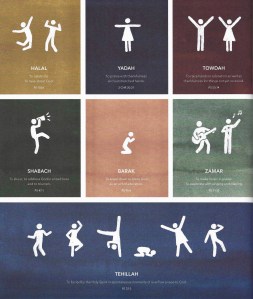
From The Infographic Bible (click the image for more)

There are so many ways to say LONG LIVE THE KING—singing, dancing, raising our hands, falling down on our knees. shouting.  

Our God is praise-worthy. He is clap-worthy! He is sing-worthy! He is dance-worthy! He is shout-worthy! He is bowing-worthy! 

Our awesome God deserves awesome praise! 

Why does it seem that we are prone to worship so quietly? Perhaps we need to take it up a notch or two (or three or four). Perhaps we haven’t gazed into His awesome beauty enough to realize just how incredible He is! 

Do you think shouting praises to the King of kings is too undignified? Did you know that when the King of kings returns, He is going to shout and there is also going to be a thundering trumpet? For the Lord Himself shall descend from heaven with a shout, with the voice of an archangel, and with the trumpet of God (1 Thessalonians 4:16)! 

Here are 4 important lessons from this Psalm of Enthronement—

  1. God is the King of all kings, enthroned on the Throne above all thrones. He is worthy of your “undignified” praise and acclamation. 
  2. God should always get your best praise. In verse 7 the phrase sing praises with understanding really means to sing with insight and skill. 
  3. God deserves a holy vocabulary. We see the word awesome in verse 2. Every time this word is used in the Scripture, it’s speaking of God. So why would we use a word like this for something like a hamburger!?!
  4. All nations and kings and peoples and tribes will bow before God at the end. They will bow in either acclamation for their King, or in abject terror of the All-Righteous Judge. Let’s remain missional so more people in the end are crowning Him as their All-Merciful King. 

I hope you can join me this next Sunday as we continue our series looking at the Selahs in the Psalms. 

8 Quotes From “The Jesus Who Surprises”

Dee Brestin has given us an excellent “starter’s guide” to help you discover Jesus on every page of the Old Testament. Be sure to check out my full book review by clicking here. 

“Every time we sin, it is because we do not trust the goodness of God, so we endeavor to meet our needs our way.” 

“The blood of innocent lambs spills throughout the pages of the Old Testament but ceases when John the Baptist heralds Jesus as the Lamb of God. Jesus is the only Lamb who can take away our sins (Hebrews 10:4, 10). All other sacrificial lambs were simply a foreshadowing of the One to come.” 

“What satan wants to do is cause attachment disorder between God and us. … satan wants to convince us that God does not love us and does not want the best for us so that we will back away and stop talking to Him, throwing away our only lifeline.” 

“Think about what makes Jesus so angry over and over again—it is the pretense and dishonesty of the Pharisees. He is not angry with Job, Naomi, the prophets, or the psalmists who lament, and indeed He often comes running to them. But He is angry with the Pharisees. They put up a façade, a wall that keeps them from experiencing intimacy with the Lord, and one day He may surprise them by saying, ‘I never knew you; depart from Me’ (Matthew 7:23).” 

“Recording and retelling increases memory—memory that is sorely needed in times of trouble.” 

“God knows the shaking of our world can awaken us to understand what is transitory and what is eternal. If we press into Him, we will discover what can never be shaken.” 

“Prayer is not getting God to give you what you want but dialoguing with Him, listening to Him, submitting to Him, and asking Him to give you what He wants, even if it is costly.” 

“Love is not love if it is only grace. That is enablement.” 

The Jesus Who Surprises (book review)

Oswald Chambers wisely noted, “God did not give a progressive revelation of Himself through the Old Testament: the people progressively grasped the revelation, which is very different.” Jesus is all throughout the Old Testament, giving us ample opportunity to discover Him on every page. A helpful guide to get you started on this journey of discovery is The Jesus Who Surprises by Dee Brestin. 

Dee wrote that she was intrigued by Christ’s words to the questioning disciples walking the road to Emmaus on the morning of His resurrection. These men were having a hard time wrapping their minds around the report from eyewitnesses who said Jesus was alive! As Jesus walked with them (although unrecognized by them for the moment), Luke records, “And beginning with Moses and all the Prophets, He explained to them what was said in all the Scriptures concerning Himself” (Luke 24:27). 

The Jews divided their Scripture—the part we now refer to as the Old Testament—into three sections: the Law, the Writings (the poetic books), and the Prophets. In The Jesus Who Surprises, Dee divides her book into the same three sections, giving us samples of how Jesus surprises us in the pages of each section of the Old Testament Scripture. Each chapter concludes with a Bible study that can be done on your own, or in a small group setting. 

The two disciples on the road Jesus commented to each other later that they felt their hearts burning as Jesus revealed Himself all throughout the Scriptures. I pray that as you read The Jesus Who Surprises you will experience the same burning. Then I believe this book will start you on your own lifelong journey to read the Scriptures for yourself and see Jesus on every single page! 

I am a Multnomah book reviewer. 

The Nearness Of God

I think too often we’re in too big of a hurry when we read the Bible. 

Think with me for a moment how much longer it takes to sing the lyrics of a heart-stirring song than it does to just say the words. The psalms were written as songs, and although the melodies that accompanied them have been lost to the pages of history, we would still do well to move more slowly and deliberately and passionately through these inspired songs. 

Let’s slowly consider Psalm 46 from four different perspectives…

First, as a pause from the noise. Selah can be used three different ways: (1) a pause to reflect; (2) a deep breath to crescendo into something bigger; or (3) a contrast between two very different things. There are three selahs in this psalm, and all of them call us to a pause from something noisy. To pause from…

    • natural upheavals—the earth gives way, the mountains fall, the waters roar, the mountains quake
    • political upheavals—nations are in an uproar, kingdoms fall 
    • religious upheavals—God has to serve the judgment of desolation, as He breaks the bow, shatters the spear, burns the shield

Selah/Pause from these upheavals and reflect—God is our refuge … the Lord Almighty is with us.

Second, notice the contrasts. The songwriter takes us to man’s mountains that fall and quake, but reminds us that THE mountain of God is our sure fortress. In the imagery of water, we see man’s attempts at refreshing that are roaring and foaming, but we also see God’s river that brings life and makes people glad. And look at how man’s use of power results in an uproar, but God makes wars to cease. 

Selah/Pause and reflect—aren’t God’s ways better than man’s ways? 

Third, notice the nearness of God. Twice the songwriter reminds us “The Lord Almighty is with us.” And then we hear God Himself speak to our anxiety-prone hearts, “Be still and know that I am God.” Those words “be still” can also mean “let go.” Let go of earthly things, negative voices, fears, trying to control events. If your hands are full of that, how can you grab onto God?! 

Selah/Pause and reflect—God is calling me to go—and stay—near to Him! 

Fourth, see how God’s peace and protection surrounds AND permeates me. In our Western literature, we are used to the climax—or the payoff—being at the end of the story. The story builds and then comes to a conclusion where the hero prevails. But in Hebrew poetry, the climax—or the payoff—is typically in the middle. So when we read Psalm 46, it’s tempting to say, “Hallelujah! Verse 11 says God is my fortress. That’s the climax, the payoff!” But really the payoff—the most important part—is the middle. In this psalm, that is verse 6. Everything else builds to this and radiates out from this. 

Read this psalm for yourself by reading the verses in this order: 6, 5, 7, 4, 8, 3, 9, 2, 10, 1, 11.

Selah/Pause and reflect—God is not only IN me, He also surrounds me. I’m invited to come close to Him because He is already in me. Nations rage, but His voice in my heart silences the upheaval. He is with me. He is the Most High Sovereign God that controls the outcome of all nations. Earth quakes and kingdoms rumble, but I will have no fear; I will be still and know He is God. He is my refuge, my strength, my help, my fortress! 

Don’t rush the reading of the Psalms. Slowly “sing” these inspired lyrics and listen to how the Holy Spirit will whisper to your heart. 

I’ll be continuing our series on the Selahs in the Psalms this Sunday, and I would love to have you join me. 

God’s Preference Is You

My dear friend Josh Schram relaunched our summertime series looking at the Selahs in the Psalms. “Selah” (or “Interlude” in some Bible translations) can mean either a time of reflection, a deep breath to go into something stronger, or a time to weigh the contrasts. 

Psalm 44 is a classic example of a Selah calling us to weigh the contrasts! The first 8 verses of this psalm celebrate the recollections of God’s past victories, declarations of God being our King, and crescendoing to a note of continual praise—O God, we give glory to You all day long and constantly praise Your name!

Then comes the Selah—pause. 

And after the pause, the scene turns dark. The psalmist now recounts how bad his situation is, descending to the low note of “we collapse in the dust, lying face down in the dirt” (v. 25). 

Josh reminded us how our preferences change over time. Consider the telephone—we’ve gone from push-button corded phones, to phones with longer cords, to cordless phones, to bulk bag phones, to smaller cell phones, to smartphones. It’s very human for our preferences to want more and better. 

But God’s preference never changes. God’s preference is YOU! 

He can never love you any more than He already does. Nor can He love you any less. 

The apostle Paul quotes Psalm 44:22—yet for Your sake we face death all day long; we are considered as sheep to be slaughtered—when he explains that absolutely nothing can separate us from God’s love (see Romans 8:31-39).

In marriage vows, we usually promise to love our spouse “for better or for worse, for richer or for poorer, in sickness or in health.” True love goes through it all! 

God’s love goes through it all with us. That’s why the psalmist’s last words are so hopeful: Rise up and help us; rescue us because of Your unfailing love. His unfailing love is our assurance of His presence and His ultimate rescue. Paul also reminds us “indeed we share in His sufferings in order that we may also share in His glory” (Romans 8:17). 

Josh said, “I want you to remember one thing: Nothing!” Nothing can separate you from God’s love. Ever!  

Hillsong United has some memorable words in their song Highlands—“I will praise You on the mountain, and I will praise You when the mountain’s in my way. … You’re the heaven where my heart is, in the highlands and the heartache all the same.” 

No matter what you’re facing, God’s preference is you. He loves you, and He wants you to grow closer to Him through this trial. Praise Him for His unfailing love on the mountain and in the valley, and then wait in eager expectation for Him to come to rescue you. 

Selah

The word Selah appears nearly 70 times in the Bible, almost exclusively in the Psalms. Although it is primarily a musical term, it applies beautifully to our new summer series. 

Selah can mean…

  • a pause from the noise to reflect;
  • a preparation for an exciting accent; or 
  • a reflective time of consideration

Throughout the Psalms, Selah appears at the end of a verse, at the end of the psalm, or sometimes even mid-sentence. But each one of them is perfectly placed by the Spirit-inspired authors to get us to take a breath and deeply contemplate what we just read or sang. 

Summertime is typically a time for us to pause from our regular routine. Perhaps it’s a vacation, time with friends and family, driving around with the windows down and the music blasting, or just a quiet walk through woods or along a beach. In any case, whether we realize it or not, we’re actually doing Selah in these break-from-the-routine activities. 

Join me this Sunday as we continue our summertime look at each of the Psalms that ask us to Selah. I think you will find that this Sunday summertime pause will be both refreshing and encouraging. You can join me either in person or on Facebook Live. 

If you missed any of the messages this summer, please check them out here:

And you can find the messages from last summer’s Selah series by clicking here.

8 Quotes From “When Faith Fails”

We’ve all been there: an unexpected calamity has rocked our faith, making us question what we previously believed to be true. What do we do with these times of doubt? Dominic Done has given us a helpful resource in his book When Faith Fails. Please check out my full book review by clicking here. 

“An anonymous fourteenth-century mystic once said that we find ourselves ‘in a cloud of unknowing.’ That is why we doubt. We don’t always see the sky. However, what we have to be reminded of here is that all of this was part of God’s design. He purposefully made it like this. He built limits into the system. It wasn’t an accident. He knew we would have to live with so many unknowns. And yet He chose for the human story to look this way. … When God decided to create, He could have said yes to a thousand other possibilities. But He didn’t. He chose this world. He chose you. He chose me. Limits and all. And still, He called it ‘good.’ All of this means that doubts are normal. They’re a natural consequence of living in this world.” 

“If all we care about is certainty, we lose the beauty of mystery. If all we value is explanation, we lose the joy of exploration.” 

“We need to stop vilifying those who live in the tension of conflicted faith. Doubt isn’t a malevolent demon that we need to exorcise out of our brothers and sisters with sanctimonious words. It’s part of their story. It’s part of my story. Jude 22 says, ‘Be merciful to those who doubt.’” 

“What if God made the world like this to push us to deeper faith? … Doubts aren’t just an obstacle; they’re an opportunity. Uncertainty can lead us into the beautiful mystery we call God.” 

“What’s vital to note here is that when the Bible uses the word doubt it’s different from the word unbelief (Matthew 14:31 and Hebrews 3:19). This is important because some Christians assume that doubt and unbelief are synonymous. They’re not. Doubt can lead to unbelief, just as doubt can lead to faith. But the two are not the same. Doubt says, ‘I am unsure of what is right.’ Unbelief says, ‘I don’t care about what is right.’ Doubt is searching for the light. Unbelief is choosing to gouge out your eyes. Doubt is pursuing truth, wherever it may lead. Unbelief is content with a lie. Doubt exists somewhere between belief and unbelief. Doubt is the moment of tension, which in and of itself isn’t good or bad. It’s somewhere in between. … Doubt isn’t the end of the story; it’s the suspense within it.” 

“Doubt’s greatest strength is secrecy.… But if we name our doubts and drag them into the light, we may find resolution, or we may discover the tension of authentically living in a doubt-filled faith.” 

“Abraham and Sarah doubted God’s promise (Genesis 17:17-22; 18:10-15). Gideon doubted his calling (Judges 6:36). Job doubted God’s character (Job 7:20-21). John the Baptist, whom Jesus called ‘the greatest of all the prophets,’ doubted if Jesus was the Messiah (Matthew 11:1-6). Peter doubted his faith (Mark 14:66-72). Thomas doubted the resurrection (John 20:24-29). The list goes on. Scripture doesn’t edit out the stories of those who struggled to believe. It weaves their heart-rending struggles into the narrative.” 

“If your faith is being shaken by the suffering you see, don’t be content with cheesy Christian truisms or Facebook clichés. … Lean into the chaos. Cry out to God. Talk to people who have gone through pain and have come out on the other side awash with hope. Immerse yourself in Scripture’s lament and redemption. Dare to say, ‘I will not let You go until You bless me.’”