How Are Godly Leaders To Use Their Authority?

Listen to the podcast of this post by clicking on the player below, and you can also subscribe on AppleSpotify, or Audible. 

Have you ever heard a parent say to their child, “Because I’m the parent and I say so”? 

Have you ever heard a pastor say that to a sheep in his flock? 

There is a certain authority that comes with God’s calling on a shepherd leader, but how exactly are pastors to use that authority? Or asked another way, how are shepherds to use their shepherding staff? 

When Paul is writing to his friend Titus some instructions for pastors, he uses a Greek word for “authority” three times. 

First, in regard to his own calling he says, “Paul, a bond-servant of God and an apostle of Jesus Christ, for the faith of those chosen of God and the knowledge of the truth which is according to godliness … but at the proper time revealed His word in the proclamation with which I was entrusted according to the commandment of God our Savior” (Titus 1:1, 3 NASB). 

The phrase “chosen of God” in verse 1 literally means the same thing he says in verse 3: “according to the commandment of God.” 

The third usage of this word is when Paul tells Titus that he has this same authority: “These things speak and exhort, and rebuke with all authority. No one is to disregard you” (Titus 2:15). 

Interestingly, Paul uses this Greek word a total of seven times in his letters, with three of those times being in this short letter to Titus. 

Paul also uses this word three times in his two letters to the saints in Corinth (1 Corinthians 7:6, 25; 2 Corinthians 8:8). But in all of three of these instances, Paul says, “I choose not to use my God-given authority on this, but I’m asking you to make a good choice.” 

The only other time Paul uses this word in a letter is found in his closing remarks to the saints in Rome, with the emphasis there on the authority of the Word of God which he preaches—

     Now to Him who is able to establish you according to my gospel and the preaching of Jesus Christ, according to the revelation of the mystery which has been kept secret for long ages past, but now has been disclosed, and through the Scriptures of the prophets, in accordance with the commandment of the eternal God, has been made known to all the nations, leading to obedience of faith. (Romans 16:25-26 NASB) 

Questioning of our pastoral authority is one of the sheep bites I discuss in my book When Sheep Bite. Here is one passage from that chapter—

     When our conversation with criticizing sheep hasn’t gone well, and when those unhealthy sheep begin to gossip and then slander, it’s inevitable that they will eventually began to question your authority as a shepherd. Perhaps they think you’re too young and naive, or too old and out of touch. They may question your motives, or the vision you’ve imparted for the church, or your ability to follow through on what you have already shared. Whatever the case, these biting sheep seem to be implying that they know better than you do how this pasture should be run. 

     During times like these, it is tempting to want to “prove” that we are qualified, that we do know what we’re doing, and that we can indeed successfully pursue the vision we’ve articulated for them. Once again, it’s natural to want to say, “I’ll show you just how qualified I am!” 

     Before we respond, we need to recognize the source of our authority. There is a certain authority that comes with a position or an office. For instance, a parent can say to a child who is questioning a rule, “Because I’m the parent and I say this is how it is going to be.” We see similar positional authority for CEOs, police officers, school teachers, and pastors. But like the little boy we met at the beginning of this book, people may say to a positional leader, “I may be obeying you on the outside, but on the inside I’m questioning everything you’re saying!” 

     Far greater than positional authority is moral authority. This is authority that comes not merely from a title or position, but from who conferred that title or position on the leader. If God has called us and appointed us to this pasture, that is all the authority we need.

Let me wrap up with four takeaways for shepherd leaders:

  1. A godly leader’s authority is imparted by God. Keep in mind these three powerful words, “God chose me.” That means you have nothing to prove. 
  2. As a godly leader, you are “entrusted” with your authority and that means you have to give an account to God for its application. Don’t let the pain of the moment tempt you to react in a shortsighted way. 
  3. There are times to use God’s authority to hold the line; specifically when addressing issues which are biblical or unbiblical (Titus 1:9-14, 3:1-8). 
  4. There are also times for us to sheath this authority; like when addressing a non-biblical issue (Titus 3:9). 

Being a godly shepherd leader is not for the faint of heart! But God has called YOU which means He has also equipped YOU to respond appropriately in each situation. 

My book When Sheep Bite is packed with biblical examples, personal experiences, practical applications, and prayers for each of these biting problems you will face. I hope you will pick up a copy today.

►► Would you please prayerfully consider supporting this ministry? My Patreon supporters get behind-the-scenes access to exclusive materials. ◀︎◀︎
Eternal > Temporal

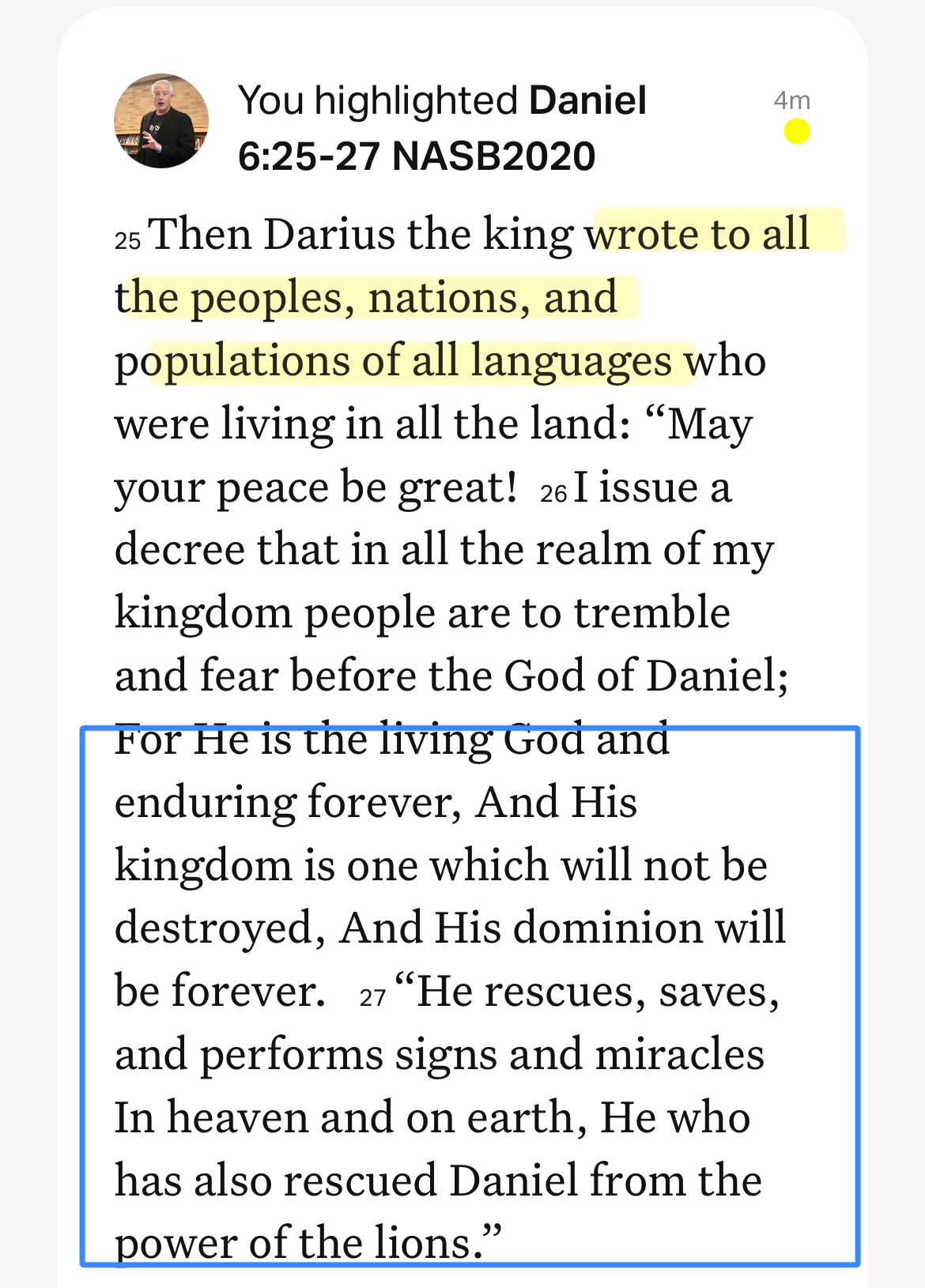
Then Darius the king wrote to all the peoples, nations, and populations of all languages who were living in all the land: “May your peace be great! I issue a decree that in all the realm of my kingdom people are to tremble and fear before the God of Daniel; for He is the living God and enduring forever, snd His kingdom is one which will not be destroyed, snd His dominion will be forever. He rescues, saves, and performs signs and miracles in heaven and on earth, He who has also rescued Daniel from the power of the lions.” (Daniel 6:25-27)

In order for God’s glory and fame to be proclaimed “to all the peoples, nations, and populations of all languages,” Daniel had to spend a single night with ravenous lions. 

When you are facing adversity—even death threats—don’t ask, “God, why is this happening to me?” Instead you can declare, “God, You are going to be highly glorified among all the people! I will remain faithful and steadfast in my trust in You!” 

The extent to which God will reveal His glory is not worthy to be compared to the single night we have to endure. “For I consider that the sufferings of this present time are not worthy to be compared with the glory that is to be revealed to us” (Romans 8:18). 

I talk more about Darius’ change of heart in my post Why We Pray For Government Leaders.

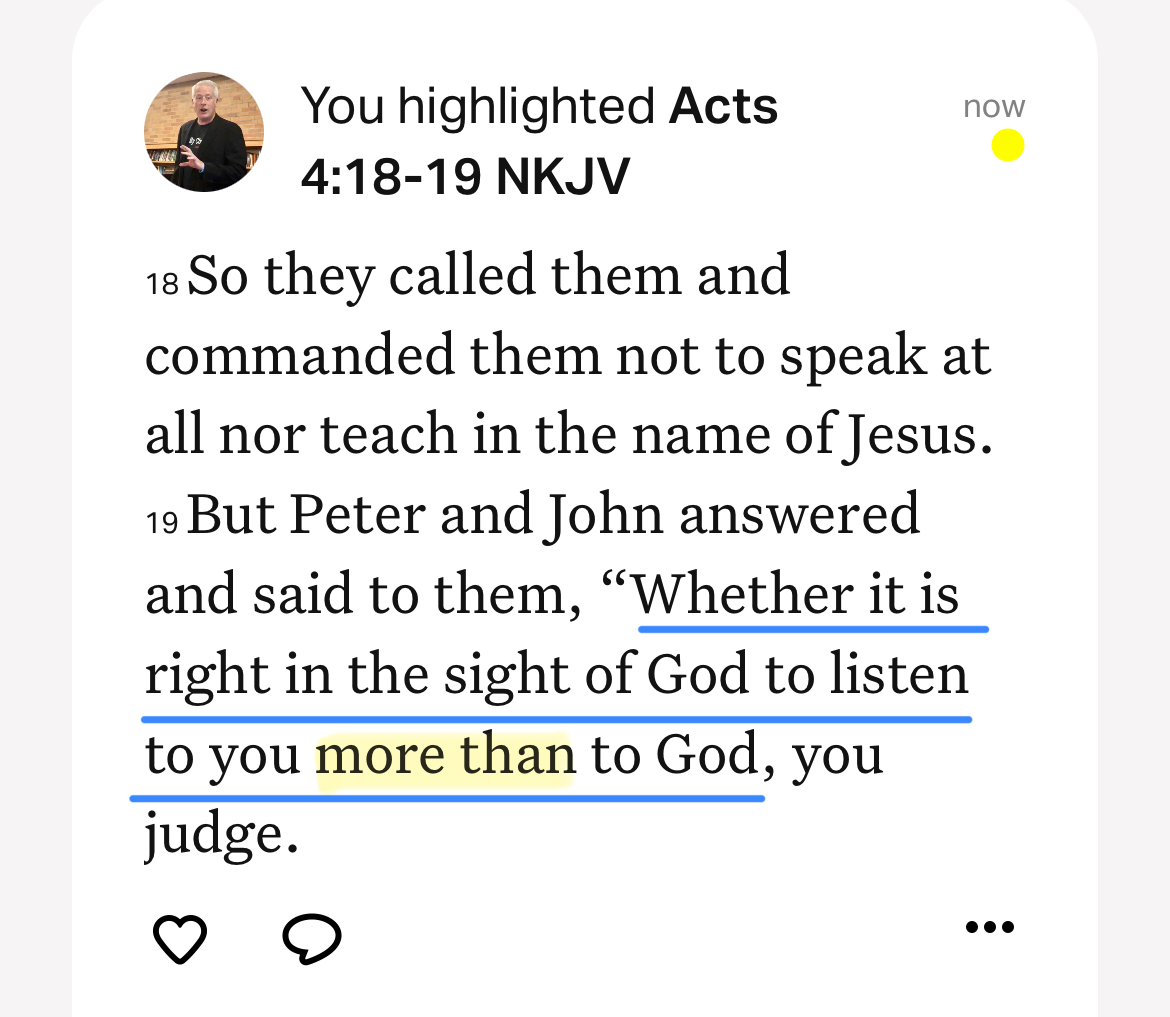
Dr. Henry Halley points out another way the eternal trumps the temporal: “There is no authority apart from God. When human authority rejects God’s authority, it becomes twisted and loses its right to demand compliance (Acts 4:19-20, 5:29). God’s people are responsible to obey the government because it has been set in place by God [Romans 13:1-2; Daniel 4:17], but when government directs against God’s will, the Giver of all authority has the higher claim on our allegiance. We must resist any command that is against God’s will (Exodus 1; Daniel 3; Hebrews 11:23).”

The Words Of Jesus

Listen to the podcast of this post by clicking on the player below, and you can also subscribe on AppleSpotify, or Audible. 

After Jesus drove the merchants out of the temple, He began to teach those who gathered around Him. Luke records that “all the people hung on His words” (Luke 19:48). 

I believe that one of the main reasons His words had such authority and power to capture people’s attention was because He was so immersed in Scripture. As Jesus cleared the temple, He quoted from two Old Testament prophets. As He told a parable to the crowd in the temple—a parable that the religious leaders knew “He had spoken…against them”—He made a passage from Psalm 118 the foundational piece of His story. 

The words of Jesus are…

  • Scriptural 
  • authoritative 
  • loving
  • unswervingly truthful
  • practical
  • challenging 
  • unconventional (according to human standards) 
  • God-glorifying 
  • paradigm challenging
  • life changing

I want others to say of me what Charles Spurgeon said of John Bunyan, “Why, this man is a living Bible! Prick him anywhere—his blood is Bibline, the very essence of the Bible flows from him. He cannot speak without quoting a text, for his very soul is full of the Word of God.” 

Wouldn’t you want that said of your life too? I sure would!

Our first step is to read the Word of God. Next, we need to allow the God of the Word to transform our minds. And then we can rely on the Holy Spirit to help us apply the Bible to everything we say and do. 

Heavenly Father, I pray that people may hear the words of Jesus in all the words I speak. Holy Spirit, bring all of the Word I have read back to my mind (John 14:26; Mark 13:11) so that it is not my words that I am speaking but Yours. In the name of Jesus I ask this. Amen! 

(To go a little deeper on this topic, check out Whose Words Have Weight? and The Timeliest of Words.) 

►► Would you please prayerfully consider supporting this ministry? My Patreon supporters get behind-the-scenes access to exclusive materials. ◀︎◀︎
Links & Quotes

God will give you everything you need to minister to others. But there’s one thing you have to do first…

“He who thinks half-heartedly will not believe in God; but he who really thinks has to believe in God.” —Isaac Newton

Back in 1929, Donald Gee shared three temptations that Pentecostals needed to be cautious of avoiding: (1) selfish satisfaction, (2) fanaticism, and (3) the temptation to forsake the pure worship of God in exchange for popularity. Check out the full article here.

I really appreciate the leadership insights from Dan Reiland. That’s why I was so honored to have him write such a nice endorsement of my book Shepherd Leadership! Here is an important post Dan wrote for leaders, warning us of 5 ways we can misuse our spiritual authority

Fight The New Drug is right on-target in warning about the dangers of pornography. Check out this insightful post that gives 8 reasons why not watching porn can improve your real human relationships as well as your physical and emotional health

Another display of God’s masterful creativity in the Archerfish. I absolutely love these video from The John 10:10 Project!

Links & Quotes

I co-host a leadership podcast with my good friend of 30+ years Greg Heeres. In an episode that came out last week, we were discussing the importance of friendships for leaders. All of us need friends that are investing in our lives. You may check out the rest of the conversation Greg and I had by clicking here.

Jonathan Woodward writes, “The right use of authority or power can make people glad. In our age, however, power is often immediately viewed with skepticism or outright disdain.” He also talks about our responsibility to the incorrect use of leadership authority: “It’s absolutely necessary to identify, challenge, and rebuke sinful leadership. It ensures that people are cared for and God is honored.” Check out The Power to Bless: Six Dimensions of Good Leadership.

More and more scientists are dissatisfied with the lack of evidence supporting the theory of evolution. ICR reports, “Indiana University Biologist Armin Moczek told The Guardian, ‘We still do not have a good answer. This classic idea of gradual change, one happy accident at a time, has so far fallen flat.’”

The churches in my hometown of Cedar Springs, MI, have partnered together to make sure students who are food insecure on the weekend are supplied with nutritious food to carry them through the weekend. If you would like to know more, or if you would like to help us, please check out the Cedar Springs Ministerial Association website.

“Because we love something else other than this world, we love even this world better than those who know no other.” —C.S. Lewis

This is one of the best interviews I have done. I so enjoyed this! And the good news is this is only part 1. We had such a good conversation that the hosts asked me to stick around to record another episode with them. Here is the first session…

“Here’s the deal: the better you get, the harder you have to work.” —Albert King, speaking to Stevie Ray Vaughan

Here is a brief clip from a teaching I did for some ministry interns. You can check out more of this by clicking here.

The Proper Value Of Words

Listen to the podcast of this post by clicking on the player below, and you can also subscribe on AppleSpotify, or Audible. 

I once knew a businessman who was one of the most silver-tongued talkers I have ever met! He could persuade just about anyone to join him in one of his “can’t miss” business ventures. 

And even after they did miss (which was all of them that I was aware of) he could still convince many of his backers to continue. I never knew him to fulfill what he had promised. 

Eventually, this caught up with him. And so did the law, and he ended up serving a prison term. 

It has always been intriguing to me how much value we put on the words of leaders. It seems as if they can “talk a good game,” we feel a need to exalt them to a higher level. It’s not the one who gets things done, or the one who has the best ideas, or the one who can bring increased efficiency or effectiveness, but the one who can talk the most convincingly. 

I think about in my own profession as a pastor. Churches will select a pastor based on how he sounds from the platform. And yet the sermon is only a tiny fraction of a pastor’s work each week. 

The danger comes when the leader thinks that his highest value to the organization is the words he speaks. Inevitably, then, he will put more effort into what he says than into what he does. He will spend a lot of time figuring out the right words to say, and how to move people’s hearts. 

The apostle Paul told the Christians at Corinth, “My speech and my preaching were not with persuasive words of human wisdom” (1 Corinthians 2:4). And he told the Christians at Thessalonica, “For you remember what we taught you by the authority of the Lord Jesus” (1 Thessalonians 4:2), not Paul’s own authority. 

I don’t want people to be impressed with me. I don’t want my authority to come from my vocabulary. I simply want to be known for speaking the Word of God, and then living a life that matches the Word of God. 

As King Solomon said, “A truly wise person uses few words” (Proverbs 17:27). The wisest words are not mine but God’s. Then “your faith [is] not in the wisdom of men but in the power of God” (1 Corinthians 2:5). 

Words do have their place. But let’s always make sure that that place isn’t in place of God’s Word. 

►► Would you please prayerfully consider supporting this ministry? My Patreon supporters get behind-the-scenes access to exclusive materials. ◀︎◀︎

Authority To Serve

And David knew the Lord has established him as king over Israel and that his kingdom had been highly exalted for the sake of His people Israel. (1 Chronicles 14:2) 

“David knew” reminds me of “Jesus knew” in John 13:3.

Both knew God had placed them exactly where they were supposed to be. 

Both knew the authority God had given them. 

Both knew the power that was theirs to use.

Both knew they could do self-glorifying, self-promoting things with their power. Yet both used their authority and power to serve others: “for the sake of His people.”

Jesus gave His authority to us (Matthew 28:18). 

Do I know that? 

I mean, really know that? 

If so, am I using His authority to serve others?

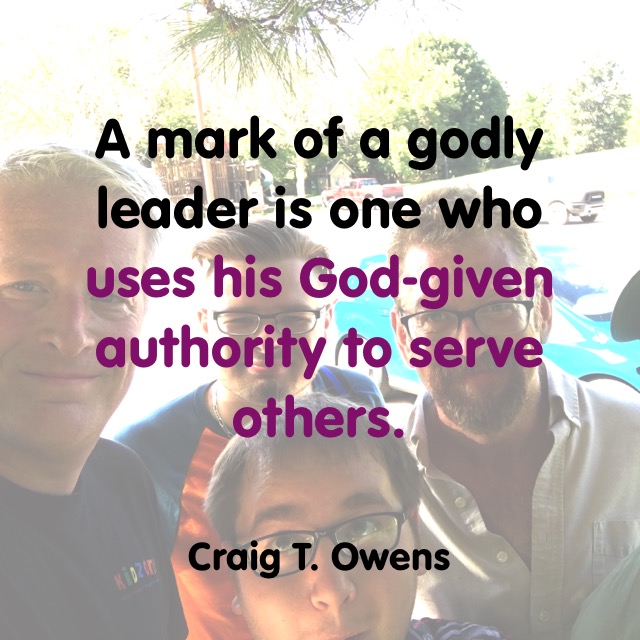
A mark of a godly leader is one who uses his God-given authority to serve others. 

This is part 53 in my series on godly leadership. You can check out all of my posts in this series by clicking here.

Our Priestly Service

… pronounce them clean … pronounce them unclean … (about 40 times in Leviticus 12-15).

The Old Testament priests could not cure anyone, they could only pronounce cleanness or uncleanness. Only God could cure. So when Jesus walked this earth, He showed His deity by touching lepers and saying, “You are clean,” by stopping the flow of blood that made a woman unclean, and by restoring maimed limbs and blinded eyes that kept people from entering into the place of worship. 

Jesus said to His followers—and He still says to us today—“You are already clean because of the word I have spoken to you“ (John 15:3). Jesus cleanses our bodies and our consciences, and He keeps us clean until He presents us to His Father in Heaven (Hebrews 10:22; Jude 24).

We have been cleansed for a purpose. What is that purpose? In short, it is for our priestly service to our world. 

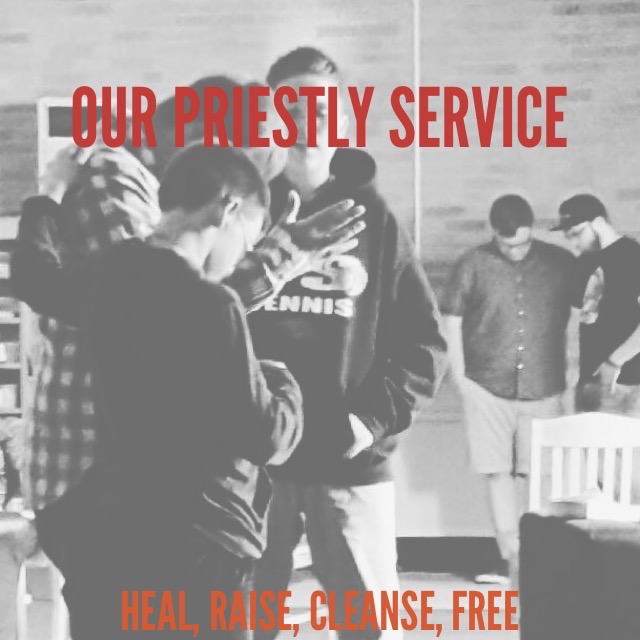
I find it interesting that the person in the Old Testament who was pronounced clean was then anointed in the exact same ways as the priests were when they were consecrated for service in the tabernacle (Leviticus 14:14-18, 25-29; 8:23-24, 30). When Jesus sent His followers out to minister, He consecrated them with the New Testament mandate, “Heal the sick, raise the dead, CLEANSE those who have leprosy, drive out demons. Freely you have received; freely give“ (Matthew 10:8). 

Not just, “Pronounce them healed, raised, cleansed, and freed,” but “Heal, raise, cleanse, free”!

Jesus has cleansed us AND consecrated us to be His ministers. He has given us His authority not just to make pronouncements, but to actually heal and deliver! 

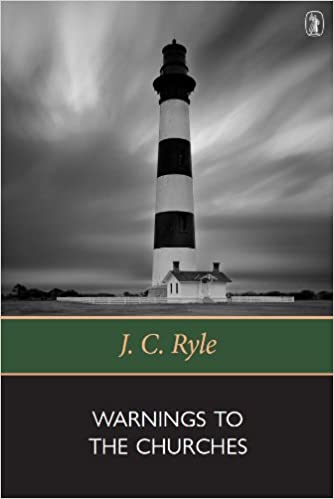
Warnings To The Churches (book review)

J.C. Ryle died in 1900, placing his writings two centuries before our own. And yet his Warnings To The Churches sound an alarm that is just as relevant to the Church and her leaders as if it were written last week! 

Bishop Ryle spoke and wrote with an authority that sounded much like the Old Testament prophets thundering, “Thus saith the Lord!” And at the same time, you can also hear his ardent love for Christ’s Bride as tenderly as the beloved disciple John, who called himself “the disciple whom Jesus loved.” Taken together, that means Ryle’s words are steeped in authoritative, loving Scripture. 

He pulls no punches in pointing out how even Church leaders have bought into a definition of “church” that doesn’t quite line up with the way Jesus defined it. He reminds pastors of their heavy responsibility to preach the Word of God in all its purity. Just like Jesus, Ryle warns church leaders of the “leaven of the Pharisees and Sadducees.” And he calls for loving confrontation of those leaders who have succumbed to the “leaven” just as Paul confronted Peter. 

This is a challenging book to read simply because of the gut-level honest introspection that it will require. I certainly couldn’t read through this book thinking I’ve got my act together, and I doubt few others will be able to either. If you are a church leader and you would like Ryle’s iron to sharpen your iron, Warnings To The Churches is a definite must-read for you.

Authority Comes From Submission

Authority comes from submissionOut of all the unlikely places, I never would have expected that guy to be a theologian! After all, the ones with the amazing insight into how God works are supposed to be deep into Scripture, know the ancient biblical languages, and be able to preach profound sermons. This guy had none of that.

He was simply an officer in the military who had an aide-de-camp who was sick. He had enough basic knowledge to see that Jesus could do something for his faithful assistant, but—strangely enough—he didn’t think he was worthy of having Jesus come into his home.

He said something that caused Jesus to be amazed. When Jesus is amazed by something a man does, that gets my attention!

This military officer said, “Although I’m an officer who can tell people what to do—when I say, ‘Jump!’ they say, “How high, sir?’ When I say, ‘Go!’ they say. ‘Yes, sir!’—I’m also a man under authority. I recognize that you too, Jesus, are a Man of authority. So if You simply say, ‘Go!’ to this disease, it will go.”

Jesus was amazed!

What theology came from that guy—a Roman centurion! This military officer saw that authority came from being under authority. Jesus had authority because He remained under the authority of His Heavenly Father (see John 12:49-50; Philippians 2:5-11).

We can learn a valuable lesson from this unlikely theologian. Authority comes NOT from trying to get our way, but from doing things God’s way … from staying under His authority. All the authority you will ever need is found in the Word of God (see Matthew 9:6-8; 10:1; 16:19).

This is a great story. Check it out for yourself here.