How “Alien” Is Your Christianity?

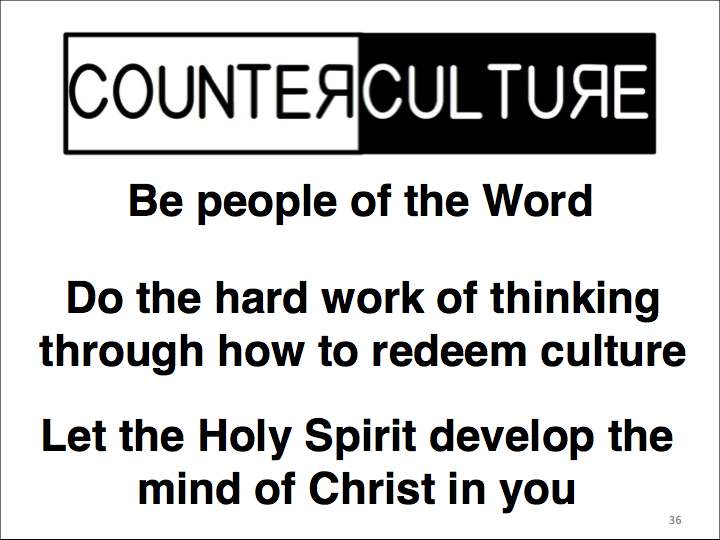
Peter pulls no punches as he calls Christians for what they are (or perhaps what they really should be): aliens … strangers … peculiar people.

But how can that be, especially in the United States of America? Survey after survey says that upwards of 95% of Americans claim to believe in God, and fully 8-out-of-10 of every American call themselves a Christian.

You only need to take a look at our schools, our government, or our entertainment to see how “alien” biblical values are with current cultural trends. I think all of us have experienced that when we try to live by a biblical standard, people roll their eyes at us (at best) or maybe outright mock us. Perhaps the term “aliens” is not so much for what we say we believe, but how we live what we believe.

That’s why Peter calls us peculiar (1 Peter 2:9). This word means a people so focused on what God wants, that they don’t have time to worry about what the world wants. Peculiar people are so focused on “Your kingdom come and Your will be done” that they don’t pay attention to “keeping up with the times.”

Peter says that the inevitable outcomes of this peculiar lifestyle are accusations of wrong doing, unjust treatment, insults, and slander, just to name a few (see 1 Peter 2:12, 19, 21-23; 3:16).

When we are treated this way, Peter tells Christians about their alien response:

  • Love one another deeply
  • Live good lives doing good deeds
  • Do not retaliate with insults or threats
  • Live in such a hope-filled way that others can’t help to ask you about it (see 1:22; 2:12, 23; 3:15)

So… how “alien” is your Christianity? Are you doing so many good things that it catches the attention of others? Are you responding to mistreatment in a Christ-honoring manner? Do you speak with others gently and respectfully? Is your life so full of hope in your eternal home in Heaven that people can’t help but ask you for the reason for the hope you have?

Don’t worry about being popular; be peculiar. Be so alien to this world’s values that you compel others to encounter Jesus Christ as you have! 

If you’ve missed any messages in this series, you may find the complete list by clicking here.

The Q Series—The Bible

Our annual Q Series is where folks send their questions to me on a variety of subjects and we do our best to answer them. This week many of the questions were about the Bible. Questions like:

  • What books should be included in the Bible?
  • What about Bible translations?
  • Is it okay for the Bible to have pictures in it?

Here’s what we discussed, along with the time this discussion appears on the video:

  • How was it decided what books would be included in the New Testament? [5:38] **Be sure to check out this post: How We Got The Bible on Biblegateway.
  • J. Warner Wallace’s list of criteria for New Testament books [9:45]
  • Did contemporary sources support or refute the New Testament authors? [11:45]
  • How did the final 27 books of the New Testament make the list? [15:02]
  • How was it decided what books would be included in the Old Testament? [18:22]
  • Evidence presented by the Apostle Paul [20:31]
  • How do we know the Scriptures were accurately transcribed? [22:50] **Be sure to check out this post: Why Trust The Bible? on Biblegateway.
  • The history surrounding the complete Latin Bible and the Dead Sea Scrolls [23:45]
  • What are Bible translations and paraphrases (with references to the Wycliffe Bible and the discovery of the Rosetta Stone)? [25:45]
  • Some cautions about Bible paraphrases [33:23]
  • Is it okay for a Bible to have pictures in it? [35:16]
  • Are icons of the Cross acceptable or a blasphemy? [37:42]
  • How can someone better understand the Bible when they read it for themselves? [41:32]
  • Why ask questions? [48:39]

We’ll be discussing more questions this upcoming Sunday, so be sure to send them my way. For all of the ways you can send questions, please click here.

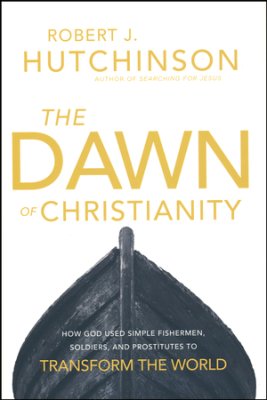
The Dawn Of Christianity (book review)

Sometimes when people are reading the Gospels and the Book of Acts in the New Testament of the Bible they forget what an accurate history is presented at a pivotal time in world events. In The Dawn Of Christianity, Robert J. Hutchinson makes the history behind, surrounding, and after the biblical accounts come to life in a fresh way.

The Dawn Of Christianity tells the history surrounding Jesus of Nazareth and His followers almost in a novel-like format. Hutchinson masterfully puts together the four Gospel accounts and Luke’s history of the early church in chronological order, and then brings in archaeological, geographic, and anthropological resources like a supporting cast to the biblical account. Along the way, we are introduced to extra-biblical characters, places, and customs that add a new depth of understanding to the history presented in Scripture.

Hutchinson notes, “Recent archaeological discoveries are showing that the New Testament in general, and the Gospels in particular, are far more reliable historical sources than previous generations of New Testament experts realized.” Indeed, he makes good use of as many pertinent finds as possible to enhance his storytelling.

The Dawn Of Christianity spans the time from just before the birth of Jesus Christ of Nazareth and then tracks the spread of Christianity for about 20 years following Christ’s ascension into heaven. It’s a fascinating and enlightening story for both Bible aficionados and skeptics alike.

I am a Thomas Nelson book reviewer.

Don’t Settle For Low Expectations

isaac-newtonSome of the greatest discoveries and revelations came about because people were curious. They refused to just go along with what they had always been told, what they grew up believing, or what the conventional wisdom told them was impossible.

Archimedes had his “Eureka!” moment because he refused to believe that it was impossible to measure the volume of an irregularly-shaped object.

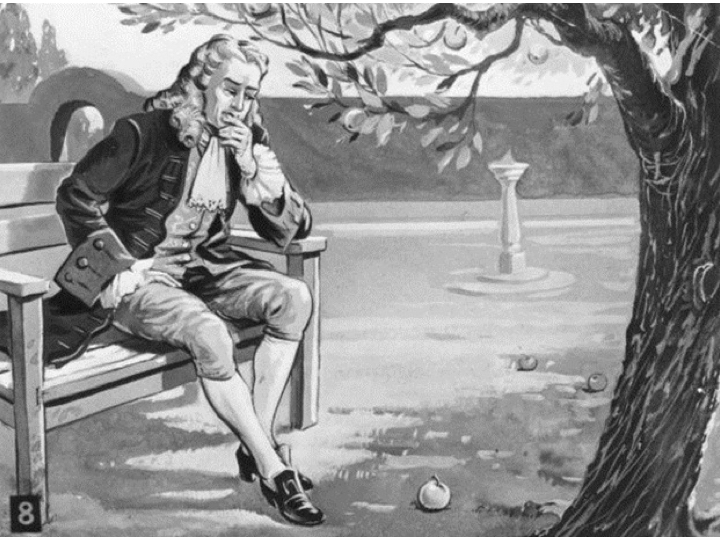
Isaac Newton formulated the laws of gravitation because he curiously wondered about why apples fell perpendicular and at the same velocity.

The Apostle Peter saw a vision from God with animals, but didn’t stop there. His openness helped him realize that God didn’t have “favorites.”

Far too many people live their lives cursed with low expectations. They say, “That’s all there is.” and they put a period on it.

God wants us to soar above those low expectations! He tells us things like:

  • Come now, let us reason together… (Isaiah 1:18).
  • Call to Me and I will answer you and tell you great and unsearchable things you do not know (Jeremiah 33:3).
  • Are you listening to this? Really listening? … The knowledge of the secrets of the kingdom of heaven has been given to you… (Matthew 13:9, 11)

great-expectationsBut we are trapped in the curse of low expectations when we put a period on things, when we refuse to learn more, see more, hear more.

  • Most people—“That’s all there is.” (period)
  • What if we changed it up—“Is this all there is?” (question mark)
  • Perhaps you might get—“There is so much more!” (exclamation point)

For example, Paul uses the word “mystery” multiple times in his letter to the Ephesians. He explains that a mystery is something hidden from those who have it all figured out (the “period” people), but is revealed to those who will ask God (the “question mark” people). Only the “question mark” people get to see the “exclamation points” God has for them. Things like…

  • God has a plan, and it is His pleasure to reveal it to me (Ephesians 1:9-10; 2:10).
  • God’s revelation is fully revealed to me in His Word (3:3-5).
  • Faith in Jesus makes Christians co-heirs and sharers in all God’s promises (3:6).
  • I have access to God’s inexhaustible riches, His immense wisdom, and I may approach Him with freedom and confidence (3:8-12).

Don’t stop with “.” but go on to “?” and experience “!

With great expectation, read God’s Word, approach His throne, dig into His riches, wrestle with the difficult things, learn more of God’s purpose for your life. He wants to give you so much more “!” 

4 Ways To Evaluate Biblical Evidence

Reliability of the GospelsTo be honest, if someone hasn’t heard the biblical account of the life of Jesus Christ before, it can sound quite fantastic! Jesus was born of a virgin, lived a sinless life, performed miracles no one had seen before, died a horrific martyr’s death, was raised back to life three days later, and then ascended back into heaven until He returns to Earth again.

But as fantastic as this sounds, there is still enough evidence to reasonably believe it’s all true. An unreasonable faith believes in something in spite of the evidence; a blind faith believes in something without any evidence; and reasonable faith believes in something because of the evidence.

The Bible gives us eyewitness testimony about the life of Jesus which we can matter-of-factly evaluate. 

In a modern-day court of law, eyewitness testimony is evaluated on…

  • …the determination that the witnesses were actually present.
  • …the ability to corroborate their testimony.
  • …the consistency of their testimony over time.
  • …any biases they have that would cause them to exaggerate or misrepresent their testimony.

Let’s consider the testimony of the four Gospel writers: Matthew, Mark, Luke and John.

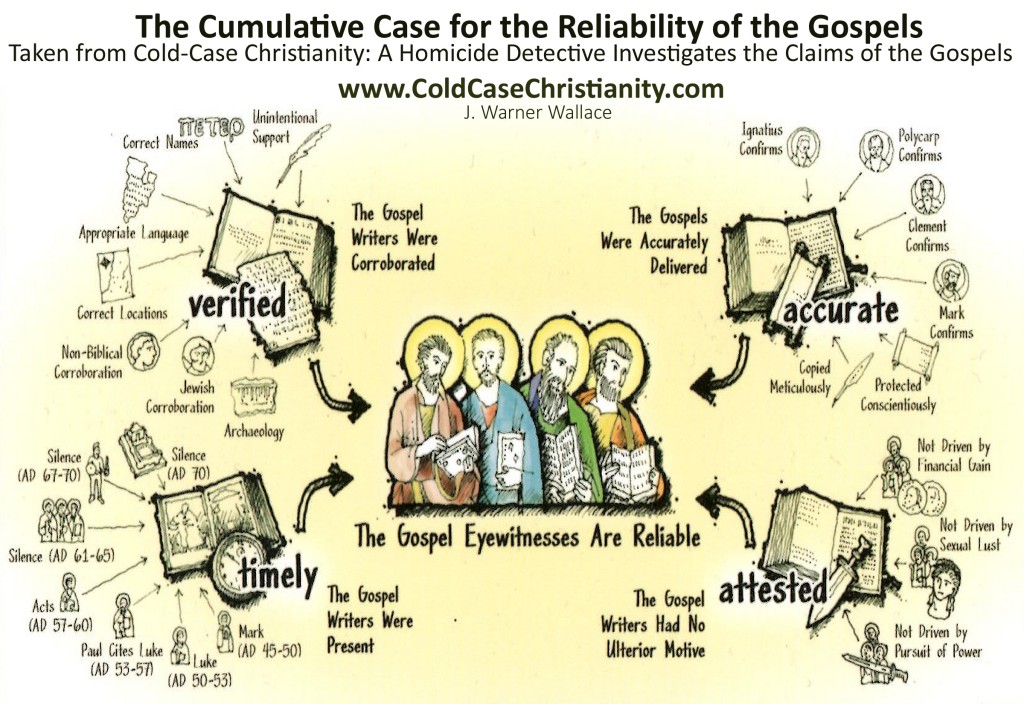
(1) Were The Eyewitnesses Present?

  • Luke is considered a credible historian, even by modern standards. He wrote the book of Acts following the ascension of Jesus into Heaven. Because he did not mention three major events in Jewish history (the Jewish uprising, the Roman siege of Jerusalem in response to that uprising, and the Roman destruction of the temple), we can determine that Acts was written before 61 AD.
  • Luke wrote the Gospel that bears his name before he wrote Acts. The Apostle Paul referenced portions of Luke’s Gospel in letters we can date by Paul’s Roman imprisonment, which means Luke was written prior to 53-57 AD.
  • Luke uses the Gospel of Mark as one of his references, which means Mark was probably written in 45-50 AD, just 10-15 years after the events of Christ’s life.
  • Mark was closely associated with the Apostle Peter, who was most assuredly Mark’s “source” in writing his Gospel, and Peter was one of the original twelve apostles called by Jesus.
  • Matthew and John were both apostles of Jesus, living and working closely with Jesus for over three years.

(2) Is Their Testimony Corroborated?

  • Archeological finds continually demonstrate the accuracy of the people, titles, places and details the Gospel writers mention.
  • Outside—or extra-biblical—sources like Josephus (a Jewish historian who wanted to preserve the purity of Judaism), Tacitus (a Roman historian), and Mara Bar-Serapion (a Syrian historian)—all who wrote between 40-70 AD—affirm things like where Jesus lived, the miracles He performed, the manner of His death, His resurrection, and the changed lives of people who believed in Jesus Christ.
  • In addition, Paul wrote of the “five hundred of the brothers” who were also eyewitnesses to the resurrected Christ (1 Corinthians 15:3-8).

(3) Has Their Testimony Remain Unchanged Over Time?

  • The history and accuracy of the scribes had already been demonstrated in the preservation and transmission of the Old Testament over a period of 1400 years.
  • These same scribal techniques were not only used in the transmission of the New Testament, but in subsequent years the Masoretic scribes became even more meticulous in the techniques they used.
  • The “chain of custody” of evidence can be absolutely traced from the Gospel authors, to their students, and to the writings of the Church Fathers.
  • In fact into the third-century AD, the writings of the Church Fathers contain so many direct quotations from the New Testament, that we can almost completely reconstruct the New Testament from their writings.

(4) Is Their Testimony Unbiased?

  • These eyewitnesses didn’t gain anything financially by their testimony. In fact, many of them lost or gave up all their possessions to tell others about Jesus.
  • They didn’t gain political power or influence that could save their own lives. All of the original apostles (except John) died a gruesome martyrs’ death.
  • In short, they had nothing to gain by making up and reporting a false story about Jesus.

All of these points make it reasonable to believe the evidence presented in the Bible about Jesus Christ is true. Check out this video where I elaborate a little more on each of these points—

If you live in the Cedar Springs area and don’t have a home church, I would love for you to visit with us Easter Sunday morning at 10:30am. We’ll be examining the evidence for Christ’s resurrection from the dead. Click here to get more details.

Asyougo

Listen to the podcast of this post by clicking on the player below, and you can also subscribe on AppleSpotify, or Audible.

A little habit started for me as a kid. I’d put things on the bottom steps of the stairway, so I’d be sure to see them and grab them as I went upstairs to my bedroom. After a while, everyone in our family had his or her own “step.” I called these asyougos: as you go upstairs, please take these with you. The principle was pretty simple, as I would naturally see these things going about my regular route.

Jesus had a similar idea for His followers: Go into all the world and preach the Good News to all creation (Mark 16:15). The verb tense and definition of the word go literally means that Jesus said, “Asyougo into all the world, preach the Good News.

In fact, this is exactly how Jesus lived His life. As He went about His normal life, His life intersected with people who needed Good News (check out Mark 10:17, 46; Luke 8:4, 42; 17:11; and John 9:1 as examples).

Peter summed up all of Christ’s life like this: God anointed Jesus of Nazareth with the Holy Spirit and power, and how He went around doing good and healing all who were under the power of the devil, because God was with Him (Acts 10:38).

Jesus lived an asyougo lifestyle, He called us to do the same, and He empowered us to live our asyougo lifestyle with the same power He had (Matthew 28:18-19; Acts 1:8).

Here’s the big idea—We don’t need to go anywhere special to find people who need Good News…

  • asyougo to school, you will attend class with them
  • asyougo to work, you will work alongside them
  • asyougo to the grocery store, you will interact with them
  • asyougo to do yard work, you will talk over the backyard fence with them
  • asyougo out to eat, you will sit next to them

People who need the life-changing, disease-healing, sin-forgiving power of Jesus are all around you. ASYOUGO share the Good News of Jesus Christ with them!

►► Would you please prayerfully consider supporting this ministry? My Patreon supporters get behind-the-scenes access to exclusive materials. ◀︎◀︎

Misbehaving Government

Misbehaving governmentChristians are to have an “alien” response to earthly governments. Simply stated: the Bible says we should not rail against governing authorities the way Earthlings do. Christians should respond with proper submission (check this out).

But what if those earthly governors are misbehaving? What then?

We can still be in God-honoring submission to them in the way we call out their misbehavior. 

Look at some examples—

  • Daniel asked permission to go against the king’s wishes (Daniel 1:8), proposed an alternative plan (v. 12), but ultimately agreed to submit to the authority’s decision (v. 13).
  • Shadrach, Meshach and Abednego didn’t argue with King Nebuchadnezzar (Daniel 3:16-18), but respectfully took their stance for God (notice the use of the phrase “O king” as a title of respect).
  • Peter and John simply stated, “We must obey God rather than human authority” (Acts 5:29).

This is exactly what Jesus told us to do when He said, “Give to Caesar what is Caesar’s, and to God what is God’s” (Luke 20:25). Jesus said something very similar to Pilate, when that governor said, “Don’t you realize I have the power to set You free?” Jesus said, “You would have no authority over Me if it were not given to you from above” (John 19:10-11).

So how do we respond to misbehaving governors?

[1] With respect to their office.

[2] With reverent fear of God (see 1 Peter 2:17). “Because we reverence God as the Lord of history, we see beyond the fear and intimidation of the moment.” —James W. Thompson

[3] Leaving the results to GodDaniel 3:26-29, 6:16-27; Acts 5:40-42.

[4] With lots of prayer1 Timothy 2:1-4.

Throughout history, Christians have always had the opportunity to confront ungodly governors. HOW they did it is what set them apart from the Earthling response, and what brought glory to God.

Here’s the video of my full message on this topic—

Next Sunday, November 8, is a day of prayer for those facing persecution for their Christian faith around the world. Join us in a time of prayer for them. If you’ve missed any messages in this series, you may find the complete list by clicking here.
Mobile, Messy & Meaningful

21st-century Americans in Christ's timeI think we have made the Church and Christianity something different than what the New Testament shows us. We’ve created far too many “things” which simply aren’t in the Bible. That’s not to say these things are wrong, but they may become stumbling blocks to us if we make secondary things the primary thing.

So what is the primary thing about church?

It might surprise you to know that the word church is only used twice by Jesus (Matthew 16:18, 18:17). He used a Greek word ekklesia, which meant a gathering of people called out from their homes into some public place. This word originally had more of a “town hall” meaning to it, but Jesus used this as a starting point to show us true church.

In Christ’s time the church for Him was…

Mobile—wherever He was, church was. Look at the extensive traveling He did. He held as many “church services” in people’s dining rooms as He did in the synagogues.

Messy—often as Jesus was speaking…

  • People constantly coming and going
  • Pharisees yapping and interrupting
  • Kids playing
  • Women sitting at His feet, anointing Him, crying over Him
  • Food and drink were usually involved
  • Foot washing was taking place
  • When He was outdoors: wind, waves, farmers, passers-by…
  • When He was indoors: food being served and eaten, roofs being ripped off…
  • People constantly interrupted His sermons: “Blessed is Your mother…”; “Tell my brother to give me my inheritance…”; “My daughter is dying!…”

Meaningful

  • “I must go through Samaria.”
  • “It’s not the healthy who need a doctor, but the sick.”
  • “Zaccheus, today I’m eating dinner at your house.”
  • “The Spirit of the Lord is upon Me to preach good news to the poor, freedom to the captive, sight to the blind, favor to the oppressed.”

Jesus asked His disciples Who they thought He was (see Matthew 16:13-18). The correct answer was Peter’s declaration, “You are the Christ, the Son of the living God!” Jesus said, “You’re right, and on that declaration I will build My church.”

Our job is to make Jesus known as the Christ, the Son of the living God (v. 16).

Christ’s job is to build His Church (v. 18).

He didn’t tell us to build a building and invite people to come on Sundays.

He didn’t tell us to start a Sunday School or a feeding program or a youth group.

There’s nothing wrong with these things, but they are not the main thing. 

The main thing is Jesus being seen as the Son of the living God. Where we are gathered together in that confession and purpose—even just two or three of us—that’s where His church is (see Matthew 18:20).

We must be mobile, taking a meaningful message into people’s messy lives. That is true church.

7 Bible Study Ideas From D.L. Moody

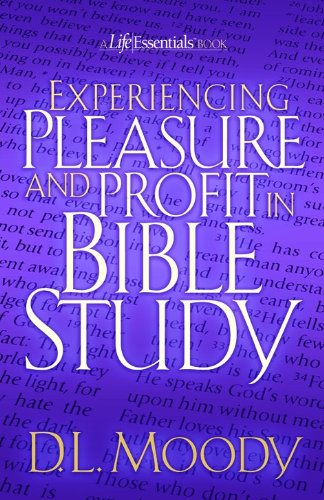
Pleasure & ProfitAs I read D.L. Moody’s book Pleasure & Profit In Bible Study, I made note of several ideas that could stimulate a great Bible study. Check out my review of this book by clicking here, then check out these great study-starters:

“If you are impatient, sit down quietly and commune with Job. If you are strong-headed, read of Moses and Peter. If you are weak-kneed, look at Elijah. If there is no song in your heart, listen to David. If you are a politician, read Daniel. If you are getting sordid, read Isaiah. If you are chilly, read of the beloved disciple. If your faith is low, read Paul. If you are getting lazy, watch James. If you are losing sight of the future, read in Revelation of the promised land.” —Richard Baxter 

“Every chapter [of Mark] but the first, seventh, eighth and fourteenth begins with ‘And,’ as if there was no pause in Christ’s ministry.”

“Matthew begins with Abraham; Mark with Malachi; Luke with John the Baptist; but John with God Himself. Matthew sets forth Christ as the Jew’s Messiah. Mark as the active worker. Luke as a man. John as a personal Savior.”

“[In John’s Gospel] the word repent does not occur once, but the word believe occurs ninety-eight times.”

“Dr. A. T. Pierson says: Let the introduction cover five P’s; place where written; person by whom written; people to whom written; purpose for which written; period at which written.” 

“Some time ago a man wanted to take my Bible home to get a few things out of it, and when it came back I found this noted in it:

  • Justification, a change of state, a new standing before God.
  • Repentance, a change of mind, a new mind about God.
  • Regeneration, a change of nature, a new heart from God.
  • Conversion, a change of life, a new life for God.
  • Adoption, a change of family, new relationship towards God.
  • Sanctification, a change of service, separation unto God.
  • Glorification, a new state, a new condition with God.”

“I was wonderfully blessed by taking the seven ‘Blesseds’ of the Revelation. … Or you may take the eight ‘overcomes’ in Revelation…. I have been greatly blessed by going through the ‘believings’ of John. Every chapter but two speaks of believing. … Take the six ‘precious’ things in Peter’s Epistles. And the seven ‘walks’ of the Epistle to the Ephesians. And the five ‘much mores’ of Romans 5. Or the two ‘receiveds’ of John 1. Or the seven ‘hearts’ in Proverbs 13, and especially an eighth. Or ‘the fear of the Lord’ in Proverbs.” 

“No scripture is exhausted by a single explanation. The flowers of God’s garden bloom, not only double, but seven-fold: they are continually pouring forth fresh fragrance.” —Charles Spurgeon

Steppin’ Up

Hard workHere’s a really simple true-false quiz for you. Anyone who has ever been in church should be able to handle this one simple question. Are you ready? Your one question is—True or False: The Bible contains the Word of God?

The answer is FALSE! The Bible doesn’t contain the Word of God, the Bible IS the Word of God.

  • It is inerrant = without error.
  • It is infallible = without mistake.
  • It is universally applicable regardless of age or culture.

The worldview which dominates today is usually one of pragmatism. That means people do what feels right to them in the moment, and then they determine the rightness or wrongness of their decision based on the outcome. In other words, if they like how things turned out they must have done something right, and if they don’t like the results then they must have done something wrong.

Christians, however, need to see the short-sightedness of this. The Apostle Peter shows the contrast between how accurate God’s Word is and how false teachers want to “exploit you with stories they have made up” (see 2 Peter 1:20-2:3), and how destruction is the end result for those with a pragmatic worldview.

It is by no means an easy thing for Christians to discipline themselves to have a consistent biblical worldview. It’s easy to simply reject something because it doesn’t appear to be “churchy” or receive something because it’s been done in the church for years. The hard work comes in this:

This week I’d like to give you the same challenge I gave my congregation: How can you STEP UP your involvement in the Word this week?

  • Do you need to read the Bible more?
  • Do you need to read the Bible better?
  • Do you need to meditate more on what you’ve read in the Bible?
  • Do you need to re-look at some things you’ve automatically rejected or received?
  • Do you need the Holy Spirit to overhaul your worldview?