May I Be Called Servant

Listen to the podcast of this post by clicking on the player below, and you can also subscribe on AppleSpotify, or Audible. 

We are getting ready to kick off a new series at Calvary Assembly of God based on the Book of Jude. When I read the opening line of this letter, it makes me pause. Jude writes, “Jude, a servant of Jesus Christ and a brother of James” (v. 1). 

Men like Peter and John had spent years in Christ’s company, and they called Him Lord and said they were His servants. Paul had supernatural encounters with the risen Savior, and said that he was a man devoted to His service. James and Jude shared a home and family with Jesus, and they call themselves His servant. 

How could I ever claim a title any higher than servant? 

Even if Jude didn’t say it in a bragging fashion, if he simply stated, “Jesus is my Brother,” I am pretty sure that has got to be a door opener for him! People would probably give him an audience and an opportunity—perhaps they would even give his words greater weight—simply because of the fact that they were brothers. But Jude uses this open door to point people to Jesus, not to himself.

So that got me thinking, “What will I do with the open doors, the opportunities, and the listening audiences that are before me? Will I use those things to promote my own agenda or will I use those things to promote Jesus? Will I speak what’s on my mind or what the Holy Spirit puts in my mind?”

I pray that I may use every opportunity to turn as many eyes and hearts as I am able to Jesus. May I use every open door to invite others to come closer to Christ. May I never promote my agenda, but merely be a servant who is speaking the words which I’ve been instructed and anointed to share. 

May I only be called a servant of Jesus Christ. 

I get much deeper into this topic of biblically-grounded leadership in my book Shepherd Leadership: The Metrics That Really Matter.

►► Would you please prayerfully consider supporting this ministry? My Patreon supporters get behind-the-scenes access to exclusive materials. ◀︎◀︎

What Godly Leaders Do

Listen to the podcast of this post by clicking on the player below, and you can also subscribe on AppleSpotify, or Audible. 

As Paul is coming to the close of his letter to the believers in Rome, he writes these beautiful words, “I myself am convinced, my brothers and sisters, that you yourselves are full of goodness, filled with knowledge and competent to instruct one another” (Romans 15:14). 

(Check out all of the Scriptures in this post by clicking here.)

I love the high esteem Paul has for the Christians in Rome. He’s not looking for what’s wrong with them, but for what’s praiseworthy in them. 

A mark of a godly leader is one who is always looking for the best in the people around him. 

Leaders see the best in people—even if the people don’t see it in themselves yet. (Check out this short video.) 

Leaders point out the specific qualities they see in their people—virtues like goodness, knowledge, and competence. 

Leaders continue to sharpen their people, challenging them to excel even more. “Yet I have written you quite boldly on some points to remind you of them again” (v. 15). 

Leaders enjoy spending time with their people and are refreshed by them. 

   But now that there is no more place for me to work in these regions, and since I have been longing for many years to visit you, I plan to do so when I go to Spain. I hope to see you while passing through and to have you assist me on my journey there, after I have enjoyed your company for a while. … So that I may come to you with joy, by God’s will, and in your company be refreshed (vv. 23-24, 32). 

Leaders pray for their people and ask their people to pray for them. “I urge you, brothers and sisters, by our Lord Jesus Christ and by the love of the Spirit, to join me in my struggle by praying to God for me. Pray that I may be kept safe from the unbelievers in Judea and that the contribution I take to Jerusalem may be favorably received by the Lord’s people there” (vv. 30-31; see Paul’s prayer for them in 16:25-27). 

Leaders publicly compliment their people (16:1-15). 

And leaders protect and empower their people. “I urge you, brothers and sisters, to watch out for those who cause divisions and put obstacles in your way that are contrary to the teaching you have learned. Keep away from them. … The God of peace will soon crush satan under your feet. The grace of our Lord Jesus be with you” (16:17, 20). 

I want to be this kind of leader. In order to do that, I need the help of the Holy Spirit. I must listen to His voice in order to make the changes I need to make so that I may lead in the most Christ-glorifying way possible, and help those around me live even more in their God-given gift zone.

This is part 85 in my series on godly leadership. You can check out all of my posts in this series by clicking here.

►► Would you please prayerfully consider supporting this ministry? My Patreon supporters get behind-the-scenes access to exclusive materials. ◀︎◀︎
Sanctified Experiences

Listen to the podcast of this post by clicking on the player below, and you can also subscribe on AppleSpotify, or Audible. 

Even with the Voice of the Holy Spirit in our ear and the Mind of God giving us insight, we still “miss it” sometimes. Maybe it’s fear or impatience or immaturity, but we try something on our own and the results are painful. 

I like the maxim, “Sometimes you win, sometimes you learn.” It’s true, but in order to learn I need a proper lens or a wise tutor to help discover those lessons from my experiences. This is what the Holy Spirit does for us: He helps us make senses of our “misses.” Otherwise, if I don’t learn from these painful experiences I will become either arrogant and God opposes this kind of pride (Proverbs 14:7; James 4:6a), or I remain ignorant (Proverbs 15:32; James 4:6b). 

(Check out all of the biblical references in this post by clicking here.) 

Peter heard from Jesus that the baptism of the Holy Spirit was intended to empower the Christians to take the Good News of Jesus to all people—including Gentiles. Peter struggled with this part, as would all good Jews. In their minds, Gentiles weren’t eligible for the blessings of God, especially not the gift of eternal life which would allow them to be in God’s presence forever! 

Before we look at Peter, we need to remember what was happening with Saul/Paul at the same time. Saul met Jesus (Acts 9:3-15), and he then went to Jerusalem (vv. 26-28; Galatians 1:13-19). 

Now let’s go back to Peter. He had just seen a vision from God and heard the Voice of the Spirit (Acts 10:9-16, 19-20). In obedience to this Voice, he went to Cornelius’ house and was given the Mind of God to preach to them. These Gentiles not only accepted Jesus as their Savior but were baptized in the Holy Spirit (vv. 44-48). 

Now let’s switch back to Paul for a moment. Antioch became the home base for Paul and Barnabas (where the believers were first called Christians), and apparently there was a large Gentile population there. At one point, Peter came to visit and struggled with whether or not the Gentile Christians must then convert to Judaism. Peter was struggling with obedience to the vision that God had shown him, his disobedience was beginning to affect others (including Barnabas), and Paul called Peter out on this (Galatians 2:1, 7-14). 

Back in Jerusalem, the Jewish Christians were insisting that the Gentile Christians become Jews. It was this controversy that prompted the Jerusalem Council. At this Council, Peter responded like one who had throughly learned a lesson from his previous “miss” (Acts 15:5-11). 

I like this verse in the Amplified Bible, particularly one phrase: I will praise and give thanks to You with uprightness of heart when I learn by sanctified experiences Your righteous judgments (Psalm 119:7 AMPC). 

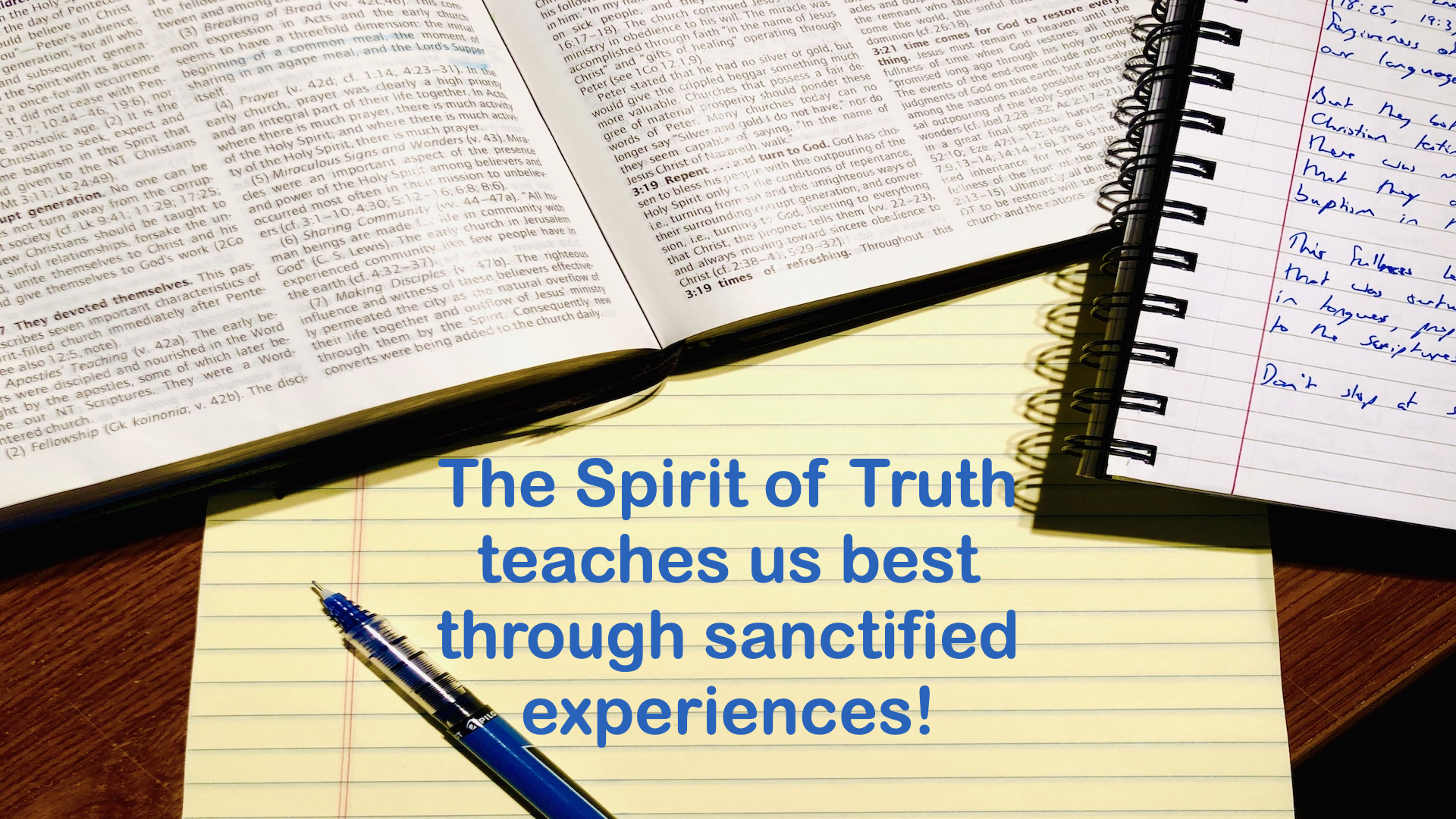
Sanctified experiences. A “miss” that the Holy Spirit uses to teach us. The “miss” has been sanctified to become a learning experience. This is what Jesus said the Spirit of Truth would do for us (John 16:13). 

There are things we simply experience, and then there are “sanctified experiences” where the Holy Spirit teaches us an invaluable lesson. These sanctified experiences are what the Holy Spirit uses to bring our thought and conduct into alignment with the perfect standard of God’s Word. 

The Holy Spirit never condemns us for our missteps (Romans 8:1), but uses them for God’s glory (v. 28). 

Just as Paul had to help Peter learn to pay attention to the Voice of the Spirit, the Holy Spirit wants to make us learner-teachers as well. In Psalm 119:7 the Hebrew word for “learn” is lamad which is also the word for “teach.” In other words, I’ve learned it well enough to teach it to another person. Even David with his sinful behavior—a really big “miss”—learned from the lesson from the Spirit of God so well that he could teach others (Psalm 51:10-13). 

Spirit-baptized Christians can lean into the Spirit of Truth to help them learn sanctified experiences from even the difficult things that have happened to them. 

If you’ve missed any of the other lessons in this series, you can find them all here. 

►► Would you please prayerfully consider supporting this ministry? My Patreon supporters get behind-the-scenes access to exclusive materials. ◀︎◀︎

Invited To Common Ground

This is an audio portion of a video teaching I recently shared with my Patreon supporters.


My supporters received the full teaching video and audio, along with some supporting resources. 

Would you consider supporting this teaching ministry for just $5 per month? My supporters get exclusive content that no one else receives, as well as early access to content that will eventually be shared publicly. 

The Blessing Of Being There

Listen to the podcast of this post by clicking on the player below, and you can also subscribe on AppleSpotify, or Audible. 

Luke had previously spent a little time with the apostle Paul (Acts 16:10-18), but near the end of the historical record in the Book of Acts, we see Luke with Paul almost continually. 

(Check out all of the Scriptures in this post by clicking here.)

The reason we can tell this is because of the pronouns “us” and “we.” From Acts 20:5—21:18, 27:1—28:16, these two pronouns are used over 80 times! 

Luke probably joined Paul in Greece (20:2) and was with him when they arrived in Jerusalem. After Paul’s arrest, transport to Caesarea, and being bound over for his hearing before Caesar, Luke is still there (27:1). Luke remains with Paul throughout the entire journey to Rome, and is still with him as the Book of Acts closes. 

Paul calls Luke a faithful friend (2 Timothy 4:11). Today, people know this man who wrote the Gospel of Luke and the Book of Acts as a preeminent historian. It is God’s perfect provision and timing that links together the lives of Paul and Luke at such a pivotal time. 

Quite simply stated: Paul is blessed by Luke just being with him. 

Not only does Luke preserve the accurate historical record of Paul’s missionary journeys, but it appears that Luke is actively involved in Paul’s letter writing to the churches. Luke uses more unique Greek words in the New Testament than any other writer. But many of the words that appear more than once are found only in the historical works of Luke and the letters of Paul. I can almost imagine Paul dictating a letter, and then pausing to ask his educated friend Luke, “What is the Greek word that means such-and-such?” Luke’s thoughtful, Spirit-inspired reply is then included in these important letters for the early churches. 

This should be a great encouragement to us still today that God has us where we need to be, and with the people that need us in their lives. 

What skills do you have? Who has God put in your life? How can your talents be a blessing to those people? 

Simply doing what God has gifted you to do with those whom He has placed in your life is both a blessing to your companions and is pleasing to your God. 

I pray that you will find a way to use your God-given talents to be a blessing to those around you. Perhaps the blessing will simply be you being there for your friends as they journey through their life. 

►► Would you please prayerfully consider supporting this ministry? My Patreon supporters get behind-the-scenes access to exclusive materials. ◀︎◀︎
Encouraging Others In The Storm

Listen to the podcast of this post by clicking on the player below, and you can also subscribe on AppleSpotify, or Audible. 

Have you ever been going through a storm in your life and wondered, “God, why are You allowing me to go through this?” 

The Scriptures I reference in this episode are Acts 27; Jonah 1; Acts 23:11.

I talk more about encouragement in the storms of life in my posts Hope in the Storms and Hard Times. And I talk more about Jonah’s storm in the post Not the Answer I was Expecting. 

My book When Sheep Bite is available here. 

►► Would you please prayerfully consider supporting this ministry? My Patreon supporters get behind-the-scenes access to exclusive materials. ◀︎◀︎

Leaders Lift Up Or Push Down

Listen to the podcast of this post by clicking on the player below, and you can also subscribe on AppleSpotify, or Audible. 

As both a consultant and in one-on-one conversations with colleagues, I have lost count of how many times I’ve heard leaders tell me how incompetent their teammates are. When I have gently asked how they could help their teammates improve, the response is usually something like, “I think they are giving me all they have right now.” 

There is an age-old leadership principle that goes something like this—

A poor leader doesn’t believe his people can achieve more than they already are, so he stops training them and stops expecting great things from them. His people soon discover the level of performance their leader will settle for, and then gravitate to that level. 

The leader then assumes that’s all that his people are capable of achieving, so he accepts it as fact and quits challenging his people to get better. 

So both reinforce what the other believes, and the vicious downward cycle continues. 

How sad! 

But I have found that exemplary leaders believe the best is still to come. They challenge their teammates to strive for greatness. They take time to train, resource, and encourage them to strive for the next level. They don’t beat them up or give up on them when they stumble, but they treat stumbles as learning opportunities. They always believe their teammates can achieve more. 

If you were on a team with a leader like that, wouldn’t you want to live up to those expectations? Of course you would! So instead of the vicious downward cycle I just outlined, an environment like this creates a virtuous cycle that keeps pulling people upward. 

The apostle Paul talked in virtuous terms about his teammates. He wrote publicly about Timothy (I have no one else like him—Philippians 2:20), Epaphroditus (my brother, co-worker and fellow soldier—Philippians 2:25), Mark (he is helpful to me in my ministry—2 Timothy 4:11), and Luke (the beloved physician and faithful comrade—Colossians 4:14), to name just a few.

Even when he had to speak a challenging, correcting word to the saints in Corinth, he still believed the best for them—

I am not sorry that I sent that severe letter to you, though I was sorry at first, for I know it was painful to you for a little while. Now I am glad I sent it, not because it hurt you, but because the pain caused you to repent and change your ways. … I am very happy now because I have complete confidence in you. (2 Corinthians 7:8-9, 16 NLT) 

I love that phrase: I have complete confidence in you! 

A mark of a godly leader is his supreme confidence in his people to grow and improve. 

If you feel like your teammates just aren’t measuring up, can I suggest that you take a look in the mirror? It may be that your expectations of them are too low, that your attitude toward them has been squelched, and that your words and actions are perpetuating a downward cycle.

By changing your attitude toward your teammates, you can put the brakes on that downward pull, and begin a brand new virtuous cycle that pulls your entire team—and your whole organization—up to heights where they have never gone before! 

This is part 82 in my series on godly leadership. You can check out all of my posts in this series by clicking here.

►► Would you please prayerfully consider supporting this ministry? My Patreon supporters get behind-the-scenes access to exclusive materials. ◀︎◀︎
Links & Quotes

God gave us a Book (the Bible) that tells us all we need to know about praying.

I have a lot of new video content on my YouTube channel every week. Please check it out and subscribe so you don’t miss anything.

T.M. is beginning a series on the ministry of the apostle Paul. He writes, “Paul was able to accomplish great things against great odds not because he was such an enthralling preacher (he was not) or had so many resources to invest in his work (he did not), but because he had such great confidence in his message and his Lord.” Check out this series.

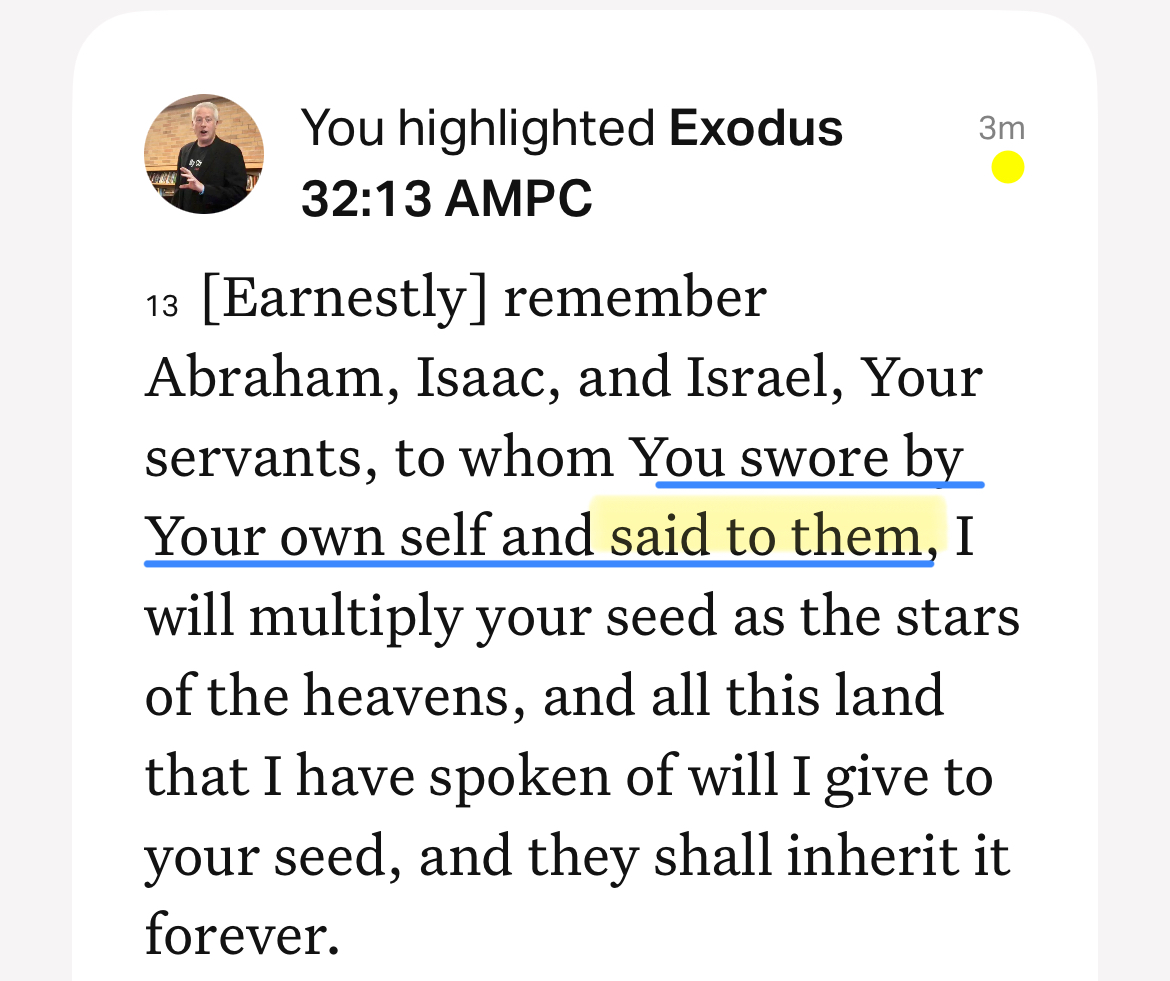
As a father, it always got my attention when my kids would remind me, “Dad, you said….” Not that God ever forgets anything He has promised, but when He hears Moses say, “You swore by Your own self and said to them,” He is pleased because this means that Moses is banking his faith on God’s unchangeable word. Let’s follow this example from Moses and use God’s Word to form our prayers to Him.

The ICR reports, “If the earth is 4.6 billion years old, virtually every square inch of the Earth’s surface would experience a host of erosive events.” But the fact that paleontologists have found so many well preserved foot tracks is a testament to both the Creation and Flood accounts recorded in biblical history.

“When ‘Aunt’ Fanny Lack, a 100-year-old Hoopa Indian woman, accepted Christ and was healed in 1920, she became a local sensation on the Hoopa Indian Reservation in northern California.” This is an amazing story!

“When you hate, the only person that is suffering is you because most of the people you hate don’t know it and the rest don’t care.” —Medgar Evers

AxisCulture Translator reported, “A study from World found that 26% of respondents admitted to flirting with a chatbot or AI, either for fun or unknowingly.” I love Axis’ conclusion: “Although social media was initially pitched as a supplement to real-life social interactions, the slope from supplement to replacement is steep. This Valentine’s Day, remind your teens that although real-life relationships can be difficult, we need both the affirmation and pushback that comes with them.”

Greg Morse shares the very real danger of shepherding God’s flock. He writes, “I enlisted to teach, preach, shepherd, and guide—but also to suffer, defend, and die, if the Lord should choose. As a son with his mother, a husband with his wife, a father with his children, so a pastor with his sheep. I am to defend them against all enemies foreign and domestic—spiritual and physical.” Pastors, I encourage you to read this article.

The Best Sermons

Listen to the podcast of this post by clicking on the player below, and you can also subscribe on AppleSpotify, or Audible. 

This one is for my fellow pastors. I want to give you THE question to ask to help you in crafting the most applicable and memorable sermons. 

It’s a question that Paul asks in Romans 4: “What does the Scripture say?” (v. 3). Preachers must make sure they get their ideas from the text of the Bible, not just from their own good ideas. Look at this amazing example from Paul in just this one chapter of his letter to the saints at Rome. 

He starts off with a question: “What then shall we say?” (v. 1). 

Then he answers his question with another question: “What does the Scripture say?” and he proceeds to give his answer by quoting from the Book of Genesis. 

From this, Paul makes a conclusion in vv. 4-5 that is signaled by the word “Now…”. 

In order to support his conclusion, Paul then quotes from Psalm 32: “David says the same thing” (vv. 6-8).

Next Paul alternates between questions and answers in vv. 9-12, bringing this Q&A to a logical conclusion in vv. 13-16. 

He supports his conclusion with even more Scripture: “As it is written” (v. 17), and “Just as it had been said” (v. 18). 

Finally, Paul wraps up this part of his sermon by both quoting more Scripture (vv. 22-23) and then reminding his audience, “The words ‘it was credited to him’ were written not for him alone, but also for us” (vv. 23-24). This shows that God’s words weren’t just for Abraham, nor just for Paul’s audience, but for anyone reading the Scripture today.

This is a short, masterful, and powerful sermon! Why? Simply because it is totally banked on God’s timeless words. 

The way that preachers can design THE perfect sermon—that is both applicable and memorable—is to start with the same question Paul did: “What does the Scripture say?” 

►► Would you please prayerfully consider supporting this ministry? My Patreon supporters get behind-the-scenes access to exclusive materials. ◀︎◀︎

How Long?

Listen to the podcast of this post by clicking on the player below, and you can also subscribe on AppleSpotify, or Audible. 

Last week we saw that if we make prayer our priority, we can expect that our eyes will be opened to the answers that God has for us. Hagar and Eliezer seemed to get pretty quick answers. Nehemiah had to wait four months for the answer to his prayer. 

We saw in Psalm 5 that David laid his requests before God first thing in the morning, and then he went out of his prayer closet in expectation of an answer (Psalm 5:1-3). But how long did he wait? 

(Check out all of the Scriptures in this post by clicking here.) 

Psalm 6 may not happen historically right after Psalm 5, but listen to David’s heart, “Have mercy on me, LORD, for I am faint; heal me, LORD, for my bones are in agony. My soul is in deep anguish. How long, LORD, how long? (Psalm 6:2-3). And then again in Psalm 13:1-3, David asks, “How long?” four times in the first two verses! 

When we read the training Jesus gave His disciples about prayer in Luke 11:9-10, we see how He implores them (and us) to keep on praying. It becomes even more emphatic in the Amplified Bible—

So I say to you, ask and keep on asking and it shall be given you; seek and keep on seeking and you shall find; knock and keep on knocking and the door shall be opened to you. For everyone who asks and keeps on asking receives; and he who seeks and keeps on seeking finds; and to him who knocks and keeps on knocking, the door shall be opened. 

But once again we have to ask: how long are we to continue asking, seeking, and knocking? This is what Job asked in the middle of his trial (Job 6:8, 11-13). 

Charles Spurgeon said, “God has measured the crosses of all His children: Israel in Egypt, 430 years; Joseph in prison, 3 years; Judah in Babylon, 70 years.” That means that God knows what He is doing, God knows His timing for answering, and that our part is to simply to continue to ask, seek, and knock as we throw our total trust on Him! 

I remember my affliction and my wandering, the bitterness and the gall. I well remember them, and my soul is downcast within me. Yet this I call to mind and therefore I have hope. Because of the LORD’s great love we are not consumed, for His compassions never fail. They are new every morning; great is Your faithfulness. I say to myself, “The LORD is my portion; therefore I will wait for Him.” (Lamentations 3:19-24) 

During these times of waiting, we need to keep recalling what we know:

  1. God’s love is unfathomable—Romans 5:5, 8:38-39 
  2. God’s timing is perfect—Deuteronomy 32:4 
  3. God’s method is flawless—Romans 8:28 
  4. God’s gifts are good—Luke 11:11-13, 12:32  

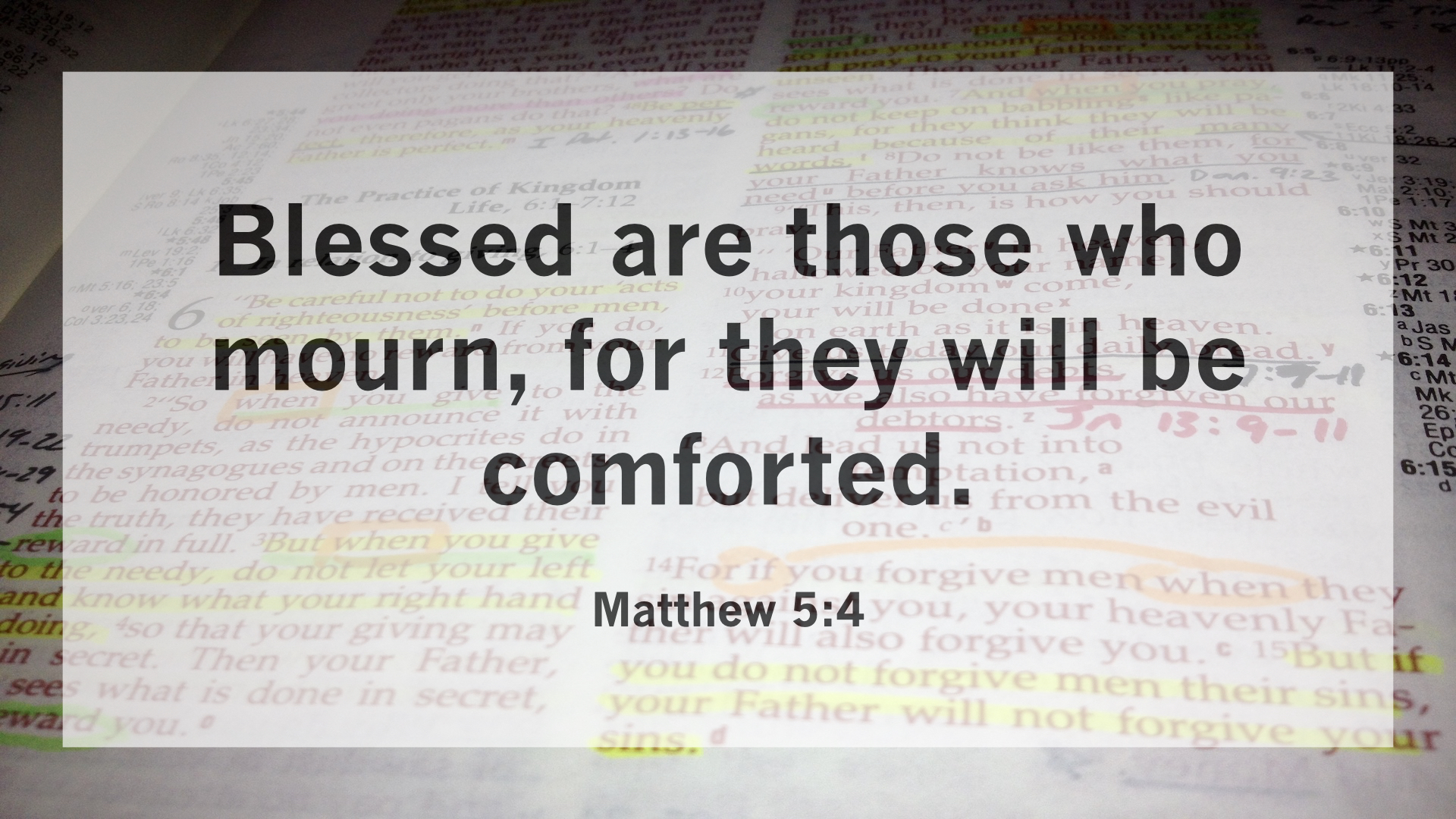
In Psalms 6 & 13, David doesn’t record any answers from God, but listen to this assurance from Jesus, “Blessed are those who mourn, for they will be comforted” (Matthew 5:4). 

Jesus doesn’t tell us how or when God will bring us comfort, but He does assure us that we will be comforted! 

In a couple of the examples from David, you can see this assurance as he continues his prayers (Psalm 6:2-4, 8-10; 13:1-6). Paul also experienced this confidence (2 Corinthians 12:7-10), and so did Jesus (Matthew 26:38-39, 50-54). 

The writer of Hebrews assures us that Jesus was heard in His, “How long?” cries, and therefore He knows exactly how to intercede for us today as we lift up the same cry (Hebrews 5:7-8; 2:10, 14, 17-18)! 

How long? Quite simply stated: Until God answers or until He lifts our burden. 

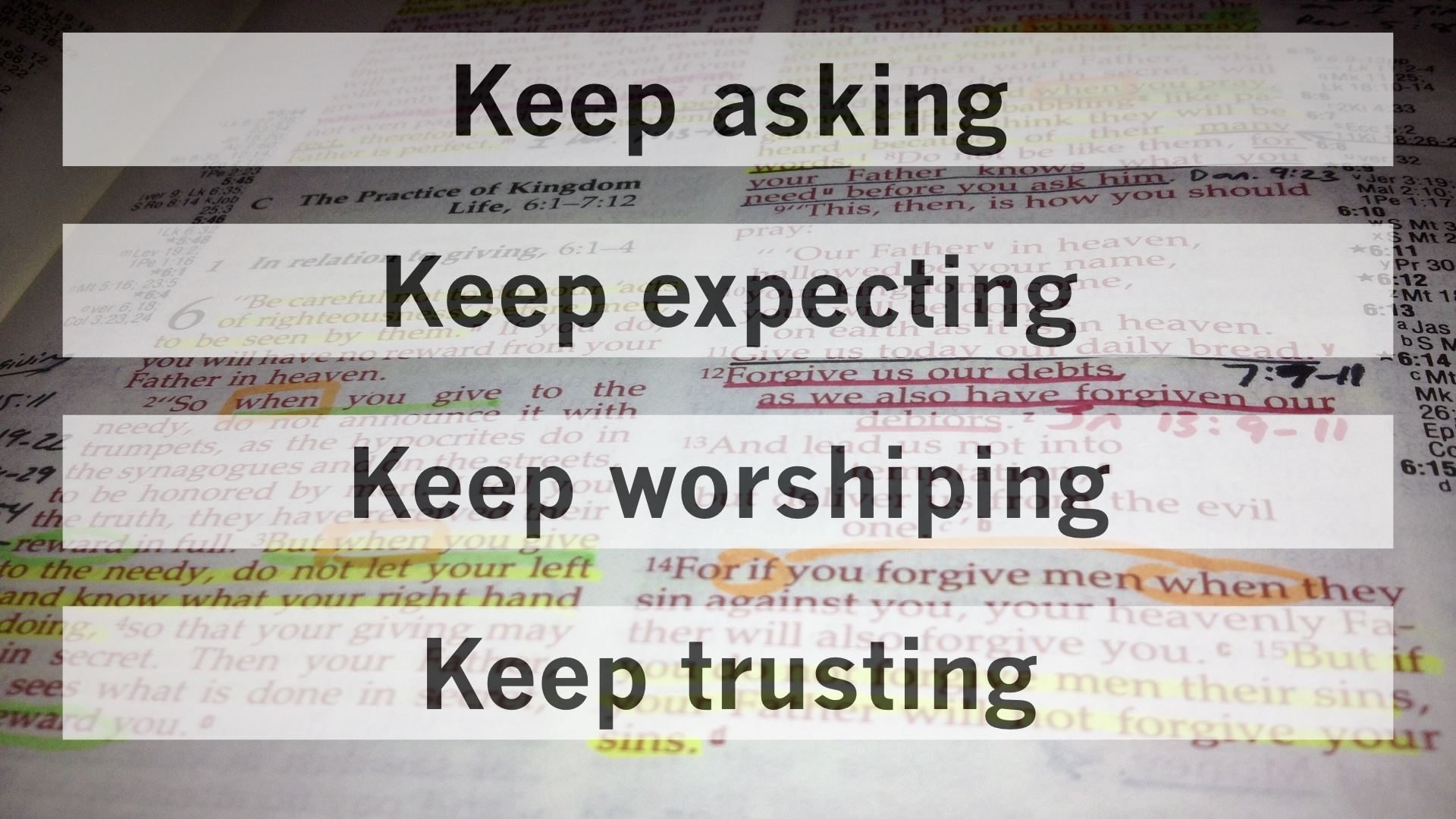
In the meantime, the examples in Scripture and the assurance of Christ’s intercession for us us encourages us to…

  1. Keep asking with full confidence that God hears you 
  2. Keep expecting an answer 
  3. Keep worshiping God for Who He is 
  4. Keep trusting that your Heavenly Father wants to give you the very best!  

If you have missed any of the other messages in our prayer series, you can find them all here. 

►► Would you please prayerfully consider supporting this ministry? My Patreon supporters get behind-the-scenes access to exclusive materials. ◀︎◀︎